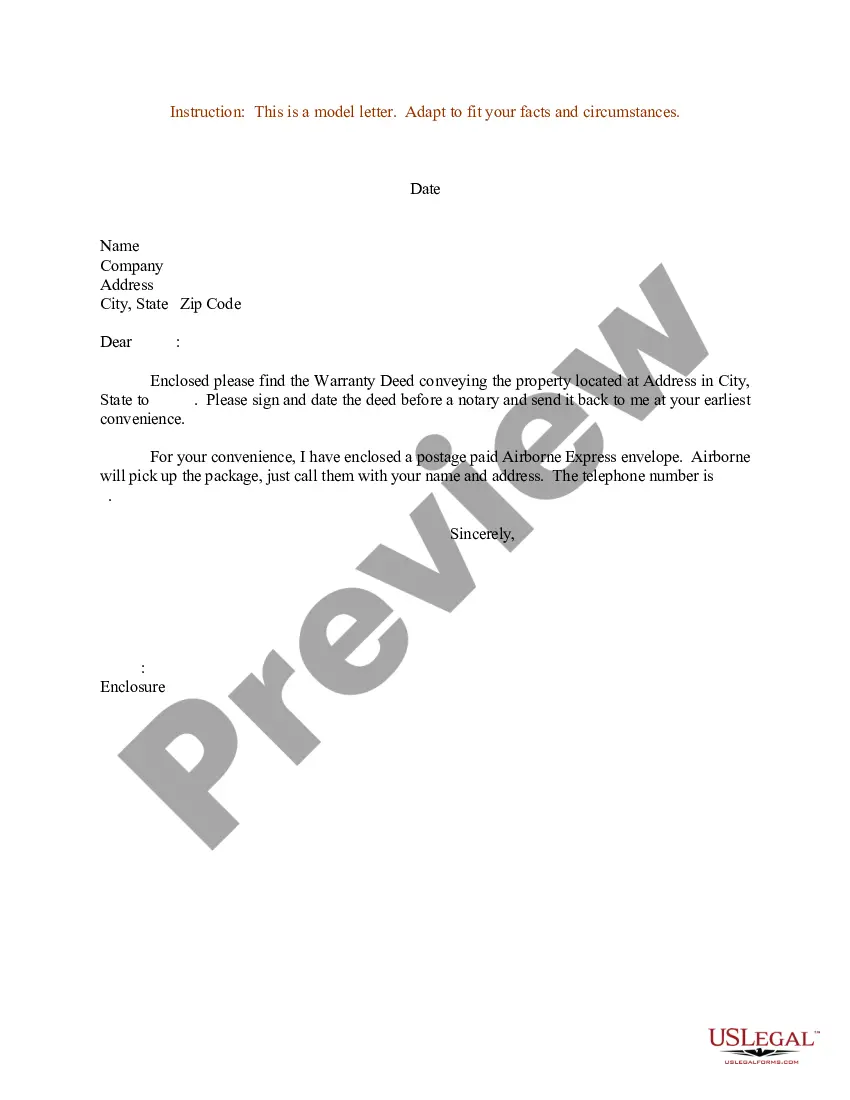
Sample Letter with Corrected Warranty Deed
What is this form?
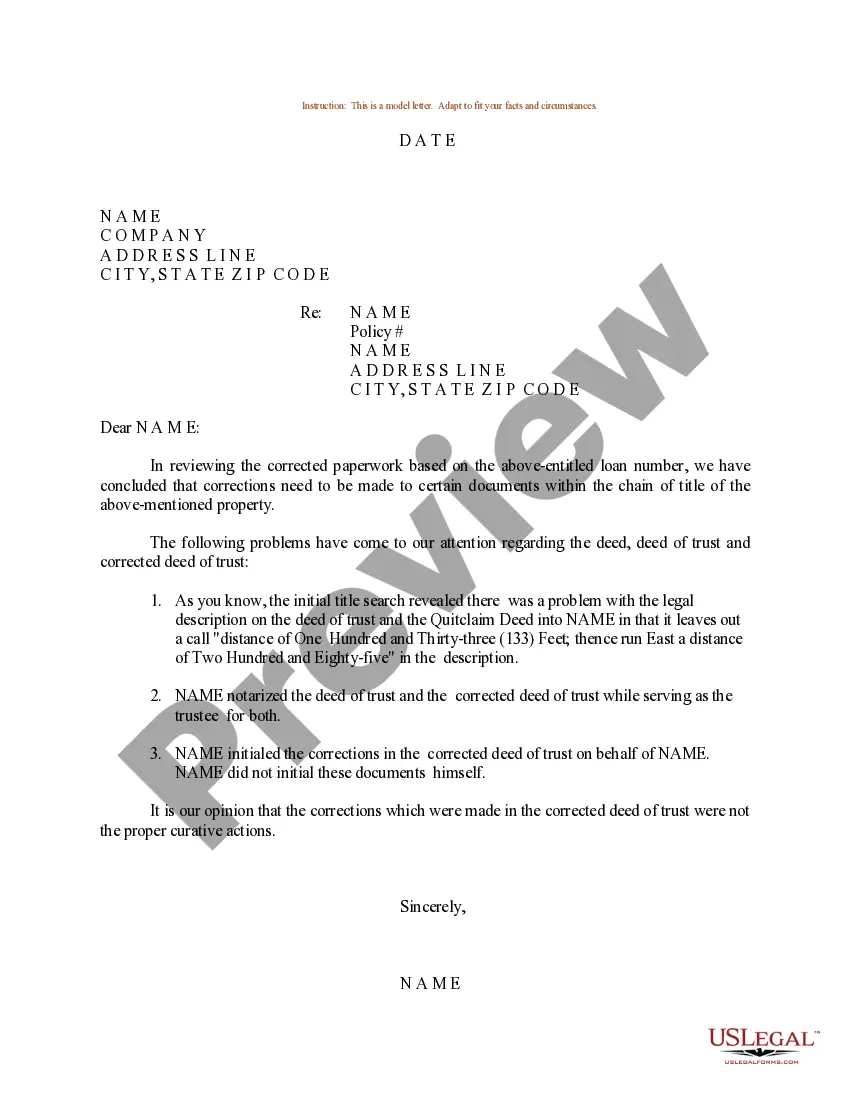
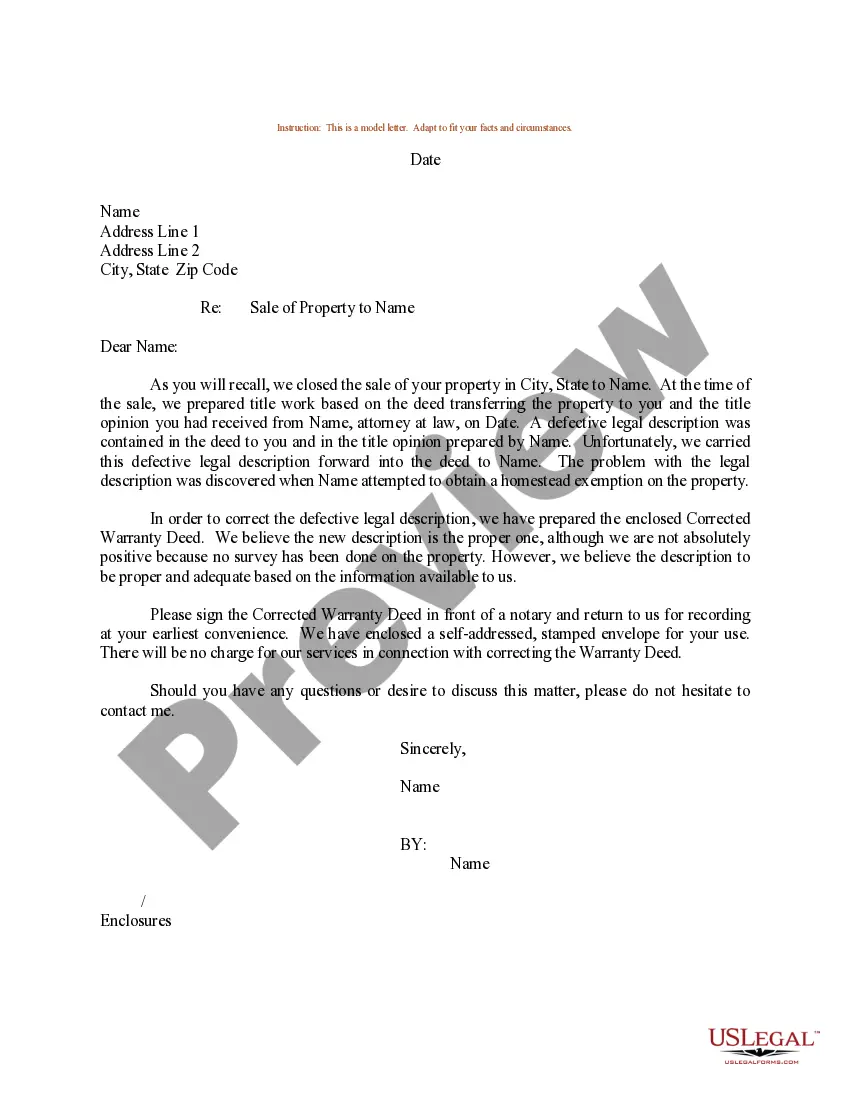
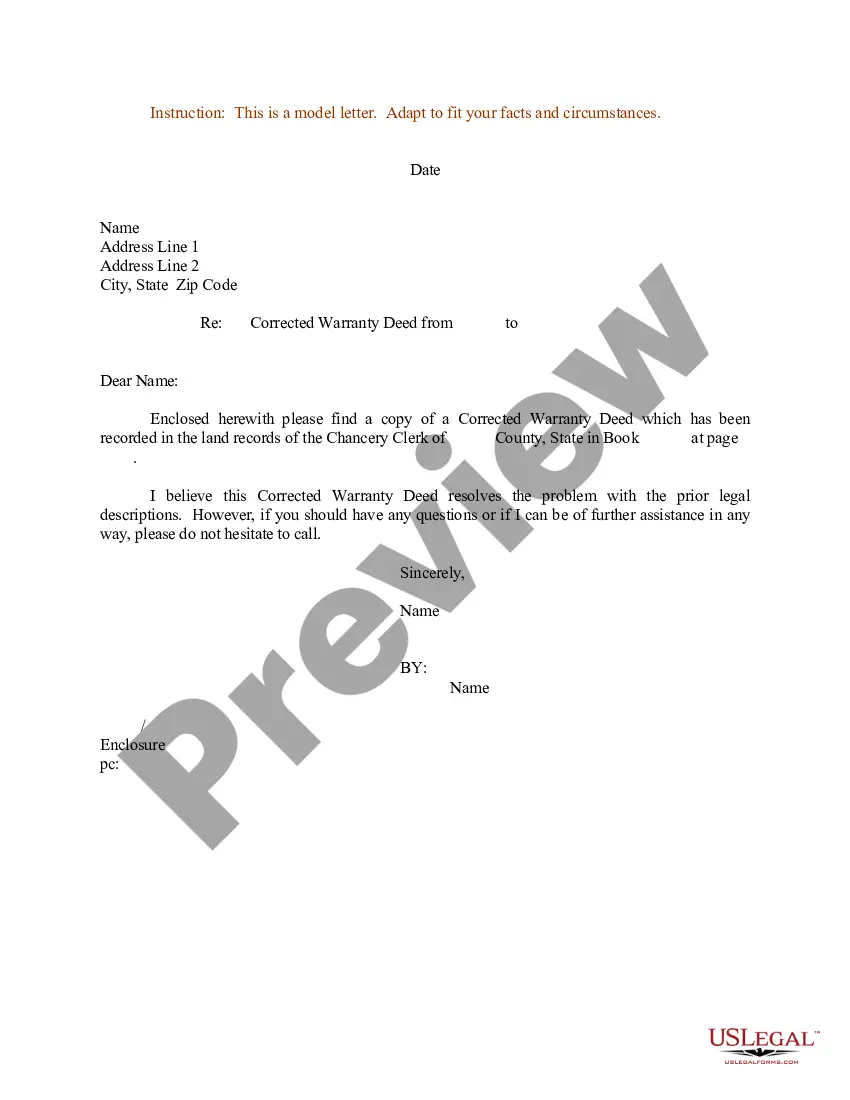
This Sample Letter with Corrected Warranty Deed is a template designed to accompany a corrected warranty deed. It serves to communicate the adjustments made to the original deed to relevant parties. Unlike typical warranty deeds, which focus solely on transferring property ownership, this letter is meant to clarify and document changes, ensuring all stakeholders are informed and legally protected.
Main sections of this form
- Introduction: Identifies the parties involved and the purpose of the letter.
- Property description: Clearly outlines the property being discussed in the warranty deed.
- Correction details: Specifies the corrections made to the original deed.
- Signatures: Provides space for signatures of the parties involved, affirming the corrections.
When to use this form
Who this form is for
This form is intended for:
- Homeowners or property owners needing to correct their warranty deed.
- Real estate agents assisting their clients with property transactions.
- Attorneys involved in real estate matters who require a formal template for communication.
How to complete this form
- Identify the parties involved in the warranty deed correction.
- Specify the property details that are being corrected or clarified.
- Clearly outline the corrections made to the original warranty deed.
- Gather the necessary signatures from all parties acknowledging the corrections.
Notarization requirements for this form
To make this form legally binding, it must be notarized. Our online notarization service, powered by Notarize, lets you verify and sign documents remotely through an encrypted video session.
Get your form ready online
Our built-in tools help you complete, sign, share, and store your documents in one place.
Make edits, fill in missing information, and update formatting in US Legal Forms—just like you would in MS Word.
Download a copy, print it, send it by email, or mail it via USPS—whatever works best for your next step.
Sign and collect signatures with our SignNow integration. Send to multiple recipients, set reminders, and more. Go Premium to unlock E-Sign.
If this form requires notarization, complete it online through a secure video call—no need to meet a notary in person or wait for an appointment.
We protect your documents and personal data by following strict security and privacy standards.

Make edits, fill in missing information, and update formatting in US Legal Forms—just like you would in MS Word.

Download a copy, print it, send it by email, or mail it via USPS—whatever works best for your next step.

Sign and collect signatures with our SignNow integration. Send to multiple recipients, set reminders, and more. Go Premium to unlock E-Sign.

If this form requires notarization, complete it online through a secure video call—no need to meet a notary in person or wait for an appointment.

We protect your documents and personal data by following strict security and privacy standards.
Common mistakes to avoid
- Failing to include all parties who signed the original warranty deed.
- Not specifying the corrections clearly enough, leaving room for misunderstanding.
- Forgetting to obtain the necessary signatures after making corrections.
Benefits of completing this form online
- Convenience of downloading and accessing the form at any time.
- Editability to customize the letter according to your specific needs.
- Reliable template drafted by legal professionals, ensuring accuracy.
Looking for another form?
Form popularity
FAQ
In Texas, a correction deed is the deed issued to make changes to an erroneous deed, referred to as the corrected deed. These two instruments are closely linked, and all corrections are effective as of the date of the original recorded instrument (Property Code Sec. 5.030).
A correction deed confirms the covenants and warranties of the prior deed. It needs to refer to that instrument by indicating its execution and recording date, the place of recording, and the number under which the document is filed. It also must identify the error or errors by type before supplying a correction.
A warranty deed guarantees that: The grantor is the rightful owner of the property and has the legal right to transfer the title.The title would withstand third-party claims to ownership of the property. The grantor will do anything to ensure the grantee's title to the property.
Correct common errors in a deed, such as typographical mistakes or omissions in various sections of the original deed, by using a corrective deed, which must be signed by the grantor and witnesses and re-acknowledged. They recommend against correcting deeds that are valid in spite of an error.
What is a Correction Affidavit? An Affidavit of Correction may be used to correct inaccurate information on an official court or government record. This includes: DMV records, such as vehicle registration or title. Property records, like deeds or liens.
A corrective deed is an instrument filed in the public record in addition to the incorrect deed. It's known as a confirmatory instrument since it perfects an existing title by removing any defects, but it doesn't pass title on its own.
If a deed is to have any validity, it must be made voluntarily.If FRAUD is committed by either the grantor or grantee, a deed can be declared invalid. For example, a deed that is a forgery is completely ineffective. The exercise of UNDUE INFLUENCE also ordinarily serves to invalidate a deed.
A correction deed is a new deed signed and acknowledged by the grantor. A correction affidavit can be signed by either party but is used in limited situations. This press release was authorized by Mark W. Bidwell, an attorney licensed in California.