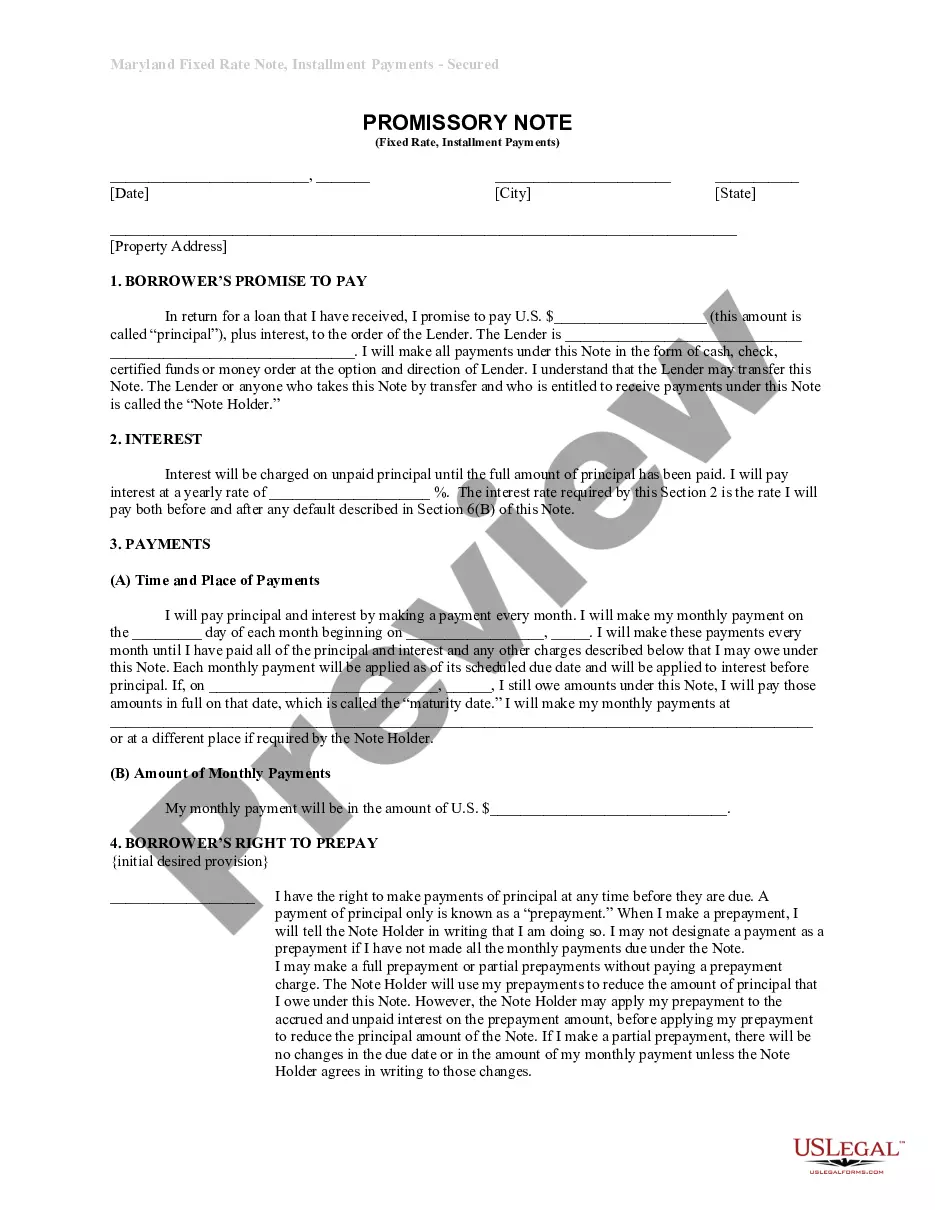
Taking the Verdict (comment only) (revised 2017)
About this form
The "Taking the Verdict" form outlines the procedures judges follow to receive and announce jury verdicts in criminal cases. It serves to standardize the process while ensuring the defendant's presence, fundamentally distinguishing it from other types of legal forms. This form provides multiple alternatives for judges to follow during this critical phase of the trial process, making it an essential tool for legal professionals and court officials alike.
Key components of this form
- Introduction by the judge to confirm the jury's readiness to deliver a verdict.
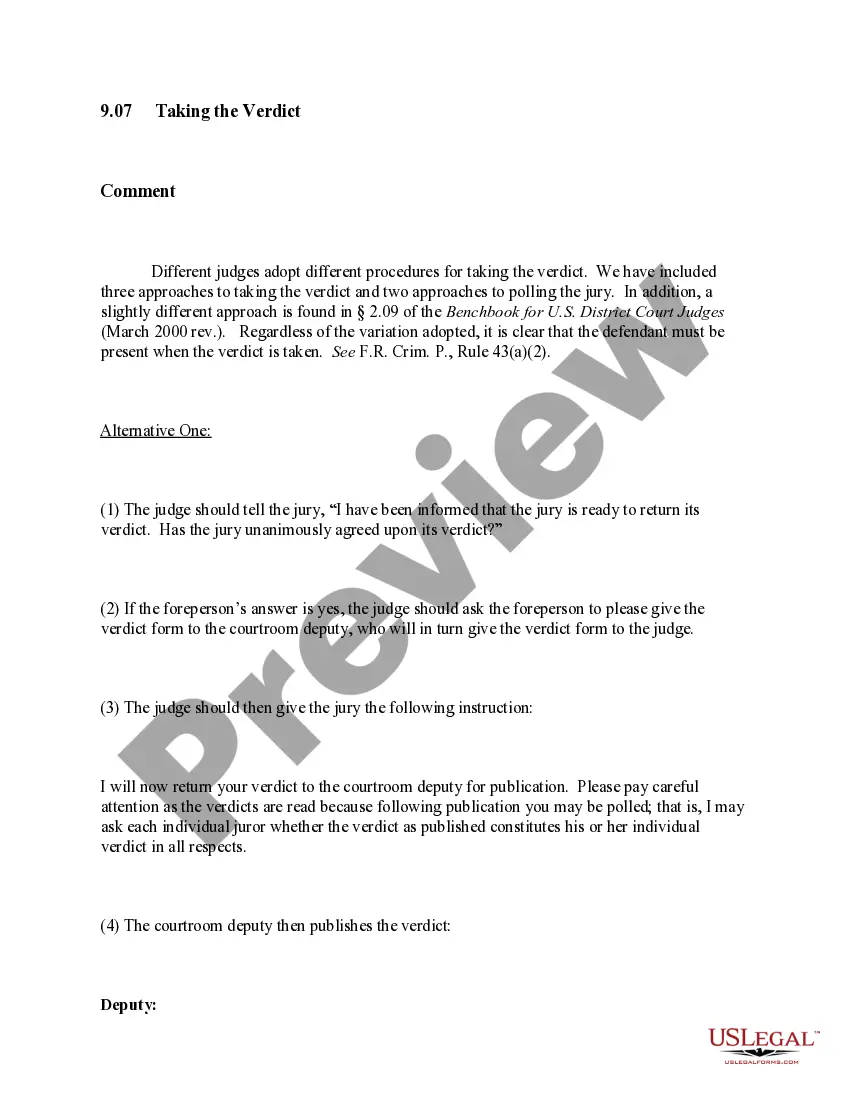
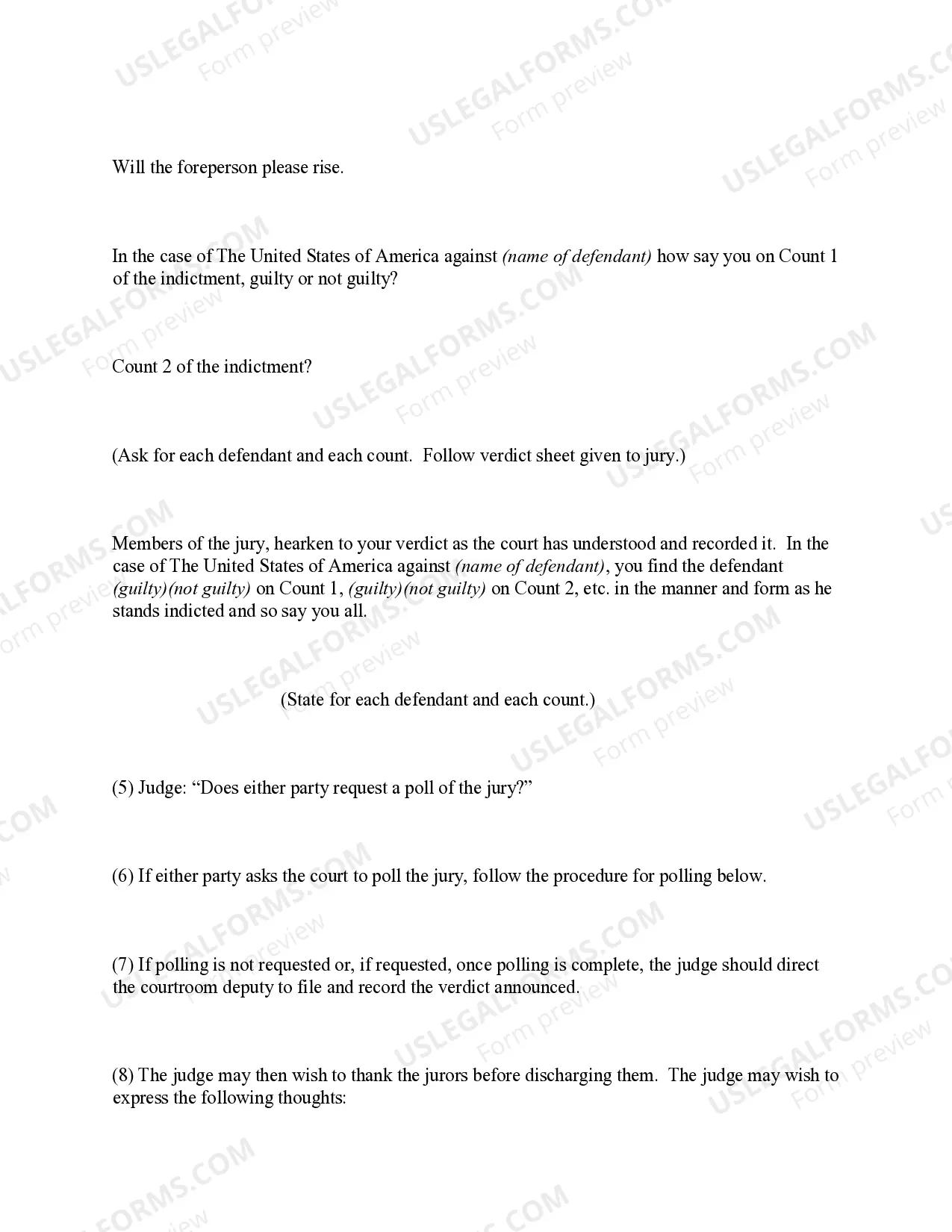
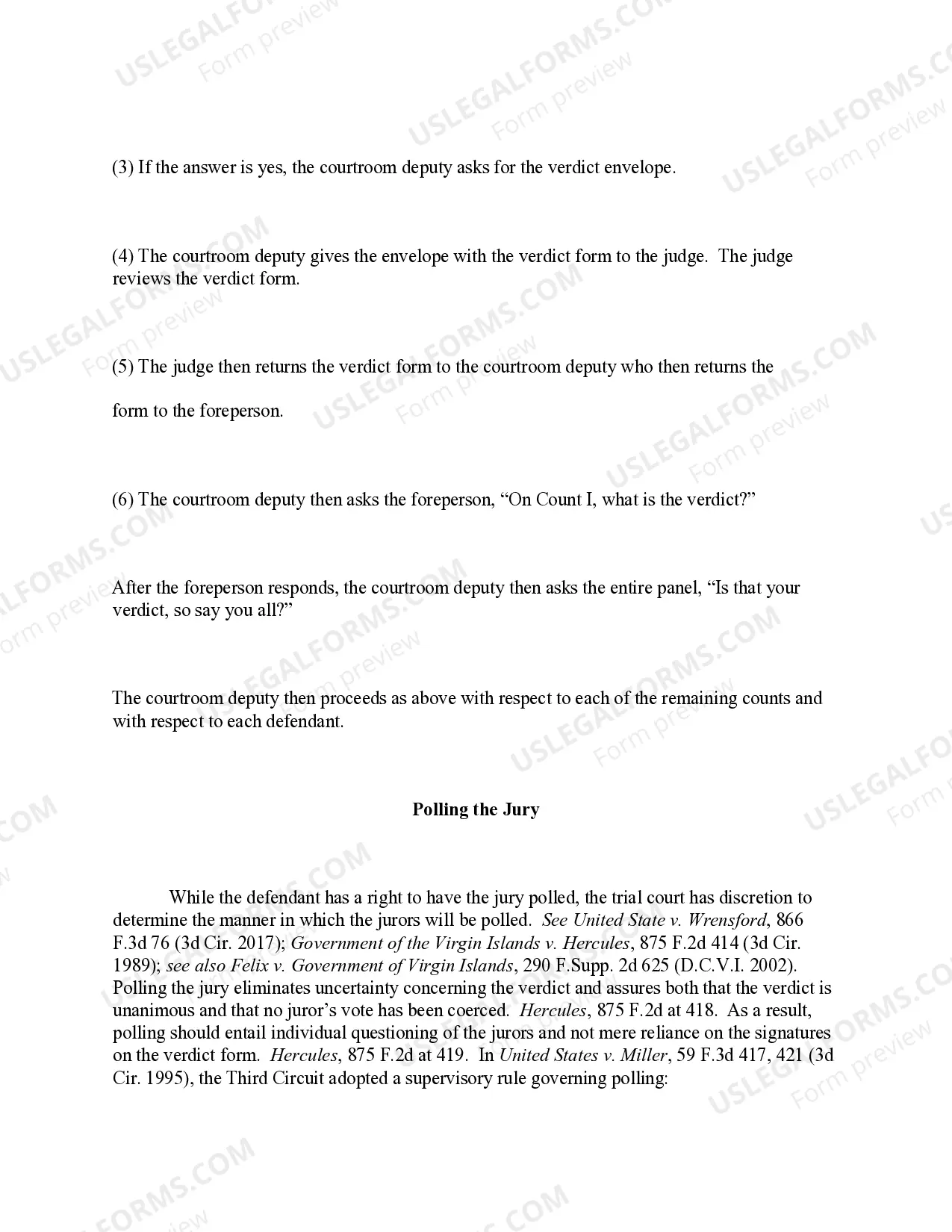
- Detailed procedures for the publication of the verdict, including the roles of the judge and courtroom deputy.
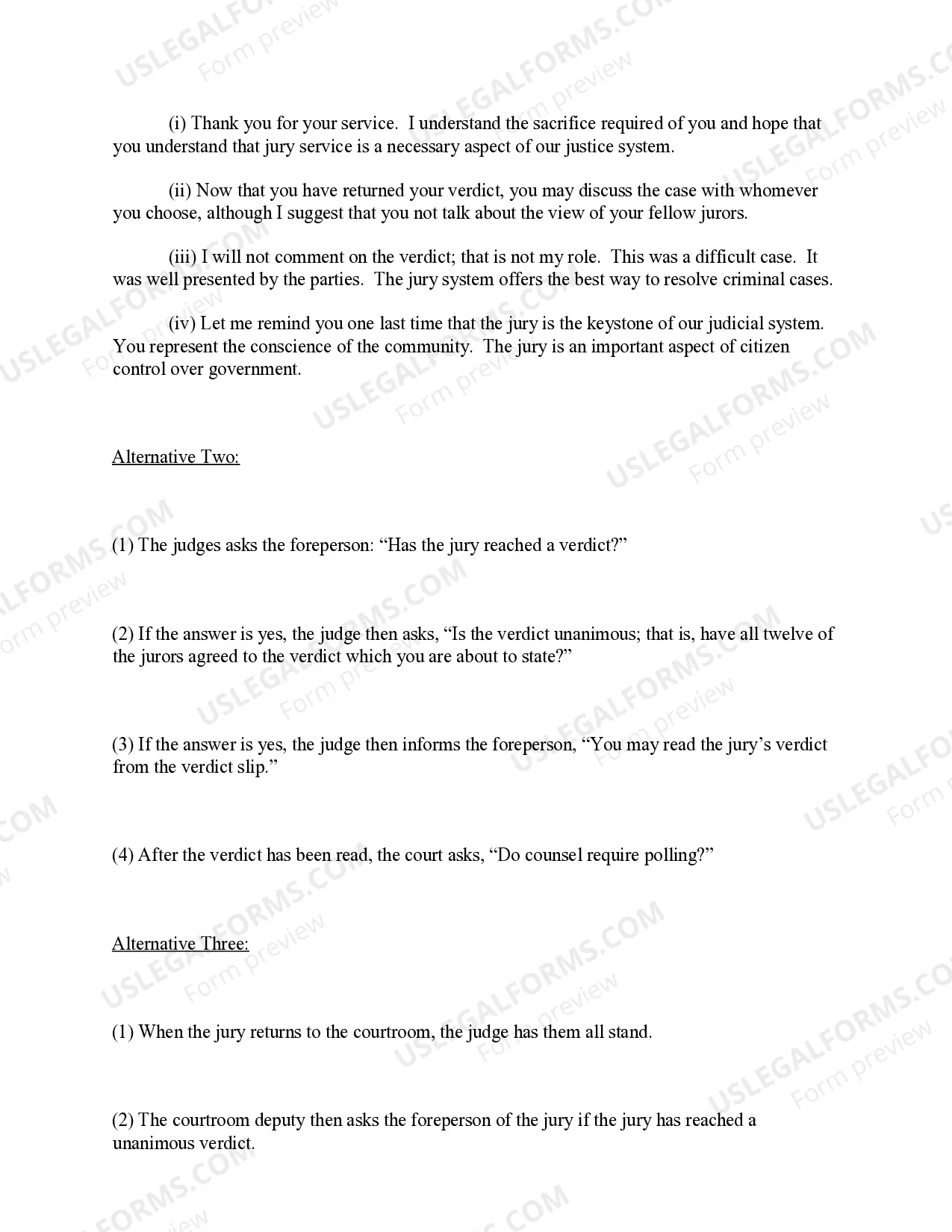
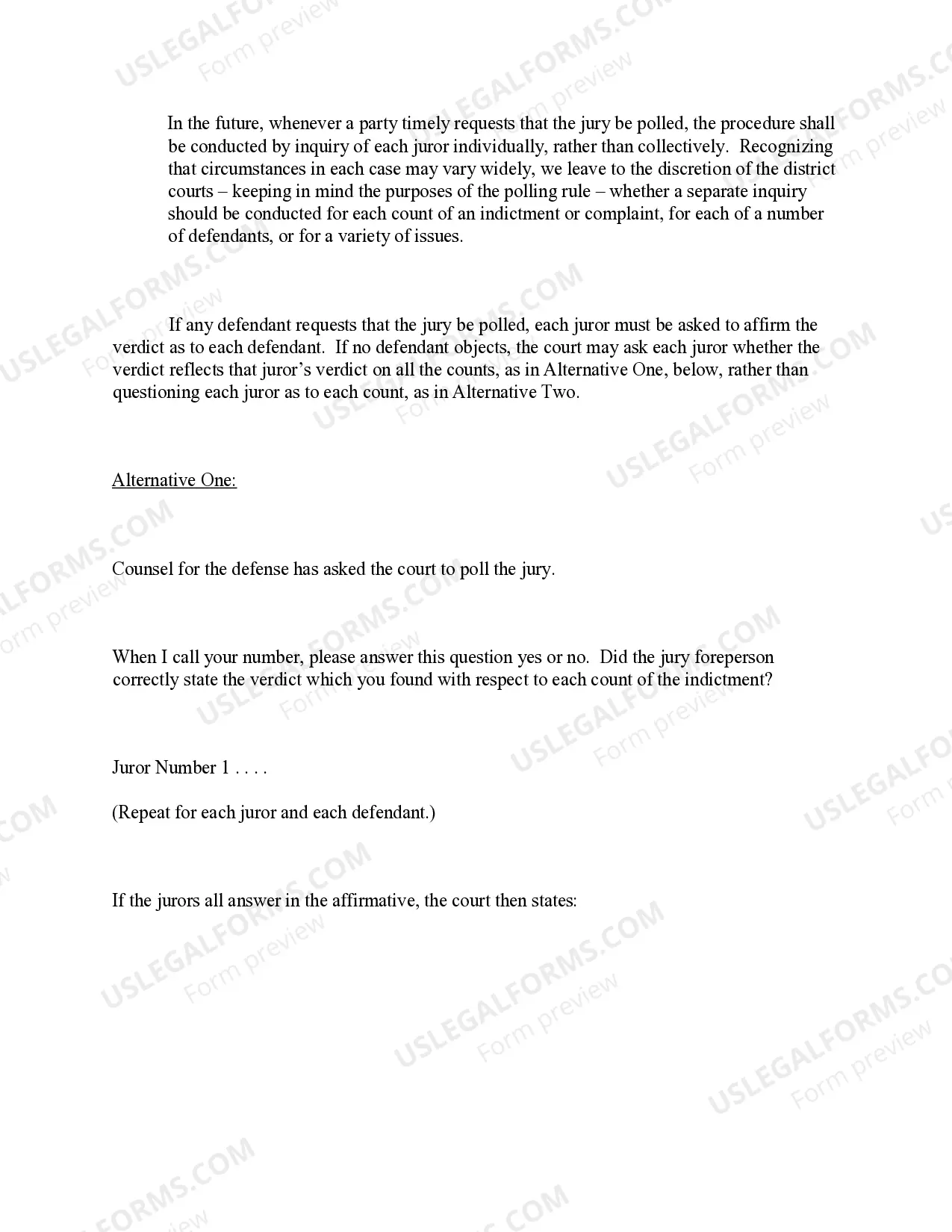
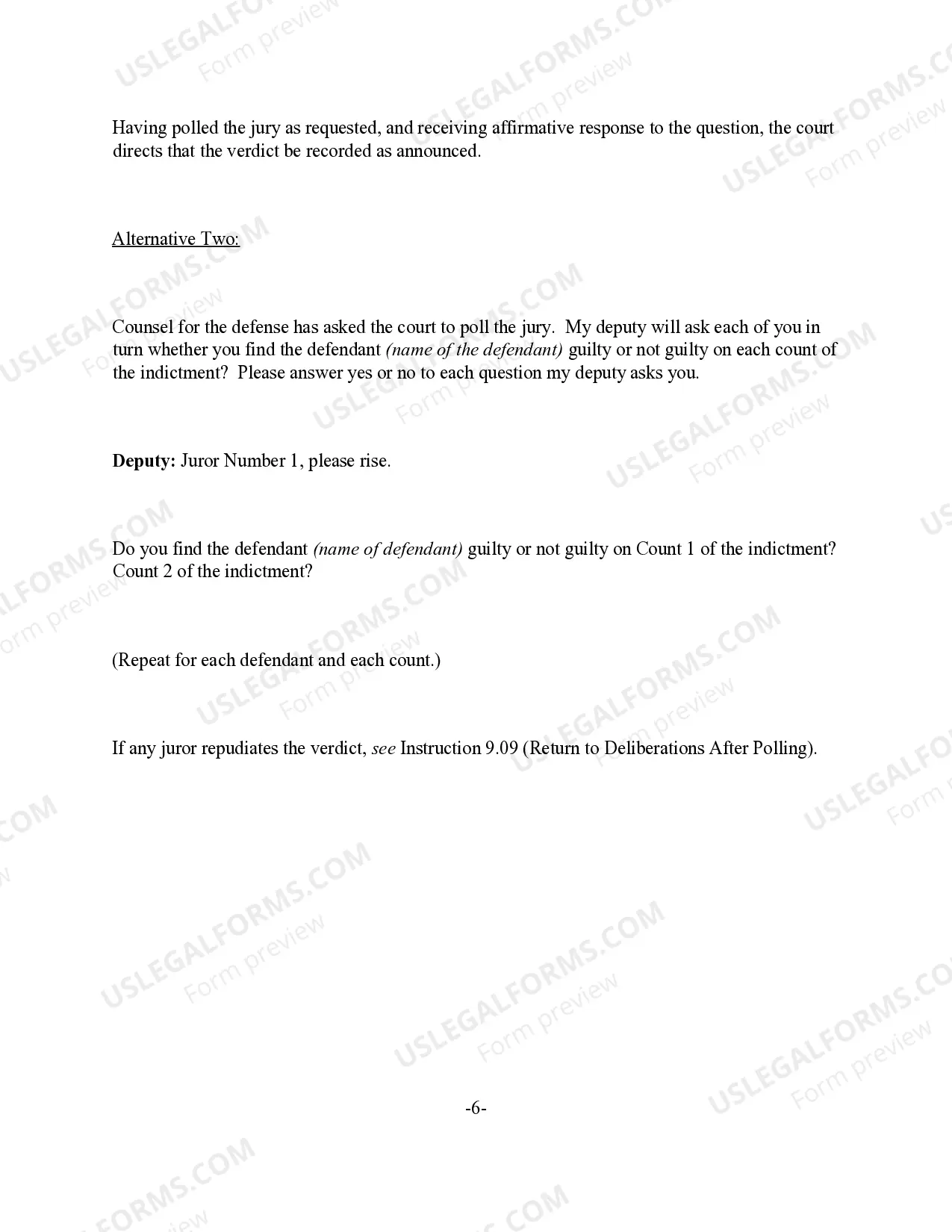
- Alternatives for polling the jury to ensure a unanimous verdict.
- Instructions on how to thank jurors and discuss the importance of jury service post-verdict announcement.
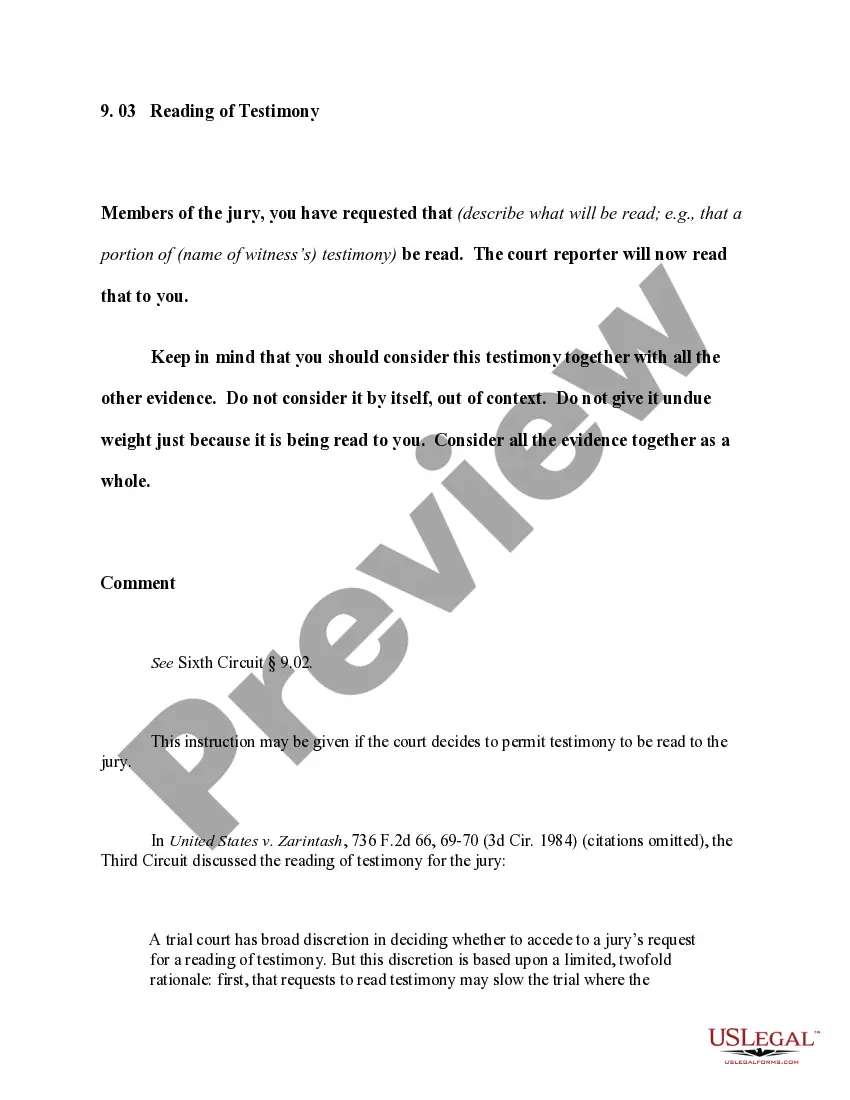
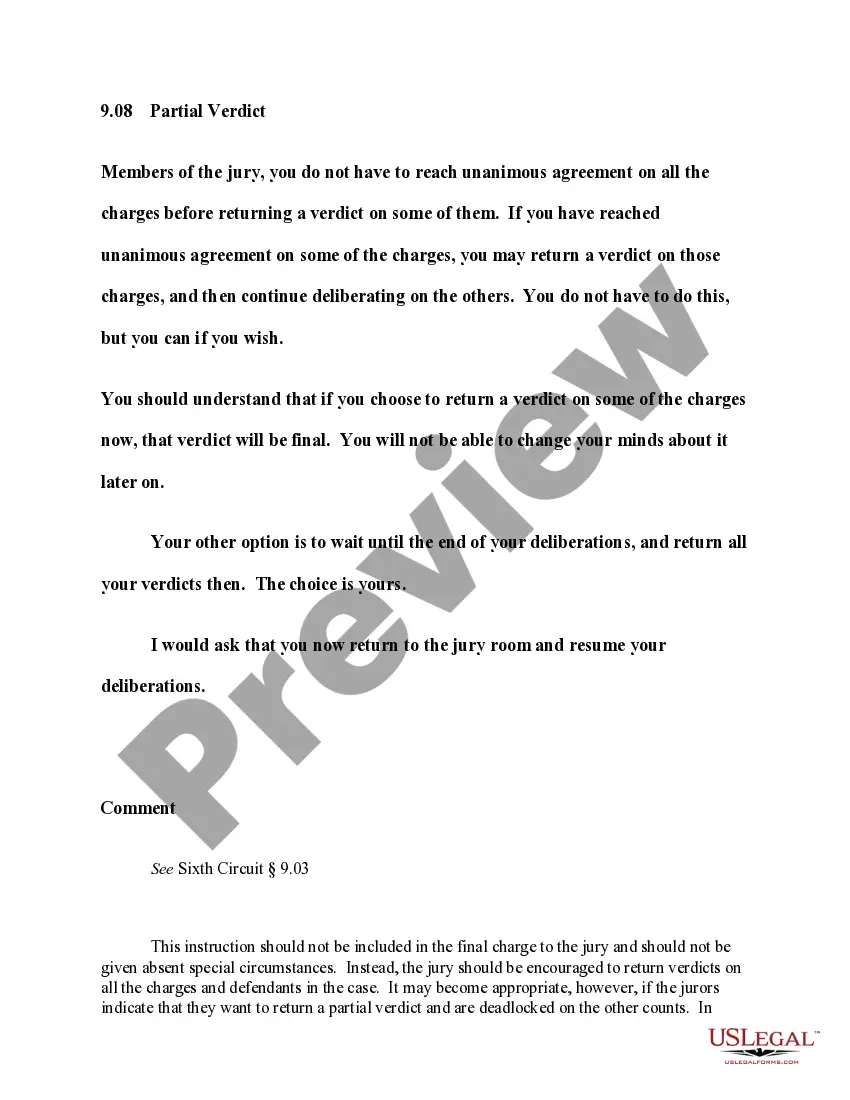
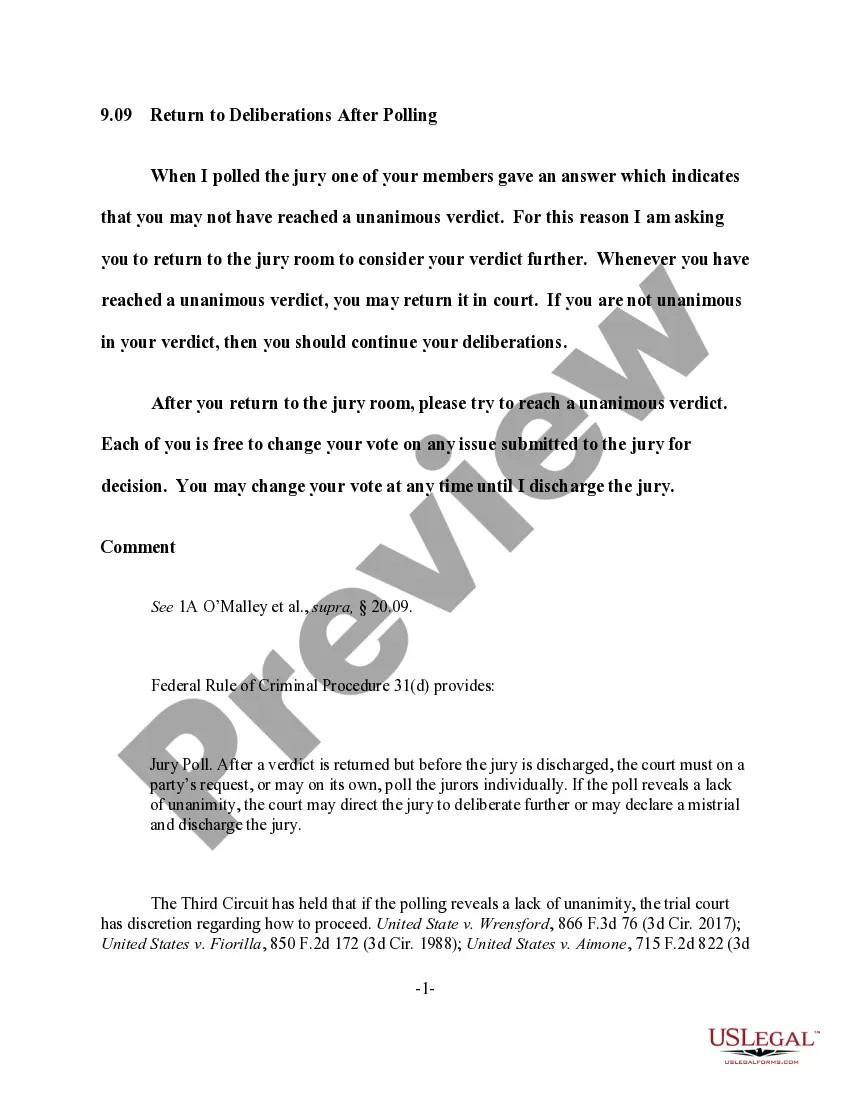
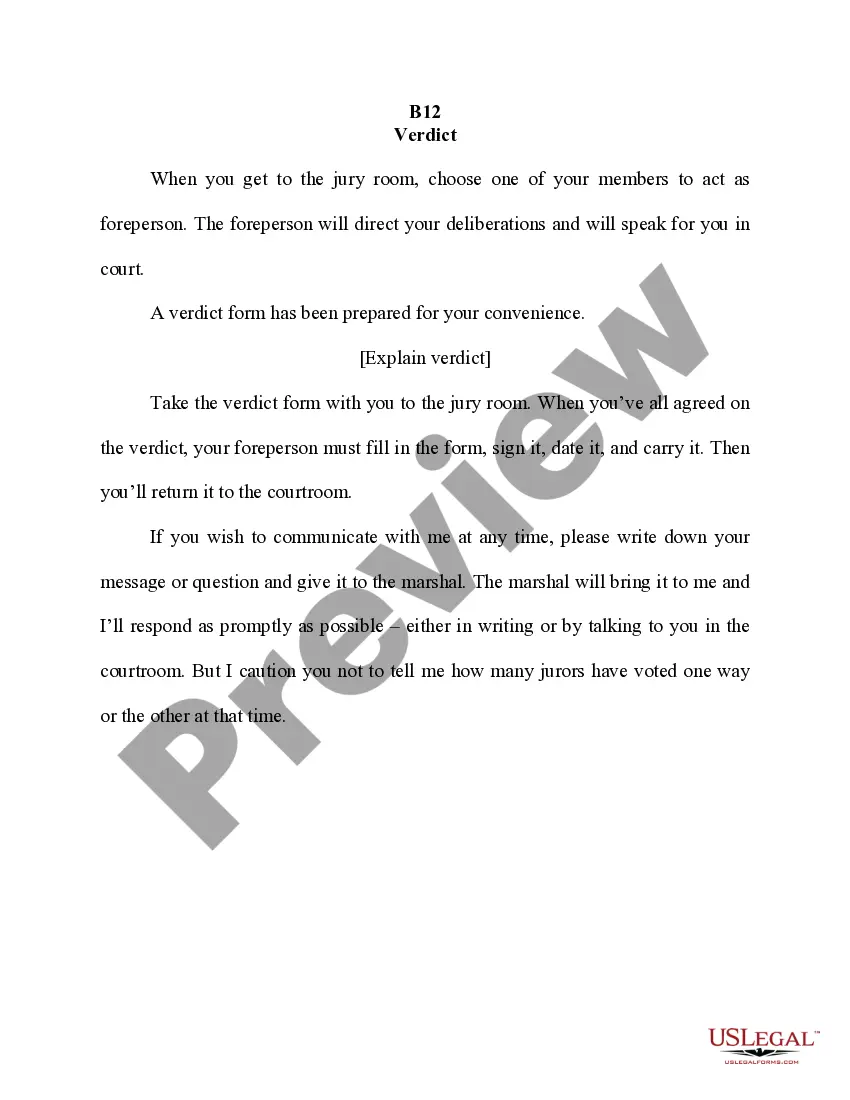
Situations where this form applies
This form is used during criminal trials when a jury has completed its deliberation and is ready to deliver its verdict. It is essential whenever judges must clarify procedures for reading and confirming jury decisions, thereby ensuring legal compliance and the integrity of the judicial process.
Who this form is for
- Judges presiding over criminal trials.
- Courtroom deputies responsible for managing jury verdict procedures.
- Legal professionals and attorneys involved in criminal cases.
How to prepare this document
- Confirm that the jury has reached a unanimous verdict.
- Instruct the jury foreperson to provide the verdict form to the courtroom deputy.
- Read the verdict aloud for the court record while ensuring clarity for each count and defendant.
- Proceed with polling the jury if requested by either party to confirm the verdict's unanimity.
- Record the verdict officially after polling, if applicable, and express appreciation for the jurors' service.
Does this document require notarization?
This form does not typically require notarization to be legally valid. However, some jurisdictions or document types may still require it. US Legal Forms provides secure online notarization powered by Notarize, available 24/7 for added convenience.
Get your form ready online
Our built-in tools help you complete, sign, share, and store your documents in one place.
Make edits, fill in missing information, and update formatting in US Legal Forms—just like you would in MS Word.
Download a copy, print it, send it by email, or mail it via USPS—whatever works best for your next step.
Sign and collect signatures with our SignNow integration. Send to multiple recipients, set reminders, and more. Go Premium to unlock E-Sign.
If this form requires notarization, complete it online through a secure video call—no need to meet a notary in person or wait for an appointment.
We protect your documents and personal data by following strict security and privacy standards.

Make edits, fill in missing information, and update formatting in US Legal Forms—just like you would in MS Word.

Download a copy, print it, send it by email, or mail it via USPS—whatever works best for your next step.

Sign and collect signatures with our SignNow integration. Send to multiple recipients, set reminders, and more. Go Premium to unlock E-Sign.

If this form requires notarization, complete it online through a secure video call—no need to meet a notary in person or wait for an appointment.

We protect your documents and personal data by following strict security and privacy standards.
Typical mistakes to avoid
- Failing to confirm the jury's unanimity before announcing the verdict.
- Not allowing adequate time for polling, which could lead to uncertainty about the verdict's status.
- Overlooking the defendant's right to be present during the verdict announcement.
Benefits of completing this form online
- Easy access to a legally structured procedure ensures accuracy in following court protocols.
- Downloadable format allows for convenient editing and adaptation as needed.
- Guidance from licensed attorneys enables users to navigate complex legal terminology with confidence.
Legal use & context
- This form aids in the legal process by providing clear guidelines for taking a verdict.
- Ensures that both defendant rights and jury integrity are respected during verdict announcements.
Main things to remember
- The "Taking the Verdict" form outlines formal procedures for announcing jury verdicts.
- It is essential for judges and legal professionals to ensure fair trial practices.
- Understanding the importance of polling and confirming jury decisions is critical to judicial integrity.
Looking for another form?
Form popularity
FAQ
A motion asking the court to enter judgment as a matter of law. This motion is made before a case is submitted to the jury, and argues that no reasonable jury could find for the opposing party (i.e., whatever evidence exists for such ruling is legally insufficient).
Summary judgment is a pre-trial motion and often takes place after discovery is complete. Meanwhile, JMOL is an in-trial or post-trial motion, and it must occur after both parties have had the chance to present their case.
Rule 50(b) allows the court to reserve decision on the question of law until after the case has been submitted to the jury and it has reached a verdict or is unable to agree. If the court decides the initial motion should have been granted, it may set aside the verdict of the jury and enter judgment as a matter of law.
For example, plaintiff produces testimony of several unimpeached, disinterested witnesses who claim to have heard defendant make the statement. In most jurisdictions, the plaintiff would then be entitled to a judgment as a matter of law unless defendant produces some contrary evidence.
Rule 50(a) provides for a motion for judgment as a matter of law (JMOL) which may be made at any time before submission of the case to the jury. This was previously known as a motion for a directed verdict.
After listening to all the evidence in a case the District Judge or a jury, in a Crown Court, will decide on whether the defendant is guilty or not guilty. If the defendant is found guilty, the judge in the case will decide the sentence.
In the United States courts, renewed judgment as a matter of law is a party's second chance at a judgment as a matter of law (JMOL) motion. Renewed JMOL is decided after a jury has returned its verdict, and is a motion to have that verdict altered.
ARGUMENT OF COUNSEL; INSTRUCTIONS TO JURY. (a) Time for Argument. Counsel for each party shall be allowed such time for argument as the court shall order. Counsel for the moving party shall argue first.