Return To Deliberations After Polling (revised 2017)
What is this form?
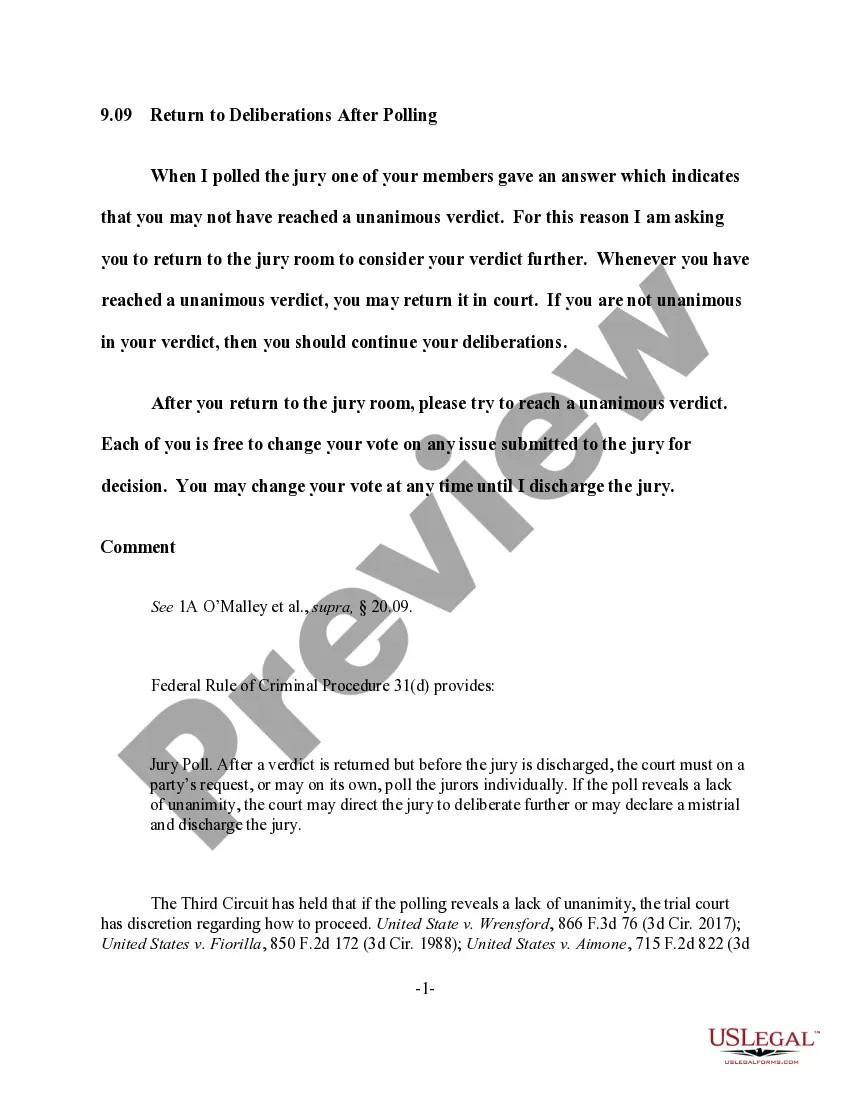
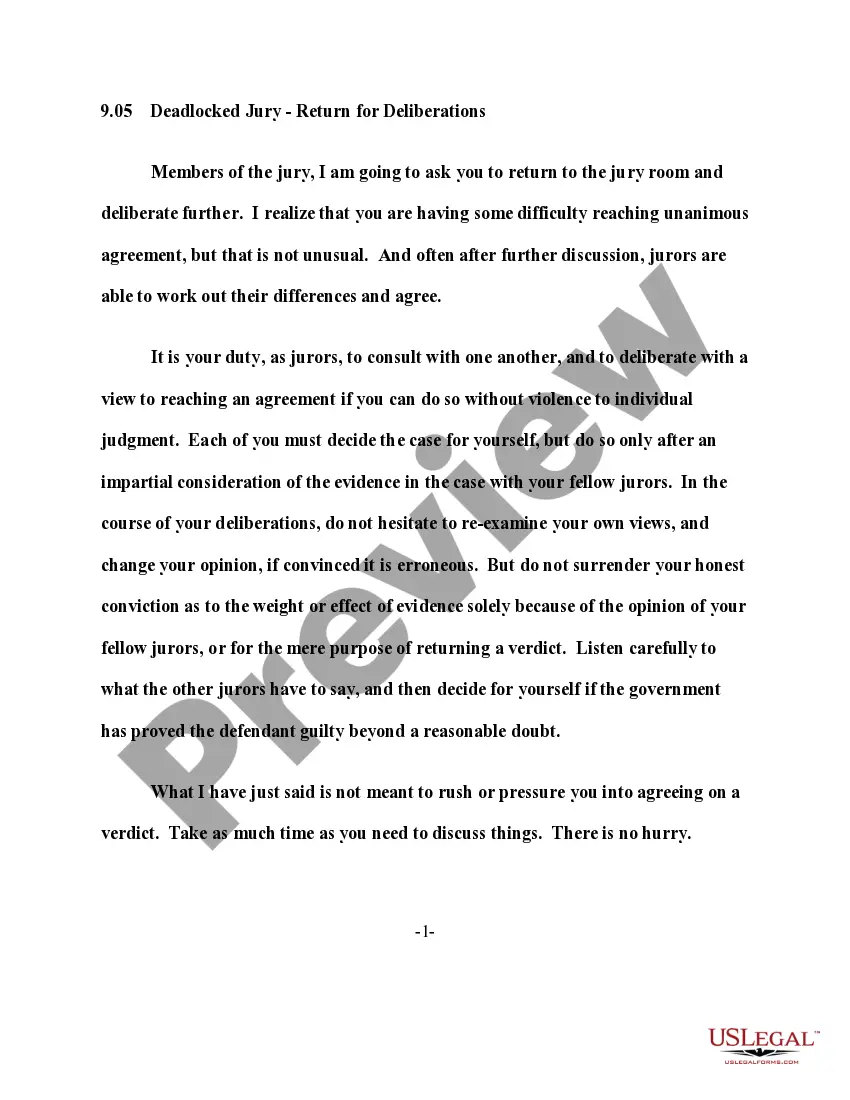
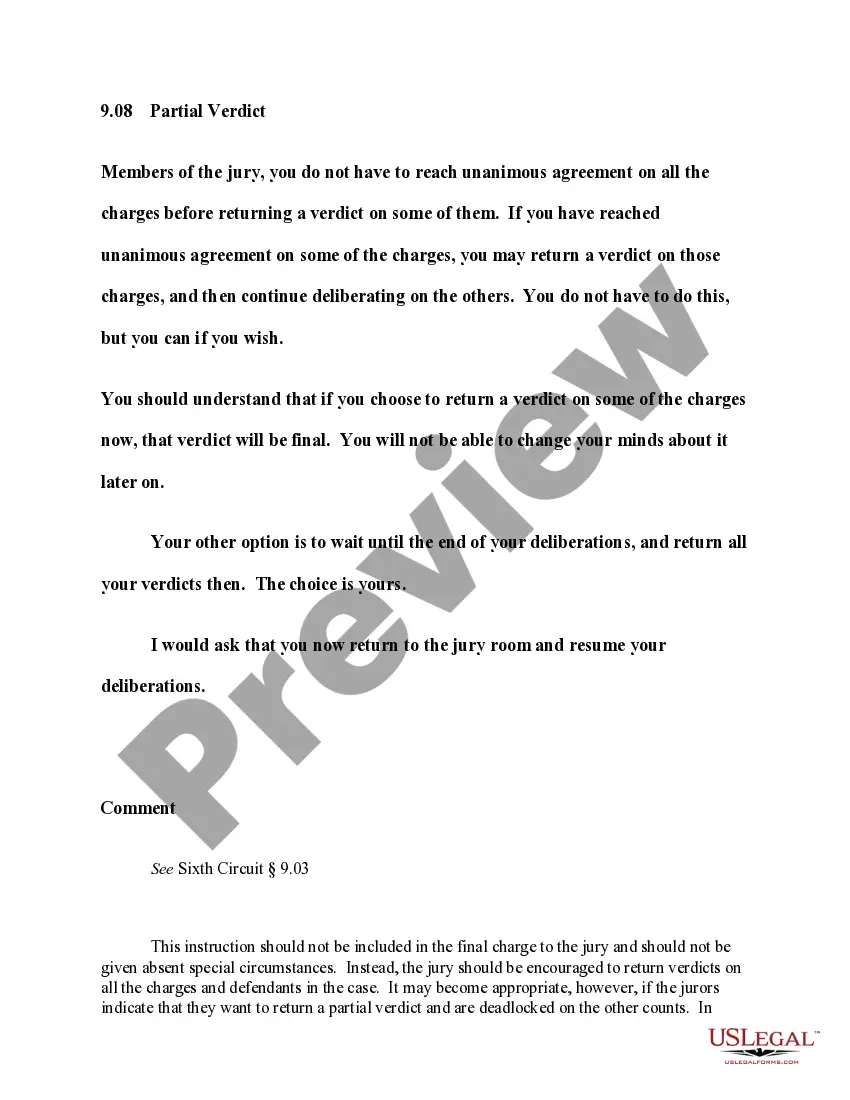
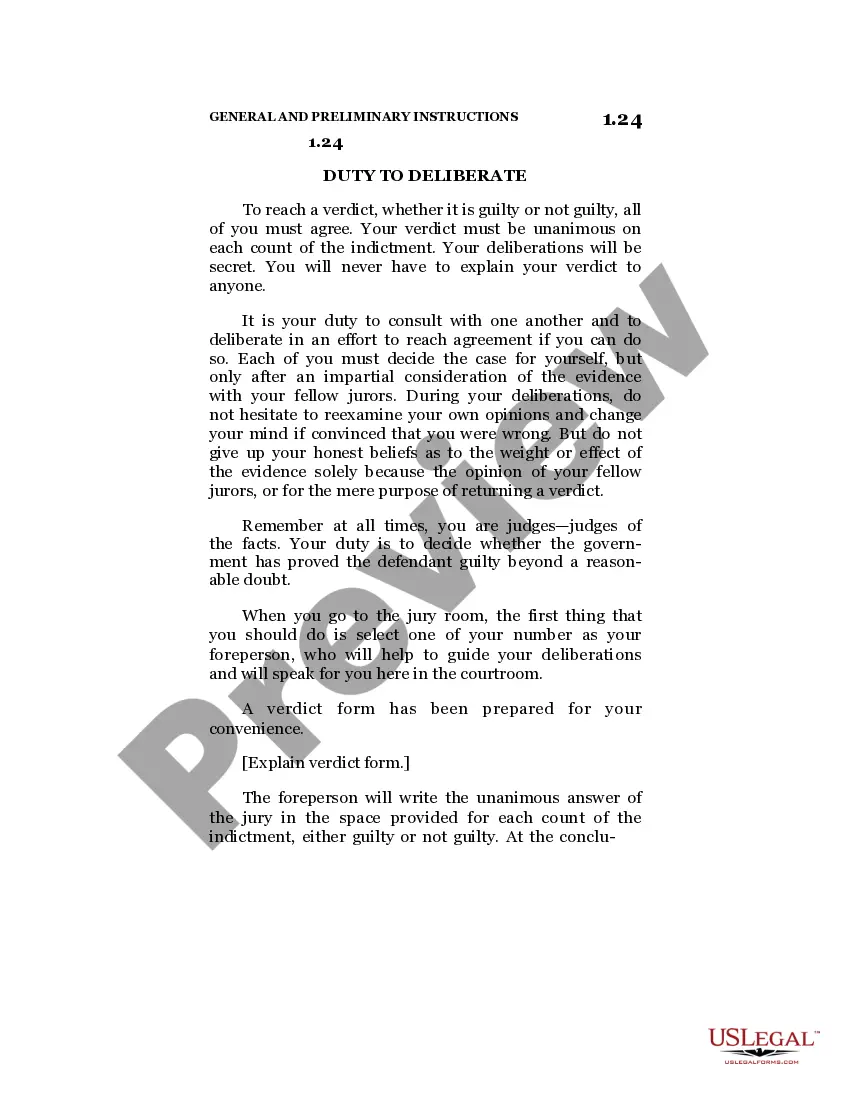
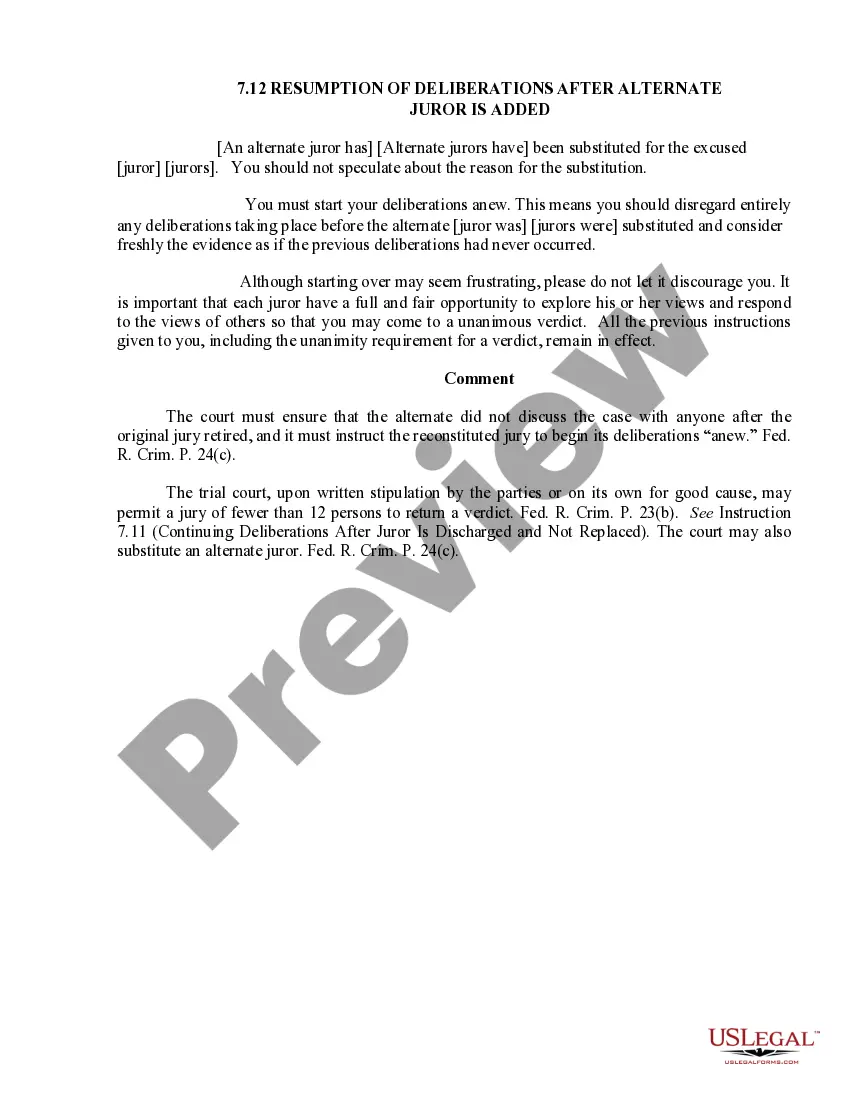
The Return to Deliberations After Polling form is a judicial instruction used in jury trials when the jury has been polled and indicates a lack of unanimity in their verdict. This form is essential for guiding jurors back to further discussions in the jury room, allowing them to attempt to reach a consensus on a verdict. It is distinctly designed for situations where the jury's initial decision is not unanimous, a critical step in ensuring a fair trial process.
Key parts of this document
- Jury polling result indicating lack of unanimity.
- Instruction for jurors to return to deliberation.
- Clarification that jurors may change their votes until discharged.
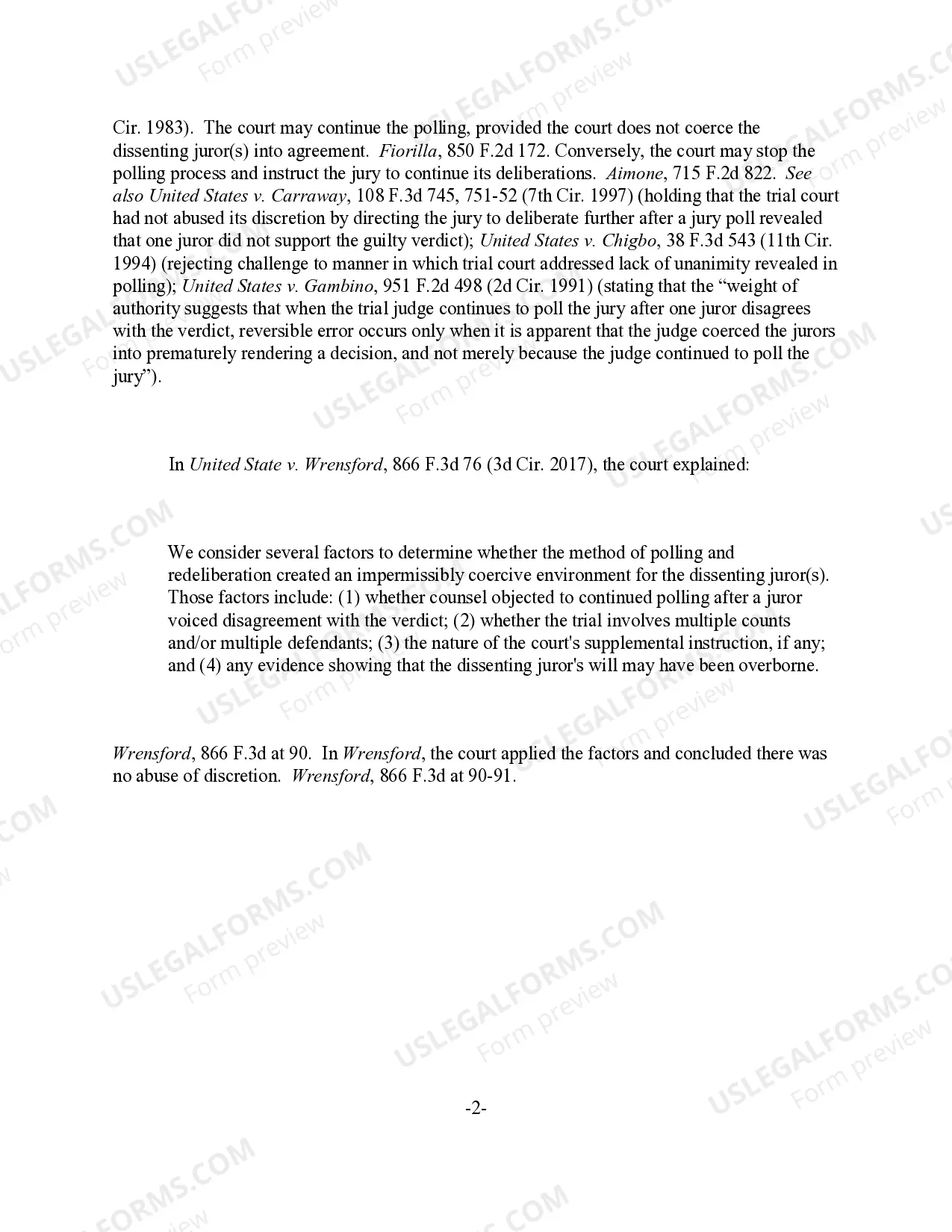
- References to federal rules and relevant case law regarding polling and juror deliberation.
When to use this document
This form is used specifically when a jury has polled their votes, and one or more jurors indicates a disagreement with the presented verdict. It becomes necessary in scenarios where the court must ensure that all jurors have had enough opportunity to discuss and come to a unanimous decision before delivering the final verdict. Using this form helps uphold the integrity of the judicial process by prompting further deliberations where needed.
Who needs this form
This form is relevant for:
- Judges overseeing jury trials.
- Attorneys representing either side in a criminal trial.
- Court clerks or administration involved in the jury process.
Steps to complete this form
- Describe the outcome of the jury poll and the indication of non-unanimity.
- Direct the jurors to return to the jury room for further discussion.
- Reiterate that jurors are free to change their votes until they are officially discharged.
- Include any necessary references to federal law or case law regarding the procedure.
Does this form need to be notarized?
This form does not typically require notarization to be legally valid. However, some jurisdictions or document types may still require it. US Legal Forms provides secure online notarization powered by Notarize, available 24/7 for added convenience.
Get your form ready online
Our built-in tools help you complete, sign, share, and store your documents in one place.
Make edits, fill in missing information, and update formatting in US Legal Forms—just like you would in MS Word.
Download a copy, print it, send it by email, or mail it via USPS—whatever works best for your next step.
Sign and collect signatures with our SignNow integration. Send to multiple recipients, set reminders, and more. Go Premium to unlock E-Sign.
If this form requires notarization, complete it online through a secure video call—no need to meet a notary in person or wait for an appointment.
We protect your documents and personal data by following strict security and privacy standards.

Make edits, fill in missing information, and update formatting in US Legal Forms—just like you would in MS Word.

Download a copy, print it, send it by email, or mail it via USPS—whatever works best for your next step.

Sign and collect signatures with our SignNow integration. Send to multiple recipients, set reminders, and more. Go Premium to unlock E-Sign.

If this form requires notarization, complete it online through a secure video call—no need to meet a notary in person or wait for an appointment.

We protect your documents and personal data by following strict security and privacy standards.
Typical mistakes to avoid
- Failing to properly poll the jury before using the form.
- Not providing clear instructions for jurors on their ability to change votes.
- Neglecting to reference applicable legal standards or previous case law.
Why use this form online
- Easy access to the form enables timely responses during trials.
- Downloadable format allows for immediate adjustments or customization.
- Reliability and accuracy ensured by licensed attorney drafting.
Legal use & context
- This form is grounded in Federal Rule of Criminal Procedure that allows jurors to express their individual votes.
- Case law illustrates the importance of not forcing agreement among dissenting jurors.
Main things to remember
- The form is critical for managing jury deliberations post-polling.
- Ensures jurors are aware of their ability to reconsider their votes.
- Helps maintain a fair trial process through guided deliberation.
Looking for another form?

Form popularity
FAQ
While it's very rare, it does happen every once in a while. This is typically called a judgment of acquittal or a judgment notwithstanding the verdict (JNOV). In the event of a guilty verdict the defense almost always makes a motion for the judge to give one of these judgments.
In the event of a mistrial, the defendant is not convicted, but neither is the defendant acquitted. An acquittal results from a not guilty verdict and cannot be appealed by the prosecution, overturned by the judge, or retried. When there is a mistrial, however, the case may be retried.
2.6. If even one member of the jury panel disagrees with the rest, the jury is hung, and the defendant retains the presumption of innocence. A ?hung jury? results in either: a mistrial (which means there may be a retrial with a new jury), a plea bargain to a reduced charge that carries a lesser sentence, or.
What Happens If a Jury Is Hung Twice? Generally, it is rare for a hung jury to occur, let alone occur twice for the same proceeding. Often, juries will report that they are deadlocked after only deliberating for a short period of time. If there is a hung jury, the judge may order the jurors to deliberate further.
How many jurors must vote for conviction in a criminal trial? In criminal cases, most courts (state and federal) require a unanimous vote by the jury to find the defendant guilty.
When the jury decides a case they reach what is called a verdict. Verdict is a Latin word which means "to speak the truth." In order to reach a verdict in a case, all 12 jurors must agree; there is no majority rule.
What happens if a jury is hung twice? If a jury is unable to reach a unanimous verdict and results in a hung jury, the case may be retried with a new jury. If the second jury is also unable to reach a verdict, the judge may declare a mistrial.
In any trial the judge is the ultimate decision maker and has the power to overturn a jury verdict if there is insufficient evidence to support that verdict or if the decision granted inadequate compensatory damages.