Basic Deed in Lieu of Foreclosure
Understanding this form
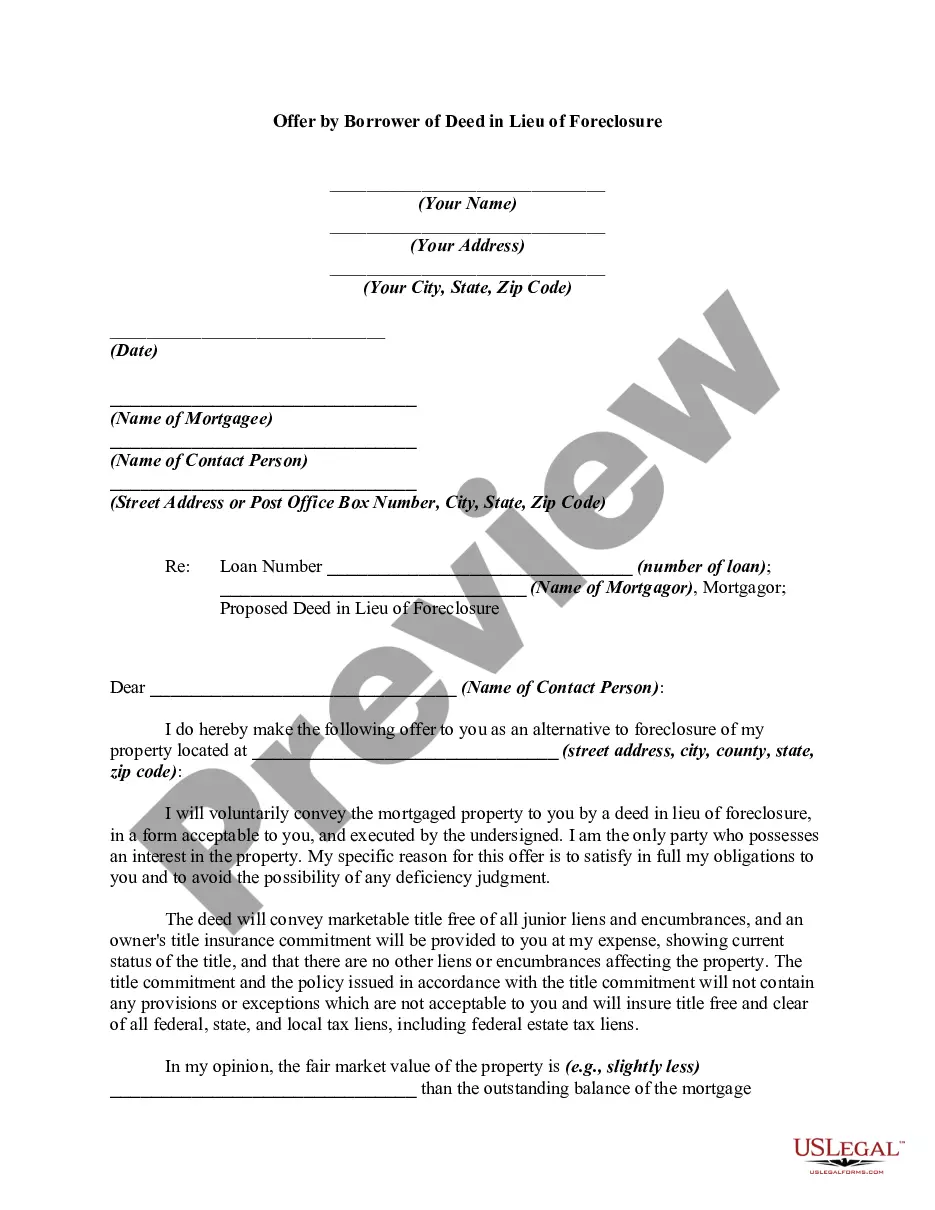
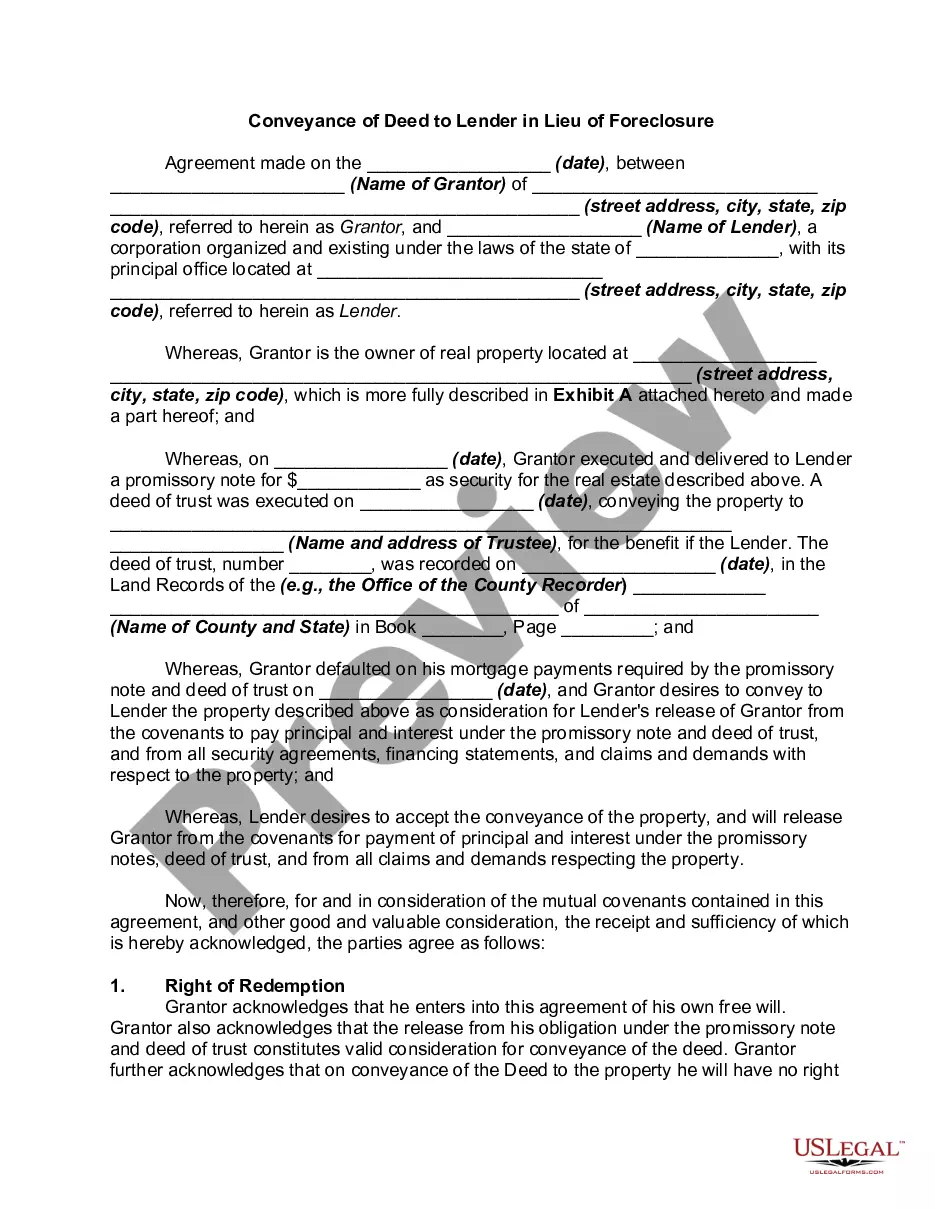
The Basic Deed in Lieu of Foreclosure is a legal document where the Grantor transfers real property to the Grantee to avoid the foreclosure process. This document serves as an alternative for property owners who are unable to meet their mortgage obligations. Unlike a foreclosure, which is initiated by the lender, this deed allows the property owner to voluntarily transfer ownership to the lender, thereby settling their debt. This form is essential for individuals looking to simplify the process and mitigate potential damage to their credit score.
Key parts of this document
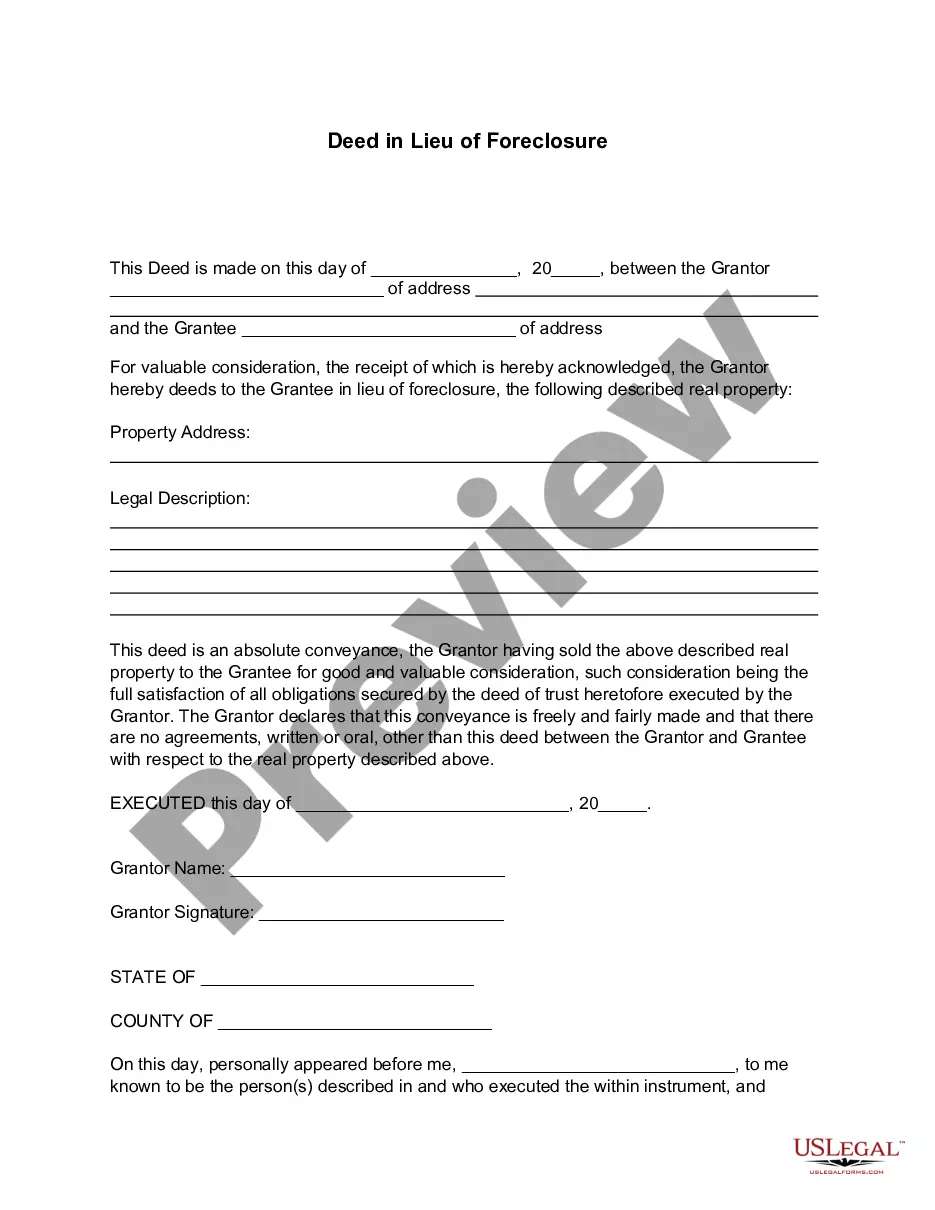
- Date of the deed execution.
- Identification of the Grantor and Grantee, including addresses.
- Description of the property being transferred, including legal description.
- Statement confirming the conveyance is made freely and fairly.
- Grantor's acknowledgment of the transfer and absence of other agreements.
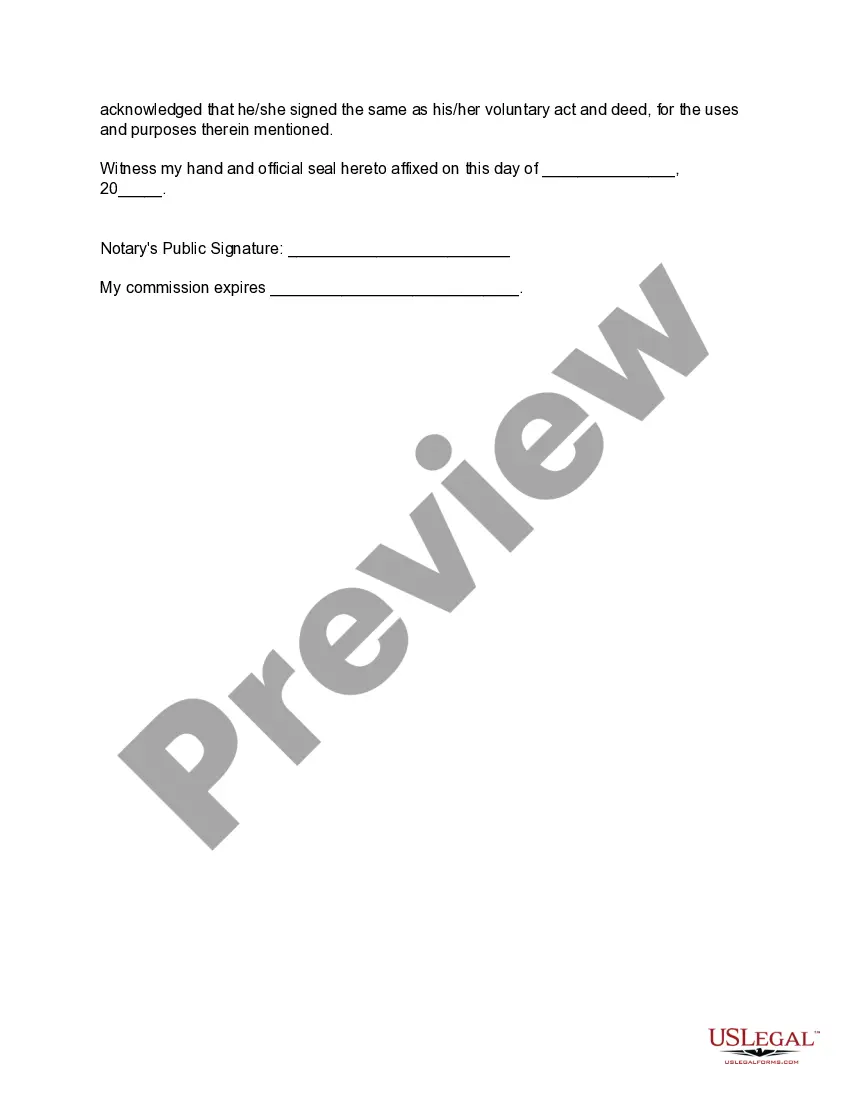
- Notary acknowledgment to validate the document.
When this form is needed
This form is typically used when a property owner is facing financial hardship and is unable to continue making mortgage payments. By executing a Deed in Lieu of Foreclosure, the owner can prevent the lengthy foreclosure process, minimize legal fees, and possibly reduce the negative impact on their credit score. It is particularly useful for homeowners looking for a straightforward way to resolve their mortgage obligations and avoid foreclosure proceedings.
Who this form is for
This form is intended for:
- Homeowners facing potential foreclosure.
- Individuals looking to transfer property ownership back to the lender.
- Anyone wanting to settle mortgage obligations without undergoing formal foreclosure.
- Property owners seeking to protect their credit by taking proactive steps.
Steps to complete this form
- Identify the parties involved: the Grantor (property owner) and the Grantee (lender).
- Input the date of the deedâs execution.
- Specify the property by providing its address and legal description.
- Complete the Grantor's name and signature for validation.
- Obtain a notary's acknowledgment to finalize the document.
Does this document require notarization?
Yes, this form must be notarized to be legally valid. The notary public will verify the identities of the parties involved and witness their signatures. US Legal Forms offers integrated online notarization services, making it easy for you to complete this step securely via video call.
Get your form ready online
Our built-in tools help you complete, sign, share, and store your documents in one place.
Make edits, fill in missing information, and update formatting in US Legal Forms—just like you would in MS Word.
Download a copy, print it, send it by email, or mail it via USPS—whatever works best for your next step.
Sign and collect signatures with our SignNow integration. Send to multiple recipients, set reminders, and more. Go Premium to unlock E-Sign.
If this form requires notarization, complete it online through a secure video call—no need to meet a notary in person or wait for an appointment.
We protect your documents and personal data by following strict security and privacy standards.

Make edits, fill in missing information, and update formatting in US Legal Forms—just like you would in MS Word.

Download a copy, print it, send it by email, or mail it via USPS—whatever works best for your next step.

Sign and collect signatures with our SignNow integration. Send to multiple recipients, set reminders, and more. Go Premium to unlock E-Sign.

If this form requires notarization, complete it online through a secure video call—no need to meet a notary in person or wait for an appointment.

We protect your documents and personal data by following strict security and privacy standards.
Avoid these common issues
- Failing to provide a complete legal description of the property.
- Not having the document notarized, when required by local law.
- Leaving out the signatures of both the Grantor and the notary.
- Not confirming that no other agreements exist regarding the property.
Benefits of completing this form online
- Convenient access to legally drafted forms that are easy to download.
- Ability to customize the form to meet specific needs.
- Reliable resources helmed by licensed attorneys ensure accuracy.
- Time-saving process as you can complete it from home without in-person visits.