Sample Letter for Plaintiff's Response in Opposition to Defendant's Motion to Extend Length of Memoranda
What is this form?
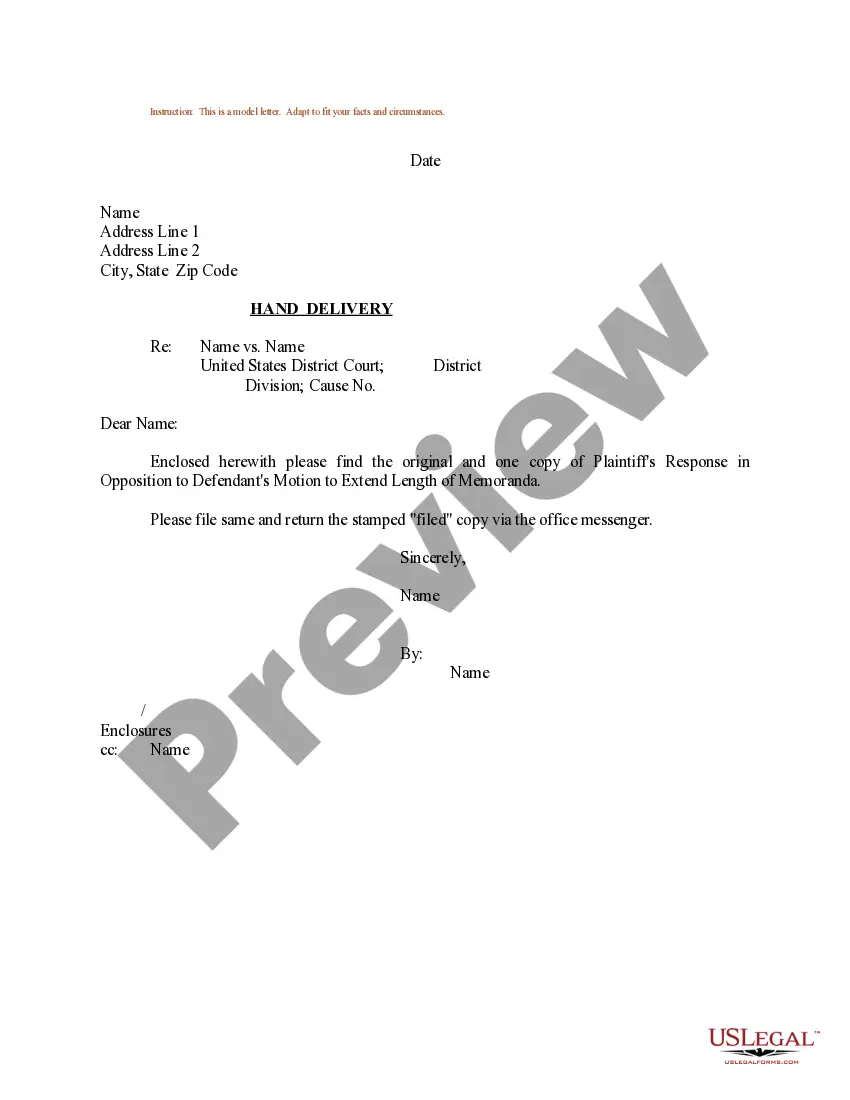
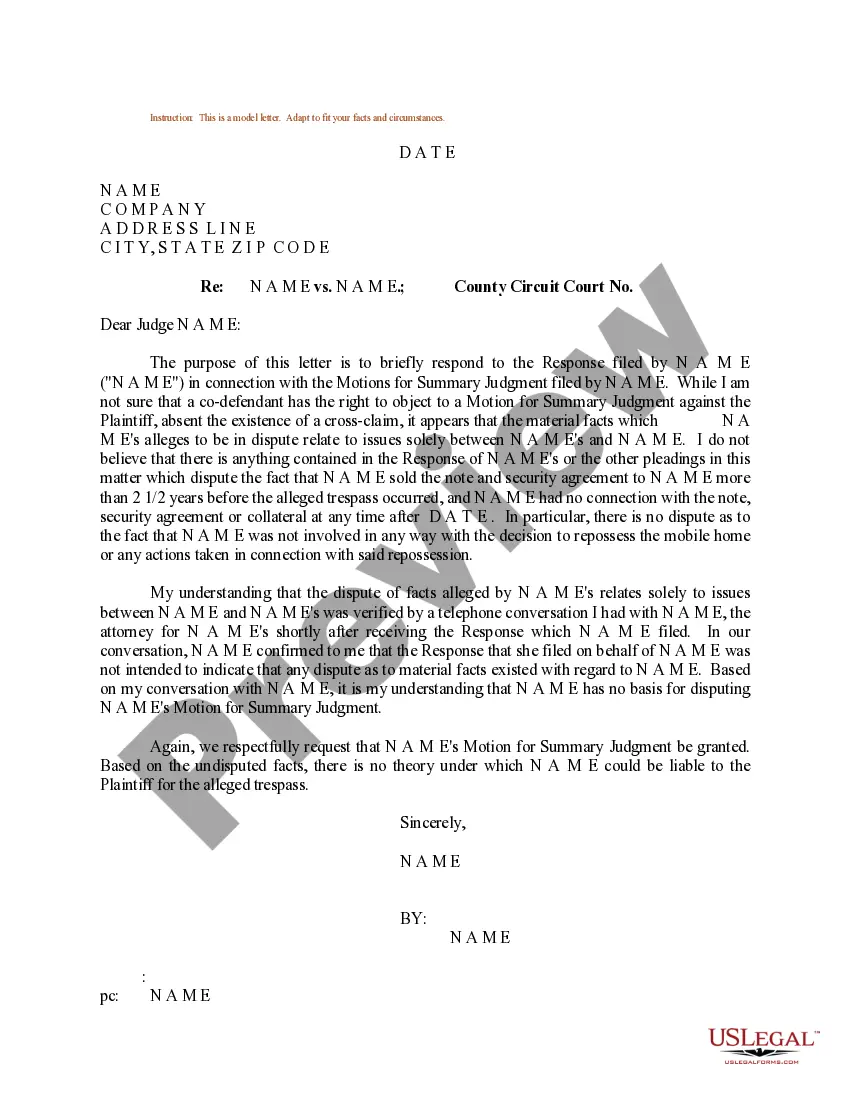
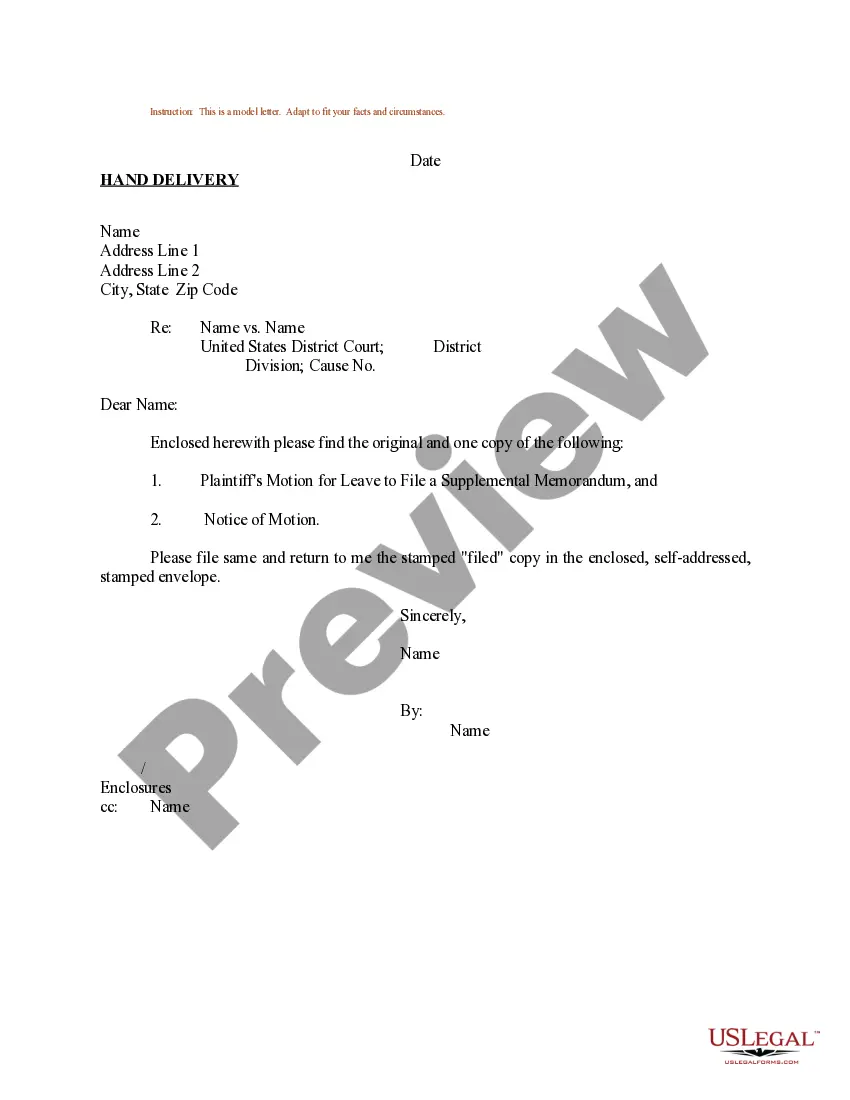
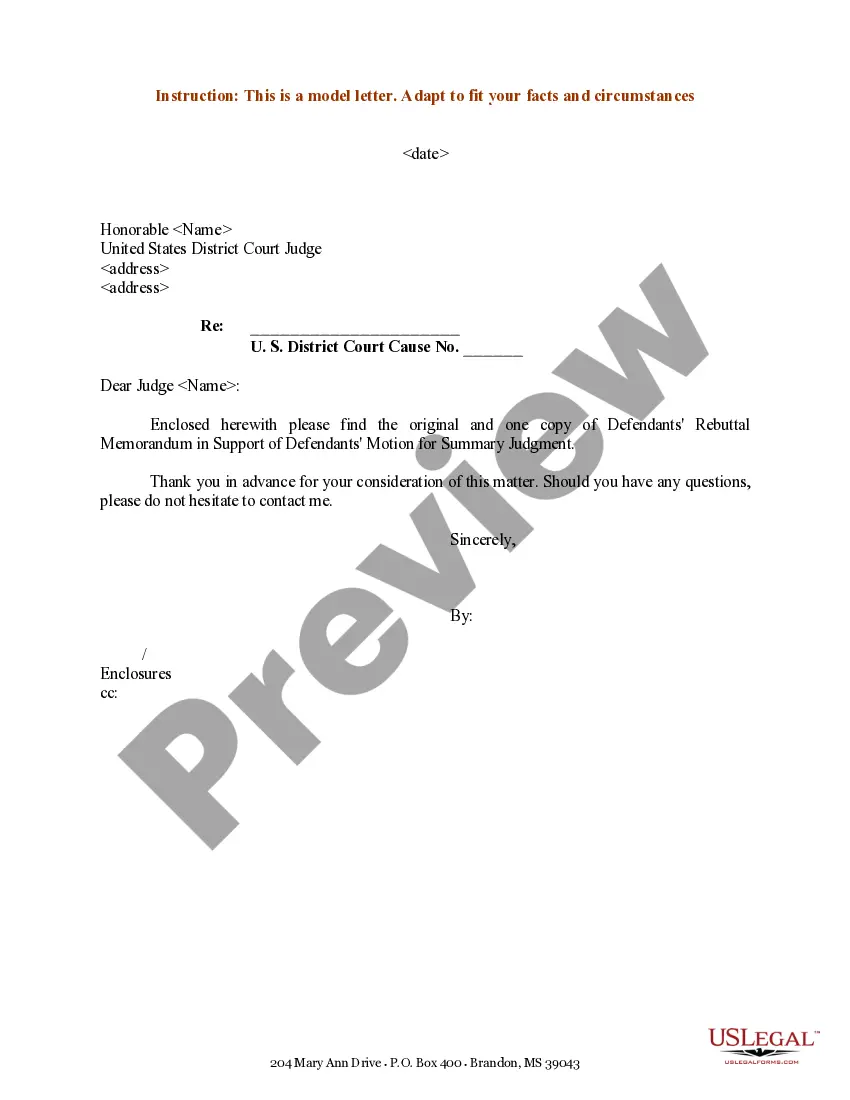
This is a sample letter for a Plaintiff's response in opposition to a Defendant's motion to extend the length of memoranda. This form is designed to help articulate objections or concerns regarding the requested extension, ensuring that procedural fairness is maintained in legal proceedings. It serves as a clear and formal way to communicate the Plaintiff's position in response to the Defendant's request, setting it apart from other legal correspondence that might not specifically address motion responses.
Key parts of this document
- Date: The date when the letter is written.
- Sender's information: Includes name and address of the Plaintiff.
- Recipient's information: Name and address of the Defendant.
- Subject line: Statement of the case, formatted as "Name vs. Name."
- Body of the letter: Detailed explanation of the Plaintiff's opposition to the motion.
When to use this document
This letter should be used when a Plaintiff needs to formally object to a Defendant's request to extend the deadline for filing memoranda. It is particularly important in legal disputes where timelines are critical, and the Plaintiff believes that an extension could affect the fairness of the proceedings. This form can be essential for litigation scenarios within various civil cases.
Who should use this form
- Plaintiffs involved in legal proceedings against Defendants.
- Individuals who have received a motion from the Defendant requesting an extension.
- Legal representatives seeking to provide a formal response on behalf of a Plaintiff.
Instructions for completing this form
- Identify the date when the letter is being drafted.
- Fill in the sender's name and address at the top of the letter.
- Enter the recipient's name and address below the sender's information.
- Specify the subject line using the names of the parties involved in the case.
- In the body of the letter, clearly state your opposition to the Defendant's motion, providing reasons for your stance.
Is notarization required?
This form does not typically require notarization unless specified by local law. Always check your jurisdiction's requirements to confirm if notarization is needed in your situation.
Get your form ready online
Our built-in tools help you complete, sign, share, and store your documents in one place.
Make edits, fill in missing information, and update formatting in US Legal Forms—just like you would in MS Word.
Download a copy, print it, send it by email, or mail it via USPS—whatever works best for your next step.
Sign and collect signatures with our SignNow integration. Send to multiple recipients, set reminders, and more. Go Premium to unlock E-Sign.
If this form requires notarization, complete it online through a secure video call—no need to meet a notary in person or wait for an appointment.
We protect your documents and personal data by following strict security and privacy standards.

Make edits, fill in missing information, and update formatting in US Legal Forms—just like you would in MS Word.

Download a copy, print it, send it by email, or mail it via USPS—whatever works best for your next step.

Sign and collect signatures with our SignNow integration. Send to multiple recipients, set reminders, and more. Go Premium to unlock E-Sign.

If this form requires notarization, complete it online through a secure video call—no need to meet a notary in person or wait for an appointment.

We protect your documents and personal data by following strict security and privacy standards.
Typical mistakes to avoid
- Failing to clearly state the reasons for the opposition.
- Neglecting to include accurate names and addresses.
- Missing the submission deadline for responding to the motion.
- Using informal language instead of a formal tone.
Benefits of using this form online
- Convenience of downloading and customizing the letter to fit your needs.
- Editable format allows easy adjustments to ensure all necessary information is included.
- Reliable templates drafted by licensed attorneys ensure legal compliance.
Main things to remember
- This is a sample letter to oppose a motion regarding memoranda length.
- Use this form to ensure your position is formally recorded.
- Complete all required sections to maintain clarity and legality.
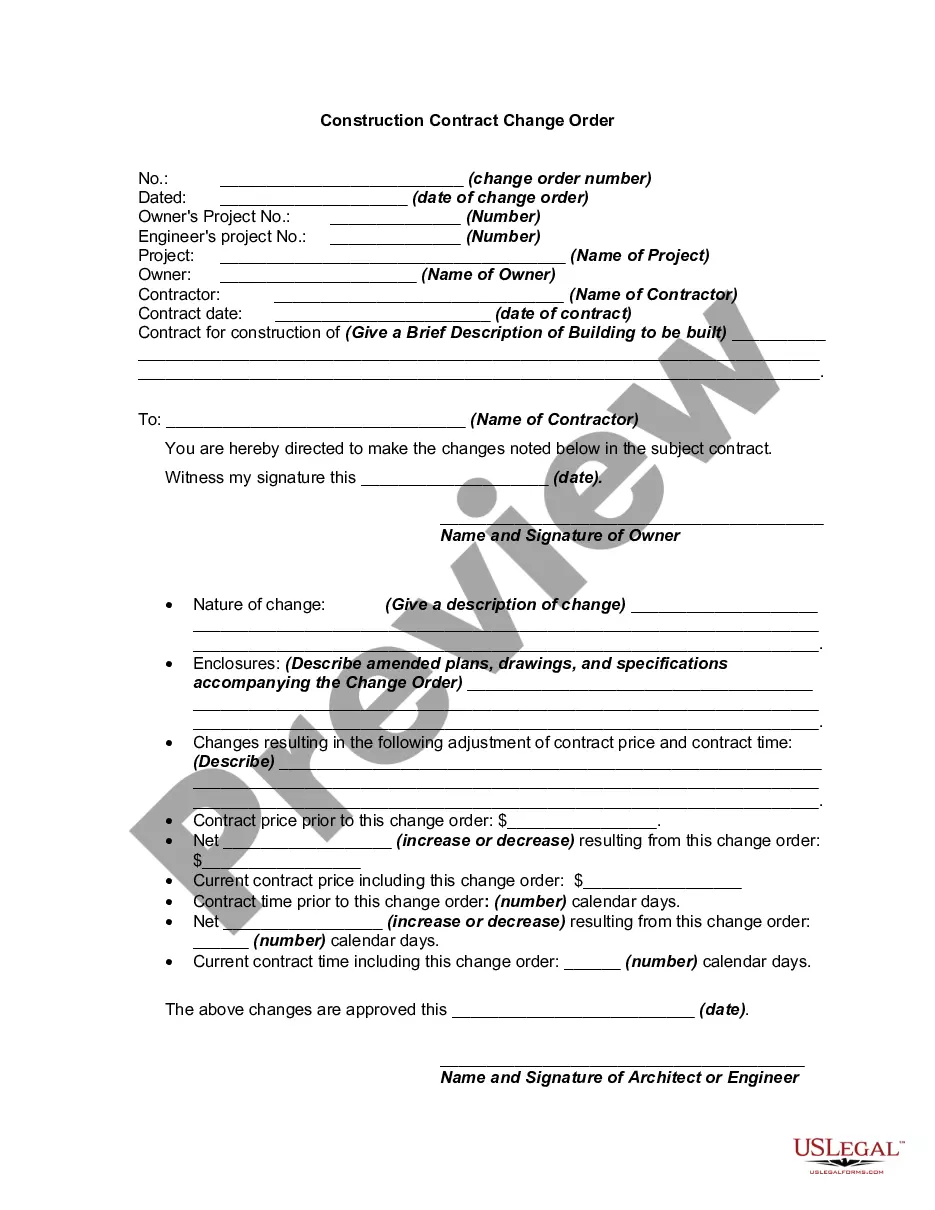
Looking for another form?
Form popularity
FAQ
Filing an Opposition to a Motion for Summary Judgment A response must be in writing and include the same supporting documents as a motion for summary judgment. The opposition to the motion for summary judgment should also include a statement of facts showing the dispute and supporting documents.
You simply need to request that the court deny the defendant's motion to dismiss. For example, you could write the following: For the foregoing reasons and all the others discussed in Plaintiff's Complaint, the present Motion to Dismiss should be denied.
You do not have to file a response. However, you would be wise to do so as a motion to dsmiss , if granted, could end your suit. Motions to dimiss for failure to state a claim are rarely granted.
Overview. If one party to a case has filed a motion with the court, the other side can file an opposition. An opposition is a written statement explaining to the judge why the other side is not entitled to whatever he is asking for in his motion. It is your opportunity to oppose the other side's request.
If a defendant refuses to produce documents or witnesses for depositions, you can oppose the summary-judgment motion by submitting your declaration and showing that facts essential to justify your opposition may exist but cannot for reasons stated be presented to the court.
The key to defeating a motion for summary judgment is to show the court that there are still facts in dispute. Summary judgment is only appropriate if none of the facts are disputed.
You've written a motion and submitted it to the court. The court has set it for oral argument - now what? Read the rules. Know the judge. Review your written motion. Shepardize your cases again. Review opposing counsel's written motion. Note cases that are directly opposed to your argument. Prepare your argument.
You must include a summary of the legal basis for your opposition, explain the reason you are opposing the motion, and state what you would like the judge to order.