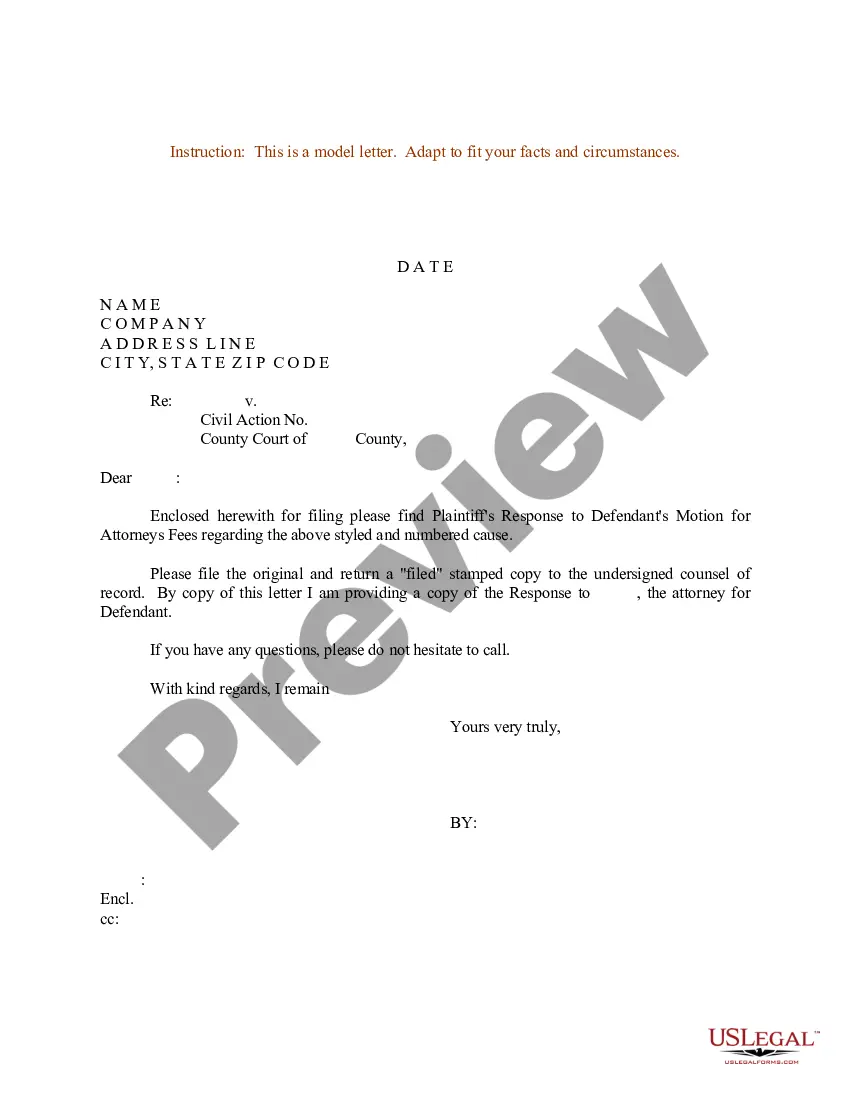
Sample Letter for Plaintiff's Response to Defendant's Motion for Attorneys Fees
Overview of this form
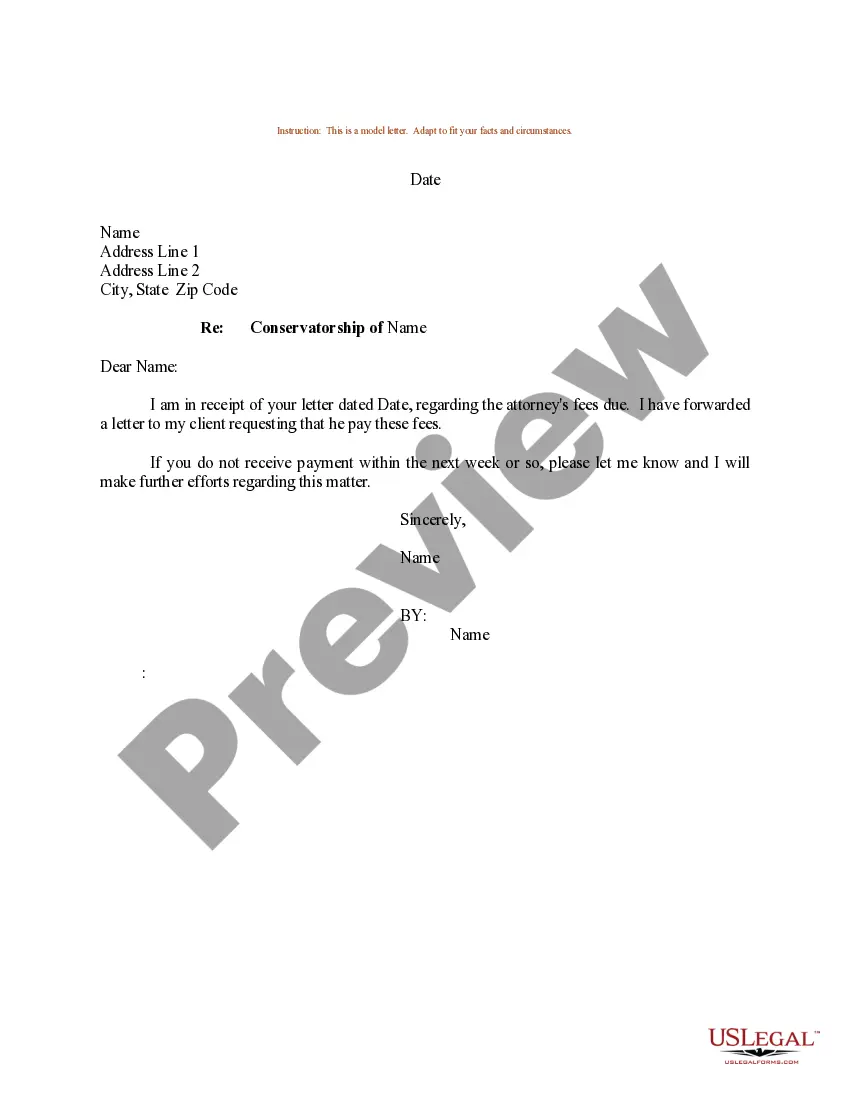
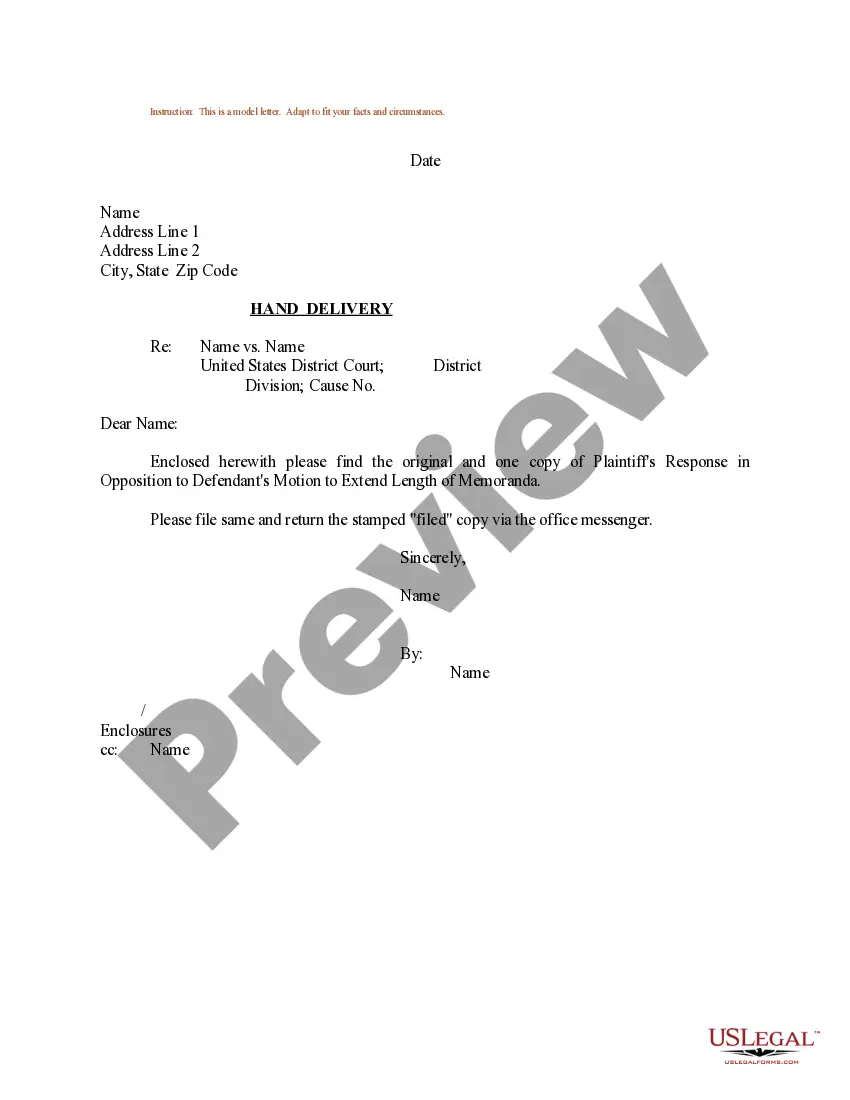
This form is a sample letter for a plaintiff's response to a defendant's motion for attorneys' fees. It serves as a template for individuals involved in a legal dispute to formally communicate their opposition to a request made by the defendant for the reimbursement of legal fees. This sample letter simplifies the process of drafting a response, ensuring that essential legal content is included in a professional manner.
Key parts of this document
- Date and parties involved: Clearly state the date and the names of the plaintiff and defendant.
- Subject line: Indicate that this is a response to the defendant's motion.
- Introduction: Briefly clarify the basis for the response and reference the original motion.
- Arguments against the motion: Outline the reasons why the request for attorneys' fees should be denied.
- Conclusion: Summarize the request for denial and express willingness to provide further information if necessary.
Common use cases
This form should be used when a defendant has filed a motion to recover attorneys' fees and the plaintiff wishes to contest that motion. It is particularly relevant in civil litigation contexts where one party seeks to hold another party accountable for legal expenses incurred during legal proceedings.
Who can use this document
This form is intended for:
- Individuals acting as plaintiffs in a legal case.
- Those who have received a motion for attorneys' fees from a defendant.
- Legal representatives assisting clients in preparing responses to such motions.
Instructions for completing this form
To complete this form, follow these steps:
- Enter the date at the top of the letter.
- List the name and address of the defendant or their attorney.
- Begin with a clear subject line stating it is a response to the motion for attorneys' fees.
- Detail your arguments against the motion in a structured manner.
- Conclude by requesting denial of the motion and offer to provide further details if needed.
Does this document require notarization?
This form does not typically require notarization unless specified by local law. However, always check local regulations to ensure compliance with any additional requirements.
Get your form ready online
Our built-in tools help you complete, sign, share, and store your documents in one place.
Make edits, fill in missing information, and update formatting in US Legal Forms—just like you would in MS Word.
Download a copy, print it, send it by email, or mail it via USPS—whatever works best for your next step.
Sign and collect signatures with our SignNow integration. Send to multiple recipients, set reminders, and more. Go Premium to unlock E-Sign.
If this form requires notarization, complete it online through a secure video call—no need to meet a notary in person or wait for an appointment.
We protect your documents and personal data by following strict security and privacy standards.

Make edits, fill in missing information, and update formatting in US Legal Forms—just like you would in MS Word.

Download a copy, print it, send it by email, or mail it via USPS—whatever works best for your next step.

Sign and collect signatures with our SignNow integration. Send to multiple recipients, set reminders, and more. Go Premium to unlock E-Sign.

If this form requires notarization, complete it online through a secure video call—no need to meet a notary in person or wait for an appointment.

We protect your documents and personal data by following strict security and privacy standards.
Avoid these common issues
- Failing to address the defendant by name in the opening of the letter.
- Overlooking the deadline for submitting a response to the motion.
- Not including sufficient legal arguments or evidence to support the objection.
- Neglecting to proofread for typos or errors that can detract from professionalism.
Advantages of online completion
- Convenience of having a ready-to-use template at your fingertips.
- Editability allows for customization to fit specific case details and arguments.
- Reliability of a legally sound template drafted by licensed attorneys.
This form serves as a formal written response to a motion in court, helping to establish the plaintiff's position against the motion for attorneys' fees. By utilizing this template, users can ensure that their responses are articulated clearly while following appropriate legal protocols.
Key takeaways
- The form is a sample letter for responding to a motion for attorneys' fees.
- It outlines key components necessary for an effective response.
- Important for plaintiffs contesting a defendant's request for legal fees.
- Ensures compliance with basic legal standards without needing extensive legal knowledge.
Looking for another form?

Form popularity
FAQ
If there is no local bar program, the State Bar may provide fee arbitration. To start the process, complete a fee arbitration request form from the local bar association and submit the filing fee. Include information about the attorney's fees and costs and explain why you believe the attorney's fees are excessive.
The typical attorney-fee clause states that if one party breaches the contract, the other party can sue and recover its attorney fees for bringing the suit. If you have a contract dispute or you if you are negotiating a contract, you should pay careful attention to any language on attorneys' fees.
If you file a Request to Waive Additional Court Fees (Form FW-002 ) and the court grants your request, you will not have to pay fees for services the court determines to be necessary for your case. The fees that are waived will be checked off on Form FW-003 or Form FW-008 .
Average Attorney FeesAttorney fees typically range from $100 to $300 per hour based on experience and specialization. Costs start at $100 per hour for new attorneys, but standard attorney fees for an expert lawyer to handle a complex case can average $225 an hour or more.
If any one of the following is true for you, then you qualify for an application fee waiver: You're enrolled in or eligible for the Federal Free or Reduced Price Lunch program. Your family income meets the Income Eligibility Guidelines set by the USDA Food and Nutrition ServiceYour family receives public assistance.
Read the Information Sheet on Waiver of Superior Court Fees and Costs (Form FW-001-INFO ). ( Fill out the Request to Waive Court Fees (Form FW-001 ) (Spanish ), reading the form very carefully. Sign your request for a fee waiver under penalty of perjury.
If you have a problem with a lawyer's bill, you don't have to spend more money to go to court to resolve it. The State Bar can help you resolve a problem with attorney fees through an informal, confidential and low-cost alternative called Mandatory Fee Arbitration.
The law in California generally provides that unless attorneys' fees are provided for by statute or by contract they are not recoverable. In other words, unless a law or contract says otherwise the winning and losing party to lawsuit must pay their own attorneys fees.
There are several different types of instances within a divorce where one might want to ask the court for attorney's fees. In a matrimonial action, we might make a motion pendente lite, which means pending the litigation, for the moneyed spouse to pay the attorney's fees for the spouse with less money.
Attorney's fee awards refer to the order of the payment of the attorney fees of one party by another party. In the U.S., each party in a legal case typically pays for his/her own attorney fees, under a principle known as the American rule.