Complaint regarding Assault
What this document covers
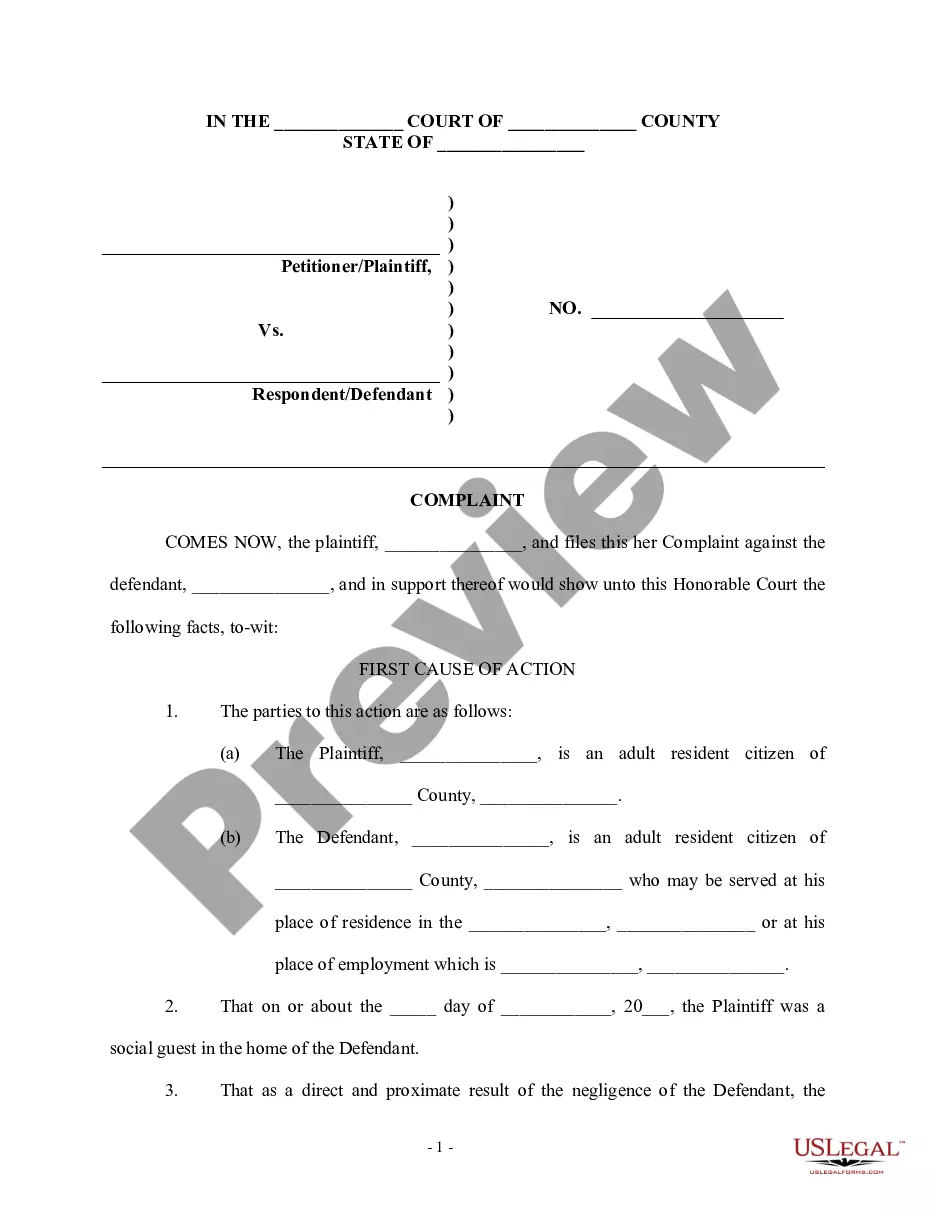
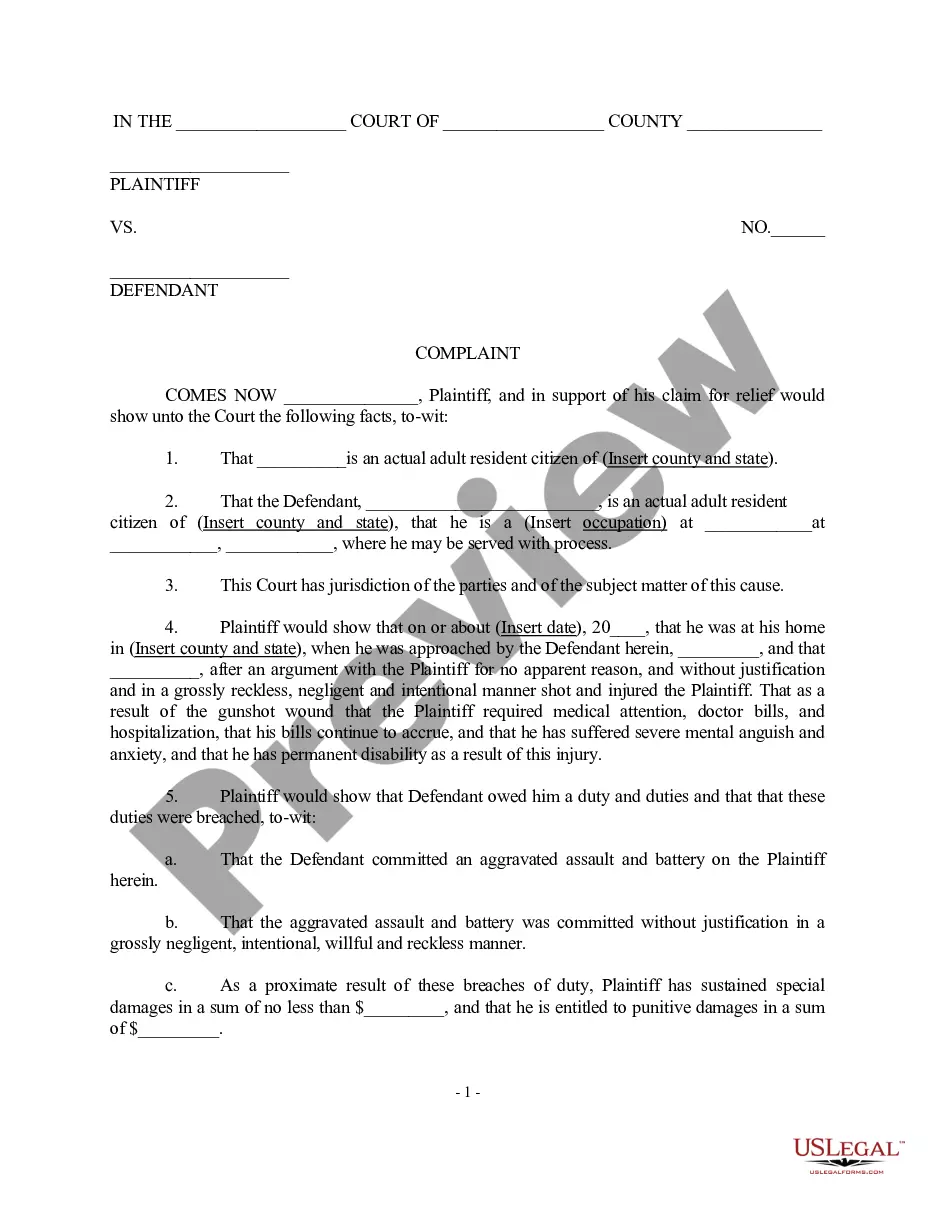
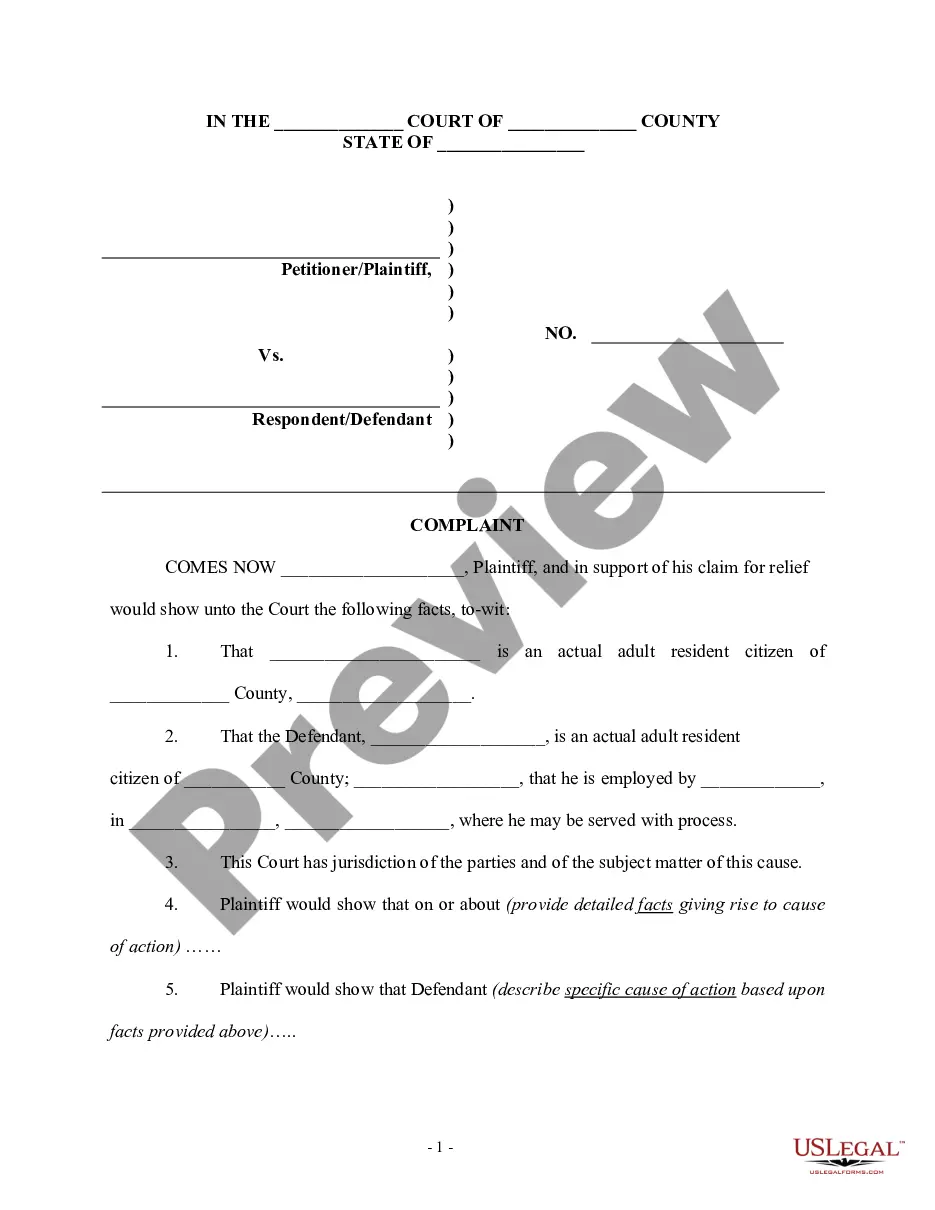
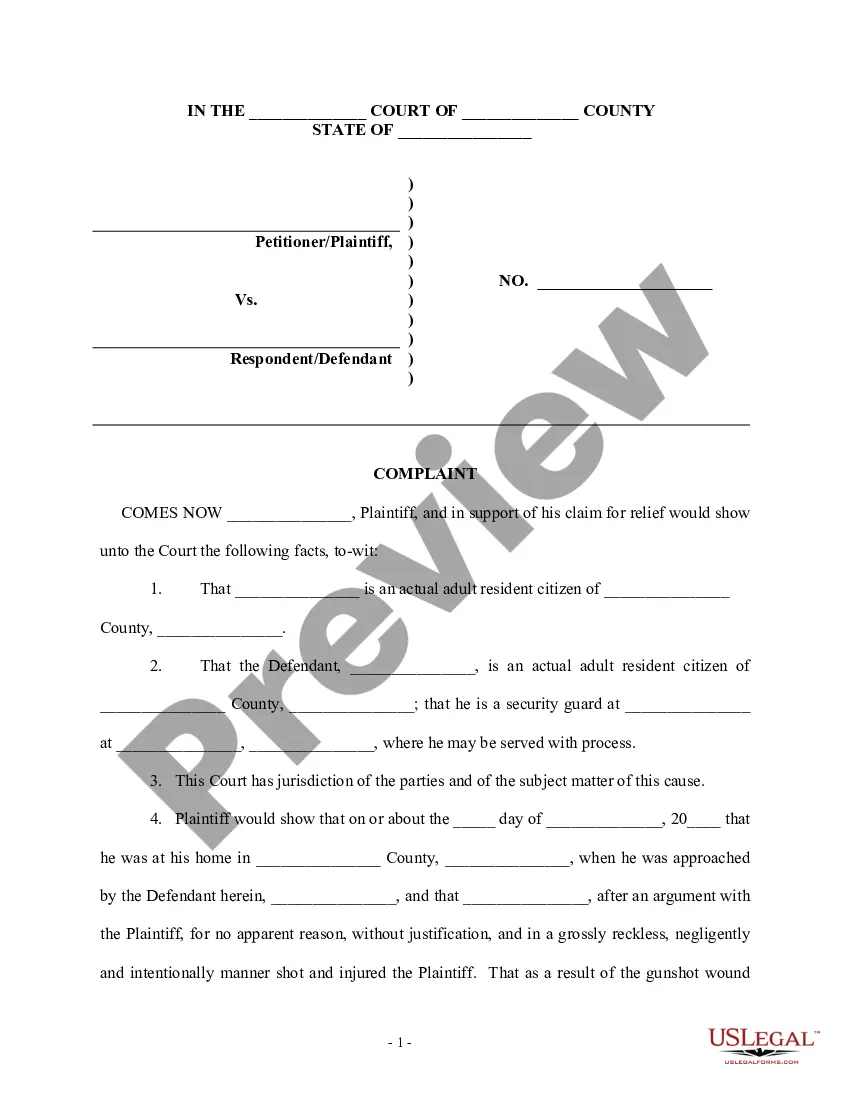
The Complaint regarding Assault is a legal document used by individuals seeking damages due to an assault that occurred while they were a guest in another person's home. This form allows the plaintiff to outline the facts of the assault, claim damages, and request relief from the court. It differs from general personal injury claims as it specifically addresses assaults occurring in social settings, emphasizing intentional actions by the defendant.
What’s included in this form
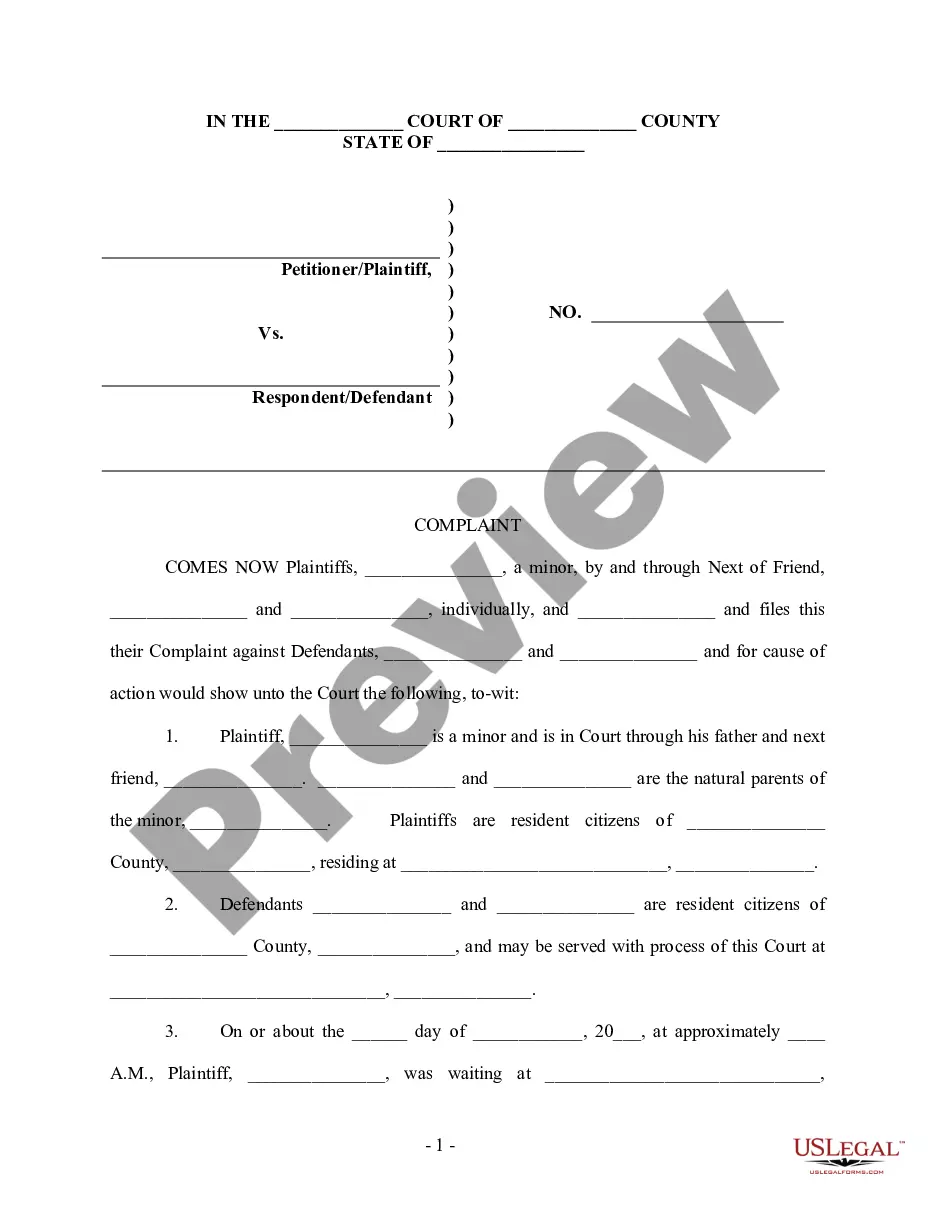
- Identification of the Plaintiff and Defendant, including their addresses and places of residence or employment.
- Details of the assault incident, including the date and circumstances of the attack.
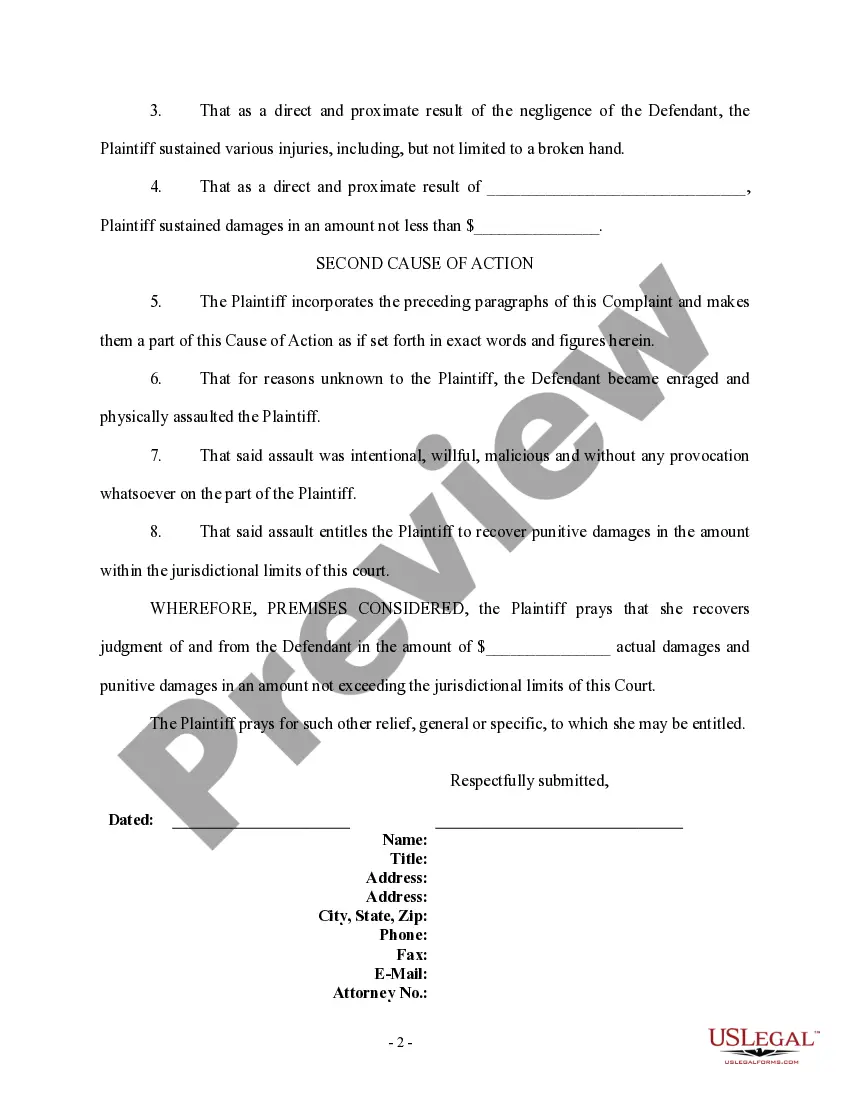
- Description of injuries sustained by the Plaintiff as a direct result of the assault.
- Claims for actual damages and potential punitive damages against the Defendant.
- Request for additional relief deemed appropriate by the court.
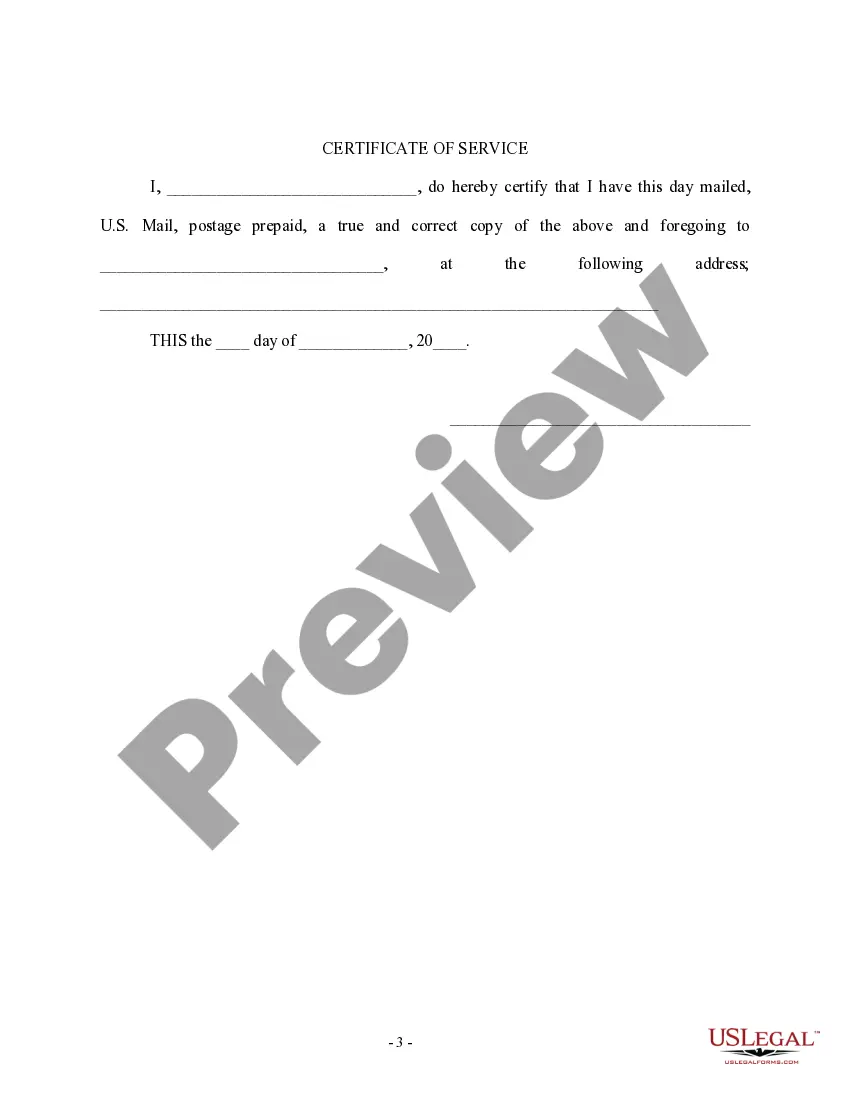
- Certification of service to notify the Defendant of the proceedings.

Common use cases
This form should be used when an individual has been assaulted while visiting someoneâs home and seeks to hold the responsible party accountable. Common scenarios include physical fights, intentional harm, or attacks that occur during social gatherings where the plaintiff is a guest. It is particularly relevant when the victim feels that the assault was unprovoked and wishes to seek damages for physical and emotional injuries resulting from the incident.
Who can use this document
- Individuals who have been assaulted by someone they know or were visiting.
- Anyone seeking compensation for injuries sustained during an assault incident.
- Persons wishing to formally document an assault in order to take legal action against the assailant.
- Individuals who understand their legal rights and have a basis for a claim against their assailant.
Instructions for completing this form
- Identify and enter the names and addresses of both the Plaintiff and Defendant in the designated fields.
- Provide the date and details of the assault, ensuring accuracy in describing events.
- Clearly state the injuries sustained, including any medical treatment received, and quantify damages sought.
- Indicate if punitive damages are being sought and their rationale based on the defendant's actions.
- Include any additional information relevant to the claim or requested relief.
- Sign and date the document, then ensure it is served to the Defendant as required by law.
Notarization requirements for this form
This form does not typically require notarization unless specified by local law. Ensure to check your stateâs specific regulations regarding the requirement for acknowledging this form before a notary public.
Get your form ready online
Our built-in tools help you complete, sign, share, and store your documents in one place.
Make edits, fill in missing information, and update formatting in US Legal Forms—just like you would in MS Word.
Download a copy, print it, send it by email, or mail it via USPS—whatever works best for your next step.
Sign and collect signatures with our SignNow integration. Send to multiple recipients, set reminders, and more. Go Premium to unlock E-Sign.
If this form requires notarization, complete it online through a secure video call—no need to meet a notary in person or wait for an appointment.
We protect your documents and personal data by following strict security and privacy standards.

Make edits, fill in missing information, and update formatting in US Legal Forms—just like you would in MS Word.

Download a copy, print it, send it by email, or mail it via USPS—whatever works best for your next step.

Sign and collect signatures with our SignNow integration. Send to multiple recipients, set reminders, and more. Go Premium to unlock E-Sign.

If this form requires notarization, complete it online through a secure video call—no need to meet a notary in person or wait for an appointment.

We protect your documents and personal data by following strict security and privacy standards.
Avoid these common issues
- Failing to accurately identify the Defendantâs place of residence or employment.
- Not providing sufficient details about the incident, which may weaken the claim.
- Overestimating the damages without clear evidence to support the claim.
- Neglecting to complete the certification of service section after sending the complaint to the Defendant.
- Not following local filing procedures or missing deadlines for submission.
Why use this form online
- Convenience of downloading and filling out the form at your own pace.
- Access to up-to-date legal templates drafted by licensed attorneys.
- Editability allows for customization based on individual circumstances.
- Reliable legal protection that helps ensure accurate completion for better outcomes.
Looking for another form?
Form popularity
FAQ
In general, the law allows you to mistakenly defend an initial aggressor (the person who started it) in a fight. In selfdefense cases, if you are the initial aggressor in a fight, the law will not allow you to claim self-defense unless in good faith, you endeavor to withdraw from and abandon the conflict.
Understanding How Assault Claims Work in Canada. If you've been assaulted, whether it was in a fight or unprovoked, you can sue your opponent for any major injuries you've suffered.In Canada, punitive damages are awarded on a more conservative basis and are usually only given in extreme situations.
Comply With the Relevant Federal, State, and Local Rules. Research Before Writing. Allege Subject Matter Jurisdiction, Personal Jurisdiction, and Venue. Draft Concise and Plain Statement of the Facts. Draft Separate Counts for Each Legal Claim. Plead Facts With Particularity Where Necessary.
If you or someone you know has been attacked in a public place, the first thing to do is call the police. Failing to notify law enforcement can actually impair your ability to make civil claims later for injuries or damages suffered in the attack. If injured, you should also seek medical attention.
A complaint must state all of the plaintiff's claims against the defendant, and must also specify what remedy the plaintiff wants. After receiving the complaint, the defendant must respond with an answer.
Arrest. You will most likely be arrested and processed when you are charged with assault. You will then be given a bail hearing, during which a judge will determine if you should be granted bail and how much your bond should be.
The four elements that a plaintiff must prove to win a negligence suit are 1) Duty, 2) Breach, 3) Cause, and 4) Harm.
The simple fear of a harmful or offensive touching is usually enough for an assault to have occurred; if the touching actually occurs, the physical contact is usually considered a "battery" in civil law, although both claims are often made together. Learn more about assault and battery as personal injury claims.
Criminal charges can involve fines and imprisonment if the court determines that party is guilty of assault or battery. Assault involves an intentional attempt to harm another person, regardless of whether the harm occurred or not. Battery refers to any intentional hits the victim suffered.