Sample Letter regarding Defendants' Rebuttal Memorandum in Support of Defendants' Motion for Summary Judgment
What this document covers
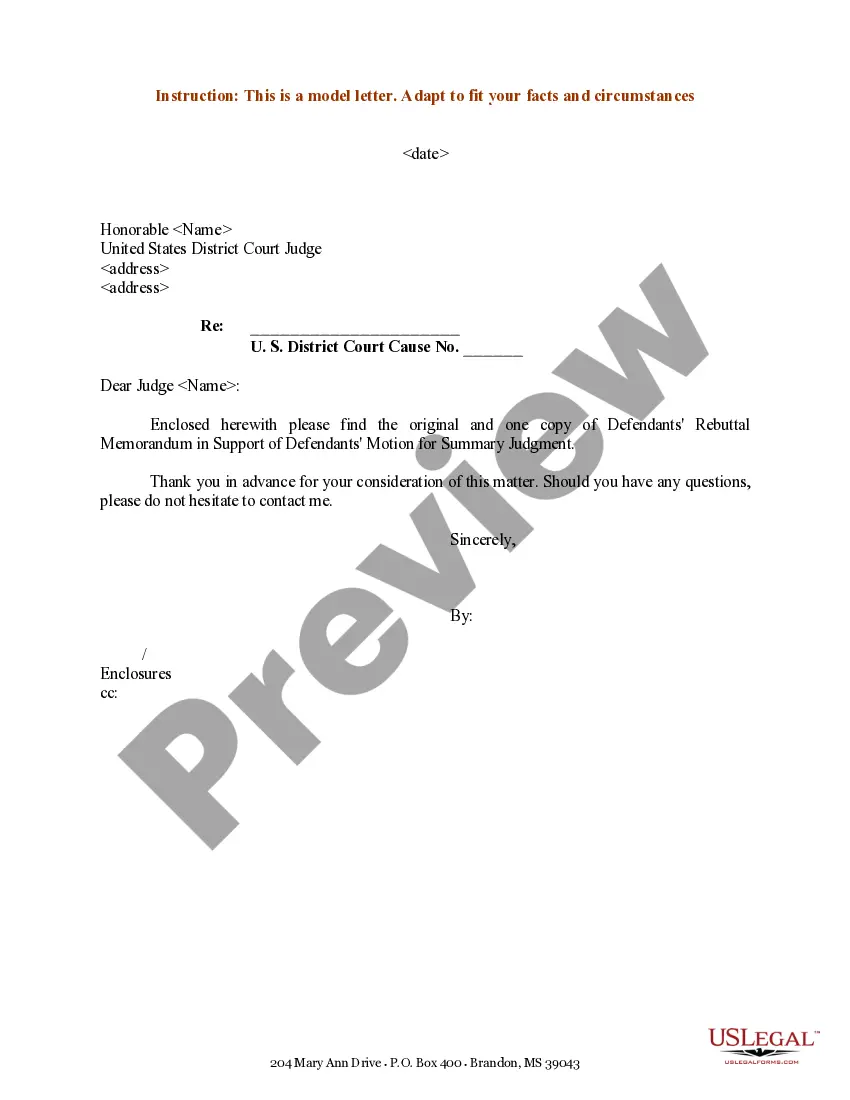
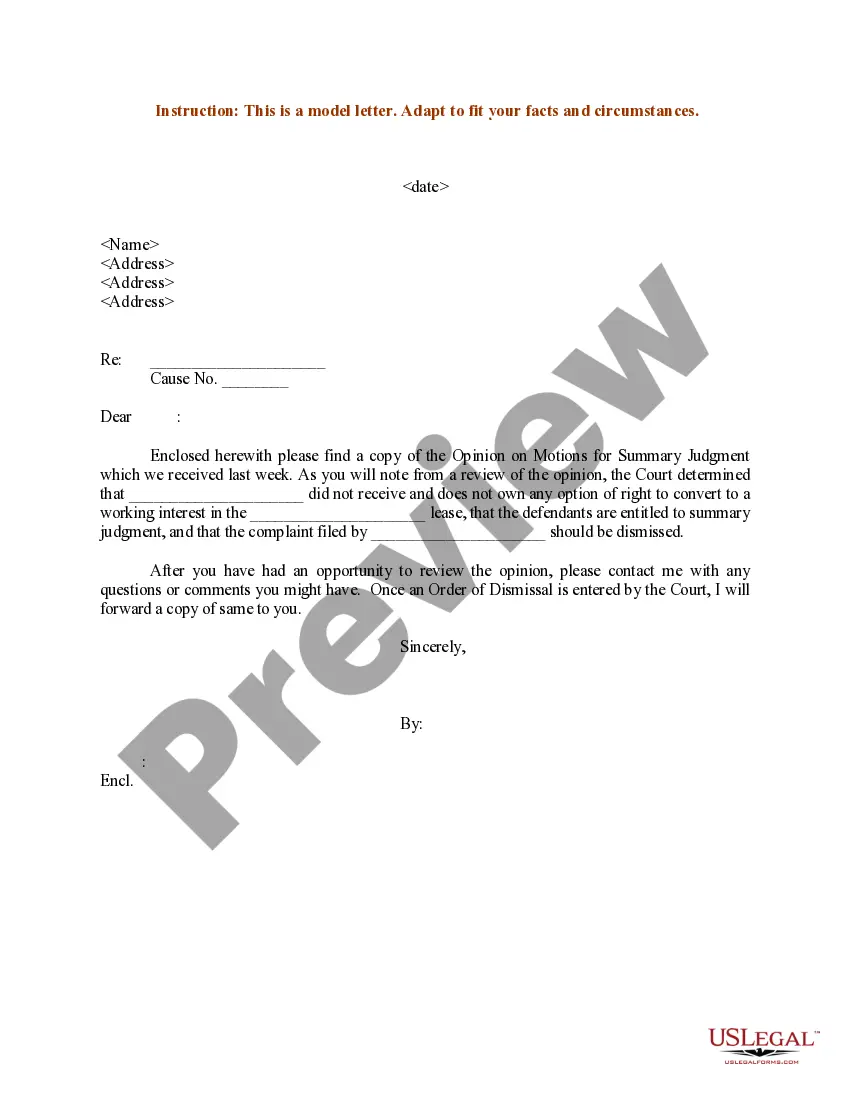
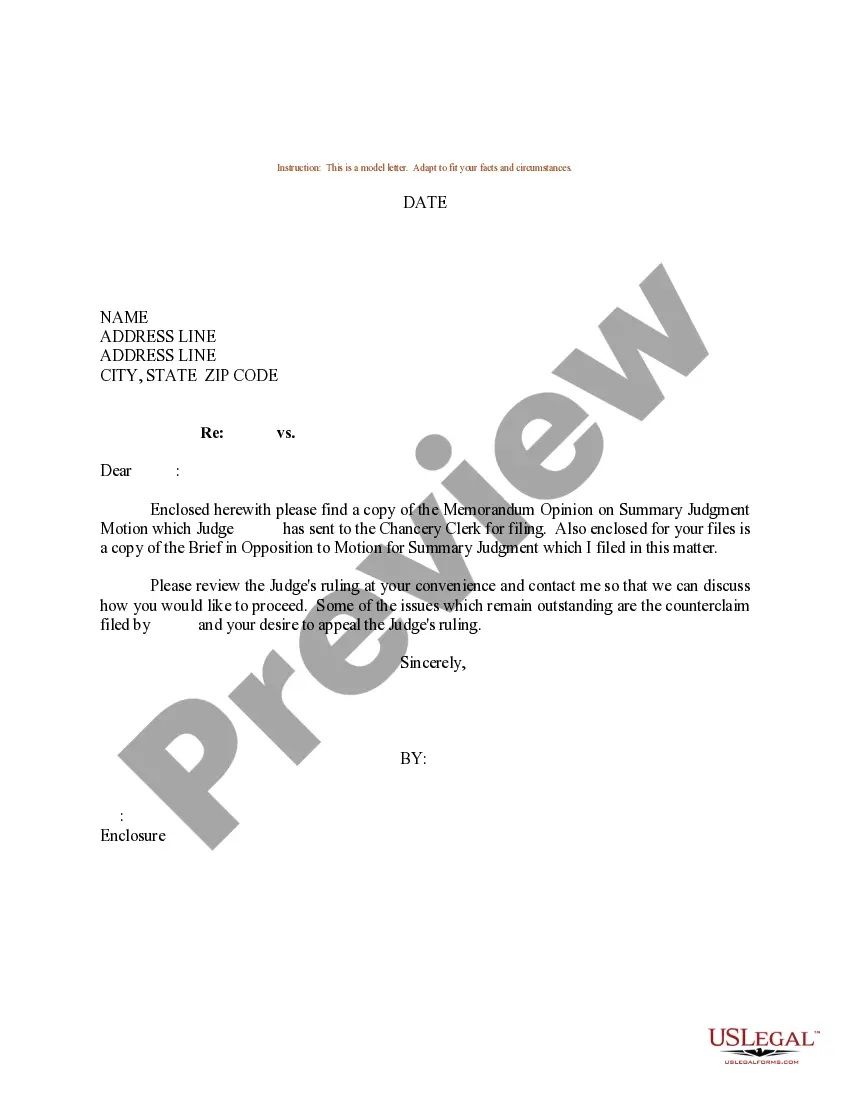
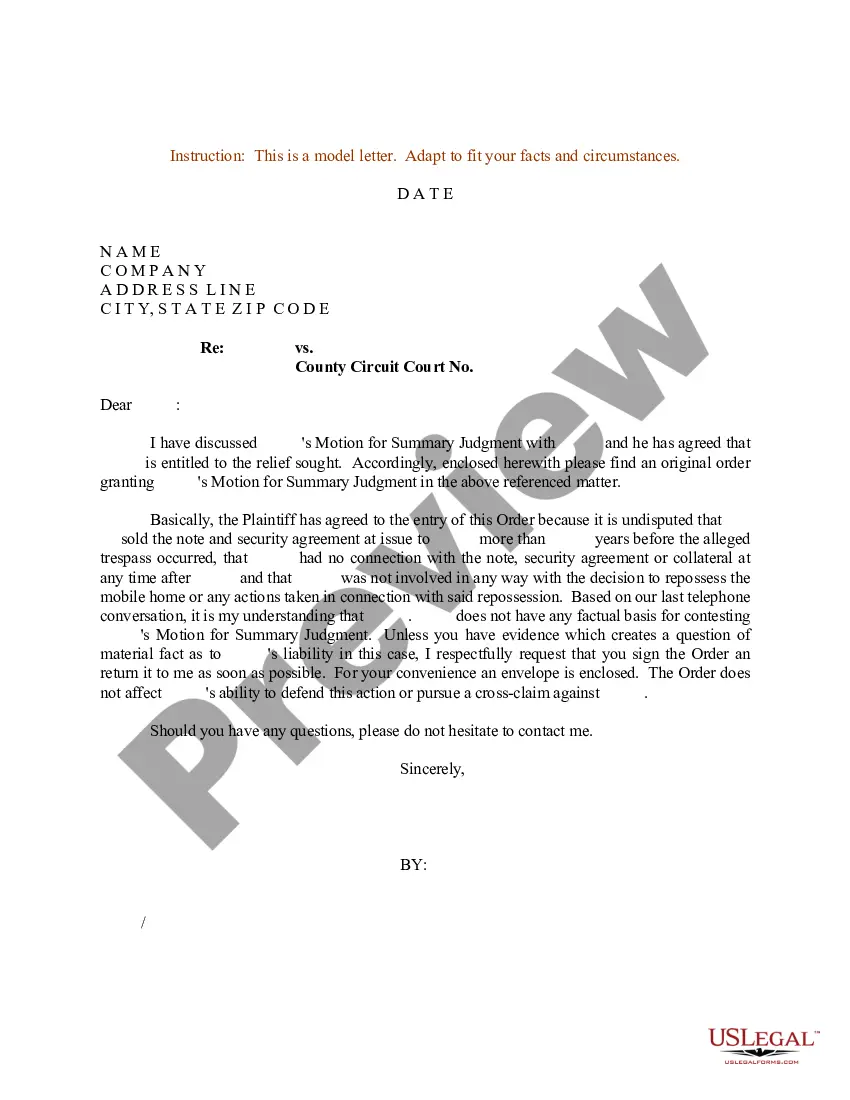
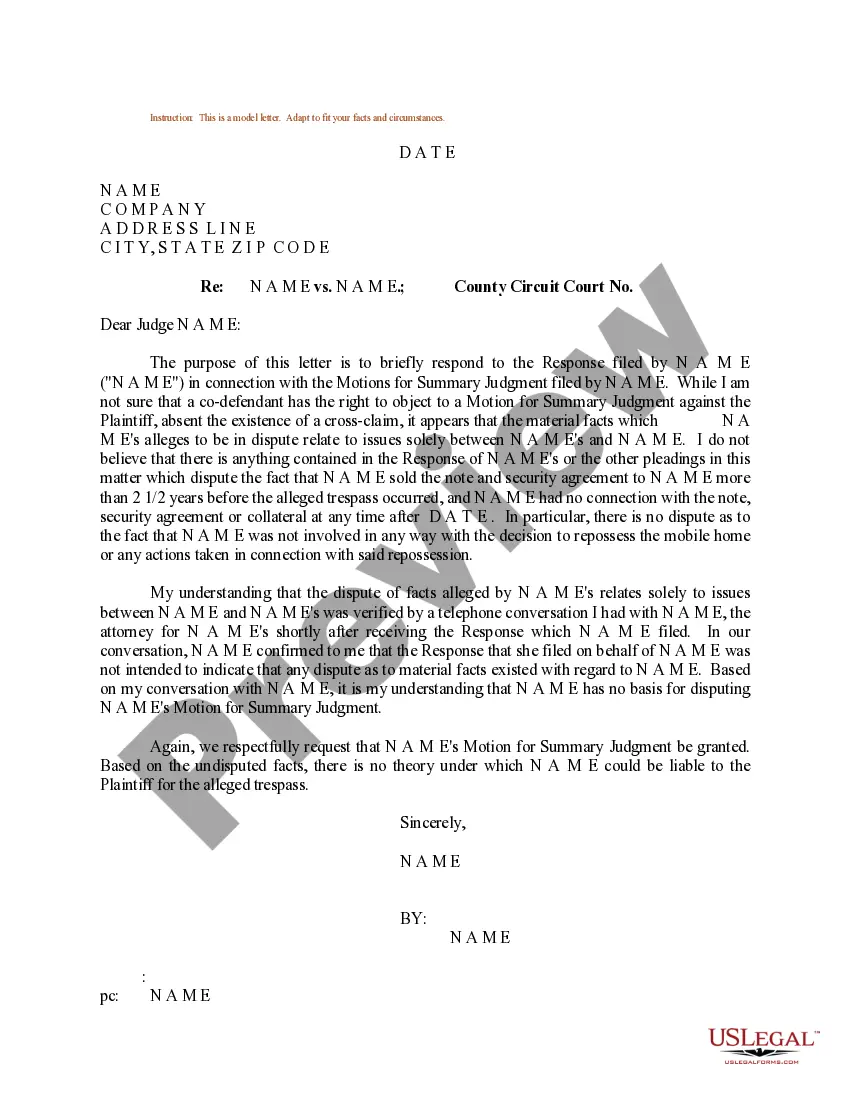
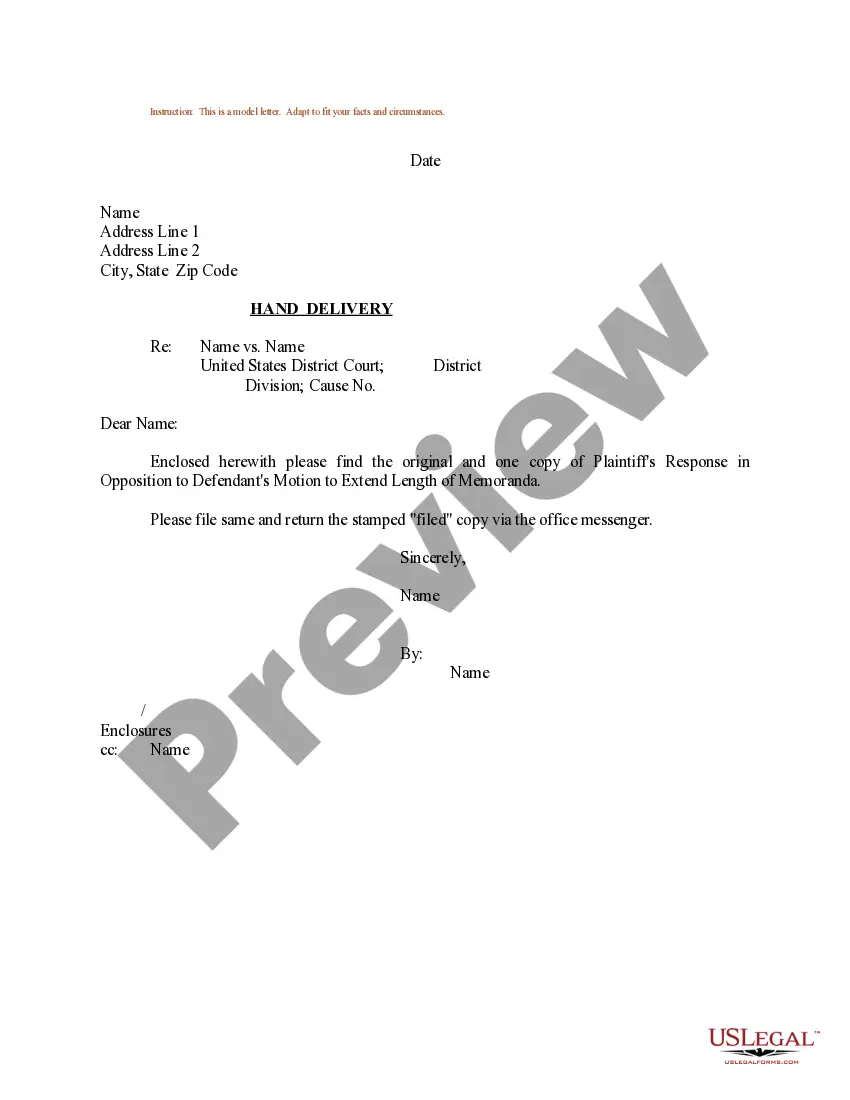
This form is a sample letter regarding the Defendants' Rebuttal Memorandum in Support of Defendants' Motion for Summary Judgment. It serves as a template for attorneys to communicate with the court, detailing a rebuttal in legal proceedings. This document is essential for clarifying arguments and supporting case law as part of the summary judgment process, ensuring that the defendants' position is clearly articulated to the judge.
Key components of this form
- Date of the letter
- Recipient information including court and judge's name
- Subject line outlining the purpose of the letter
- Reference to the cause number
- Enclosure notification regarding the rebuttal memorandum
Situations where this form applies
Who should use this form
This form is intended for:
- Attorneys representing defendants in civil litigation
- Legal assistants preparing court documents
- Individuals involved in a legal case seeking clarity on rebuttals
Instructions for completing this form
- Enter the current date at the top of the letter.
- Fill in the name of the court and the judge receiving the letter.
- Provide a clear subject line referencing the rebuttal memorandum.
- Include the cause number related to the case.
- Clarify that the rebuttal memorandum is enclosed with the letter.
Does this document require notarization?
This form does not typically require notarization unless specified by local law. However, always check the requirements of the court in your jurisdiction to ensure compliance.
Get your form ready online
Our built-in tools help you complete, sign, share, and store your documents in one place.
Make edits, fill in missing information, and update formatting in US Legal Forms—just like you would in MS Word.
Download a copy, print it, send it by email, or mail it via USPS—whatever works best for your next step.
Sign and collect signatures with our SignNow integration. Send to multiple recipients, set reminders, and more. Go Premium to unlock E-Sign.
If this form requires notarization, complete it online through a secure video call—no need to meet a notary in person or wait for an appointment.
We protect your documents and personal data by following strict security and privacy standards.

Make edits, fill in missing information, and update formatting in US Legal Forms—just like you would in MS Word.

Download a copy, print it, send it by email, or mail it via USPS—whatever works best for your next step.

Sign and collect signatures with our SignNow integration. Send to multiple recipients, set reminders, and more. Go Premium to unlock E-Sign.

If this form requires notarization, complete it online through a secure video call—no need to meet a notary in person or wait for an appointment.

We protect your documents and personal data by following strict security and privacy standards.
Common mistakes
- Failing to include the cause number for the case.
- Using unclear or overly technical language that may confuse the judge.
- Not including a proper enclosure notice for the memorandum.
- Omitting the date of the letter, which can affect the filing timeline.
Benefits of using this form online
- Convenient access to a professionally drafted legal template.
- Edit and customize the form easily to suit specific legal needs.
- Time-efficient: download and complete your form at your convenience.
- Ensures reliability by using a document created by licensed attorneys.
Looking for another form?
Form popularity
FAQ
It is a template letter attorneys use to communicate the defendants' rebuttal to a summary judgment motion to the court. It guides including essential details such as the date, recipient court and judge, a clear subject line, the cause number, and an enclosure notice for the rebuttal memorandum, ensuring orderly court communication as part of the MSJ process.
The form provides a structured letter template to accompany the Defendants' Rebuttal Memorandum in Support of Defendants' Motion for Summary Judgment. It helps organize essential details such as the date, the court and judge, the subject line, the cause number, and an enclosure notice, ensuring the rebuttal is clearly presented to the court.
Use this letter template to draft a response that accompanies the Defendants' Rebuttal Memorandum in Support of Defendants' Motion for Summary Judgment. It guides presenting reasons and authorities in a concise, court-focused format, including proper recipient details, a subject line, and an enclosure notice to ensure the court considers the rebuttal along with the attached memorandum.
This template focuses on a defendant's rebuttal letter rather than a plaintiff's opposition brief. It helps ensure the letter includes the date, court and judge, subject, cause number, and enclosure notice, and serves as a structured way to present arguments to support the defendants' MSJ.
A plaintiff's memorandum in opposition to a defendant's motion for summary judgment is the opposing party's brief arguing why the motion should be denied. This form, by contrast, provides a defendant-focused rebuttal letter template to accompany the Defendants' Rebuttal Memorandum in Support of Defendants' Motion for Summary Judgment, including date, court details, subject, cause number, and enclosure.
It is a letter-style template designed to accompany the Defendants' Rebuttal Memorandum and to be sent to the court, with specific formatting like enclosing notification; unlike a standard opposition brief, it emphasizes recipient information and a concise letter format. This difference helps ensure the judge receives clearly organized communication alongside the substantive rebuttal.