Publishing Agreement with Author for Digital Publication Rights as well as Print
Understanding this form
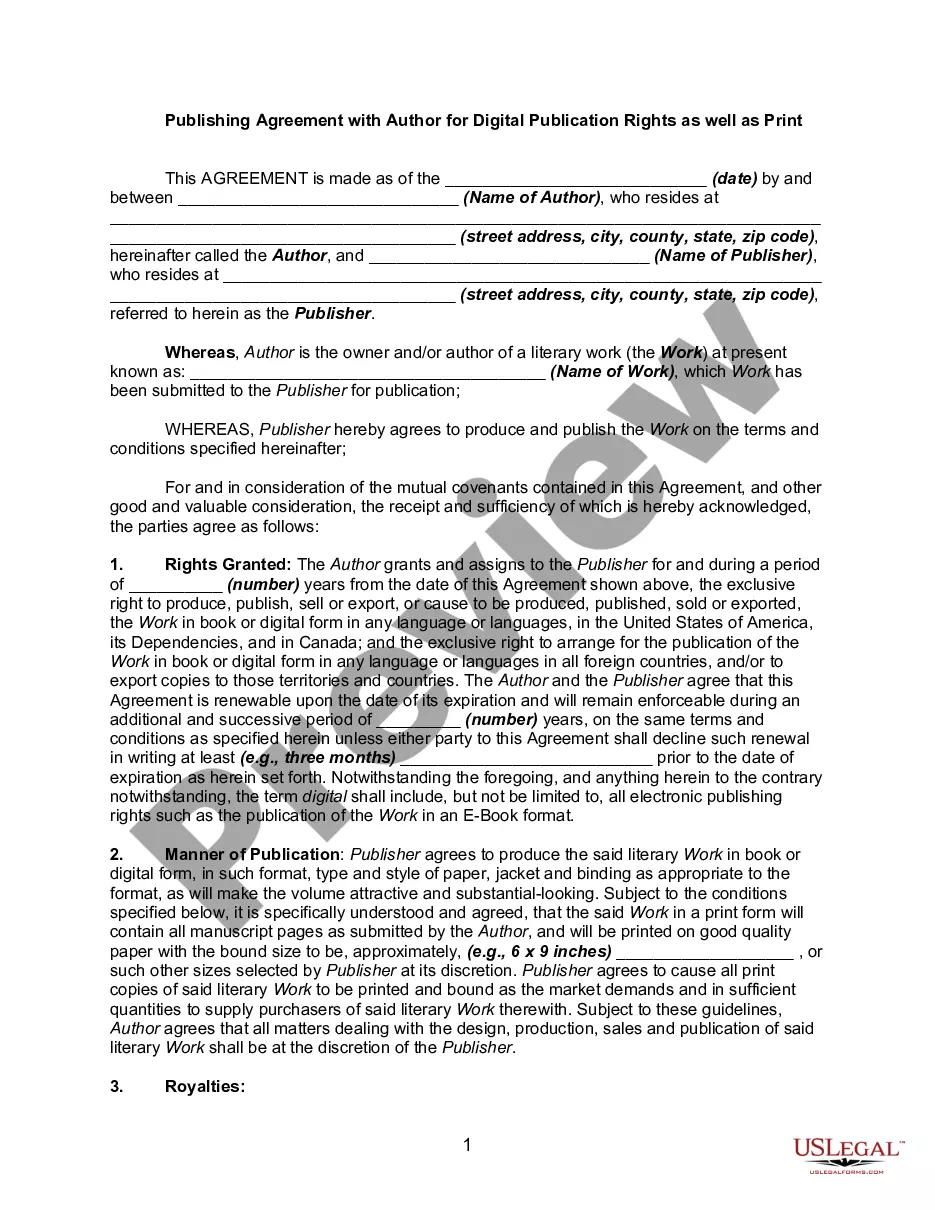
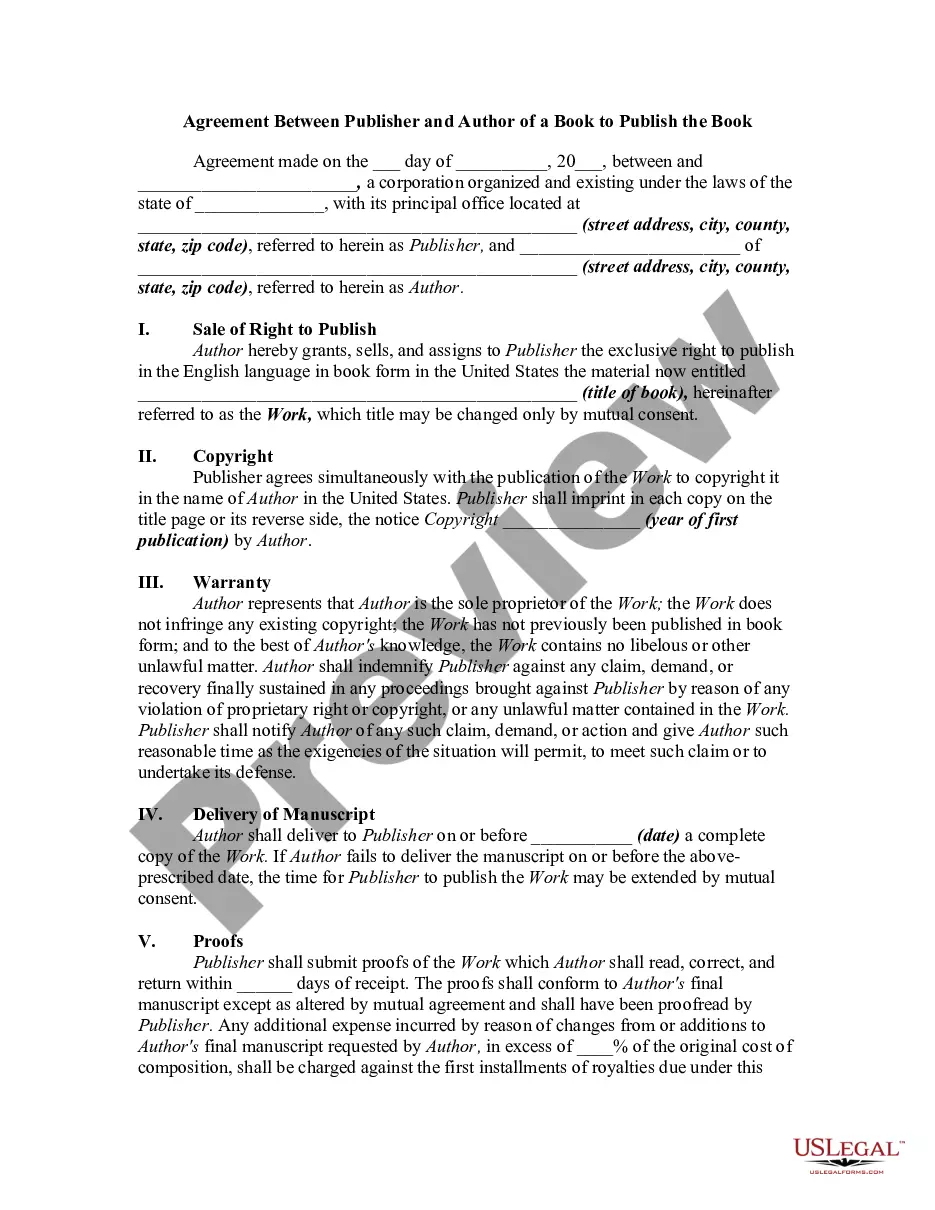
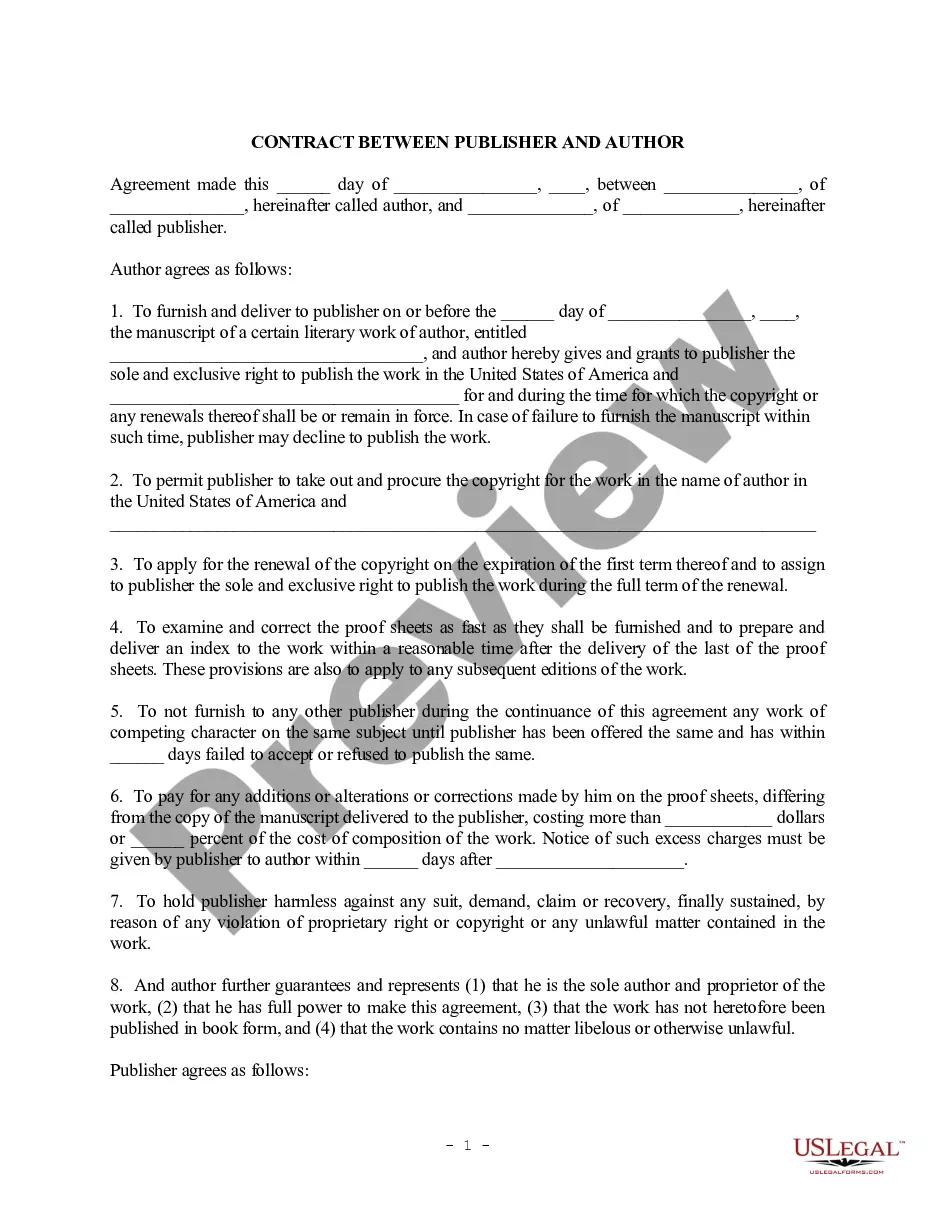
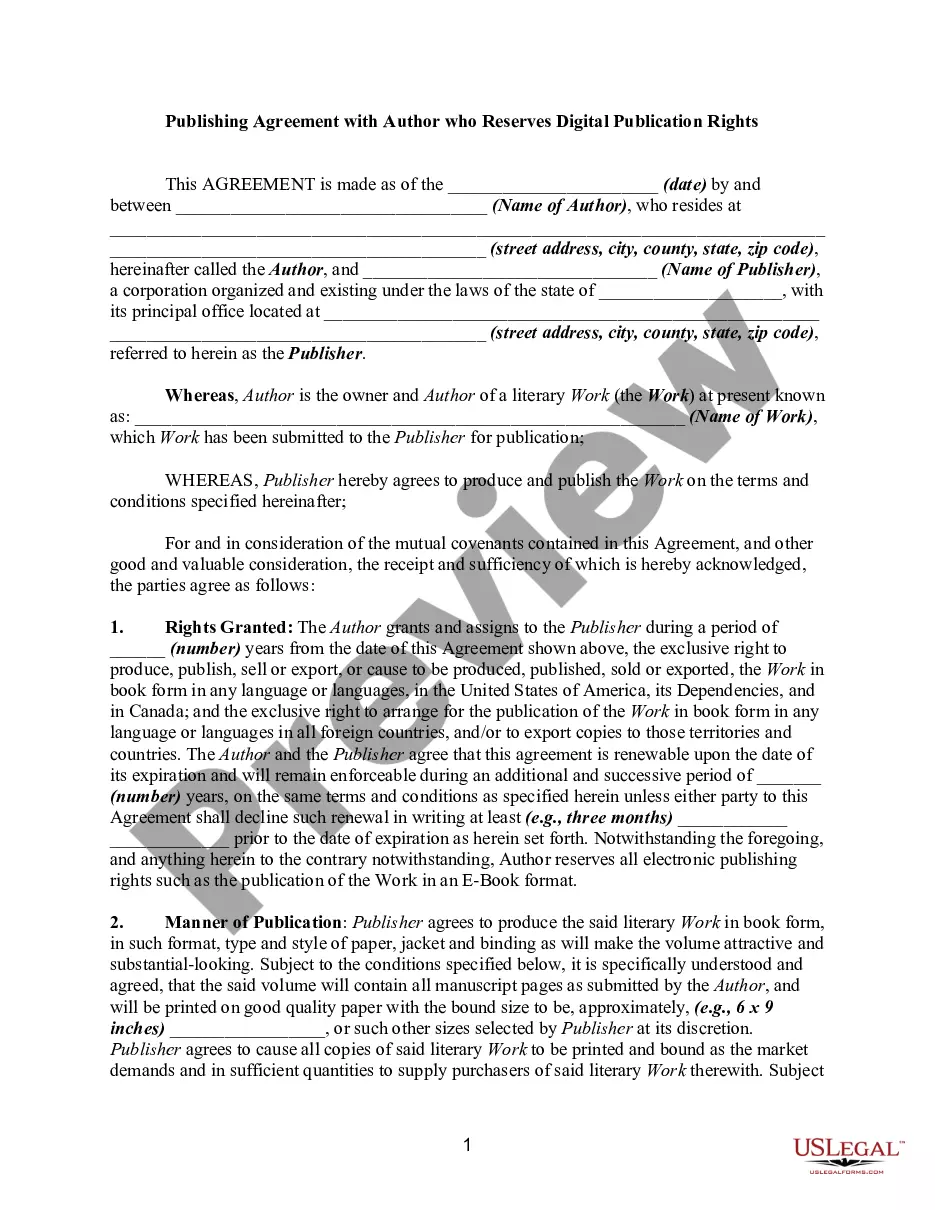
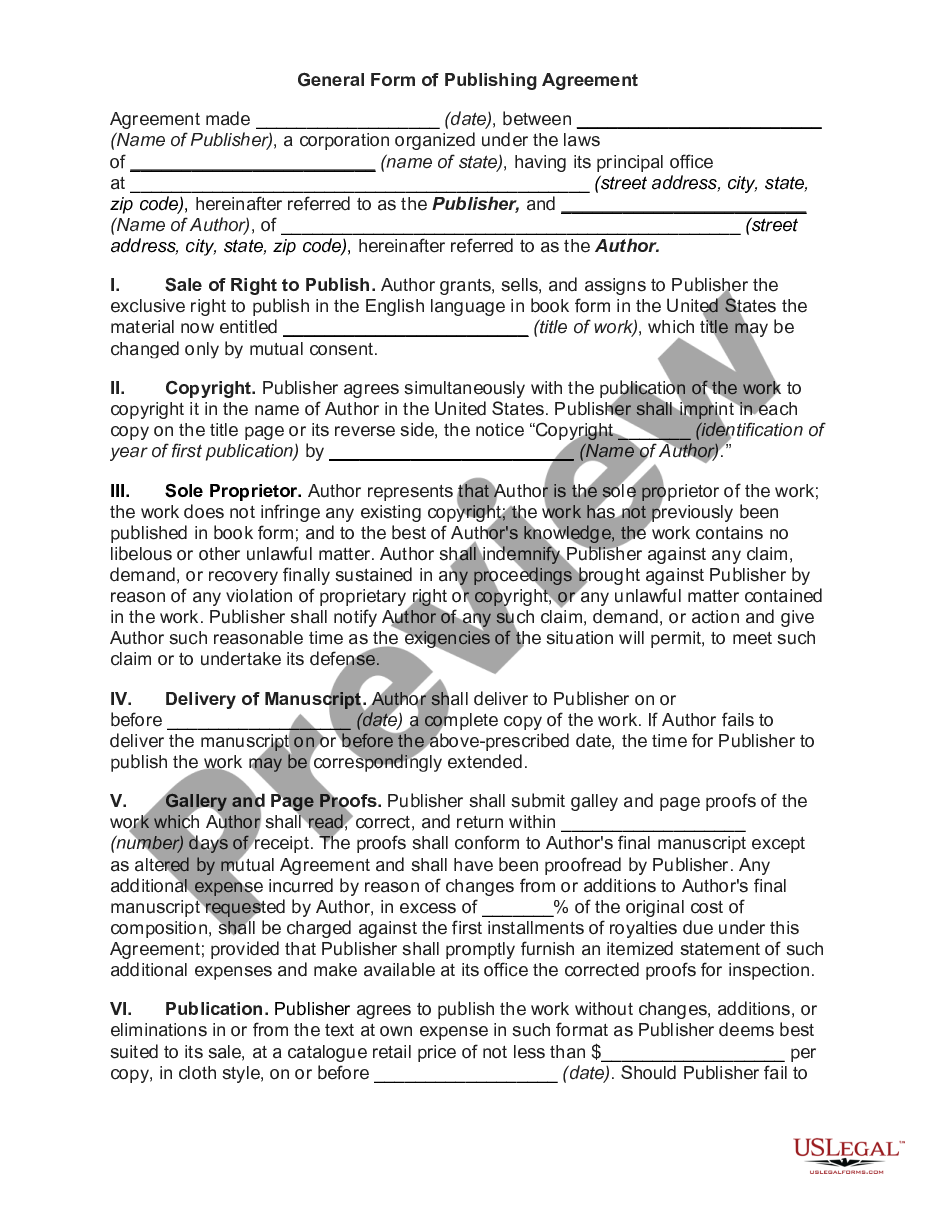
The Publishing Agreement with Author for Digital Publication Rights as well as Print is a legal document that outlines the terms under which an author grants a publisher the rights to produce, publish, and sell their literary work in both digital and print formats. This agreement ensures that both parties have a clear understanding of their rights and obligations regarding royalties, publication timelines, and the management of the work. Unlike simple publishing agreements, this comprehensive form includes clauses that address issues like copyright, revisions, and joint ownership, making it suitable for authors looking to publish their e-books and printed works effectively.
Key parts of this document
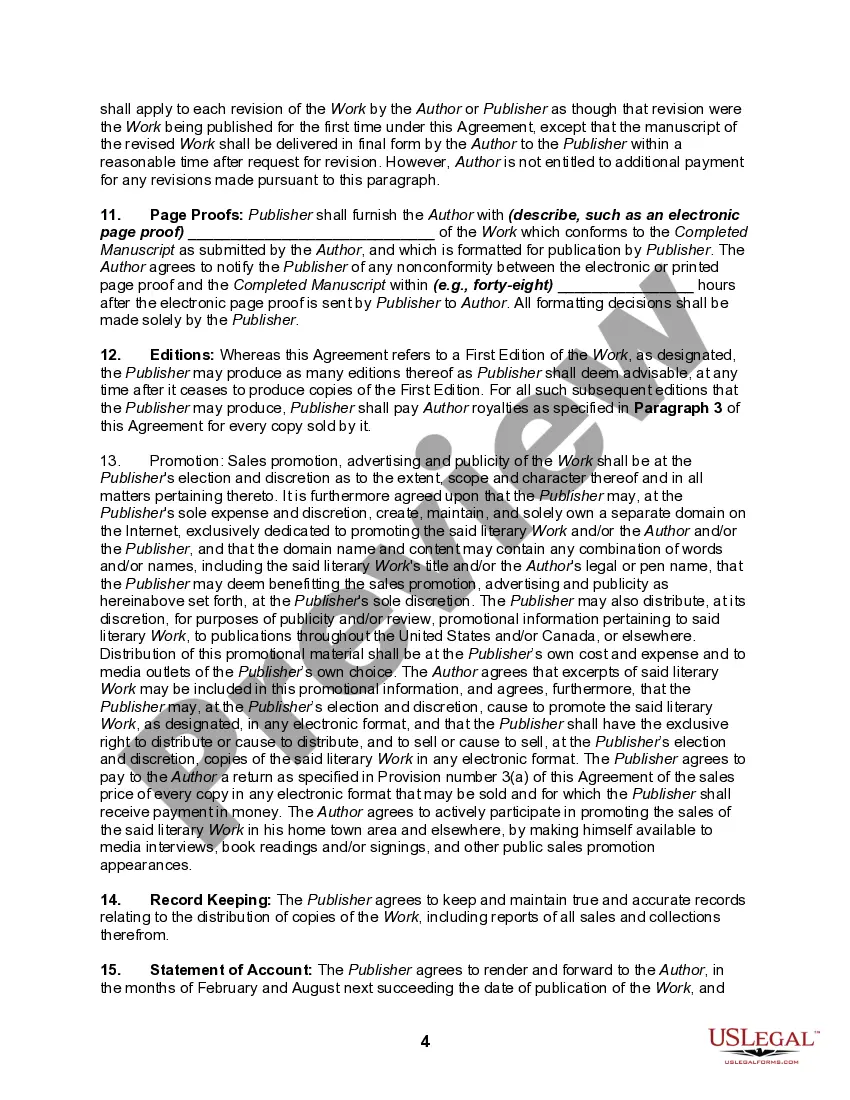
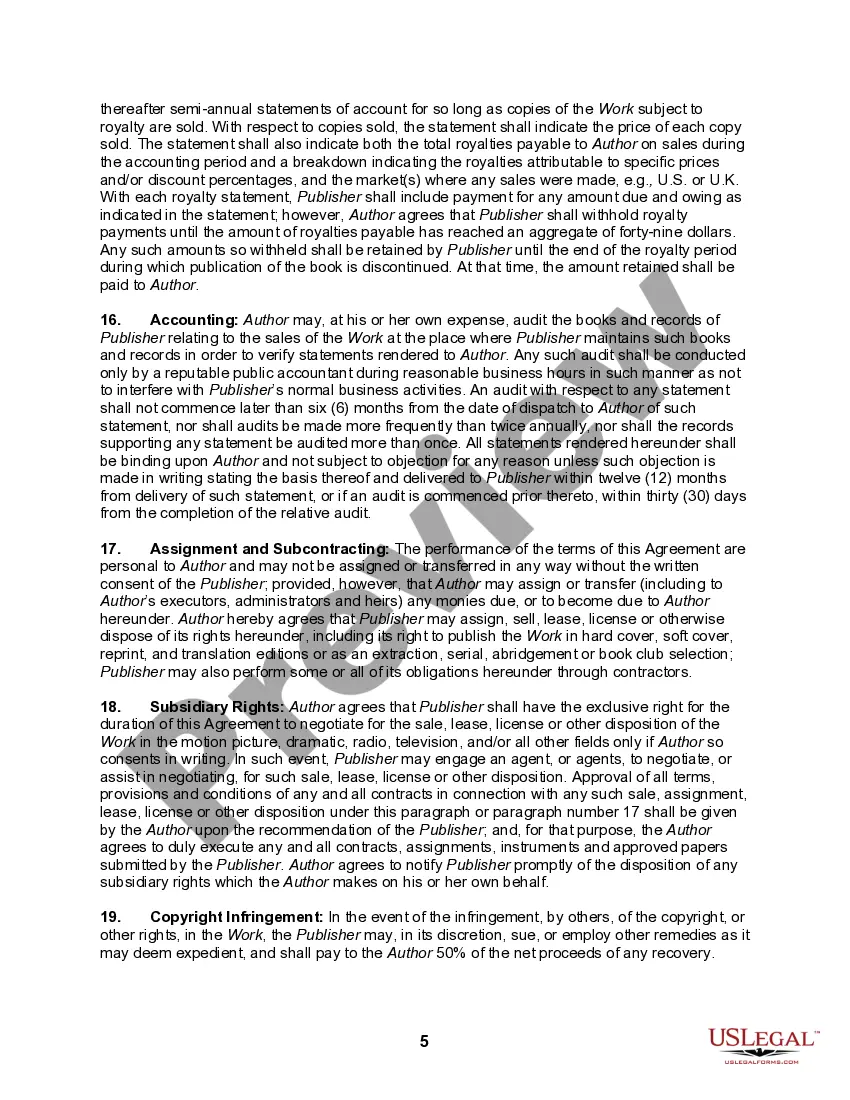
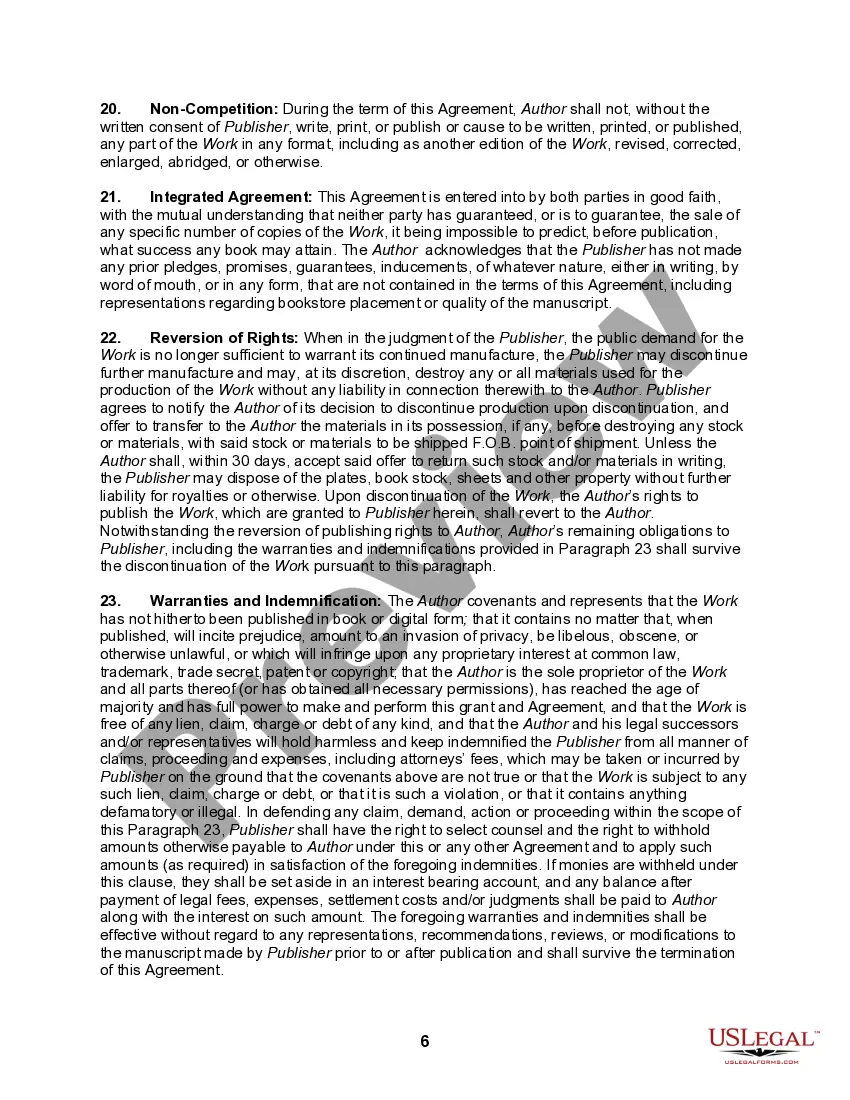
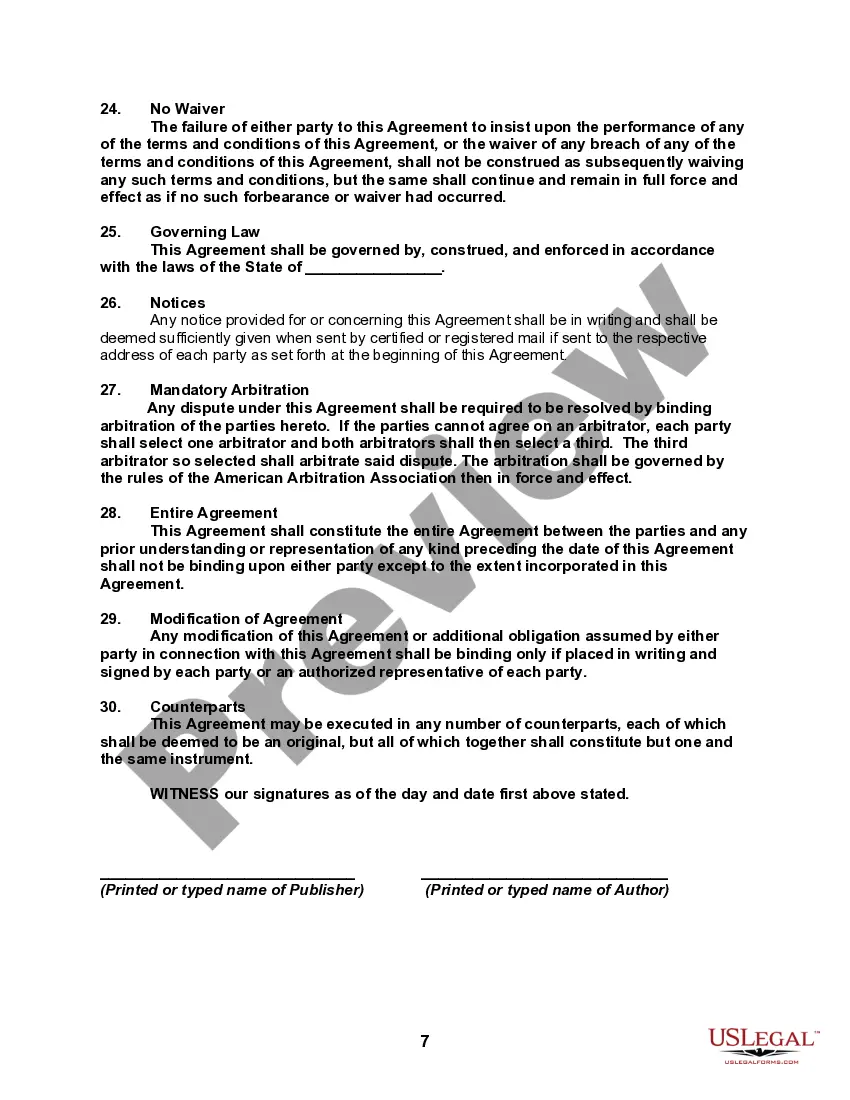
- Rights Granted: Specifies the exclusive rights assigned to the publisher for a defined period.
- Manner of Publication: Describes how the work will be published and the quality standards required.
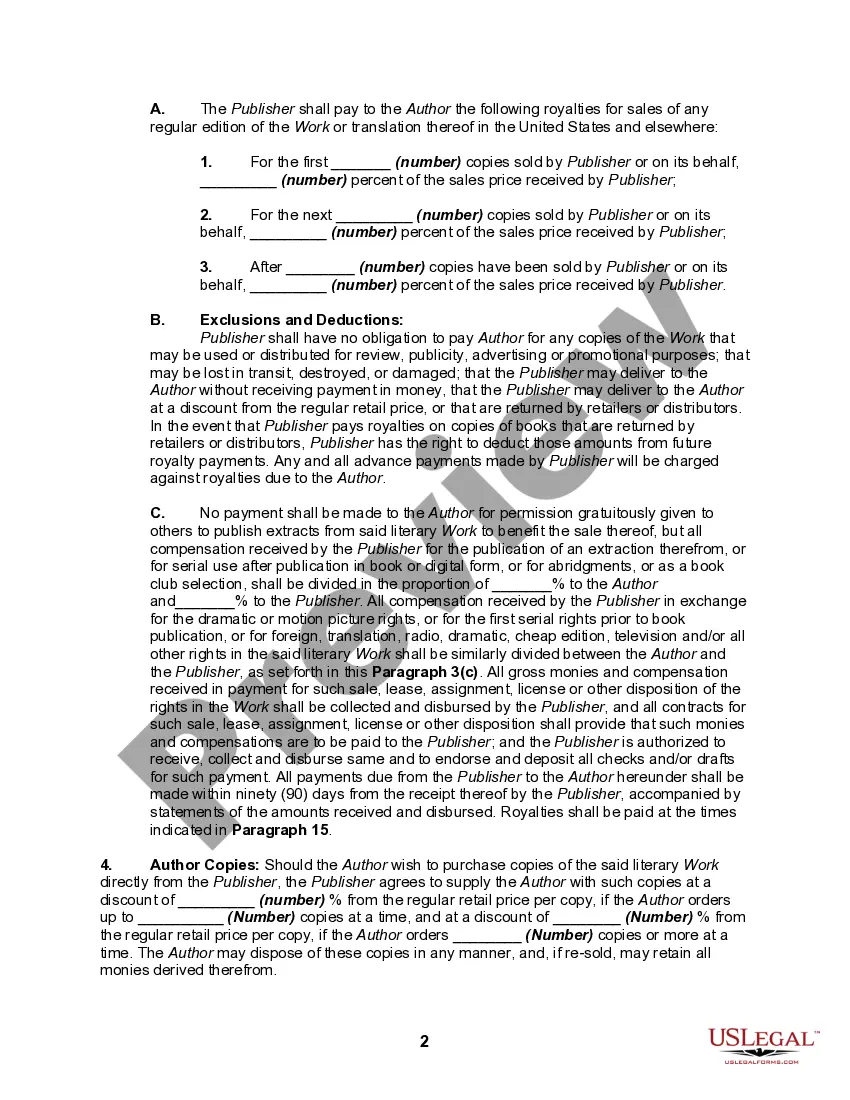
- Royalties: Outlines the payment structure and percentages for profits generated from sales.
- Author Copies: Details purchasing options for authors and any associated discounts.
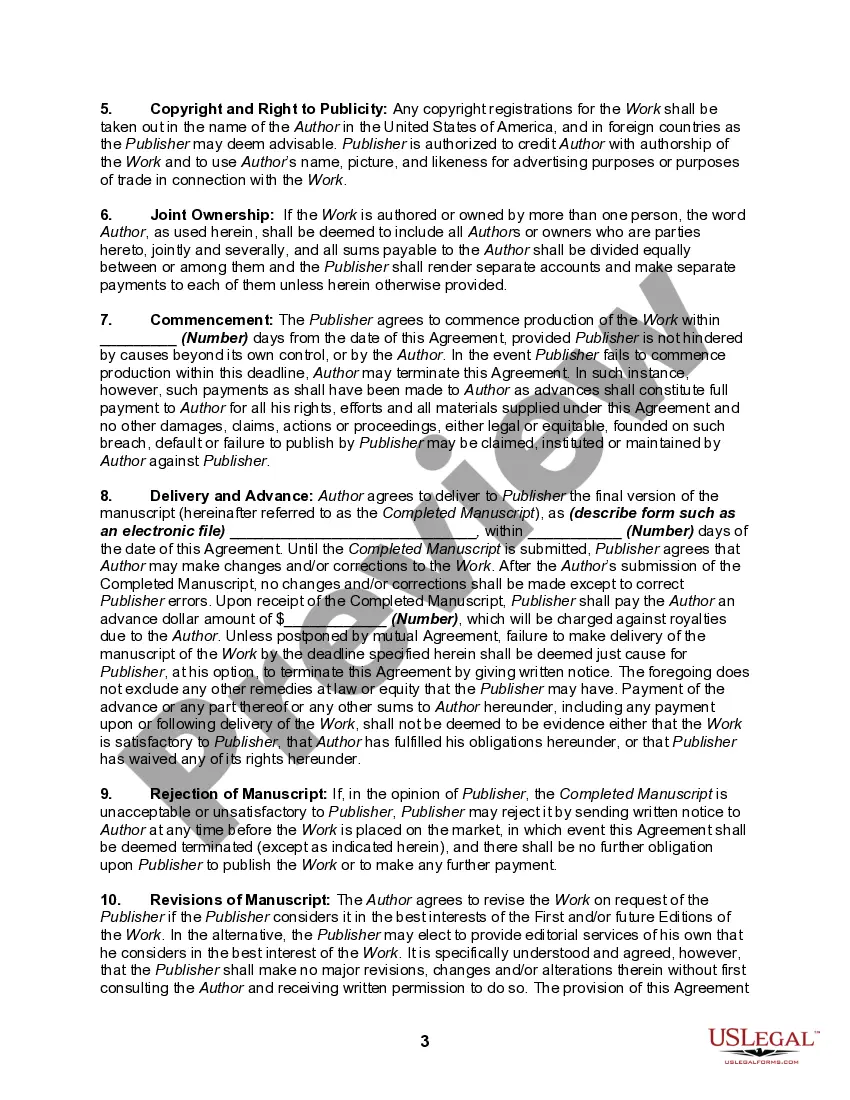
- Copyright and Right to Publicity: Establishes copyright ownership and promotional rights for both parties.
- Revisions of Manuscript: Covers the process and expectations for manuscript changes after submission.

Situations where this form applies
This form is ideal when an author and a publisher reach an agreement regarding the publication of a new literary work. It should be used when the author wants to ensure their rights are protected, including royalties and future publication formats, especially for digital platforms. Additionally, it is appropriate when both parties need to clarify their roles throughout the publishing process, such as production, distribution, and marketing of the work.
Who should use this form
- Authors seeking to publish their written works in both digital and print formats.
- Publishers looking to establish clear agreements with authors regarding rights and royalties.
- Co-authors or writers collaborating on a literary project who need to delineate ownership and rights.
Completing this form step by step
- Identify the parties: Enter the names and addresses of both the author and the publisher at the beginning of the form.
- Fill out the rights granted: Specify the exclusive rights being assigned to the publisher and the duration for which these rights will apply.
- Detail royalty structure: Clearly outline the payment percentages and conditions for the author based on sales.
- State publication details: Describe how the work will be published, including format and quality standards.
- Include copyright information: Document the copyright ownership and specify any promotional rights agreed upon by the parties.
Is notarization required?
This form usually doesn’t need to be notarized. However, local laws or specific transactions may require it. Our online notarization service, powered by Notarize, lets you complete it remotely through a secure video session, available 24/7.
Get your form ready online
Our built-in tools help you complete, sign, share, and store your documents in one place.
Make edits, fill in missing information, and update formatting in US Legal Forms—just like you would in MS Word.
Download a copy, print it, send it by email, or mail it via USPS—whatever works best for your next step.
Sign and collect signatures with our SignNow integration. Send to multiple recipients, set reminders, and more. Go Premium to unlock E-Sign.
If this form requires notarization, complete it online through a secure video call—no need to meet a notary in person or wait for an appointment.
We protect your documents and personal data by following strict security and privacy standards.

Make edits, fill in missing information, and update formatting in US Legal Forms—just like you would in MS Word.

Download a copy, print it, send it by email, or mail it via USPS—whatever works best for your next step.

Sign and collect signatures with our SignNow integration. Send to multiple recipients, set reminders, and more. Go Premium to unlock E-Sign.

If this form requires notarization, complete it online through a secure video call—no need to meet a notary in person or wait for an appointment.

We protect your documents and personal data by following strict security and privacy standards.
Typical mistakes to avoid
- Failing to specify the duration of the exclusive rights granted.
- Not clearly outlining the royalty percentages or conditions, leading to misunderstandings later.
- Neglecting to include provisions for revisions, which can cause conflicts in the publication process.
- Overlooking joint ownership clauses when multiple authors are involved.
Benefits of using this form online
- Convenience of immediate access to a comprehensive legal template.
- Editability allows users to customize the agreement to suit their specific needs.
- Reliability, as templates are drafted by licensed attorneys, ensuring legal compliance.
Legal use & context
- This form provides a legally binding framework for publishing agreements.
- It covers essential legal aspects such as copyright protection and royalty distribution.
- By using this form, both parties establish clear expectations regarding the publication and promotion of the work.
Key takeaways
- This form is essential for authors and publishers looking to formalize their publishing agreements.
- Understanding each component of the agreement can prevent potential legal disputes in the future.
- Both parties should review the terms carefully to ensure mutual understanding before signing.
Looking for another form?


Form popularity
FAQ
Usually, the author of the creative work is the owner of the copyright. But in the publishing industry, the owner of the copyright may be the publishing company due to an agreement between the author and the publisher. Some of the big names in book publishing are Random House, DoubleDay, and Penguin.
Self-published authors can make between 40% 60% royalties on a single book sale while traditionally published authors usually make between 10%-12% royalties. First-time authors who want to traditionally publish can get an advance, which is usually $10,000 (usually not that much more for a first-timer).
The average author with a first-time book deal can expect to receive an advance of $5,000 to $15,000. Once your book is released, you won't see another dime until you have earned back that advance$1.25 at a timeuntil the advance is paid back in full.
Should I copyright my book before I submit it to editors and agents? There is no need to copyright your book (with the U.S. Copyright Office) before submitting it.The publisher merely handles the paperwork on behalf of the author, and the copyright is the author's property.
Some of the most essential clauses of a standard (boilerplate) book publishing contract are: Grant of Rights, Subsidiary Rights, Delivery and Acceptance, Publication, Copyright, Advance (if there is any), Royalties, and Out of Print.
Author assigns copyright to the publisher Assignment of copyright is generally permanent unless the agreement indicates otherwise. If the author assigns copyright to the publisher; the publisher can also, at their discretion, enter into agreements with other parties to use the work.
Typically, an author can expect to receive the following royalties: Hardback edition: 10% of the retail price on the first 5,000 copies; 12.5% for the next 5,000 copies sold, then 15% for all further copies sold. Paperback: 8% of retail price on the first 150,000 copies sold, then 10% thereafter.
Author assigns copyright to the publisher Assignment of copyright is generally permanent unless the agreement indicates otherwise. If the author assigns copyright to the publisher; the publisher can also, at their discretion, enter into agreements with other parties to use the work.
Under standard royalties, an author gets roughly 20 to 30% of the publisher's revenue for a hardcover, 15% for a trade paperback, and 25% for an eBook. So, very roughly, every hardcover release that earns out brings the author something like 25% of all revenue earned by the publisher.