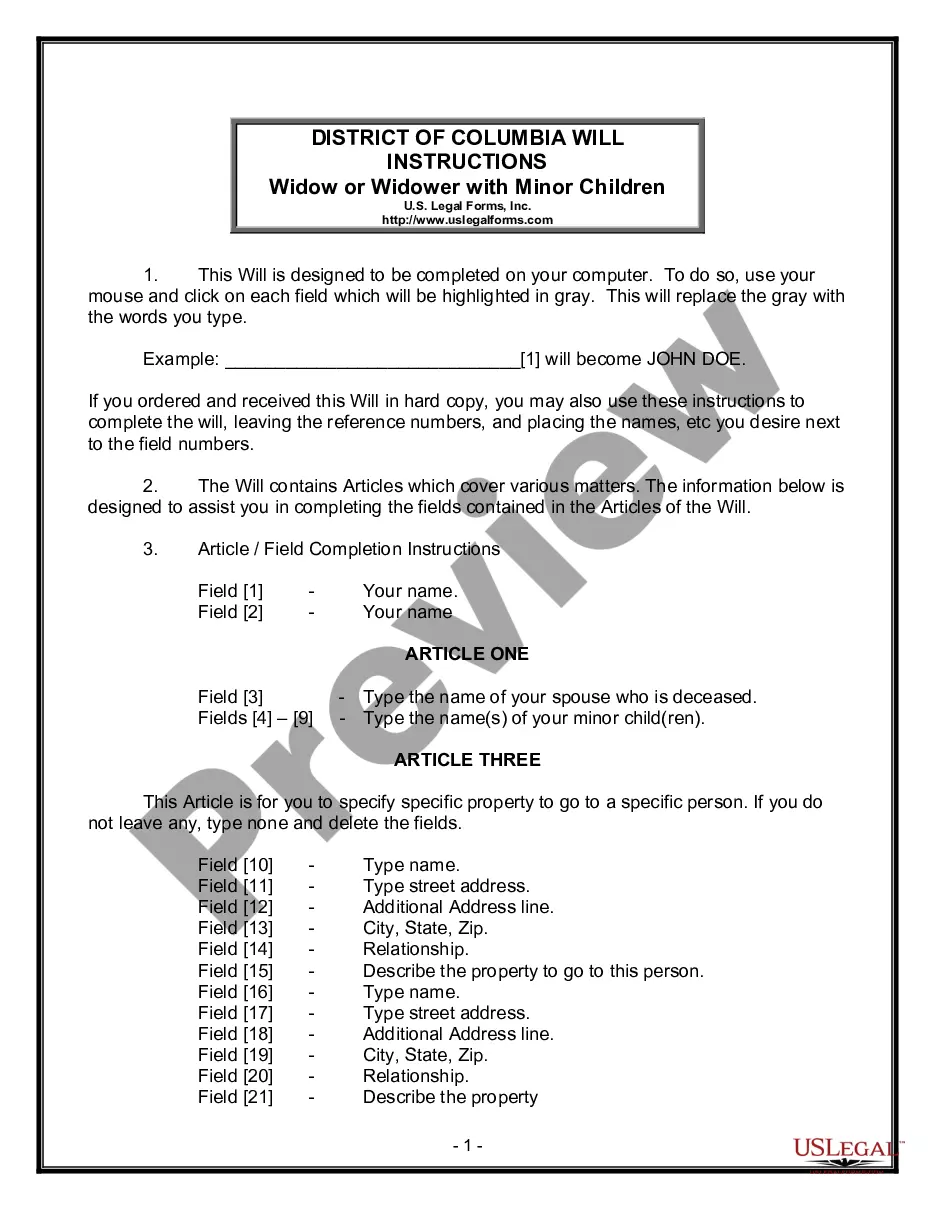
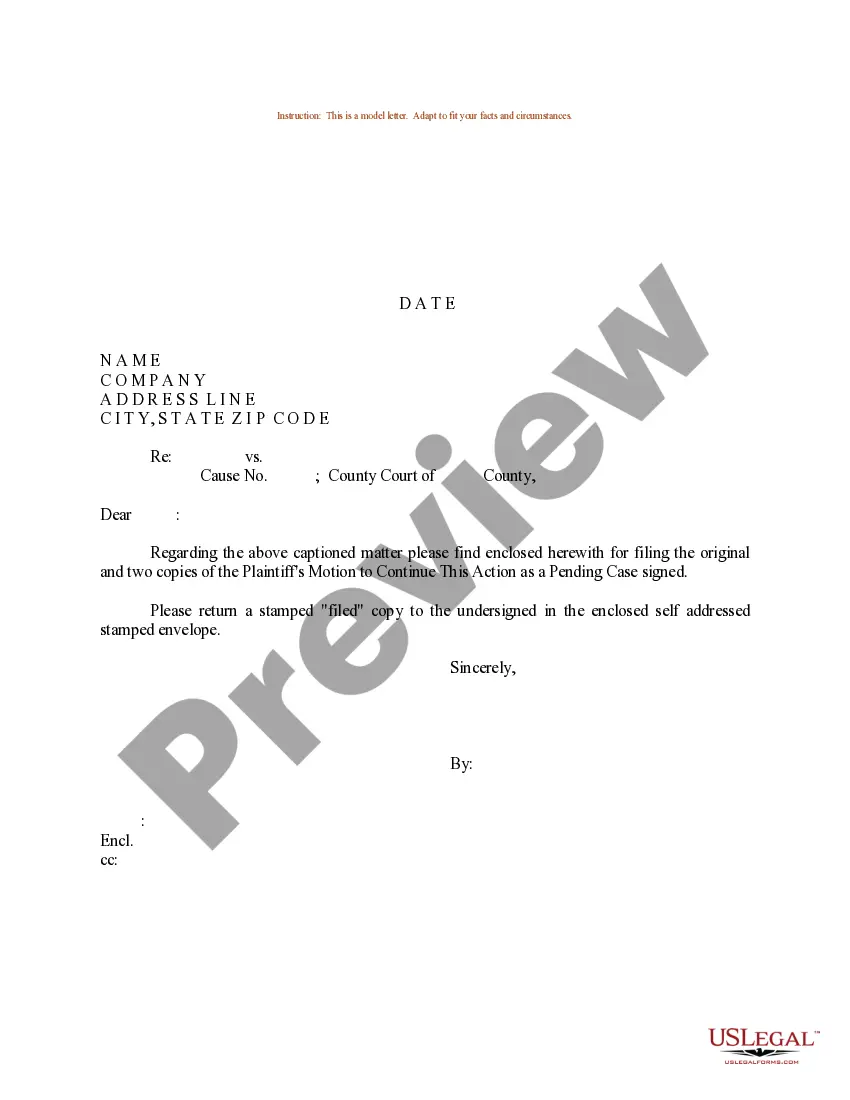
Sample Letter for Plaintiff's Motion to Continue This Action as a Pending Case
What is this form?
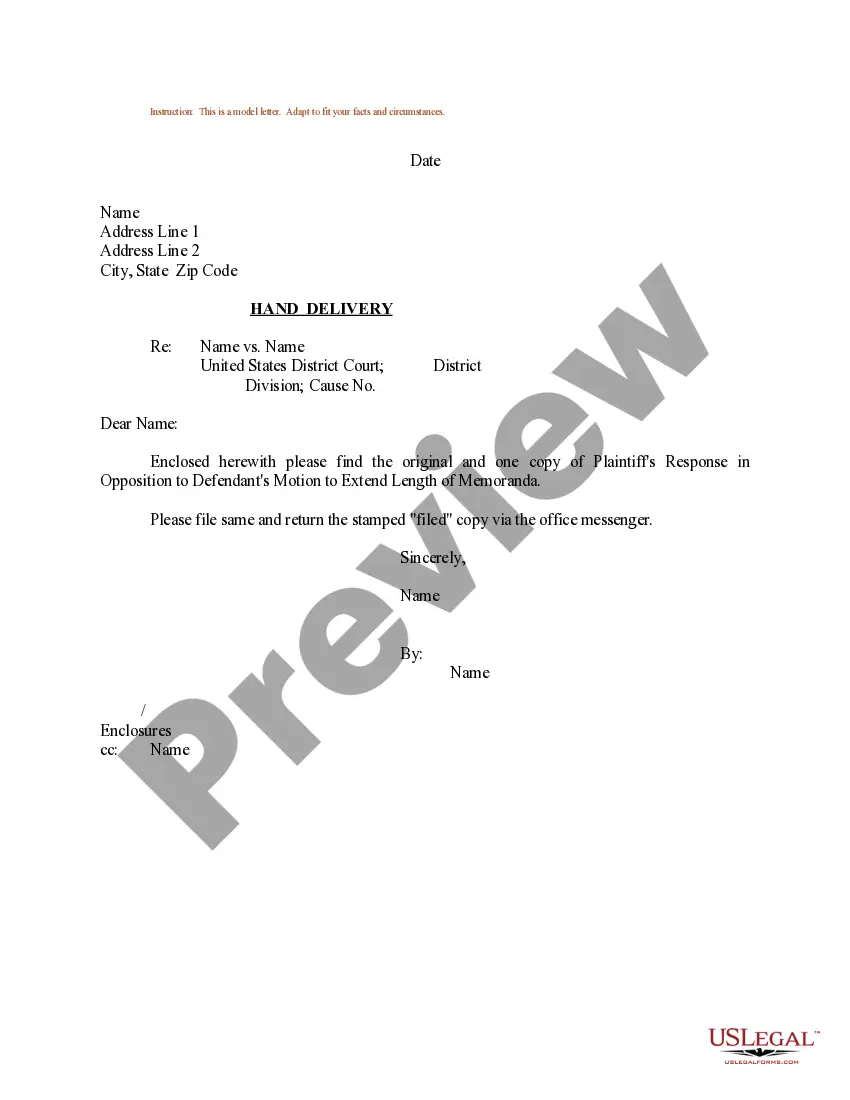
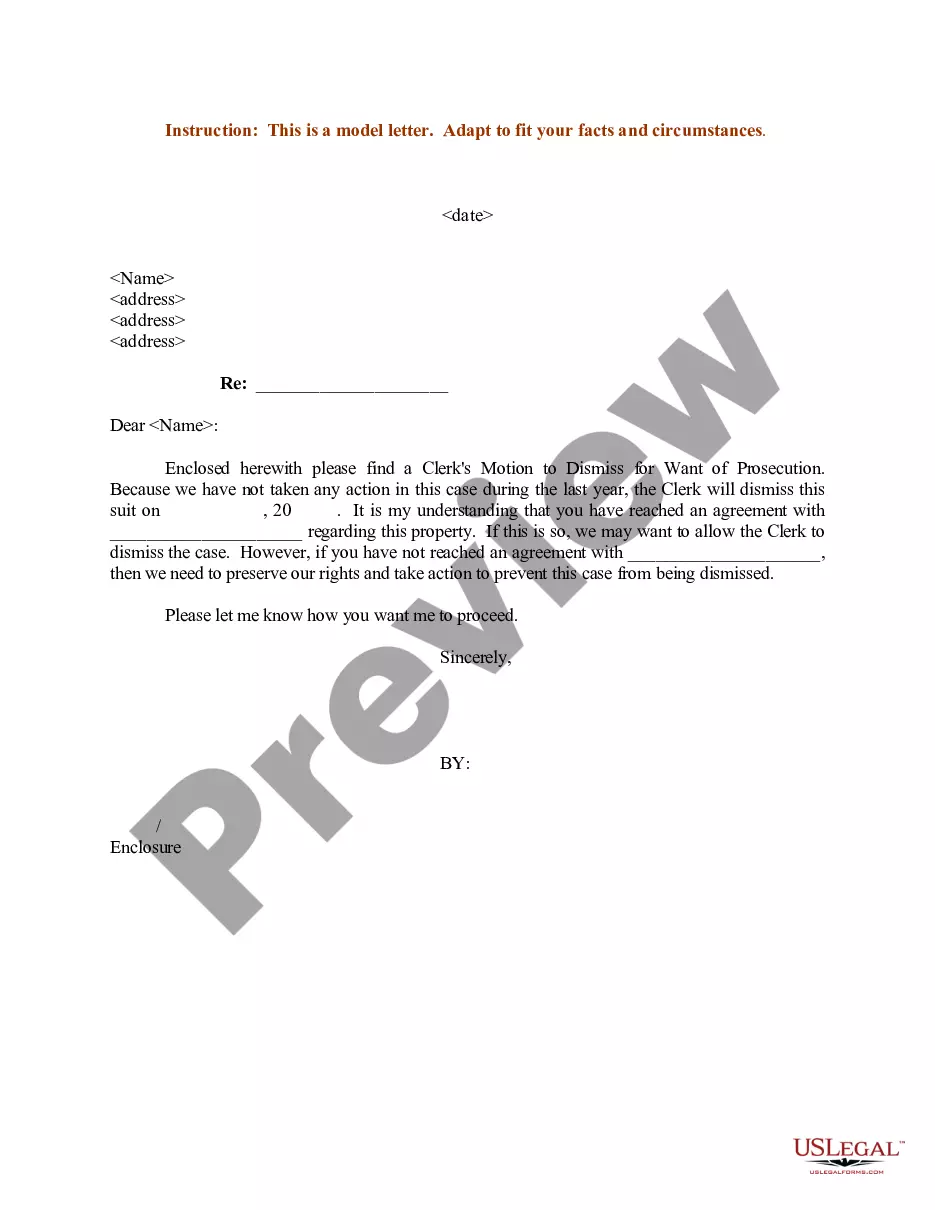
This Sample Letter for Plaintiff's Motion to Continue This Action as a Pending Case is a template designed for use in legal proceedings. Its primary purpose is to formally request a delay or continuance in a court case, allowing the plaintiff to maintain the action as pending until a new court date can be scheduled. This letter is crucial for ensuring that the plaintiff's interests are preserved while providing the court with the necessary notification of the request.
Key parts of this document
- Date of the letter
- Plaintiff's name and address
- Defendant's name and address
- Subject line indicating the purpose of the letter
- Clear statement requesting a continuance
- Signature of the plaintiff or their attorney

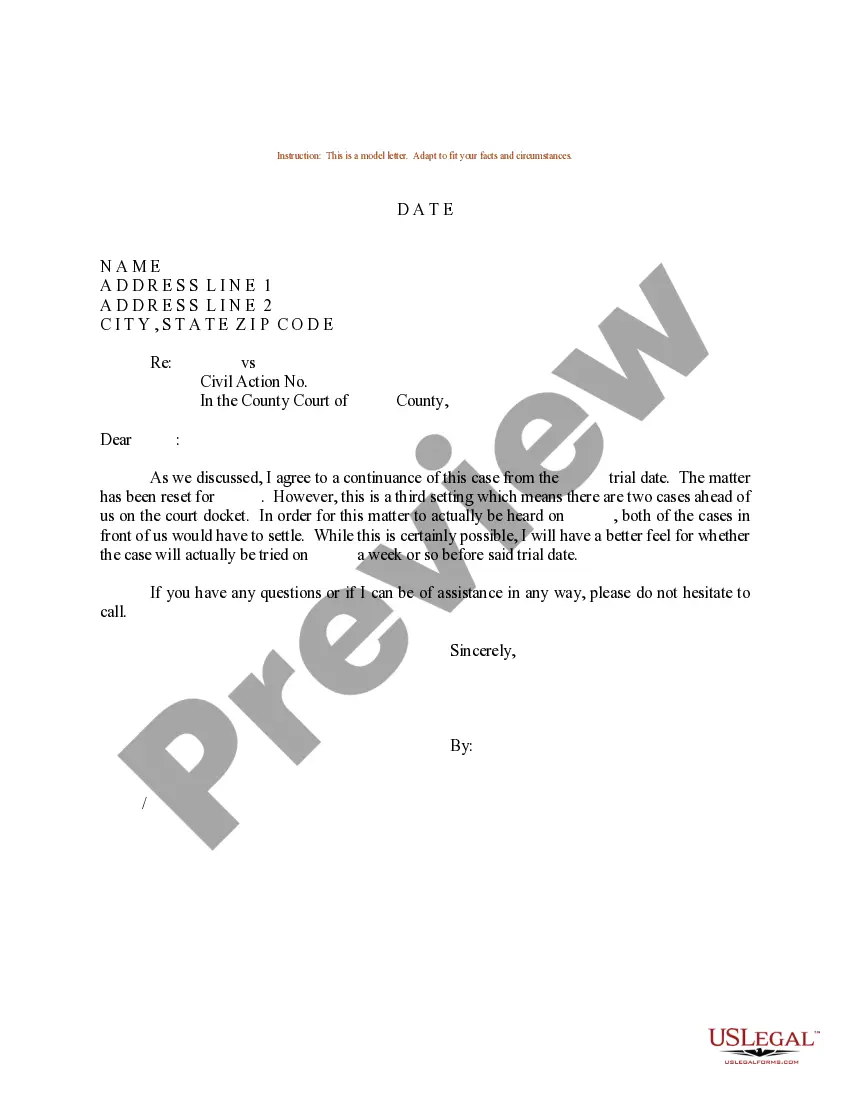
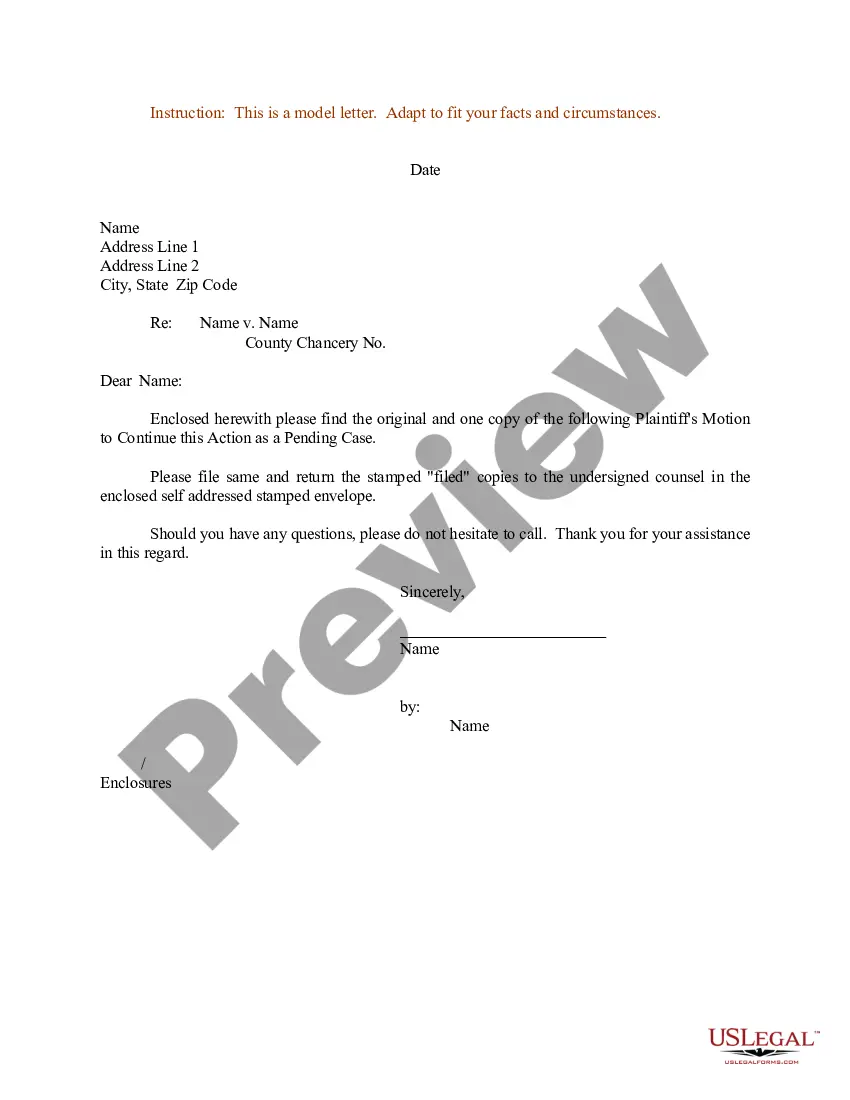
When this form is needed
This form should be used when a plaintiff needs to request a postponement of a court hearing or trial. Scenarios may include circumstances such as unexpected events, scheduling conflicts, or the need for additional time to prepare a case. Submitting this motion helps ensure that the plaintiff's legal rights are maintained while the case is temporarily on hold.
Who this form is for
- Plaintiffs in a legal action seeking a continuance
- Attorneys representing plaintiffs in civil litigation
- Individuals with limited legal knowledge needing a straightforward solution for court delays
How to prepare this document
- Enter the date at the top of the letter.
- Fill in the plaintiff's full name and address.
- Provide the defendant's name and address below the plaintiff's information.
- State the purpose clearly in the subject line.
- Clearly articulate the request for a continuance in the body of the letter.
- Sign the letter, ensuring it is dated.
Is notarization required?
This form does not typically require notarization to be legally valid. However, some jurisdictions or document types may still require it. US Legal Forms provides secure online notarization powered by Notarize, available 24/7 for added convenience.
Get your form ready online
Our built-in tools help you complete, sign, share, and store your documents in one place.
Make edits, fill in missing information, and update formatting in US Legal Forms—just like you would in MS Word.
Download a copy, print it, send it by email, or mail it via USPS—whatever works best for your next step.
Sign and collect signatures with our SignNow integration. Send to multiple recipients, set reminders, and more. Go Premium to unlock E-Sign.
If this form requires notarization, complete it online through a secure video call—no need to meet a notary in person or wait for an appointment.
We protect your documents and personal data by following strict security and privacy standards.

Make edits, fill in missing information, and update formatting in US Legal Forms—just like you would in MS Word.

Download a copy, print it, send it by email, or mail it via USPS—whatever works best for your next step.

Sign and collect signatures with our SignNow integration. Send to multiple recipients, set reminders, and more. Go Premium to unlock E-Sign.

If this form requires notarization, complete it online through a secure video call—no need to meet a notary in person or wait for an appointment.

We protect your documents and personal data by following strict security and privacy standards.
Mistakes to watch out for
- Failing to include a specific reason for the request.
- Not providing sufficient contact information.
- Neglecting to sign or date the letter.
- Using informal language that may undermine professionalism.
Advantages of online completion
- Convenience of accessing and downloading the form anytime.
- Editable Word format allows for easy customization.
- Legally vetted templates provide reliable guidance.
Legal use & context
- The letter serves as an official request to the court and must be treated with the same seriousness as any other legal document.
- Failure to submit this motion properly may result in consequences for the plaintiff's case.
- It is advisable to seek legal counsel if unsure about the completion or submission process.
Summary of main points
- Use this sample letter to request a delay in court proceedings formally.
- Fill out personal and case-specific information accurately.
- Submit on time to ensure your request is considered by the court.
Looking for another form?


Form popularity
FAQ
A Motion to Continue is a request by one or both parties in a legal dispute to the Court to extend or reschedule a hearing or trial date to a specified new date.
Sometimes the prosecution or the defense in a criminal trial discovers that they will not be ready to present their case properly at the scheduled time. Either side can ask the court for a continuance, or the judge can order a continuance independently if they feel that it is necessary.
You can file a written response to the Motion to Continue, calling it something like an "Objection" or "Opposition." This MAY prevent the Court from entering a continuance without a hearing...
In American procedural law, a continuance is the postponement of a hearing, trial, or other scheduled court proceeding at the request of either or both parties in the dispute, or by the judge sua sponte.
You can file a written response to the Motion to Continue, calling it something like an "Objection" or "Opposition." This MAY prevent the Court from entering a continuance without a hearing...
Continuances Based on Inadequate Time. Perhaps the most common reason for a continuance is when one side did not have enough time to investigate the case and analyze the evidence. Continuances Based on Changing the Indictment or Attorney. Continuances Based on Surprises.
The rule of reason applies to postponing a court date. If the justification is reasonable, related to trial preparation, your health or that of a family member, or a matter of some importance scheduled before the court date was set, the judge will likely have no problem with a request for postponement.
A continuance is a grant of additional preparation time before or during a trial. Either the prosecution or the defense can request a continuance, and sometimes even the court can order a continuance of its own accord.
A continuance can be asked for as many times as someone might wish. Whether the judge grants is going to be based on the type of case, the rationale for the request, and the particular judge's general stance on continuances.