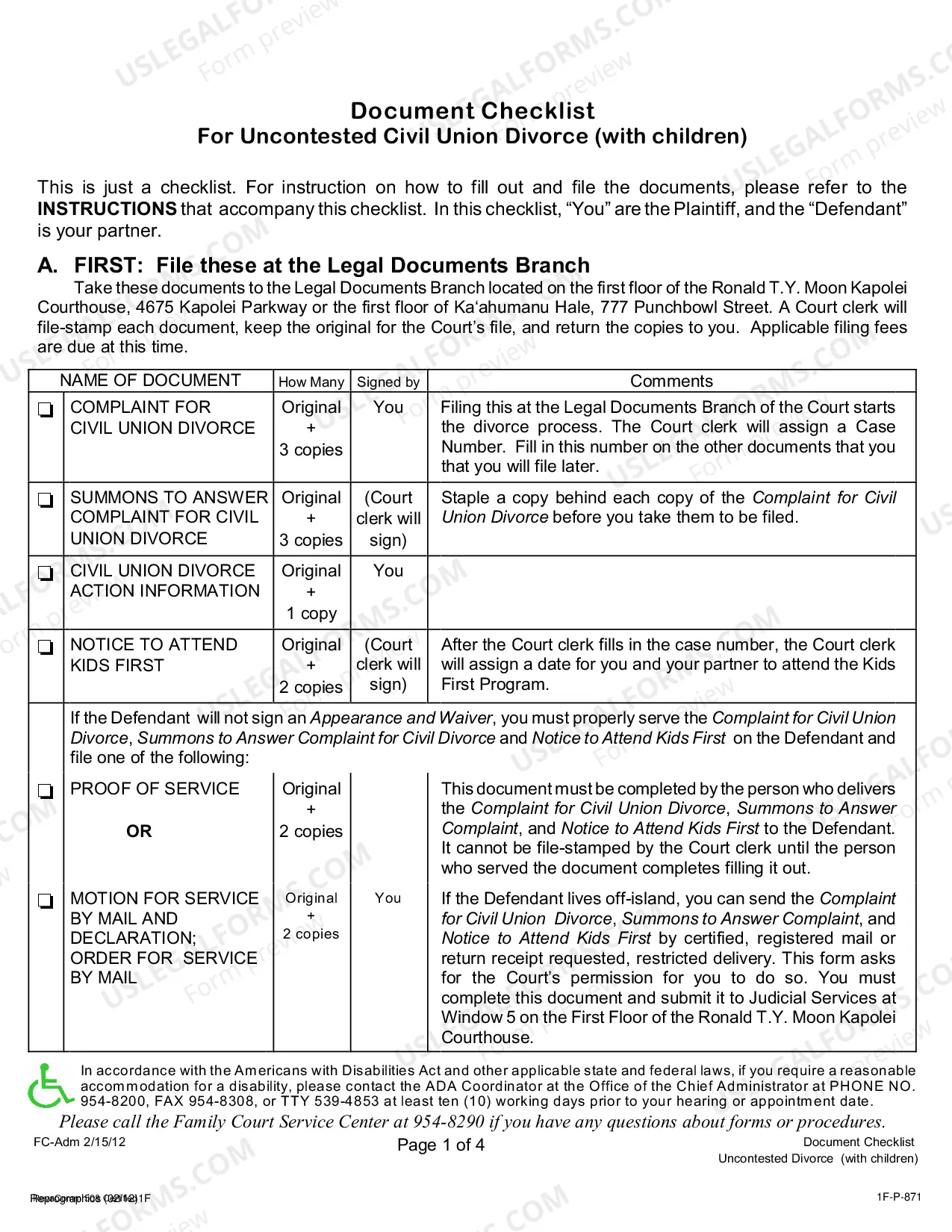
Sample Letter for Letter Template #1
What is this form?
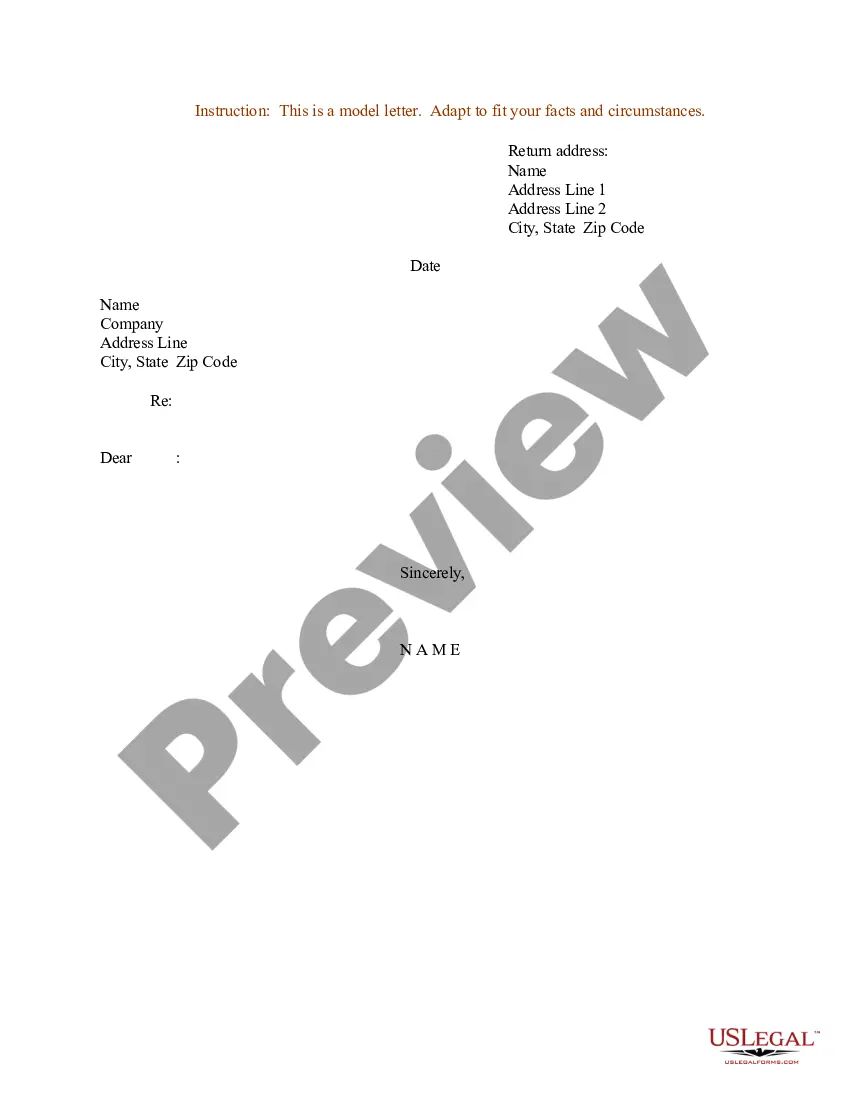
The Sample Letter for Letter Template #1 is a straightforward Word document designed to assist individuals in drafting a professional letter. This letter template serves as a guide to structure your written communication effectively. Unlike other letters, this template provides a clear framework that can be adapted for various purposes.
Key components of this form
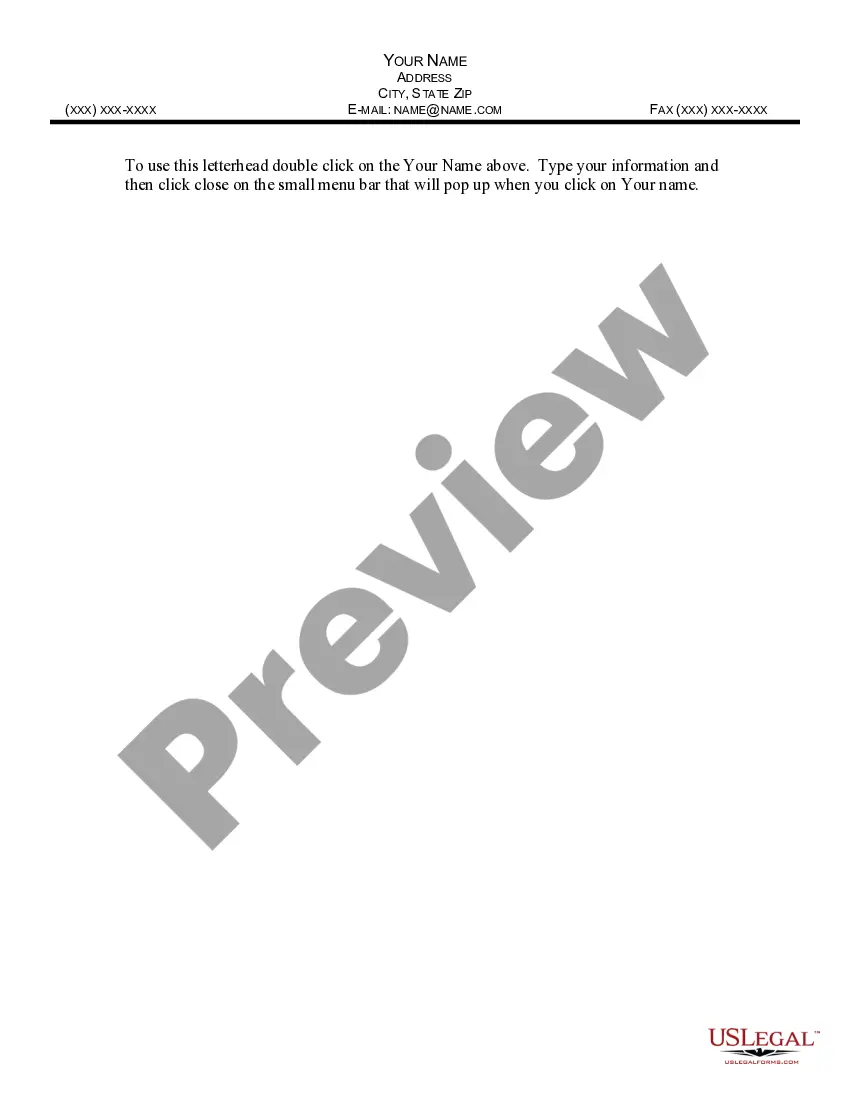
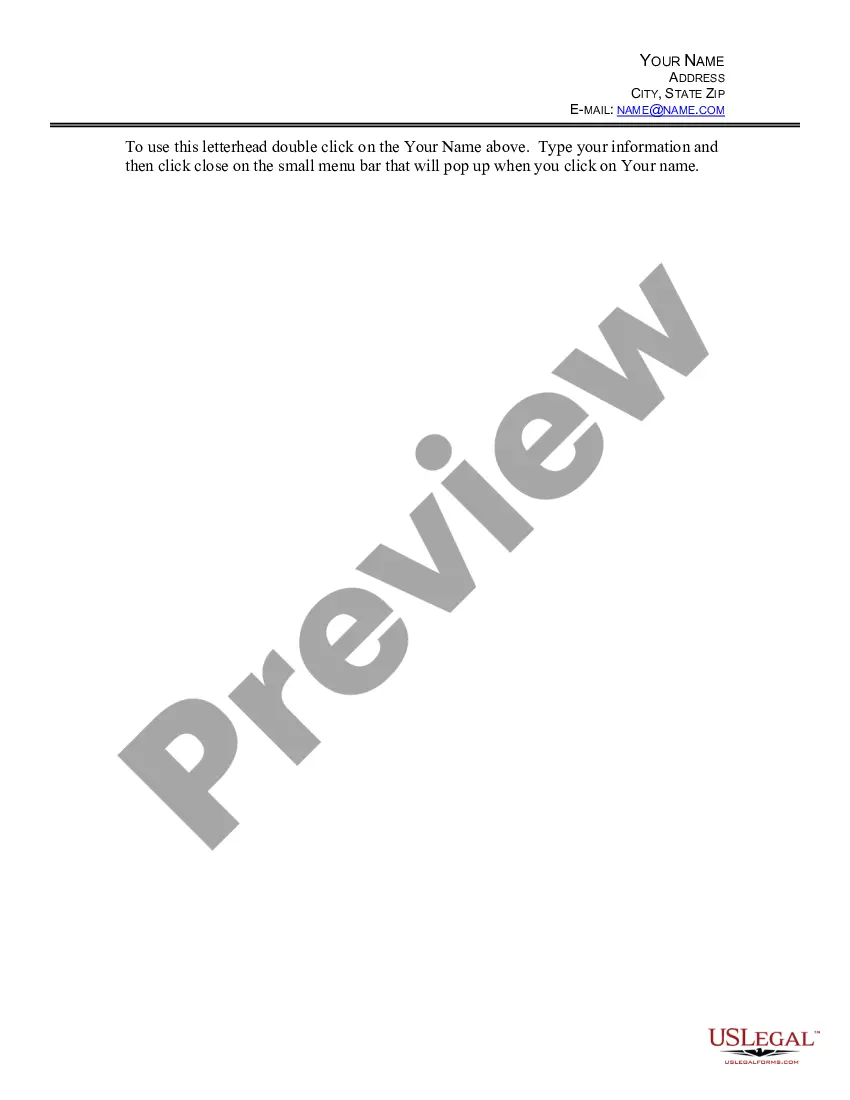
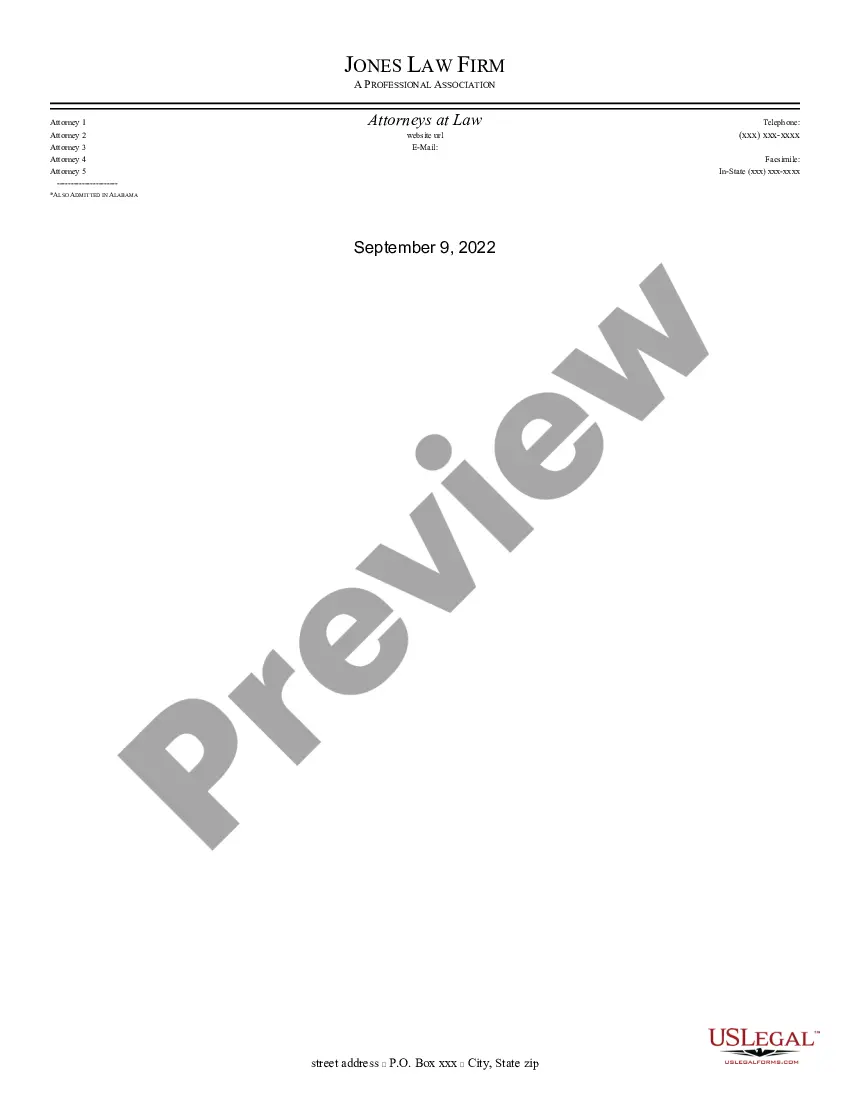
- Return address: Your name and address at the top of the letter.
- Date: The date when the letter is drafted.
- Recipient's address: The name and address of the person or company you are writing to.
- Subject line: A brief statement of the letter's purpose.
Common use cases
This letter template is useful in a variety of situations where formal communication is needed, such as responding to a business inquiry, sending a notice, or making a formal request. It can be customized to suit different contexts, making it a versatile option for many personal and professional scenarios.
Who needs this form
- Individuals seeking to communicate formally in a business context.
- Professionals who need to send letters for correspondence or notifications.
- Anyone looking for a structured template to organize their thoughts in a letter format.
How to complete this form
- Identify the sender's information and enter your name and address in the return address section.
- Insert the date when you are writing the letter.
- Fill in the recipient's details, including their name and address.
- Write a clear subject line that summarizes the purpose of your letter.
Is notarization required?
This form usually doesn’t need to be notarized. However, local laws or specific transactions may require it. Our online notarization service, powered by Notarize, lets you complete it remotely through a secure video session, available 24/7.
Get your form ready online
Our built-in tools help you complete, sign, share, and store your documents in one place.
Make edits, fill in missing information, and update formatting in US Legal Forms—just like you would in MS Word.
Download a copy, print it, send it by email, or mail it via USPS—whatever works best for your next step.
Sign and collect signatures with our SignNow integration. Send to multiple recipients, set reminders, and more. Go Premium to unlock E-Sign.
If this form requires notarization, complete it online through a secure video call—no need to meet a notary in person or wait for an appointment.
We protect your documents and personal data by following strict security and privacy standards.

Make edits, fill in missing information, and update formatting in US Legal Forms—just like you would in MS Word.

Download a copy, print it, send it by email, or mail it via USPS—whatever works best for your next step.

Sign and collect signatures with our SignNow integration. Send to multiple recipients, set reminders, and more. Go Premium to unlock E-Sign.

If this form requires notarization, complete it online through a secure video call—no need to meet a notary in person or wait for an appointment.

We protect your documents and personal data by following strict security and privacy standards.
Avoid these common issues
- Failing to include the recipient's correct address.
- Omitting the date of the letter.
- Not proofreading for spelling or grammatical errors before sending.
Advantages of online completion
- Convenient access to a professionally drafted template.
- Editable format allows for quick adjustments to fit your specific needs.
- Reliable structure ensures that your message is clear and effective.
Legal use & context
- This form can serve as a legally recognized document for effective communication.
- Ensures that important information is conveyed in a formal format.
Summary of main points
- This Sample Letter for Letter Template #1 helps in creating professional correspondence.
- Completing the form properly is essential for effective communication.
- It is a versatile tool for both personal and business use.
Looking for another form?
Form popularity
FAQ
You write your correspondent's reference in the form: 'Your ref: 01234'. If you wish to include your own reference, you write: 'My ref: 56789' or 'Our ref: 56789'. A letter in English almost always begins with 'Dear...', even if you do not know the person.
Most business letters must include a return address (letterhead or your name and address), date, an inside address (receiver's name and address), a salutation, body paragraphs, and a closing. However, there are several ways to format this information.
From the top of the page, the format for the APA style letter is: Sender's Address, Date, Recipient's Address, Salutation, Body, Closing and Sender's Name. Most APA letters are written in block format, in which all lines are justified to the left.
Contact Information (Include your contact information unless you are writing on letterhead that already includes it.) Your Name. Your Address. Date. Contact Information (The person or company you are writing to) Name. Title. Greeting (Salutation Examples) Body of Letter. Closing. Signature. Typed Signature.
Use block format left justified. Single space. Use Times New Roman 12 font. Type your address first. Space down one line. Type the date. Space down one line. Type the recipient's name and address.
Don't use this overused opening line. I'm writing to apply for the role of2026 is the most overused opening line job seekers use on their cover letters. Cut meaningless buzzwords. Don't mention every past job. Use snappy, short words rather than long phrases.
First Paragraph: Clearly introduce yourself. Second Paragraph: Talk about your relevant skills and accomplishments. Third Paragraph: Highlight your best qualities and explain why you're a good fit. Fourth Paragraph: Conclude with a call to action.
Sender's address. Date. Name / Designation of Addressee. Address of the Addressee. Salutation. Subject. Body Introduction, Content, Conclusion. Complimentary Close.
For example, a customer may simply reference transaction 123456 instead of using the store and date of the transaction.With the reference number, the company can identify the merchant or seller, as well as the card terminal or terminal owner that was used to execute the transaction.