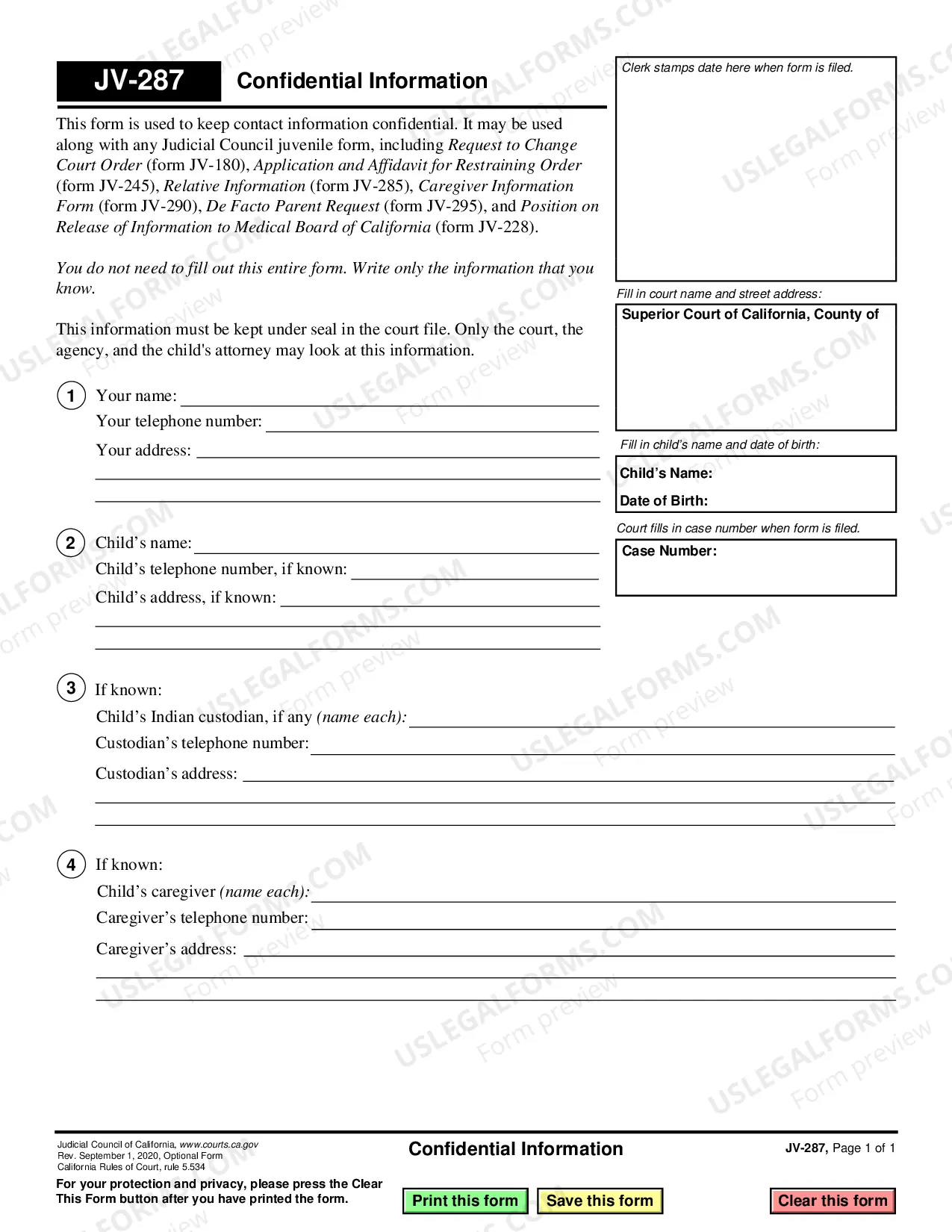
Motion for In-Camera Hearing
Understanding this form
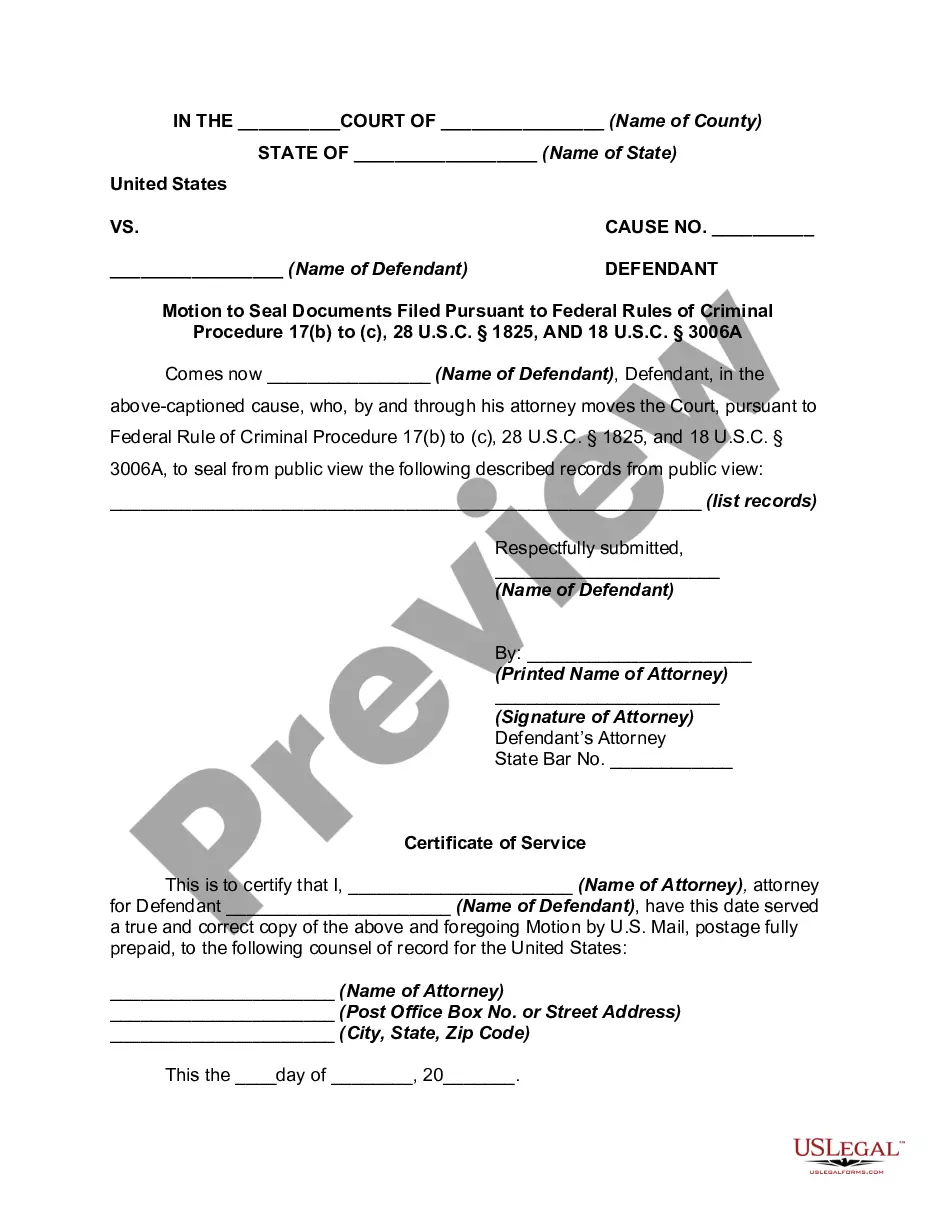
The Motion for In-Camera Hearing is a legal document filed by a defendant to request a private court session. This motion is used to assess the relevance of evidence, particularly regarding a victim's past conduct, while maintaining the privacy of sensitive information. The in-camera process differs from regular hearings by restricting public access, ensuring vulnerable witnesses or parties are protected.
Key components of this form
- Name of the court and parties involved.
- The precise request for an in-camera hearing, citing relevant statutes.
- Argument for the relevance of the victim's past conduct to the case.
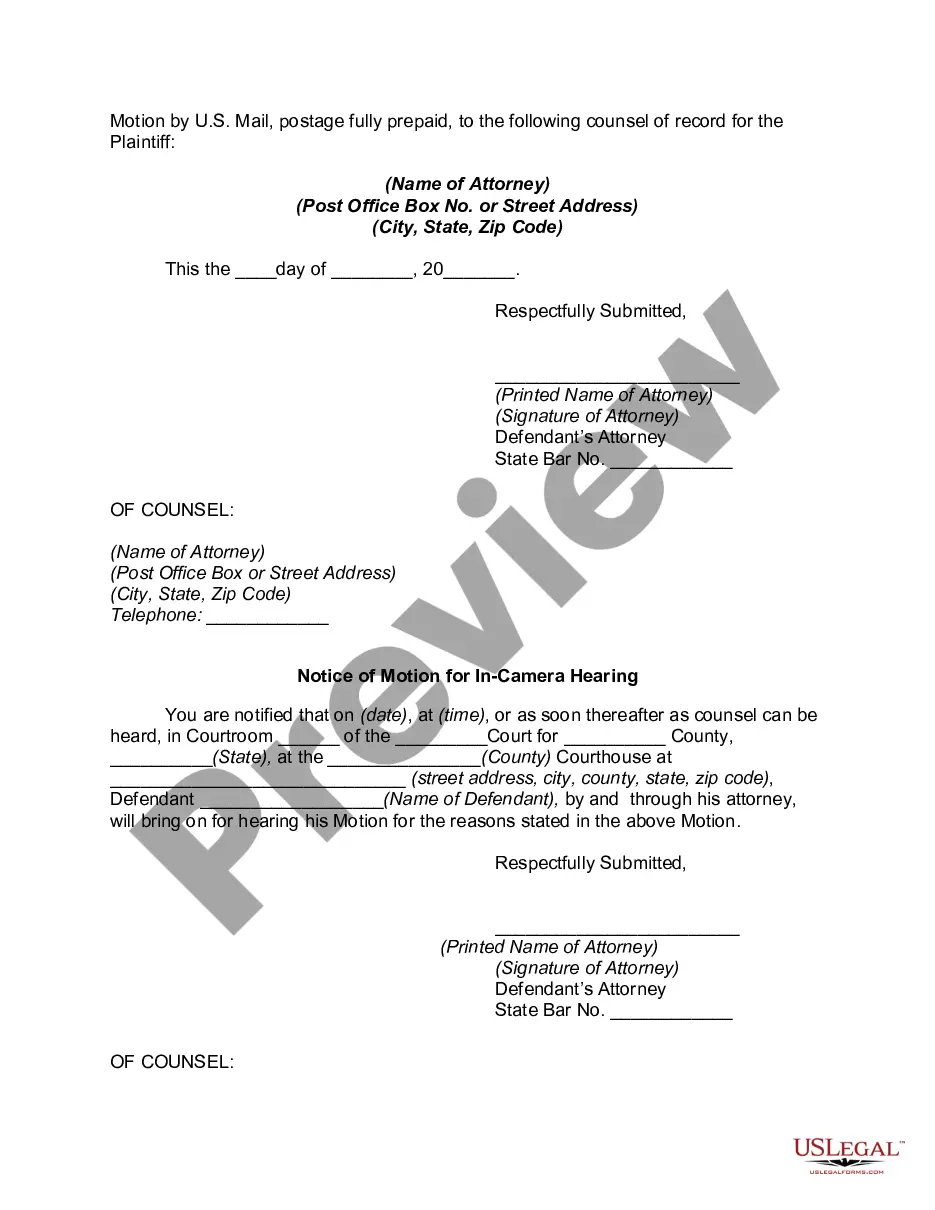
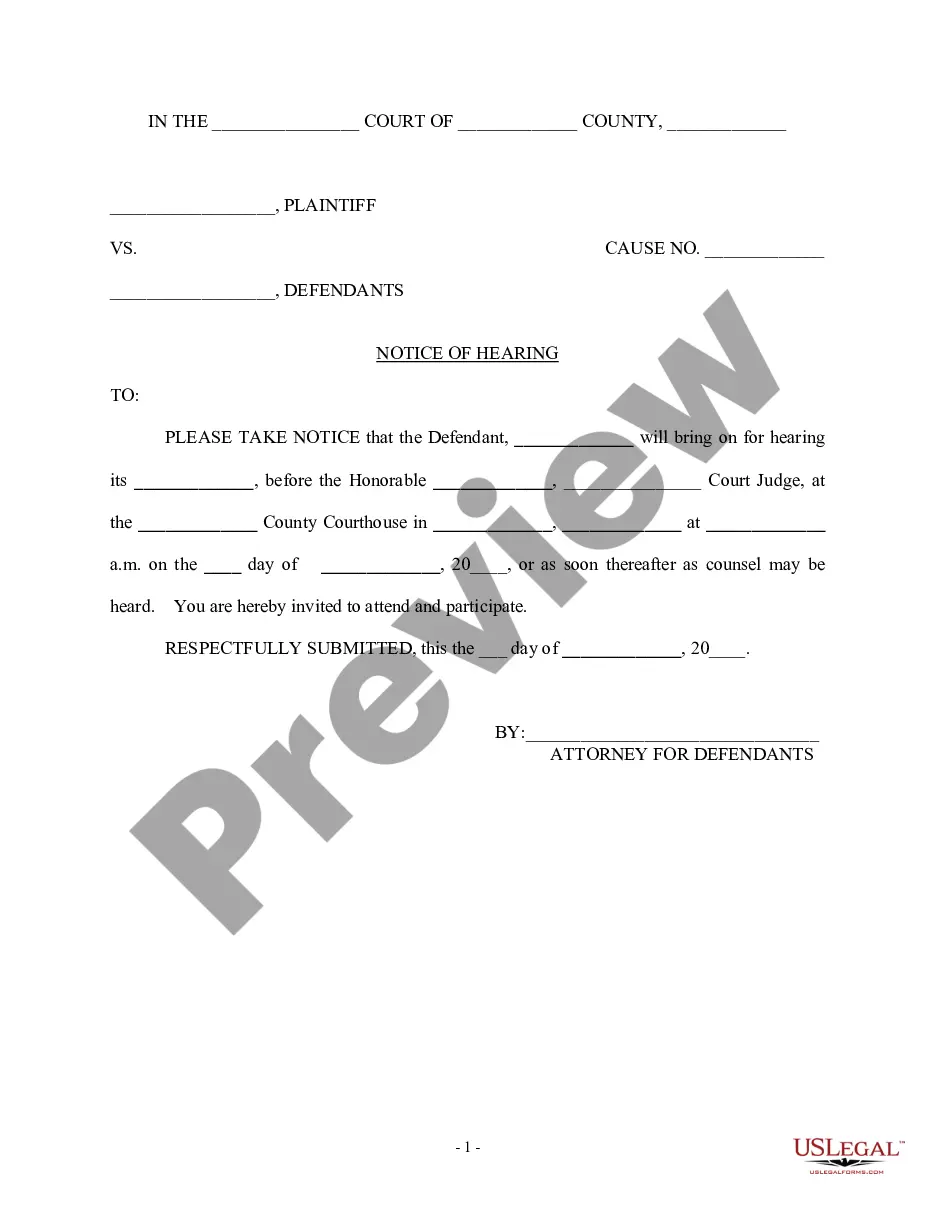
- Notice of the motion including date, time, and location of the hearing.
- Signature block for the attorney representing the defendant.

When this form is needed
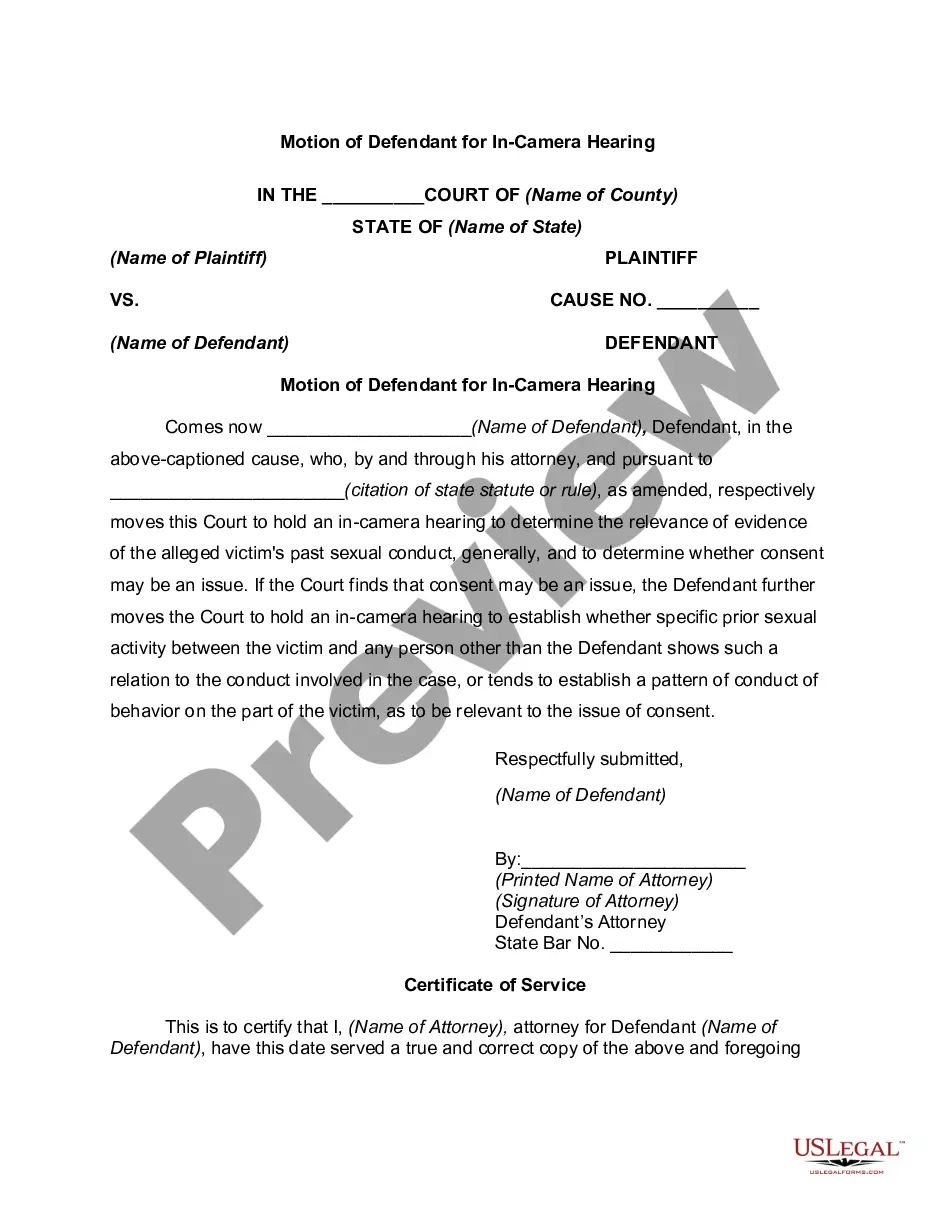
This form should be used in situations where a defendant believes that evidence related to a victim's past sexual conduct may be crucial in determining the issue of consent in their defense. It is particularly applicable in cases involving sexual assault or similar crimes, where personal privacy and the integrity of evidence are essential considerations.
Who can use this document
- Defendants in criminal cases involving sensitive evidence.
- Attorneys representing defendants seeking confidential hearings.
- Any party needing to protect the privacy of witnesses or victims during legal proceedings.
Instructions for completing this form
- Fill in the name of the court and the parties involved in the case.
- Provide a citation for the applicable state statute or rule supporting the motion.
- Detail the request for an in-camera hearing, specifically addressing the factors related to the victim's past conduct.
- Indicate the date and time for the hearing in the notice section.
- Sign and date the motion as the attorney representing the defendant.
Does this form need to be notarized?
In most cases, this form does not require notarization. However, some jurisdictions or signing circumstances might. US Legal Forms offers online notarization powered by Notarize, accessible 24/7 for a quick, remote process.
Get your form ready online
Our built-in tools help you complete, sign, share, and store your documents in one place.
Make edits, fill in missing information, and update formatting in US Legal Forms—just like you would in MS Word.
Download a copy, print it, send it by email, or mail it via USPS—whatever works best for your next step.
Sign and collect signatures with our SignNow integration. Send to multiple recipients, set reminders, and more. Go Premium to unlock E-Sign.
If this form requires notarization, complete it online through a secure video call—no need to meet a notary in person or wait for an appointment.
We protect your documents and personal data by following strict security and privacy standards.

Make edits, fill in missing information, and update formatting in US Legal Forms—just like you would in MS Word.

Download a copy, print it, send it by email, or mail it via USPS—whatever works best for your next step.

Sign and collect signatures with our SignNow integration. Send to multiple recipients, set reminders, and more. Go Premium to unlock E-Sign.

If this form requires notarization, complete it online through a secure video call—no need to meet a notary in person or wait for an appointment.

We protect your documents and personal data by following strict security and privacy standards.
Common mistakes
- Failing to cite the appropriate state statute or rule.
- Omitting key details of the evidence being contested.
- Not filling in the required names and dates correctly.
Benefits of completing this form online
- Convenience of downloading and completing the form at your pace.
- Editability allows for easy customization of details.
- Reliability of using professionally drafted templates ensures compliance with legal standards.
Legal use & context
- The in-camera process protects sensitive information that could prejudice the case.
- Understanding local laws is key to effectively utilizing this form to secure an in-camera hearing.
Looking for another form?
Form popularity
FAQ
What it means to file a motion: A motion, in its simplest form is a list of requests that you are asking the Court grant on your behalf. You, or your attorney on your behalf, will file a Notice of Motion which includes a list of requests for the court to rule upon.
A hearing for the purpose of asking a judge to issue a ruling or order. The motion is typically filed by one side and a notice is sent to the opposing attorney who responds in writing.
What happens next? When you file your Motion and Affidavit to Set Aside Default, you will get a hearing date and time from the court clerk. At the hearing, the judge will grant or deny the motion. If the judge grants your motion, the default or default judgment will be set aside, and the case will move forward.
When you file your motion, the court clerk will insert the date, time, and place of the hearing on your motion. You must then serve (mail) a copy of your filed motion (including all exhibits and the date, time, and place of hearing) to all other parties in the case.
In camera is a Latin phrase meaning in chambers (referring to the judge's chambers). It means that the case will be heard in private and members of the public are not allowed to attend. Almost all family law cases are subject to this rule.
At a motion hearing, each party can argue its position and the judge can ask specific questions about the fact or law. After hearing the judge decides the motion and this is called an order. However, during a trial or a hearing, an oral motion may also be permitted.
There's no exact time limit on how fast a judge must do his work. In the states and federal courts I am familiar with, the lawyer files a motion and sets it for hearing about six weeks later, more or less, depending on the court's docket.
Hearing on a motion is Motion Hearing. A Motion is a request asking a judge to issue a ruling or order on a legal matter.At a motion hearing, each party can argue its position and the judge can ask specific questions about the fact or law. After hearing the judge decides the motion and this is called an order.
A Latin term literally meaning "in chambers" but carrying the meaning "in private". This refers to portions of a case that are held in private before a judge. The press and the public are not allowed to take part. courts. subject.