Illinois Agreement between Parties Living Together but Remaining Unmarried with Regard to Sale of Residence
About this form
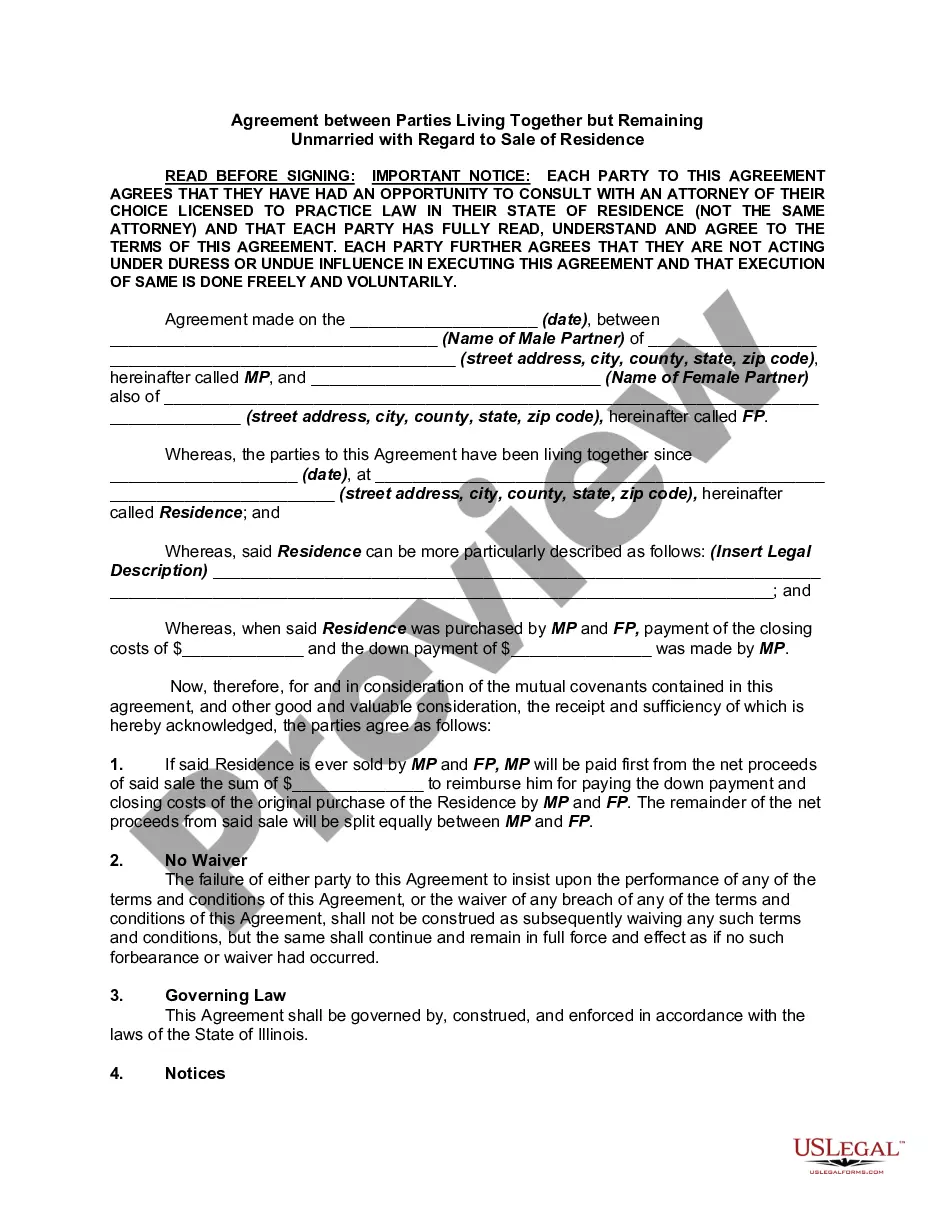
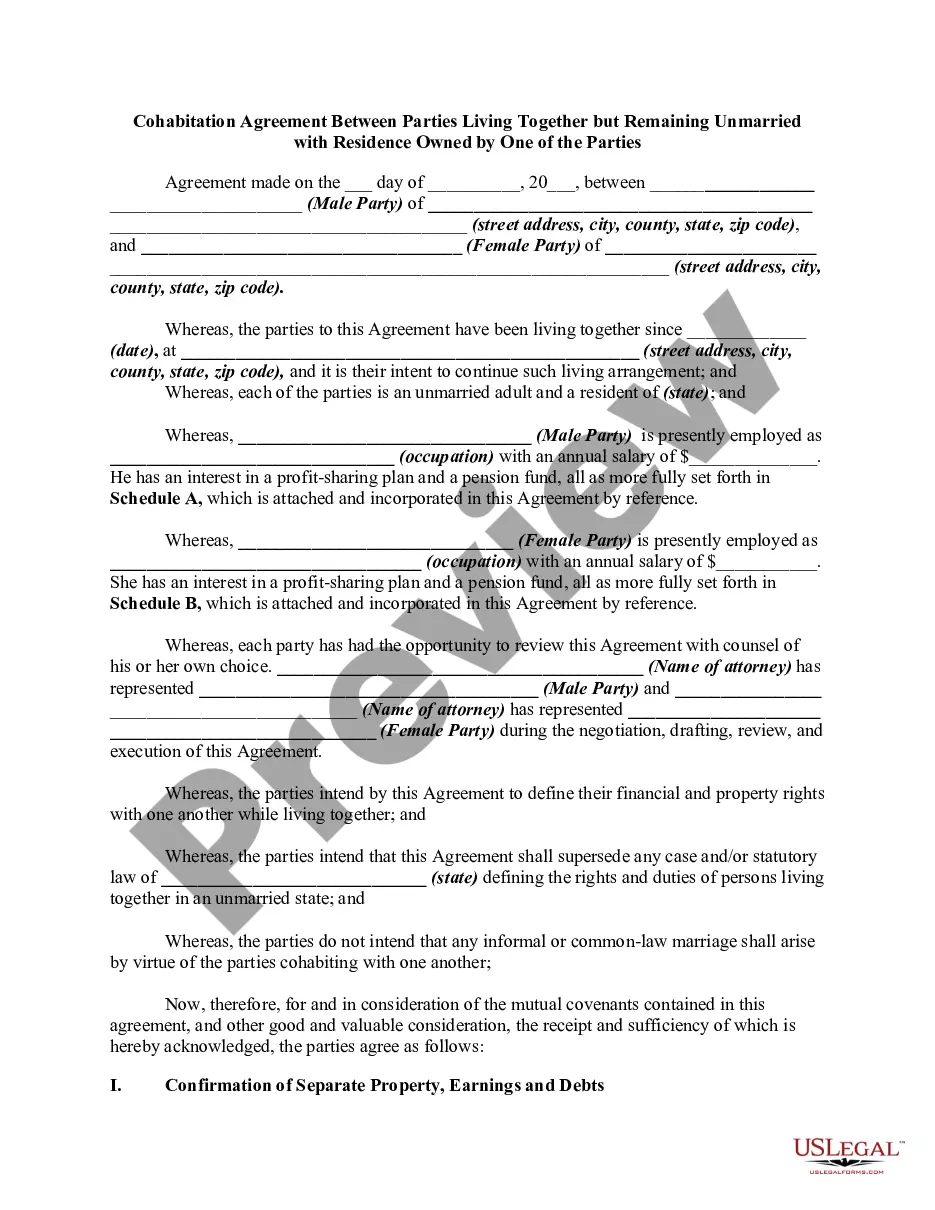
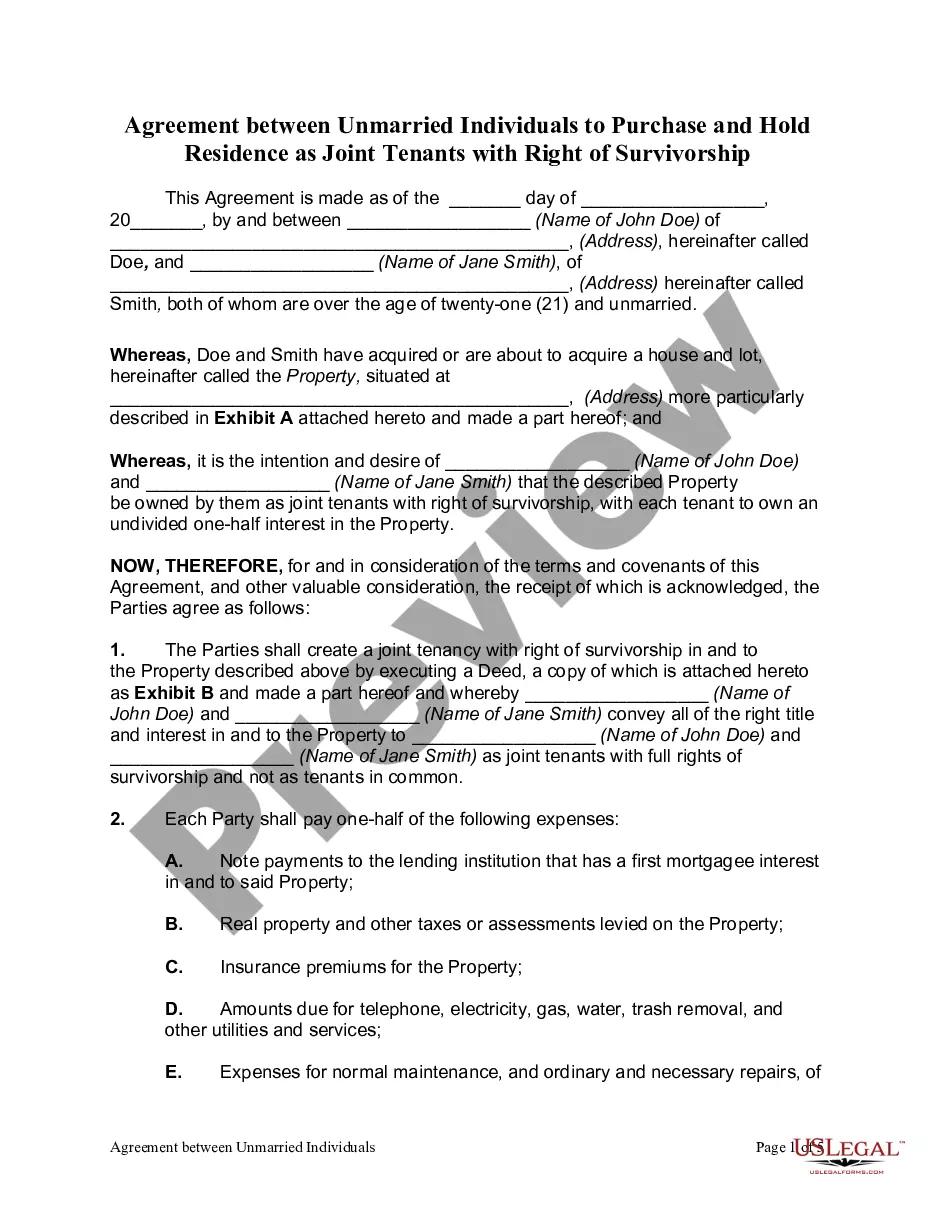
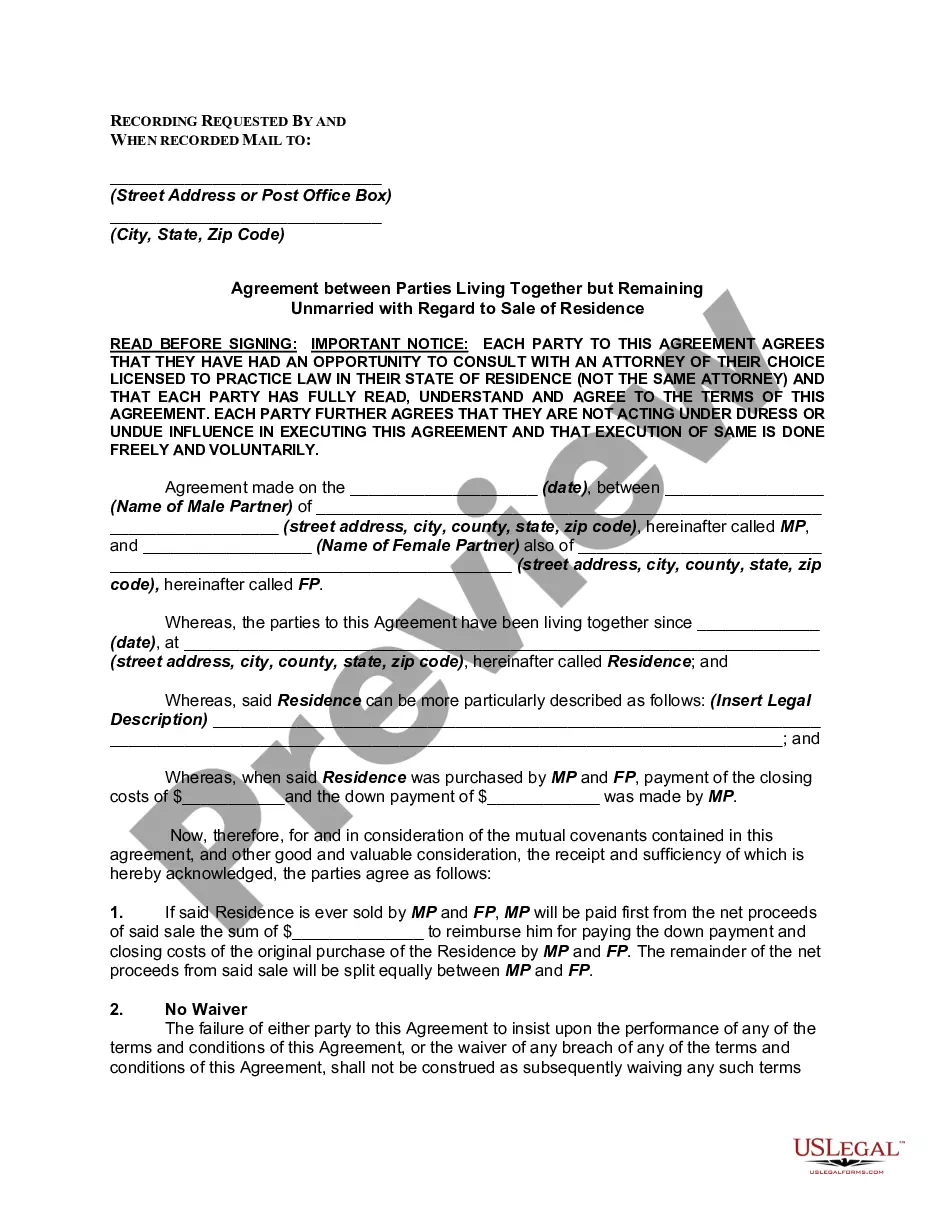
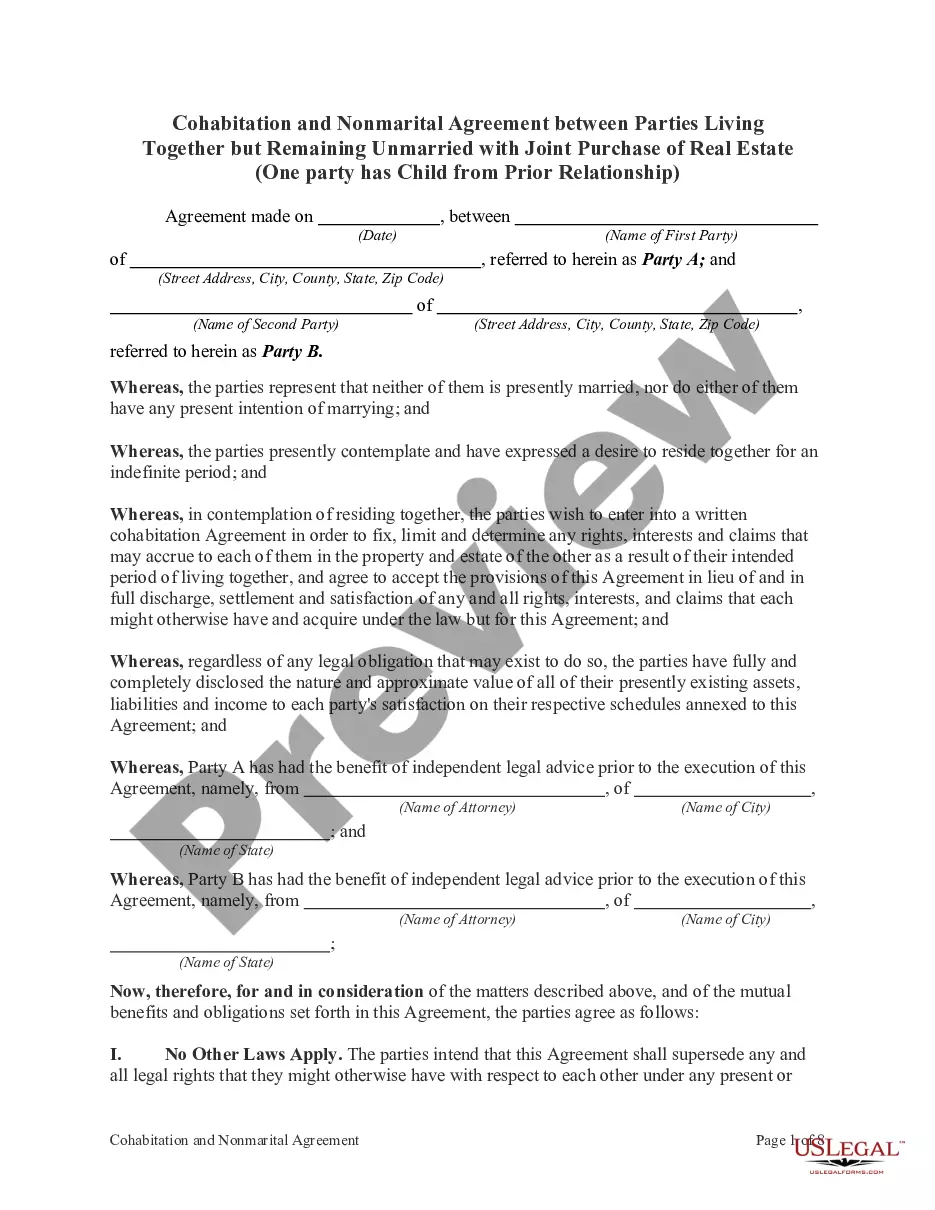
The Agreement between Parties Living Together but Remaining Unmarried with Regard to Sale of Residence is a legal document designed for individuals who cohabitate but choose not to marry. This form outlines the financial responsibilities regarding the sale of their shared residence, specifically addressing how proceeds from a sale should be distributed. It ensures that the party who contributed more towards the purchase cost is compensated first upon sale, preventing potential disputes in the future.
Main sections of this form
- Reimbursement Clause: Specifies the amount the paying party will receive from the sale proceeds for their initial investment in down payment and closing costs.
- Equal Distribution: Ensures the remaining proceeds after reimbursement are split equally between both parties.
- Governing Law: States the form will be governed by Illinois law, which is crucial for enforcing the agreement.
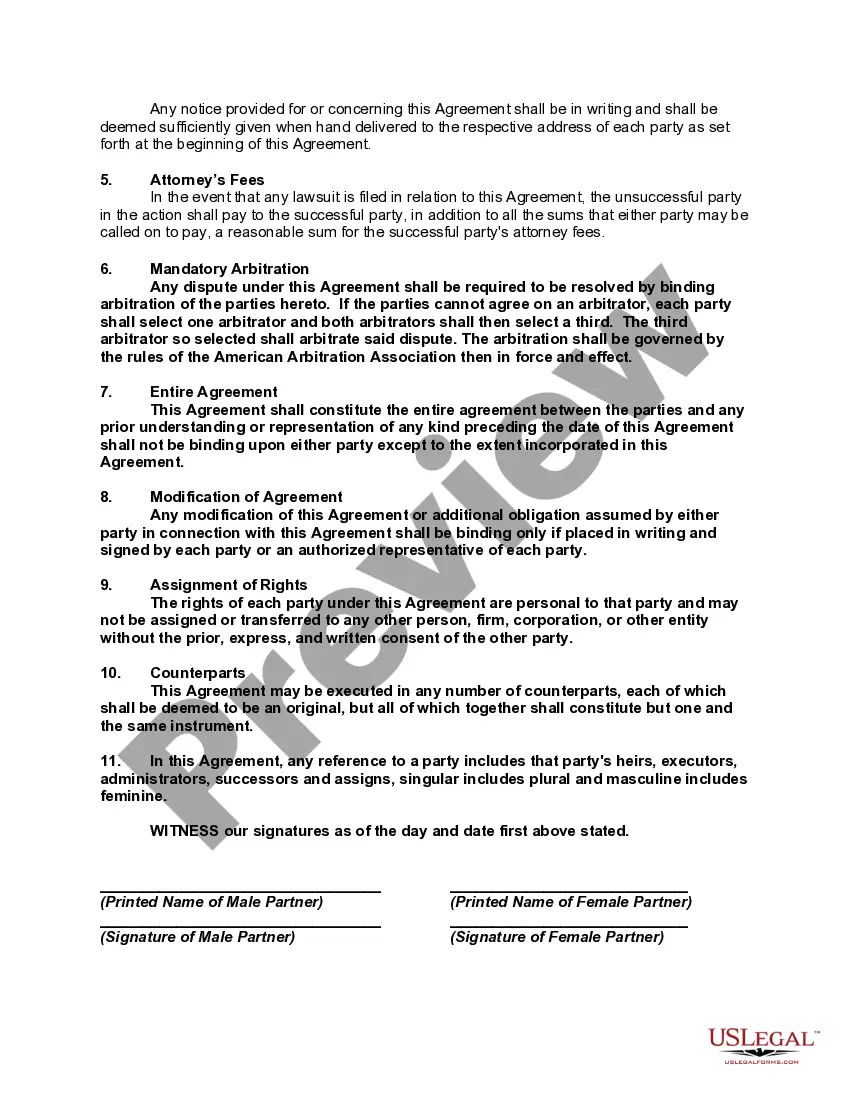
- Arbitration Requirement: Mandates that any disputes under this Agreement be settled through arbitration instead of litigation.
- Modification Clause: Outlines how the agreement can be modified, requiring any changes to be documented in writing.
When to use this form
This form should be used when two parties, regardless of gender, live together in a long-term relationship without formalizing their union through marriage and wish to define their rights and responsibilities regarding their shared residence. It is particularly useful when one partner contributes significantly more financially to the purchase of the home and seeks assurance regarding the reimbursement from any future sale.
Who this form is for
This agreement is suitable for:
- Unmarried couples who share a residence.
- Partners who want to clarify financial contributions related to home ownership.
- Individuals looking to avoid disputes regarding property sales in the event of a breakup.
- Couples interested in establishing formalized agreements regarding shared financial responsibilities.
How to complete this form
To complete this agreement, follow these steps:
- Identify the parties involved by entering their names and addresses at the beginning of the agreement.
- Fill in the date when the agreement is made.
- Specify the residence details, including the legal description of the property.
- Clearly state the amounts for the down payment and closing costs originally paid.
- Enter the reimbursement amount the paying party will receive upon sale of the property.
- Both parties should review, sign, and date the agreement, and have it notarized to ensure its legality.
Notarization guidance
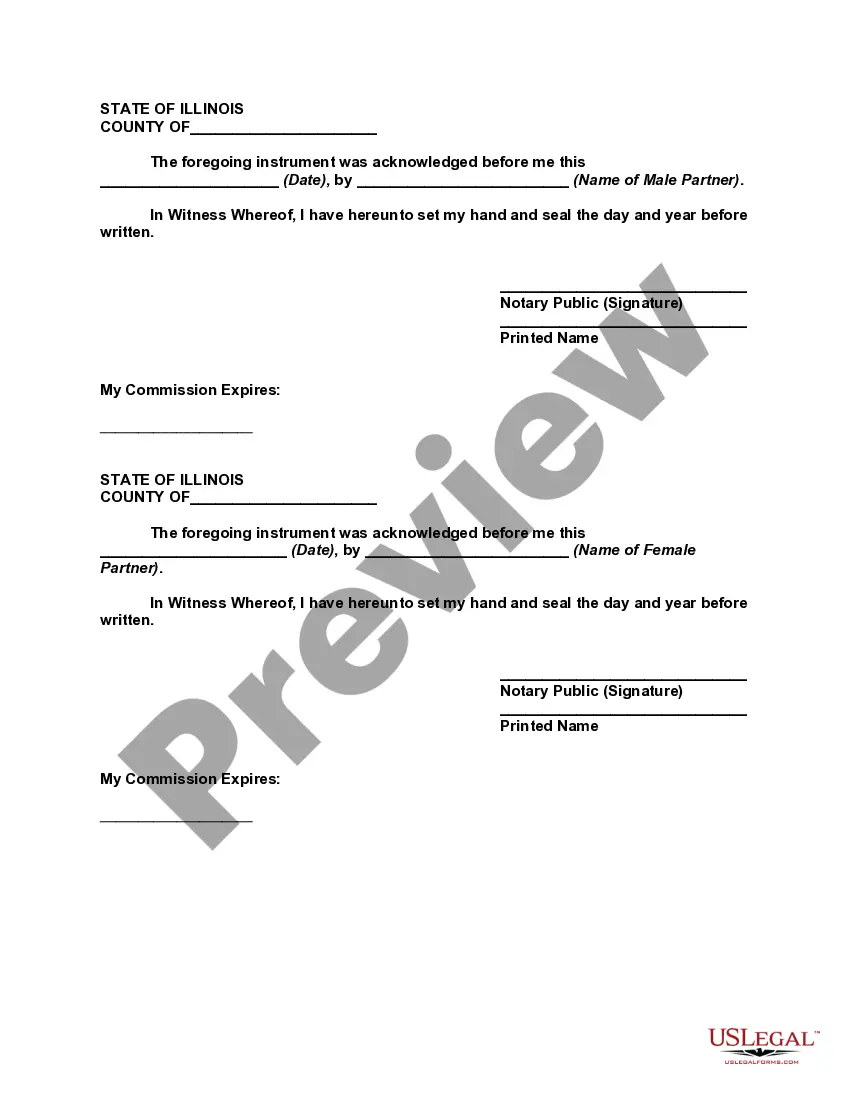
Yes, this form must be notarized to be legally valid. Notarization provides an additional layer of authenticity and ensures that the signatures are verified. US Legal Forms offers integrated online notarization services, allowing you to complete notarization via a secure video call, available 24/7 without the need to travel.
Get your form ready online
Our built-in tools help you complete, sign, share, and store your documents in one place.
Make edits, fill in missing information, and update formatting in US Legal Forms—just like you would in MS Word.
Download a copy, print it, send it by email, or mail it via USPS—whatever works best for your next step.
Sign and collect signatures with our SignNow integration. Send to multiple recipients, set reminders, and more. Go Premium to unlock E-Sign.
If this form requires notarization, complete it online through a secure video call—no need to meet a notary in person or wait for an appointment.
We protect your documents and personal data by following strict security and privacy standards.

Make edits, fill in missing information, and update formatting in US Legal Forms—just like you would in MS Word.

Download a copy, print it, send it by email, or mail it via USPS—whatever works best for your next step.

Sign and collect signatures with our SignNow integration. Send to multiple recipients, set reminders, and more. Go Premium to unlock E-Sign.

If this form requires notarization, complete it online through a secure video call—no need to meet a notary in person or wait for an appointment.

We protect your documents and personal data by following strict security and privacy standards.
Common mistakes to avoid
- Failing to fully understand the terms before signing the agreement.
- Neglecting to include the legal description of the residence.
- Not having the agreement notarized, which may affect its enforceability.
- Not recording the agreement with the local county clerk.
- Forgetting to specify the exact amounts for reimbursement and distribution.
Why use this form online
- Convenient access to a comprehensive legal form that can be downloaded and filled out at your own pace.
- Editability allows for adjustments according to your specific situation and needs.
- Reliability, with forms drafted by licensed attorneys to ensure legal compliance.
- 24/7 availability to obtain the form online from the comfort of your home.
- Quick and easy printing for immediate use after completion.
Legal use & context
- This agreement is enforceable under Illinois law, providing a clear agreement between parties regarding their financial arrangements.
- In the event of disputes, having a written agreement helps clarify the intentions of the parties involved.
- Notarization adds an additional layer of validity and can help protect both parties in legal contexts.
Main things to remember
- This agreement protects the financial interests of both parties involved in a cohabitation arrangement.
- It specifies how proceeds from the sale of their shared residence will be handled.
- Failure to follow through on formalities, such as notarization or recording, may affect the enforceability of the agreement.
- Parties should seek independent legal advice to ensure understanding and clarity of the terms.
Looking for another form?
Form popularity
FAQ
When you buy a house with someone who is not your spouse, both parties usually own the property as joint tenants or tenants in common. This arrangement means both individuals have equal rights to the property, even without a formal marriage. However, it is crucial to have clarity on each person's financial obligations, especially in terms of mortgage payments and property maintenance. An Illinois Agreement between Parties Living Together but Remaining Unmarried with Regard to Sale of Residence can help delineate these obligations.
When an unmarried couple breaks up, the fate of their house depends on the title and any agreements made beforehand. If one partner owns the home solely, they may keep it unless stated otherwise. An Illinois Agreement between Parties Living Together but Remaining Unmarried with Regard to Sale of Residence can clearly outline what happens to shared properties, benefiting both parties.
Sell the home and both of you move out. Arrange for one of you to buy the other out. Keep the home and not change who owns it. Transfer part of the value of the property from one partner to the other so that your children have somewhere to live.
There are many reasons why people choose to live together without getting married.Many couples view it as a trial period before marriage. Some avoid marriage because they have gone through a messy divorce. Many people live with partners for economic reasons, especially in expensive urban areas with high-cost housing.
Can I legally draw up my own cohabitation agreement? Whilst you can access templates online, the agreement should be specific to your case and tailor made a template may miss something out.
Cohabitation agreements are similar contracts for unmarried spouses. These contracts allow you to make legal decisions about your rights in a relationship and decide how you want to arrange your finances if your relationship ends.
An Unmarried partner, also known as a domestic partner, is specifically defined as a person who shares a close personal relationship with the reference person. Opposite-sex unmarried-partner households -- reference person and unmarried partner are different sexes.
"Domestic Partner" is, in some state and local governments, a legal designation that clarifies benefits to unmarried couples.
Cohabitation is an arrangement where two people are not married but live together.
Cohabitation is an arrangement where two people are not married but live together.