Cohabitation and Nonmarital Agreement between Parties Living Together but Remaining Unmarried with Joint Purchase of Real Estate
Overview of this form
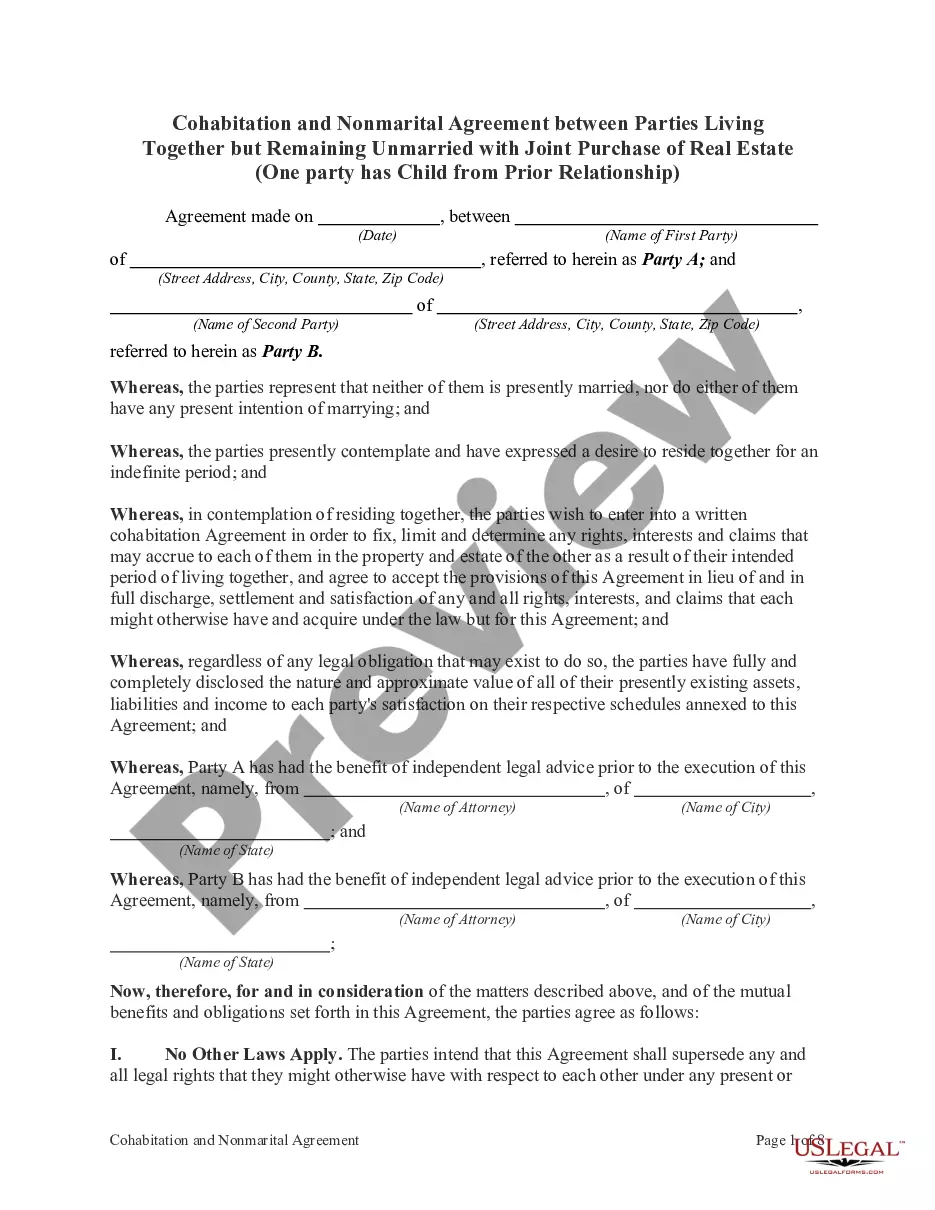
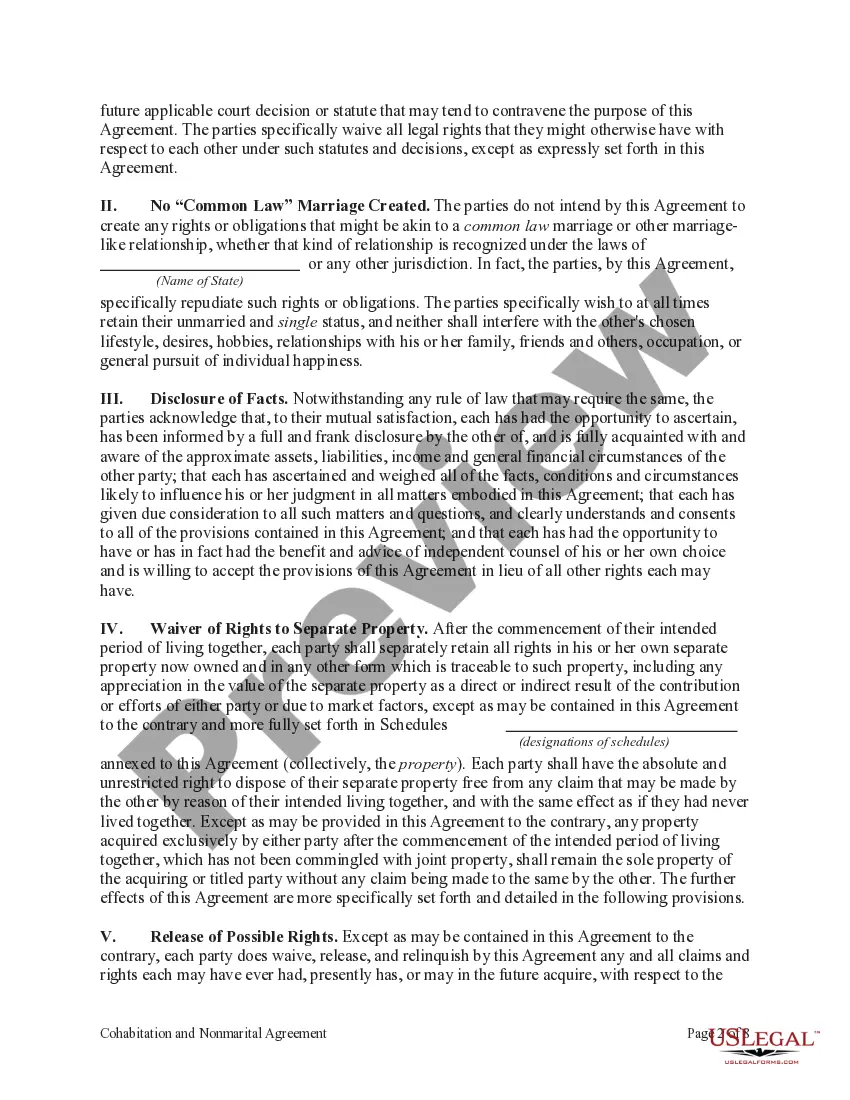
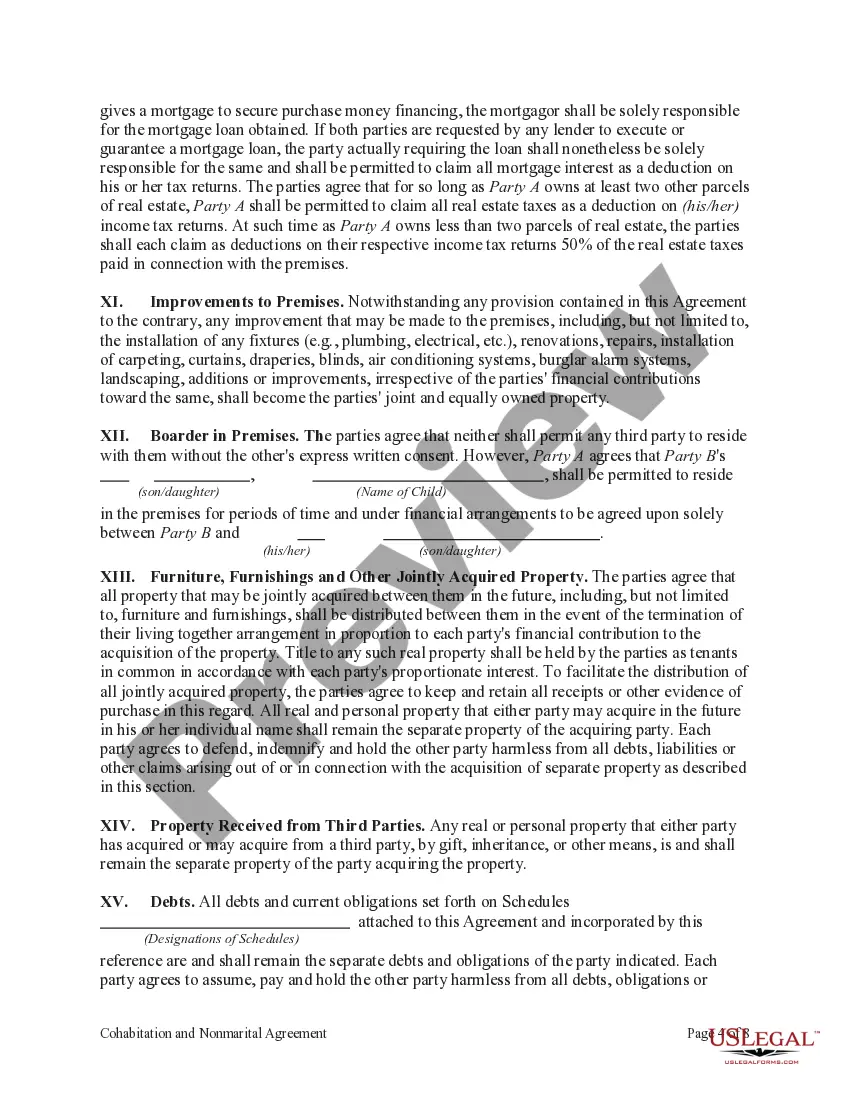
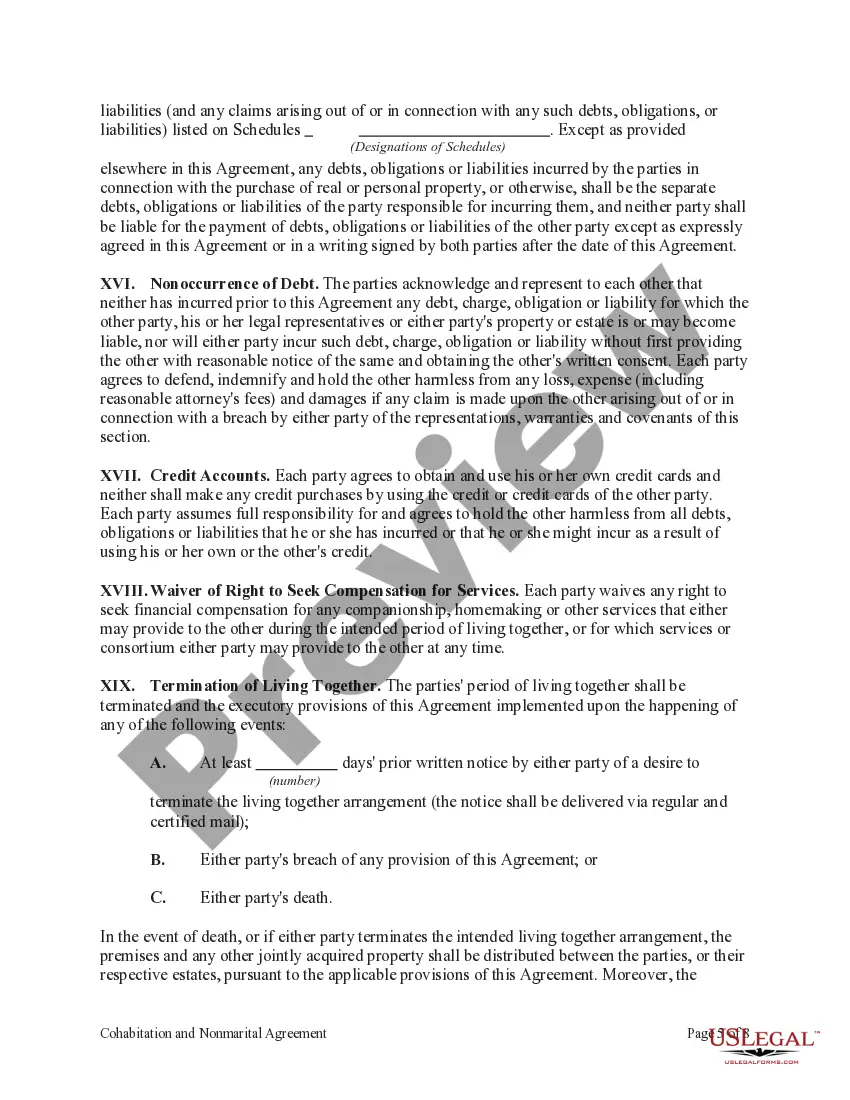
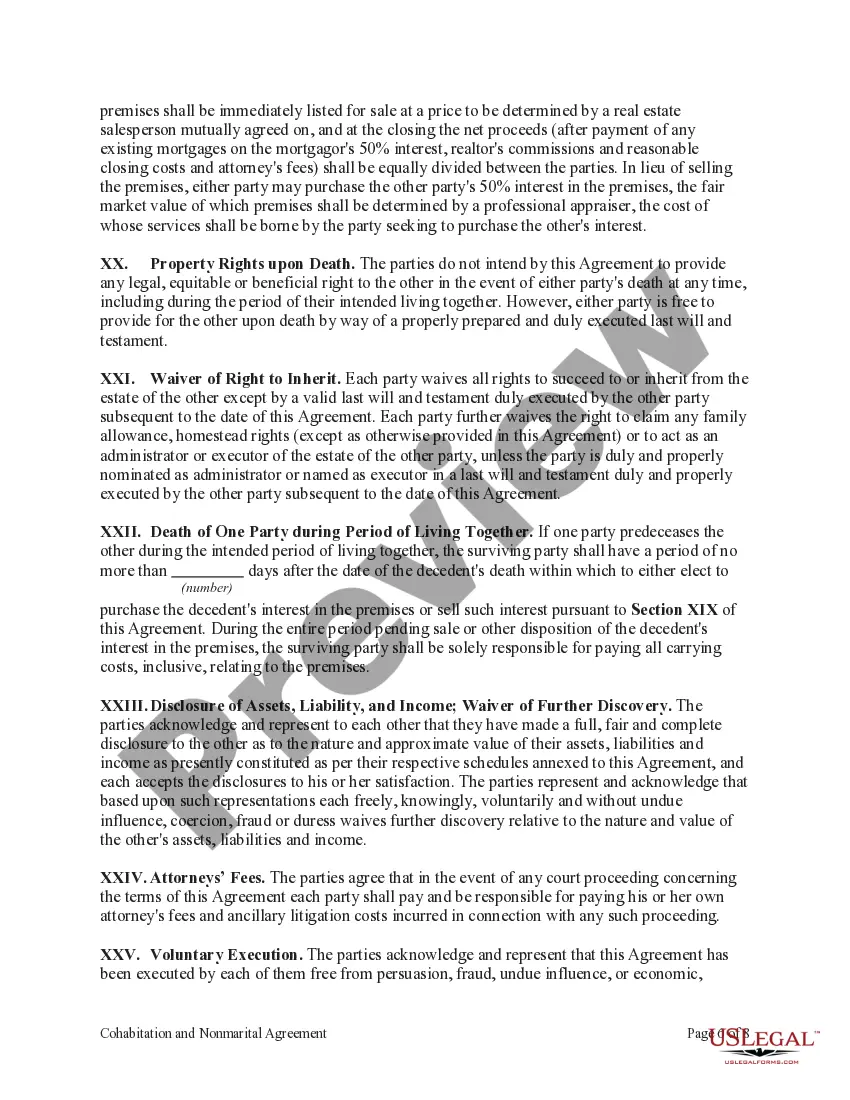
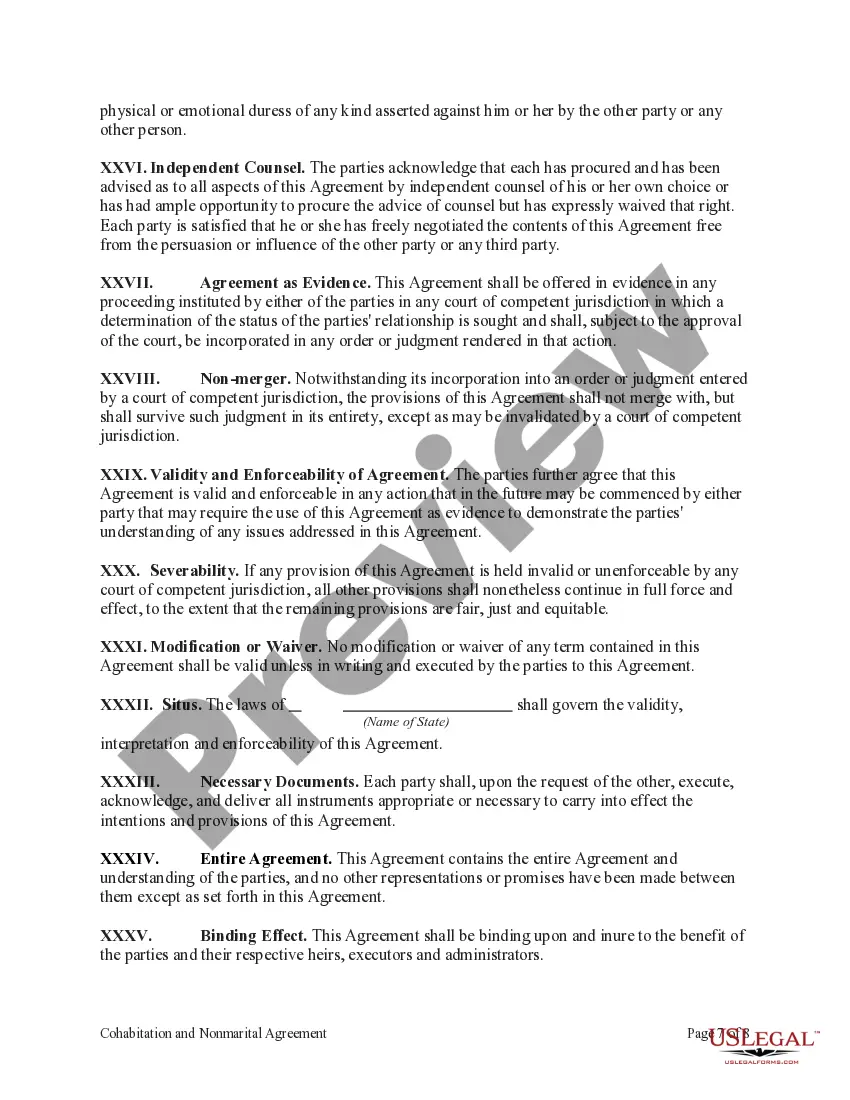
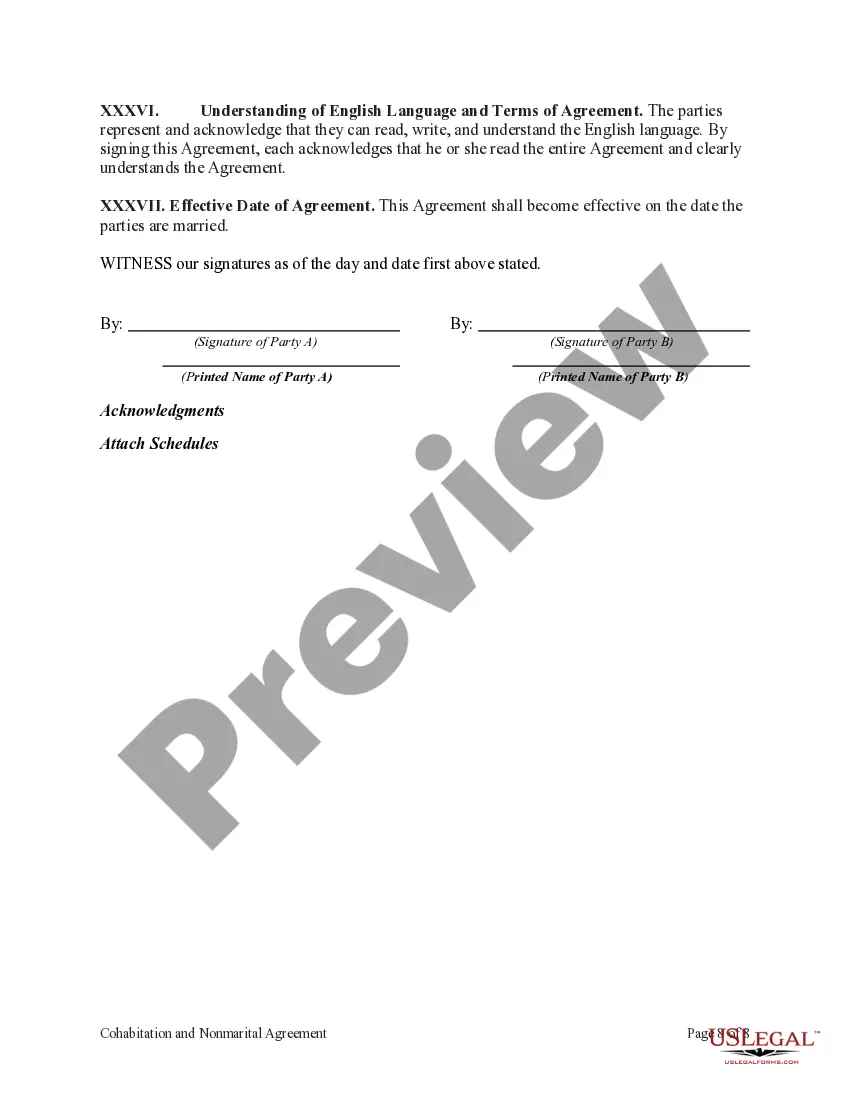
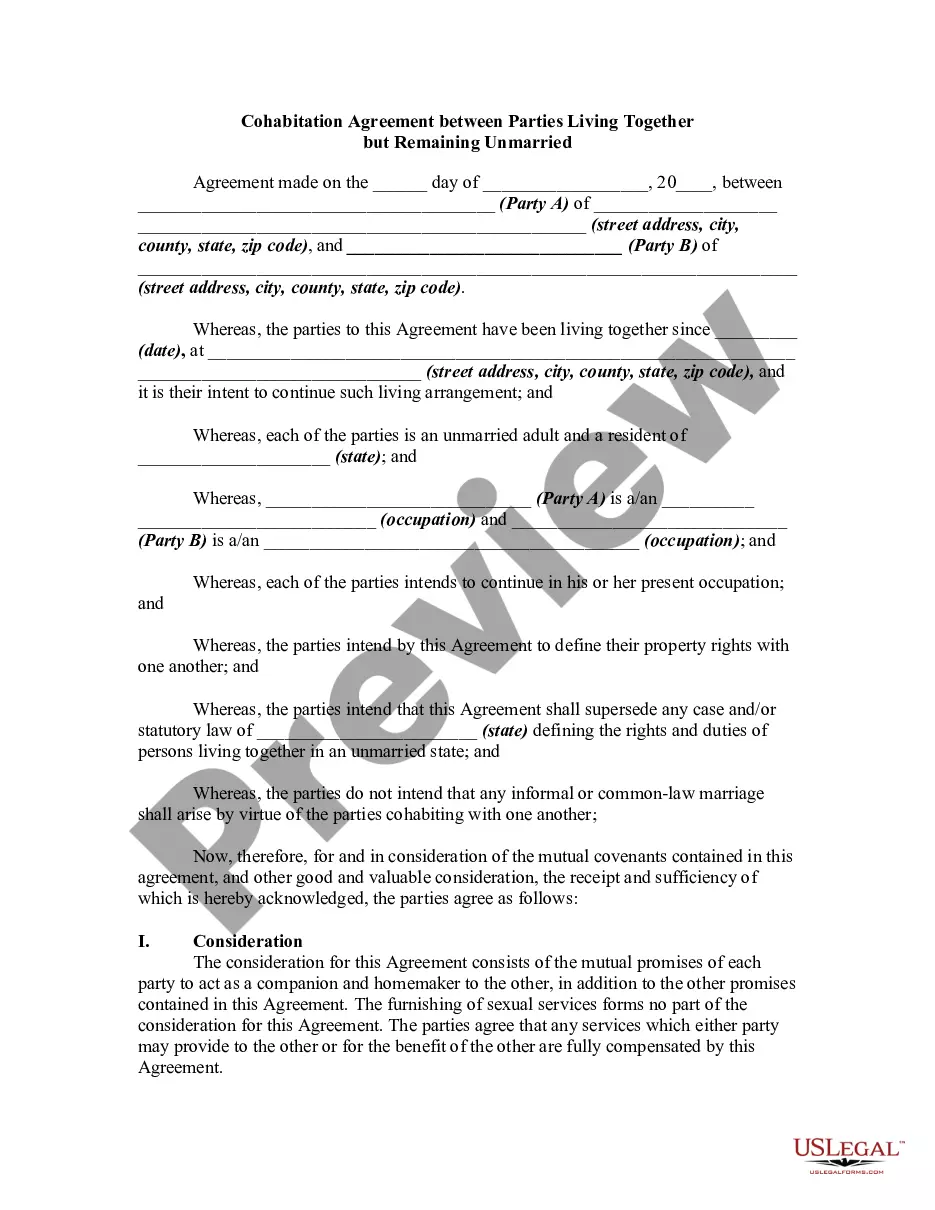
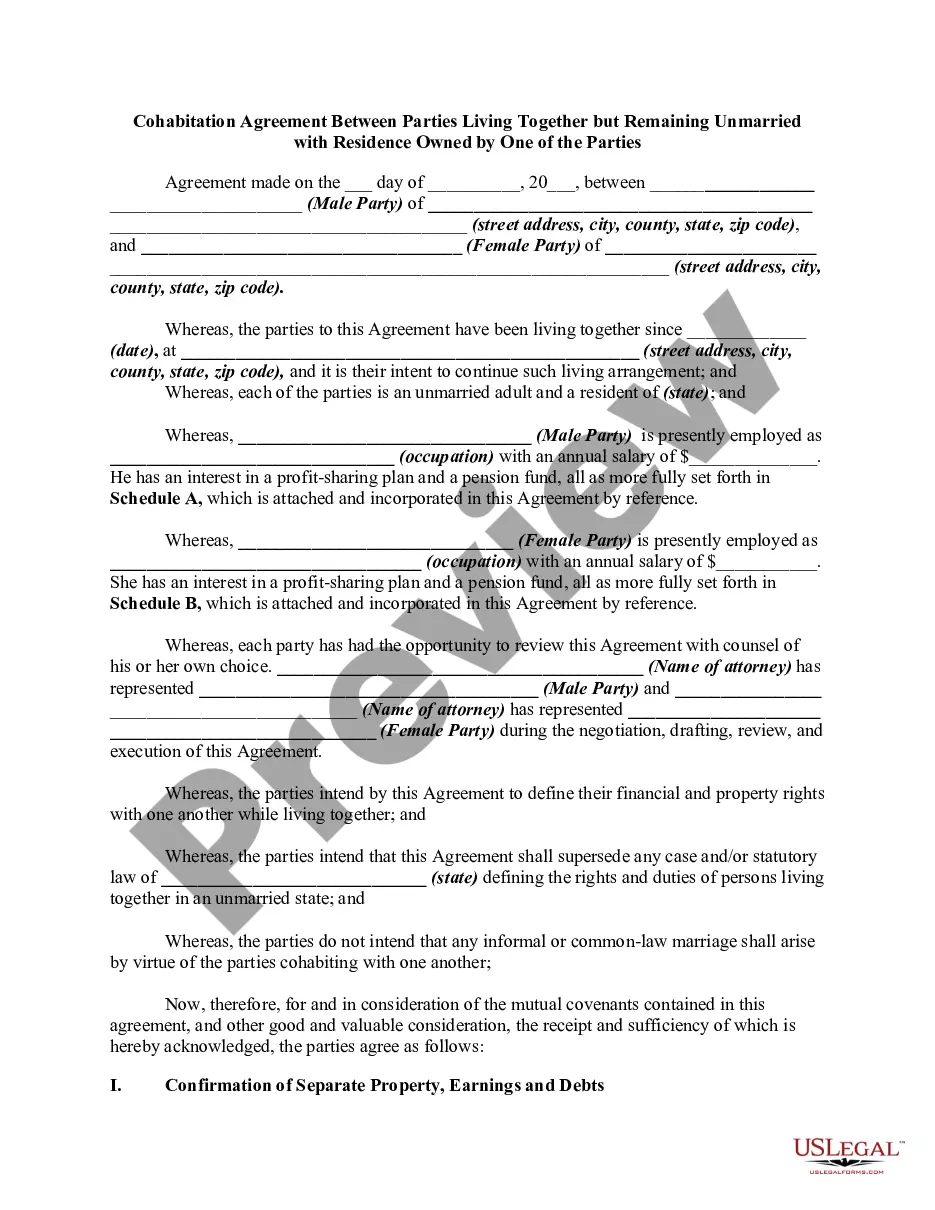
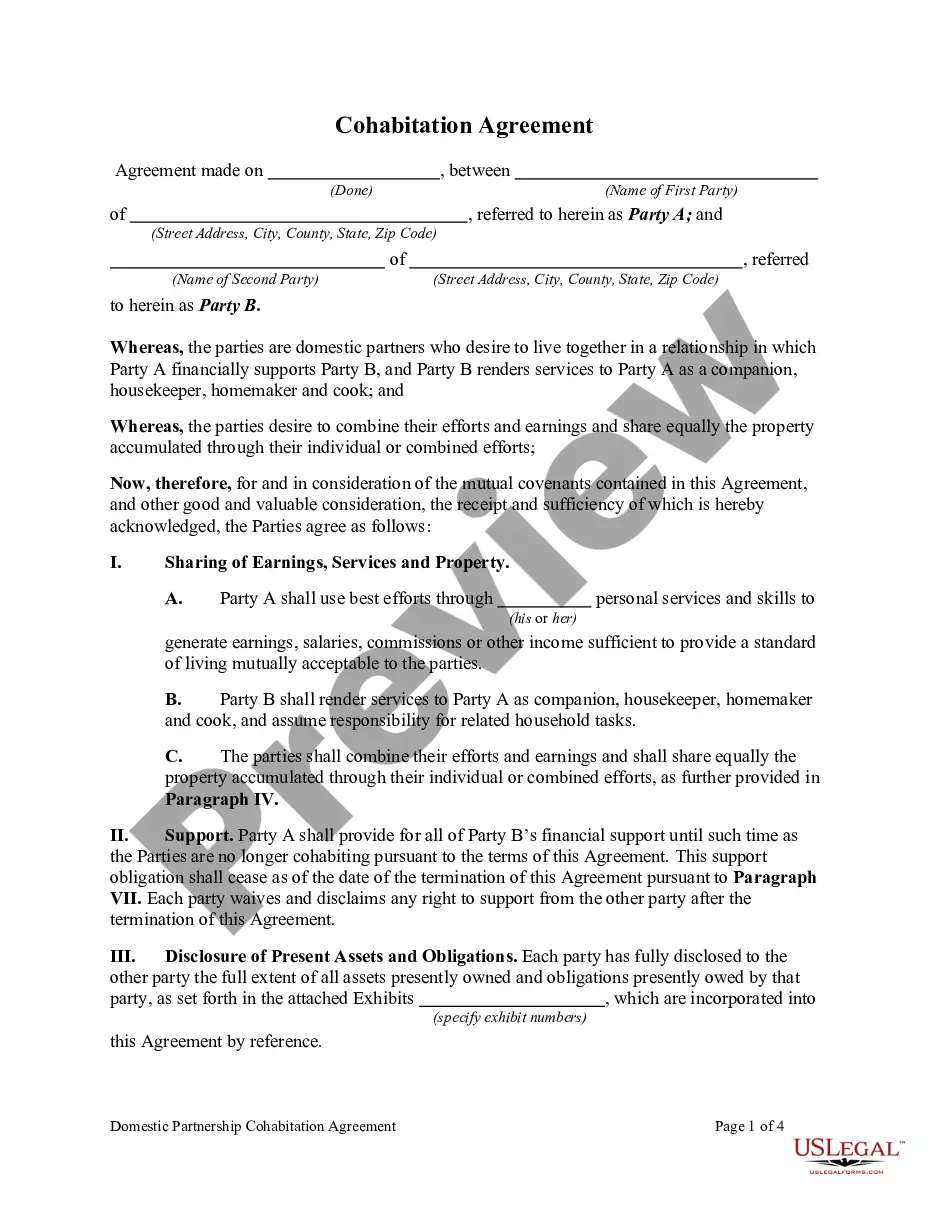
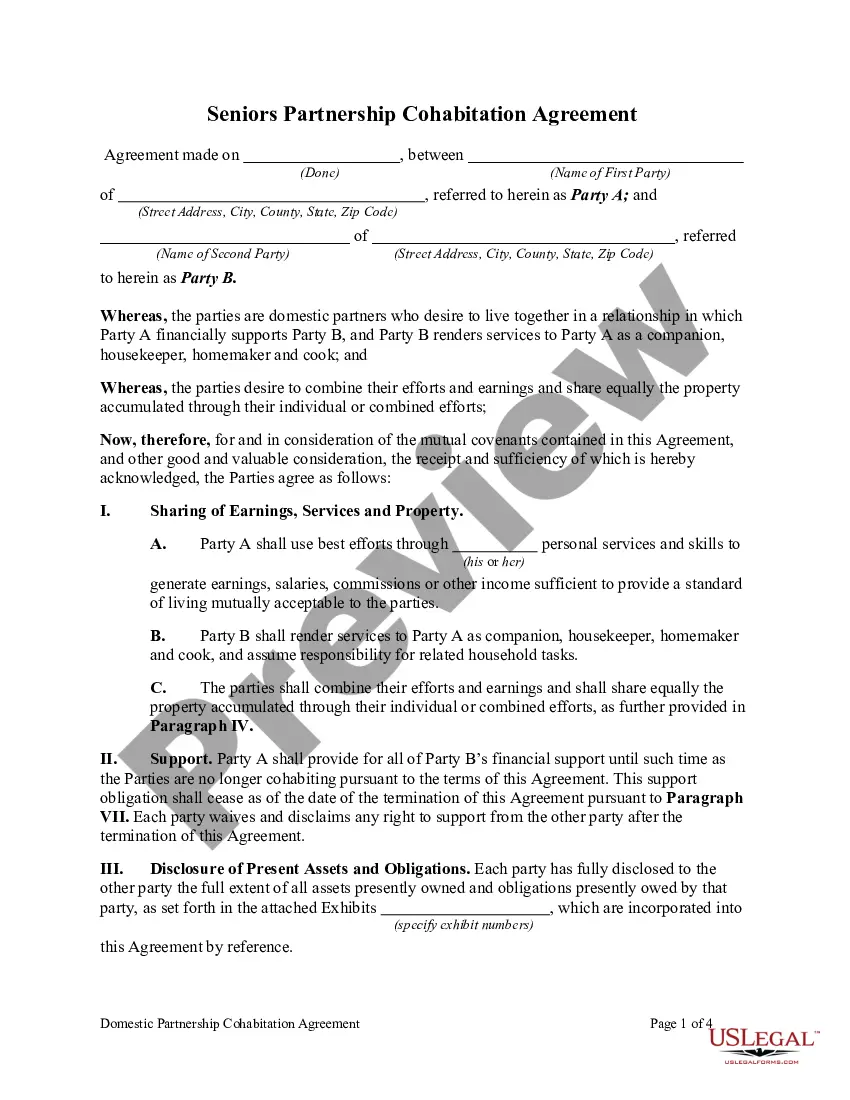
The Cohabitation and Nonmarital Agreement establishes a legal framework for two individuals living together without being married. This form is essential for couples who want to clearly outline their financial rights and responsibilities concerning jointly owned real estate while maintaining their unmarried status. It differs from traditional marriage agreements by focusing solely on cohabitation arrangements and does not confer rights akin to a marriage or common law marriage.
Form components explained
- Identification of both parties and their intention to cohabit without forming a marriage.
- Disclosure requirements regarding each party's assets, liabilities, and income.
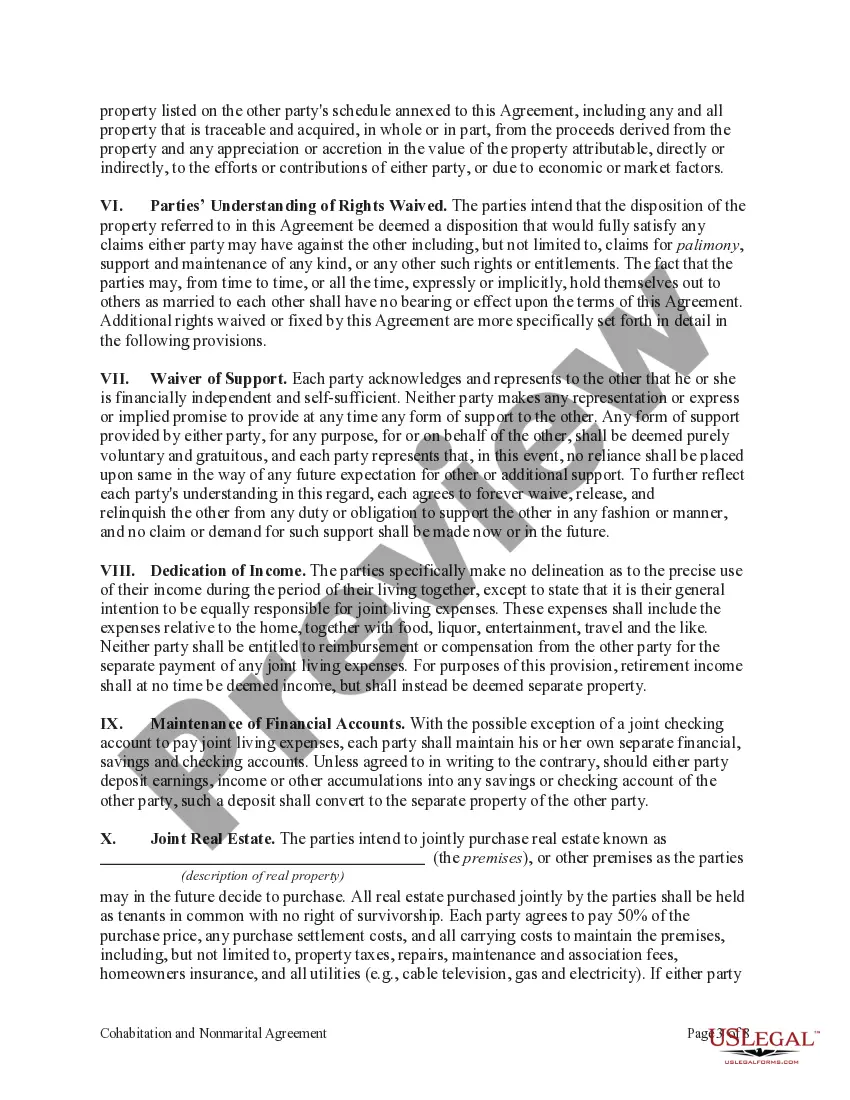
- Provisions for joint ownership of property and shared expenses.
- Clauses waiving support obligations and disclaiming rights to inherit from each other.
- Conditions for termination of the agreement and distribution of jointly acquired property.
Situations where this form applies
This form is useful in various situations including when two individuals decide to live together, especially if they plan to make a joint purchase of real estate. It can also protect each party's financial interests and clarify responsibilities related to shared living costs, ensuring both parties understand their rights and obligations.
Who needs this form
- Couples who are cohabiting but intend to remain unmarried.
- Individuals purchasing property together without entering into a marriage.
- Partners wishing to clarify financial obligations and property rights.
- Any party seeking to define their rights in a nonmarital living arrangement.
How to prepare this document
- Identify all parties involved, including their full names and addresses.
- List and attach details of existing assets, liabilities, and income for full transparency.
- Agree on how to manage joint living expenses during the cohabitation.
- Clearly outline how property will be owned and what will happen if the relationship ends.
- Both parties must read the agreement thoroughly, consent to its terms, and provide signatures.
Notarization guidance
Notarization is required for this form to take effect. Our online notarization service, powered by Notarize, lets you verify and sign documents remotely through an encrypted video session, available 24/7.
Get your form ready online
Our built-in tools help you complete, sign, share, and store your documents in one place.
Make edits, fill in missing information, and update formatting in US Legal Forms—just like you would in MS Word.
Download a copy, print it, send it by email, or mail it via USPS—whatever works best for your next step.
Sign and collect signatures with our SignNow integration. Send to multiple recipients, set reminders, and more. Go Premium to unlock E-Sign.
If this form requires notarization, complete it online through a secure video call—no need to meet a notary in person or wait for an appointment.
We protect your documents and personal data by following strict security and privacy standards.

Make edits, fill in missing information, and update formatting in US Legal Forms—just like you would in MS Word.

Download a copy, print it, send it by email, or mail it via USPS—whatever works best for your next step.

Sign and collect signatures with our SignNow integration. Send to multiple recipients, set reminders, and more. Go Premium to unlock E-Sign.

If this form requires notarization, complete it online through a secure video call—no need to meet a notary in person or wait for an appointment.

We protect your documents and personal data by following strict security and privacy standards.
Common mistakes
- Failing to fully disclose assets and liabilities can lead to disputes later.
- Not specifying how joint expenses will be managed may create confusion.
- Overlooking the need for both parties to sign the agreement to ensure its validity.
- Misunderstanding the implications of waiving rights to inherit from one another.
Why use this form online
- Convenience of downloading and completing the form at your own pace.
- The ability to edit and customize the template to fit your specific situation.
- Reliability of templates drafted by licensed attorneys ensuring legal accuracy.
- Access to guidance on how to properly fill out and use the agreement effectively.
Main things to remember
- The Cohabitation and Nonmarital Agreement protects both parties' interests while cohabitating.
- Clear terms regarding property ownership and financial responsibilities help prevent conflicts.
- Understanding and transparency about assets is crucial for a fair agreement.
Looking for another form?
Form popularity
FAQ
Think About Your End Goal. Pro: Your Relationship May Be Deepened and Enriched. Pro: The Stresses Of Getting Married Can Be Eased. Pro: Reducing Your Expenses Can Save You More Money. Con: Without Good Support, You Put Your Relationship At Risk. Con: What You Save In Money, You Might Lose In Relationship Quality.
Cohabitation and Marriage Agreements can be reviewed and overturned by the court in certain circumstances, such as where the agreement is objectively unreasonable, or if the agreement was entered into through undue influence, duress or coercion.
It's important to have a cohabitation agreement because your lives become financially intertwined when you move in together.A cohabitation agreement can spell out how you will share responsibilities during the time you are living together. It can also help you in the event that you eventually decide to separate.
Cohabitation Agreement Requirements The majority of states now recognizes these cohabitation agreements, though many require that the agreement be in writing and signed by the parties.Only a small number of recent cases have held that contracts between unmarried cohabitants are unenforceable.
A cohabitation agreement is a legal document between unmarried couples who are living together. It sets out arrangements for finances, property and children while you're living together and if you split up, become ill or die. You can make an agreement at any time. It's good to do it before you move in together.
Legally, cohabiting couples have no financial responsibility to one another if they separate. If your relationship ends you have no legal responsibility to provide your former partner with financial support. Many cohabiting couples choose to start a family together.
Cohabitation agreements are similar contracts for unmarried spouses. These contracts allow you to make legal decisions about your rights in a relationship and decide how you want to arrange your finances if your relationship ends.
Cohabitation is an arrangement where two people are not married but live together. They are often involved in a romantic or sexually intimate relationship on a long-term or permanent basis.To "cohabit", in a broad sense, means to "coexist".
In both types of agreements, the disclosure requirements are onerous but necessary. Full disclosure includes things such as income tax returns, pay stubs, banks account and credit card statements, RRSP/investment statements and a statutory declaration of all income, assets and debts, among others.