Cohabitation Agreement for Unmarried Partners
What this document covers
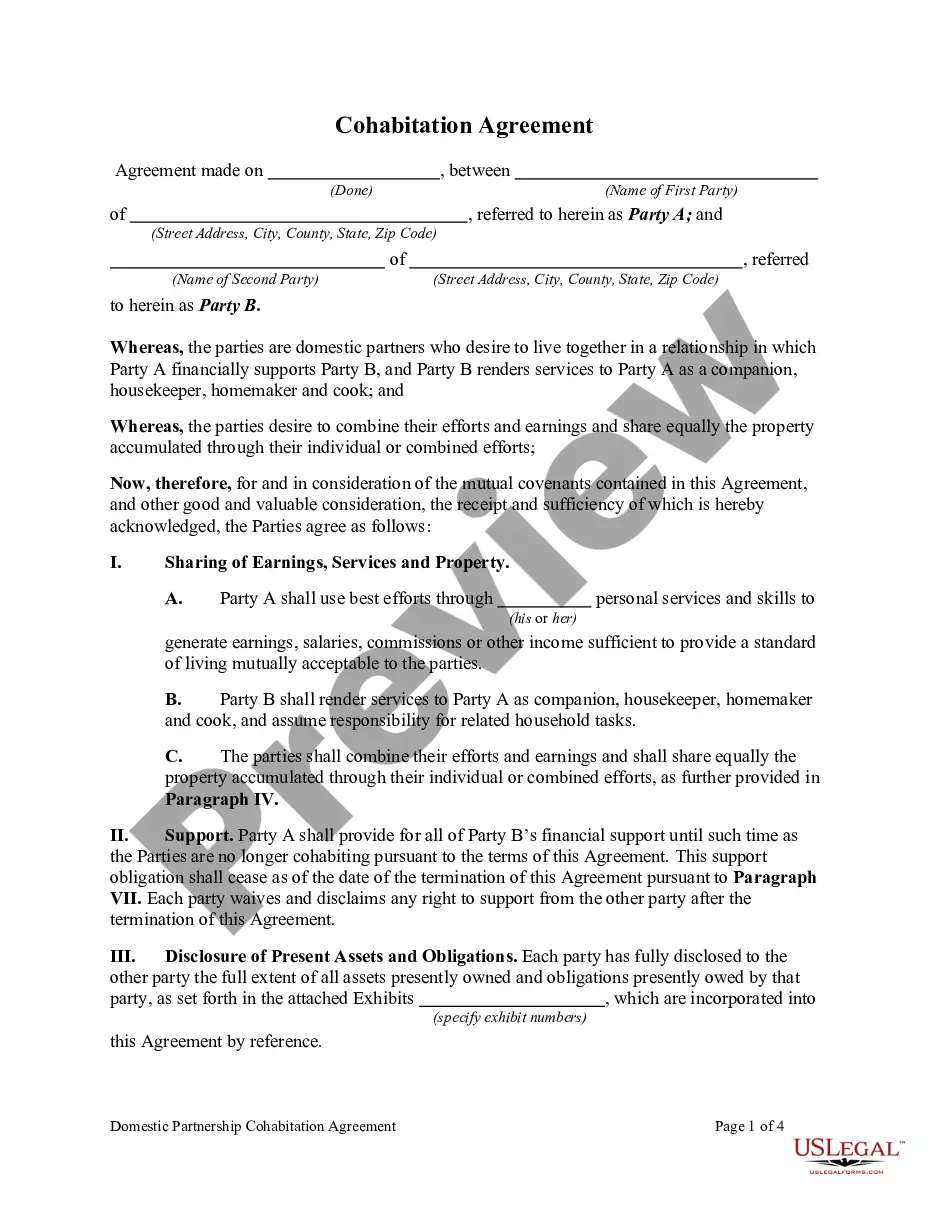
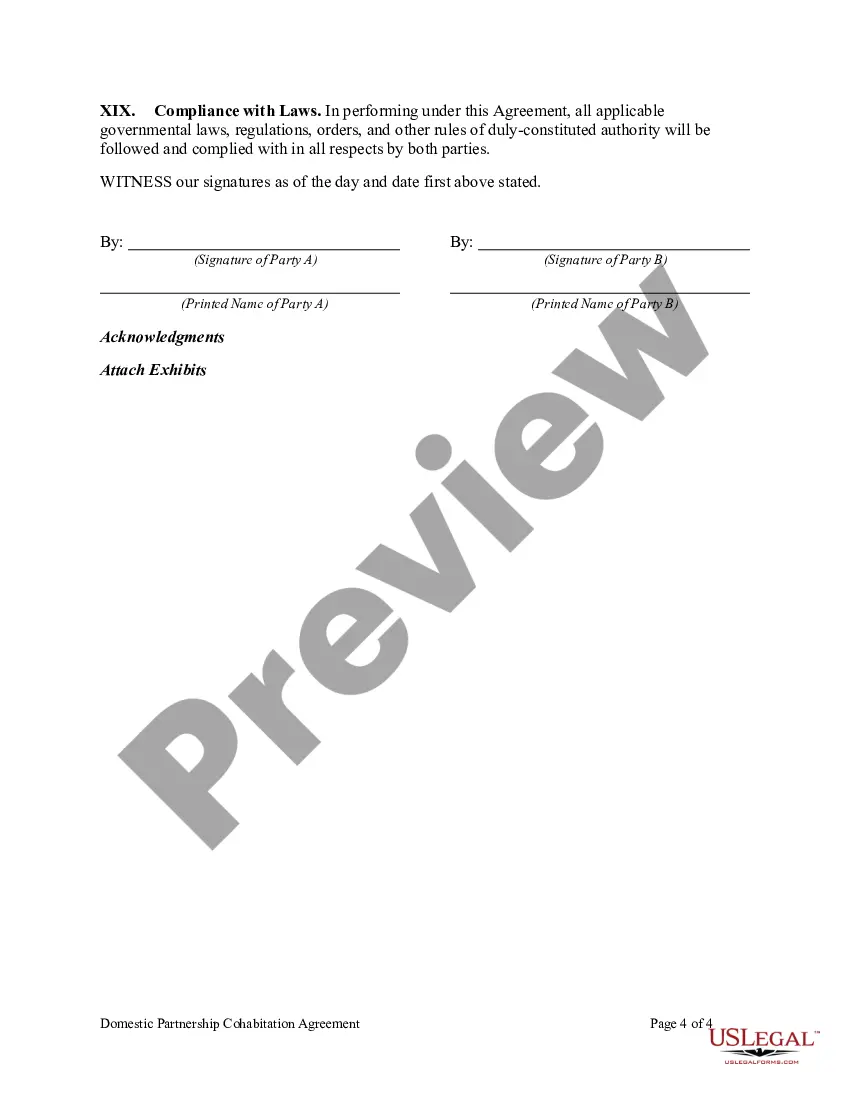
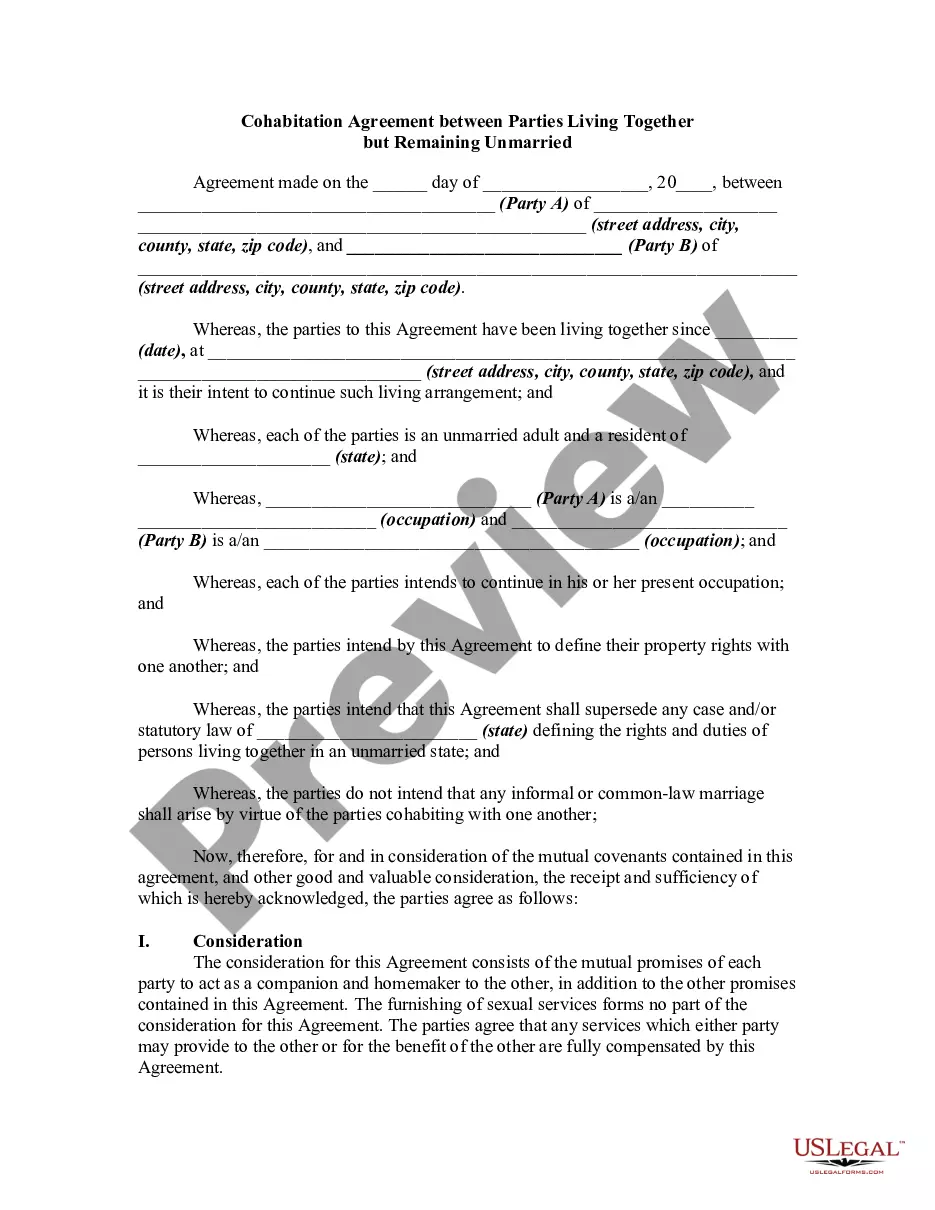
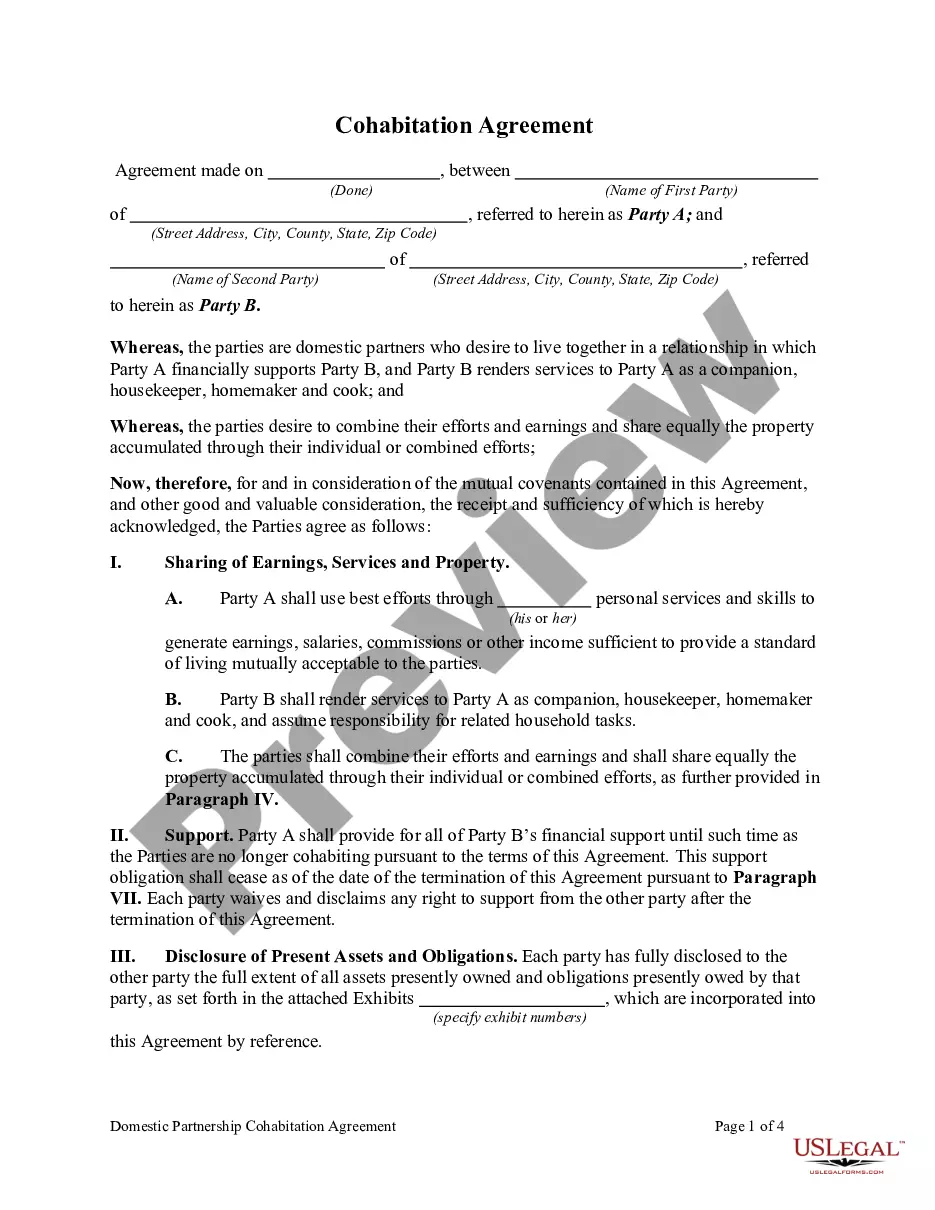
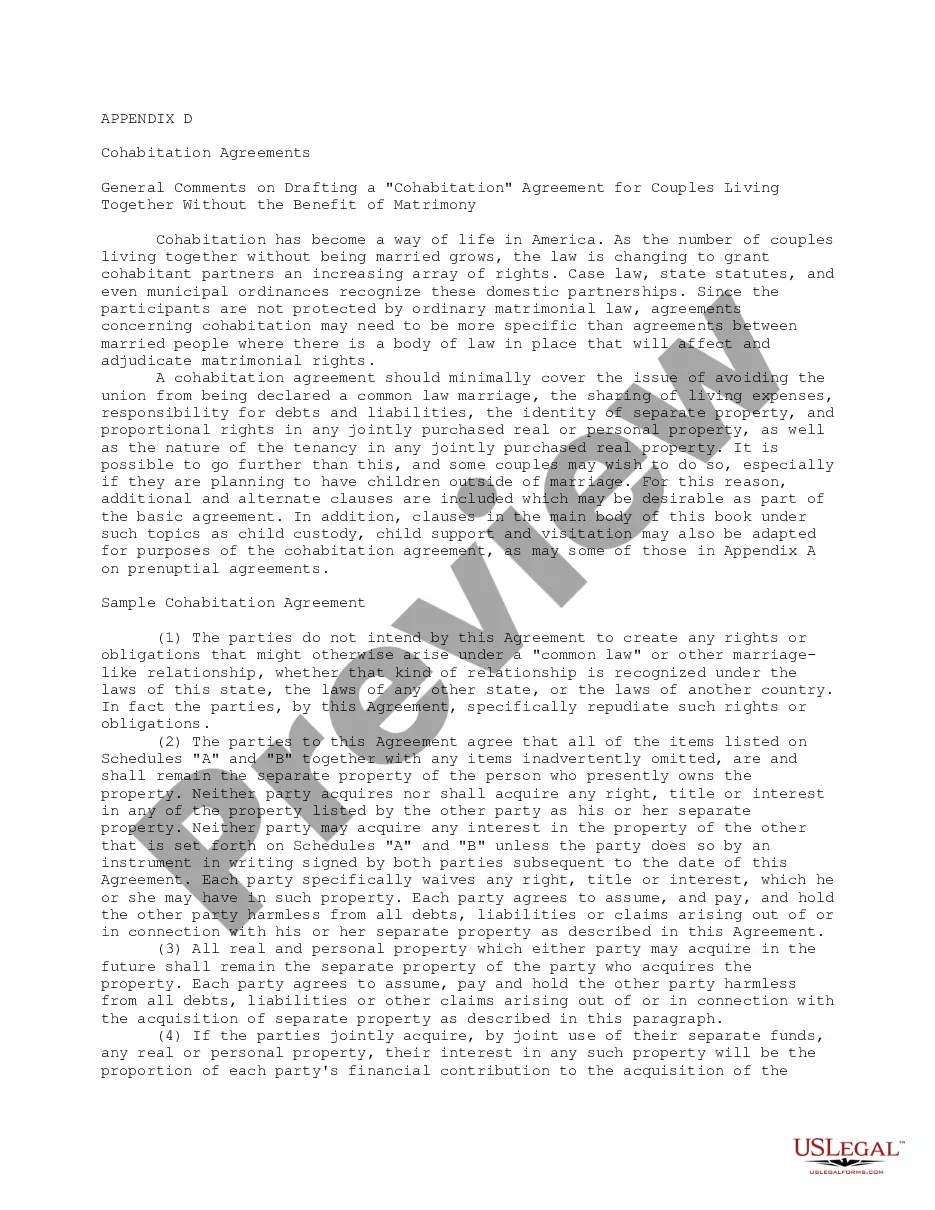
The Cohabitation Agreement for Unmarried Partners is a legal document designed for couples, whether same-sex or opposite-sex, who wish to formalize their living arrangement. This agreement outlines the responsibilities and financial obligations of each partner, distinguishing it from other relationship agreements, such as marriage or domestic partnership agreements. It enables the parties to define their relationship's terms, including support, property ownership, and duties, providing clarity and protection for both partners.
Key parts of this document
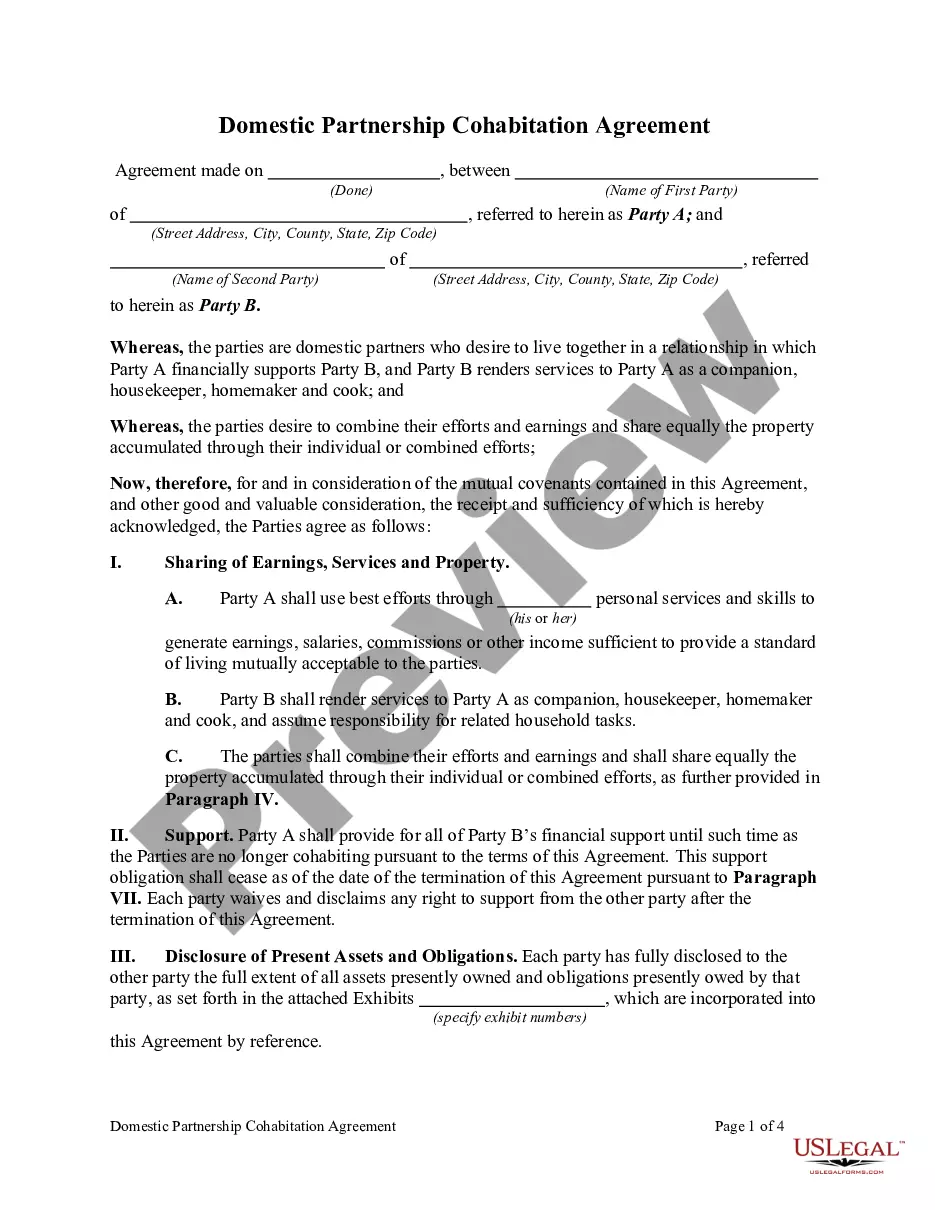
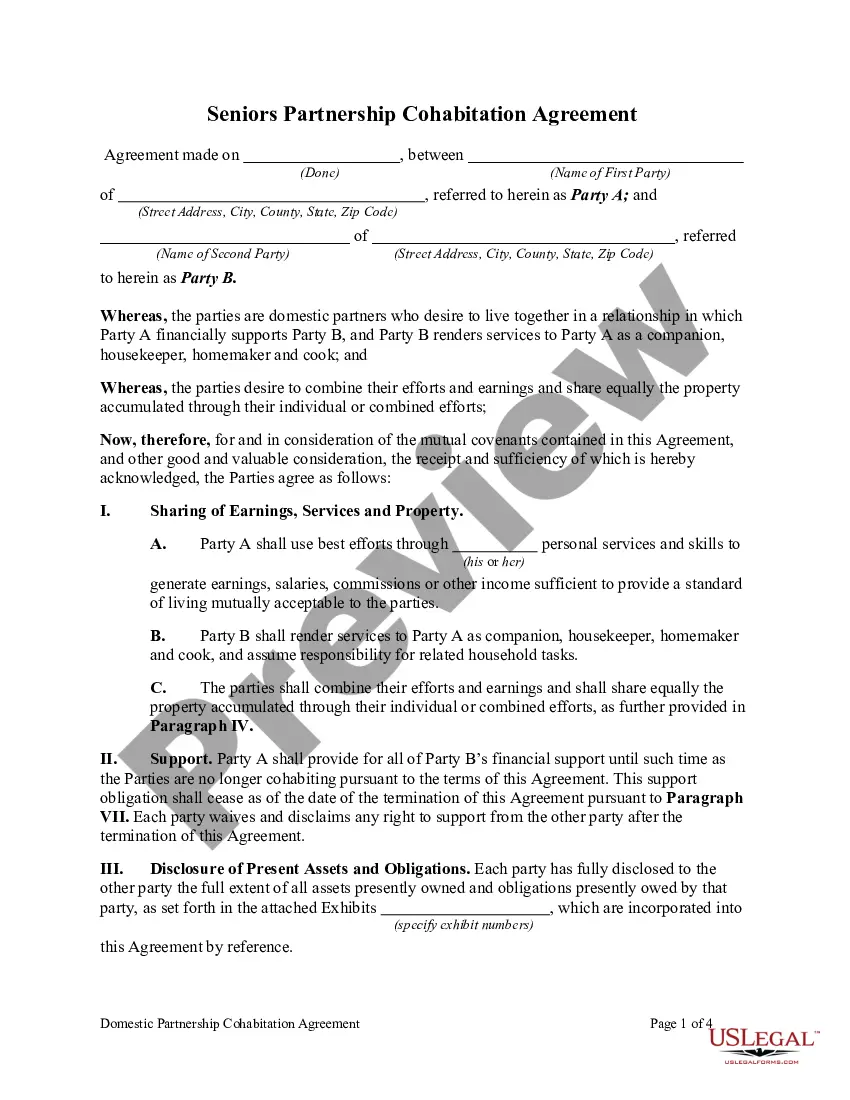
- Sharing of earnings, services, and property, defining financial roles and responsibilities.
- Support obligations, specifying Party A's financial support to Party B.
- Disclosure of current assets and liabilities of both parties.
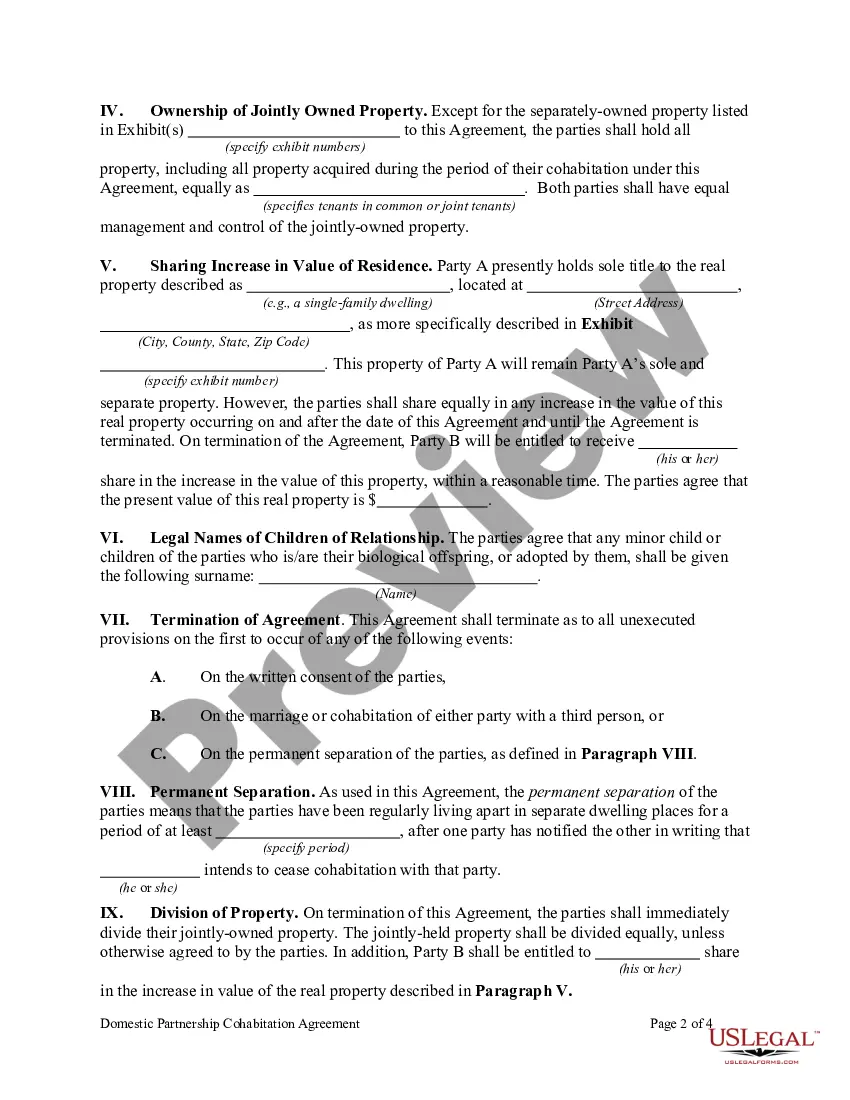
- Management of jointly owned property, determining how property is held and controlled.
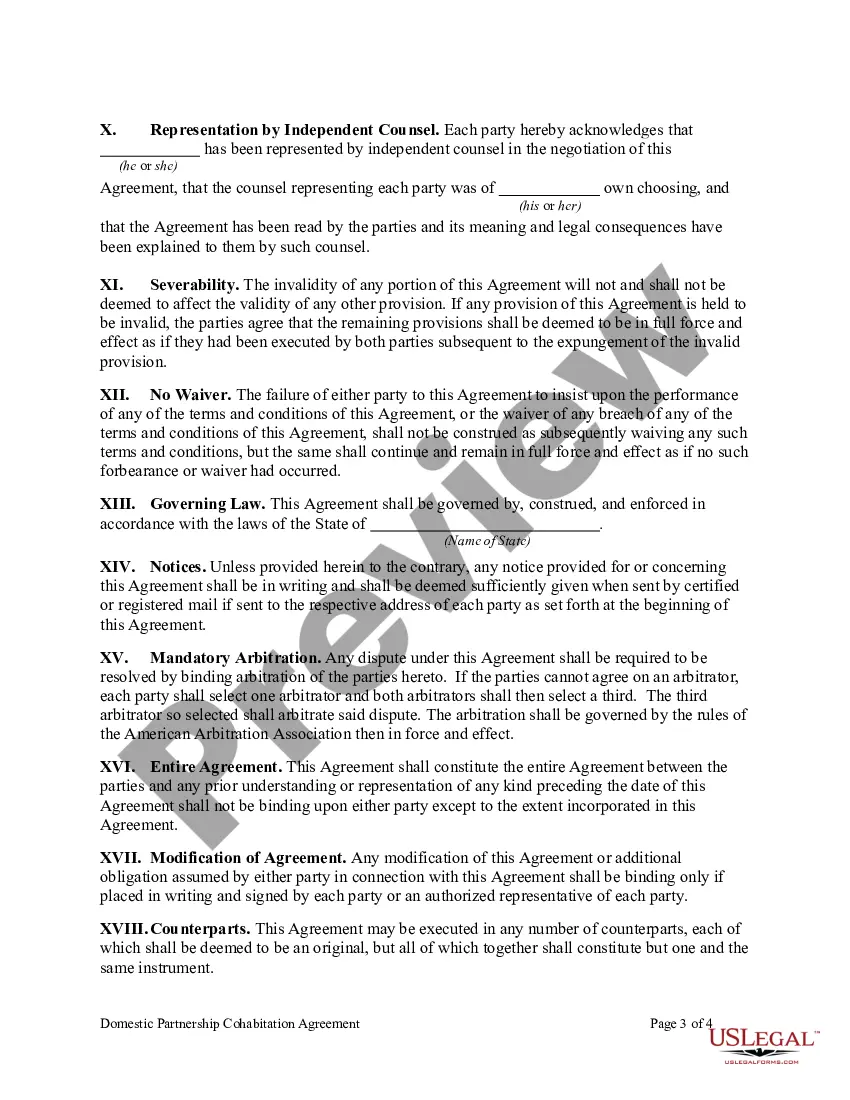
- Termination clauses detailing how the agreement can end and the conditions that trigger termination.
When to use this document
This form is ideal for couples who are cohabitating but are not married. It is particularly useful when one partner financially supports the other while the other contributes through homemaking and related services. Consider using this agreement if you want to ensure clarity around shared responsibilities, financial arrangements, and property rights during your relationship.
Who this form is for
- Cohabitating couples, whether same-sex or opposite-sex.
- Unmarried partners who wish to formalize their living arrangements.
- Individuals seeking to outline financial and household responsibilities within their relationship.
Completing this form step by step
- Identify the parties involved by entering the names and addresses of Party A and Party B.
- Specify the financial support obligations of Party A and the services provided by Party B.
- Disclose all current assets and obligations in the attached exhibits.
- Define how jointly owned property will be managed and shared.
- Include the termination conditions and timeframe for permanent separation.
Is notarization required?
This form does not typically require notarization unless specified by local law. However, having the document notarized can enhance its legal standing in certain jurisdictions.
Get your form ready online
Our built-in tools help you complete, sign, share, and store your documents in one place.
Make edits, fill in missing information, and update formatting in US Legal Forms—just like you would in MS Word.
Download a copy, print it, send it by email, or mail it via USPS—whatever works best for your next step.
Sign and collect signatures with our SignNow integration. Send to multiple recipients, set reminders, and more. Go Premium to unlock E-Sign.
If this form requires notarization, complete it online through a secure video call—no need to meet a notary in person or wait for an appointment.
We protect your documents and personal data by following strict security and privacy standards.

Make edits, fill in missing information, and update formatting in US Legal Forms—just like you would in MS Word.

Download a copy, print it, send it by email, or mail it via USPS—whatever works best for your next step.

Sign and collect signatures with our SignNow integration. Send to multiple recipients, set reminders, and more. Go Premium to unlock E-Sign.

If this form requires notarization, complete it online through a secure video call—no need to meet a notary in person or wait for an appointment.

We protect your documents and personal data by following strict security and privacy standards.
Common mistakes to avoid
- Failing to fully disclose all assets and liabilities.
- Not clearly defining the financial support obligations and responsibilities.
- Overlooking termination conditions, leading to potential disputes later.
Advantages of online completion
- Convenient access to a downloadable and customizable legal document.
- Editable format allows users to tailor the agreement to their specific relationship needs.
- Access to legal expertise during the form creation process ensures accurate and enforceable agreements.
Looking for another form?
Form popularity
FAQ
However, as an unmarried partner, you can get short-term rights to stay by applying to court.You can also get long-term rights to stay by applying to court to transfer a tenancy, whether it's a sole or joint tenancy. Find out how to apply to the court to get long-term rights to stay.
Cohabitation agreements are similar contracts for unmarried spouses. These contracts allow you to make legal decisions about your rights in a relationship and decide how you want to arrange your finances if your relationship ends.
Can I legally draw up my own cohabitation agreement? Whilst you can access templates online, the agreement should be specific to your case and tailor made a template may miss something out.
In light of these dramatic social changes, you may be surprised to learn that cohabitation is technically still illegal in 4 U.S. states. As it currently stands, Mississippi, Michigan, Florida, and Virginia currently have laws on the books banning cohabitation.
As an unmarried partner you are entitled to be known by whatever name you wish and can change that name at any time. Two people living together can decide to use the same family name, although legally they do not have to.
Cohabitation and Marriage Agreements can be reviewed and overturned by the court in certain circumstances, such as where the agreement is objectively unreasonable, or if the agreement was entered into through undue influence, duress or coercion.
Under current law, cohabiting couples do not have the same legal rights as married couples and if separation occurs, there is limited recourse to their ex-partner's property, pension or financial support.
In both types of agreements, the disclosure requirements are onerous but necessary. Full disclosure includes things such as income tax returns, pay stubs, banks account and credit card statements, RRSP/investment statements and a statutory declaration of all income, assets and debts, among others.
Cohabitation Agreement Requirements The majority of states now recognizes these cohabitation agreements, though many require that the agreement be in writing and signed by the parties.Only a small number of recent cases have held that contracts between unmarried cohabitants are unenforceable.