Cohabitation Agreement for Married Couples
About this form
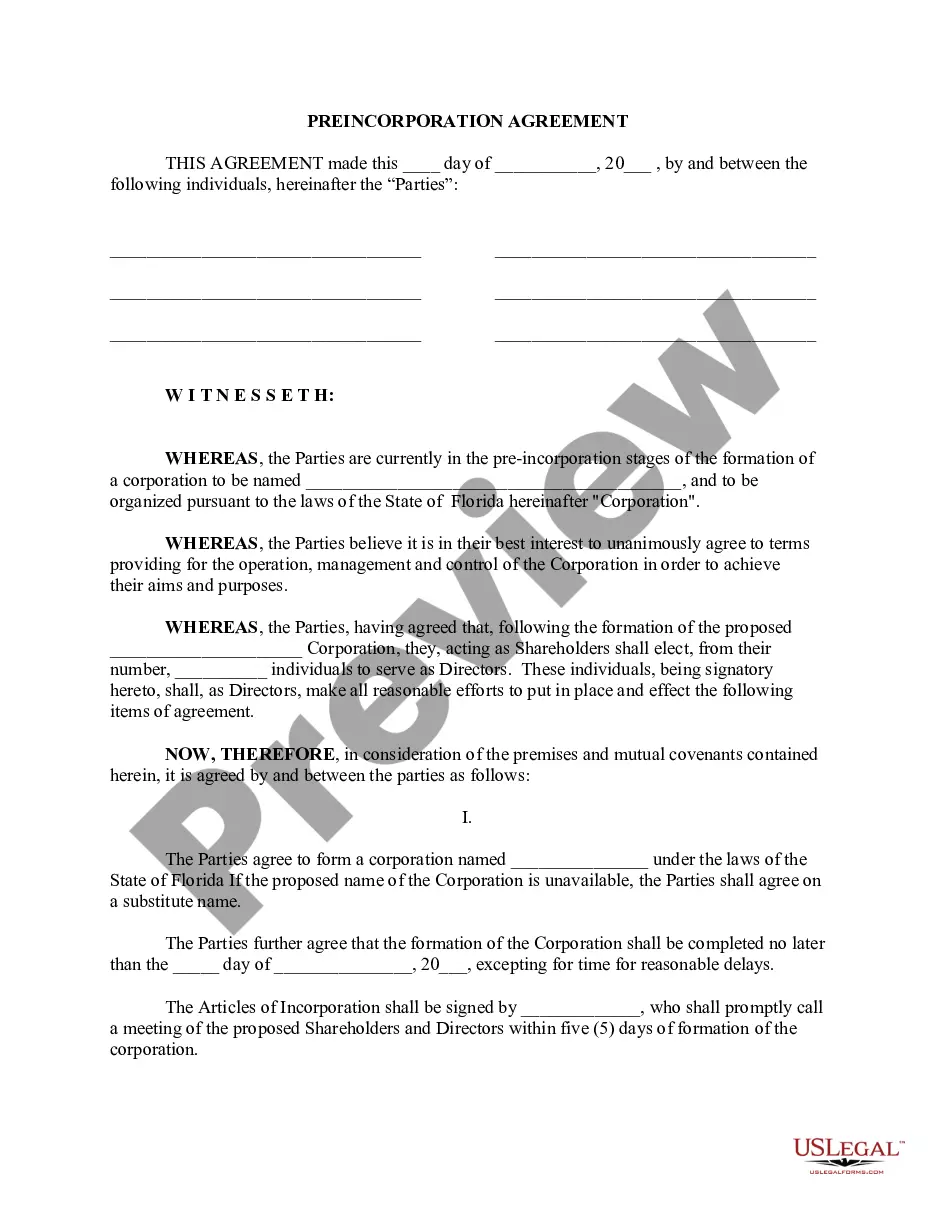
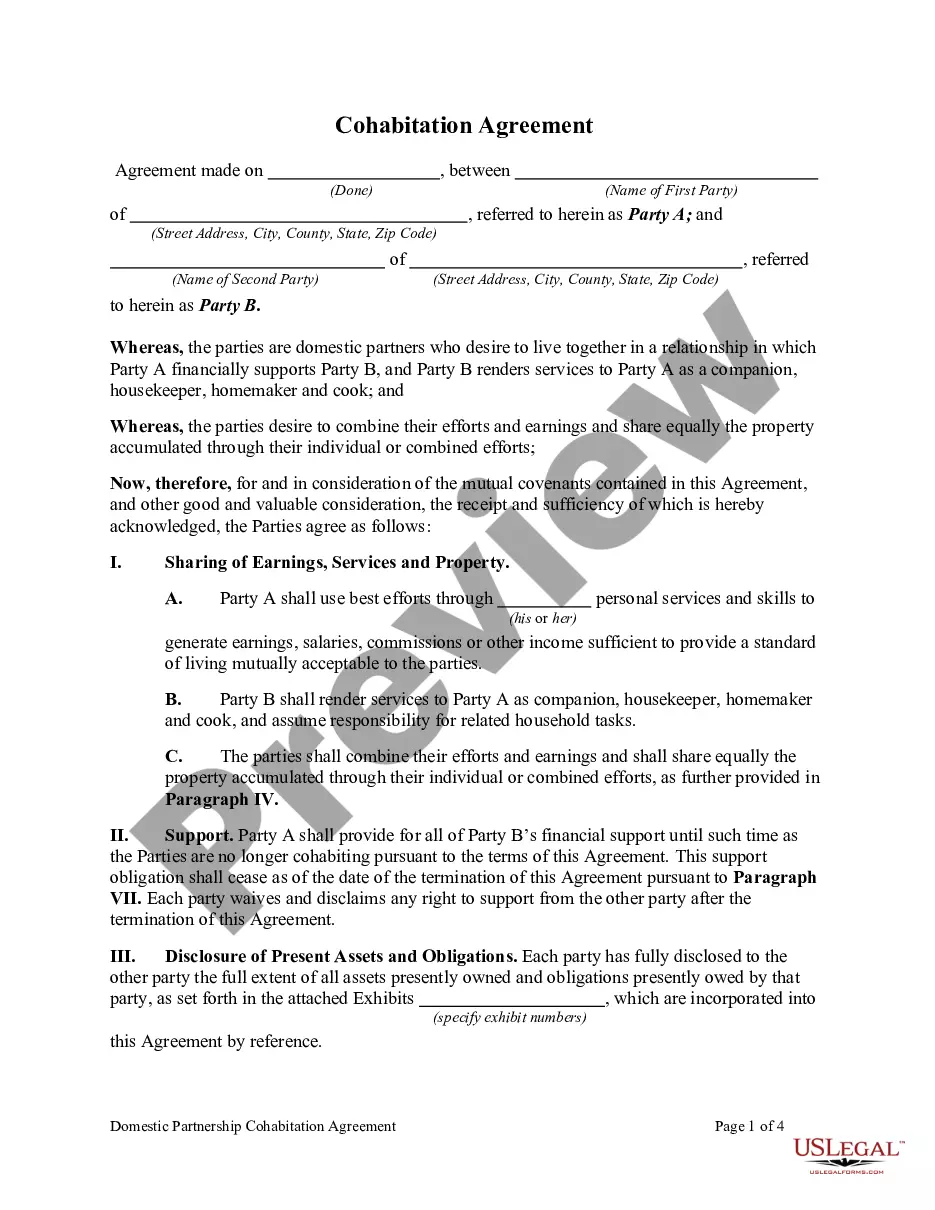
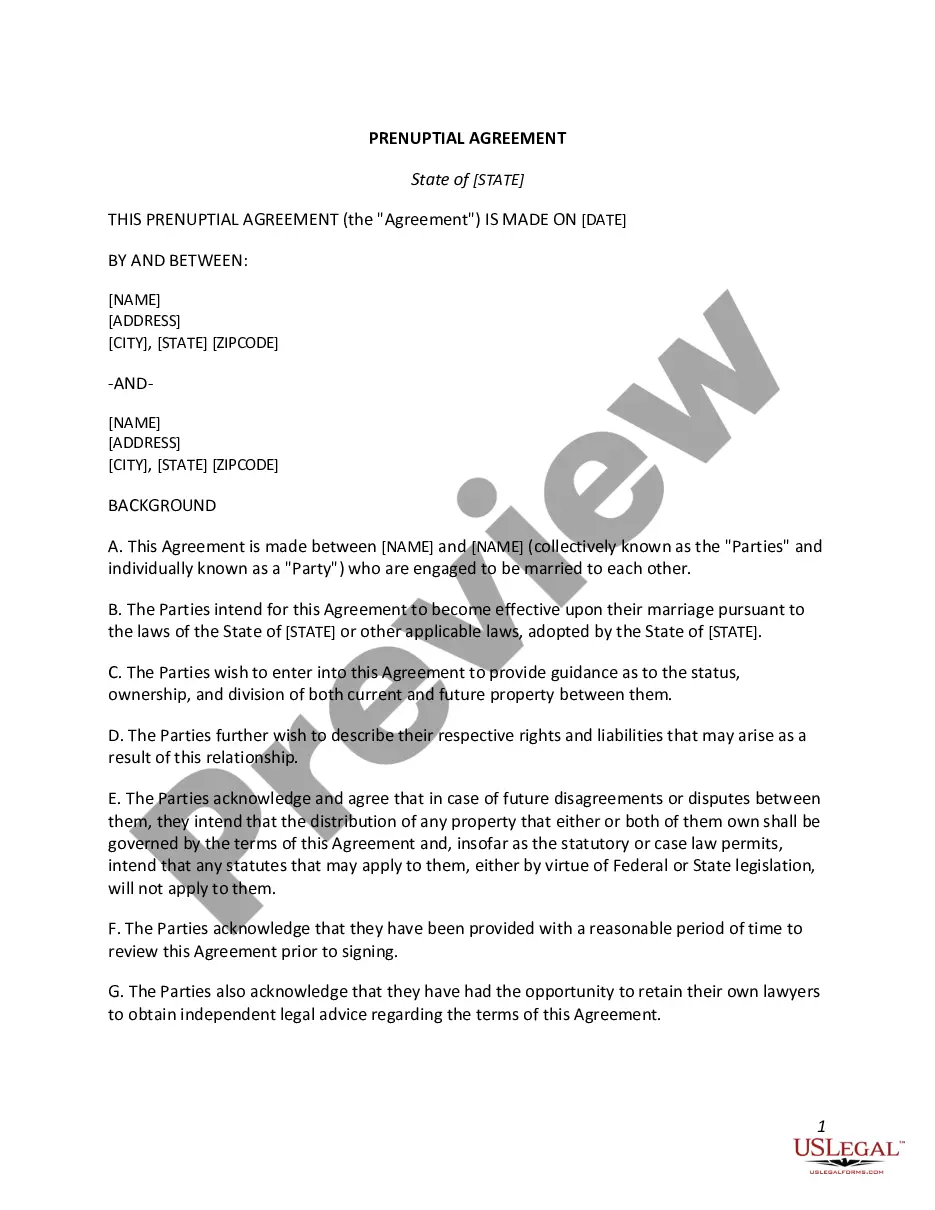
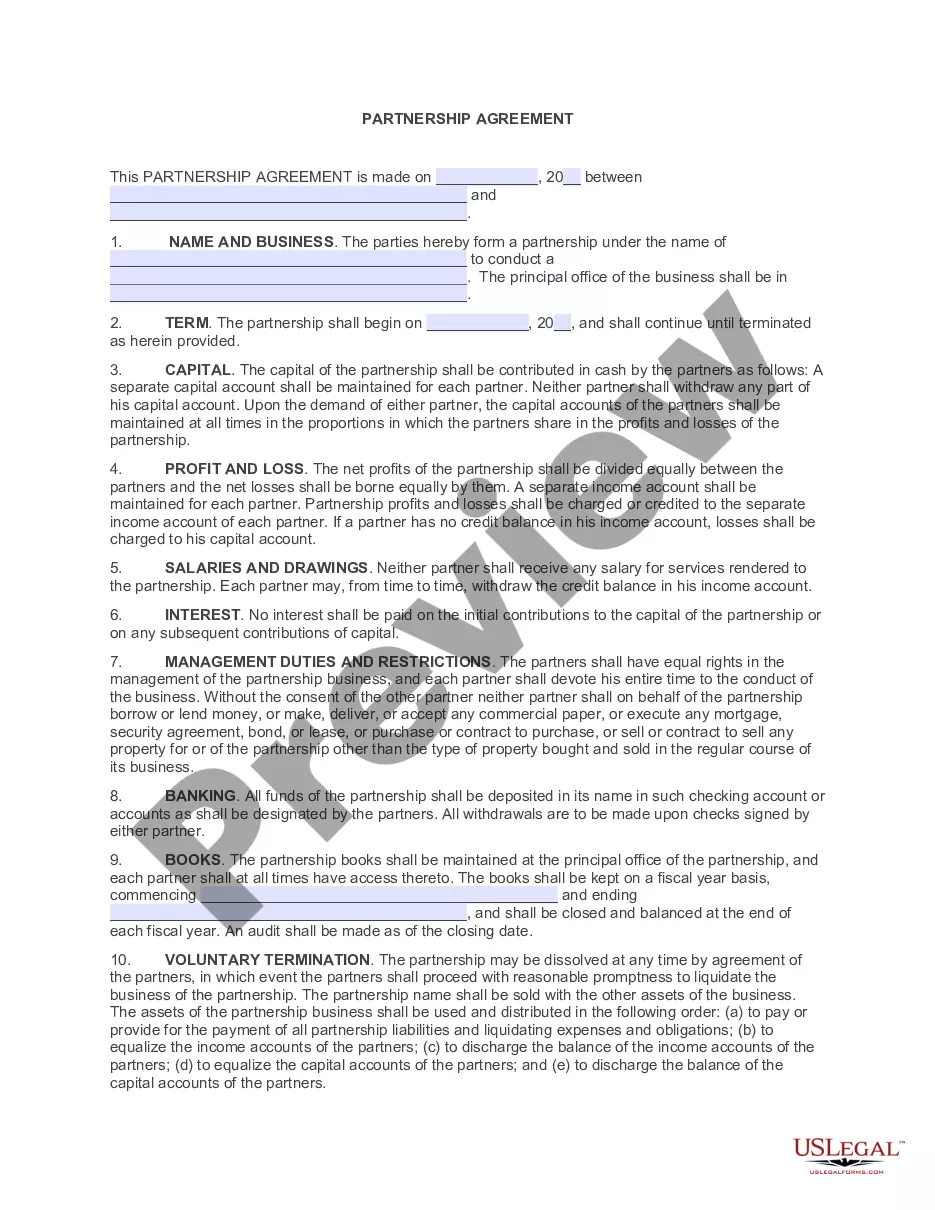
The Cohabitation Agreement for Married Couples is a legal document designed for couples living together, outlining their financial responsibilities and other mutual obligations. This agreement helps define the terms of financial support, service contributions, and property ownership, distinguishing it from general cohabitation agreements that may not address these aspects specifically for married couples.
Form components explained
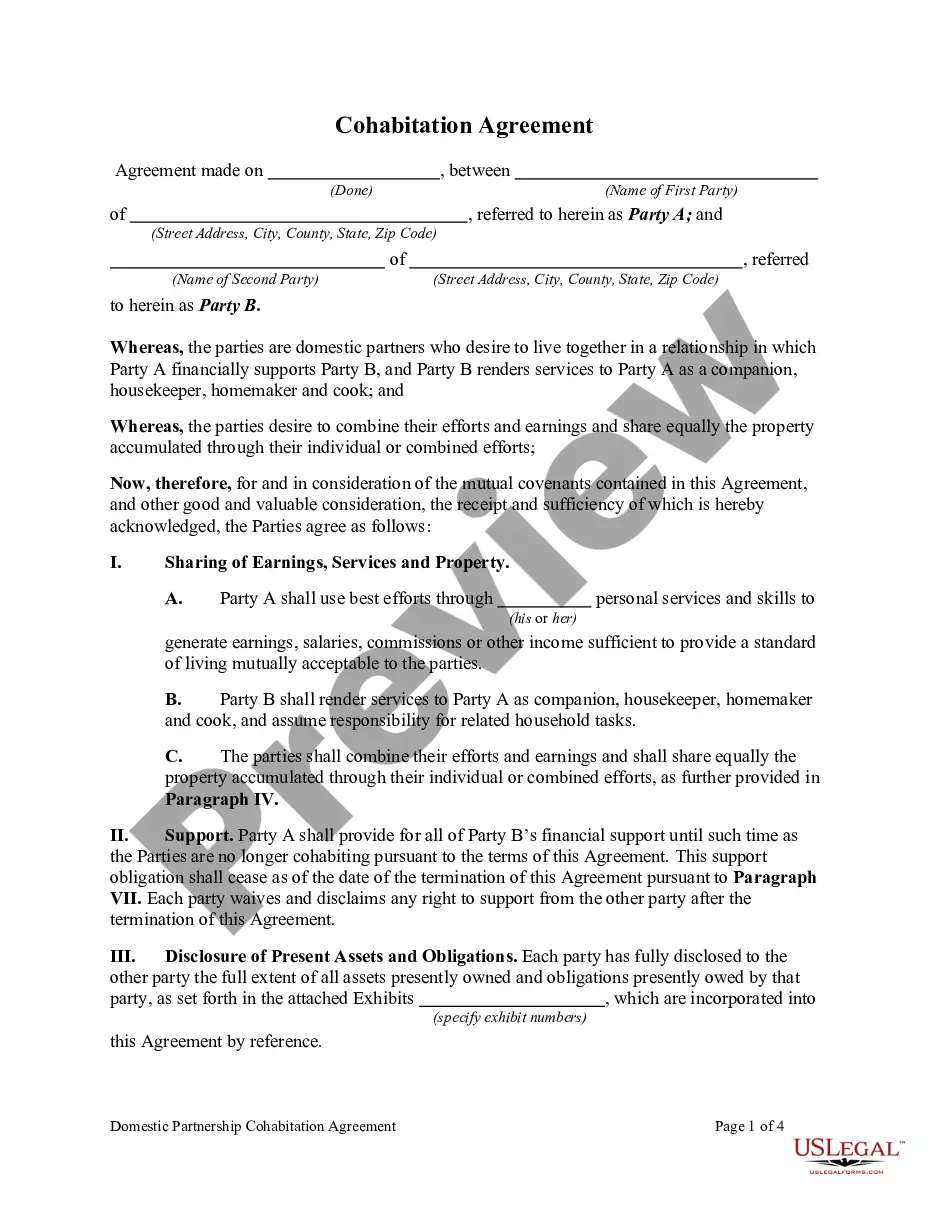
- Identification of the parties involved in the agreement.
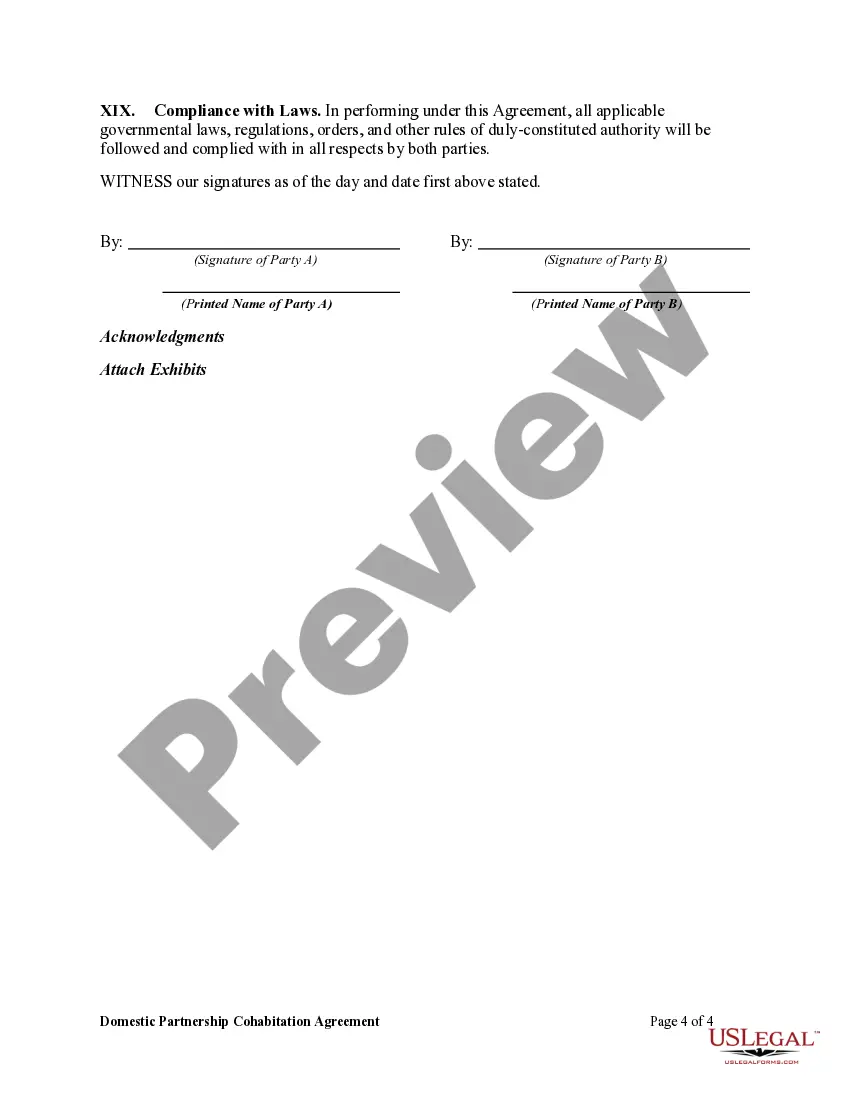
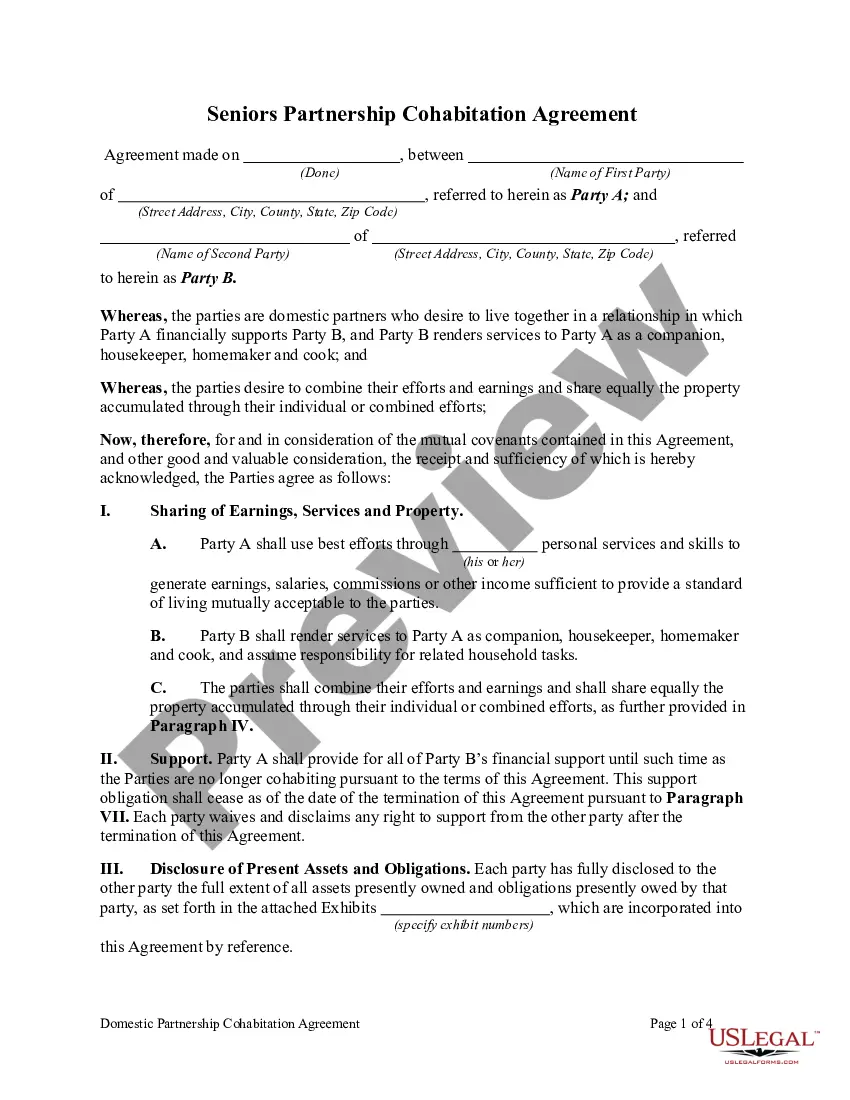
- Details on the sharing of earnings, services, and property between the partners.
- Financial support obligations of one partner to the other.
- Disclosure of assets and obligations by both parties.
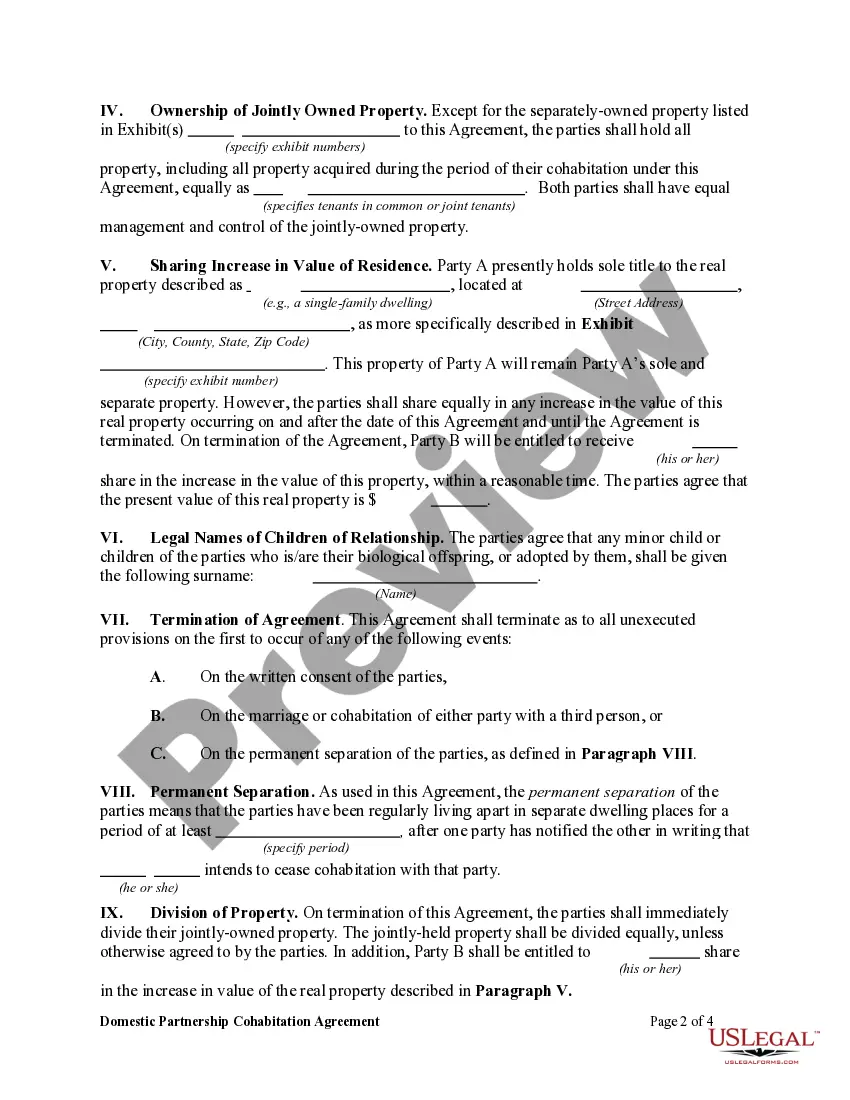
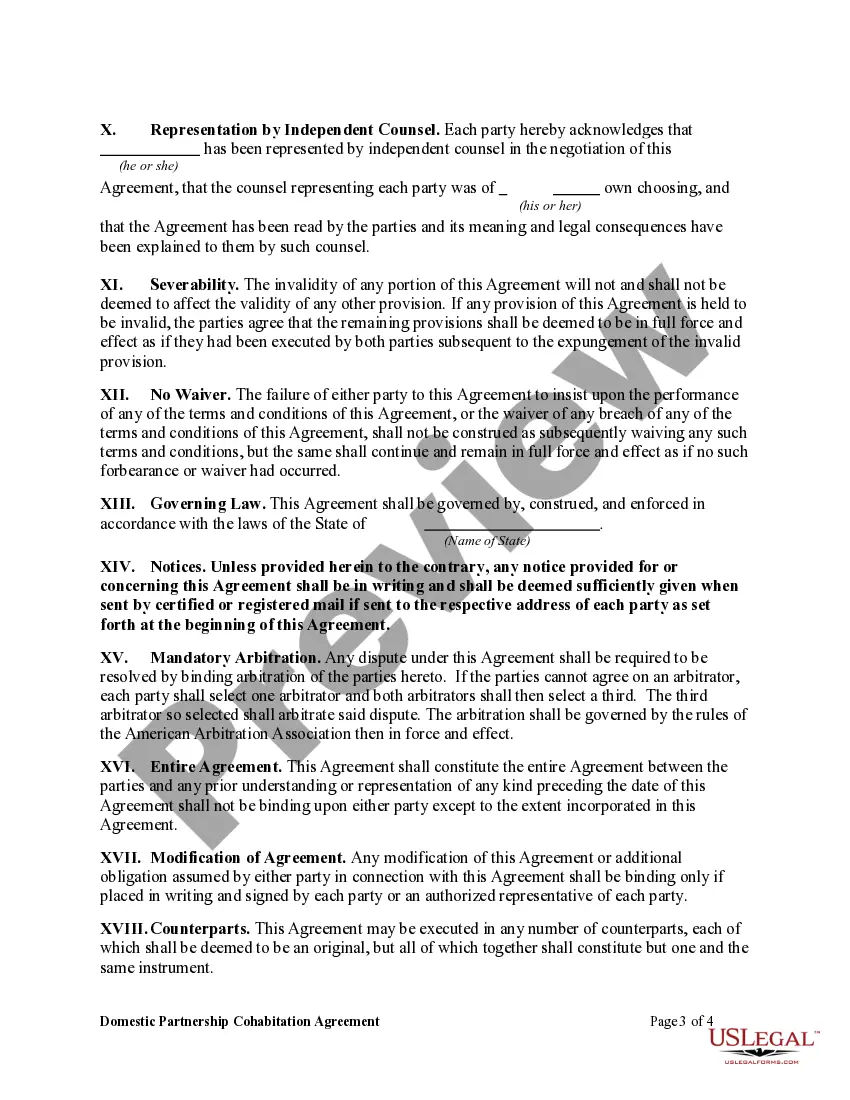
- Conditions for termination of the agreement.
- Provisions for the division of property upon termination.
Situations where this form applies
This form is useful for married couples who are cohabiting and want to establish clear agreements regarding financial support and household responsibilities. It can be used when couples wish to formalize their living arrangements, especially in situations where one partner may be financially supporting the other or where shared property is involved.
Who can use this document
- Married couples who live together and wish to outline financial and domestic responsibilities.
- Couples seeking to protect their assets and clarify property rights.
- Those who want to establish clear terms for support and services rendered within the household.
Completing this form step by step
- Identify and enter the names and addresses of both parties involved in the agreement.
- Specify the financial obligations of Party A and the services provided by Party B.
- List all assets and obligations to ensure full disclosure between the parties.
- Detail the terms for property ownership and how it will be divided upon termination of the agreement.
- Include signatures from both parties to validate the document.
Notarization requirements for this form
This form does not typically require notarization unless specified by local law. However, having it notarized can add an additional layer of security to ensure its validity.
Get your form ready online
Our built-in tools help you complete, sign, share, and store your documents in one place.
Make edits, fill in missing information, and update formatting in US Legal Forms—just like you would in MS Word.
Download a copy, print it, send it by email, or mail it via USPS—whatever works best for your next step.
Sign and collect signatures with our SignNow integration. Send to multiple recipients, set reminders, and more. Go Premium to unlock E-Sign.
If this form requires notarization, complete it online through a secure video call—no need to meet a notary in person or wait for an appointment.
We protect your documents and personal data by following strict security and privacy standards.

Make edits, fill in missing information, and update formatting in US Legal Forms—just like you would in MS Word.

Download a copy, print it, send it by email, or mail it via USPS—whatever works best for your next step.

Sign and collect signatures with our SignNow integration. Send to multiple recipients, set reminders, and more. Go Premium to unlock E-Sign.

If this form requires notarization, complete it online through a secure video call—no need to meet a notary in person or wait for an appointment.

We protect your documents and personal data by following strict security and privacy standards.
Typical mistakes to avoid
- Not fully disclosing all assets and obligations, which can lead to misunderstandings.
- Failing to specify terms for property division upon termination.
- Using vague language that may lead to disputes in the future.
Why complete this form online
- Convenience of downloading and completing the form from home.
- Editability allows you to customize the agreement to suit your specific needs.
- Access to templates drafted by licensed attorneys, ensuring legal reliability.
Looking for another form?
Form popularity
FAQ
A cohabitation agreement tends to cost around £750 to A£2,000 plus VAT. But it is a good investment if you compare this to the potential costs if there is a dispute if a couple separate. We ask three law firms for their advice about what needs to be included in a cohabitation agreement.
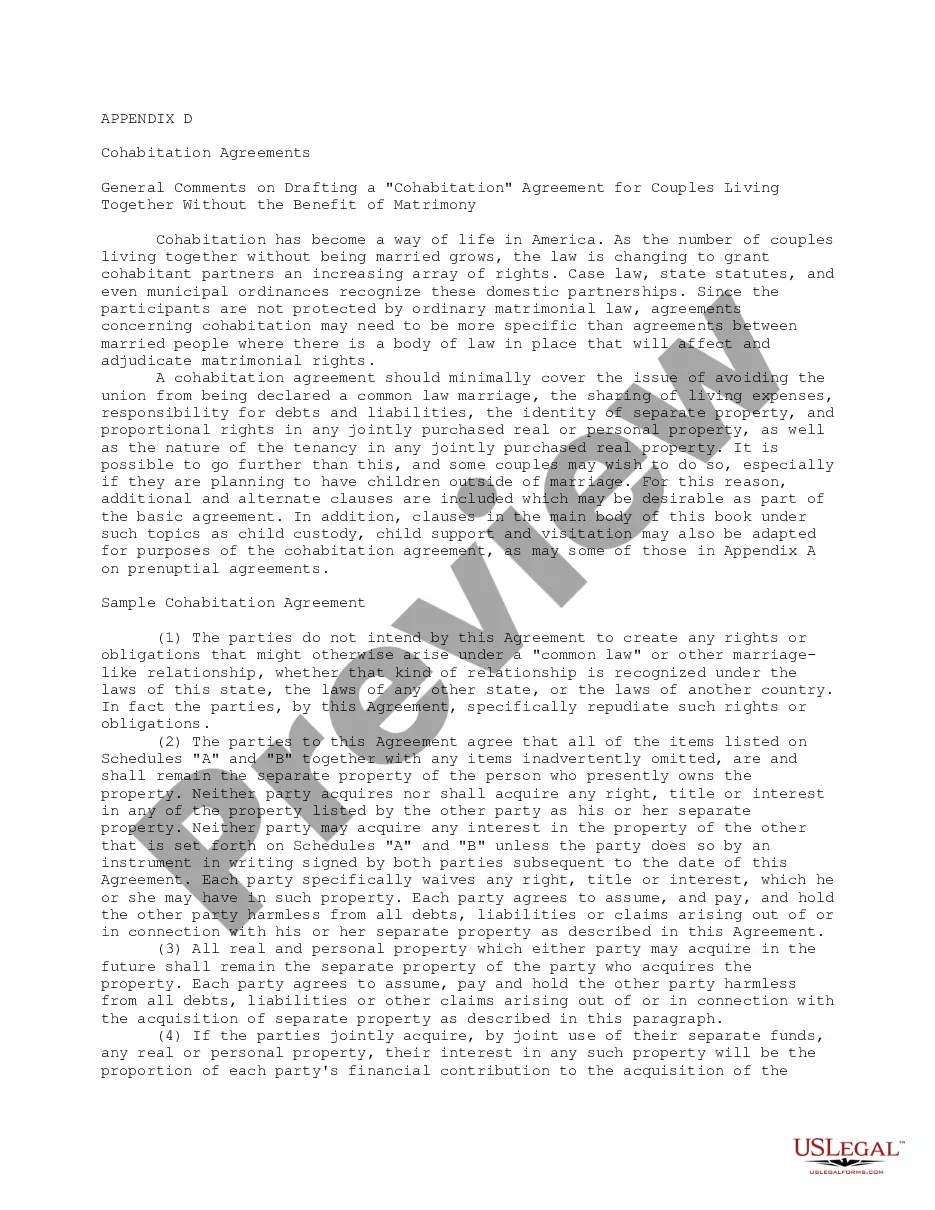
Many couples believe that moving in together creates a common law marriage, giving you the same rights as if you were married.In reality, moving in together does not give you automatic rights to each other's property, no matter how long you live together.
Although there is no legal definition of living together, it generally means to live together as a couple without being married. Couples who live together are sometimes called common-law partners. This is just another way of saying a couple are living together.
Under current law, cohabiting couples do not have the same legal rights as married couples and if separation occurs, there is limited recourse to their ex-partner's property, pension or financial support.
Legally, cohabiting couples have no financial responsibility to one another if they separate. If your relationship ends you have no legal responsibility to provide your former partner with financial support. Many cohabiting couples choose to start a family together.
Is a Cohabitation Agreement valid after marriage? Yes a cohabitation agreement signed before marriage will automatically be considered a marriage contract in the event spouses get married.
Cohabitation Agreement Requirements The majority of states now recognizes these cohabitation agreements, though many require that the agreement be in writing and signed by the parties.Only a small number of recent cases have held that contracts between unmarried cohabitants are unenforceable.
Cohabitation and Marriage Agreements can be reviewed and overturned by the court in certain circumstances, such as where the agreement is objectively unreasonable, or if the agreement was entered into through undue influence, duress or coercion.