Cohabitation Agreement for Unmarried Couples
About this form
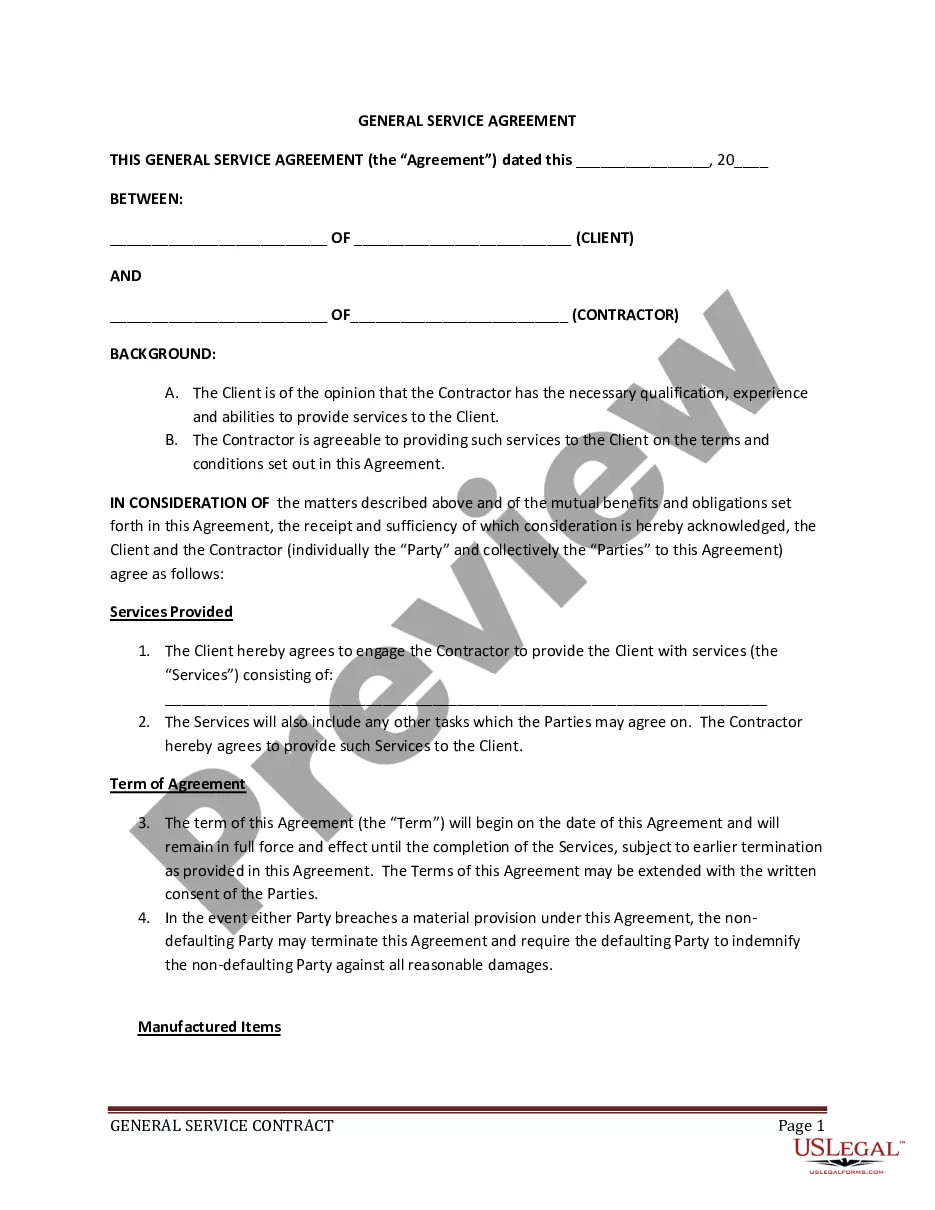
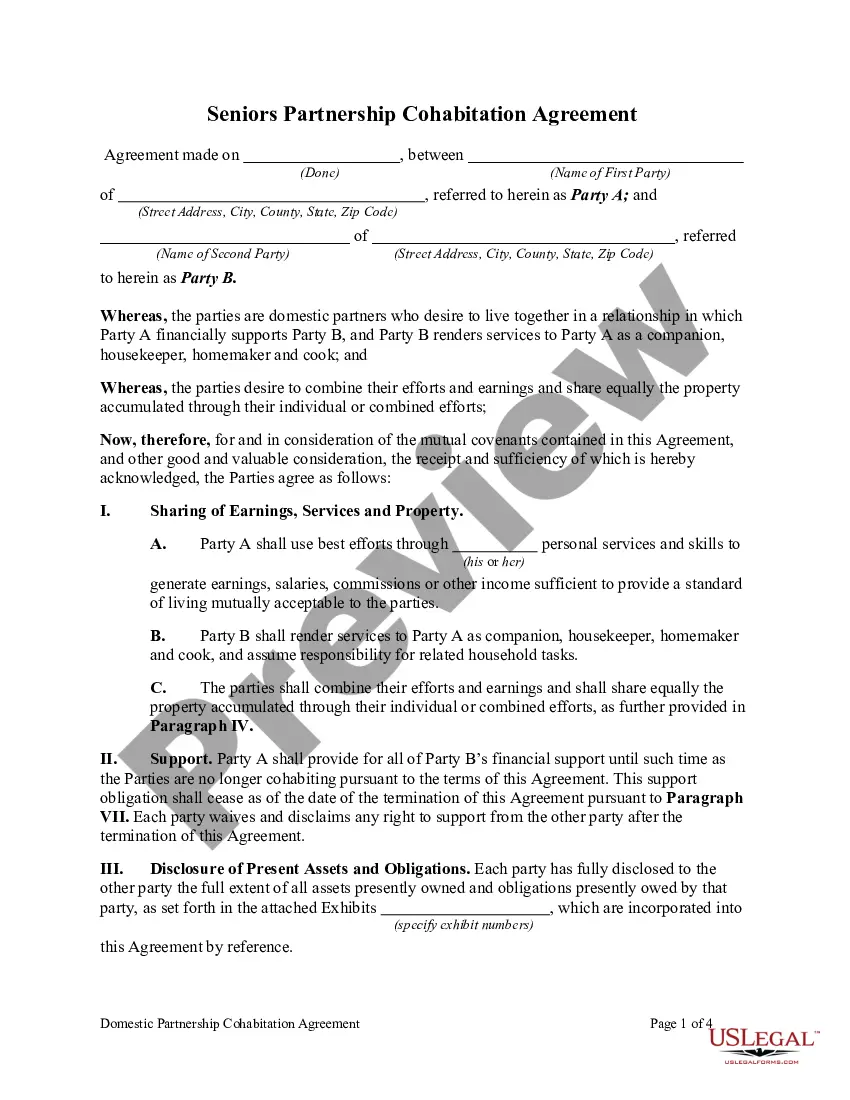
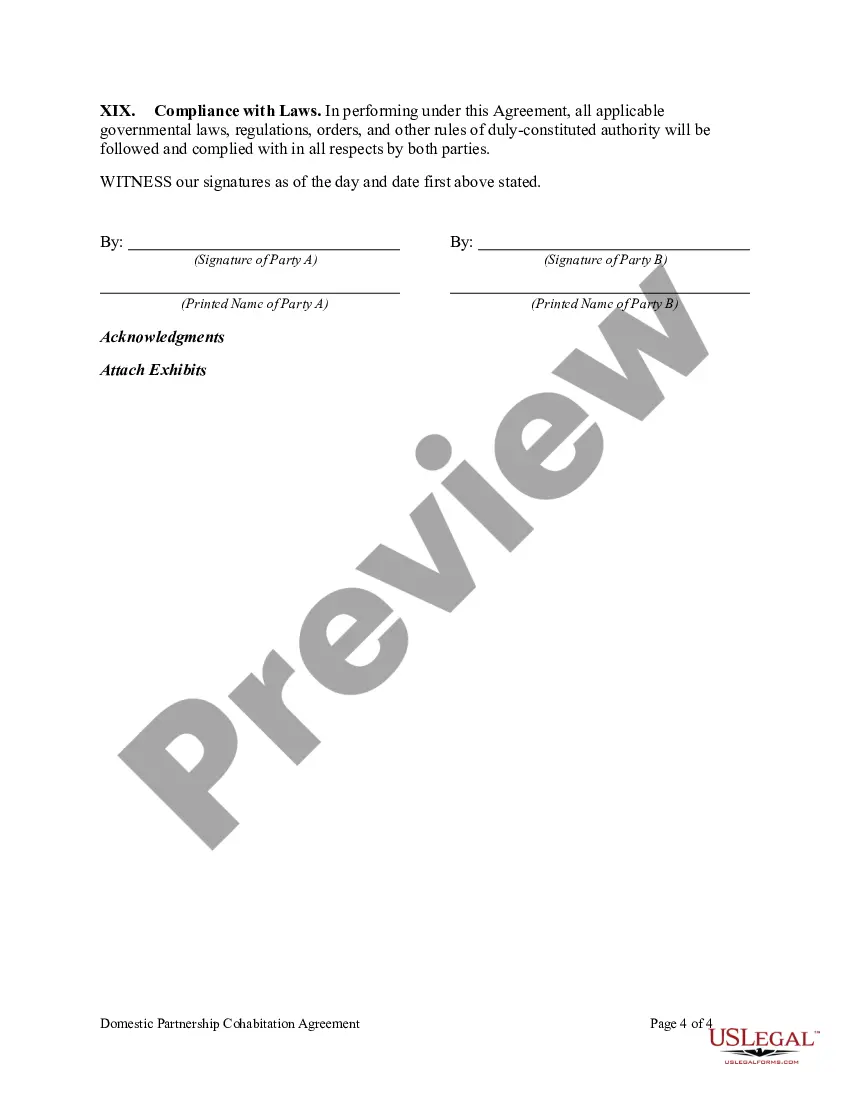
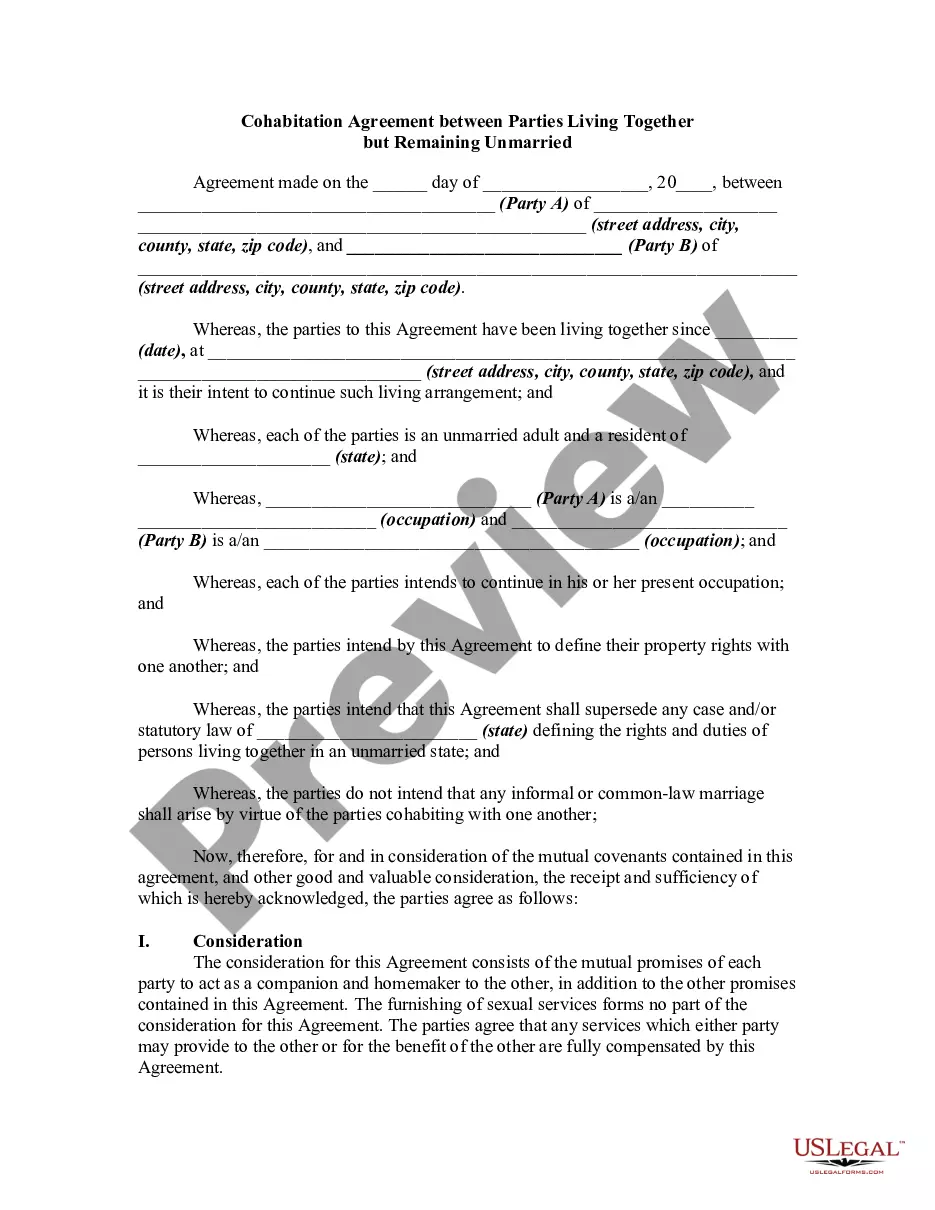
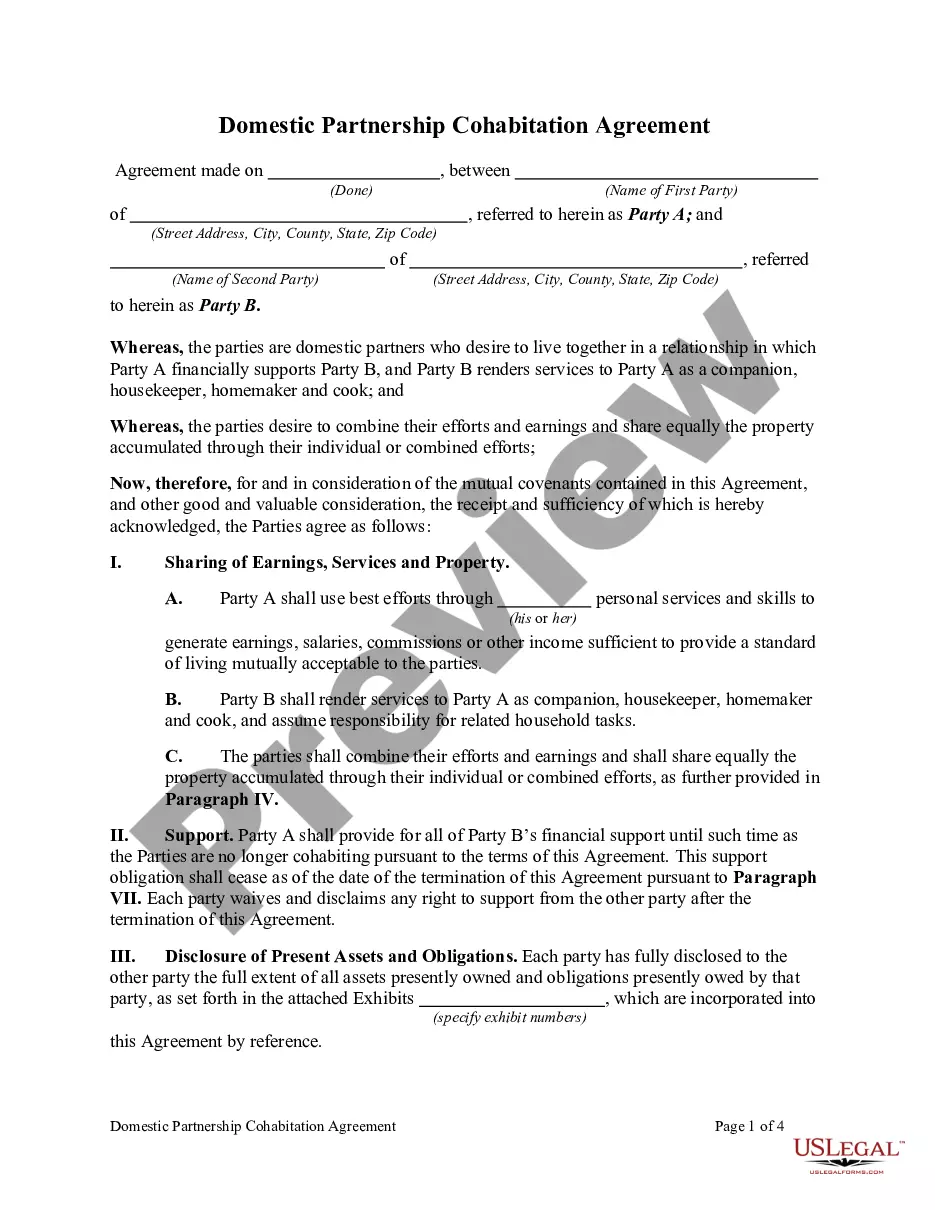
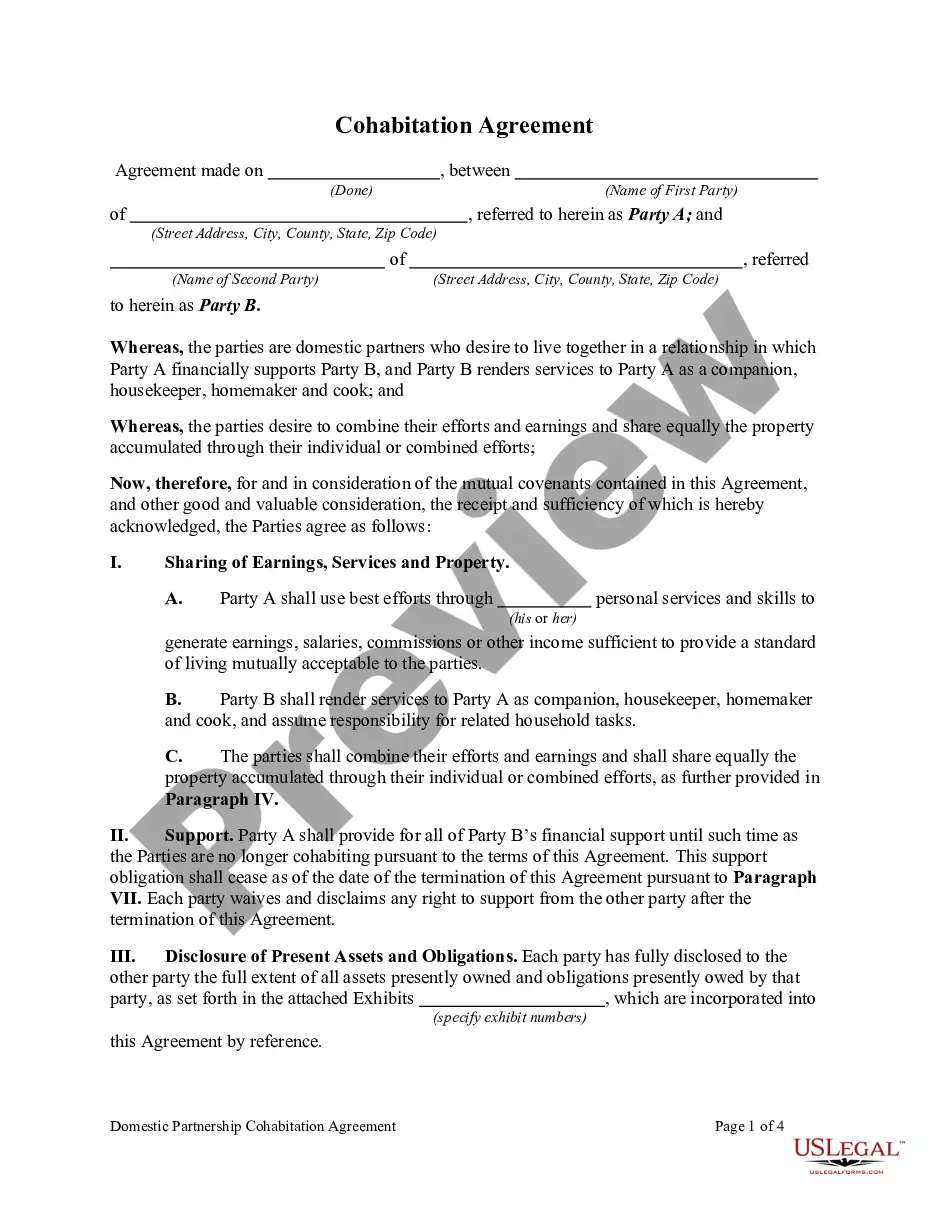
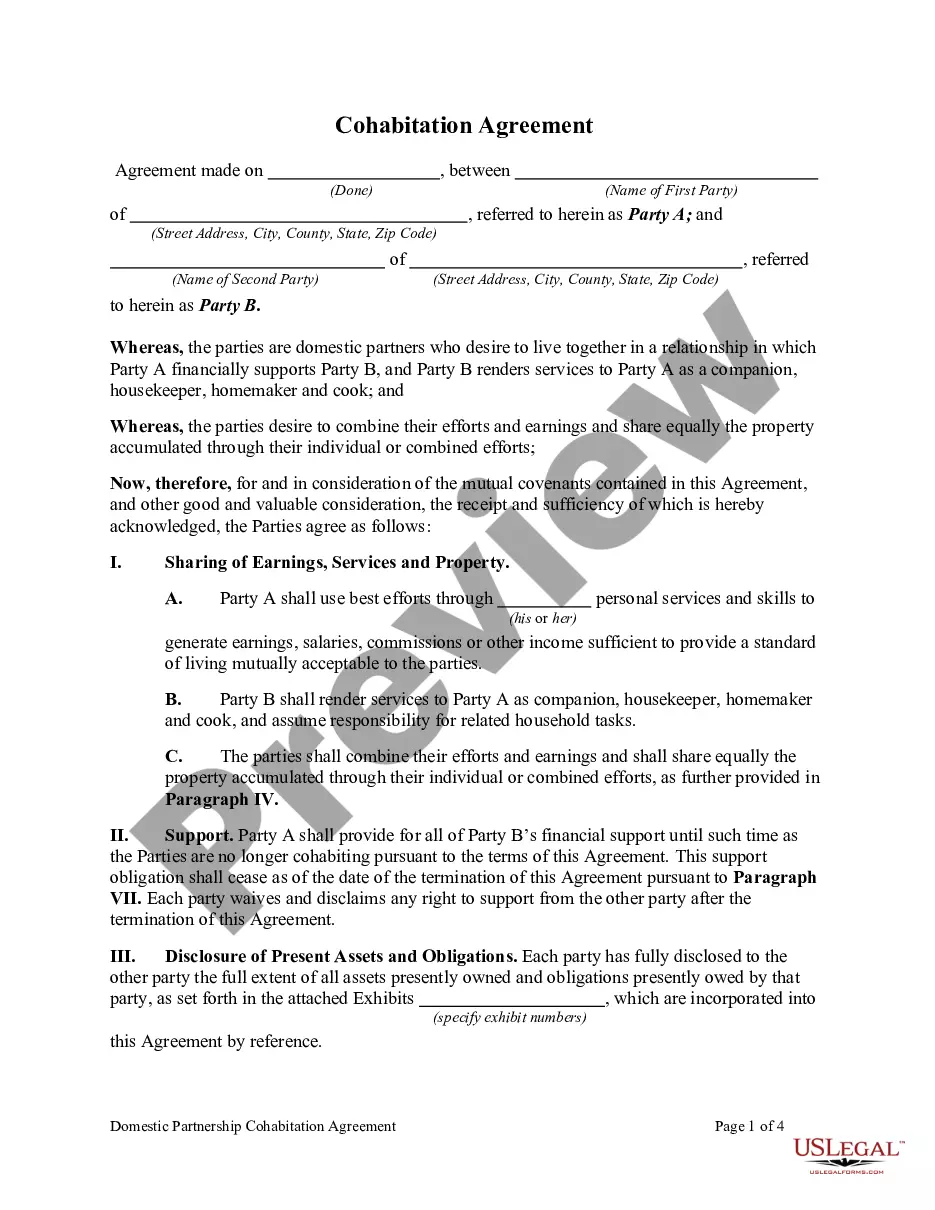
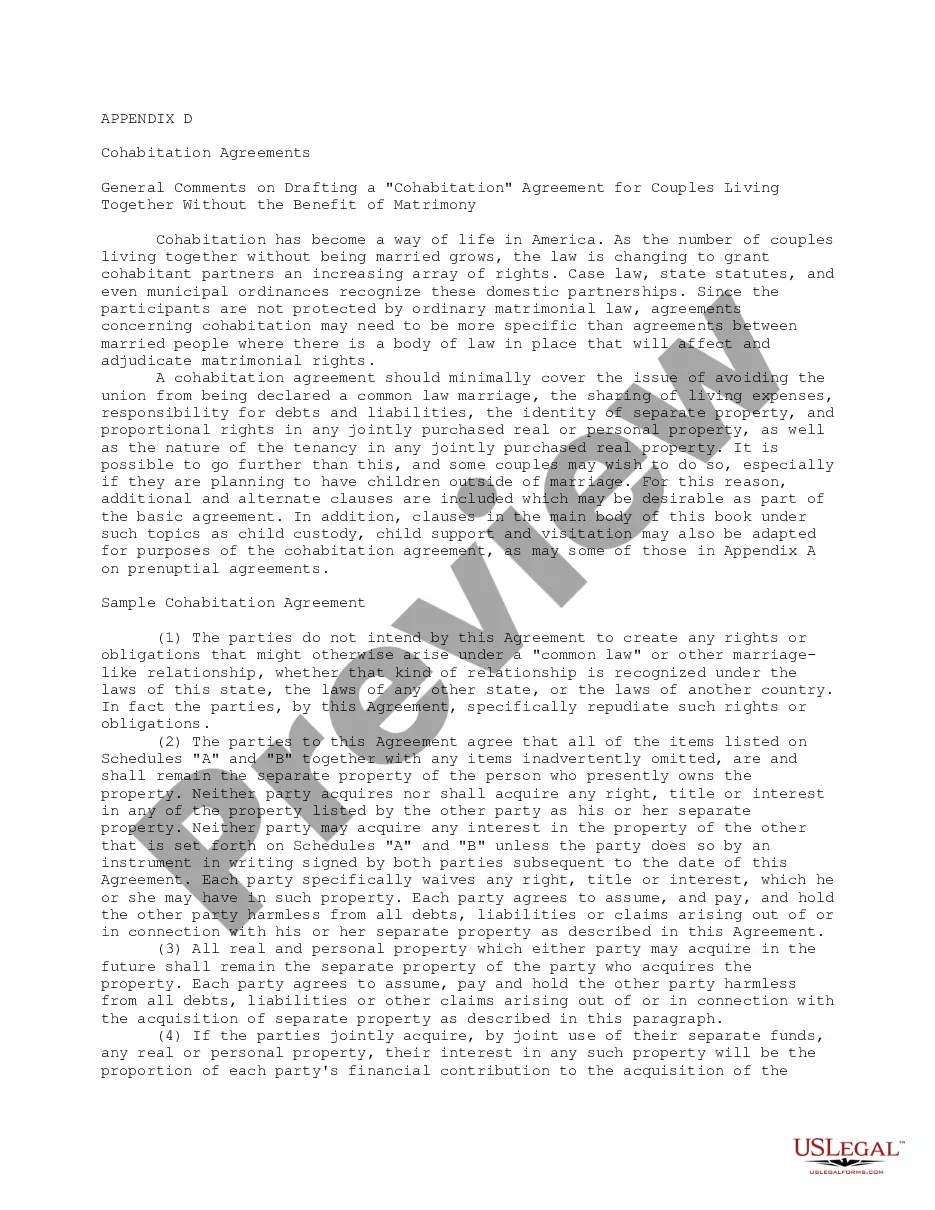
The Cohabitation Agreement for Unmarried Couples is a legal document designed for two individualsâregardless of genderâwho wish to establish a cohabitation relationship. This agreement outlines the financial support from one partner while the other provides homemaking services, ensuring clarity over shared responsibilities and property ownership. Unlike marriage contracts, this agreement caters specifically to unmarried couples, providing a legal framework for living arrangements and financial arrangements without formalizing a marriage.
What’s included in this form
- Identification of the parties involved, referred to as Party A and Party B.
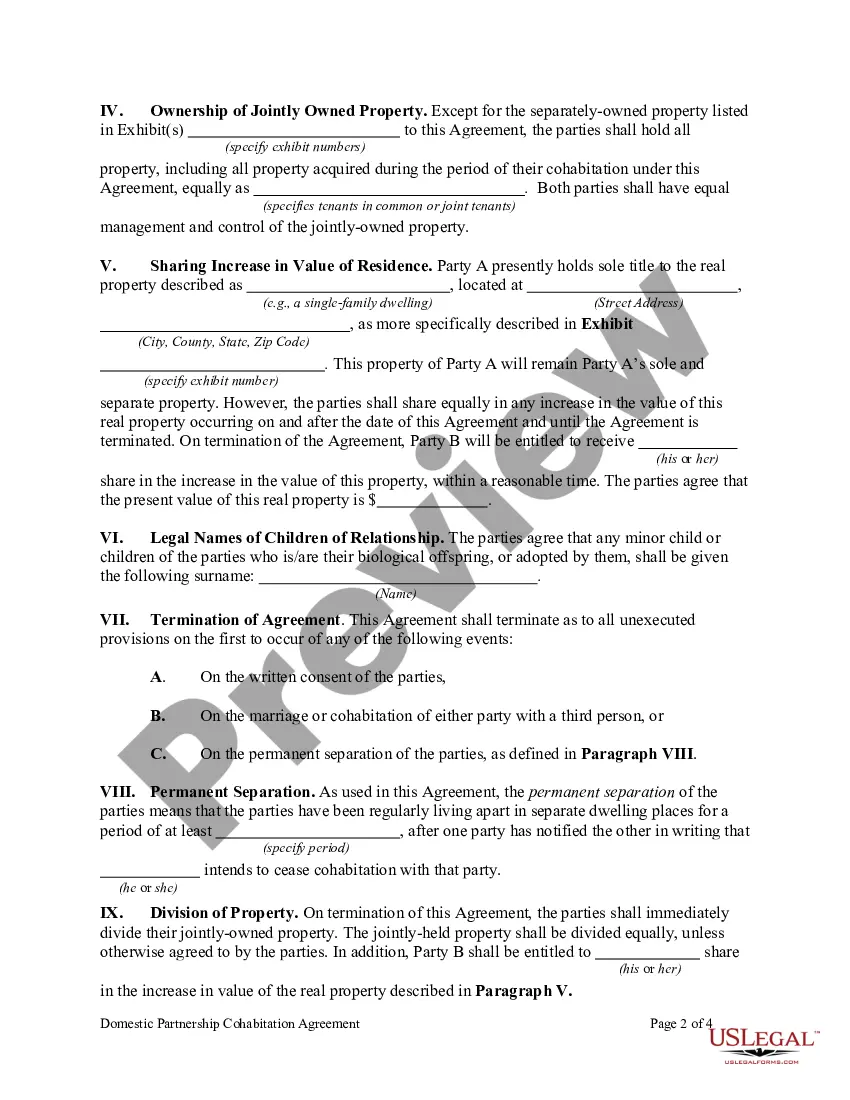
- Terms outlining the sharing of earnings, services, and property accumulated during the cohabitation.
- Financial support obligations of Party A to Party B throughout the duration of the agreement.
- Clauses regarding the disclosure of assets and obligations between the parties.
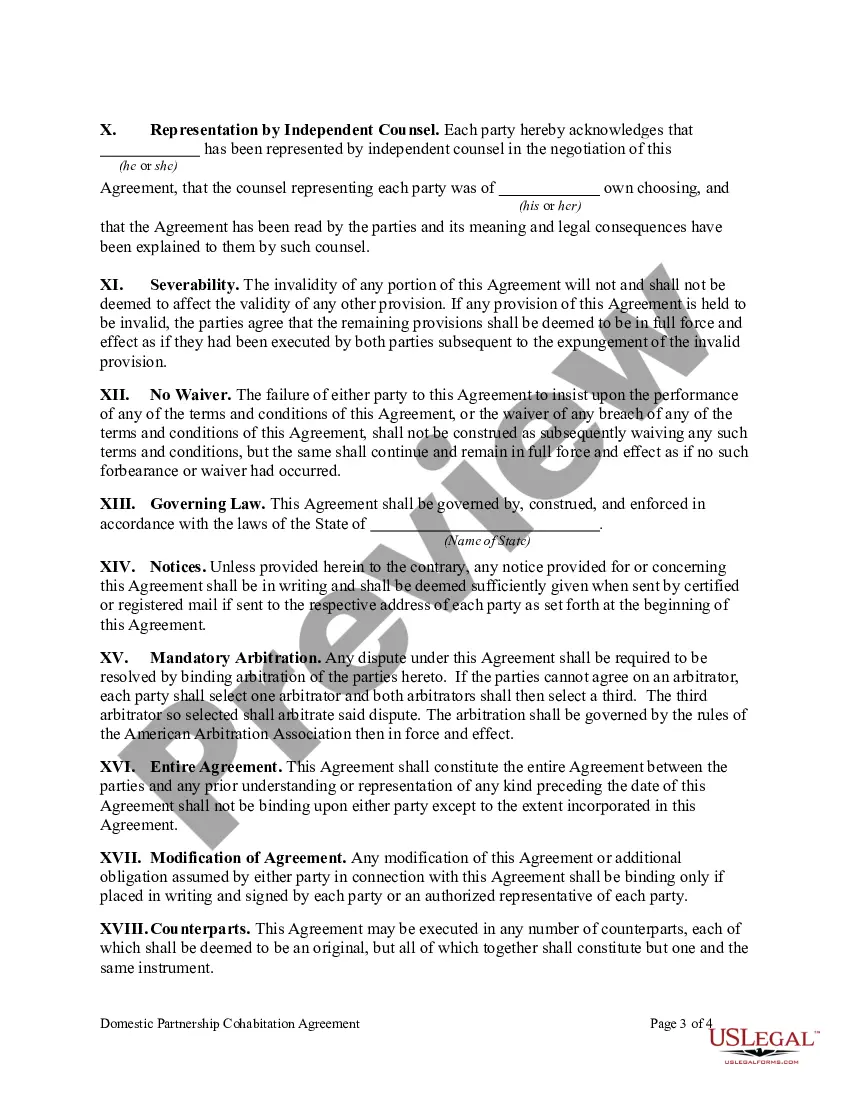
- Provisions for the termination of the agreement and division of property upon separation.
- Legal requirements for representation by independent counsel to ensure informed consent.
When to use this form
This cohabitation agreement is useful in various situations, including when two individuals plan to live together without getting married, when they wish to clarify financial responsibilities and household duties, or when they have significant assets that need to be addressed. It can also protect both parties' interests in the event that the relationship ends or if legal circumstances arise concerning property or financial support.
Intended users of this form
- Unmarried couples who are considering living together.
- Partners who want to delineate their financial responsibilities and shared household duties.
- Individuals who have substantial assets and wish to protect their interests while cohabiting.
- Partners who seek a legal understanding of their relationship without formalizing it through marriage.
Steps to complete this form
- Identify the parties by entering the names and addresses of Party A and Party B.
- Specify the financial support obligations of Party A and the homemaking duties of Party B.
- Disclose all current assets and obligations in the designated exhibit section.
- Outline the terms for joint property ownership and any separate property listed in the exhibits.
- Enter the required signatures of both parties, along with the dates of signing, to finalize the agreement.
Does this document require notarization?
This form does not typically require notarization unless specified by local law. However, having it notarized may provide an extra layer of validation and security for both parties involved.
Get your form ready online
Our built-in tools help you complete, sign, share, and store your documents in one place.
Make edits, fill in missing information, and update formatting in US Legal Forms—just like you would in MS Word.
Download a copy, print it, send it by email, or mail it via USPS—whatever works best for your next step.
Sign and collect signatures with our SignNow integration. Send to multiple recipients, set reminders, and more. Go Premium to unlock E-Sign.
If this form requires notarization, complete it online through a secure video call—no need to meet a notary in person or wait for an appointment.
We protect your documents and personal data by following strict security and privacy standards.

Make edits, fill in missing information, and update formatting in US Legal Forms—just like you would in MS Word.

Download a copy, print it, send it by email, or mail it via USPS—whatever works best for your next step.

Sign and collect signatures with our SignNow integration. Send to multiple recipients, set reminders, and more. Go Premium to unlock E-Sign.

If this form requires notarization, complete it online through a secure video call—no need to meet a notary in person or wait for an appointment.

We protect your documents and personal data by following strict security and privacy standards.
Common mistakes to avoid
- Not disclosing complete financial information, which can lead to disputes.
- Failing to include clauses about property division upon termination of the agreement.
- Not having the agreement reviewed by independent counsel, which can compromise enforceability.
- Using unclear language that may lead to misunderstandings in responsibilities.
Benefits of completing this form online
- Conveniently fill out and download the form at your own pace.
- Edit the document to suit your specific needs without paying for legal consultations.
- Access professionally drafted templates created by licensed attorneys, ensuring reliability.
- Save time by avoiding in-person meetingsâcomplete the process from anywhere.
Legal use & context
- This agreement serves as a binding contract in the eyes of the law, ensuring both parties adhere to the outlined terms.
- While it is enforceable, the agreement can be subject to state laws governing cohabitation and partnerships.
- Parties are encouraged to maintain open communication and update the agreement as necessary.
Main things to remember
- The cohabitation agreement outlines the financial and household responsibilities between partners.
- Clear disclosure of assets and obligations is essential for effective legal protection.
- Both parties should seek independent legal counsel before signing to ensure their rights are protected.
- This agreement is tailored for unmarried couples seeking clarity in their cohabitation arrangement.
Looking for another form?
Form popularity
FAQ
A cohabitation agreement tends to cost around £750 to A£2,000 plus VAT. But it is a good investment if you compare this to the potential costs if there is a dispute if a couple separate. We ask three law firms for their advice about what needs to be included in a cohabitation agreement.
However, unmarried couples living together have different legal rights compared to married couples. Unmarried couples don't have the same legal protection as married couples; and they also have less responsibility to each other in the event of a breakup.
Under current law, cohabiting couples do not have the same legal rights as married couples and if separation occurs, there is limited recourse to their ex-partner's property, pension or financial support.
Can I legally draw up my own cohabitation agreement? Whilst you can access templates online, the agreement should be specific to your case and tailor made a template may miss something out.
Can I legally draw up my own cohabitation agreement? Whilst you can access templates online, the agreement should be specific to your case and tailor made a template may miss something out.
Cohabitation Agreement Requirements The majority of states now recognizes these cohabitation agreements, though many require that the agreement be in writing and signed by the parties.Only a small number of recent cases have held that contracts between unmarried cohabitants are unenforceable.
In light of these dramatic social changes, you may be surprised to learn that cohabitation is technically still illegal in 4 U.S. states. As it currently stands, Mississippi, Michigan, Florida, and Virginia currently have laws on the books banning cohabitation.
Cohabitation and Marriage Agreements can be reviewed and overturned by the court in certain circumstances, such as where the agreement is objectively unreasonable, or if the agreement was entered into through undue influence, duress or coercion.