Domestic Partnership Cohabitation Agreement
What is this form?
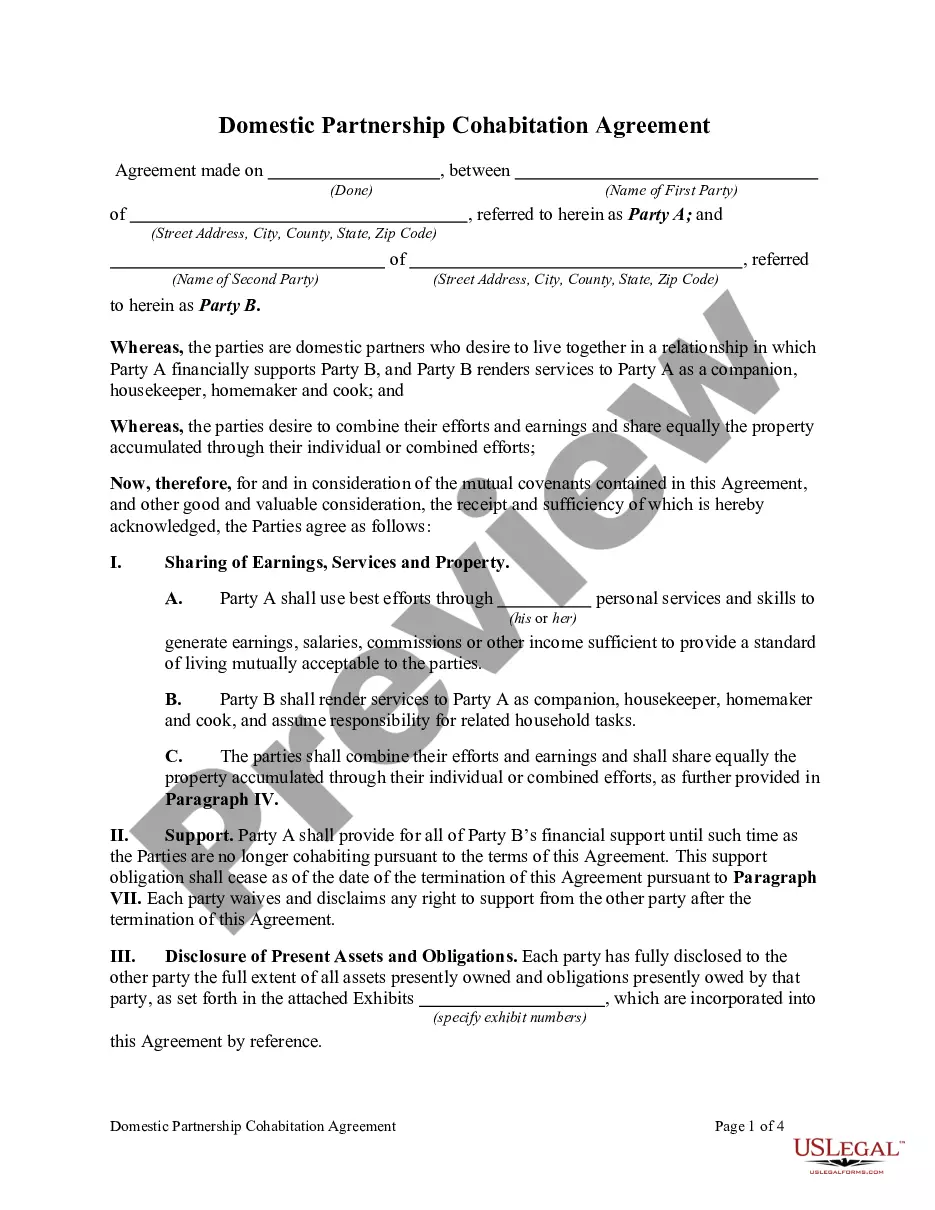
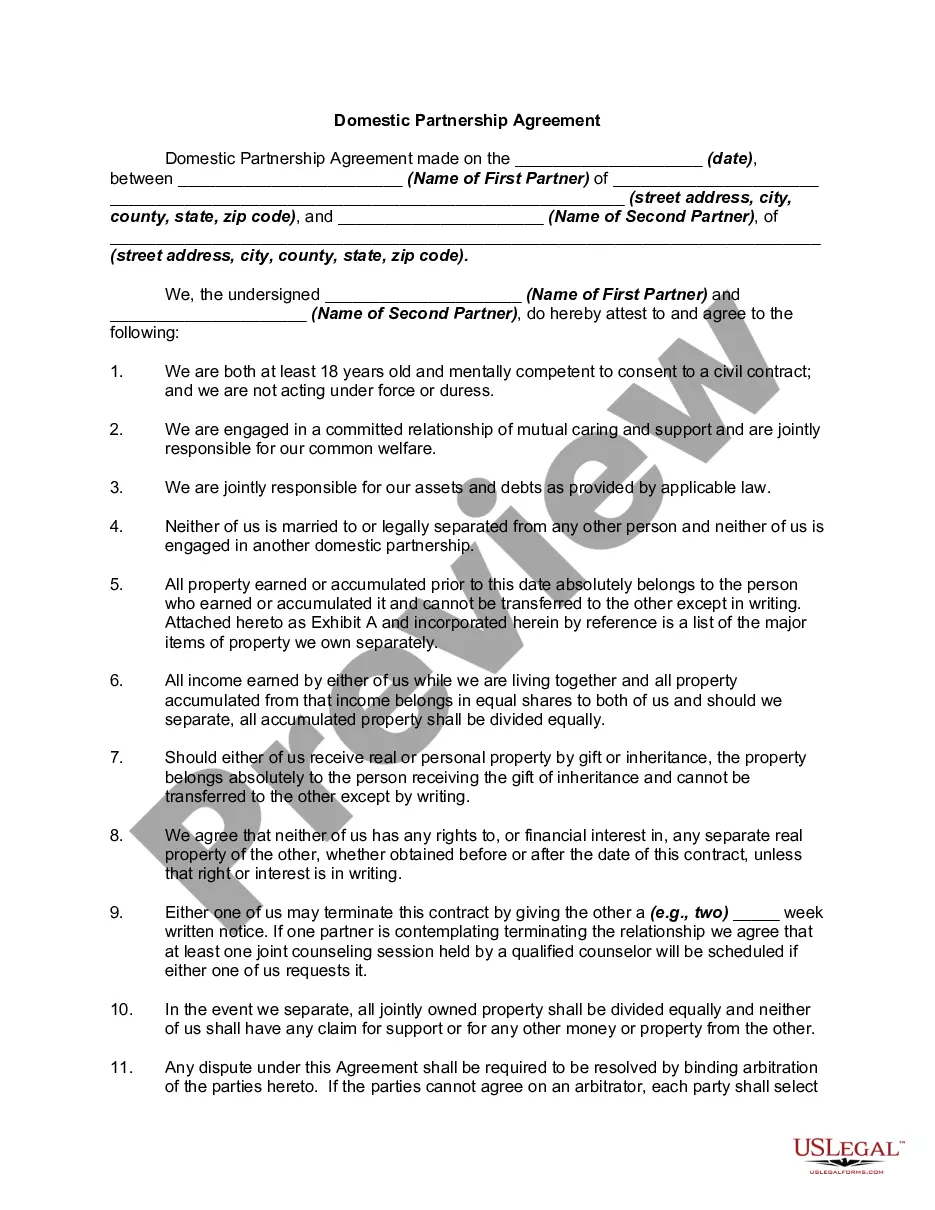
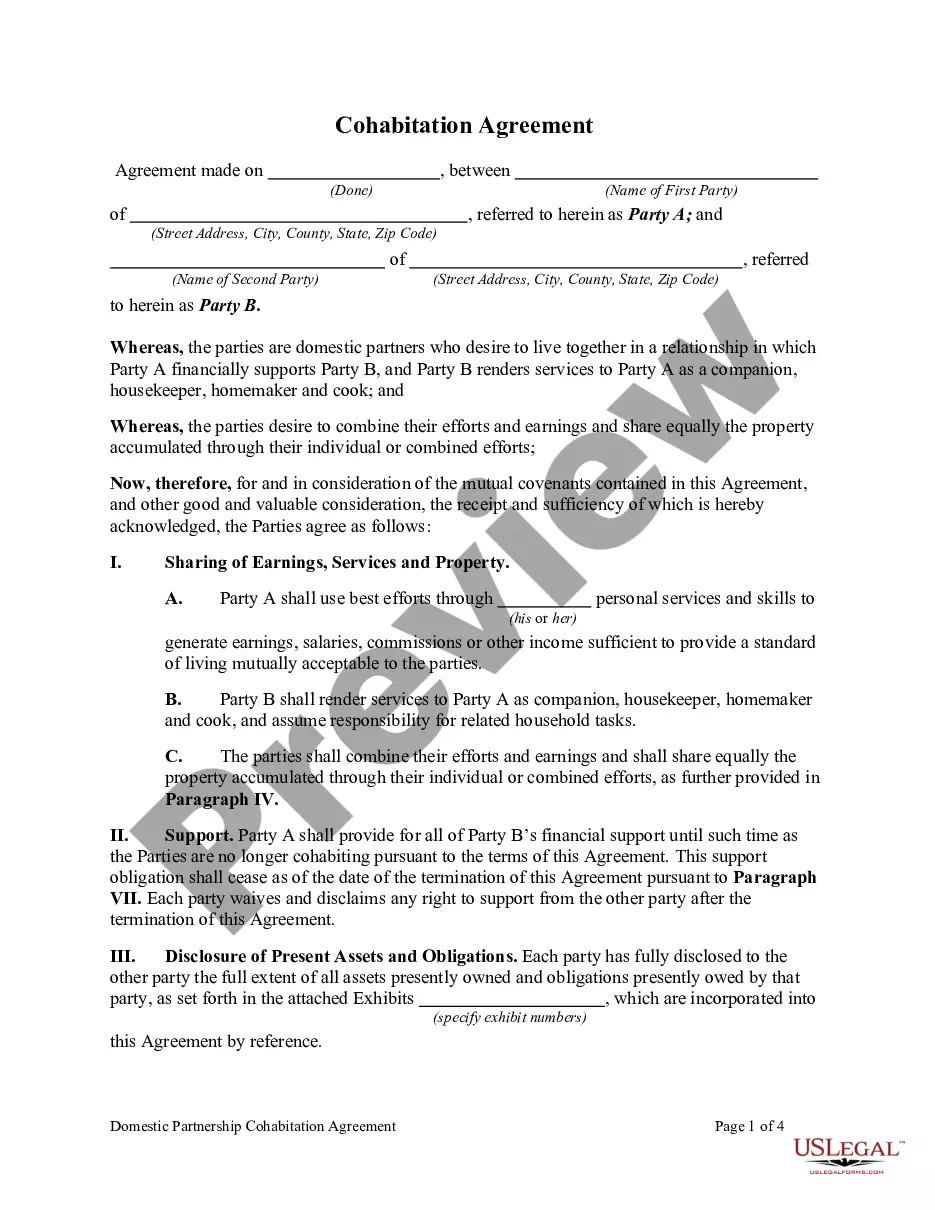
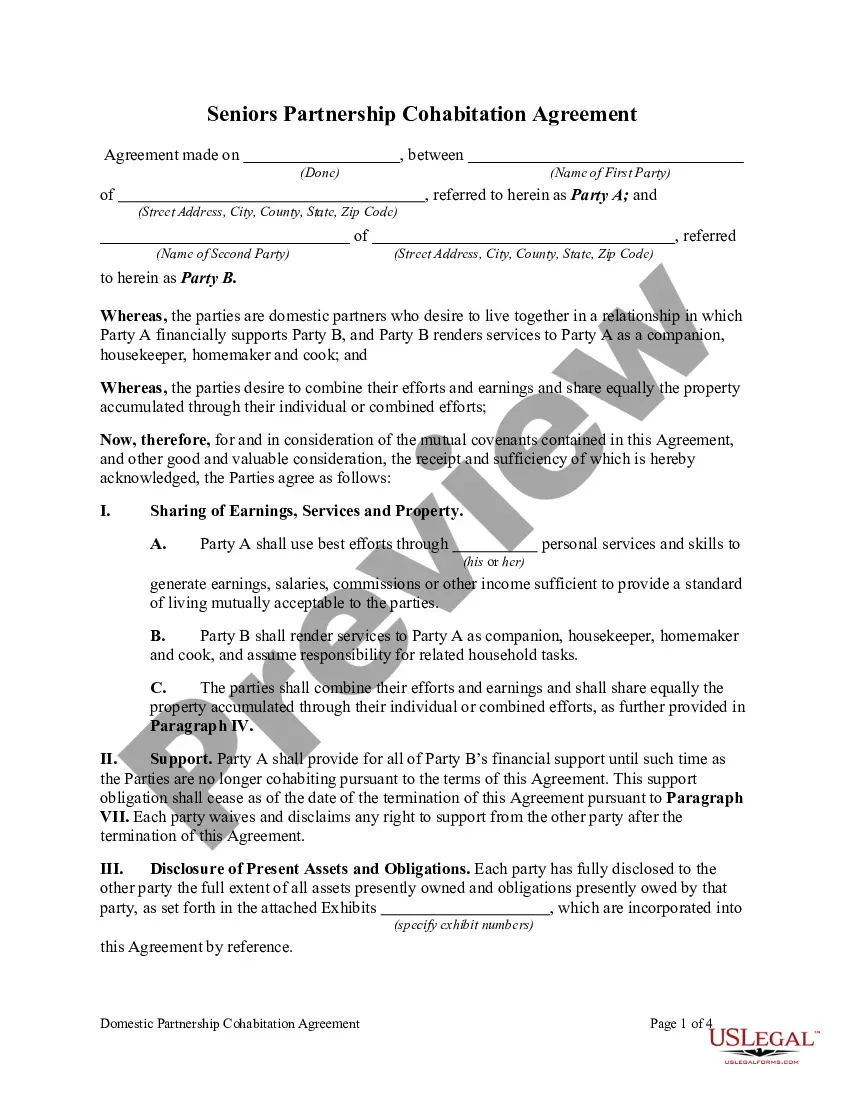
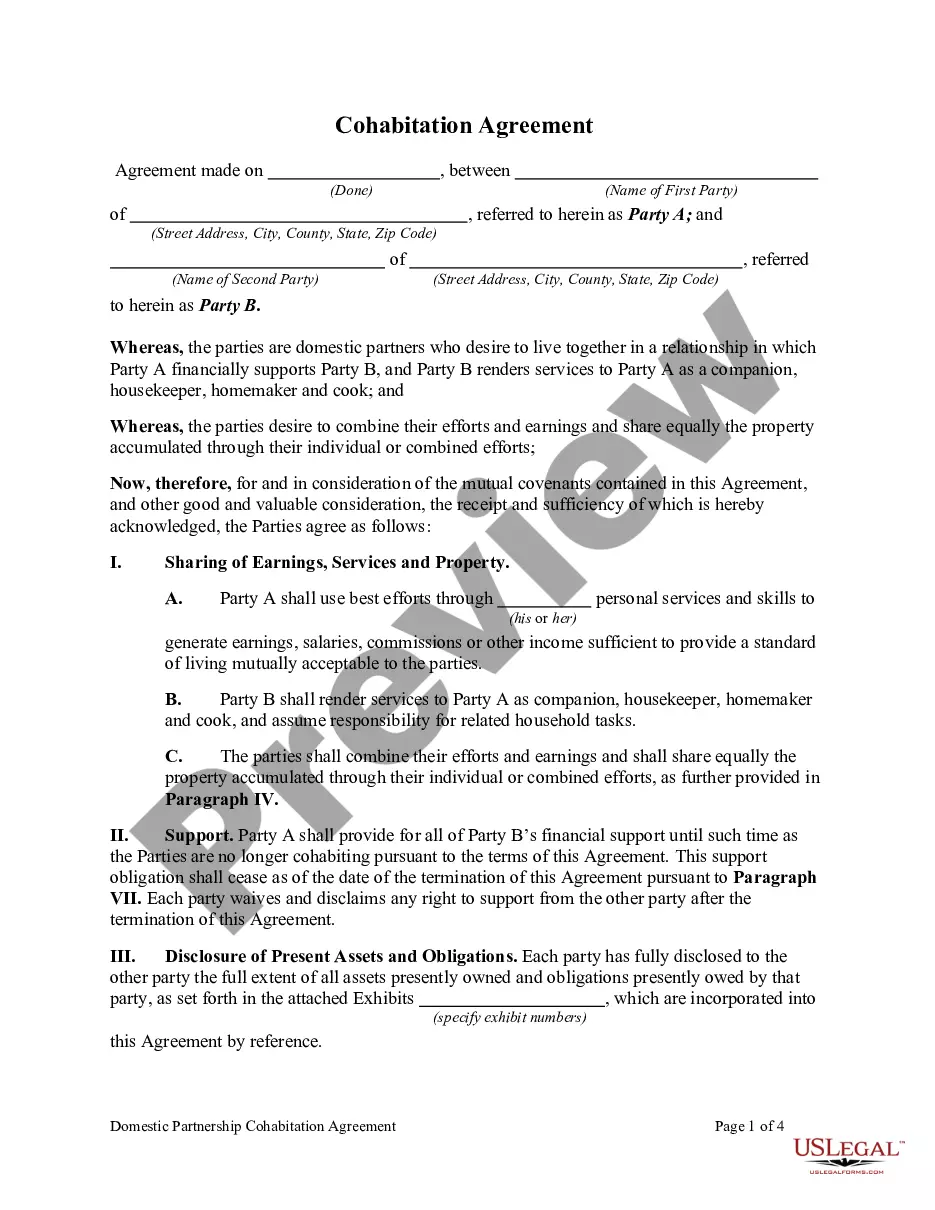
The Domestic Partnership Cohabitation Agreement is a legal document that outlines the mutual understanding between two individuals, whether same-sex or opposite-sex, who choose to live together in a domestic partnership. This agreement specifically addresses the financial support provided by one partner in exchange for various homemaking services rendered by the other. It also clarifies property ownership and obligations regarding shared and individual assets acquired during the relationship, distinguishing it from other cohabitation agreements by its specific focus on mutual financial support and duties.
Main sections of this form
- Definition of roles: Specifies the responsibilities of each party, including financial support and homemaking tasks.
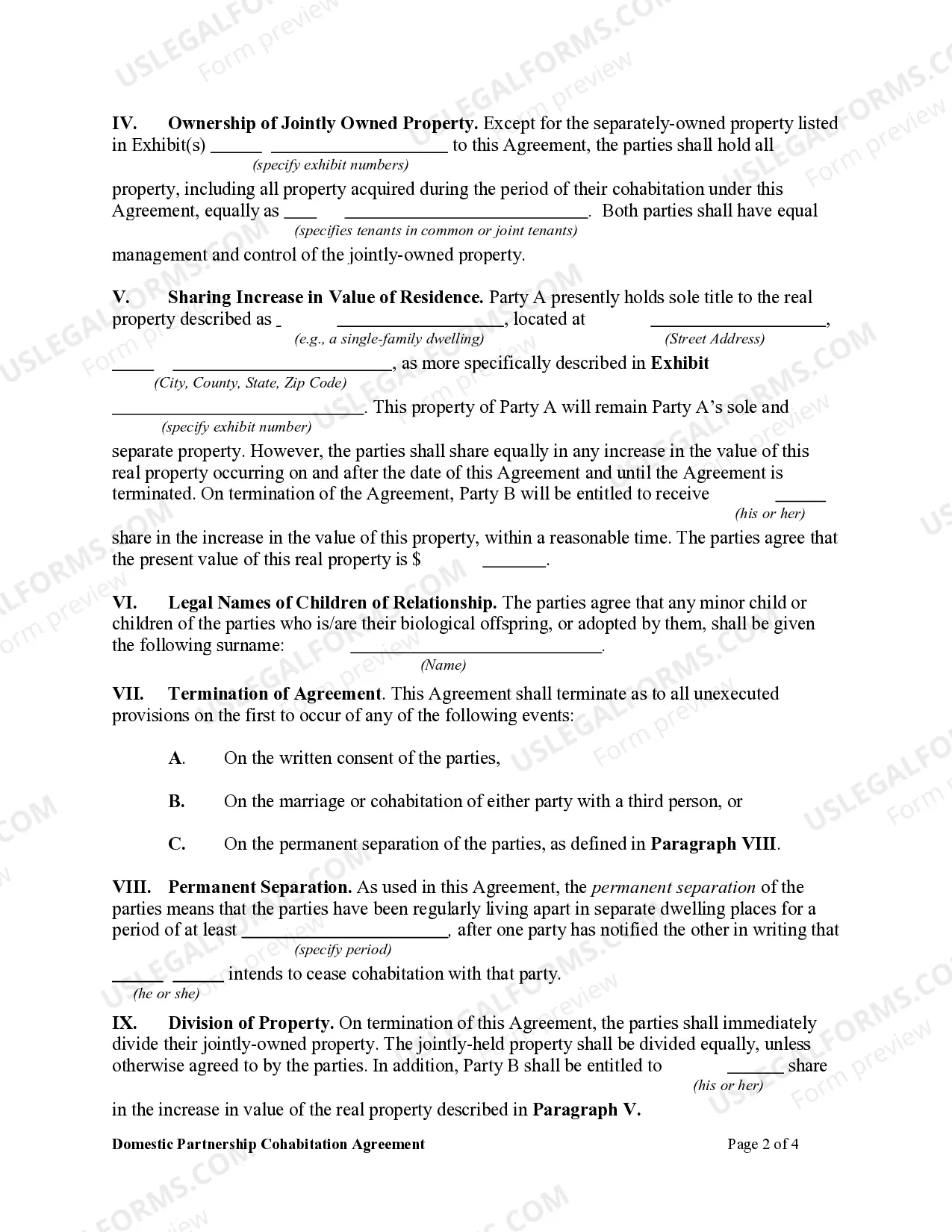
- Property ownership: Establishes that any property gained during the cohabitation will be jointly owned by both parties.
- Support obligations: Details the financial support to be provided by one partner until the termination of the agreement.
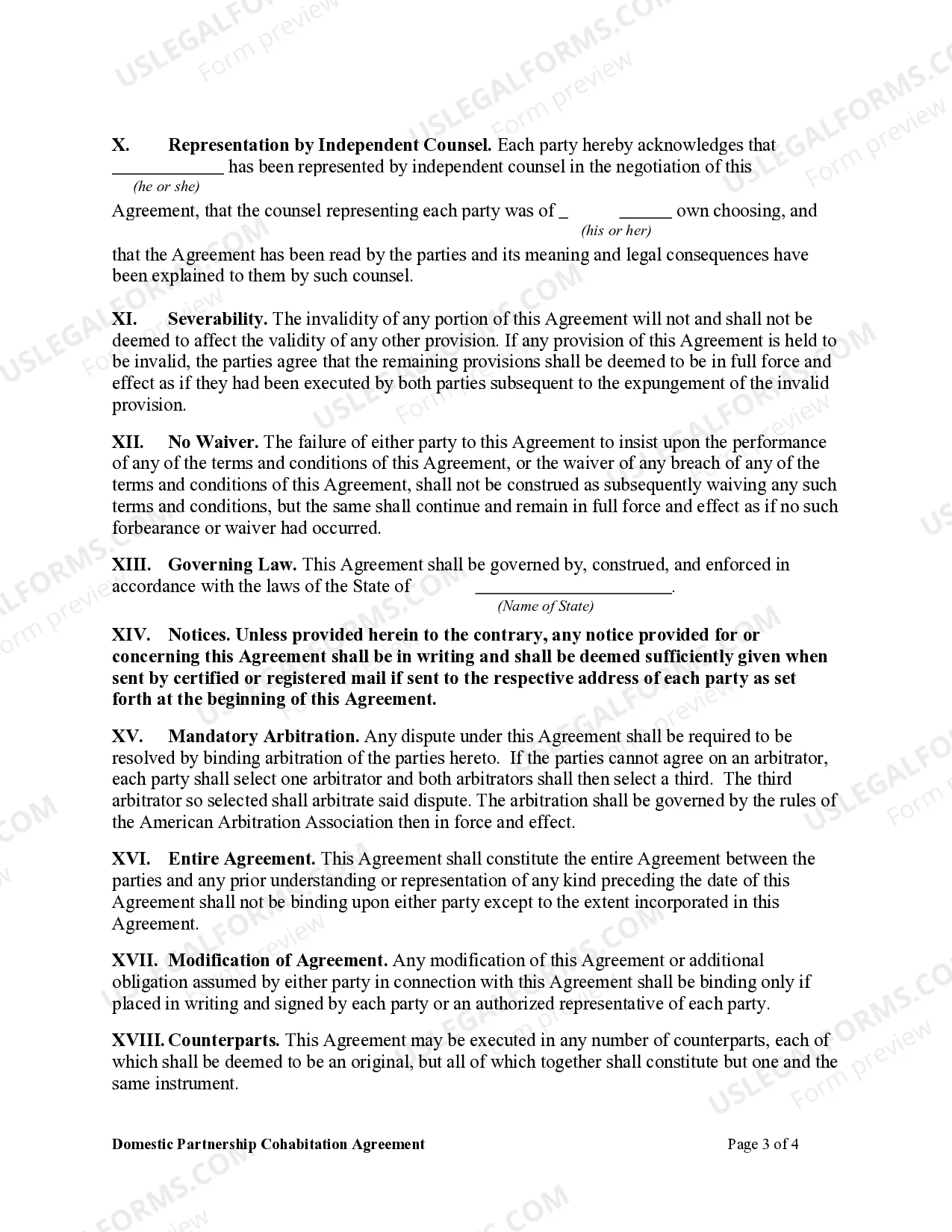
- Termination clauses: Outlines conditions for terminating the agreement, such as written consent or marriage to a third party.
- Exhibits: Requires attachment of any current assets and obligations each party has, serving as a financial disclosure.
When to use this document
This form is ideal for couples who are entering into a domestic partnership and want to clearly define their financial responsibilities and household roles. It is useful when one partner is providing financial support while the other is handling domestic duties. This agreement can help prevent potential disputes regarding asset ownership and support obligations if the relationship ends, whether due to separation or marriage to another person.
Intended users of this form
This form is suitable for:
- Couples of any sexual orientation who intend to live together in a domestic partnership.
- Individuals seeking to formalize their financial arrangement and household duties with their partner.
- Partners wanting to ensure clarity and legal protection regarding asset ownership and support obligations.
Steps to complete this form
- Identify the parties: Clearly state the full names and addresses of both partners.
- Define roles: Specify the financial responsibilities and homemaking duties of each party.
- List assets and obligations: Attach exhibits that detail each party's current financial assets and debts.
- Include termination terms: Clearly outline the conditions under which the agreement can be terminated.
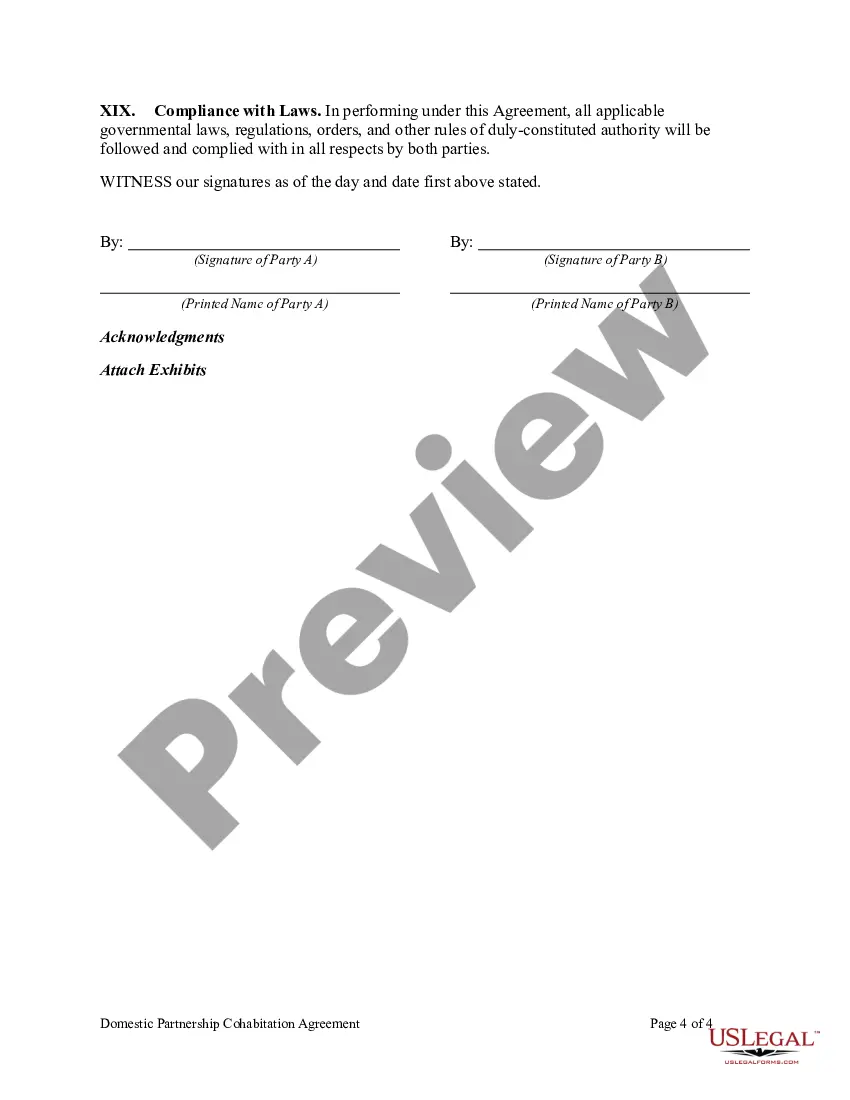
- Sign and date: Both parties should review the agreement thoroughly, then sign and date it in the designated areas.
Notarization guidance
Notarization is generally not required for this form. However, certain states or situations might demand it. You can complete notarization online through US Legal Forms, powered by Notarize, using a verified video call available anytime.
Get your form ready online
Our built-in tools help you complete, sign, share, and store your documents in one place.
Make edits, fill in missing information, and update formatting in US Legal Forms—just like you would in MS Word.
Download a copy, print it, send it by email, or mail it via USPS—whatever works best for your next step.
Sign and collect signatures with our SignNow integration. Send to multiple recipients, set reminders, and more. Go Premium to unlock E-Sign.
If this form requires notarization, complete it online through a secure video call—no need to meet a notary in person or wait for an appointment.
We protect your documents and personal data by following strict security and privacy standards.

Make edits, fill in missing information, and update formatting in US Legal Forms—just like you would in MS Word.

Download a copy, print it, send it by email, or mail it via USPS—whatever works best for your next step.

Sign and collect signatures with our SignNow integration. Send to multiple recipients, set reminders, and more. Go Premium to unlock E-Sign.

If this form requires notarization, complete it online through a secure video call—no need to meet a notary in person or wait for an appointment.

We protect your documents and personal data by following strict security and privacy standards.
Common mistakes
- Failing to attach a complete exhibit listing assets and obligations.
- Not specifying all relevant terms, such as the duration of financial support.
- Overlooking the need for both parties to sign and date the agreement.
- Neglecting to review and edit the form for clarity and accuracy before finalizing.
Benefits of completing this form online
- Convenience: Easily accessible and downloadable from any device, allowing you to complete it at your own pace.
- Editability: You can modify the form to suit your specific needs without the constraints of pre-printed versions.
- Reliability: The form is drafted by licensed attorneys, ensuring that it meets legal standards for enforceability.
Legal use & context
- This agreement helps establish legal rights in cohabitation arrangements, but enforceability may vary by jurisdiction.
- Couples should consult a legal professional to ensure the agreement meets local requirements and adequately protects both parties.
Main things to remember
- The Domestic Partnership Cohabitation Agreement clearly outlines the roles and responsibilities of each partner.
- This form helps define financial support and property ownership during the relationship.
- It is important to detail termination conditions to avoid disputes later on.
Looking for another form?
Form popularity
FAQ
In both types of agreements, the disclosure requirements are onerous but necessary. Full disclosure includes things such as income tax returns, pay stubs, banks account and credit card statements, RRSP/investment statements and a statutory declaration of all income, assets and debts, among others.
You must be at least 18 years old; Neither partner may be married to, or the domestic partner of, anyone else; You must reside together, and intend to do so permanently; You must not be so closely related by blood (or marriage) as to bar marriage in the state;
Cohabitation and Marriage Agreements can be reviewed and overturned by the court in certain circumstances, such as where the agreement is objectively unreasonable, or if the agreement was entered into through undue influence, duress or coercion.
Cohabitation agreements are legally binding contracts, provided that they are drafted and executed properly, and are signed as a deed. It is therefore essential to obtain legal advice before preparing an agreement.
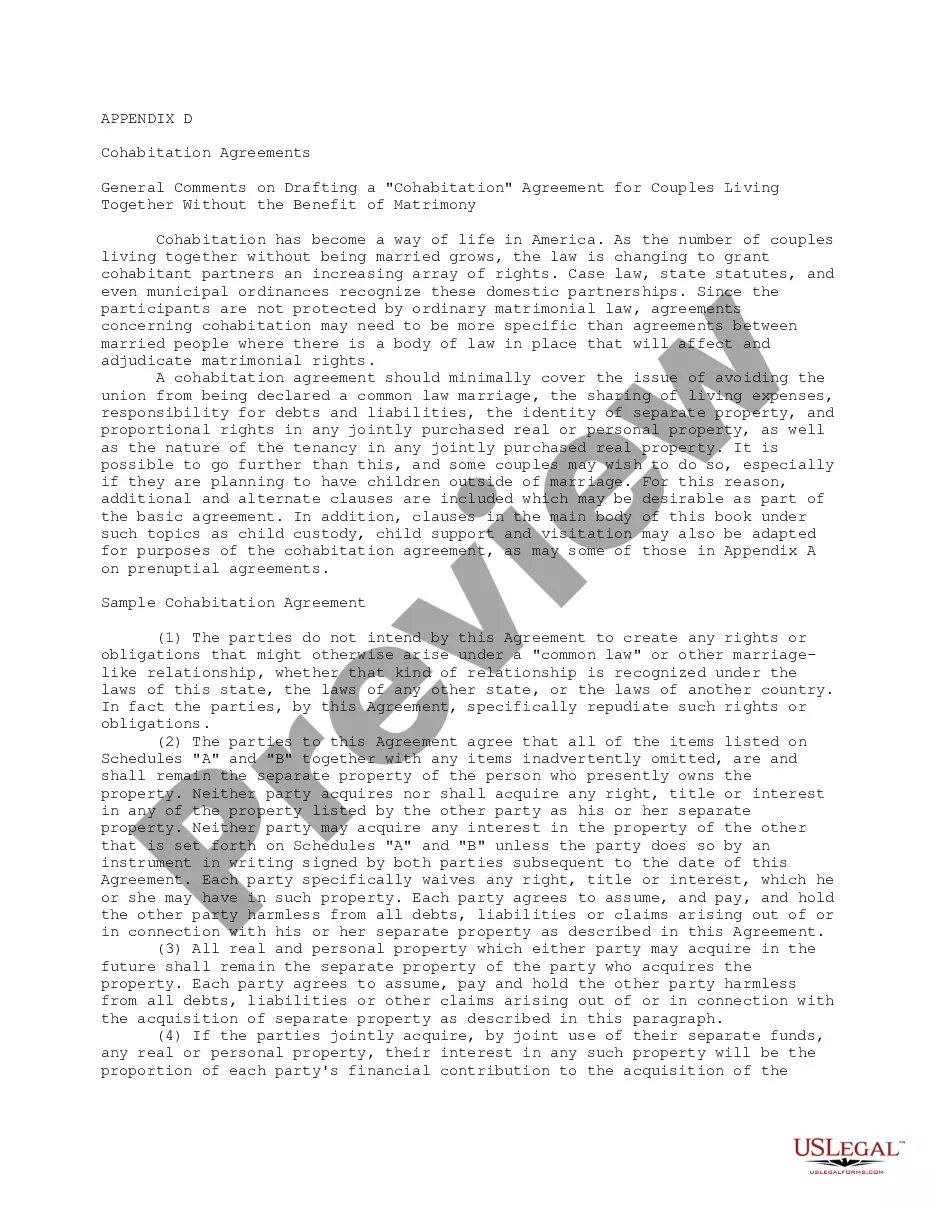
Cohabitation agreements are similar contracts for unmarried spouses. These contracts allow you to make legal decisions about your rights in a relationship and decide how you want to arrange your finances if your relationship ends.
Example of Cohabitation Two single people meet at a university and live together to save on expenses and have a sexual relationship.
Cohabitation is defined as two people living together as if they were a married couple. Cohabiting couples do not possess the same rights as married couples or people within a domestic partnership.
Cohabitation is an arrangement where two people are not married but live together. They are often involved in a romantic or sexually intimate relationship on a long-term or permanent basis.More broadly, the term cohabitation can mean any number of people living together.