Agreement to Lease Commercial Property with Option to Purchase at End of Lease Term - Lease or Rent to Own
What is this form?
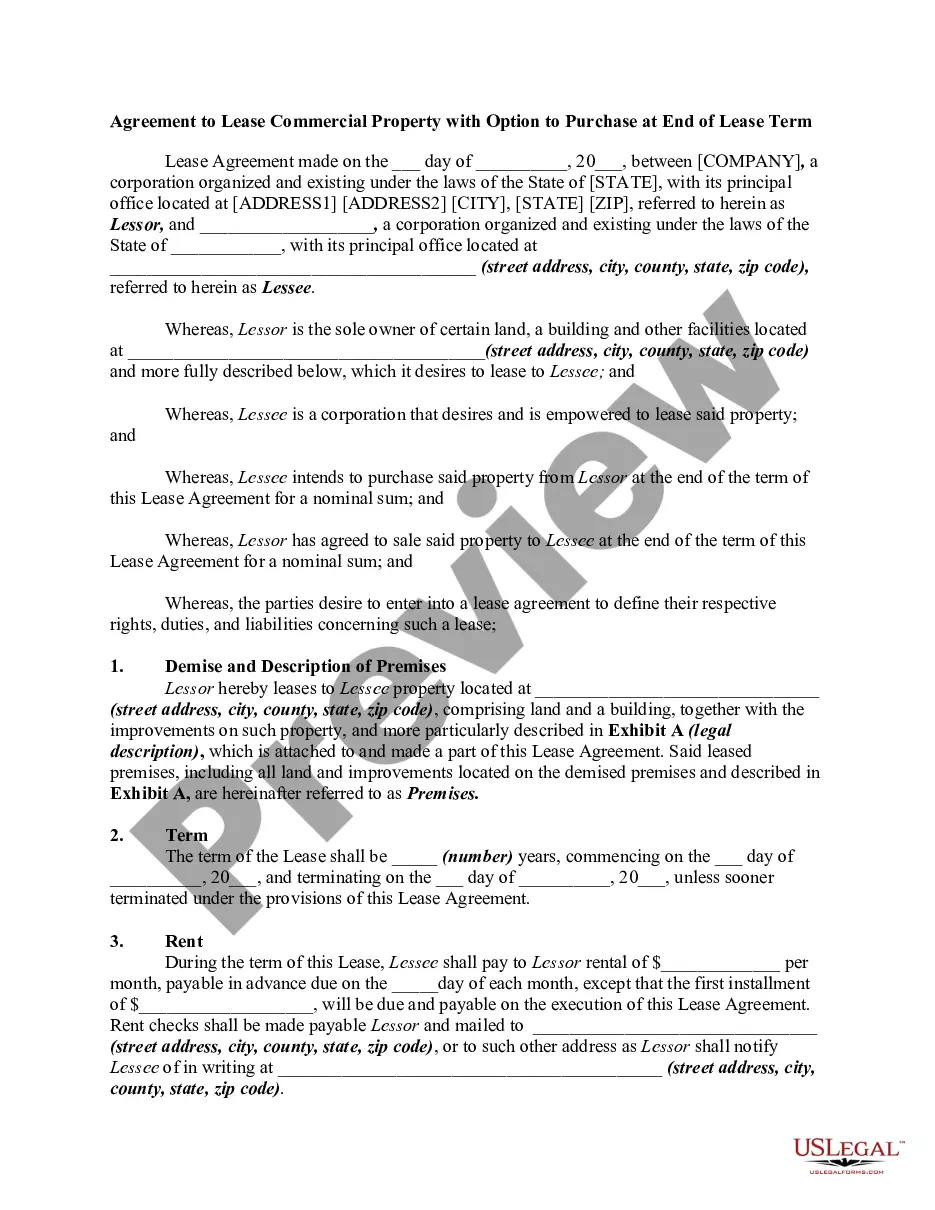
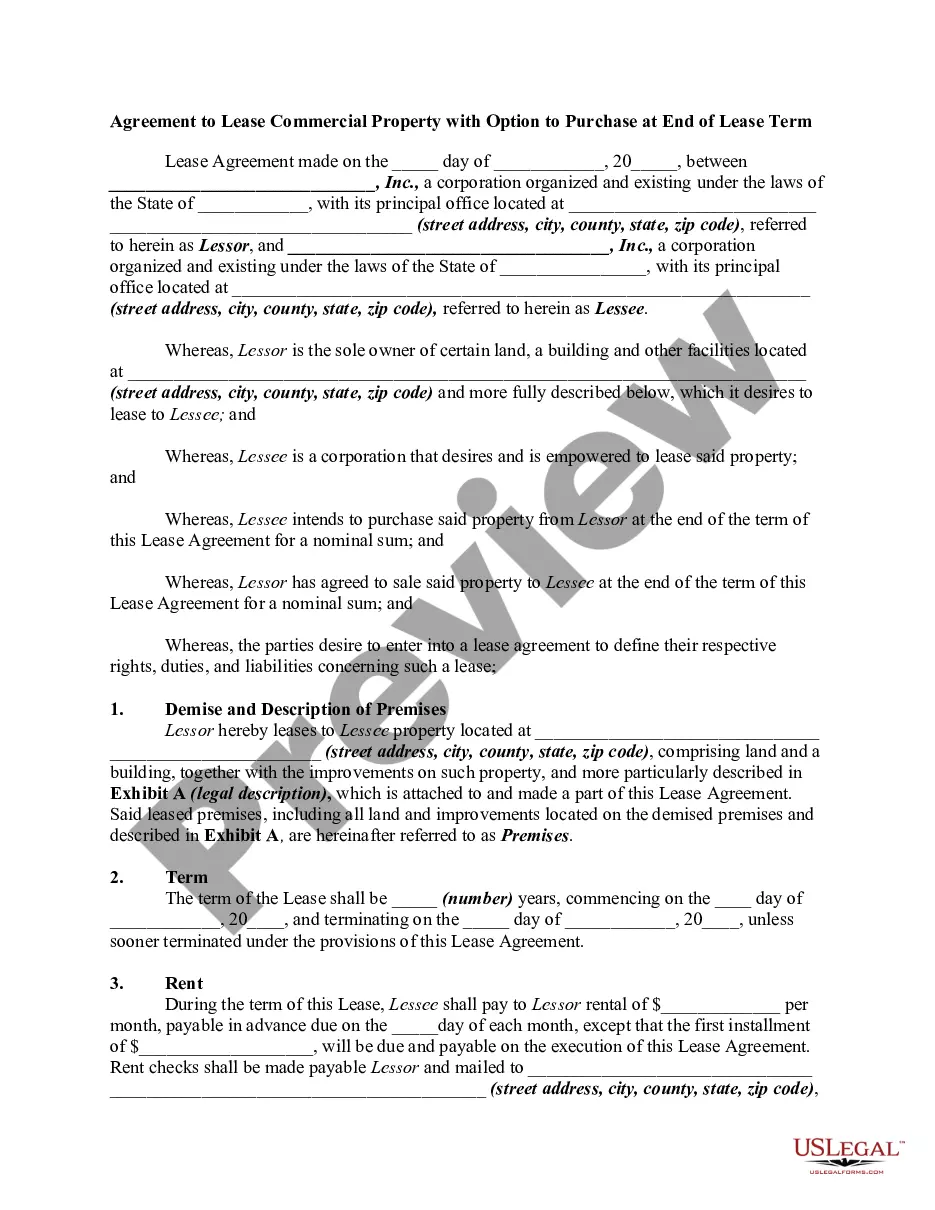
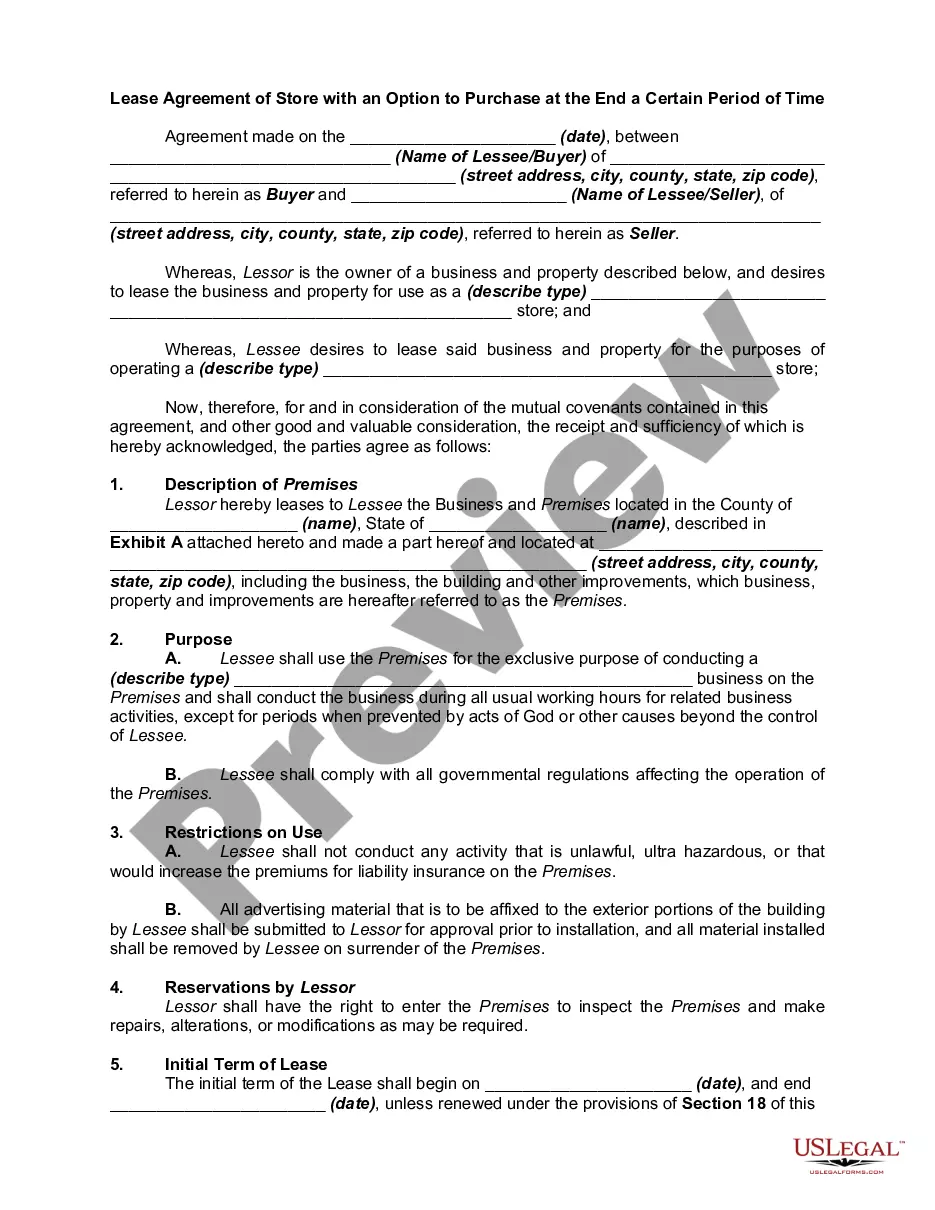
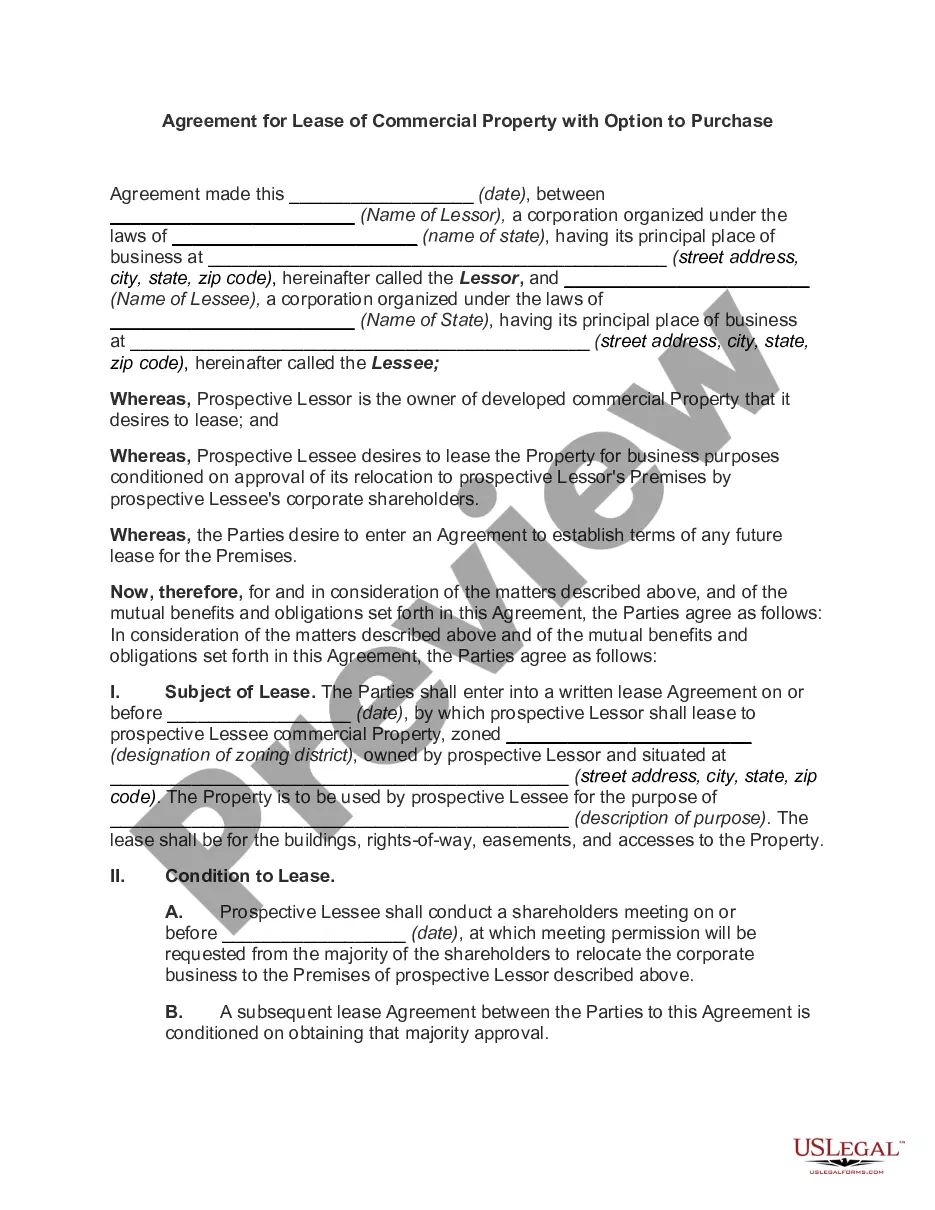
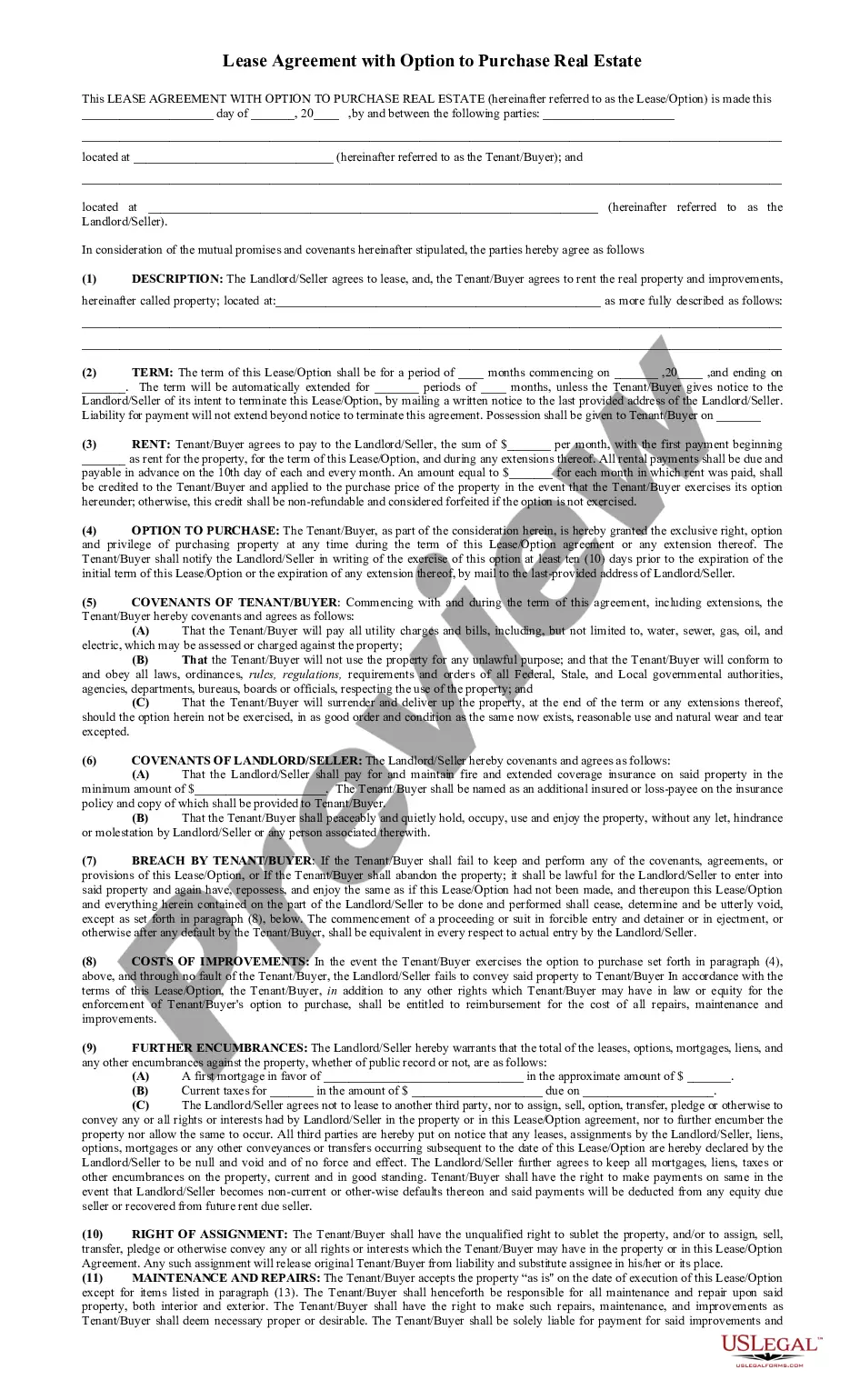
This Agreement to Lease Commercial Property with Option to Purchase at End of Lease Term is a legal document that outlines the terms for leasing commercial property while providing the lessee the option to purchase the property at the end of the lease term. This form is distinct from standard commercial lease agreements as it includes an option for the lessee to buy the property, allowing for a "rent-to-own" scenario that benefits both the lessor and lessee.
What’s included in this form
- Identification of lessor and lessee with their business details.
- Property description and the term of the lease.
- Monthly rent details and payment instructions.
- Use and restrictions of the premises.
- Maintenance responsibilities and utilities.
- Provisions for an option to purchase at the end of the lease.


When to use this document
This form is suitable for businesses that want to lease commercial property with the intent to purchase it later. It is ideal for companies looking to minimize upfront investment in real estate while testing the location and property for their business operations before making a long-term commitment to buy.
Who can use this document
- Business owners seeking to lease commercial property with an option to purchase.
- Landowners or corporations wishing to lease their property while retaining the potential for sale.
- Real estate agents or attorneys facilitating lease agreements for clients.
Steps to complete this form
- Identify the parties involved: fill in the names and details of the lessor and lessee.
- Specify the property: provide the address and a legal description of the premises being leased.
- Enter the lease term: state the duration of the lease agreement.
- Detail the rental payment: insert the amount of monthly rent and payment due date.
- Indicate the property use: describe the intended usage of the premises.
- Complete the option to purchase clause: specify the purchase price and notification period for exercising the option.
Notarization requirements for this form
To make this form legally binding, it must be notarized. Our online notarization service, powered by Notarize, lets you verify and sign documents remotely through an encrypted video session.
Get your form ready online
Our built-in tools help you complete, sign, share, and store your documents in one place.
Make edits, fill in missing information, and update formatting in US Legal Forms—just like you would in MS Word.
Download a copy, print it, send it by email, or mail it via USPS—whatever works best for your next step.
Sign and collect signatures with our SignNow integration. Send to multiple recipients, set reminders, and more. Go Premium to unlock E-Sign.
If this form requires notarization, complete it online through a secure video call—no need to meet a notary in person or wait for an appointment.
We protect your documents and personal data by following strict security and privacy standards.

Make edits, fill in missing information, and update formatting in US Legal Forms—just like you would in MS Word.

Download a copy, print it, send it by email, or mail it via USPS—whatever works best for your next step.

Sign and collect signatures with our SignNow integration. Send to multiple recipients, set reminders, and more. Go Premium to unlock E-Sign.

If this form requires notarization, complete it online through a secure video call—no need to meet a notary in person or wait for an appointment.

We protect your documents and personal data by following strict security and privacy standards.
Mistakes to watch out for
- Failing to specify the correct purchase price or terms for the option to buy.
- Not including the accurate property description or address.
- Omitting crucial details about maintenance responsibilities or utilities.
- Not understanding or misinterpreting the duration of the lease term.
Why use this form online
- Convenience of instant access and download at any time.
- Editability of the form to tailor it to specific needs.
- Reliability through templates drafted by licensed attorneys.
Looking for another form?
Form popularity
FAQ
An option to purchase provides that a tenant can request to purchase the real estate on or after a certain date. A right of first refusal (ROFR) states that before a landlord can sell the real estate to anyone else, he or she must first offer to sell it to the tenant.
?A lease purchase agreement?also known as a rent-to-own or lease-to-own agreement?lets someone rent a property for a specified period of time with the promise to purchase it at the end of the lease term.
The terms of an option contract specify the underlying security, the price at which that security can be transacted (strike price), and the expiration date of the contract.
The statement must state the total amount that you would have to pay to acquire ownership by using the purchase option and by making all the remaining periodic payments scheduled under the RTO agreement.
An estate for years is a lease with a specific beginning and ending date. At the end of the lease, the tenant is expected to vacate the property. Neither the tenant nor the landlord is required to give notice to terminate this lease as the end date is specified at the beginning.
Put more simply, a contraction option is the fixed right to return space to the landlord in the future should the tenant no longer require all of the space that it originally contracted for. Prior to March of 2020, landlords and their lenders were resistant to granting this concession.
What Is An Option To Purchase? An option to purchase agreement gives a home buyer the exclusive right to purchase a property within a specified time period and for a fixed or sometimes variable price. This, in turn, prevents sellers from providing other parties with offers or selling to them within this time period.
Sometimes referred to as a right of first opportunity or first right to purchase, this provision requires the owner to give the holder the first chance to buy a property after the owner decides to sell. Unlike the option to purchase, the holder cannot force the owner to sell.