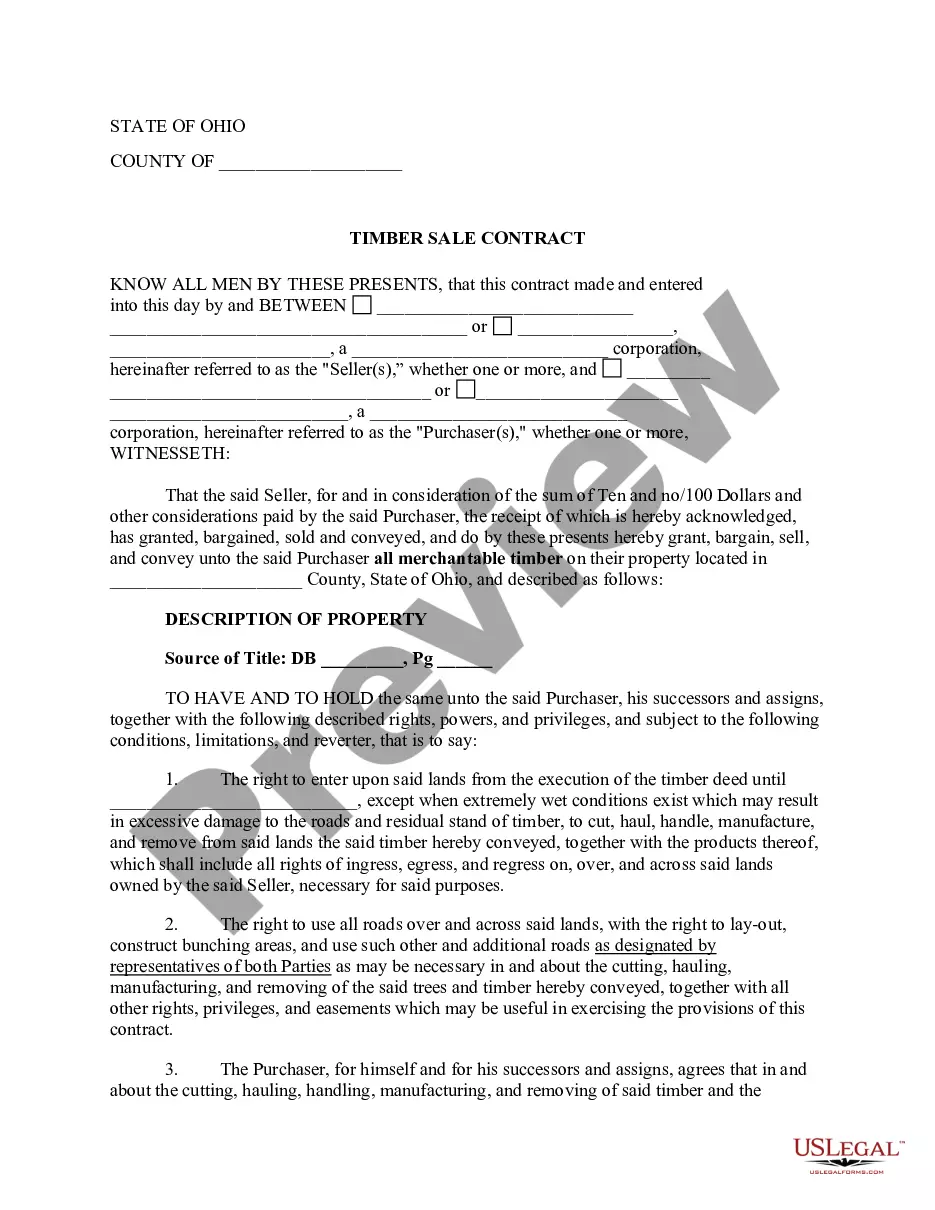
Letter of Intent to Purchase
Overview of this form
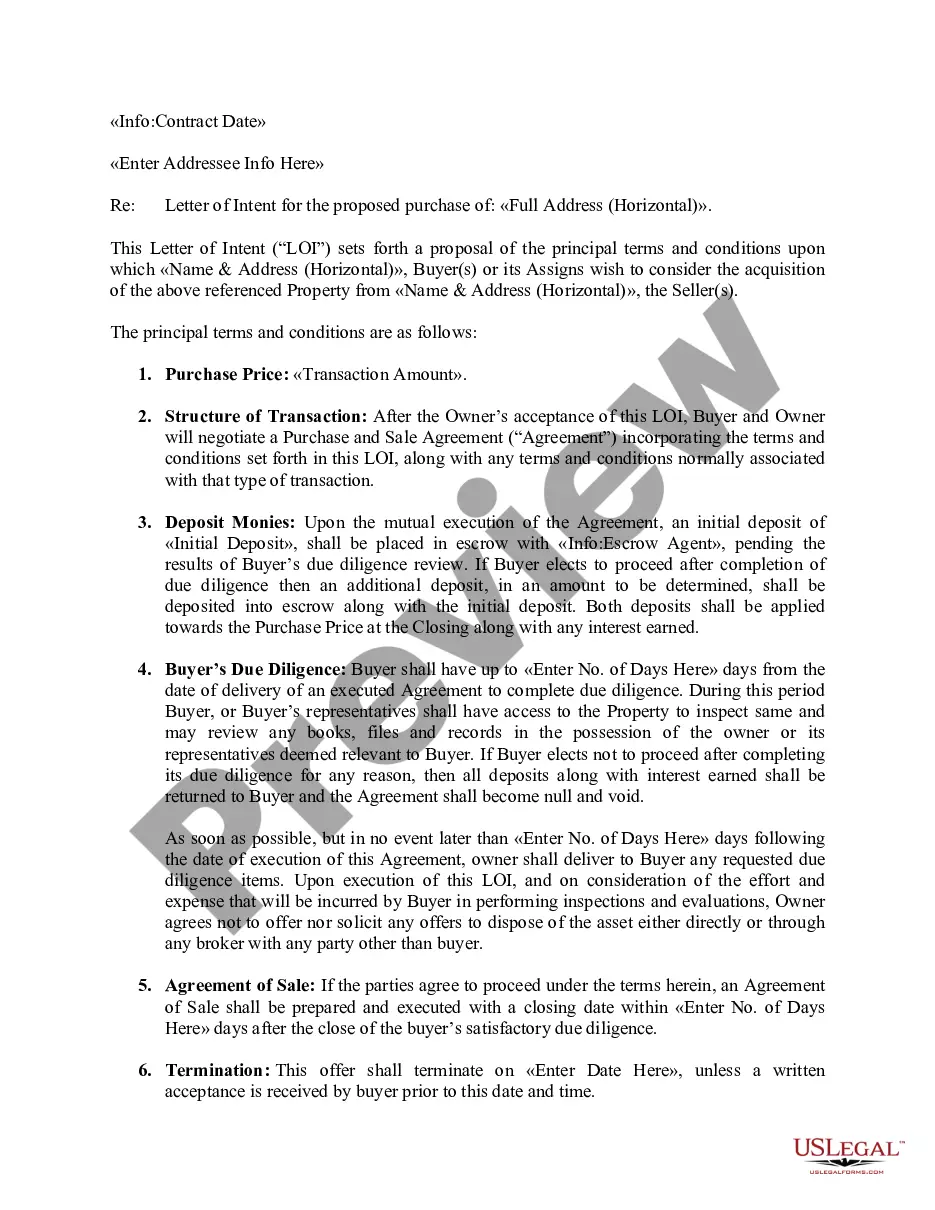
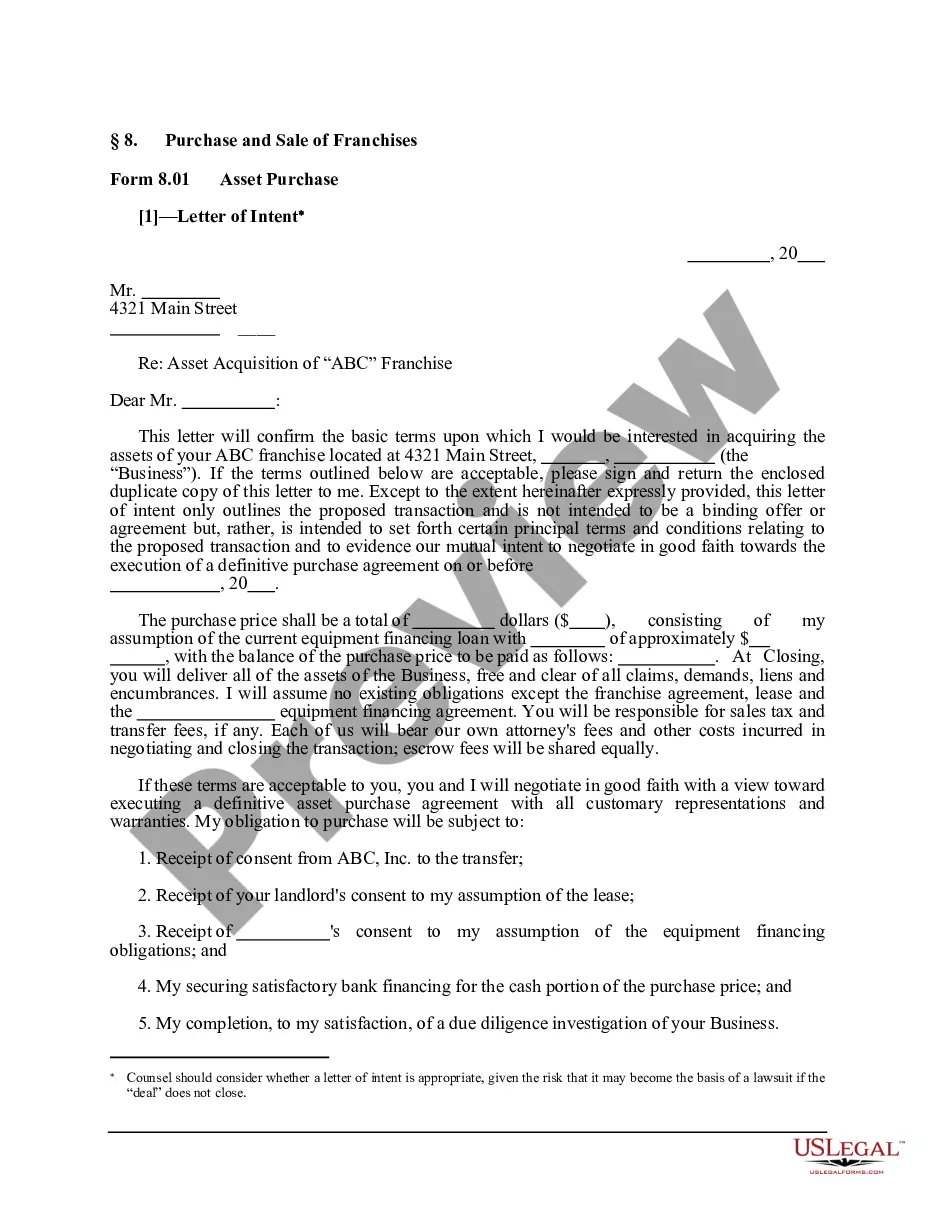
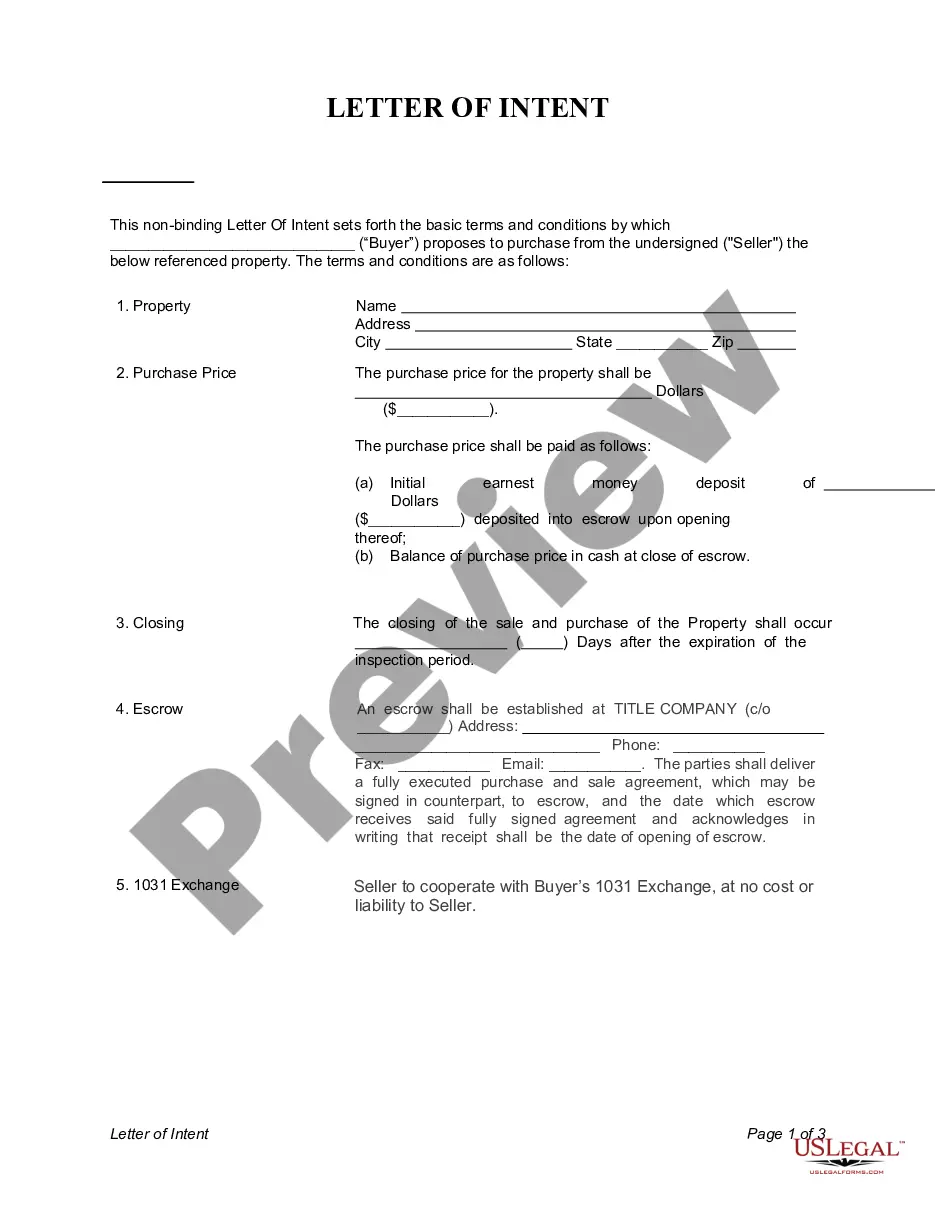
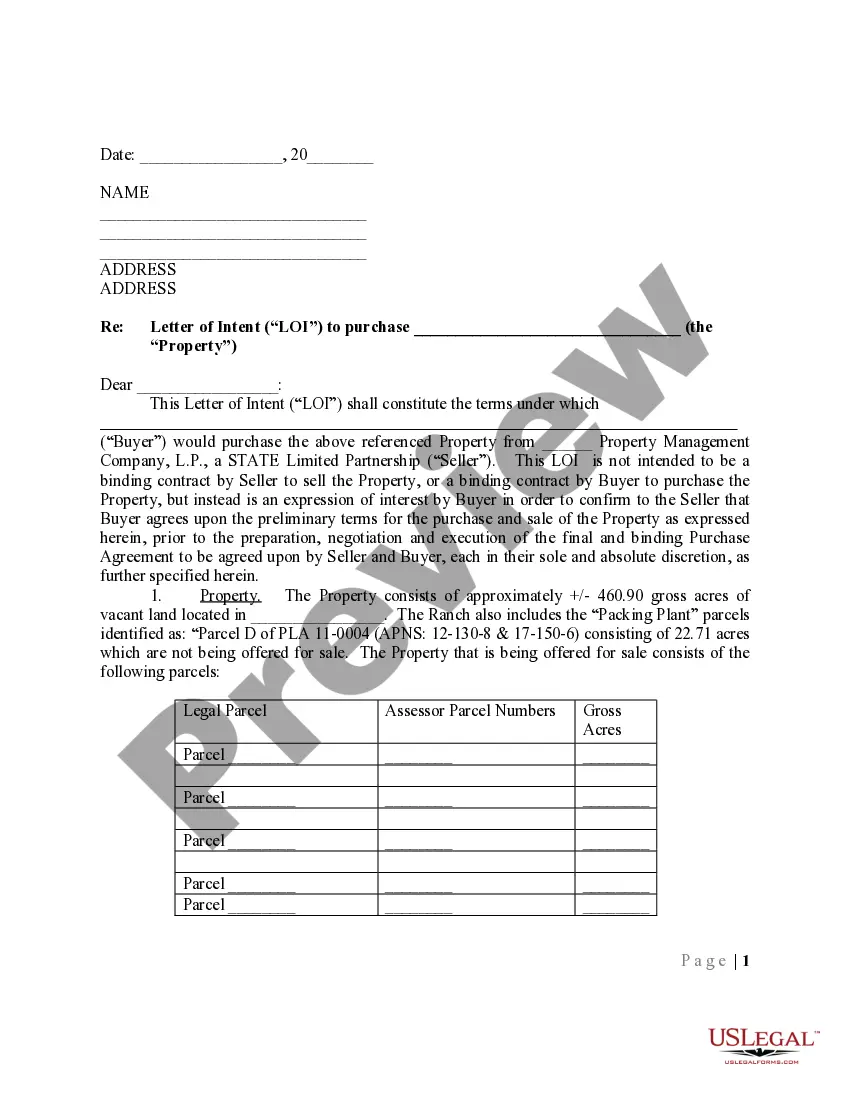
A Letter of Intent to Purchase is a formal document that outlines a buyer's intention to purchase real estate from a seller. It serves as a starting point for negotiations and details the principal terms and conditions of the proposed transaction. Unlike a purchase agreement, this letter is not legally binding but establishes a framework for future negotiations and agreements regarding the sale of the property.
Form components explained
- Addressee information: Includes details about the buyer and seller.
- Property description: Clearly identifies the real property being purchased.
- Purchase price: Specifies the financial terms of the transaction.
- Due diligence period: Outlines the timeframe for the buyer to conduct inspections and reviews.
- Confidentiality clause: Protects the information contained in the letter from unauthorized disclosure.
- Acceptance terms: Details how and when the seller can accept the offer outlined in the letter.

When this form is needed
This form is useful when a buyer is interested in purchasing real estate and wishes to express that interest formally. It can be used in a variety of scenarios, such as residential purchases, commercial property acquisitions, or any situation where an initial proposal is necessary before proceeding with a detailed purchase agreement.
Who should use this form
- Buyers who are looking to purchase real estate and want to initiate negotiations.
- Sellers who are considering offers and need an initial proposal for the property.
- Real estate agents representing buyers or sellers in property transactions.
Instructions for completing this form
- Identify the parties involved: Enter the names and addresses of both the buyer and seller.
- Specify the property: Clearly describe the property being purchased, including its full address.
- Enter the purchase price: State the proposed price for the property and any associated deposit details.
- Define the due diligence period: Indicate the number of days the buyer will have to conduct inspections.
- Include confidentiality terms: Ensure the confidentiality clause is acknowledged by both parties.
Does this form need to be notarized?
This form does not typically require notarization unless specified by local law. It is always recommended to check your stateâs requirements to ensure compliance.
Get your form ready online
Our built-in tools help you complete, sign, share, and store your documents in one place.
Make edits, fill in missing information, and update formatting in US Legal Forms—just like you would in MS Word.
Download a copy, print it, send it by email, or mail it via USPS—whatever works best for your next step.
Sign and collect signatures with our SignNow integration. Send to multiple recipients, set reminders, and more. Go Premium to unlock E-Sign.
If this form requires notarization, complete it online through a secure video call—no need to meet a notary in person or wait for an appointment.
We protect your documents and personal data by following strict security and privacy standards.

Make edits, fill in missing information, and update formatting in US Legal Forms—just like you would in MS Word.

Download a copy, print it, send it by email, or mail it via USPS—whatever works best for your next step.

Sign and collect signatures with our SignNow integration. Send to multiple recipients, set reminders, and more. Go Premium to unlock E-Sign.

If this form requires notarization, complete it online through a secure video call—no need to meet a notary in person or wait for an appointment.

We protect your documents and personal data by following strict security and privacy standards.
Common mistakes
- Failing to specify all terms clearly, leading to misunderstandings.
- Not including appropriate deadlines for acceptance or due diligence.
- Omitting confidentiality agreements, which can lead to unauthorized disclosures.
Advantages of online completion
- Convenience: Download and customize your form from anywhere, anytime.
- Editability: Easily adjust the terms to fit your specific situation.
- Reliability: Forms are prepared by licensed attorneys to ensure legal soundness.
Looking for another form?

Form popularity
FAQ
Due Diligence and Purchase Agreement Once the LOI is signed, the next steps are to negotiate the purchase agreement and perform due diligence. These are separate processes, but they usually occur in parallel and take about 90 days to complete.
In commercial real estate, a Letter of Intent is a preliminary agreement that is negotiated between a tenant and landlord or buyer and seller. The LOI or Letter of Intent states the primary economics and deal points with proposed terms.
A letter of intent is generally not binding since it's basically a description of the deal process. It is, in effect, an agreement to agree. Thus, either party can cancel the letter at any time.
A residential purchase letter of intent is written by a prospective buyer to formally express their interest in purchasing real estate. The letter is commonly non-binding that sellers will require before efforts are made to draft a legally-binding purchase agreement.
Another significant difference between a sales contract and an LOI is a letter of intent is not legally binding and not used to negotiate the terms of the sale. When sending an LOI, the potential buyer doesn't need to provide a deposit or down payment as they would with an offer to buy.
A letter of intent (LOI) or ?offer letter? outlines the terms of employment in a much simpler format than what will be presented in a contract. The LOI is a preliminary document based on the mutual interest and good faith of both parties.
An LOI stands for Letter of Intent. In commercial real estate, a Letter of Intent is a preliminary agreement that is negotiated between a tenant and landlord or buyer and seller. The LOI or Letter of Intent states the primary economics and deal points with proposed terms.
The key difference is that, once executed, a PSA is legally binding and a Letter of Intent is not. A LOI is an expression of interest in making a deal, but it is not legally binding.