Sample Letter for Letter of Intent to Purchase Assets
What is this form?
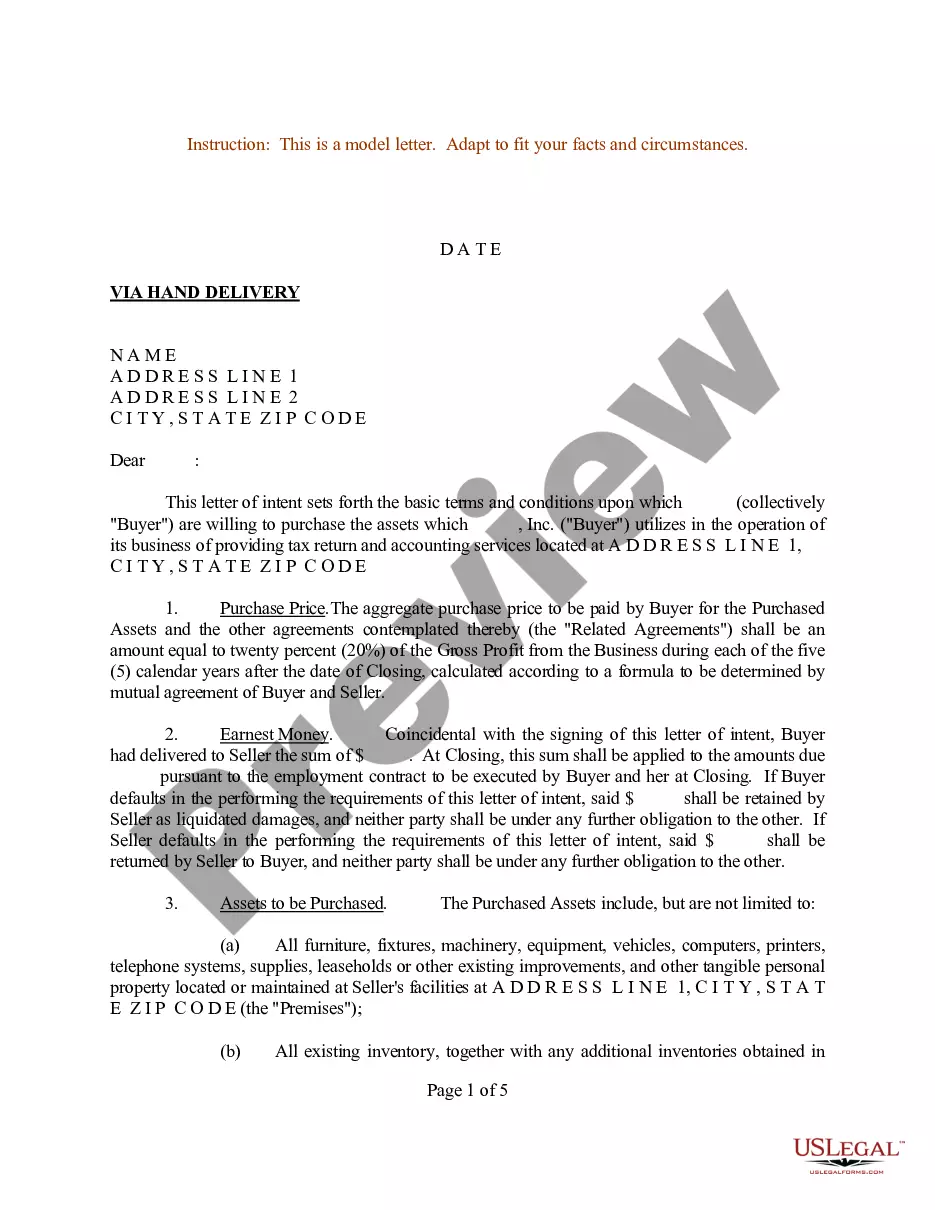
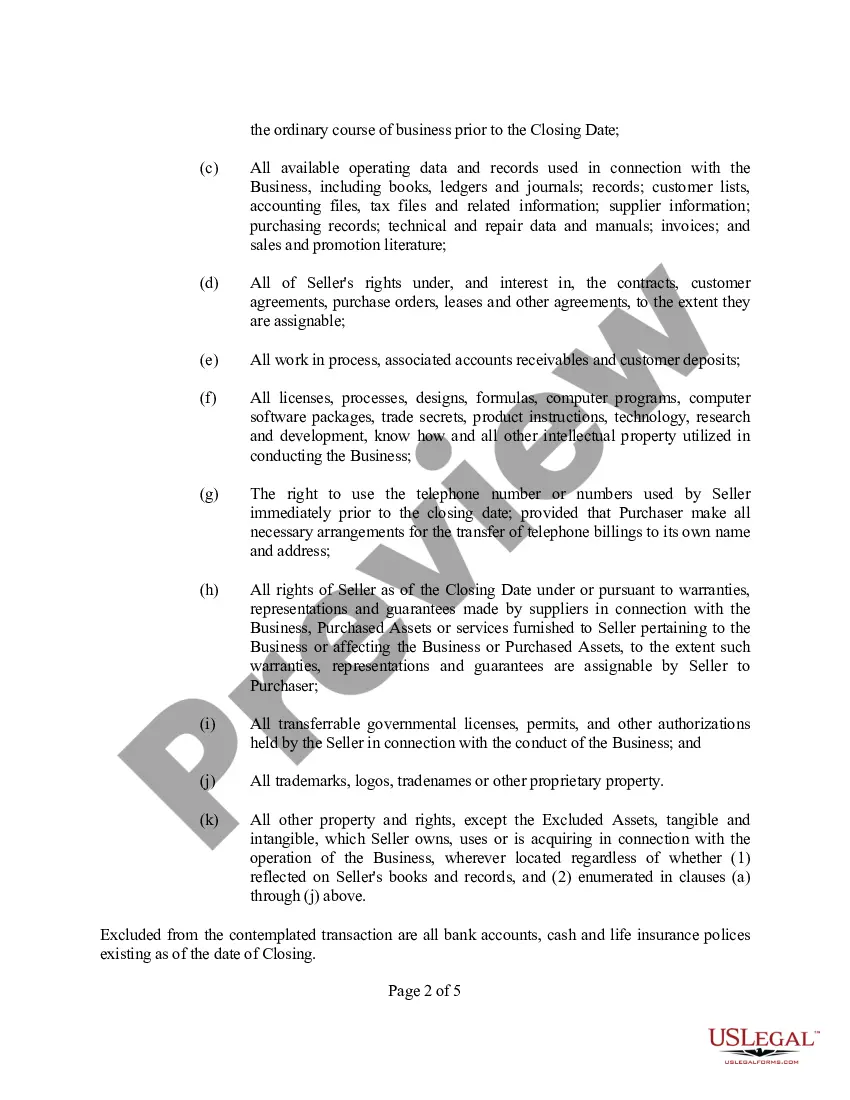
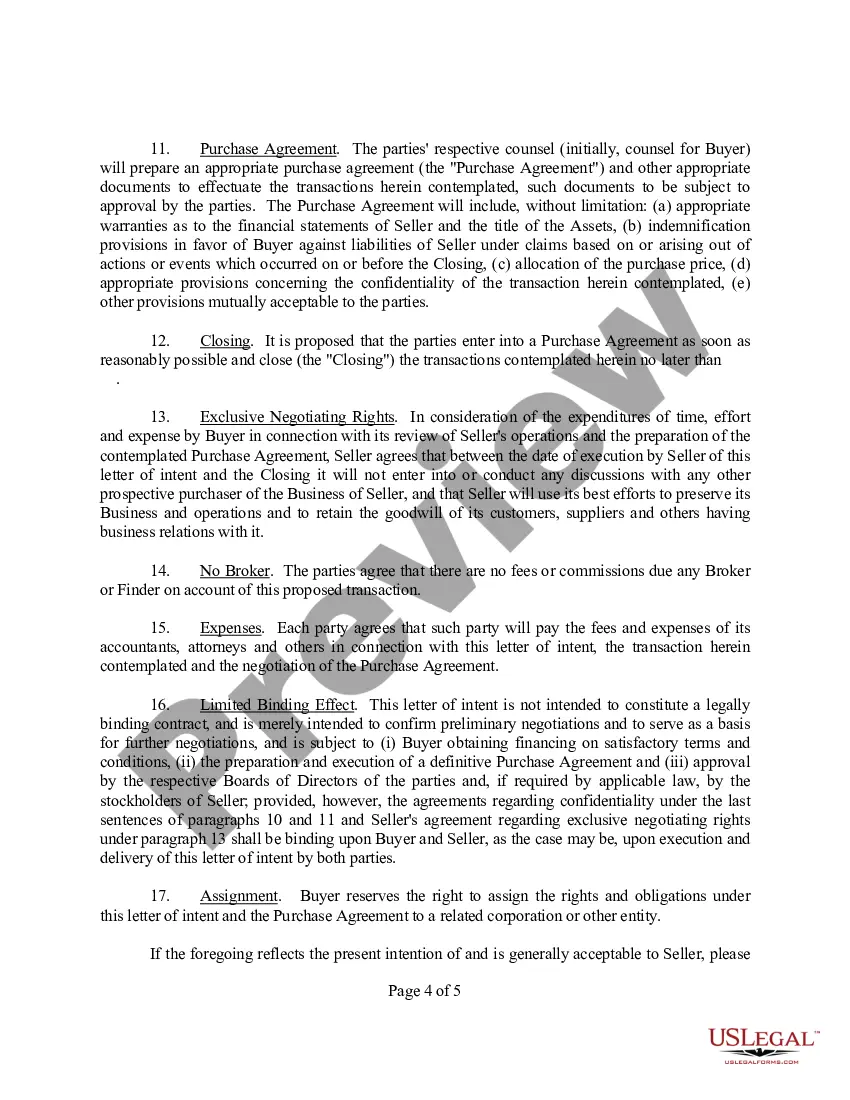
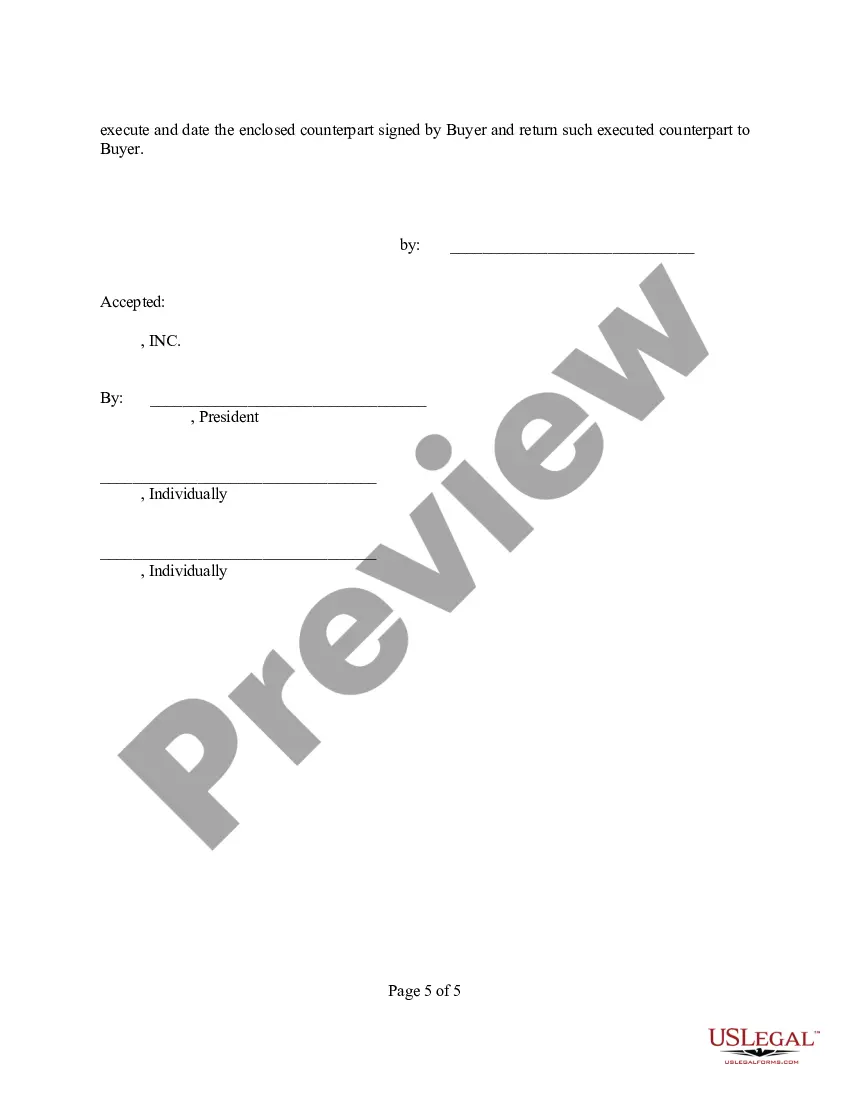
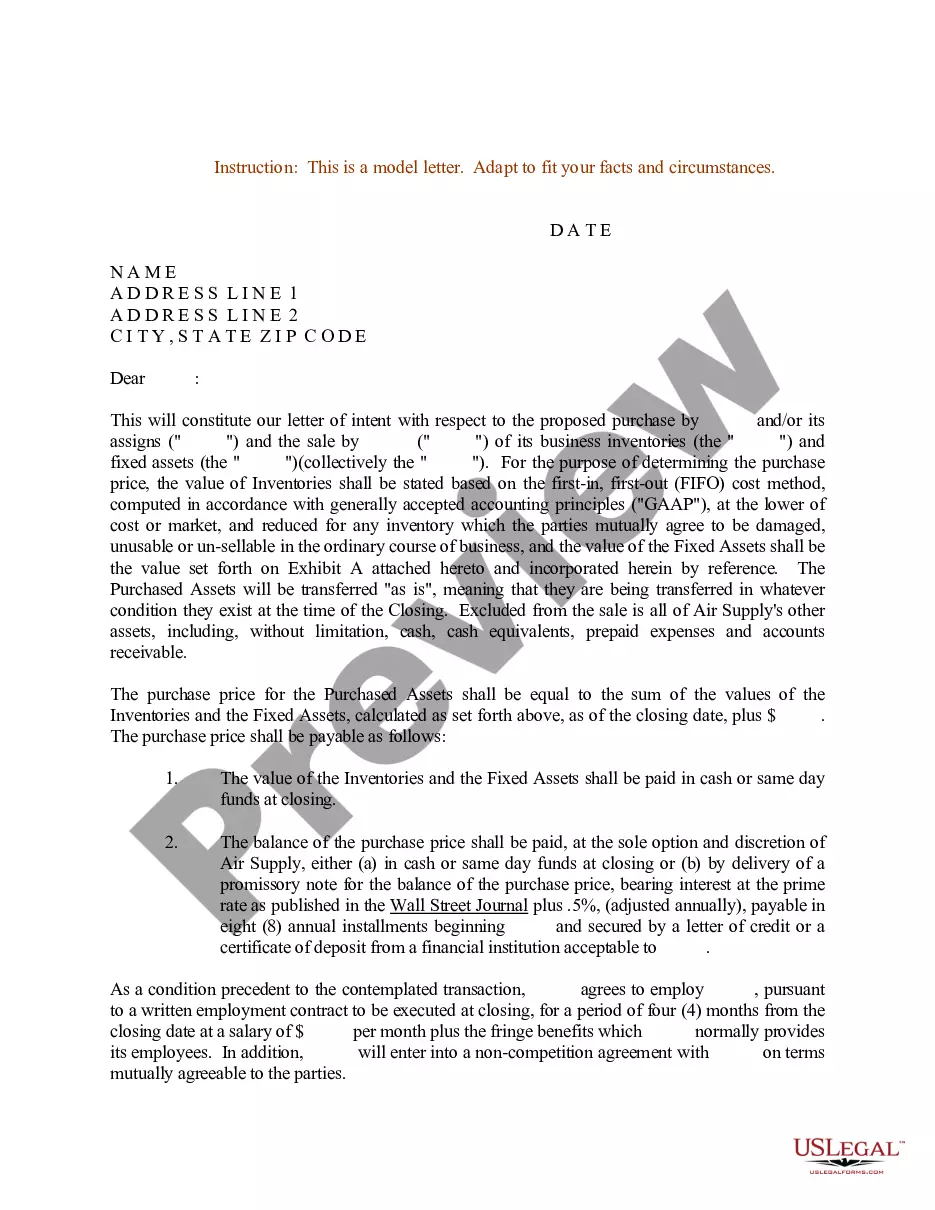
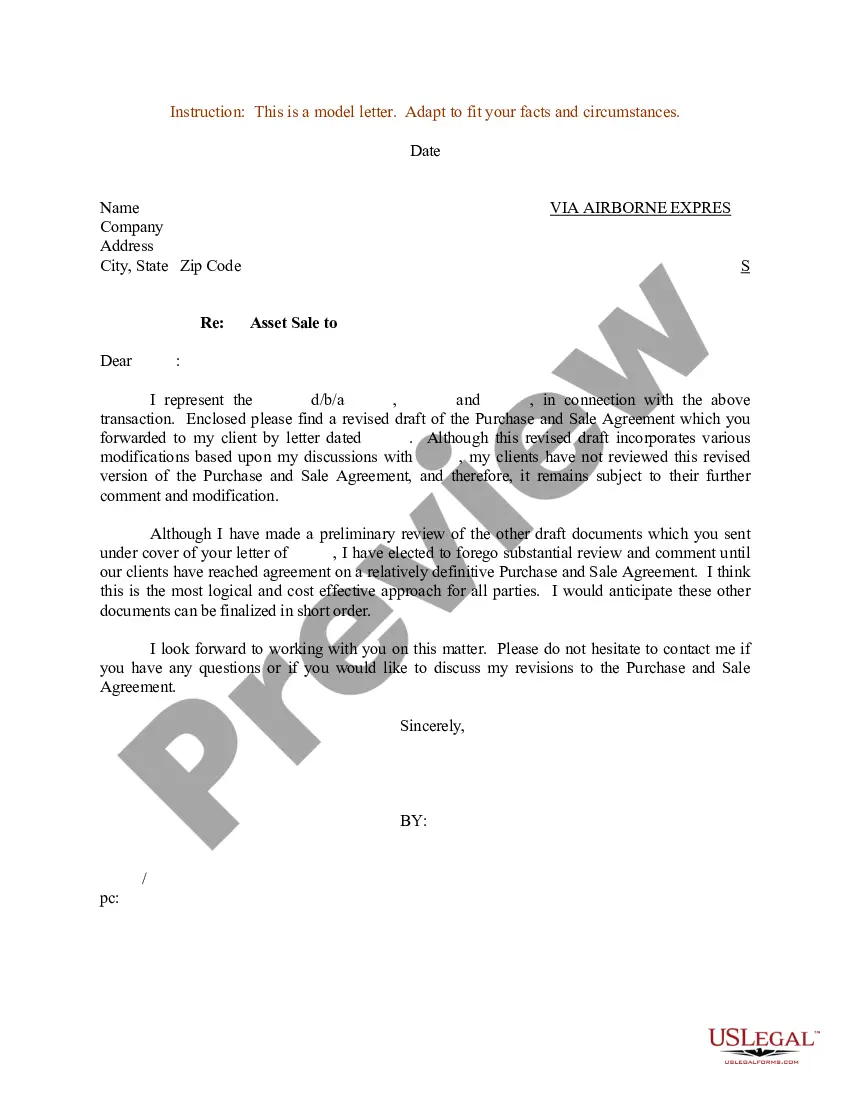
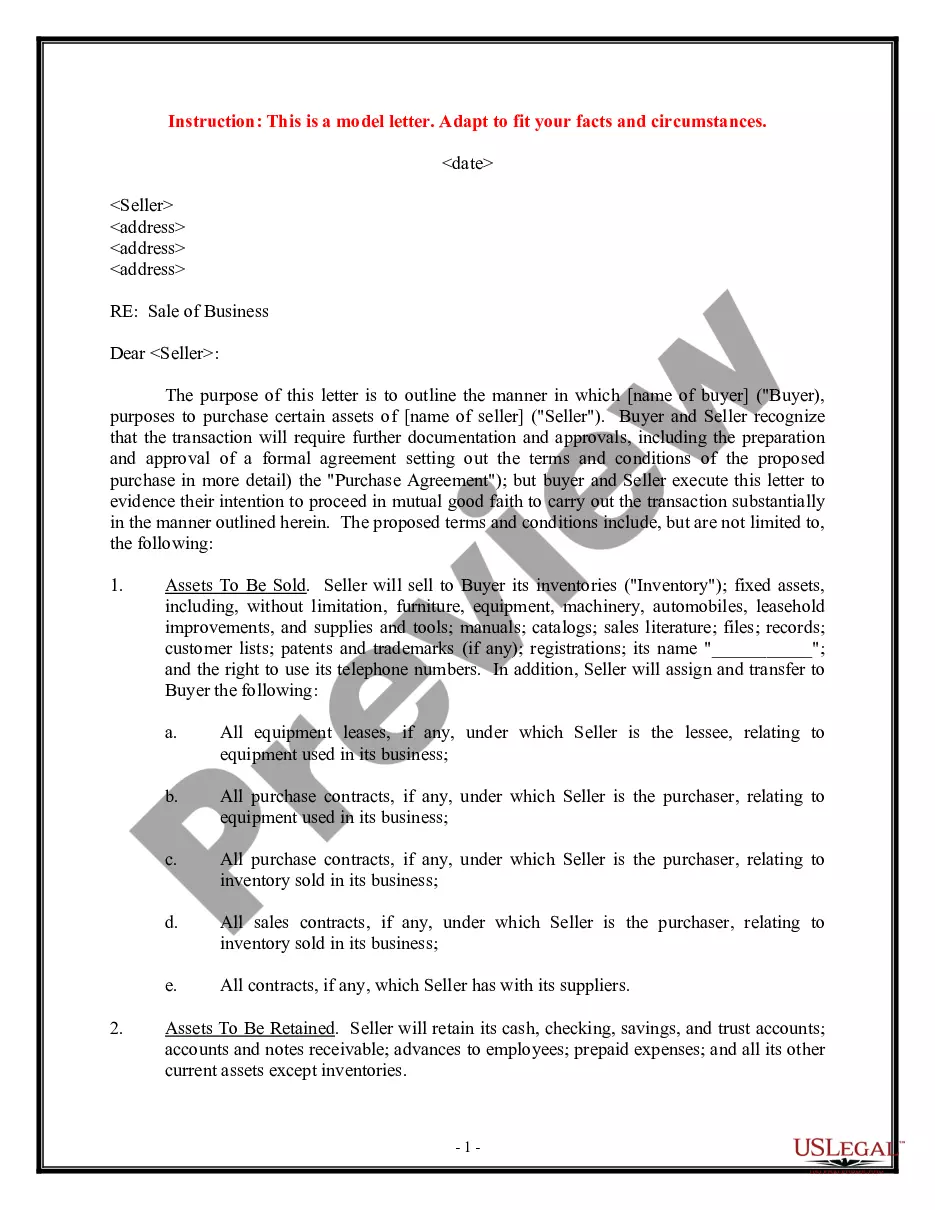
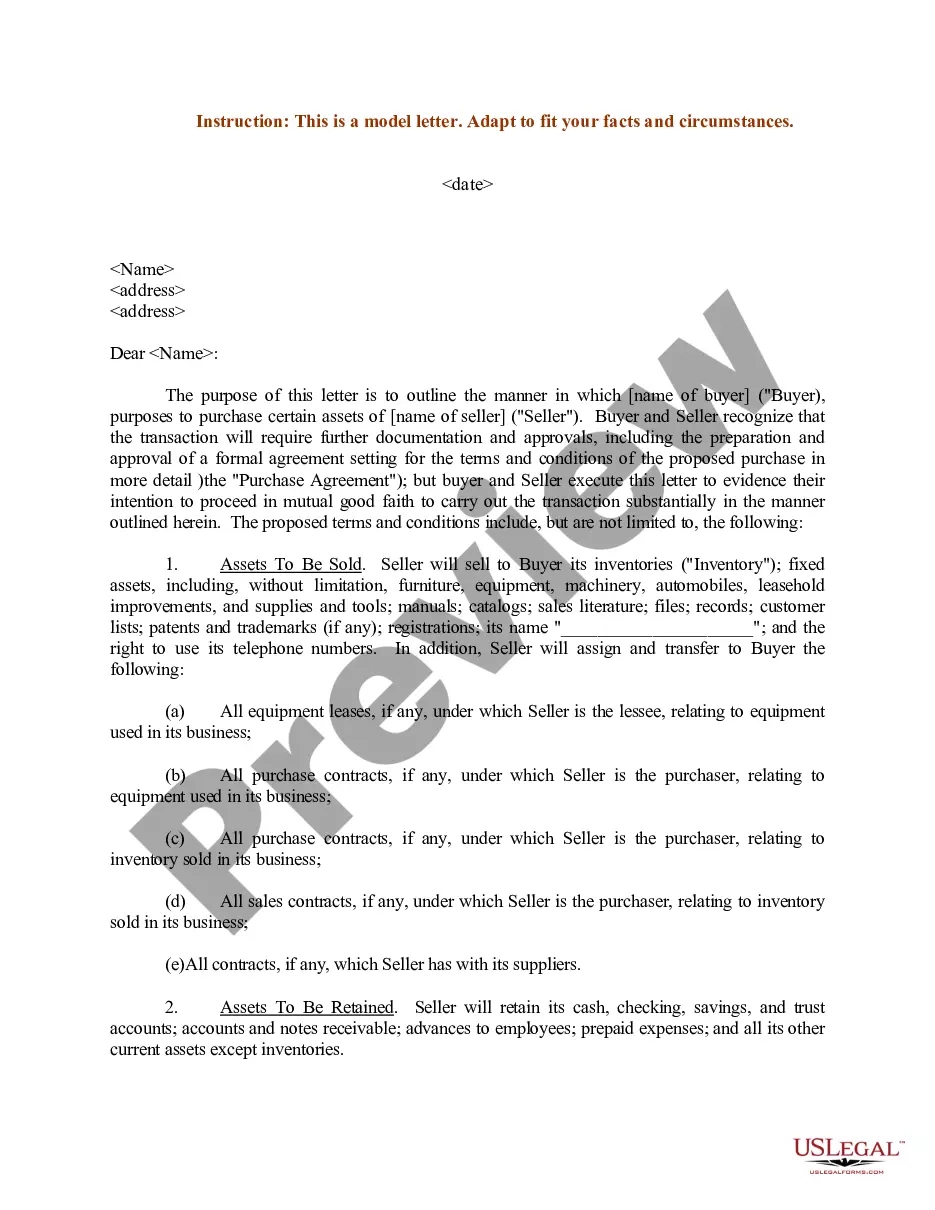
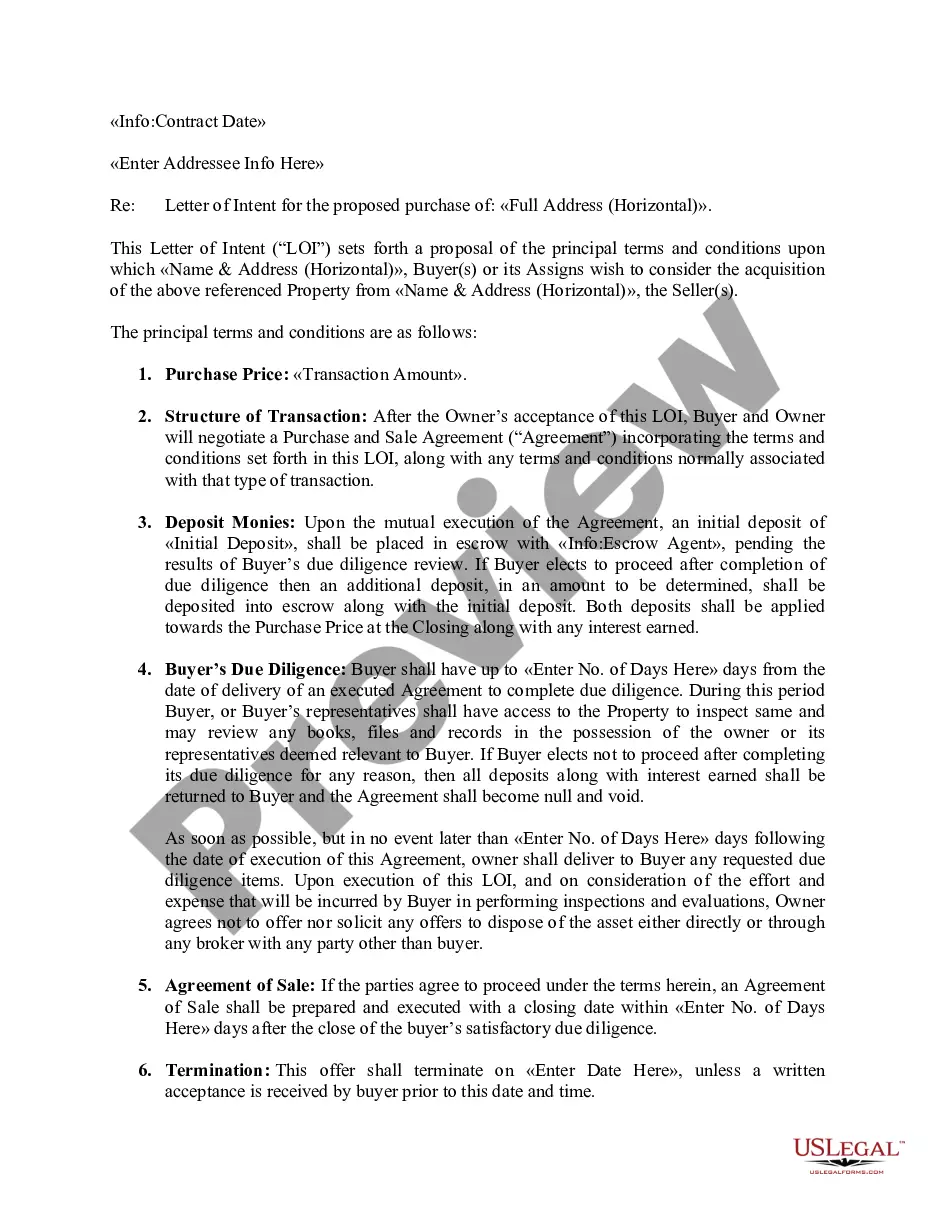
The Sample Letter for Letter of Intent to Purchase Assets is a preliminary document that outlines the intention of a buyer to acquire specific assets from a seller. It serves as a foundation for negotiations and is distinct from a formal purchase agreement. This letter helps clarify the proposals regarding the sale and identifies the assets involved, along with the liabilities that may be assumed by the buyer.
Key parts of this document
- Date and delivery method
- Parties involved: names and addresses
- Description of the assets to be purchased
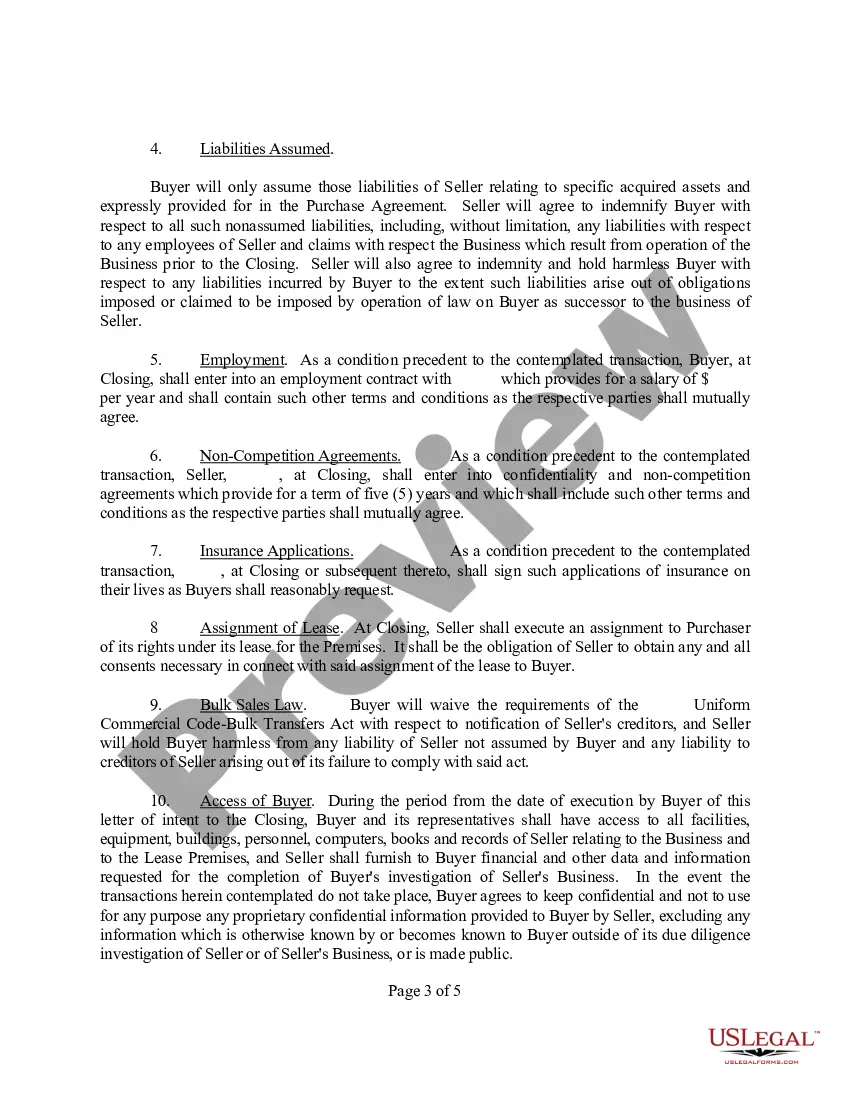
- Liabilities assumed by the buyer
- Confidentiality agreement
- Purchase agreement stipulations
- Assignment of lease contracts
- Expenses and limitations of the letter
When this form is needed
This letter should be used during negotiations when a buyer intends to purchase assets from a seller. It is particularly useful in business transactions to ensure clarity on the terms and conditions being proposed before a formal purchase agreement is drafted. Typical scenarios include acquiring a business's equipment, inventory, intellectual property, or leases.
Who can use this document
- Business buyers looking to acquire assets from another business
- Sellers looking to formalize the intent of a potential asset sale
- Attorneys or legal representatives involved in asset purchase agreements
- Companies undergoing mergers or acquisitions
How to prepare this document
- Identify the parties involved, including their names and addresses.
- Clearly describe the assets being purchased to avoid misunderstandings.
- Specify any liabilities that the buyer will assume.
- Include terms regarding confidentiality and its enforcement.
- Sign and date the letter to formalize the intent.
Does this document require notarization?
This form does not typically require notarization unless specified by local law. Be sure to check your stateâs requirements to confirm if notarization is necessary for your transaction.
Get your form ready online
Our built-in tools help you complete, sign, share, and store your documents in one place.
Make edits, fill in missing information, and update formatting in US Legal Forms—just like you would in MS Word.
Download a copy, print it, send it by email, or mail it via USPS—whatever works best for your next step.
Sign and collect signatures with our SignNow integration. Send to multiple recipients, set reminders, and more. Go Premium to unlock E-Sign.
If this form requires notarization, complete it online through a secure video call—no need to meet a notary in person or wait for an appointment.
We protect your documents and personal data by following strict security and privacy standards.

Make edits, fill in missing information, and update formatting in US Legal Forms—just like you would in MS Word.

Download a copy, print it, send it by email, or mail it via USPS—whatever works best for your next step.

Sign and collect signatures with our SignNow integration. Send to multiple recipients, set reminders, and more. Go Premium to unlock E-Sign.

If this form requires notarization, complete it online through a secure video call—no need to meet a notary in person or wait for an appointment.

We protect your documents and personal data by following strict security and privacy standards.
Typical mistakes to avoid
- Failure to specify all assets and liabilities involved in the transaction.
- Not including confidentiality terms, which can lead to unauthorized information sharing.
- Assuming all parties understand the context without adequate explanations.
- Neglecting to date the letter, which can create confusion over timelines.
Benefits of completing this form online
- Convenient access to a downloadable format that can be easily edited.
- Reliability from a trusted source with attorney-drafted content.
- Ability to customize quickly for specific transactions or parties involved.
- No need for physical travel as the form can be completed and shared electronically.
Looking for another form?
Form popularity
FAQ
Address the Seller By Name. Highlight What You Like Most About the Home. Share Something About Yourself. Throw in a Personal Picture. Discuss What You Have in Common. Keep it Short. Close the Letter Appropriately.
A letter of intent (LOI) is a document that someone uses in order to declare their intent to do something, such as make a purchase, apply for a job or education program, or to clarify points in a business transaction. They are written in letter format, and signed by one party (the party writing it).
Choose the Right Letter of Intent Format and Layout. Research the Company Before You Write. Find 3 Ways You Fit the Position. Get Attention with a Strong First Paragraph. Explain Why You're Interested in Them. End Your Letter of Intent by Asking for Action. Sign off with a Professional Closing.
The full names of the buyer and the seller. The complete address of the property. The agreed-upon purchase price. The agreed-upon earnest deposit. The date of signing the SPA. The terms and conditions that surround the earnest deposit.
A purchase letter of intent is the written intention to purchase products or services from a vendor. The customer will make use of this letter to demonstrate their seriousness as a buyer and their motivation to transact business in the future.
The LOI should be in writing; it should be signed by the parties; it should state all needed terms of a property sale agreement or lease, like price or rent, party names and descriptions of the property and the interest conveyed and finally, it should state clearly that the parties may (or will) prepare a final written
In commercial real estate, a Letter of Intent is a preliminary agreement that is negotiated between a tenant and landlord or buyer and seller. The LOI or Letter of Intent states the primary economics and deal points with proposed terms.
State your reasons for writing the letter of intent. Give information on how you got to know about the vacancy and why you are interested in the said position. Highlight your accomplishments. Be confident to state your achievements. Praise the institution to which you are writing to.