California Grant Deed
What this document covers
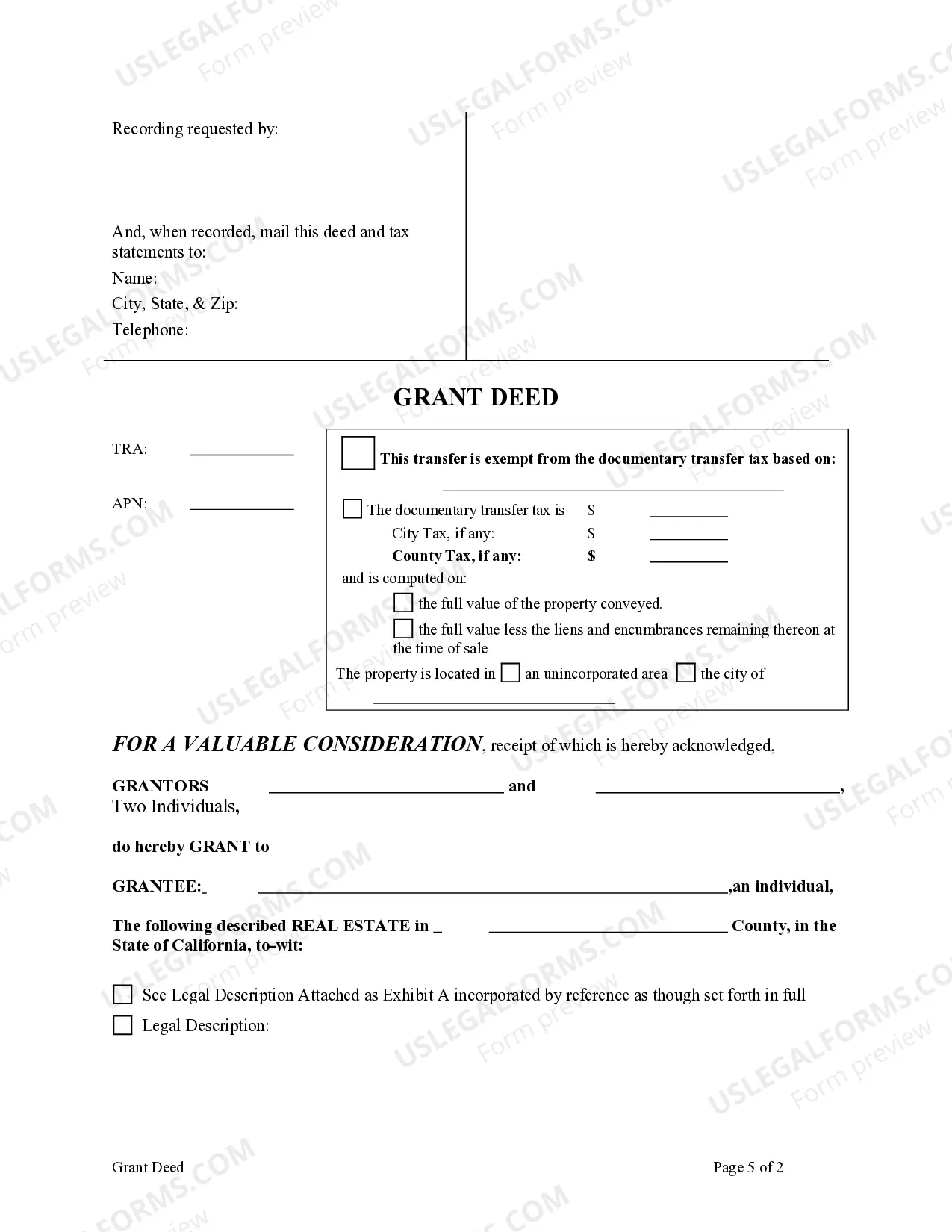
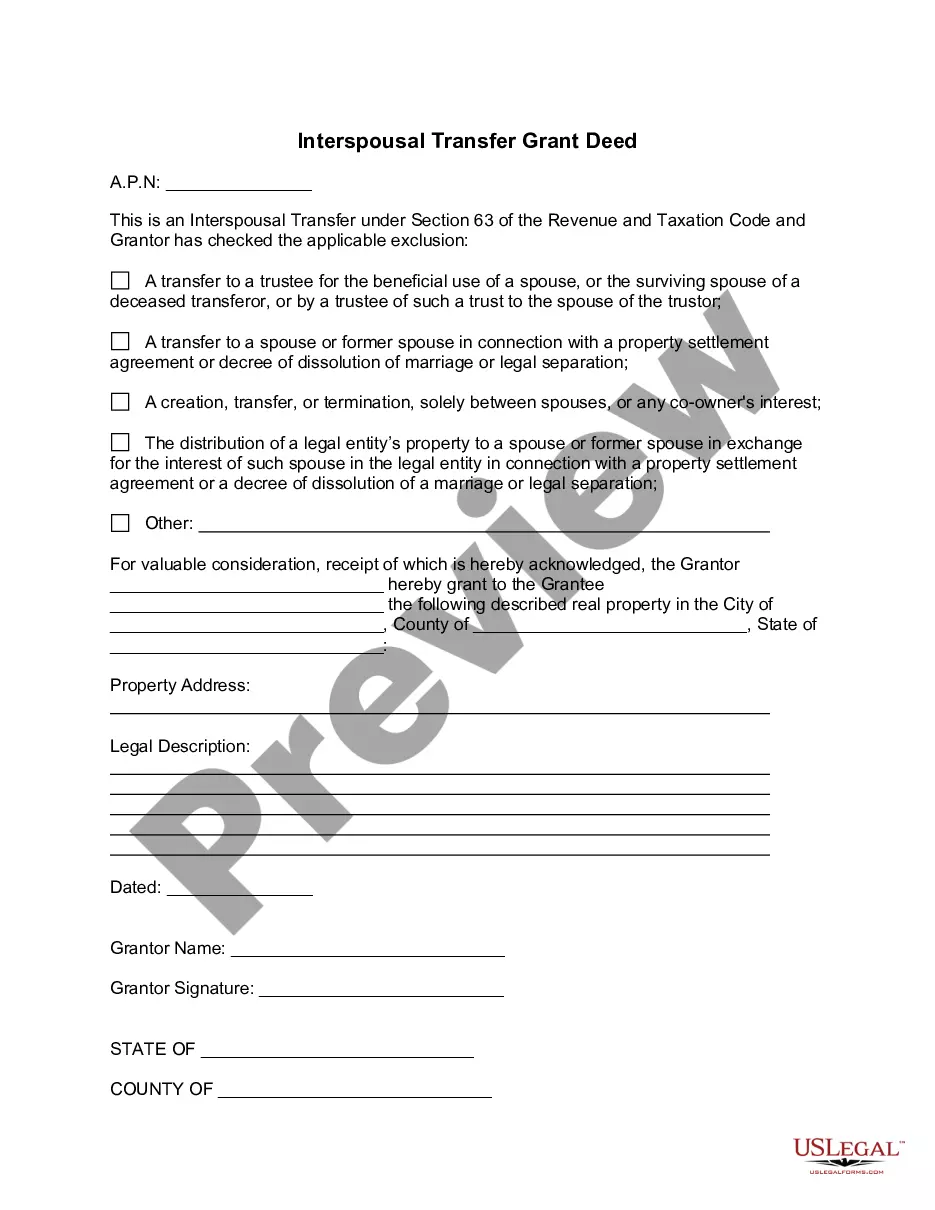
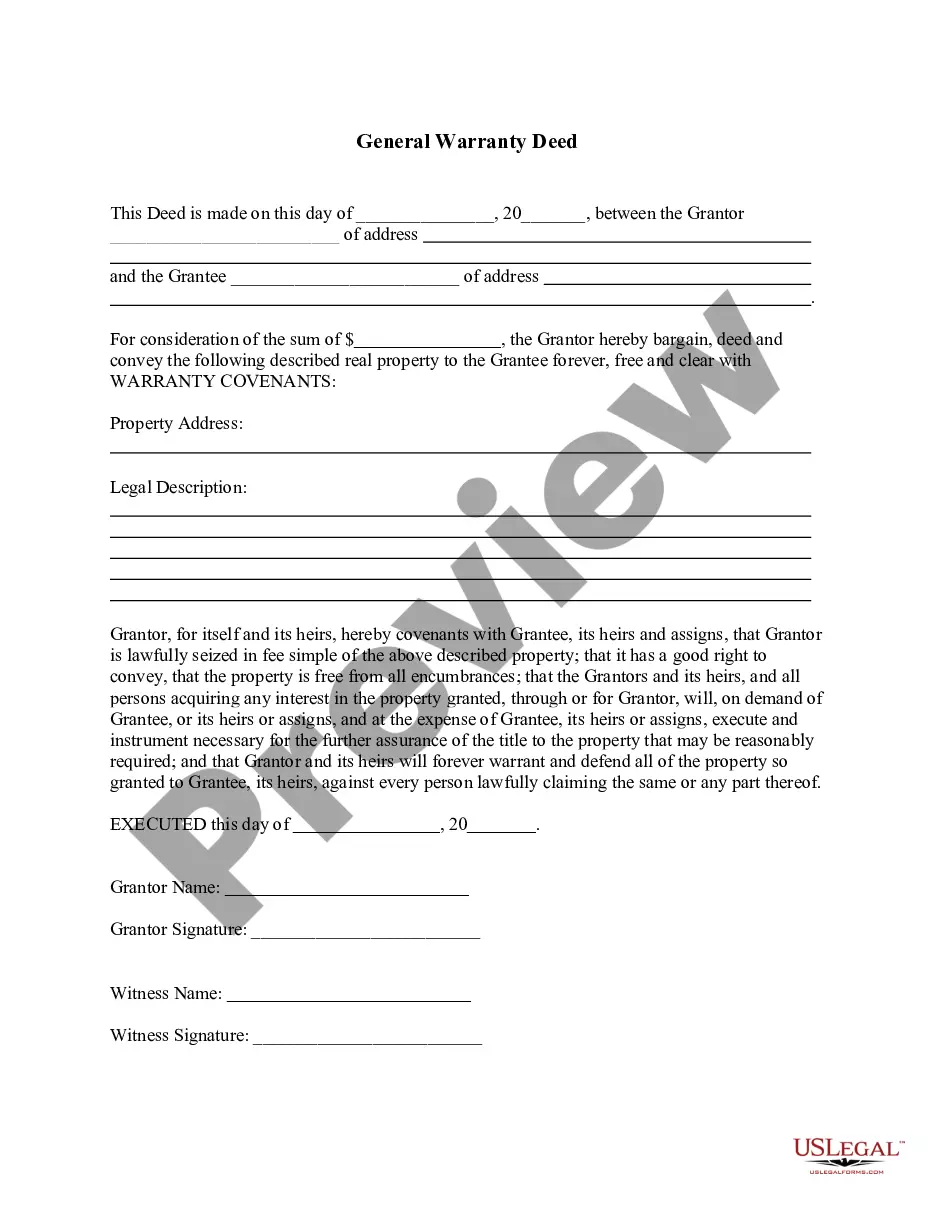
A grant deed is a legal document used to transfer real property from two individuals (the grantors) to another individual (the grantee). This deed ensures that the grantors are conveying their interest in the property and complies with state laws. Unlike other forms of property transfer, a grant deed includes certain guarantees regarding the title, providing the grantee assurance that the property is free of encumbrances that were not disclosed at the time of sale.
Key parts of this document
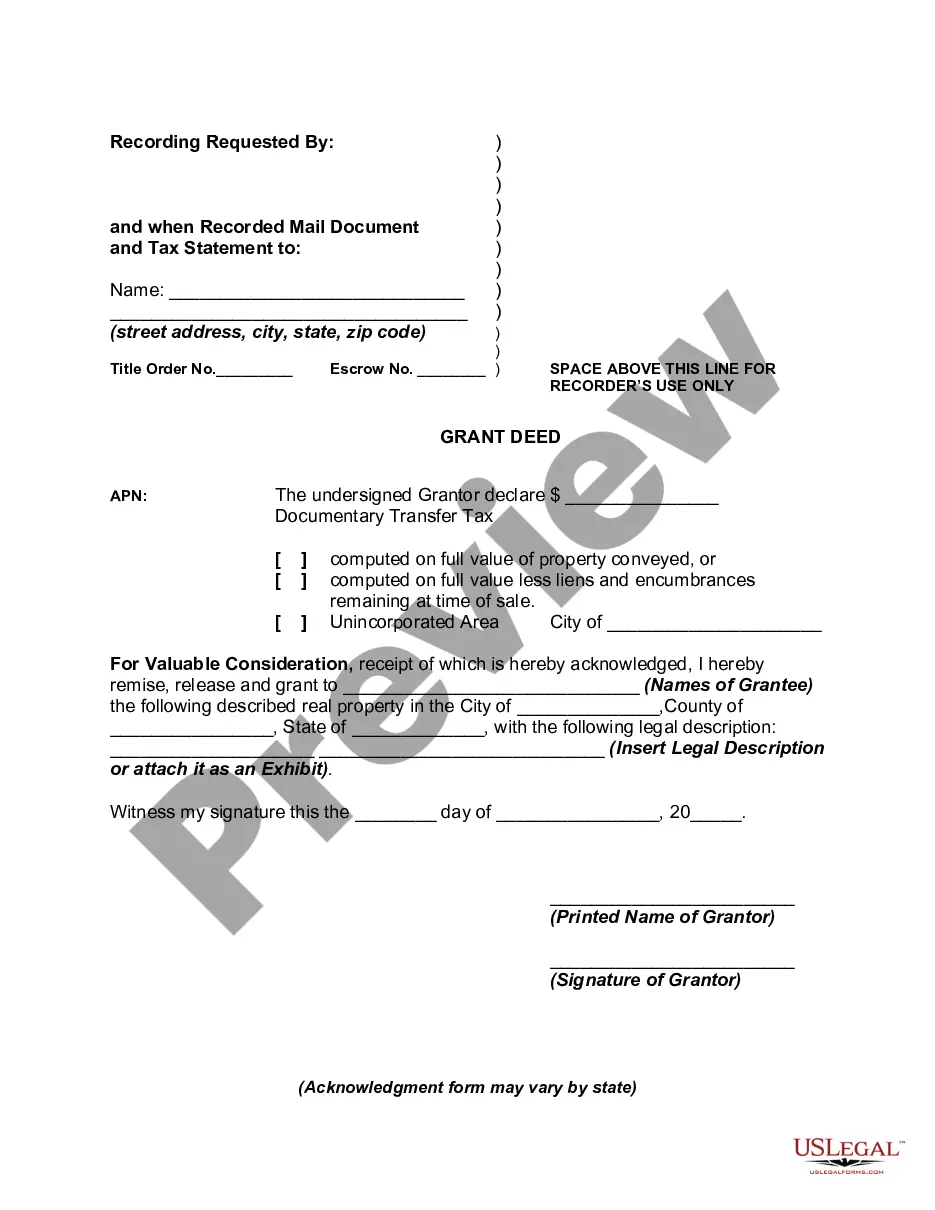
- Identification of the grantors (two individuals) and the grantee (one individual).
- Description of the property being transferred, including its legal description.
- Confirmation that the grantors hold clear title to the property being conveyed.
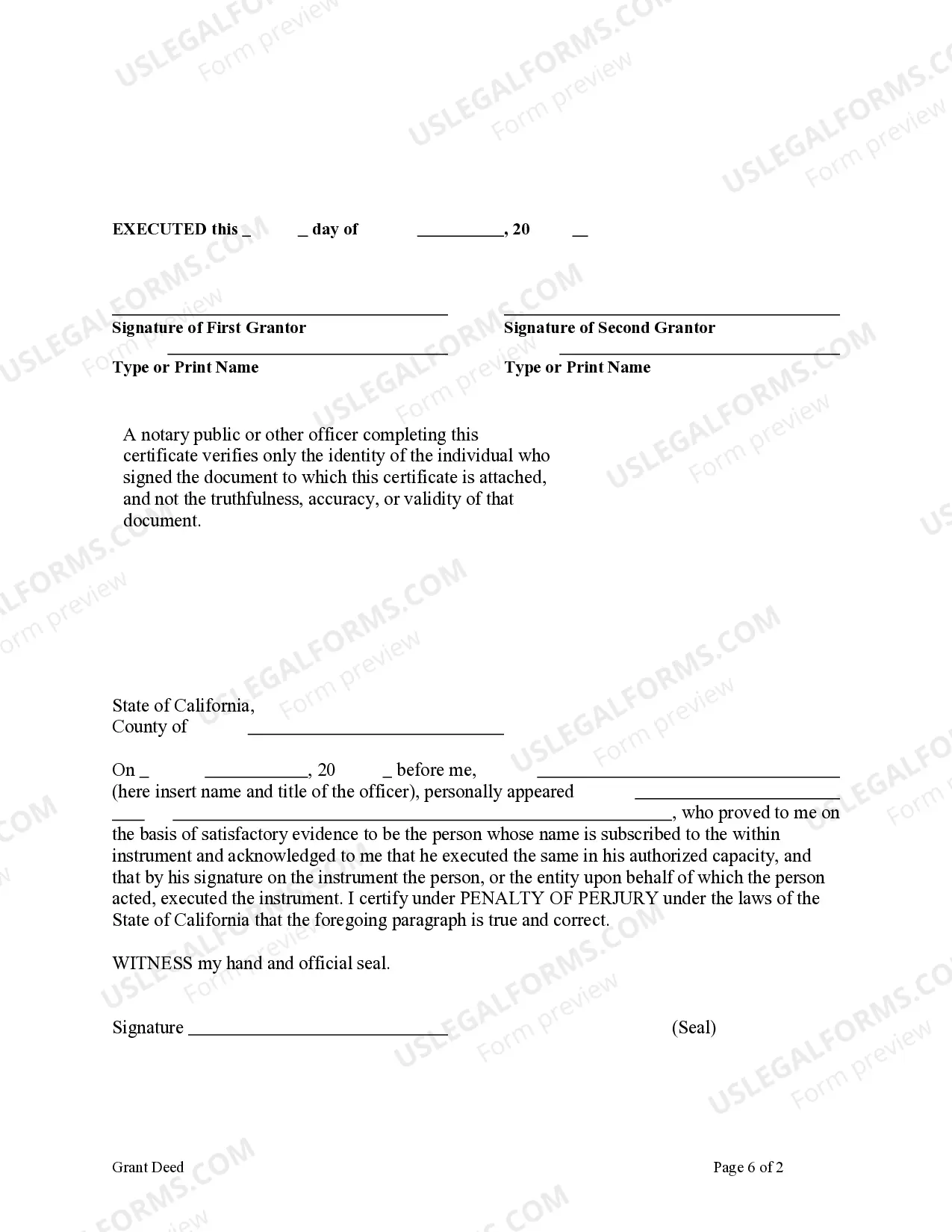
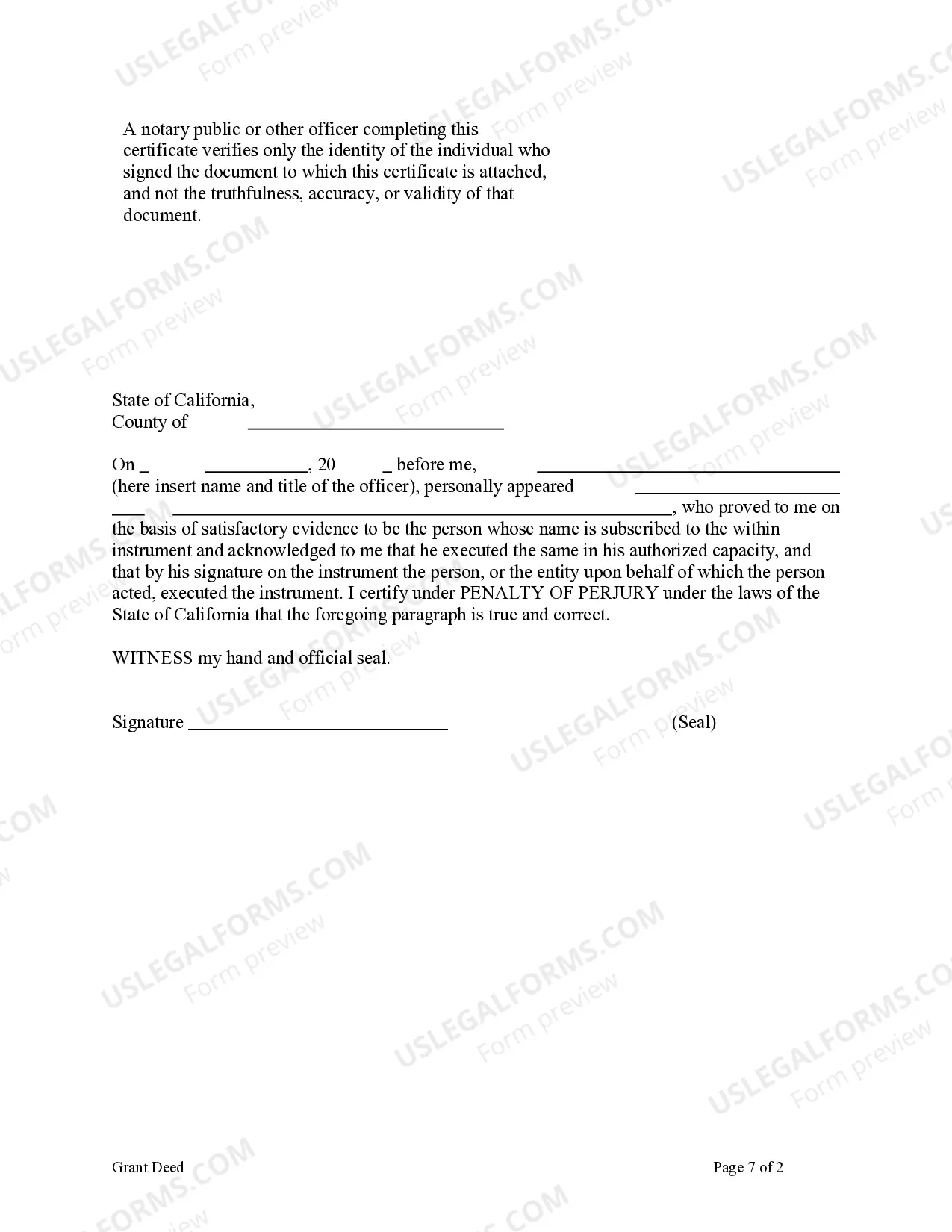
- Signature lines for all grantors, along with a notary acknowledgment (if needed).
- Exemptions from documentary transfer tax, if applicable, should be noted.



When this form is needed
This form should be used when transferring property ownership from two individuals to another individual. It is particularly useful in situations where the grantors wish to ensure that the title is clear and to provide legal proof of the transfer. Typical scenarios include property sales, gifts of real estate, or transfers resulting from divorce settlements.
Who can use this document
This form is suitable for:
- Individuals transferring property ownership to another individual.
- Couples undergoing a divorce who need to transfer property as part of the settlement.
- Property owners who want to confirm the title after a previous transaction.
- Individuals who are gifting real estate to a family member or friend.
How to prepare this document
- Identify the full names of the grantors transferring the property and the grantee receiving it.
- Clearly describe the property being transferred, including its legal description or address.
- Add any additional relevant details, such as exemptions from transfer tax, if applicable.
- Have all grantors sign the deed in the designated signature areas.
- Consider notarizing the document to ensure its legality, particularly if required by local laws.
Does this form need to be notarized?
This form does not typically require notarization unless specified by local law. However, notarization may enhance the legal validity of the document, especially during property transactions. Always check your local laws or consult with a legal professional regarding notarization requirements.
Get your form ready online
Our built-in tools help you complete, sign, share, and store your documents in one place.
Make edits, fill in missing information, and update formatting in US Legal Forms—just like you would in MS Word.
Download a copy, print it, send it by email, or mail it via USPS—whatever works best for your next step.
Sign and collect signatures with our SignNow integration. Send to multiple recipients, set reminders, and more. Go Premium to unlock E-Sign.
If this form requires notarization, complete it online through a secure video call—no need to meet a notary in person or wait for an appointment.
We protect your documents and personal data by following strict security and privacy standards.

Make edits, fill in missing information, and update formatting in US Legal Forms—just like you would in MS Word.

Download a copy, print it, send it by email, or mail it via USPS—whatever works best for your next step.

Sign and collect signatures with our SignNow integration. Send to multiple recipients, set reminders, and more. Go Premium to unlock E-Sign.

If this form requires notarization, complete it online through a secure video call—no need to meet a notary in person or wait for an appointment.

We protect your documents and personal data by following strict security and privacy standards.
Avoid these common issues
- Failing to accurately describe the property being transferred.
- Not having all grantors sign the deed.
- Omitting necessary information related to tax exemptions.
- Forgetting to check if notarization is required in your jurisdiction.
- Using incorrect or outdated forms that do not comply with state laws.
Advantages of online completion
- Convenience of downloading and filling out forms at any time.
- Editability allows you to make corrections easily before finalizing the document.
- Access to forms prepared by licensed attorneys, ensuring legal accuracy.
- Immediate access to forms without waiting for postal delivery.
Looking for another form?

Form popularity
FAQ
To get a grant deed in California, start by downloading the appropriate forms from your county's recorder office or using trusted online legal platforms like uslegalforms to guide you through the process. Complete the form accurately, have it notarized if required, and then submit it to the county office along with any necessary fees. Once recorded, your California Grant Deed will legally transfer ownership of the property.
If you have lost your California Grant Deed, you can request a certified copy from the county recorder's office where it was originally filed. Provide them with your property's details to assist in locating the document. If needed, resources like uslegalforms can help you navigate the replacement process and obtain a new deed efficiently.
A grant deed is indeed a public record in the state of California. This accessibility allows you and others to verify ownership and transfer of property rights. If you need to inspect a grant deed, you can visit your local county recorder’s office or explore their online databases.
Yes, grant deeds are considered public records in California. This means that anyone can access and view them, subject to certain privacy protections. You can find grant deeds at the county recorder’s office where the property is located, making it easy to research property ownership.
To obtain a California Grant Deed, you typically need to fill out the grant deed form, which is available through county recorder's offices or online legal resources. After completing the form, bring it to the relevant county office, along with the necessary fees and identification. It's recommended to check with your local office for any specific requirements or additional documentation that may be needed.
To be valid, a California Grant Deed must include specific elements, such as the names of the parties, a clear property description, and the signatures of the grantor. Additionally, it should be notarized. To simplify the process and ensure compliance with legal standards, consider using uslegalforms to access templates and guidance.
Yes, a California Grant Deed must be recorded to ensure the transfer of property ownership is legally recognized. While the deed is effective between the parties once signed, recording it protects against future disputes. It also provides public notice of ownership which can be crucial for title integrity.
To record a deed in California, you need to take your completed and notarized California Grant Deed to the local county recorder's office. Submit the original deed along with any necessary fees. The recorder will then enter the deed into public records, ensuring it is legally recognized.
Filling out a California Grant Deed involves entering the names of the grantor and grantee, along with a description of the property. Make sure to include the property's legal description, which can be found in previous deeds or tax assessments. Once you have completed the form, consult an expert or use online resources to ensure accuracy.
To file a California Grant Deed, start by completing the deed form with accurate property and owner information. After filling it out, you must sign the deed in front of a notary public. Finally, submit the executed deed to the county recorder's office in the county where the property is located.