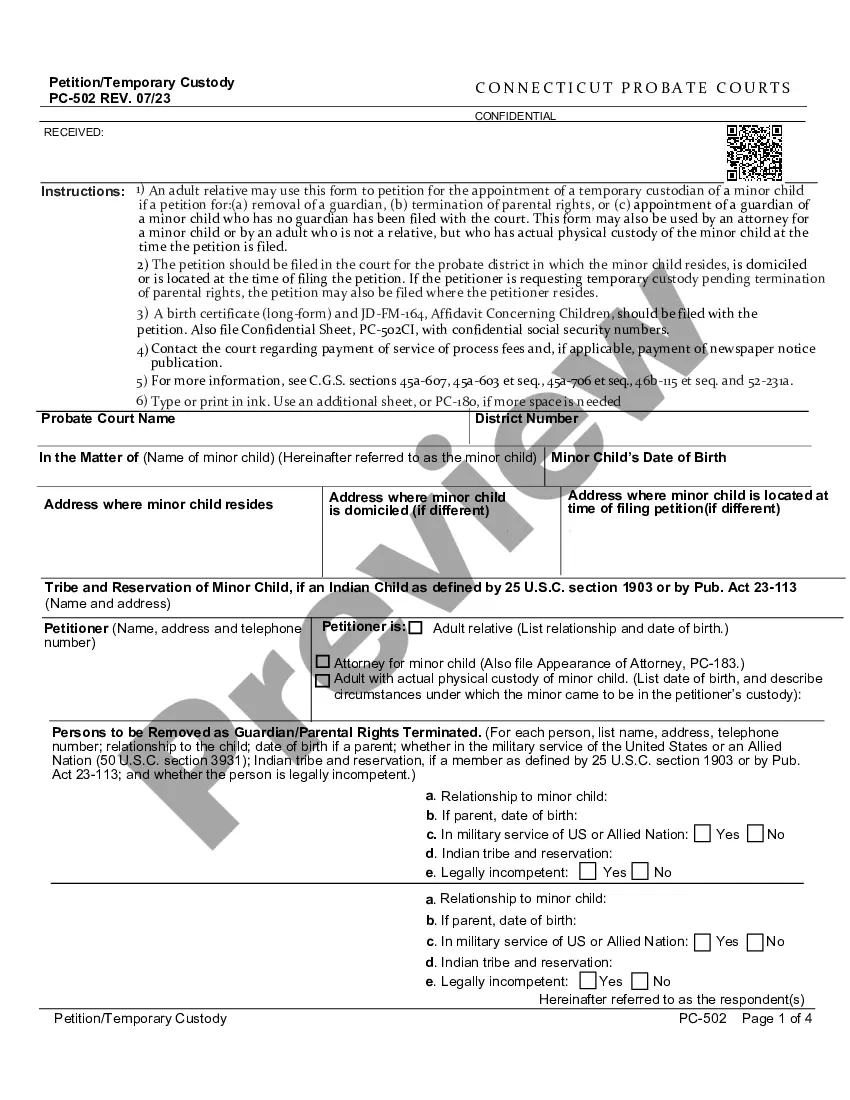
Grant Deed
About this form
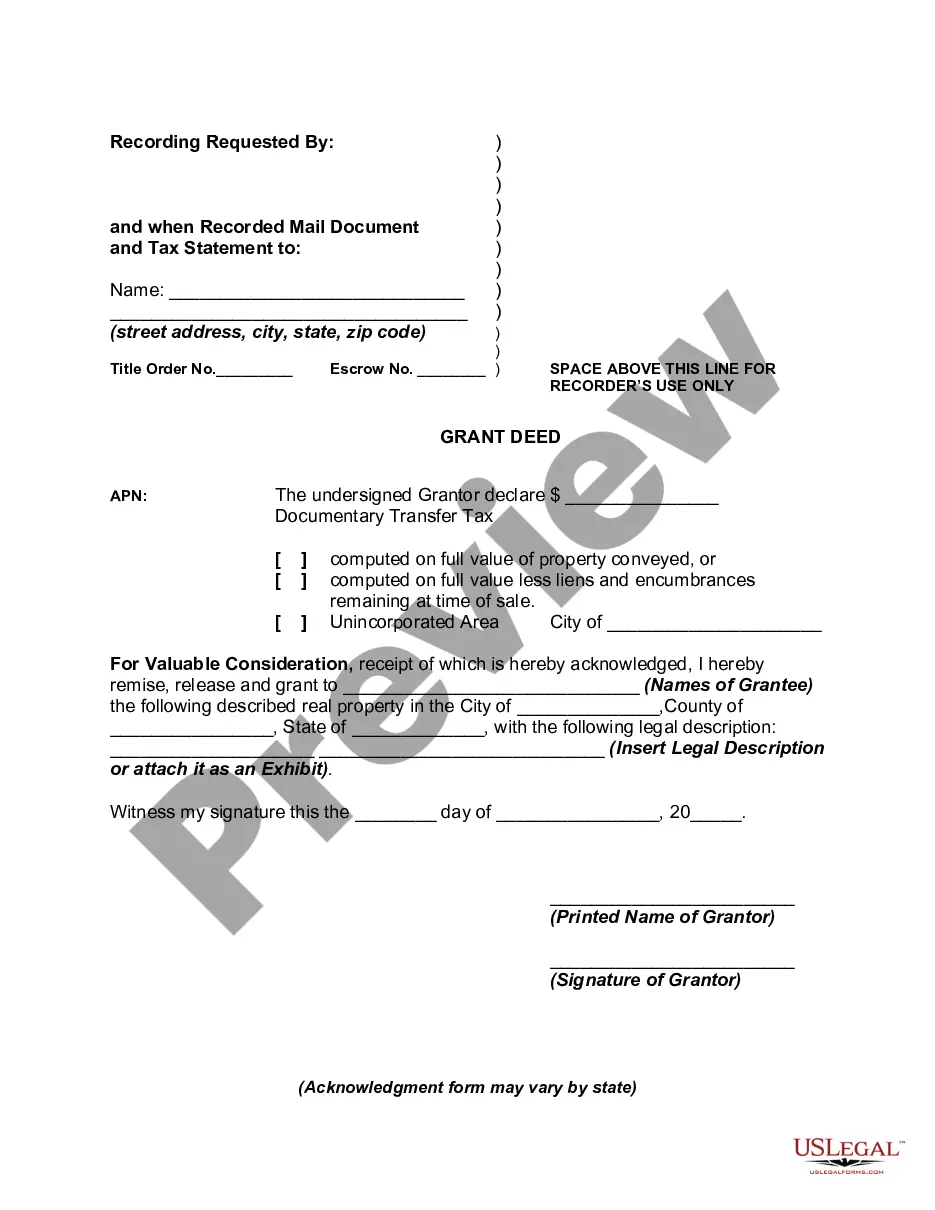
A grant deed is a legal document used by an owner, known as the grantor, to transfer interest in a piece of real property to a new owner, referred to as the grantee. Unlike a quit claim deed, which only conveys the ownership interest the grantor has, a grant deed includes an implied warranty asserting that there are no undisclosed encumbrances on the property and that the grantor holds the title to the property being transferred. This form is essential for conveying property ownership, ensuring that the buyer is recognized as the official owner once the deed is executed and delivered.
What’s included in this form
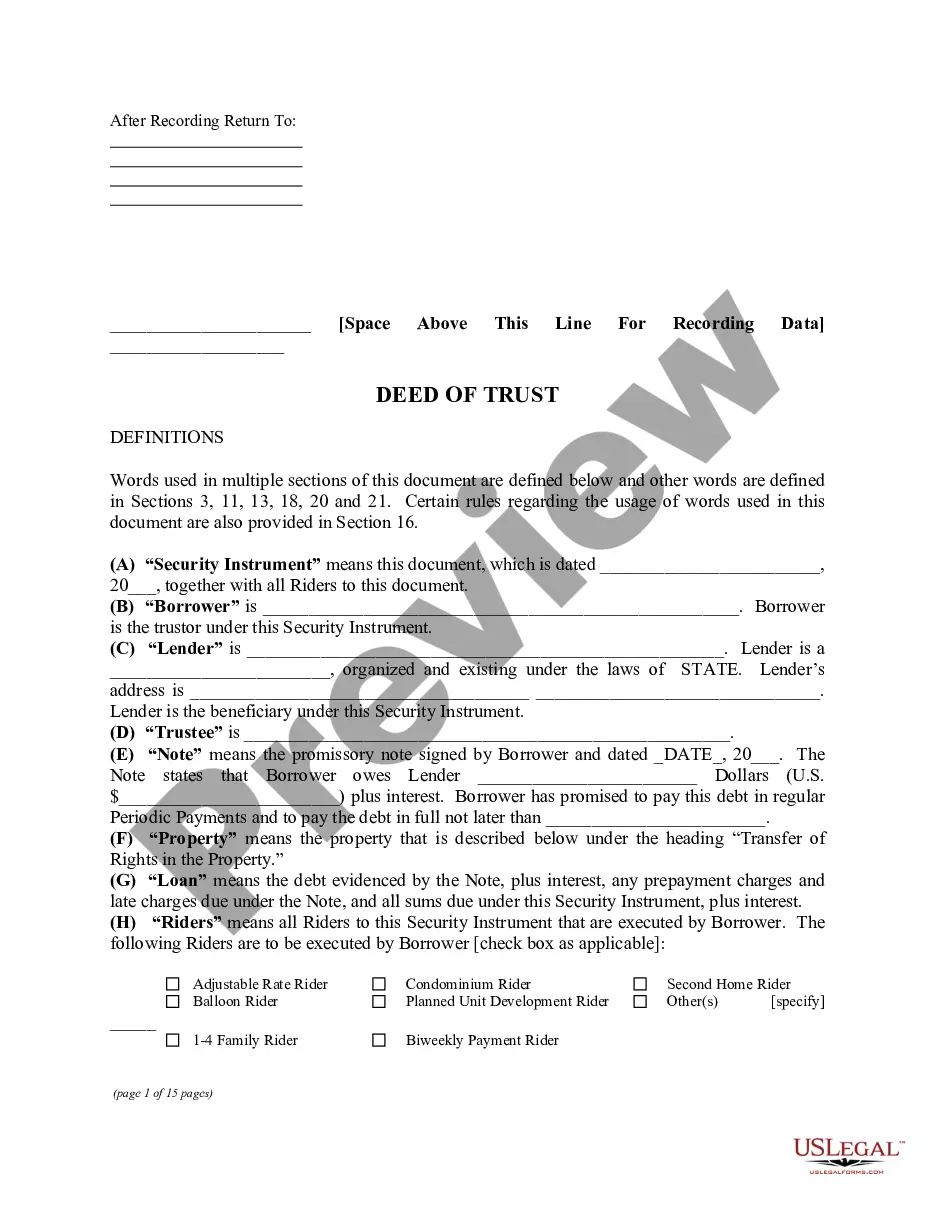
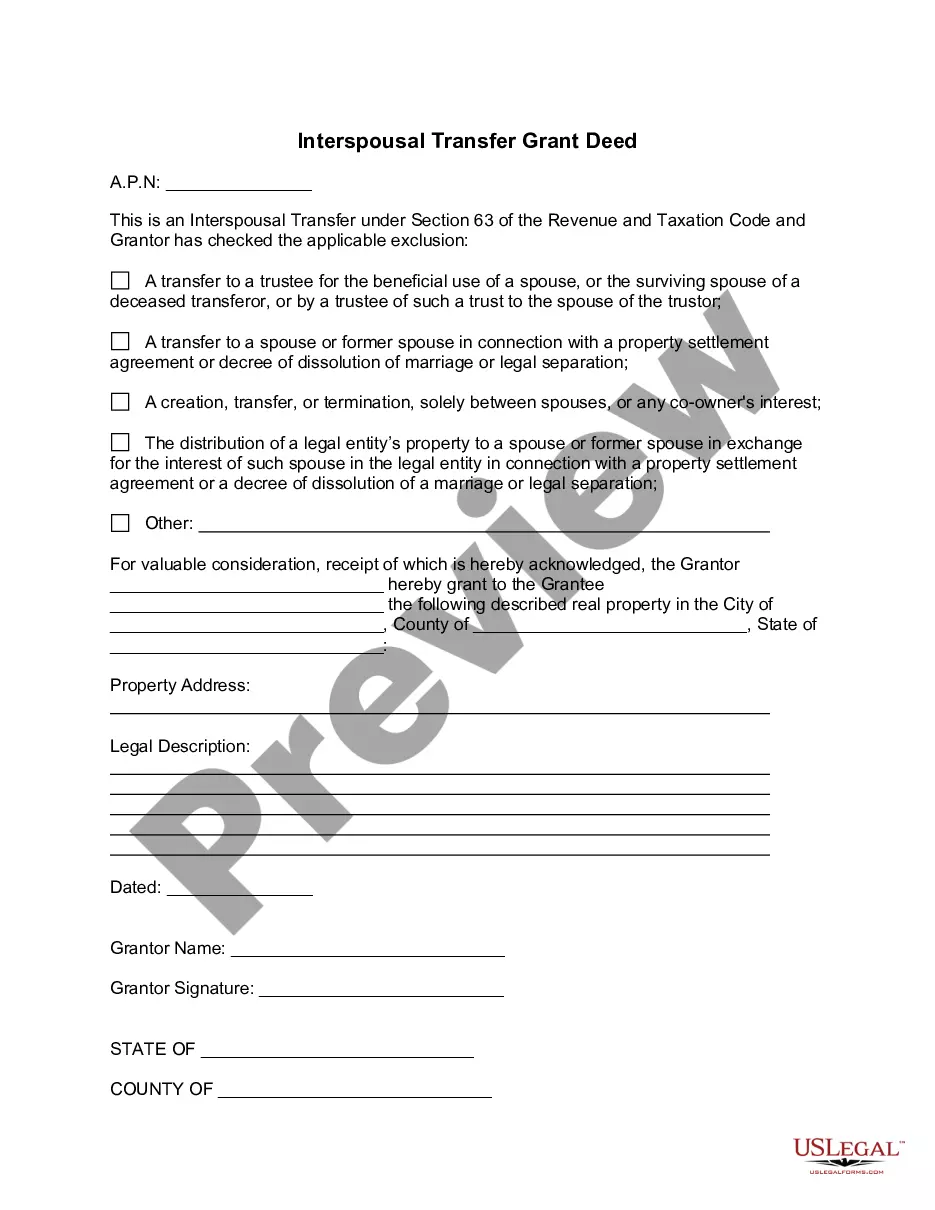
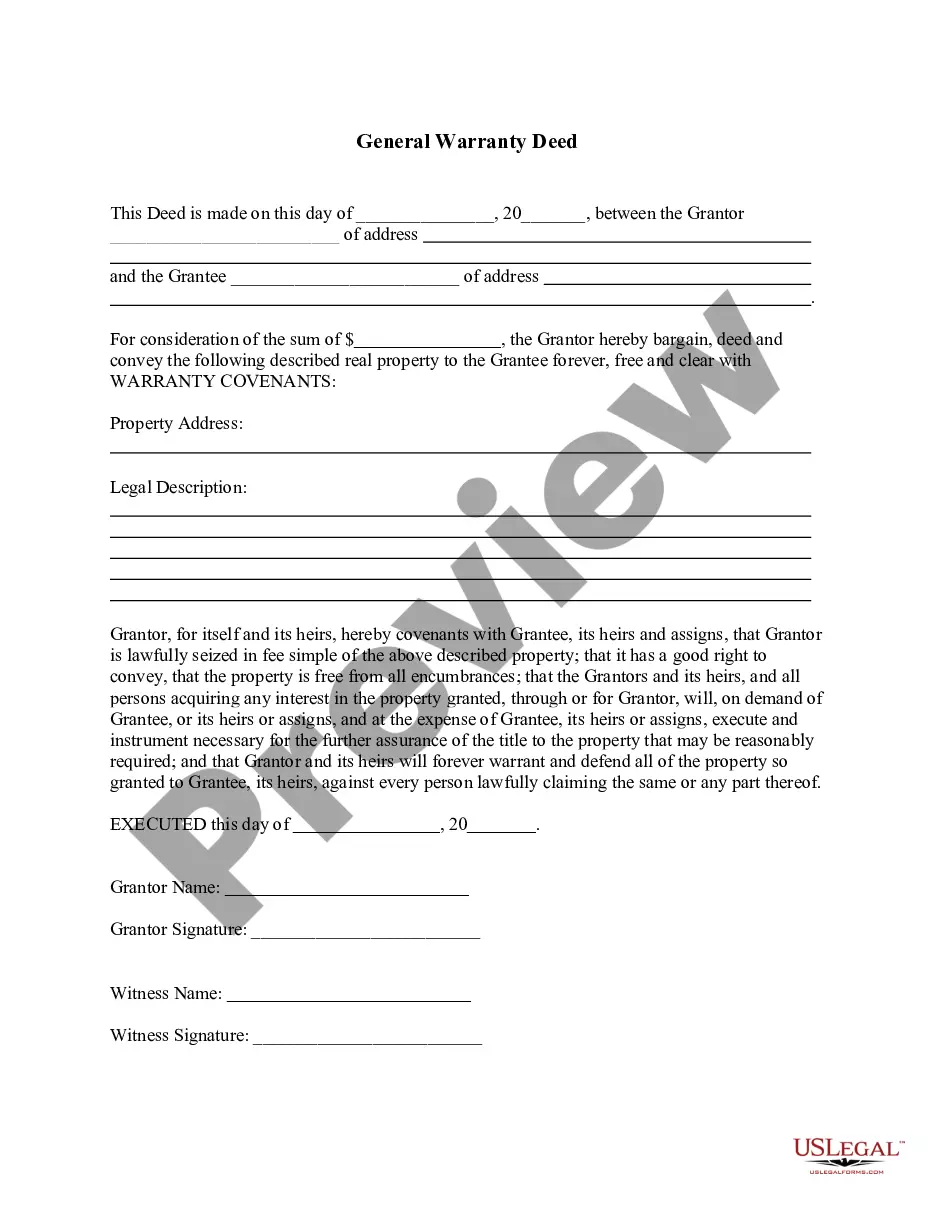
- Identification of the grantor (seller) and grantee (buyer)
- Legal description of the property being transferred
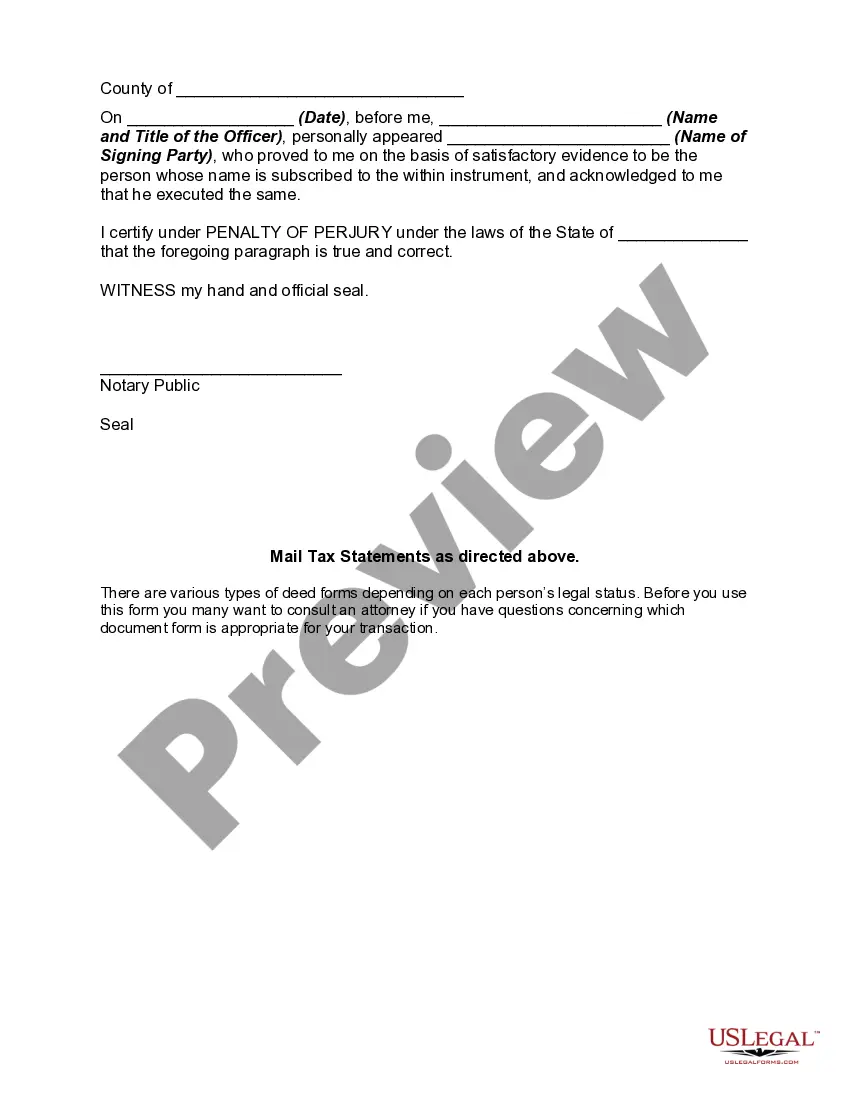
- Notarization section for acknowledgment of the grantor's signature
- Fields for the date of transfer and execution
- Space for recording information by county or local authority

When to use this document
This grant deed form should be used when an individual or entity wishes to transfer ownership of real estate to another person or entity. It is particularly applicable in transactions involving the sale of property, gifts of property, or transfers between family members. This form is essential whenever the title to property needs to be clearly transferred from one party to another.
Intended users of this form
Consider using this grant deed if you are:
- The current property owner (grantor) seeking to sell or transfer property to another party
- A buyer (grantee) who requires formal documentation proving ownership of the acquired property
- Family members or individuals engaged in property transfers as part of gift arrangements or inheritance
Instructions for completing this form
- Identify the parties involved: enter the names and addresses of the grantor and grantee.
- Specify the property: provide a detailed legal description of the property being transferred.
- Enter the date of transfer on the designated line.
- Ensure all grantors sign the document in the presence of a notary public.
- Complete any additional required fields, including the acknowledgement section.
Does this form need to be notarized?
This form needs to be notarized to ensure legal validity. US Legal Forms provides secure online notarization powered by Notarize, allowing you to complete the process through a verified video call, available anytime.
Get your form ready online
Our built-in tools help you complete, sign, share, and store your documents in one place.
Make edits, fill in missing information, and update formatting in US Legal Forms—just like you would in MS Word.
Download a copy, print it, send it by email, or mail it via USPS—whatever works best for your next step.
Sign and collect signatures with our SignNow integration. Send to multiple recipients, set reminders, and more. Go Premium to unlock E-Sign.
If this form requires notarization, complete it online through a secure video call—no need to meet a notary in person or wait for an appointment.
We protect your documents and personal data by following strict security and privacy standards.

Make edits, fill in missing information, and update formatting in US Legal Forms—just like you would in MS Word.

Download a copy, print it, send it by email, or mail it via USPS—whatever works best for your next step.

Sign and collect signatures with our SignNow integration. Send to multiple recipients, set reminders, and more. Go Premium to unlock E-Sign.

If this form requires notarization, complete it online through a secure video call—no need to meet a notary in person or wait for an appointment.

We protect your documents and personal data by following strict security and privacy standards.
Avoid these common issues
- Not including the full legal description of the property.
- Failing to have the document notarized where required.
- Not signing the deed by all individuals listed as grantors.
- Omitting details about any existing encumbrances, which can lead to legal disputes.
Benefits of using this form online
- Convenience of downloading and printing the form at your leisure.
- Editability to customize the form to fit your specific real estate transaction needs.
- Access to professionally drafted documents created by licensed attorneys, ensuring legal compliance.
Summary of main points
- A grant deed transfers ownership of property with an implied warranty of clear title.
- Essential components include the details of the parties and a legal description of the property.
- Completion involves specific steps, including notarization in most jurisdictions.
- This form is utilized in various situations, from sales to property gifts.
Looking for another form?



Form popularity
FAQ
Title deeds are documents that essentially provide for proof of ownership over property, real estate, and in some cases, vehicles as well.A grant deed is the legal document that is used to indicate the transfer of property or real estate from one party to another.
The deed must be signed by the party or parties making the conveyance or grant; and 7. It must be delivered and accepted. Contrary to the law and established custom in other states, the expression "to have and to hold" (called the "habendum clause" of a deed) is not necessary, nor are witnesses or seal required.
A grant deed ensures that the grantor has a legal interest in the property. A quitclaim deed merely releases any potential interest the signatory may have in a property with no warranties.
A grant deed (also known as a special warranty deed) is a property deed that makes two guarantees: The property has not been sold to anyone else. The house is not under any liens or restrictions that have not already been disclosed to the buyer.
A grant deed ensures that the grantor has a legal interest in the property. A quitclaim deed merely releases any potential interest the signatory may have in a property with no warranties.
You must sign the grant deed if you are the seller. You also must have a public notary acknowledge or verify your signature on the grant deed. A grant deed is legally ineffective unless the grantor, meaning the person selling or transferring the property, signs the grant deed.
Contrary to normal expectations, the Deed DOES NOT have to be recorded to be effective or to show delivery, and because of that, the Deed DOES NOT have to be signed in front of a Notary Public. However, if you plan to record it, then it does have to be notarized as that is a County Recorder requirement.
A grant deed is a form of deed common in California, which contains implied warranties to the effect that the grantor has not previously conveyed or encumbered the property.