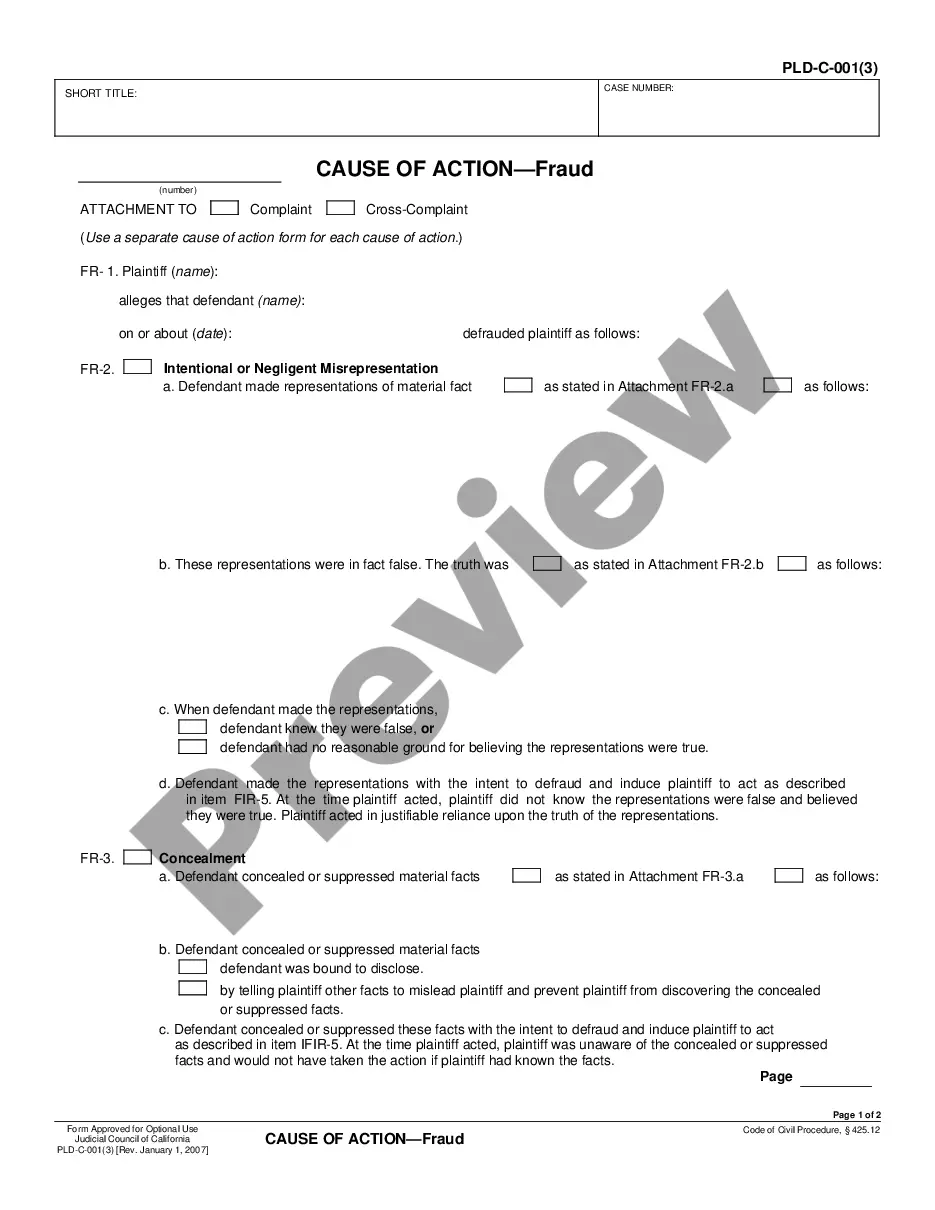
Mississippi Agreed Judgment
Understanding this form
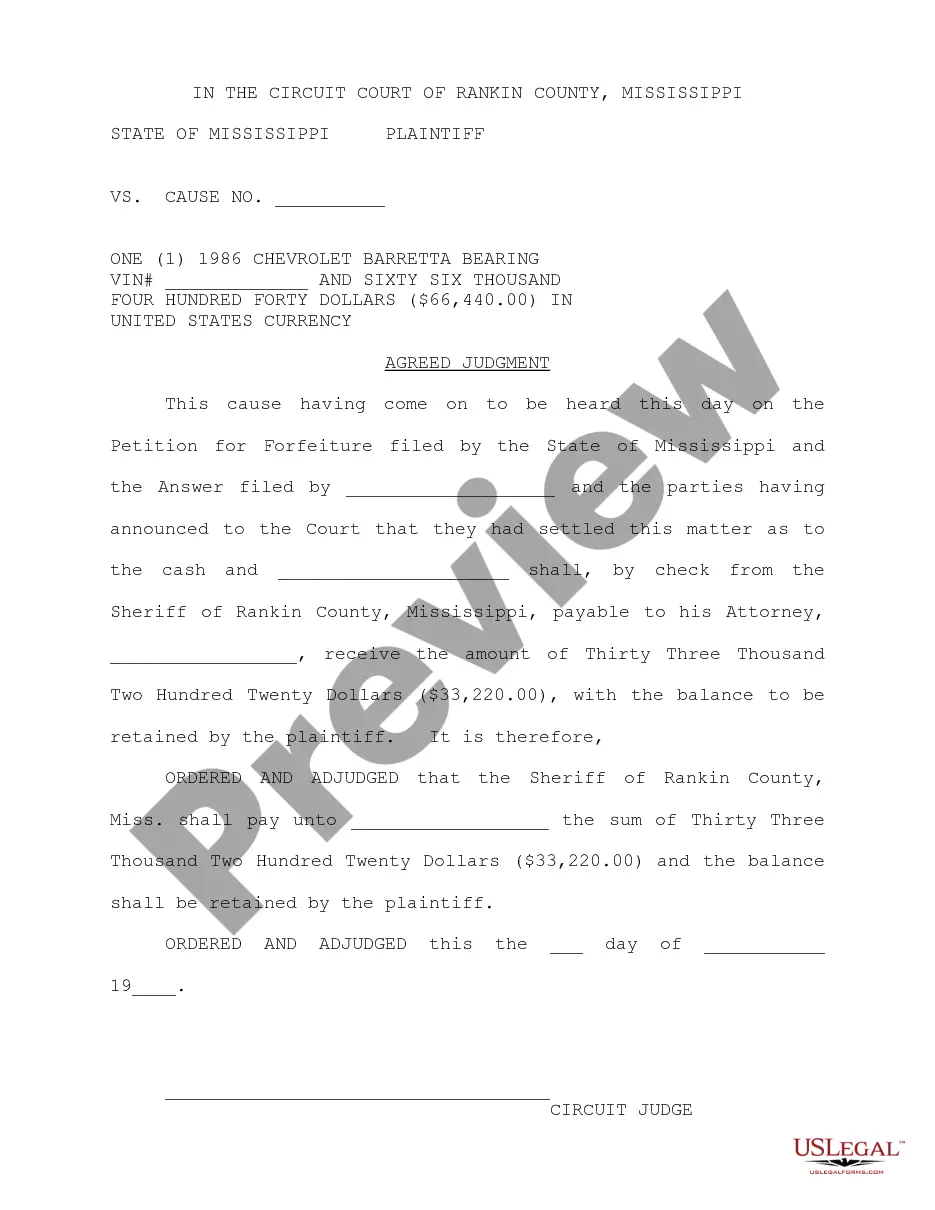
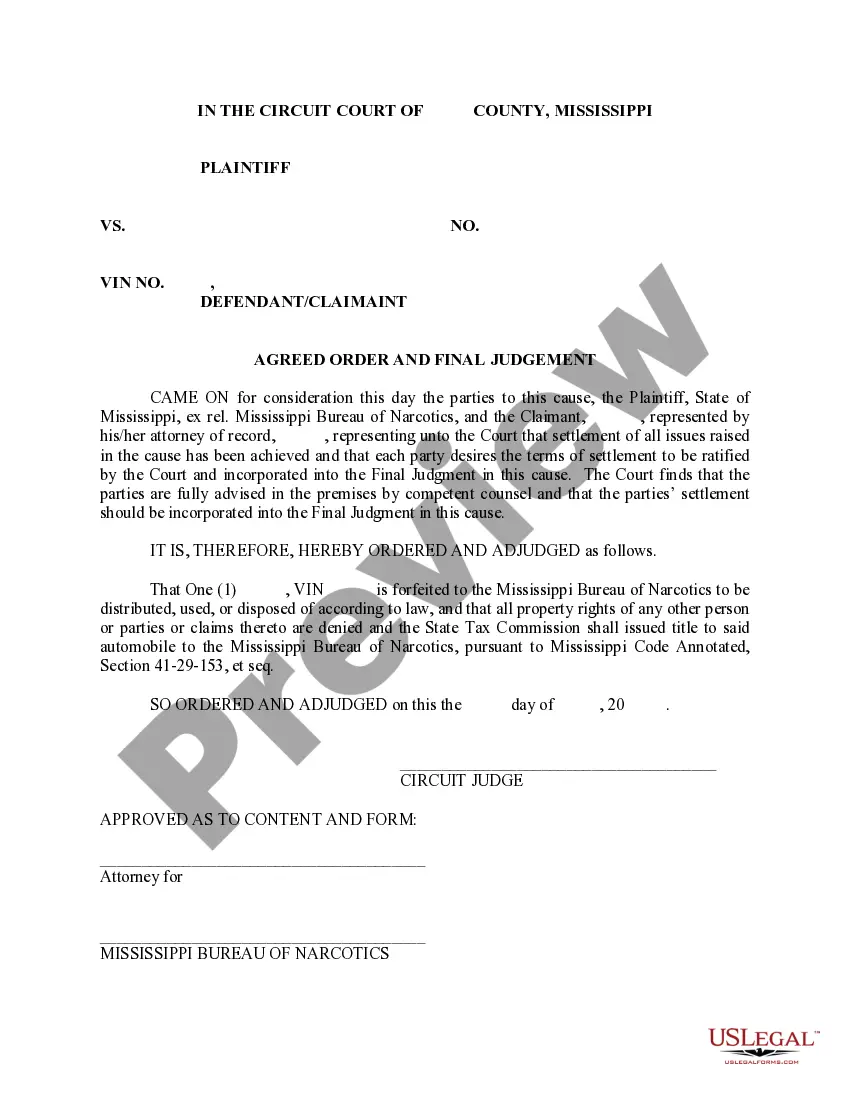
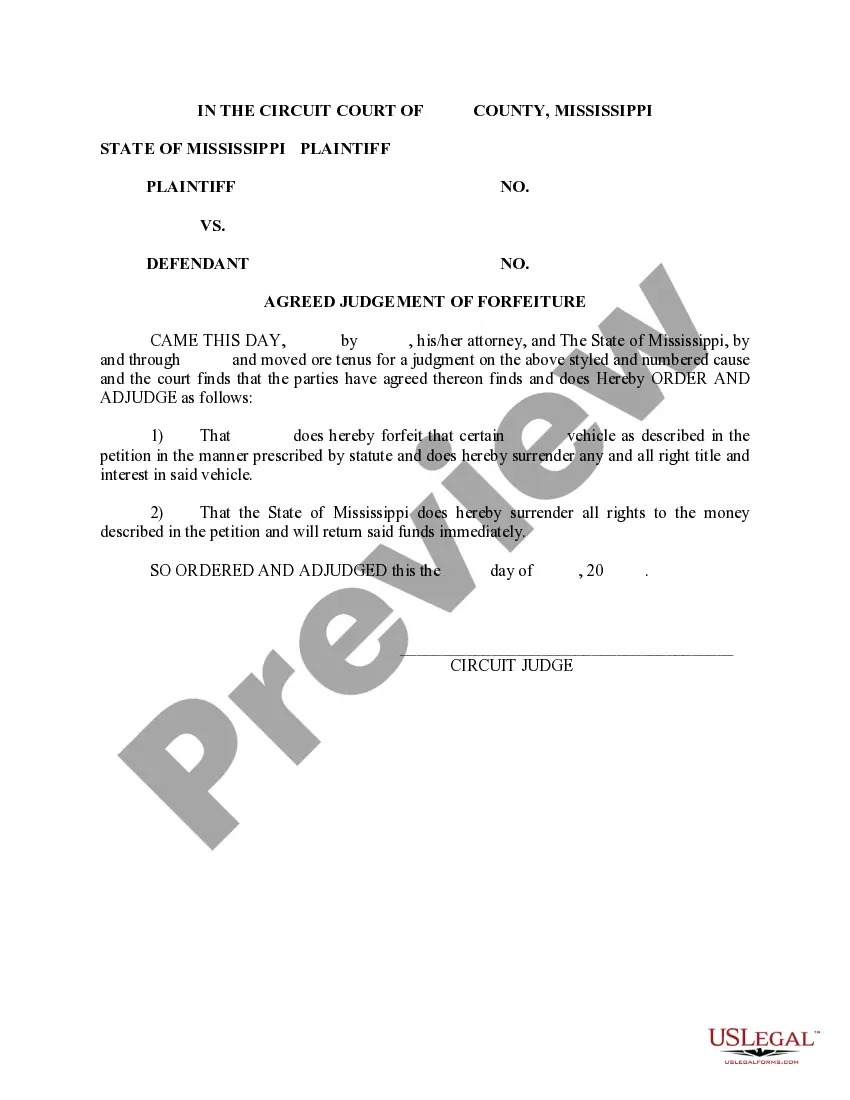
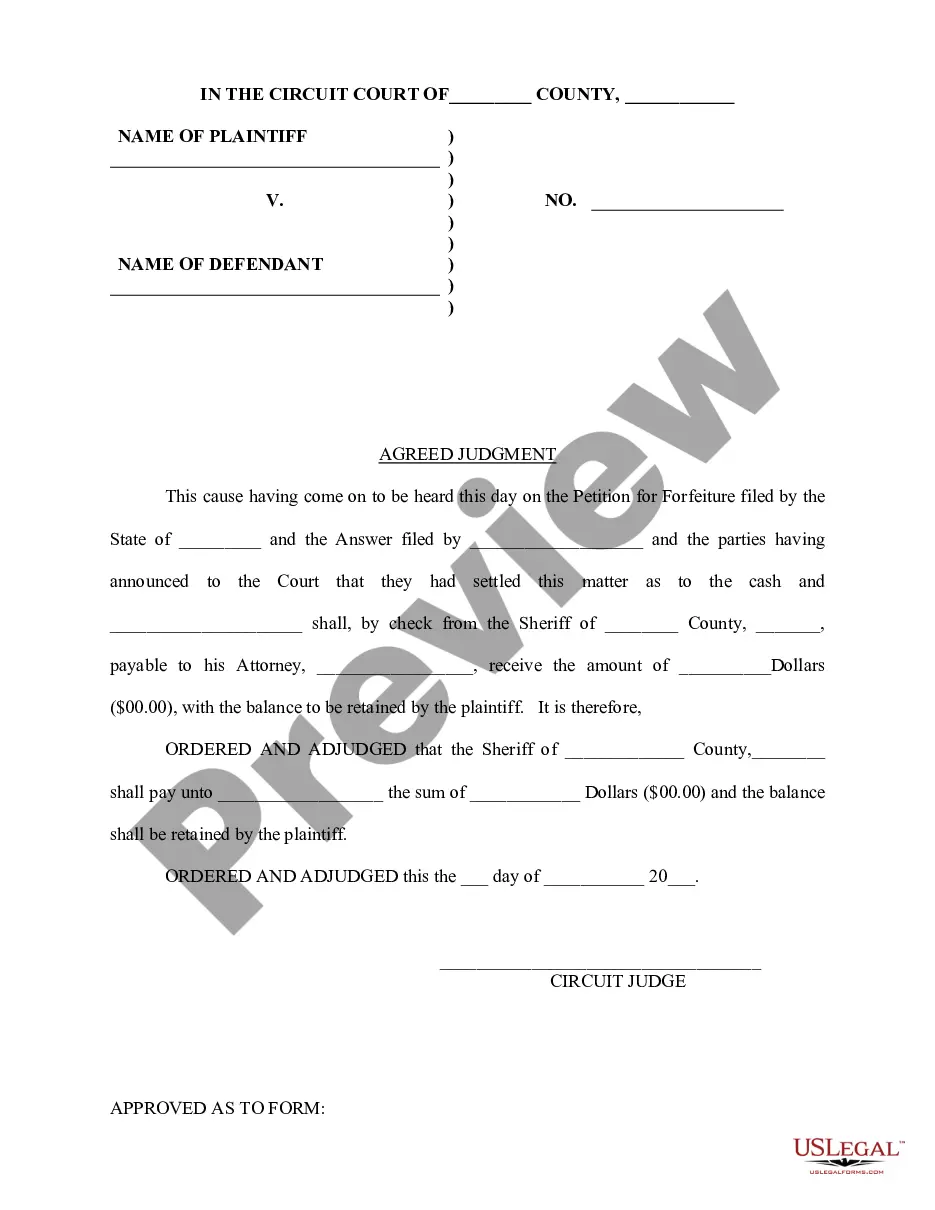
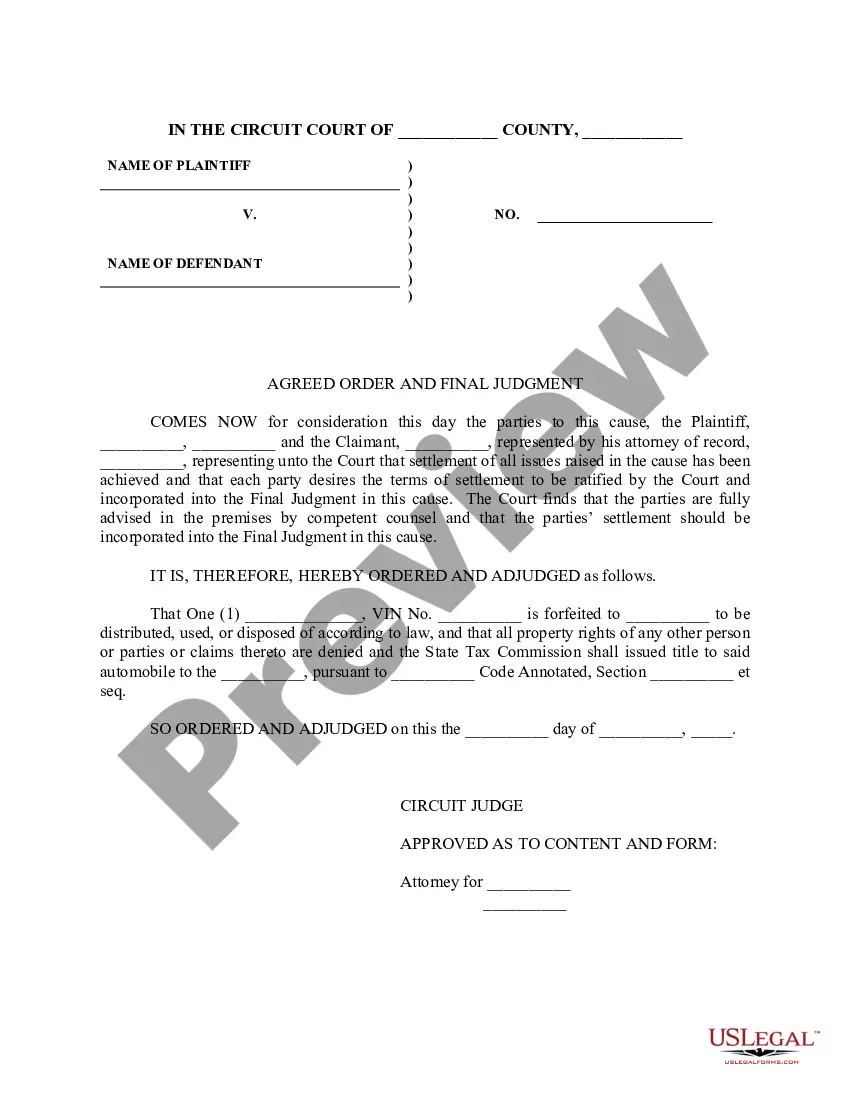
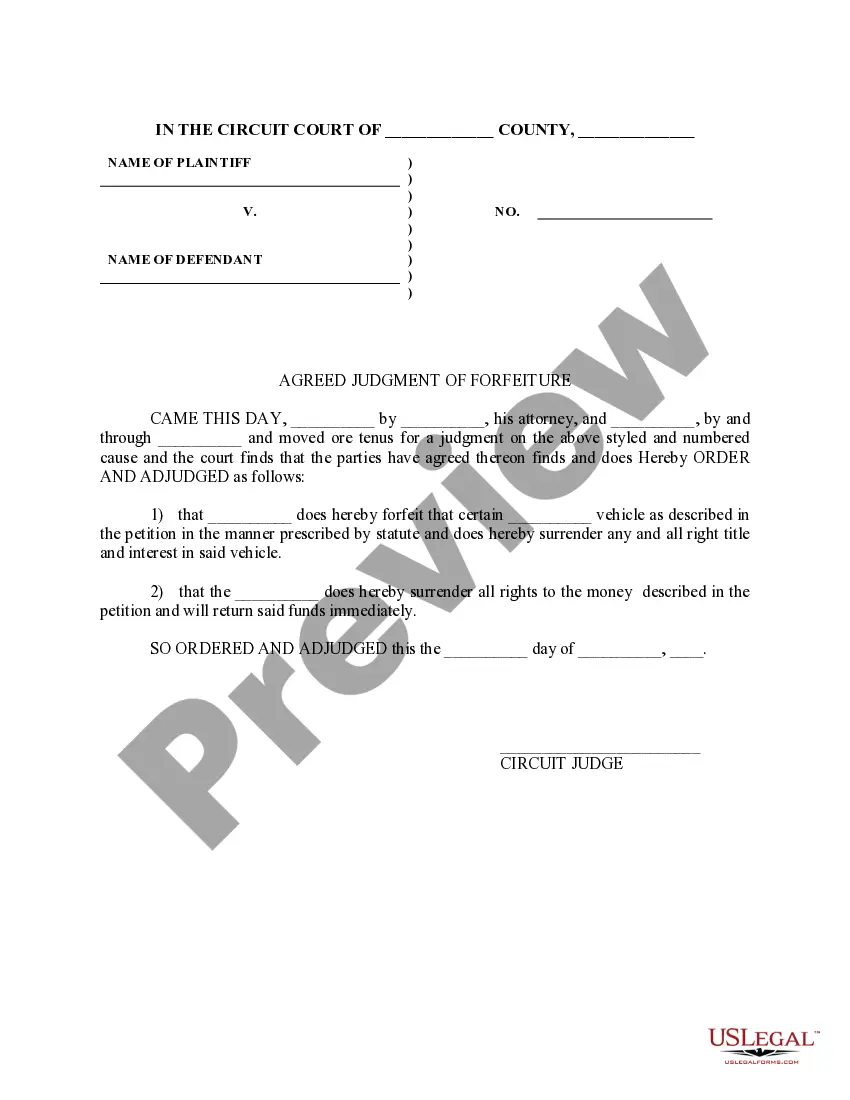
The Agreed Judgment is a legal document used in Mississippi to formalize an agreement between parties in a legal dispute. This form is particularly important in cases involving the forfeiture of property, as it outlines the terms agreed upon by both parties and the court. Unlike other judgments, an Agreed Judgment is based on the consensus of the involved parties, aiming to resolve matters amicably without the need for a trial.
What’s included in this form
- Case information: Includes the names of the plaintiff and defendant along with the cause number.
- Property details: Specifies the asset involved, such as a vehicle and its VIN.
- Agreement terms: Outlines the financial settlement agreed upon by the parties.
- Court order: Documents the authority of the court to enforce the agreement.
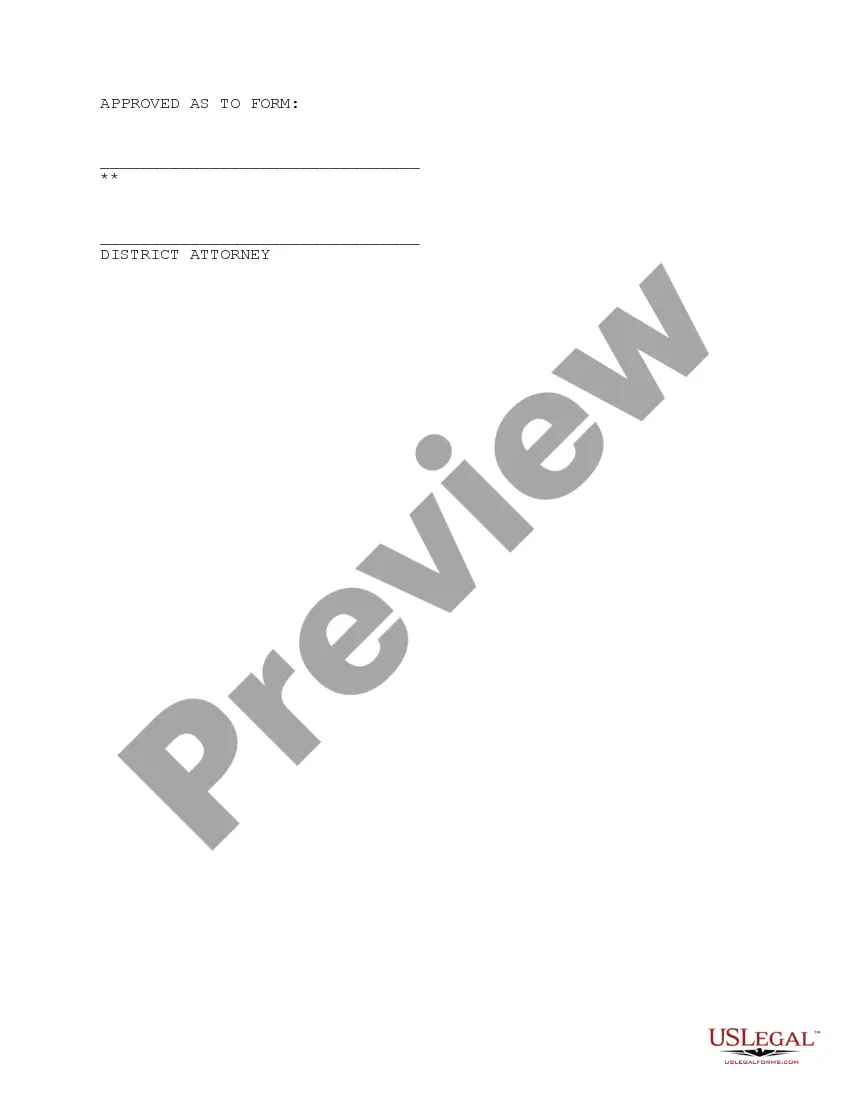
- Signatures: Requires signatures from the judge and the district attorney, confirming the validity of the judgment.
When to use this form
This form should be used when parties have reached a settlement in cases of forfeiture in Mississippi. It is particularly relevant when the State seeks to forfeit property, and the owner contests this in court, leading to an agreed resolution on the distribution of funds or assets.
Who needs this form
- Individuals involved in a forfeiture case in Mississippi.
- Legal representatives mediating settlements on behalf of their clients.
- Parties seeking to formalize an agreement after a dispute over property has arisen.
Steps to complete this form
- Identify the parties involved: Fill in the names of the plaintiff and defendant.
- Insert the case number: Provide the specific cause number related to the case.
- Detail the property: Enter the type of property (e.g., vehicle) and its VIN in the designated areas.
- Specify the settlement amount: Clearly indicate any amounts agreed upon by both parties.
- Obtain signatures: Ensure the form is signed by the appropriate court officials to finalize the judgment.
Notarization requirements for this form
In most cases, this form does not require notarization. However, some jurisdictions or signing circumstances might. US Legal Forms offers online notarization powered by Notarize, accessible 24/7 for a quick, remote process.
Get your form ready online
Our built-in tools help you complete, sign, share, and store your documents in one place.
Make edits, fill in missing information, and update formatting in US Legal Forms—just like you would in MS Word.
Download a copy, print it, send it by email, or mail it via USPS—whatever works best for your next step.
Sign and collect signatures with our SignNow integration. Send to multiple recipients, set reminders, and more. Go Premium to unlock E-Sign.
If this form requires notarization, complete it online through a secure video call—no need to meet a notary in person or wait for an appointment.
We protect your documents and personal data by following strict security and privacy standards.

Make edits, fill in missing information, and update formatting in US Legal Forms—just like you would in MS Word.

Download a copy, print it, send it by email, or mail it via USPS—whatever works best for your next step.

Sign and collect signatures with our SignNow integration. Send to multiple recipients, set reminders, and more. Go Premium to unlock E-Sign.

If this form requires notarization, complete it online through a secure video call—no need to meet a notary in person or wait for an appointment.

We protect your documents and personal data by following strict security and privacy standards.
Common mistakes to avoid
- Failing to include all required parties in the document.
- Leaving the case number blank or incorrectly filled.
- Not obtaining all necessary signatures before submission.
- Inaccurate property details, such as VIN or description.
Why complete this form online
- Convenience of downloading and printing from home.
- Easy access to the latest legal templates, drafted by licensed attorneys.
- Time-saving by quickly completing forms without visiting a lawyer's office.
Legal use & context
- An Agreed Judgment is legally binding once approved by a judge.
- Failure to comply with the terms in the judgment can lead to further legal action.
- It serves to clear up disputes without the need for a full trial, promoting efficiency in the legal process.
Quick recap
- An Agreed Judgment formalizes settlement agreements in forfeiture cases.
- It is essential to complete all sections accurately to ensure enforcement.
- Parties should consult with legal representatives when needed to avoid common mistakes.
Looking for another form?


Form popularity
FAQ
You cannot be coerced to settle by threat of sanctions. Courts recognize that judges cannot coerce parties to settle by threatening sanctions for refusing to settle.
An agreed judgment is a judgment which is typically entered after a memorandum of understanding, which is a written agreement shared with counsel who then incorporate it into an agreed order signed by a magistrate, the parties, and their attorneys, if applicable.
After the judge, or a jury, grants you your award or judgment, you must still pursue or execute on the judgment. Lawsuits typically resolve with one of two different outcomes you receive an order from the court requiring the party to do something (or refrain from doing something) or you receive a monetary award.
An Agreed Judgment is usually a settlement agreement for an extended payment plan. Payment plans are usually 12 to 36 months. Sometimes an agreed judgment is the only option if the creditor has produced enough evidence to likely win at trial and the consumer can only do a settlement with a long term payment plan.
The last decision from a court that resolves all issues in dispute and settles the parties' rights with respect to those issues. A final judgment leaves nothing except decisions on how to enforce the judgment, whether to award costs, and whether to file an appeal.
A settlement offer is never (usually never) an admission of guilt. In fact, a good attorney will insist on language in the settlement contract that specifies that the settlement does not imply guilt. A settlement is just one party's way of saying, "it's...
Whenever a civil lawsuit is filed, the plaintiff wins the case by obtaining a judgment against the Defendant. A judgment is the final determination by a court of proper jurisdiction of who wins the case.An agreed judgment, like a regular judgment, resolves the lawsuit.
A creditor may agree to settle the judgment for less than you owe. This typically happens when the creditor thinks you might file bankruptcy and wipe out the debt that way. Settling can be a win-win. The creditor gets at least partial payment for the debt although it usually will require it as a lump sum.
Generally, it should take a week or two to get the settlement agreement to your attorney from the other side. When everyone has signed, your settlement must be approved by a Workers' Compensation judge, which can take up to two weeks. Once it is approved, an insurance company has up to 30 days to mail your check.
What Happens After a Judgment Is Entered Against You? The court enters a judgment against you if your creditor wins their claim or you fail to show up to court. You should receive a notice of the judgment entry in the mail. The judgment creditor can then use that court judgment to try to collect money from you.