Credit and Term Loan Agreement
Overview of this form
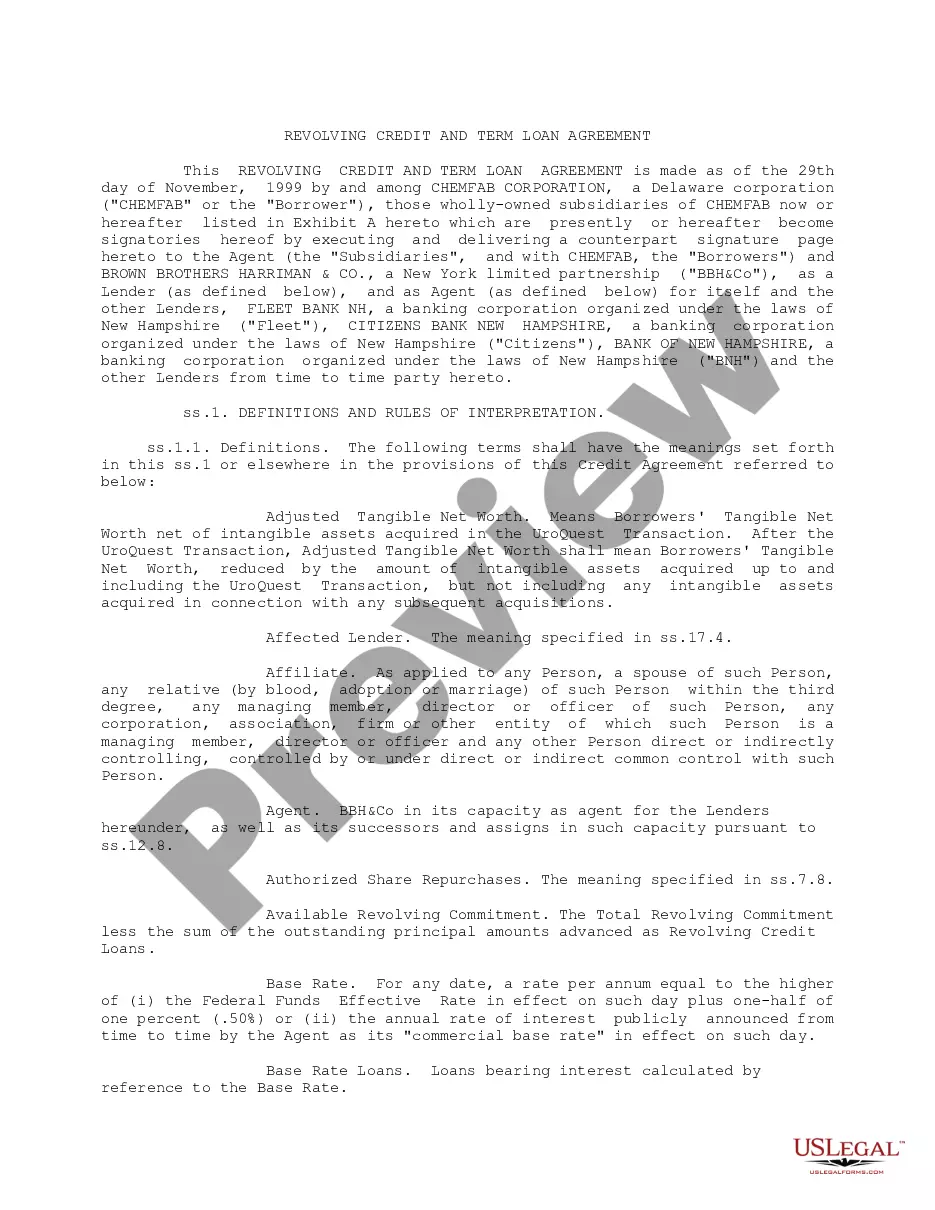
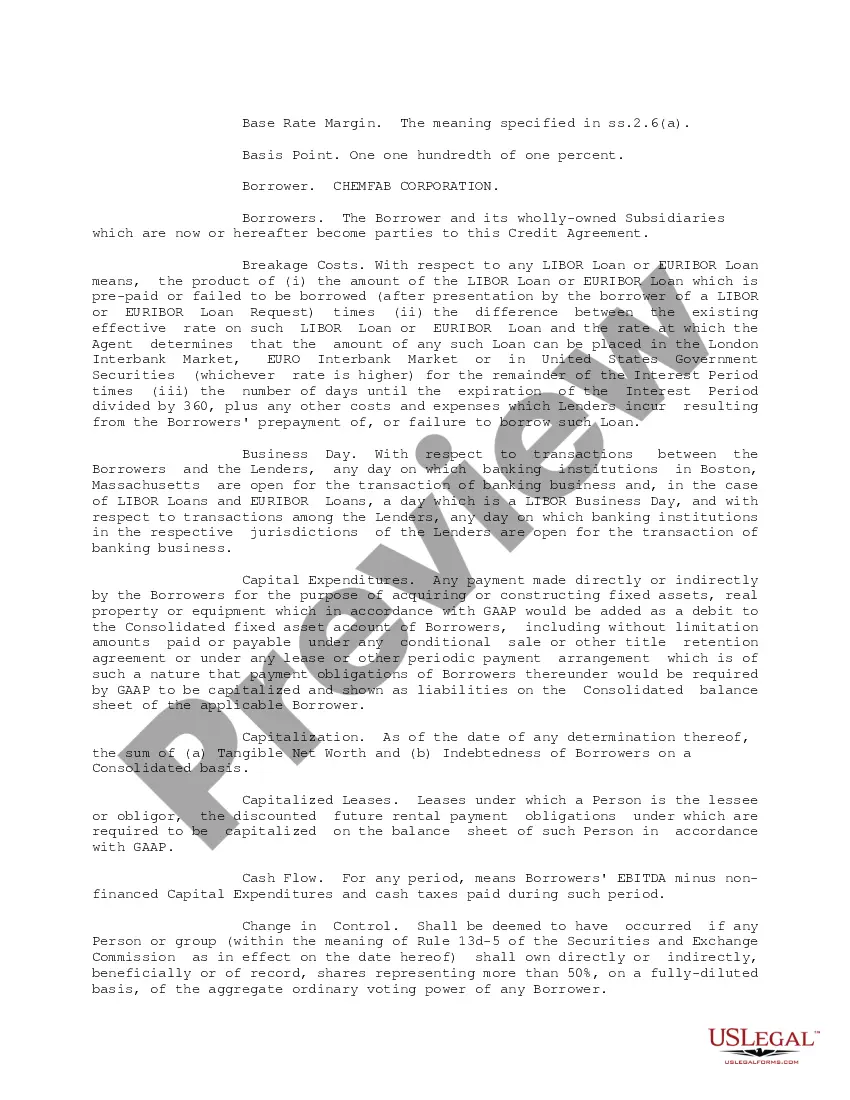
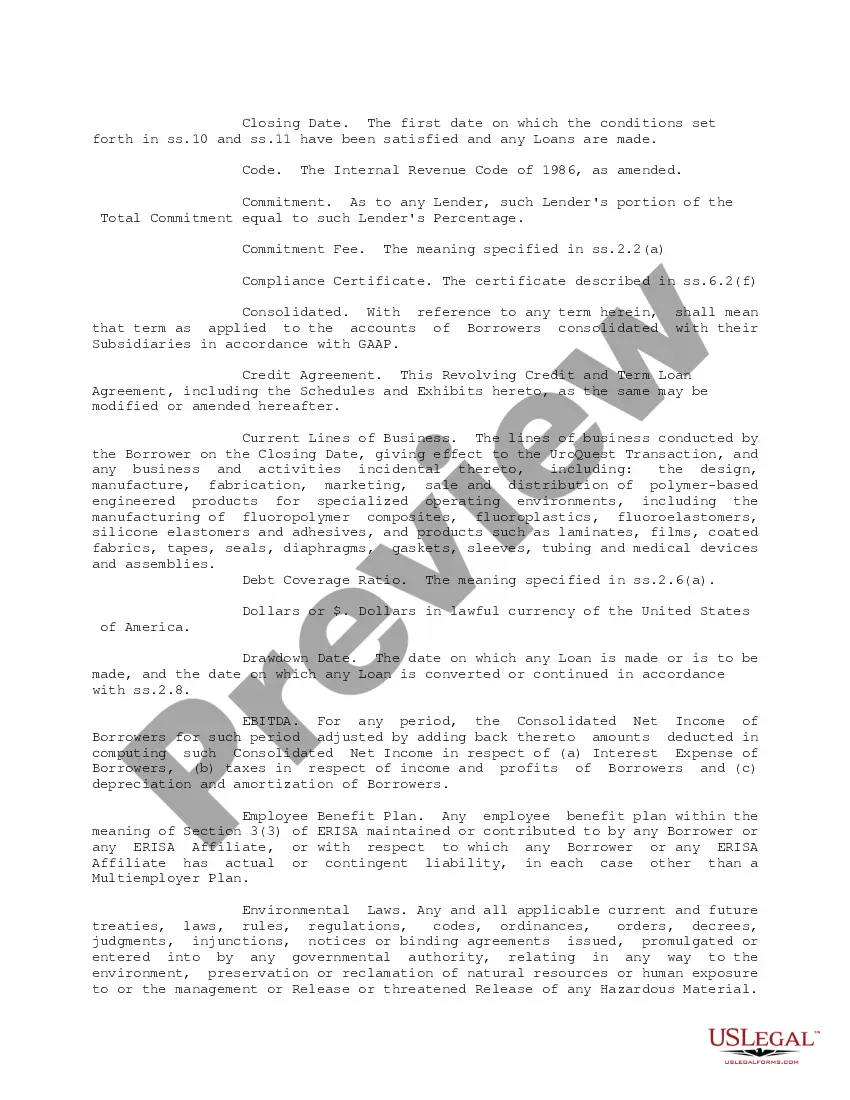
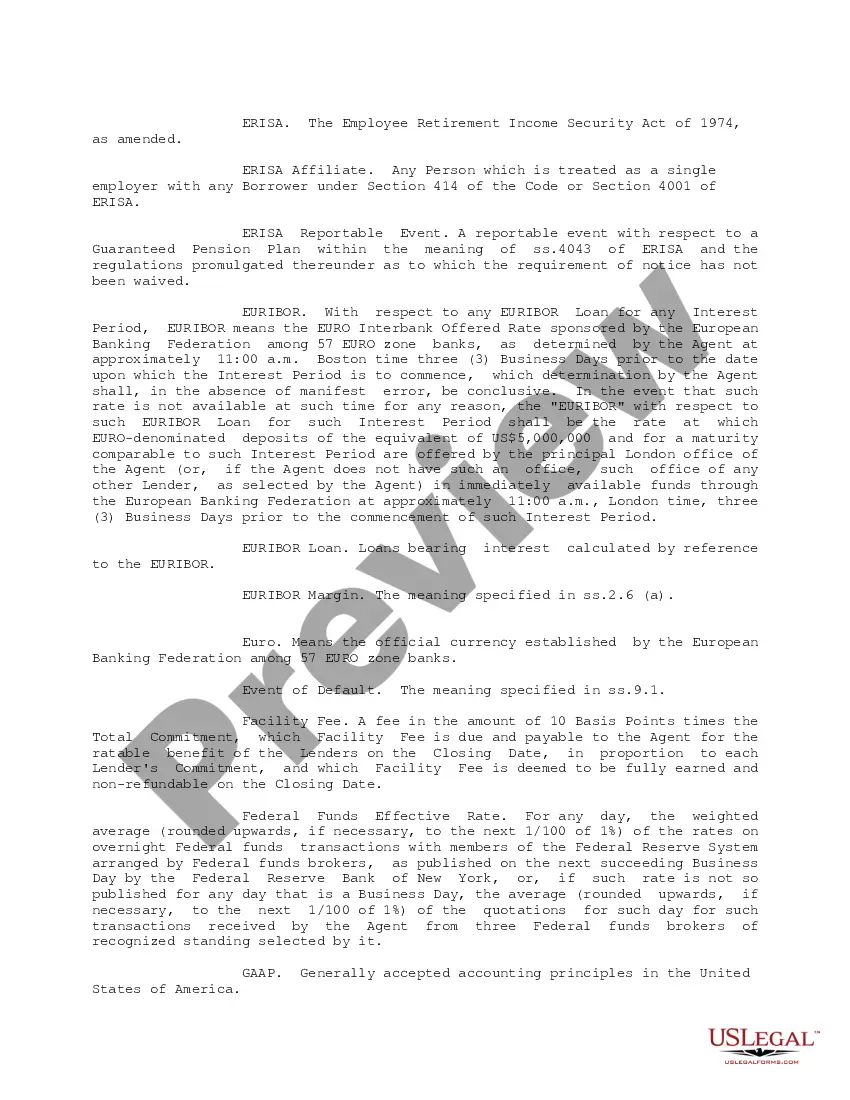
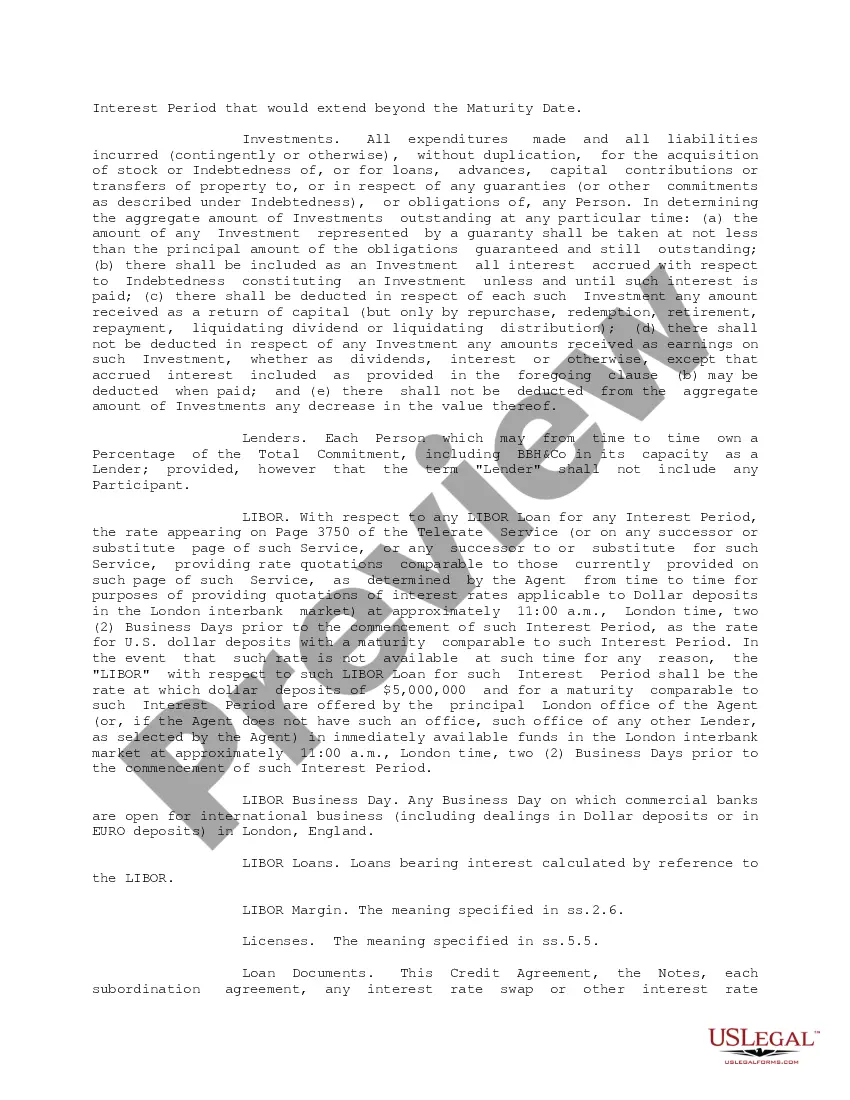
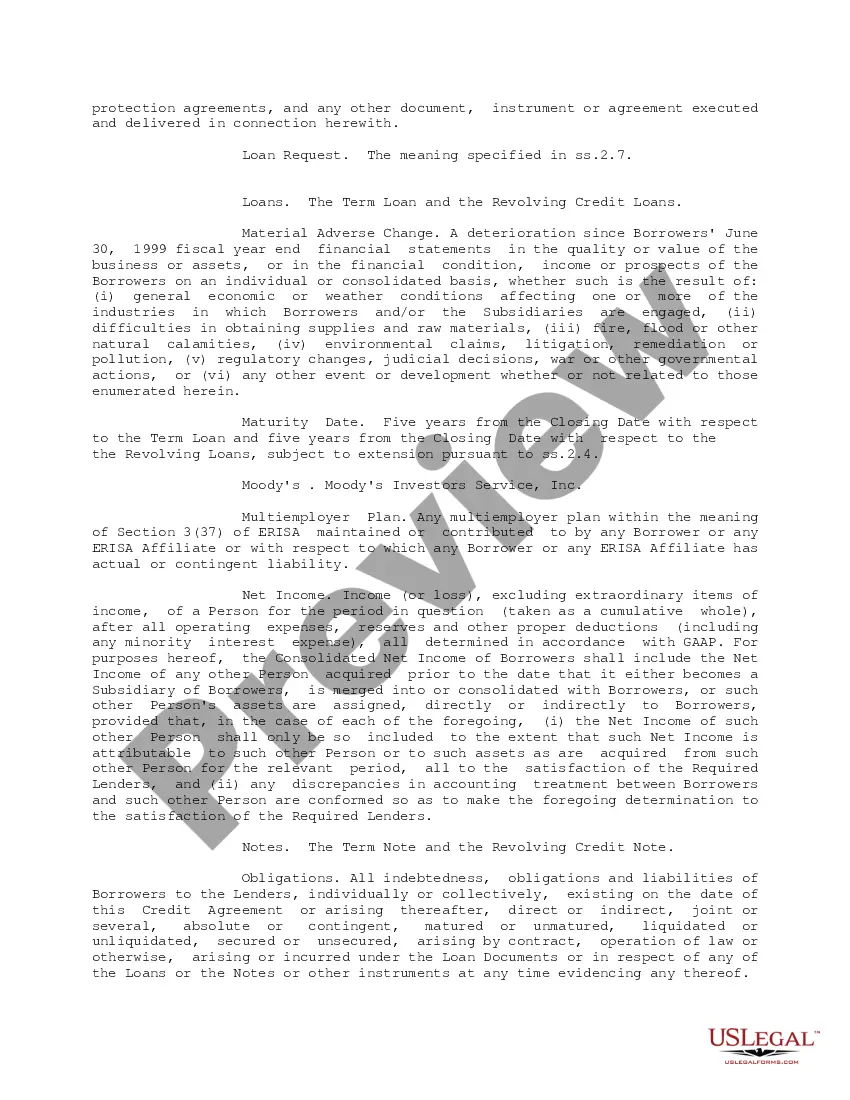
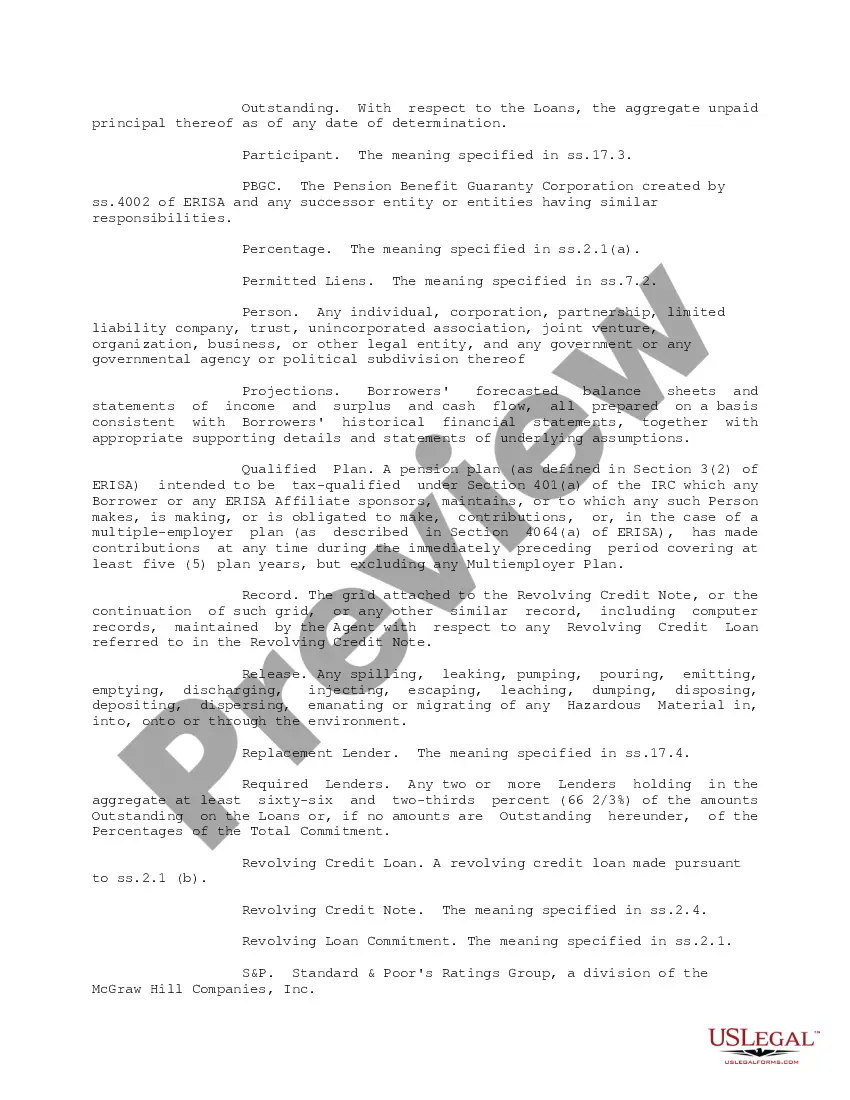
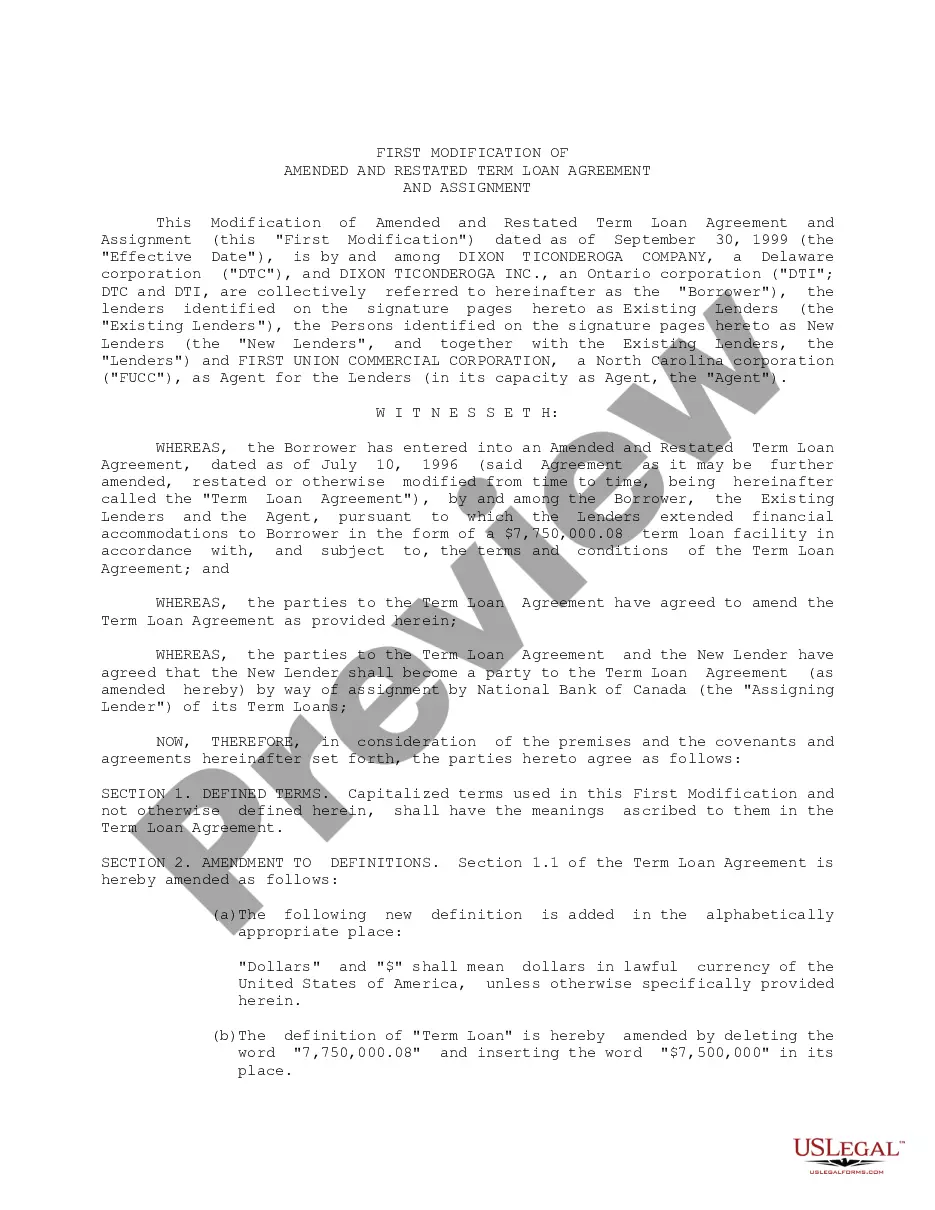
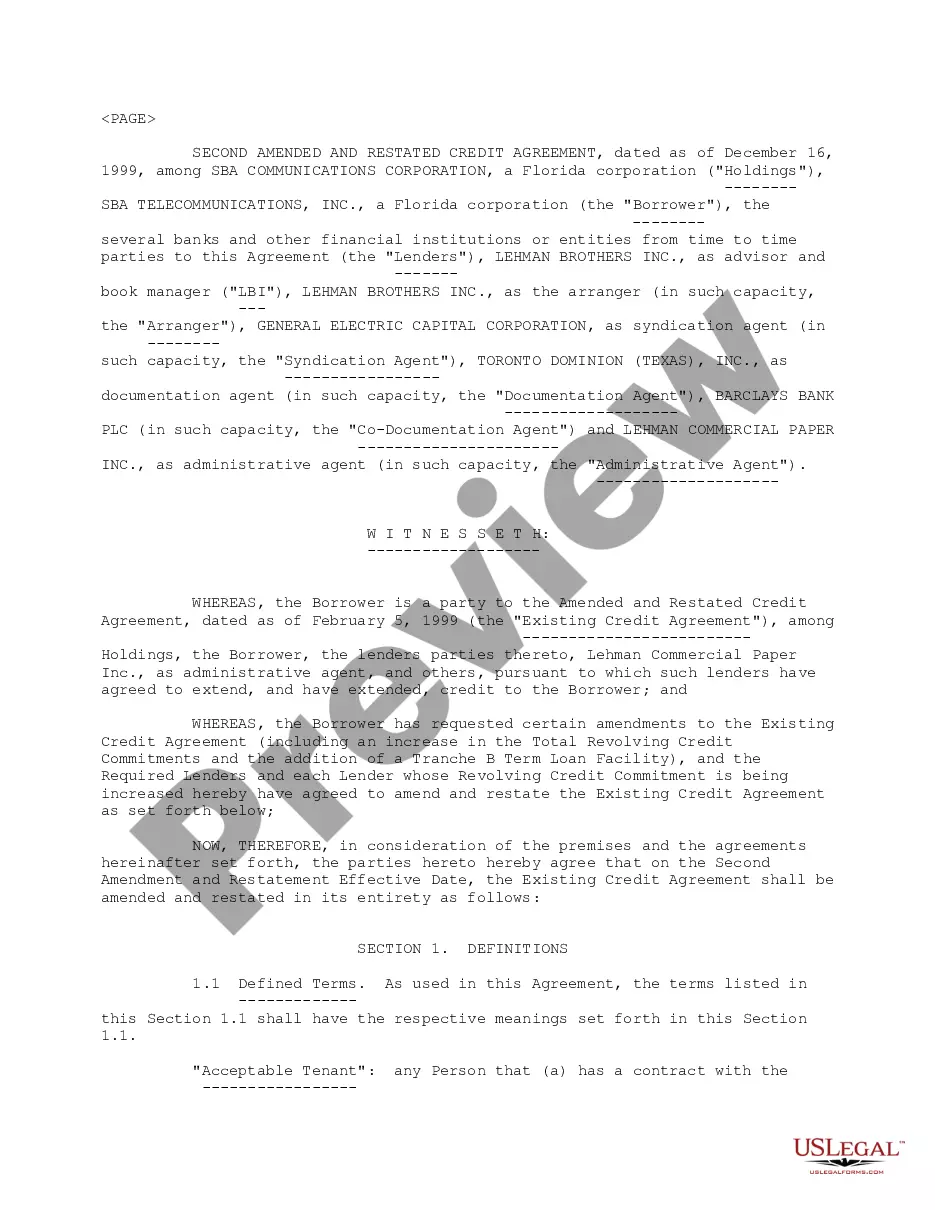
The Credit and Term Loan Agreement is a legal document that outlines the terms and conditions under which borrowers, specifically Chemfab Corporation and its subsidiaries, can receive loans from lenders such as Brown Brothers Harriman Co. This form is essential for establishing a formal credit relationship, detailing obligations, and ensuring clarity in financial transactions. Unlike other loan agreements, this document specifically addresses both revolving credit and term loans, making it suitable for varied borrowing needs.
Key components of this form
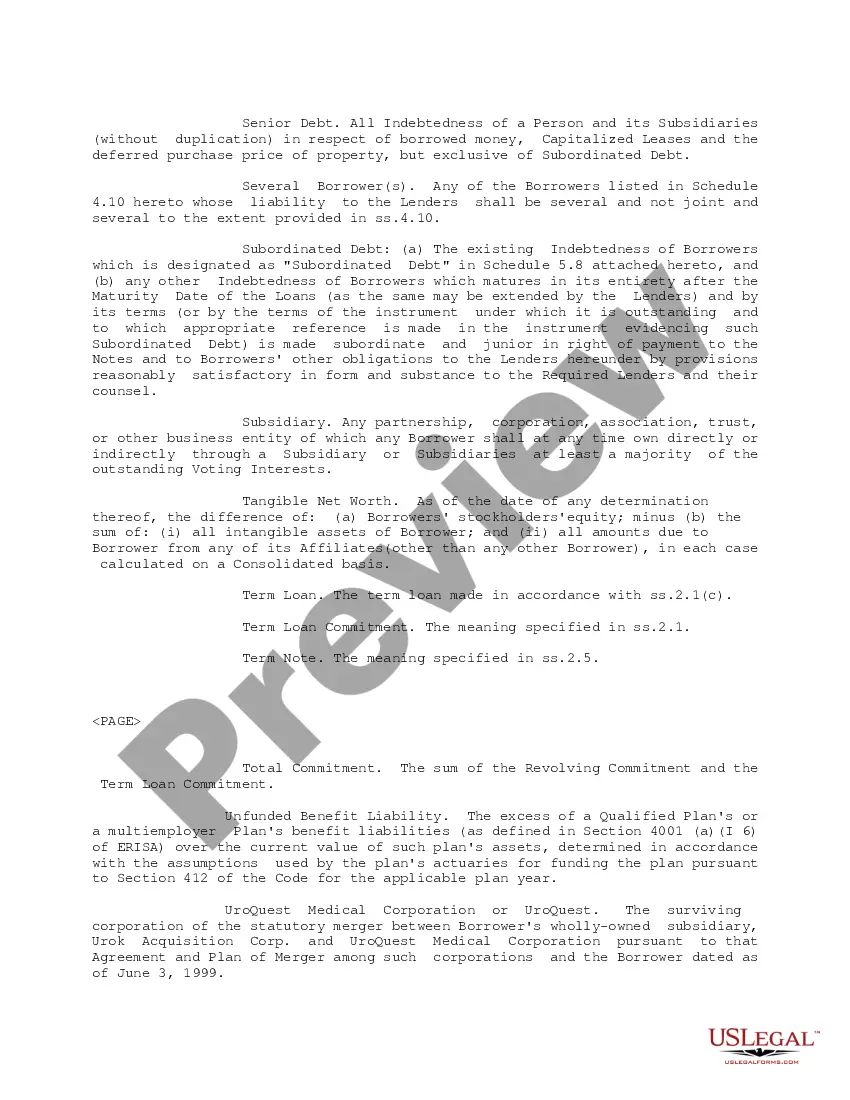
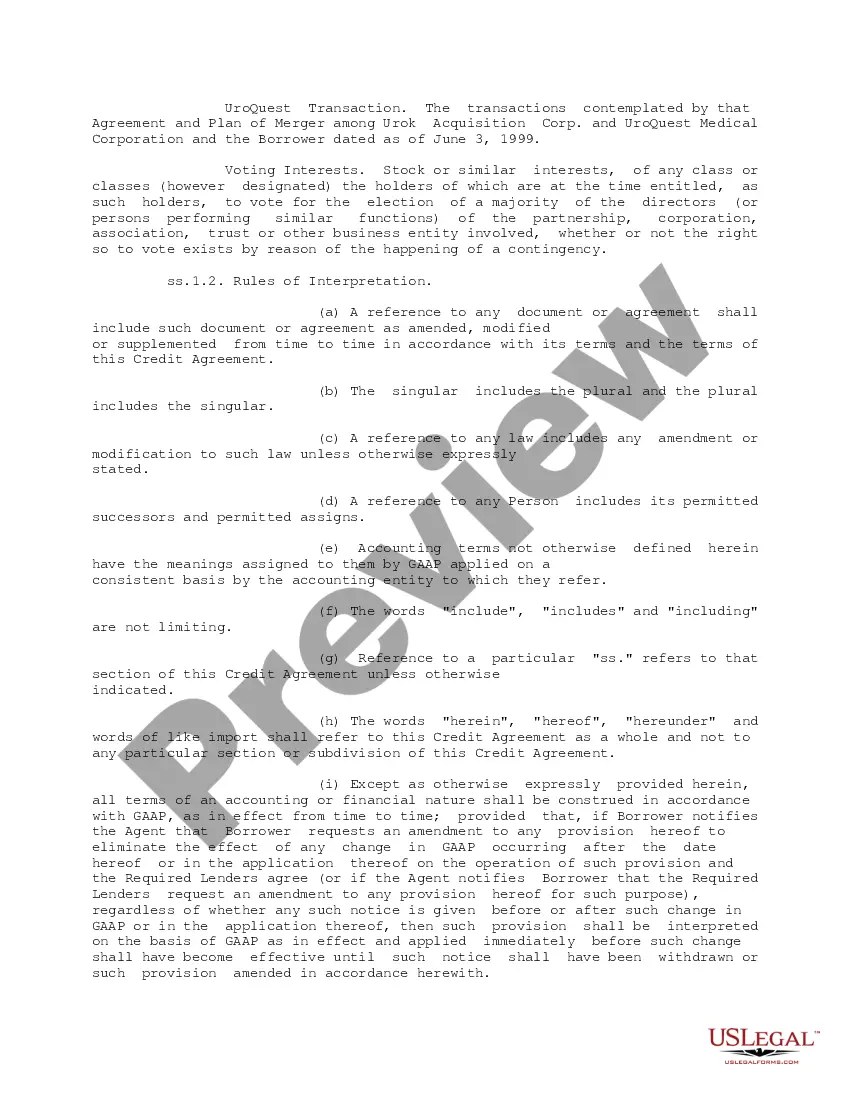
- Definitions: Details key terms used throughout the agreement, including definitions of borrowers, lenders, and commitment fees.
- Credit Facilities: Specifies the amounts and terms of revolving credit and term loans available to the borrower.
- Interest Rates: Outlines how interest on loans is calculated based on terms like LIBOR and Base Rate.
- Events of Default: Lists the circumstances under which the lender can call the loan due.
- Legal Liabilities: Details the responsibilities of borrowers and lenders, including indemnities and representations.
- State Law Compliance: Indicates the governing law for the agreement and the state jurisdictions in which it applies.


Common use cases
This form should be used when a corporation or business entity requires financing through loans from one or more lenders. Situations may include expansion projects, acquisition financing, or restructuring existing debt. The agreement provides the necessary framework to ensure all parties understand their rights and responsibilities regarding the loans provided.
Who should use this form
Who should use this form:
- Corporations seeking to establish a loan agreement with financial institutions.
- Small businesses looking for revolving credit options and term loans to support their operations.
- Finance professionals and legal advisors drafting loan agreements for their clients.
- Any entity that plans to engage in significant borrowing from multiple lenders.
Completing this form step by step
How to complete this form:
- Identify the parties involved: include the names and details of the borrower and the lending institutions.
- Specify the amount and type of credit: outline specifics of the revolving credit and term loan facilities.
- Detail the interest rate structure: indicate whether the loan will have a fixed or variable interest rate, and how it will be calculated.
- Set repayment terms: stipulate the timeline for repayments and any fees associated with late payments or prepayments.
- Include necessary signatures: ensure all relevant parties sign and date the document to validate the agreement.
Notarization guidance
This form does not typically require notarization unless specified by local law. However, having it notarized can add an extra layer of legal validation. US Legal Forms offers integrated online notarization, available 24/7 via secure video call, ensuring convenience without the need for physical travel.
Get your form ready online
Our built-in tools help you complete, sign, share, and store your documents in one place.
Make edits, fill in missing information, and update formatting in US Legal Forms—just like you would in MS Word.
Download a copy, print it, send it by email, or mail it via USPS—whatever works best for your next step.
Sign and collect signatures with our SignNow integration. Send to multiple recipients, set reminders, and more. Go Premium to unlock E-Sign.
If this form requires notarization, complete it online through a secure video call—no need to meet a notary in person or wait for an appointment.
We protect your documents and personal data by following strict security and privacy standards.

Make edits, fill in missing information, and update formatting in US Legal Forms—just like you would in MS Word.

Download a copy, print it, send it by email, or mail it via USPS—whatever works best for your next step.

Sign and collect signatures with our SignNow integration. Send to multiple recipients, set reminders, and more. Go Premium to unlock E-Sign.

If this form requires notarization, complete it online through a secure video call—no need to meet a notary in person or wait for an appointment.

We protect your documents and personal data by following strict security and privacy standards.
Mistakes to watch out for
- Failing to clearly specify the repayment terms, leading to confusion for both parties.
- Not including multiple dates for interest payment, which can cause missed deadlines.
- Omitting necessary legal definitions, which can lead to misunderstandings of key terms.
- Inadequately outlining conditions of default, which could cause issues in the future.
- Not ensuring all parties have signed the agreement, which makes it unenforceable.
Advantages of online completion
- Convenient online access to the agreement ensures that users can easily utilize it without extensive legal consultations.
- The editable format allows customization to meet specific financial and legal needs.
- Reliability of the document, as it is drafted by licensed attorneys familiar with the regulatory environment.
- Provides clarity and assurance for both borrowers and lenders regarding their obligations and rights.
- Speed in obtaining the form online allows for quicker financial arrangements, supporting timely business operations.
What to keep in mind
- The Credit and Term Loan Agreement is essential for managing corporate borrowing.
- Understanding the key components helps prevent common mistakes.
- Proper completion and adherence to state requirements ensure legal enforceability.
Looking for another form?

Form popularity
FAQ
D) Example of Term Loan A term loan is a type of advance that comes with a fixed duration for repayment, a fixed amount as loan, a repayment schedule as well as a pre-determined interest rate. A borrower can opt for a fixed or floating rate of interest for repayment of the advance.
For loans by a commercial lender, the lender will provide the agreement. But for loans between friends or relatives, you will need to create your own loan agreement.
A credit agreement has two main characteristics: Firstly, there must be some deferral of repayment, or a prepayment and secondly, the credit provider must impose a fee, charge or interest with respect to deferred payments or the credit provider must give a discount with respect to prepayment. a credit guarantee.
Also known as a loan agreement. The main transaction document for a loan financing between one or more lenders and a borrower.
Key Takeaways. A term loan is a loan issued by a bank for a fixed amount and fixed repayment schedule with either a fixed or floating interest rate. Companies often use a term loan's proceeds to purchase fixed assets, such as equipment or a new building for its production process.
Loan agreements are an important part of borrowing money; they protect both the borrower and the lender. A loan agreement spells out the details of the transaction, including the loan amount, the interest rate, and the terms.
Term Loan A This layer of debt is typically amortized evenly over 5 to 7 years. Term Loan B This layer of debt usually involves nominal amortization (repayment) over 5 to 8 years, with a large bullet payment in the last year.Depending on the credit terms, bank debt may or may not be repaid early without penalty.
Term out is the transfer of debt internallycapitalizing short-term debt to long-term debt on its balance sheet.The ability of a company or lending institution to "term out" a loan is an important strategy for debt management and normally occurs in two situationswith facility loans or evergreen loans.
A credit agreement has two main characteristics: Firstly, there must be some deferral of repayment, or a prepayment and secondly, the credit provider must impose a fee, charge or interest with respect to deferred payments or the credit provider must give a discount with respect to prepayment. a credit guarantee.