Proxy Statement of Electronic Associates, Inc. with appendix
What is this form?
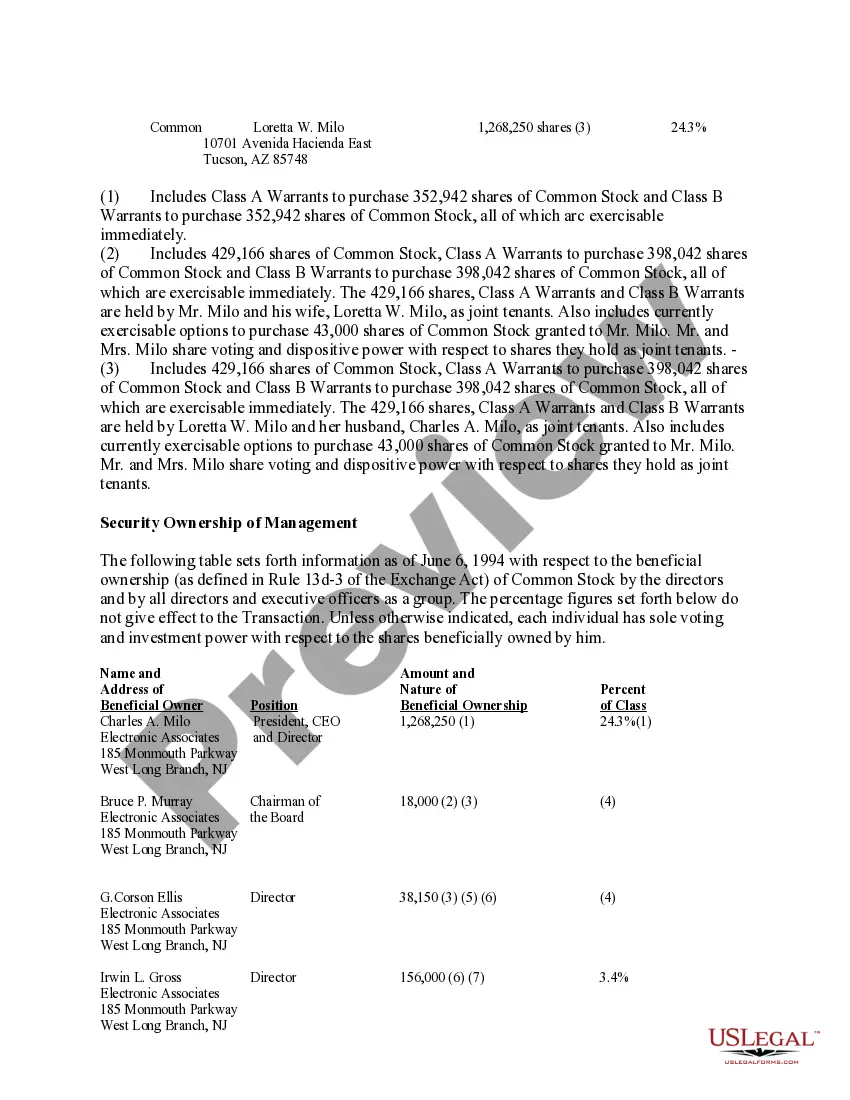
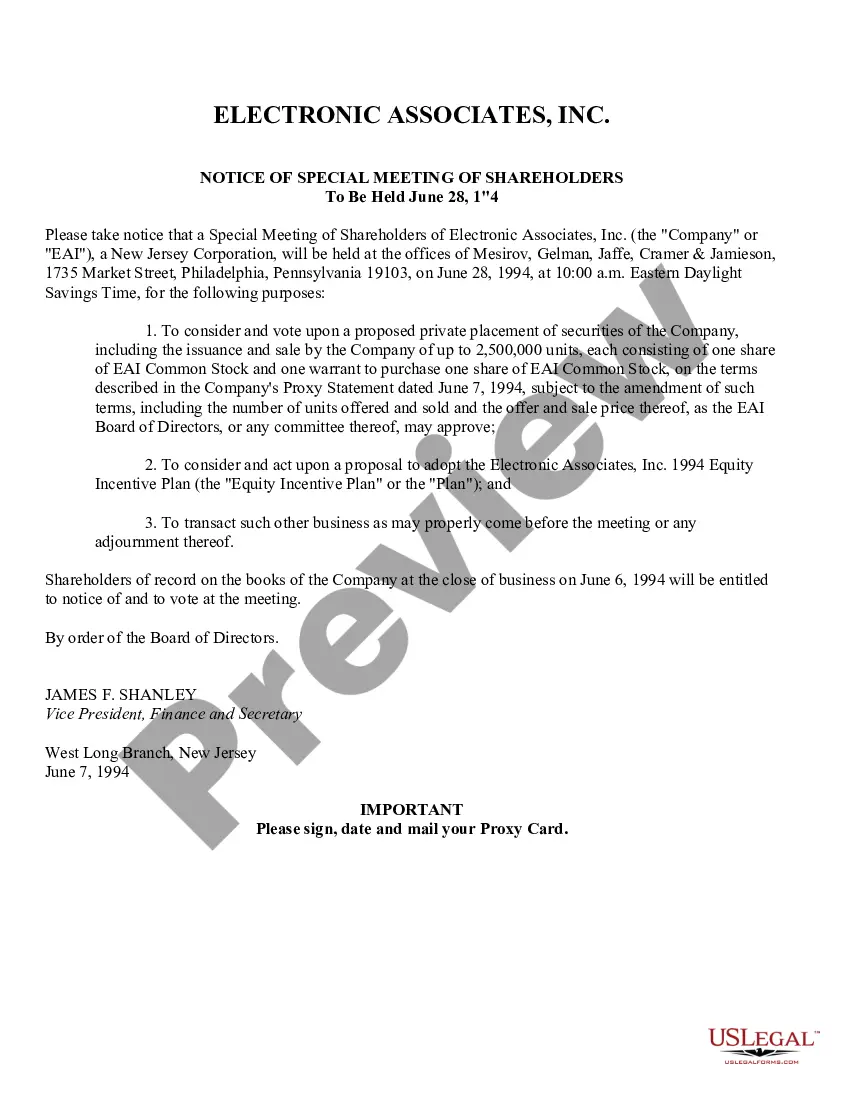
The Proxy Statement of Electronic Associates, Inc. is a legal document that facilitates the solicitation of proxies from shareholders for a special meeting. This form outlines the agenda for the meeting, including voting on significant corporate actions such as security placements and equity incentivization plans. It is essential for informing shareholders about their rights and the voting process, particularly regarding crucial decisions that could impact their investment.
Form components explained
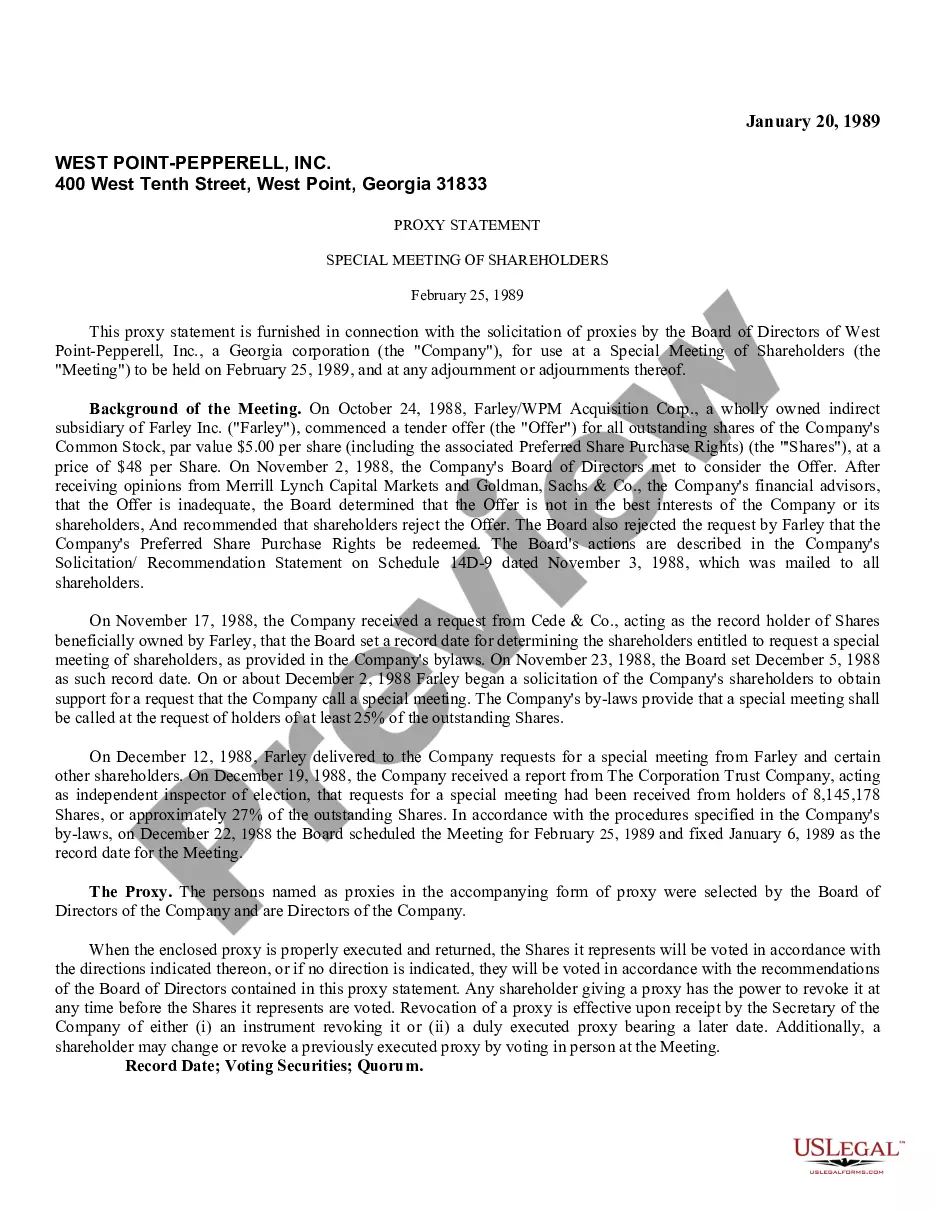
- General information about the meeting and its agenda
- Instructions for granting proxies and voting rights
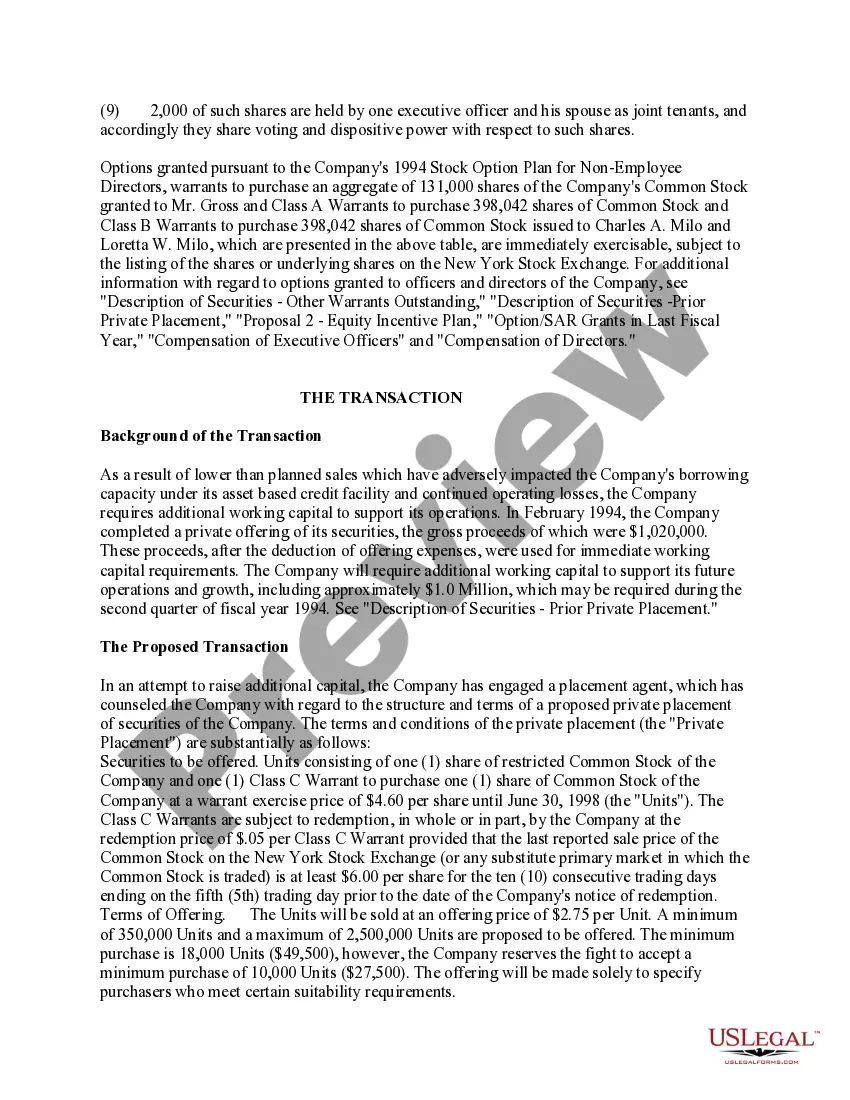
- Details about proposed transactions and equity incentive plans
- Information on the tabulation of votes and quorum requirements
- Disclosure of shareholders with significant ownership
- Management's recommendation on proposals to be voted on










When this form is needed
This form should be used when a company needs to solicit votes from shareholders for important decisions, such as issuing new securities or adopting a new equity incentive plan. It is particularly useful during a special meeting of shareholders where corporate governance issues need to be addressed publicly.
Who needs this form
- Corporate officers seeking to inform shareholders about significant corporate actions.
- Shareholders looking to understand voting processes and their rights.
- Legal professionals assisting corporations in governance matters.
- Investment advisors advising clients on corporate governance issues.
Instructions for completing this form
- Read through the entire Proxy Statement to understand the contents and significance of each section.
- Complete the proxy form section by signing and dating it.
- Specify your voting preferences for each agenda item listed, such as approving the proposed transactions.
- Ensure to submit the completed proxy form according to the instructions provided within the document.
- Keep a copy of the completed form for your records.
Is notarization required?
This form does not typically require notarization unless specified by local law. It is advisable to check local regulations for any specific requirements regarding proxy documents.
Get your form ready online
Our built-in tools help you complete, sign, share, and store your documents in one place.
Make edits, fill in missing information, and update formatting in US Legal Forms—just like you would in MS Word.
Download a copy, print it, send it by email, or mail it via USPS—whatever works best for your next step.
Sign and collect signatures with our SignNow integration. Send to multiple recipients, set reminders, and more. Go Premium to unlock E-Sign.
If this form requires notarization, complete it online through a secure video call—no need to meet a notary in person or wait for an appointment.
We protect your documents and personal data by following strict security and privacy standards.

Make edits, fill in missing information, and update formatting in US Legal Forms—just like you would in MS Word.

Download a copy, print it, send it by email, or mail it via USPS—whatever works best for your next step.

Sign and collect signatures with our SignNow integration. Send to multiple recipients, set reminders, and more. Go Premium to unlock E-Sign.

If this form requires notarization, complete it online through a secure video call—no need to meet a notary in person or wait for an appointment.

We protect your documents and personal data by following strict security and privacy standards.
Common mistakes to avoid
- Failing to sign or date the proxy form, which can invalidate it.
- Not specifying voting preferences clearly, leading to a default vote.
- Missing deadlines for submitting the proxy can impact your eligibility to vote.
Advantages of online completion
- Convenience of completing the form from any location at any time.
- Easy access to templates and guidelines to ensure legal compliance.
- Improved accuracy through automated checks and prompts.
Legal use & context
- Proxy statements are governed by federal securities laws and regulations.
- Shareholder votes based on the information in these statements are legally binding.
Summary of main points
- The Proxy Statement is crucial for understanding shareholder voting rights.
- Reviewing the proposed transactions will help inform better voting decisions.
- Timely submission of the proxy form is essential for it to be counted.
Looking for another form?





Form popularity
FAQ
Physical exam to assess your pain. Your doctor may apply gentle pressure on the painful area. Blood test. This allows your doctor to check for a high white blood cell count, which may indicate an infection. Urine test. Imaging tests.
It suggests that the appendix acts as a safe house for good bacteria. After intense diarrhea, the appendix repopulates and reboots the intestine with good bacteria before harmful bacteria finds a home there. Humans aren't the only creatures with an appendix; about 533 mammal species live with an appendix.
Why do we have an appendix? The entire digestive tract helps with our immune system, but some scientists and doctors think the appendix may be a place for our body to store certain healthy types of gut bacteria that otherwise could be altered or changed during an intestinal illness or with overuse of antibiotics.
The appendix is prone to painful inflammation, known as appendicitis, and sometimes has to be surgically removed. It is usually considered a pointless, vestigial organ, but may actually serve as a reservoir for beneficial gut bacteria, according to researchers at Midwestern University in the US state of Arizona.
The most telltale symptom of appendicitis is a sudden, sharp pain that starts on the right side of your lower abdomen. It may also start near your belly button and then move lower to your right. The pain may feel like a cramp at first, and it may get worse when you cough, sneeze, or move.
Most often, health care professionals suspect the diagnosis of appendicitis based on your symptoms, your medical history, and a physical exam. A doctor can confirm the diagnosis with an ultrasound, x-ray, or MRI exam.
Fever. nausea and vomiting. abdominal pain that may start in the upper or middle abdomen but usually settles in the lower abdomen on the right side. abdominal pain that increases with walking, standing, jumping, coughing, or sneezing.
Most often, health care professionals suspect the diagnosis of appendicitis based on your symptoms, your medical history, and a physical exam. A doctor can confirm the diagnosis with an ultrasound, x-ray, or MRI exam.