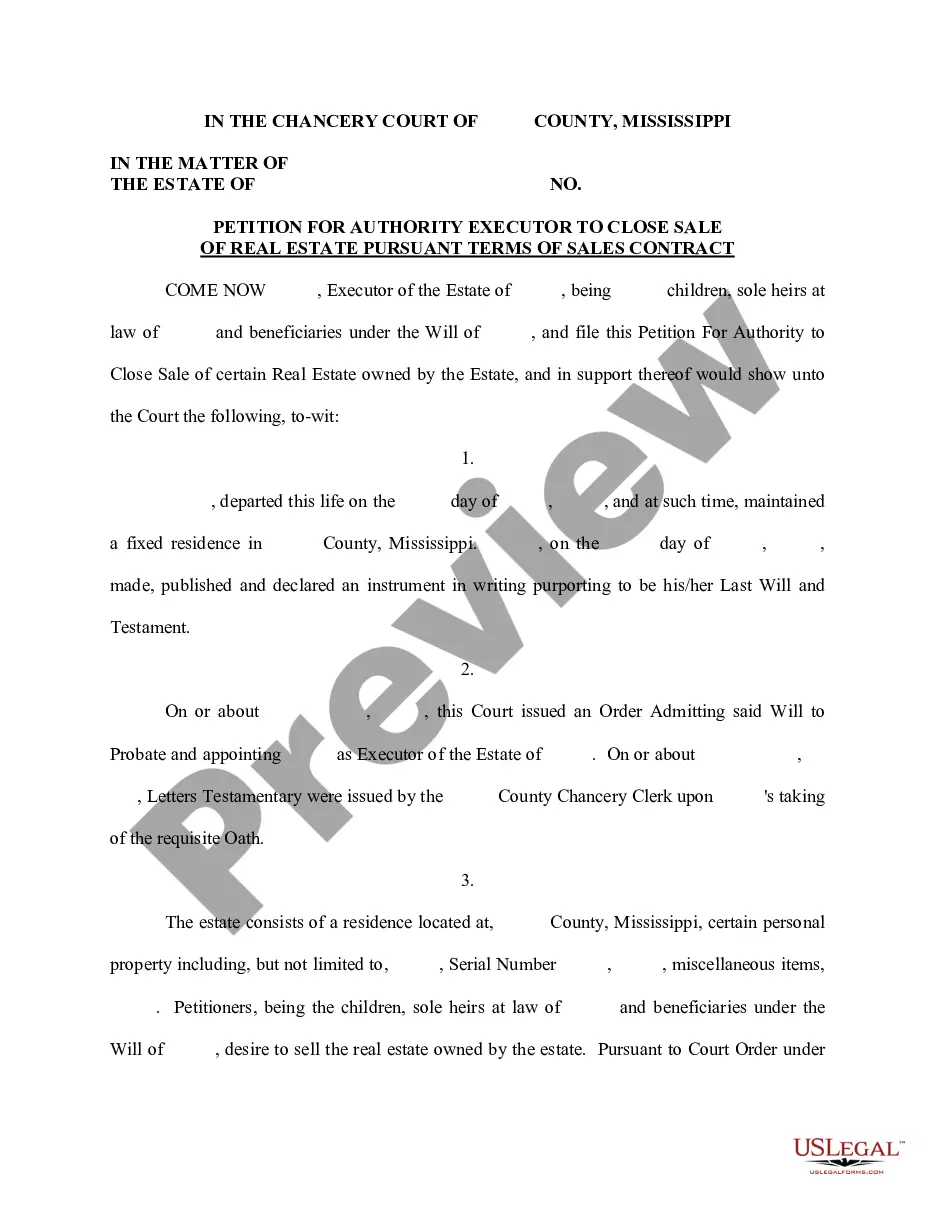
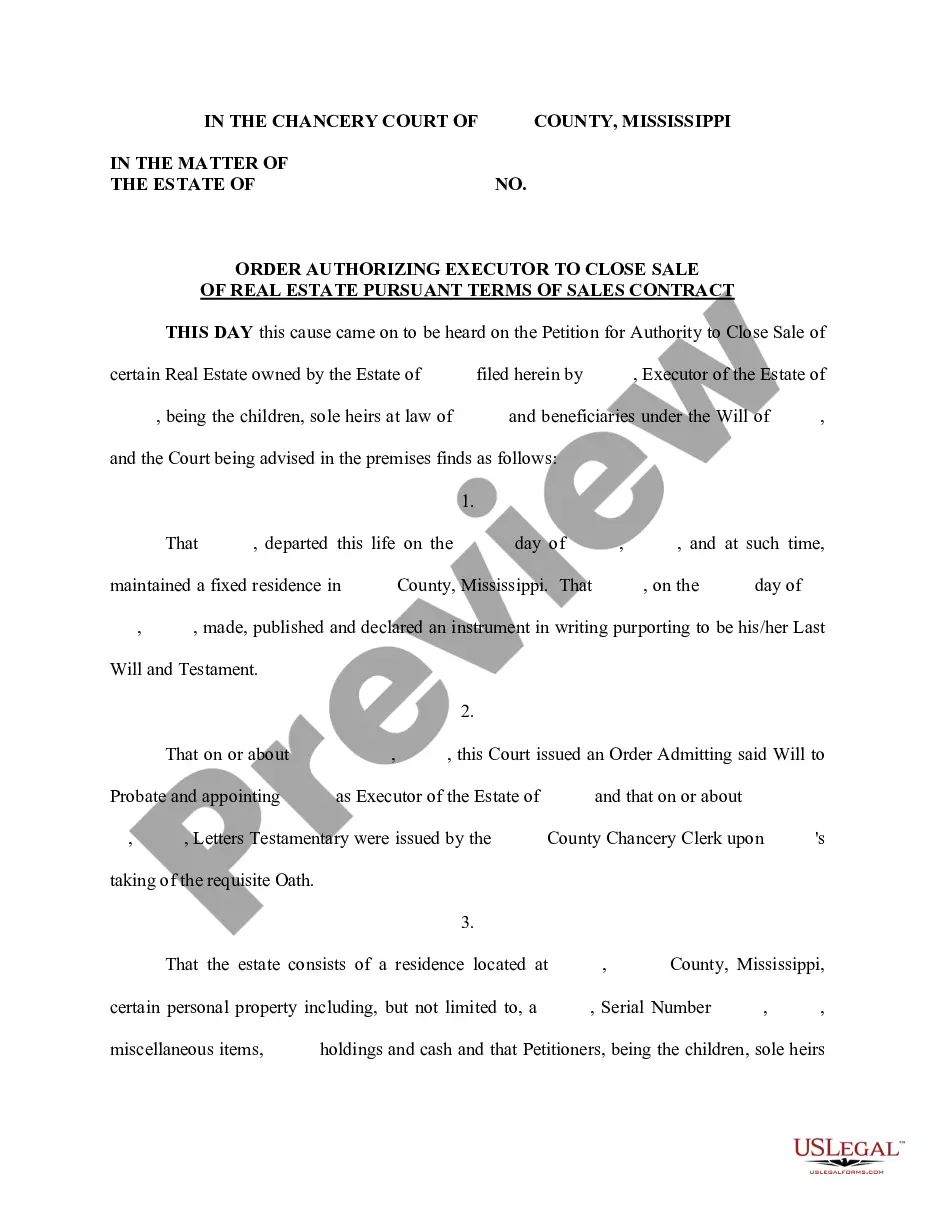
Order disallowing claim
Overview of this form
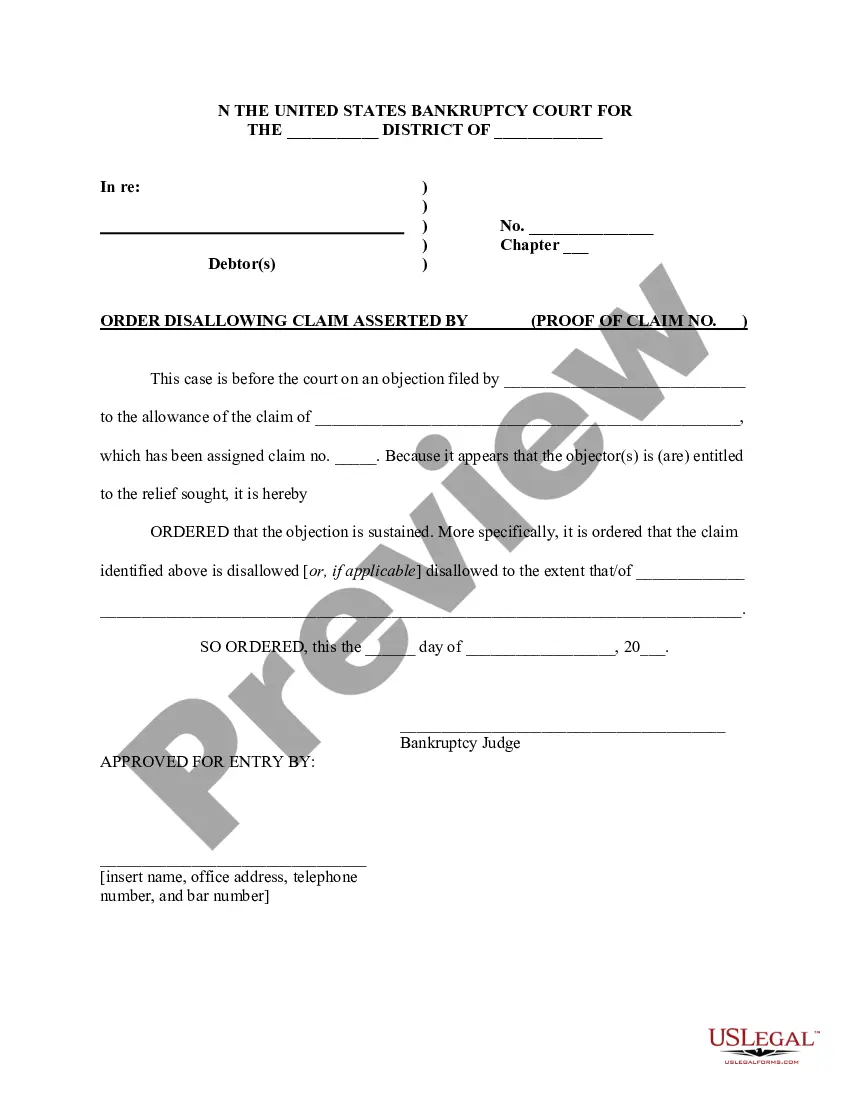
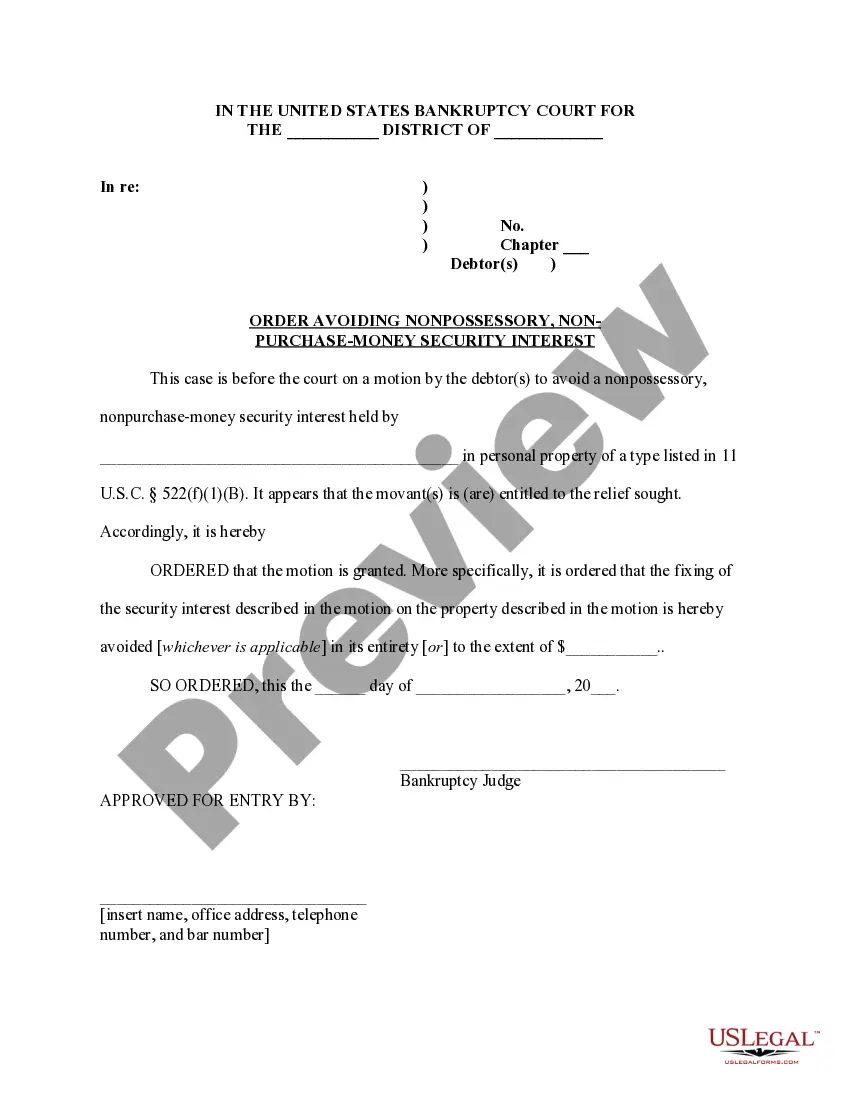
The Order Disallowing Claim is a legal document used in bankruptcy proceedings. It serves the purpose of formally rejecting claims against the debtor's estate, allowing the court to determine which claims are valid. This form is essential for ensuring that only legitimate claims are considered, thus protecting the interests of both the debtor and the creditors involved. Unlike other bankruptcy forms, this specific order focuses exclusively on disallowing a claim that has been contested.
Form components explained
- Case details: Includes the court's name, district, and case number.
- Debtor information: Identifies the debtor(s) related to the bankruptcy case.
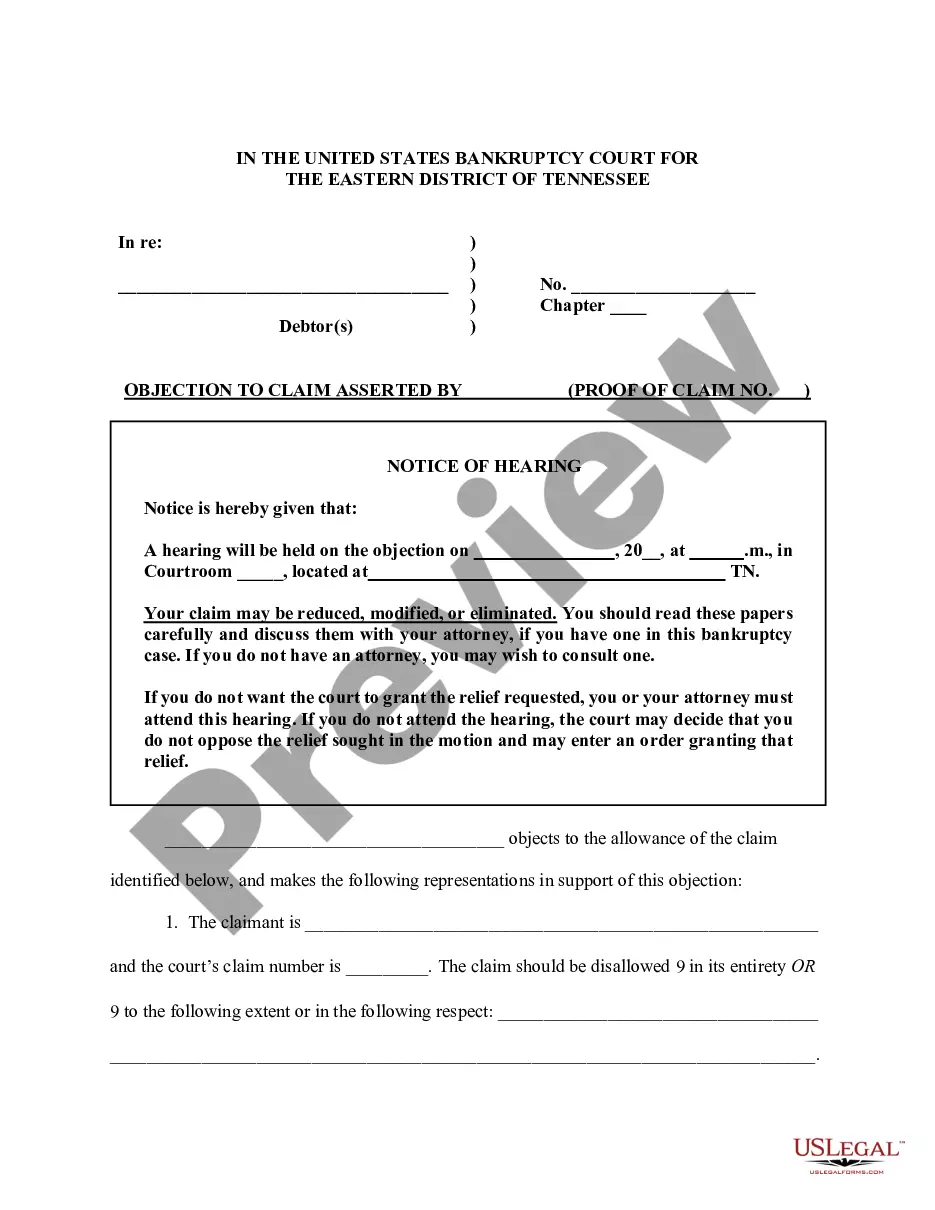
- Claim identification: Specifies the claim being disallowed, including the proof of claim number.
- Objection details: Names the party filing the objection and provides a space for their information.
- Order conclusion: Indicates whether the claim is disallowed in full or partially, with a field for details.
- Judge's signature: Confirms the order is official with the bankruptcy judge's signature and date.
Situations where this form applies
This form should be used when a party objects to a claim made against a debtor in a bankruptcy case. Situations where this form is relevant include disputes about the validity or amount of a claim, instances where claims are outdated, or when claims are not supported by documentation. Using this form ensures that the court formally acknowledges the disallowance of such claims, contributing to a fair bankruptcy process.
Intended users of this form
- Creditors seeking to challenge a claim made against the debtor's estate.
- Debtors needing to object to an improper claim filed in their bankruptcy proceedings.
- Legal representatives or attorneys handling bankruptcy cases for clients.
How to complete this form
- Identify the court: Fill in the name of the district and the case number at the top of the form.
- Provide debtor details: Enter the name of the debtor(s) involved in the bankruptcy case.
- Specify the claim: Clearly identify the claim being contested, including the proof of claim number.
- Enter objection details: Provide the name of the party making the objection and relevant contact information.
- Conclude with the order: State whether the claim is fully or partially disallowed and provide additional details as necessary.
- Obtain the judge's signature: Leave space for the bankruptcy judge to sign and date the order.
Does this document require notarization?
This form does not typically require notarization to be legally valid. However, some jurisdictions or document types may still require it. US Legal Forms provides secure online notarization powered by Notarize, available 24/7 for added convenience.
Get your form ready online
Our built-in tools help you complete, sign, share, and store your documents in one place.
Make edits, fill in missing information, and update formatting in US Legal Forms—just like you would in MS Word.
Download a copy, print it, send it by email, or mail it via USPS—whatever works best for your next step.
Sign and collect signatures with our SignNow integration. Send to multiple recipients, set reminders, and more. Go Premium to unlock E-Sign.
If this form requires notarization, complete it online through a secure video call—no need to meet a notary in person or wait for an appointment.
We protect your documents and personal data by following strict security and privacy standards.

Make edits, fill in missing information, and update formatting in US Legal Forms—just like you would in MS Word.

Download a copy, print it, send it by email, or mail it via USPS—whatever works best for your next step.

Sign and collect signatures with our SignNow integration. Send to multiple recipients, set reminders, and more. Go Premium to unlock E-Sign.

If this form requires notarization, complete it online through a secure video call—no need to meet a notary in person or wait for an appointment.

We protect your documents and personal data by following strict security and privacy standards.
Common mistakes to avoid
- Failing to accurately identify the claim being disputed.
- Leaving blank spaces for important details like case numbers or debtor names.
- Not providing sufficient justification for the objection to the claim.
- Missing the judge's signature after completion.
Advantages of online completion
- Convenience: Access and download the form anytime, anywhere.
- Editability: Customize the form easily to fit specific case details.
- Reliability: Ensure you are using the most up-to-date legal template prepared by licensed attorneys.
Looking for another form?
Form popularity
FAQ
If the claim is for a lower-priority debt, then if the claim is not filed on time or is successfully objected to, then it is disallowed. This means that the creditor does not get to participate in any distribution. In most circumstances, a disallowed claim is automatically discharged at the end of the bankruptcy case.
Allowed claim. The term allowed claim means a claim against the covered financial company or receiver that is allowed by the Corporation as receiver or upon which a final non-appealable judgment has been entered in favor of a claimant against a receivership by a court with jurisdiction to adjudicate the claim.
Filing an objection to claim may initiate a contested matter depending on the objection and may cause a hearing, full trial, or resolution without a hearing. An objection to claim may be filed to object to one claim or multiple claims subject to conditions in Federal Rule of Bankruptcy Procedure 3007(e).
Disallowed Claim means (a) a Claim, or any portion thereof, that has been disallowed by a Final Order or a settlement, (b) a Claim or any portion thereof that is Scheduled at zero or as contingent, disputed, or unliquidated and as to which a proof of claim bar date has been established but no proof of claim has been
You either filed your claim late, or the claim was timely but the amount of a refund or credit is limited.
An objection to a proof of claim must be in writing and filed with the bankruptcy court. A copy of the objection and the notice of court hearing date must be mailed to the creditor, the trustee, and the debtor at least 30 days before the hearing.