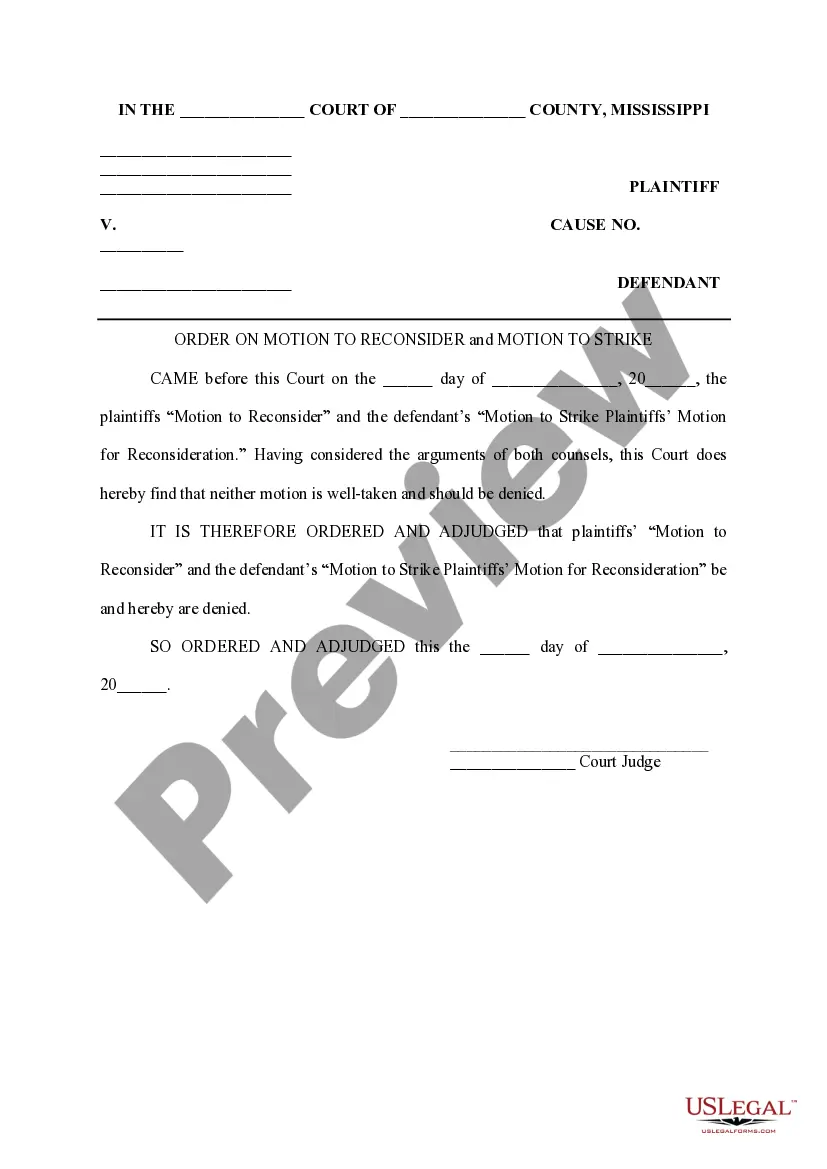
Objection to claim (hearing)
About this form
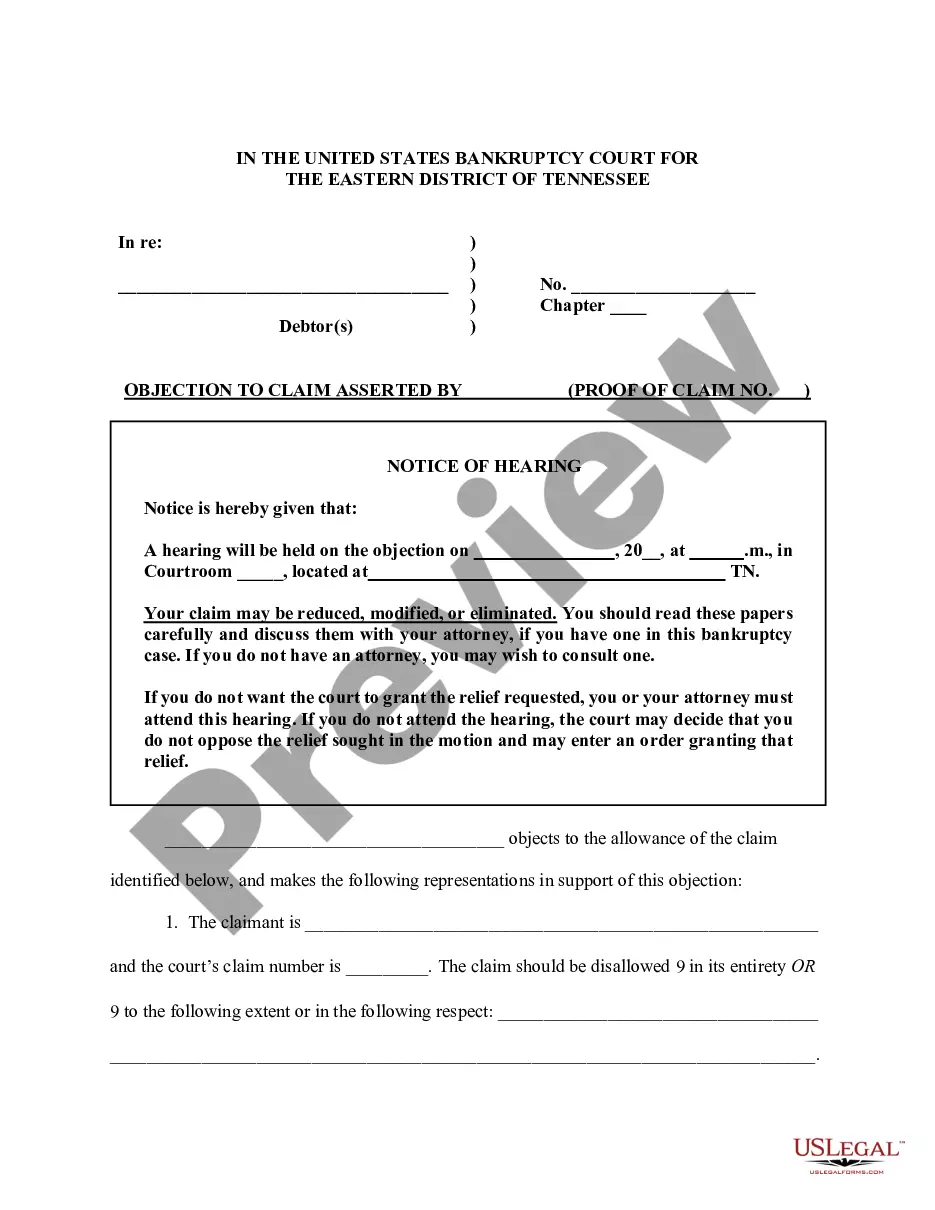
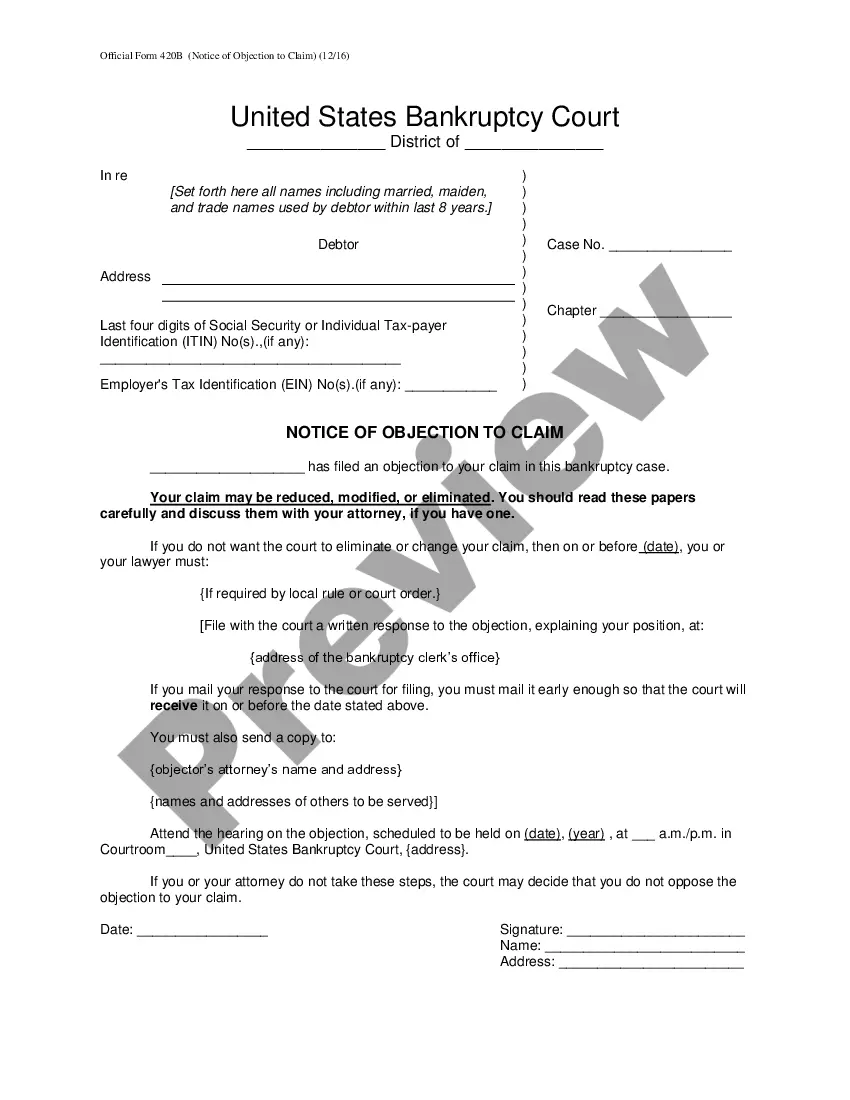
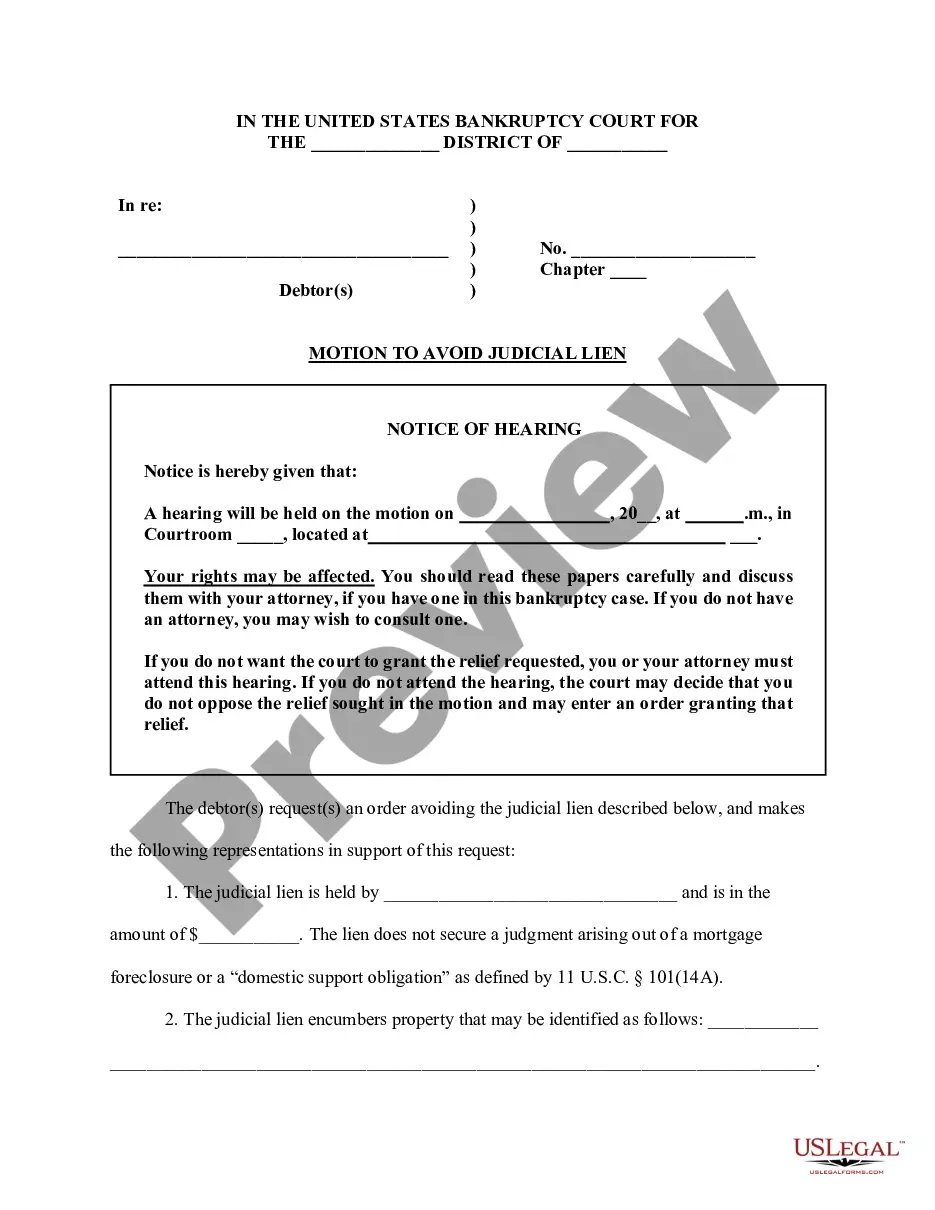
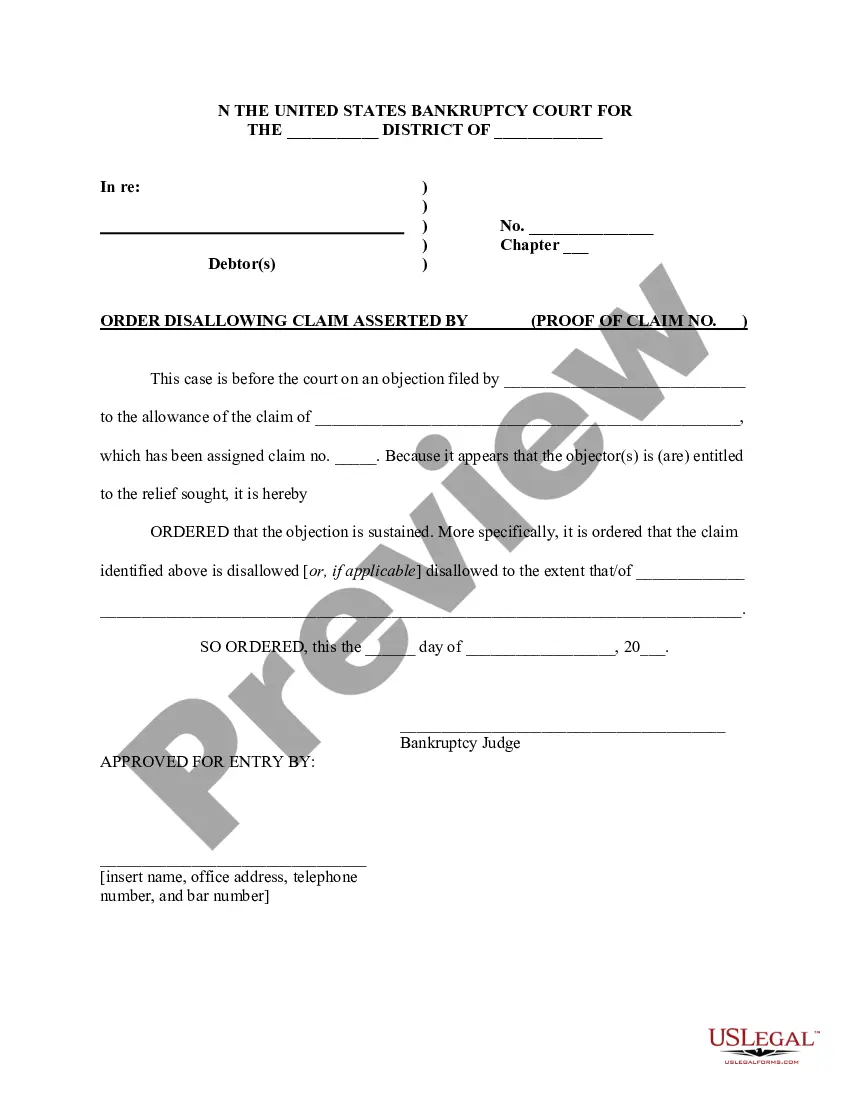
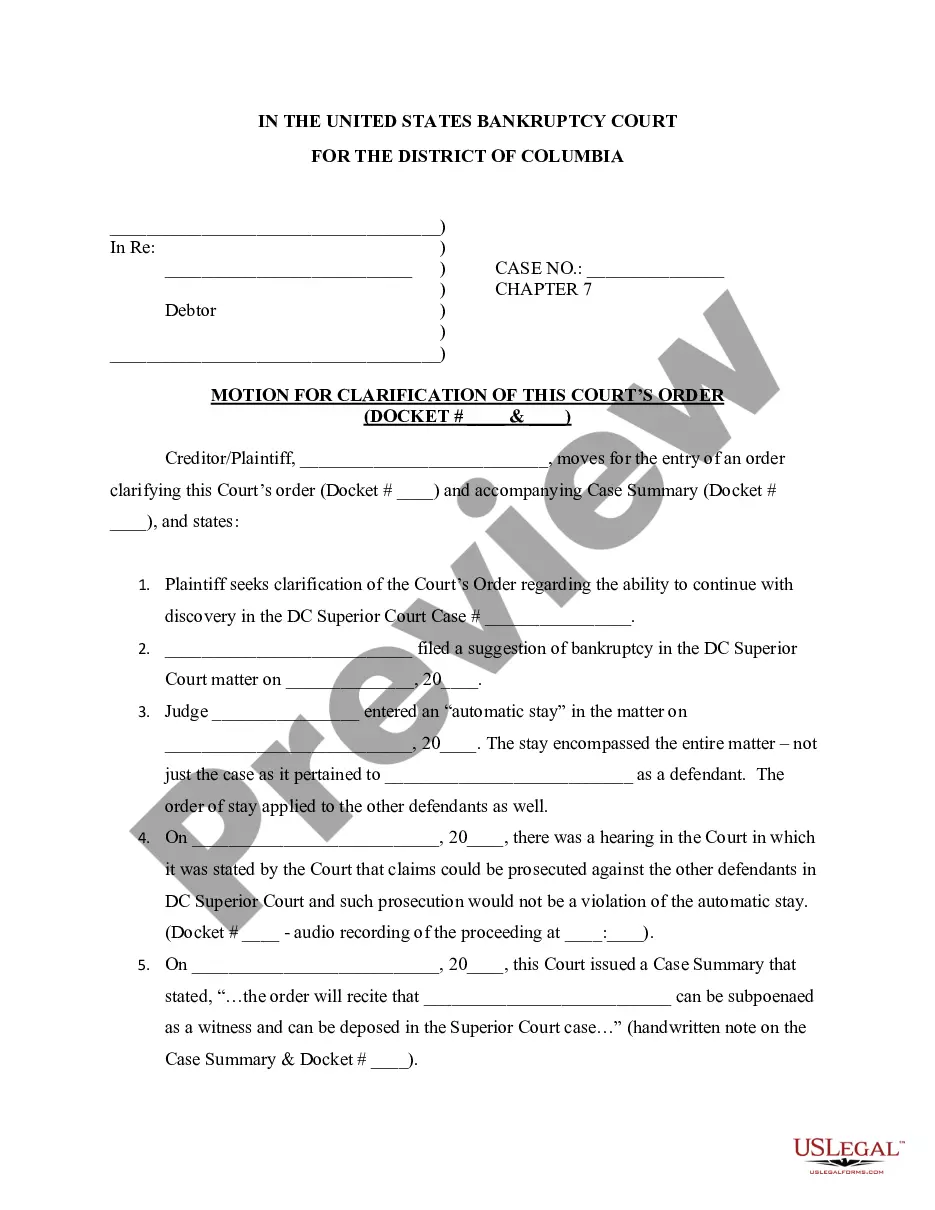
The Objection to Claim (Hearing) is a legal document used in bankruptcy proceedings to formally contest a claim made by a creditor against a debtor's estate. This form helps ensure that only valid claims are recognized by the court, allowing debtors to safeguard their interests. Unlike other bankruptcy forms, this document specifically addresses objections to the legitimacy or validity of a claim submitted by a creditor.
Key components of this form
- Identification of the debtor and their bankruptcy case number.
- Details of the claim being contested, including the claimant's name and proof of claim number.
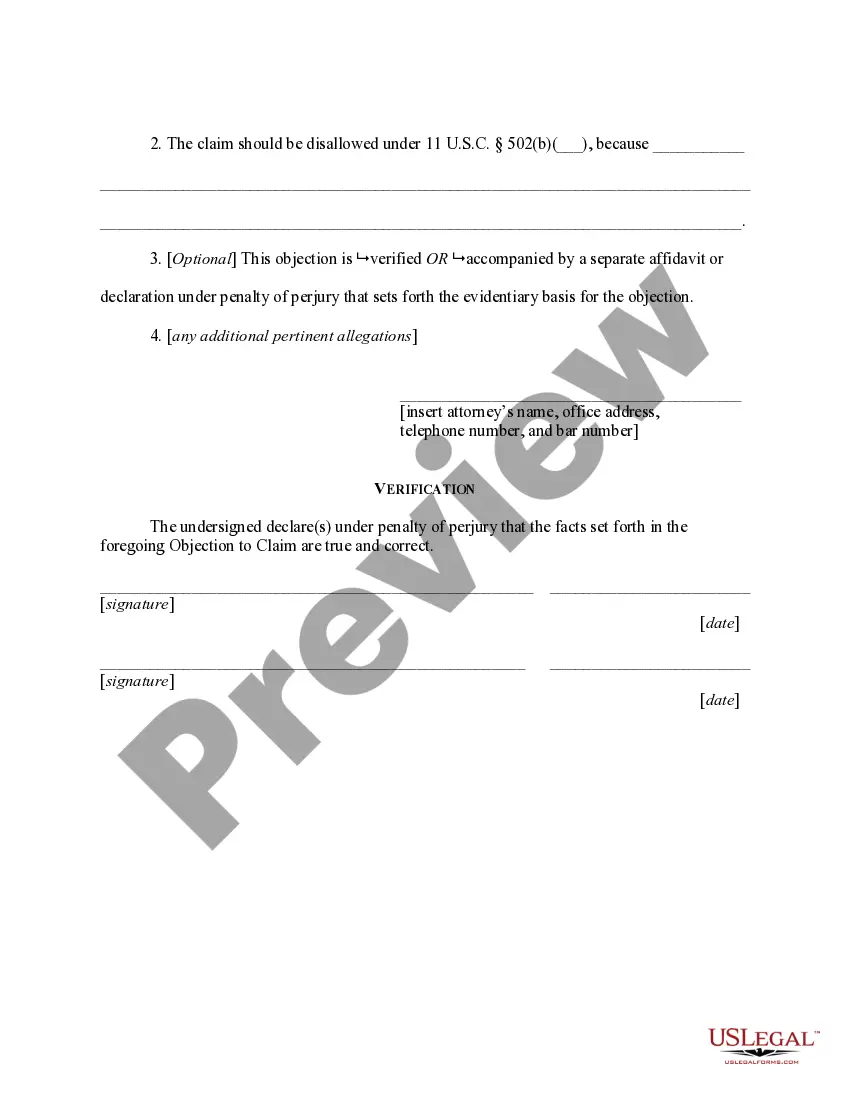
- Legal grounds for disallowing the claim under specific sections of the Bankruptcy Code.
- Attestation from the debtor or their attorney under penalty of perjury.
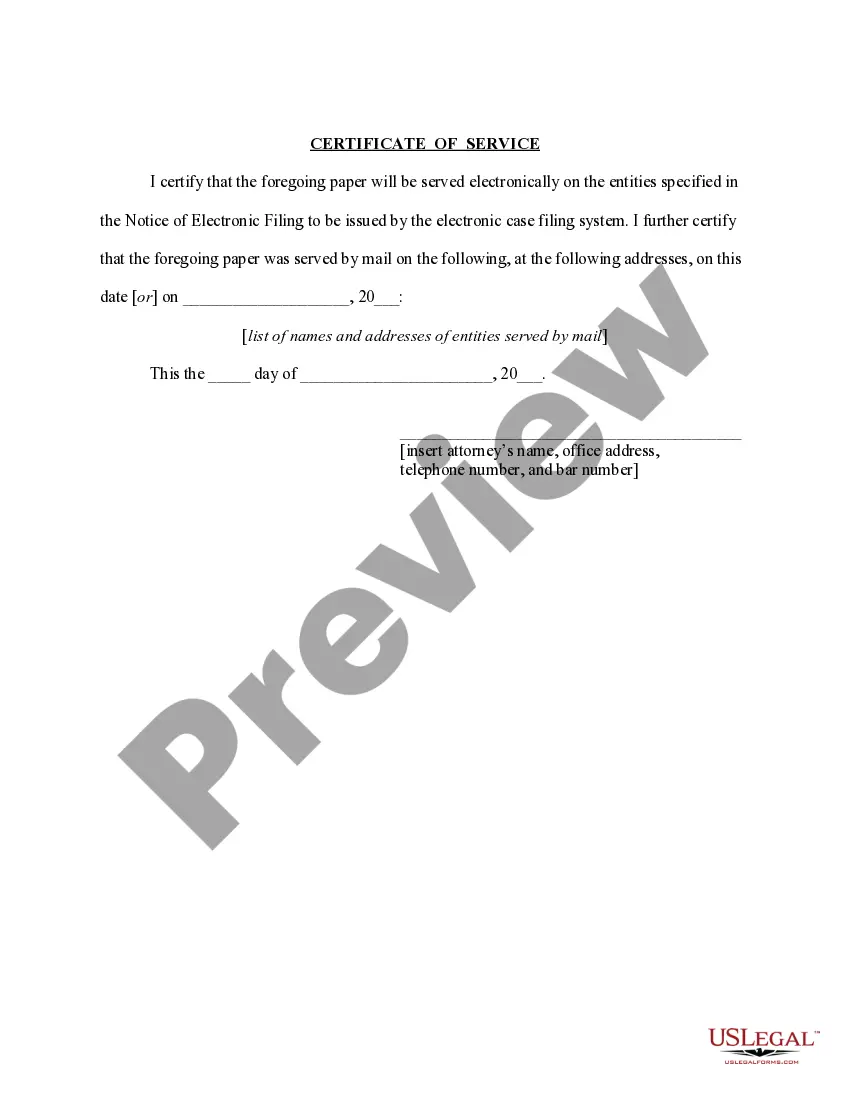
- Certificate of service indicating how and when the objection was served to involved parties.
When to use this document
This form should be used when a debtor wishes to dispute a claim made by a creditor in a bankruptcy case. Scenarios that may require this form include instances where the claim amount is incorrect, the claim is for an unsecured debt that should be discharged, or the claimant does not have the legal right to the claim. If you believe that a creditor's claim is invalid or excessive, filing this objection is necessary to protect your rights and financial interests.
Who this form is for
- Debtors currently undergoing bankruptcy proceedings.
- Individuals or businesses who have received notice of a claim filed against their estate.
- Attorneys representing debtors in bankruptcy cases.
Instructions for completing this form
- Identify the debtor and enter the bankruptcy case number at the top of the form.
- Provide the creditor's name and the claim number for the objection.
- Clearly state the reasons for the objection, citing applicable sections of the Bankruptcy Code.
- Include any required verification or accompanying affidavits if necessary.
- Sign and date the form, and ensure it is properly served to all relevant parties.
Does this document require notarization?
In most cases, this form does not require notarization. However, some jurisdictions or signing circumstances might. US Legal Forms offers online notarization powered by Notarize, accessible 24/7 for a quick, remote process.
Get your form ready online
Our built-in tools help you complete, sign, share, and store your documents in one place.
Make edits, fill in missing information, and update formatting in US Legal Forms—just like you would in MS Word.
Download a copy, print it, send it by email, or mail it via USPS—whatever works best for your next step.
Sign and collect signatures with our SignNow integration. Send to multiple recipients, set reminders, and more. Go Premium to unlock E-Sign.
If this form requires notarization, complete it online through a secure video call—no need to meet a notary in person or wait for an appointment.
We protect your documents and personal data by following strict security and privacy standards.

Make edits, fill in missing information, and update formatting in US Legal Forms—just like you would in MS Word.

Download a copy, print it, send it by email, or mail it via USPS—whatever works best for your next step.

Sign and collect signatures with our SignNow integration. Send to multiple recipients, set reminders, and more. Go Premium to unlock E-Sign.

If this form requires notarization, complete it online through a secure video call—no need to meet a notary in person or wait for an appointment.

We protect your documents and personal data by following strict security and privacy standards.
Common mistakes to avoid
- Failing to properly serve the objection to all parties involved.
- Not providing specific legal grounds for the objection.
- Missing signature or date on the form.
- Using an outdated version of the form that does not comply with current legal standards.
Benefits of completing this form online
- Convenient access to the form at any time, allowing for quicker preparation and filing.
- Editable format to ensure all necessary information can be accurately filled in.
- Reliable templates drafted by licensed attorneys to ensure legal compliance.
Looking for another form?

Form popularity
FAQ
Form 410 is the form used by creditors to file a proof of claim. In some cases, a bankruptcy judge may accept an informal proof of claim. This must be a written document filed with the bankruptcy court, and it must make a demand against the debtor's bankruptcy estate.
This bankruptcy form Notice of Objecton to Proof of Claim and Notice of Hearing and Objection to Claim can be used in Chapter 13 bankruptcy by a debtor's attorney to object to the proof of claim of a creditor who has overstated the amount due.
A response to an objection is sufficient if it states that written documentation in support of the proof of claim has already been provided to the objecting party and that the documentation will be provided at any evidentiary hearing or trial on the matter.
Filing an objection to claim may initiate a contested matter depending on the objection and may cause a hearing, full trial, or resolution without a hearing. An objection to claim may be filed to object to one claim or multiple claims subject to conditions in Federal Rule of Bankruptcy Procedure 3007(e).
In order to object to a Proof of Claim, the Debtor is required to file a written objection with the Bankruptcy Court and request a hearing. The Creditor must receive a copy of the objection and the notice of hearing no later than 30 days before the hearing date.
This bankruptcy form Notice of Objecton to Proof of Claim and Notice of Hearing and Objection to Claim can be used in Chapter 13 bankruptcy by a debtor's attorney to object to the proof of claim of a creditor who has overstated the amount due.
The burden of proof is always on the claimant, but, as probative force is given to the allegations of proofs of claim, and no probative force is given to the objections, this must be met, overcome, or at least equalized, by the objecting party, hi short, if the proofs of claim state facts sufficient to make a prima
Filing an objection to claim may initiate a contested matter depending on the objection and may cause a hearing, full trial, or resolution without a hearing. An objection to claim may be filed to object to one claim or multiple claims subject to conditions in Federal Rule of Bankruptcy Procedure 3007(e).