Sample Letter for Petition to Appoint Administratrix
What this document covers
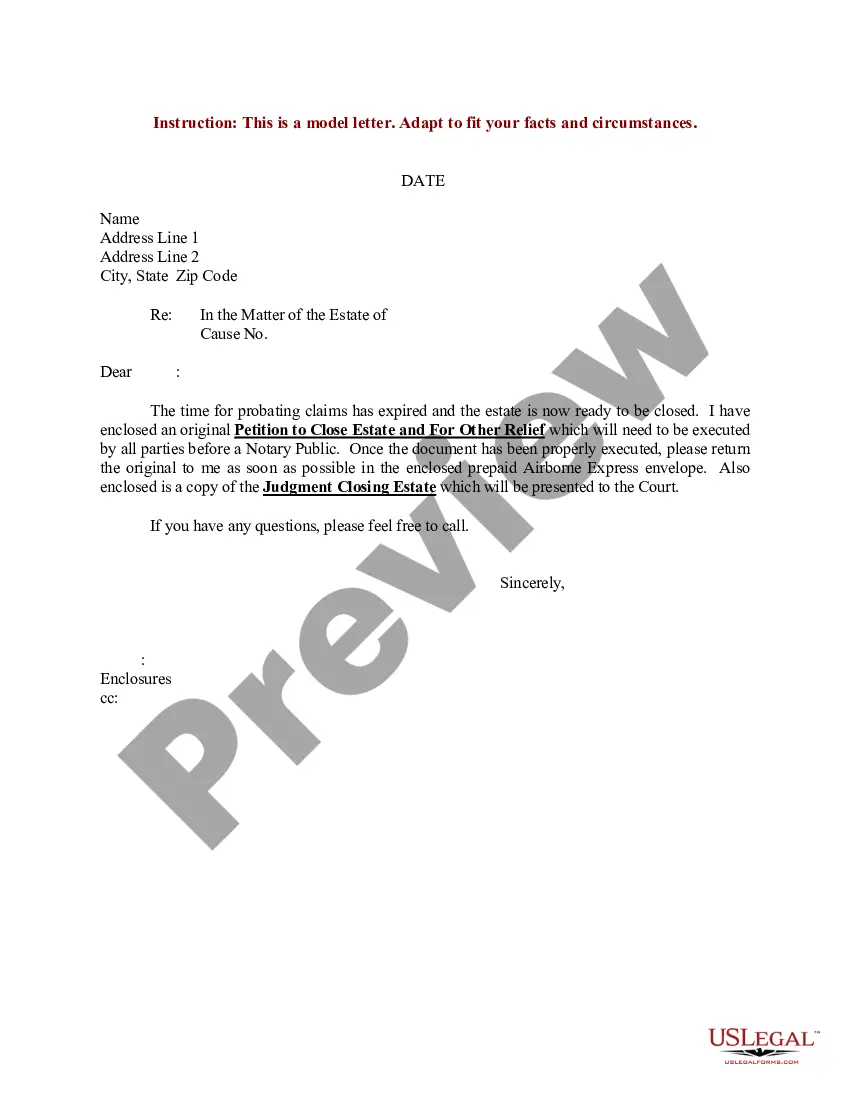
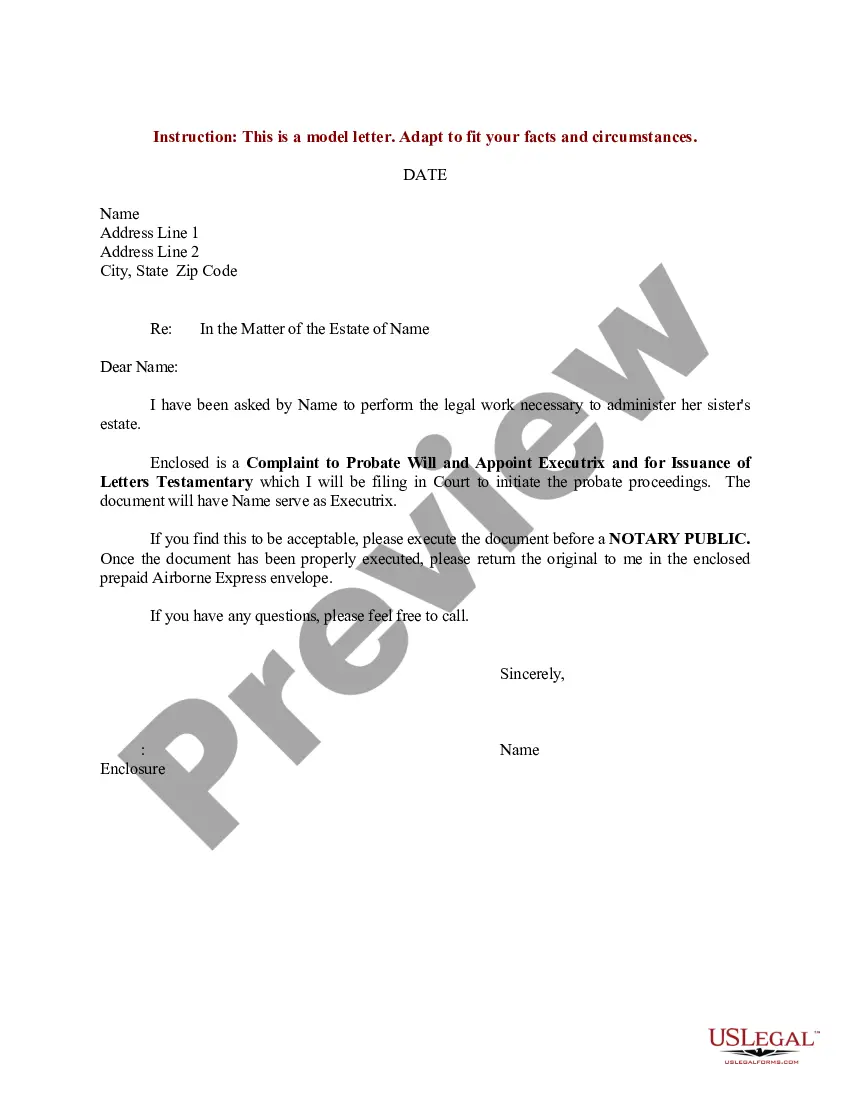
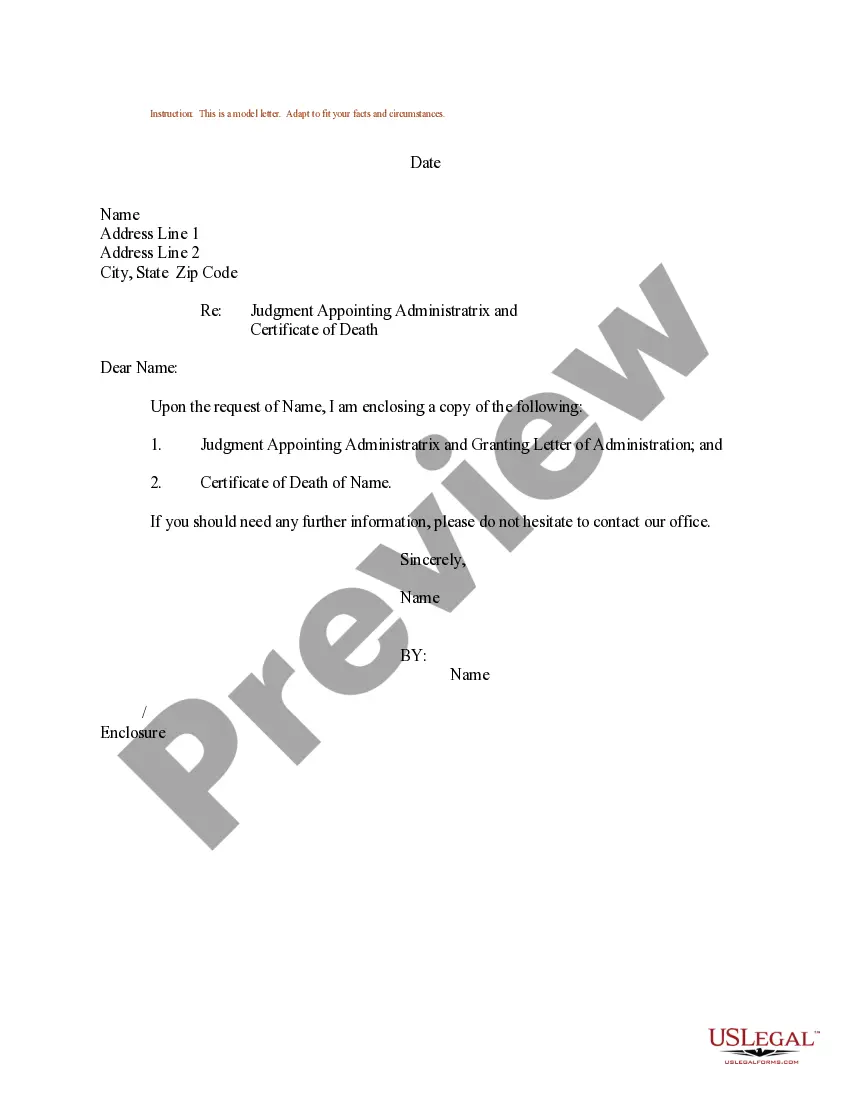
The Sample Letter for Petition to Appoint Administratrix is a legal document used to formally request the appointment of an administratrix to manage the estate of a deceased individual. This form is a template that can be customized to fit specific needs and is prepared in Word format. It differs from other estate management forms in that it specifically addresses the request for appointment through a petition to the court, rather than handling other estate issues directly.
Form components explained
- Date of the letter
- Name of the chancery clerk
- Address and contact details of the sender
- Formal request for filing and stamped copies
- Closing statement expressing willingness to assist with questions


Common use cases
This form is typically used when a person needs to petition the court for the appointment of an administratrix to handle the estate of a decedent. Common scenarios include situations where there is no will, or where the will names the petitioner as the administratrix. Utilizing this form can help ensure that the process is documented properly and that all necessary communications are conveyed to the appropriate clerk.
Who needs this form
- Individuals acting as potential administratrices for an estate
- Estate executors seeking further legal authority
- Heirs of a deceased person with a need to manage the estate
- Legal representatives handling estate matters
How to complete this form
- Identify the date the letter is being sent.
- Fill in the name and address of the chancery clerk.
- Provide your own name and address in the designated fields.
- Explicitly mention your request for the court to appoint an administratrix.
- Sign and date the letter before submission.
Does this document require notarization?
This form does not typically require notarization unless specified by local law. It is advisable to check the specific regulations in your jurisdiction to confirm any additional requirements.
Get your form ready online
Our built-in tools help you complete, sign, share, and store your documents in one place.
Make edits, fill in missing information, and update formatting in US Legal Forms—just like you would in MS Word.
Download a copy, print it, send it by email, or mail it via USPS—whatever works best for your next step.
Sign and collect signatures with our SignNow integration. Send to multiple recipients, set reminders, and more. Go Premium to unlock E-Sign.
If this form requires notarization, complete it online through a secure video call—no need to meet a notary in person or wait for an appointment.
We protect your documents and personal data by following strict security and privacy standards.

Make edits, fill in missing information, and update formatting in US Legal Forms—just like you would in MS Word.

Download a copy, print it, send it by email, or mail it via USPS—whatever works best for your next step.

Sign and collect signatures with our SignNow integration. Send to multiple recipients, set reminders, and more. Go Premium to unlock E-Sign.

If this form requires notarization, complete it online through a secure video call—no need to meet a notary in person or wait for an appointment.

We protect your documents and personal data by following strict security and privacy standards.
Common mistakes
- Failing to include the correct date.
- Omitting the name or address of the chancery clerk.
- Not signing the letter or including the date of signature.
Benefits of using this form online
- Immediate access to a professionally drafted template.
- Edit and customize the document to fit your specific needs from home.
- Convenient and time-saving process, eliminating the need for in-person visits.
Main things to remember
- The Sample Letter for Petition to Appoint Administratrix is essential for managing a deceased person's estate.
- This document simplifies the petitioning process to the court.
- Properly completing this form is critical for legal compliance and successful estate management.
Looking for another form?





Form popularity
FAQ
A Letter of Appointment of Executor helps prove you have been put in charge of someone's estate after they have passed away. As Executor, you've been given the duty to manage the estate and carry out the directions of the will; however, a court may require official documentation.
A Letter of Testamentarysometimes called a Letter of Administration or Letter of Representationis a document granted by a local court. The document simply states that you are the legal executor for a particular estate and that you have the ability to act as such.
The difference between executor and administrator of estate in comes down to how the person came to be in charge of the estate. Someone who is appointed through the will of the person who died is called executor. Someone who is appointed because of any other reason is called administrator.
To be appointed executor or personal representative, file a petition at the probate court in the county where your loved one was living before they died. In the absence of a will, heirs must petition the court to be appointed administrator of the estate.
Determine who has priority to serve. State law establishes the qualifications for an administrator and sets the order of priority that the court must follow in making an appointment. Prepare to file a petition to administer. Collect the necessary information. File the petition with the court.
Administrators. If no living executors are named in the will, or if the executors named can't or don't wish to act, or there is no will, then one or more beneficiaries can apply to act as an administrator. A beneficiary is appointed an administrator once a 'grant of letters of administration with Will annexed' is given
Letters of Administration are granted by a Surrogate Court or probate registry to appoint appropriate people to deal with a deceased person's estate where property will pass under Intestacy Rules or where there are no executors living (and willing and able to act) having been validly appointed under the deceased's will
Determine who has priority to serve. State law establishes the qualifications for an administrator and sets the order of priority that the court must follow in making an appointment. Prepare to file a petition to administer. Collect the necessary information. File the petition with the court.
You can do this by simply signing your name and putting your title of executor of the estate afterward. One example of an acceptable signature would be Signed by Jane Doe, Executor of the Estate of John Doe, Deceased. Of course, many institutions may not simply take your word that you are the executor of the estate.