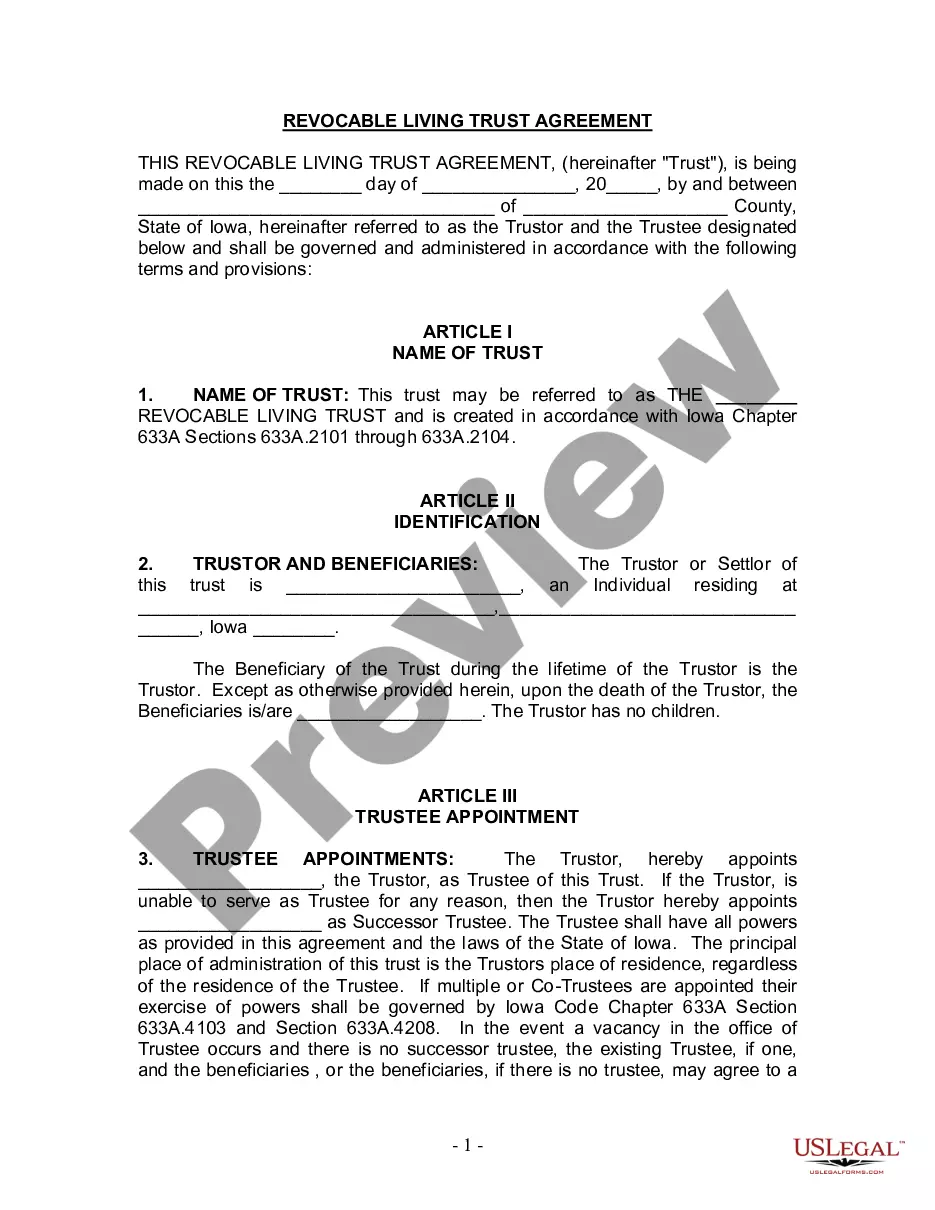
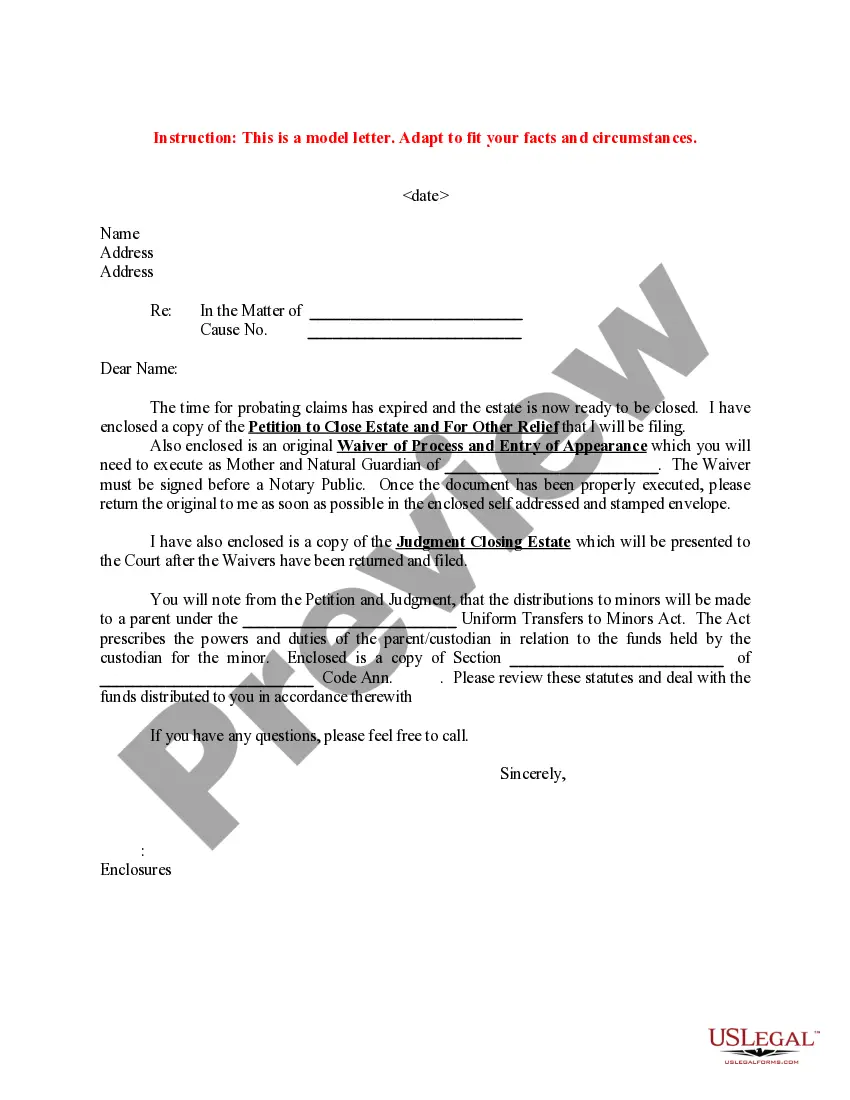
Sample Letter regarding Petition to Close Estate and Other Relief
Overview of this form
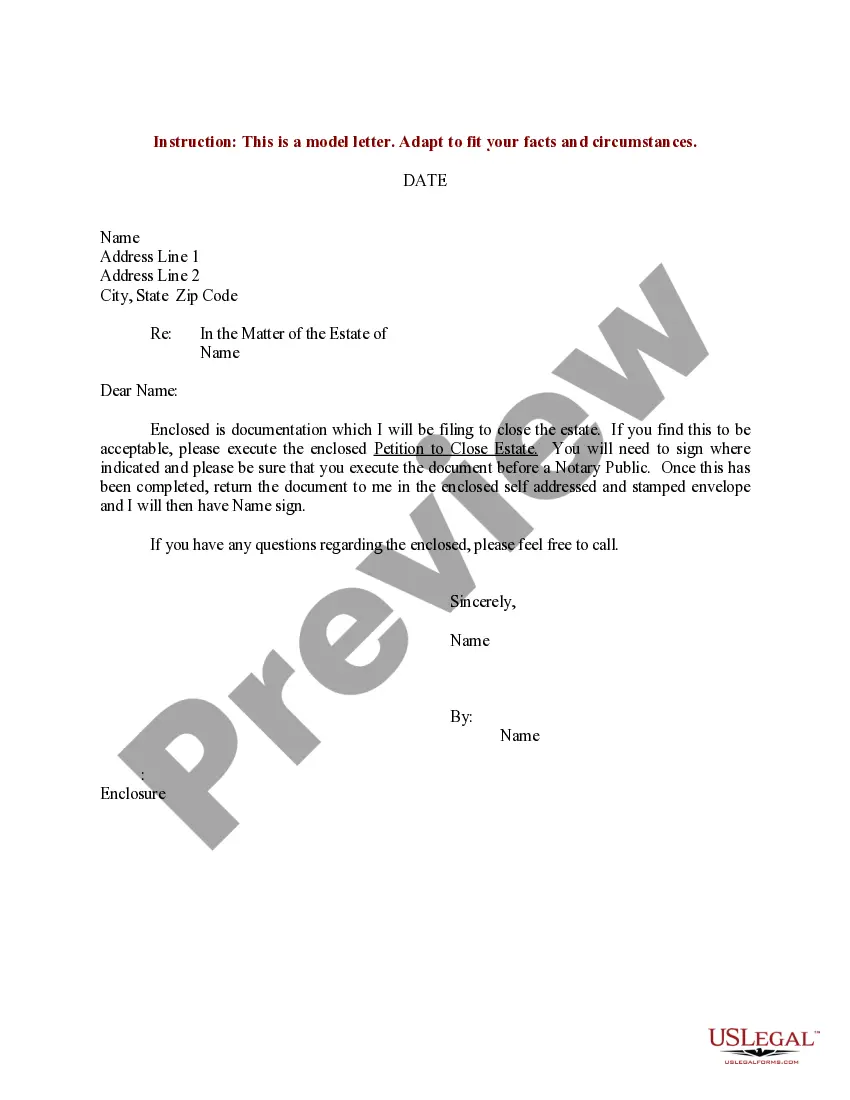
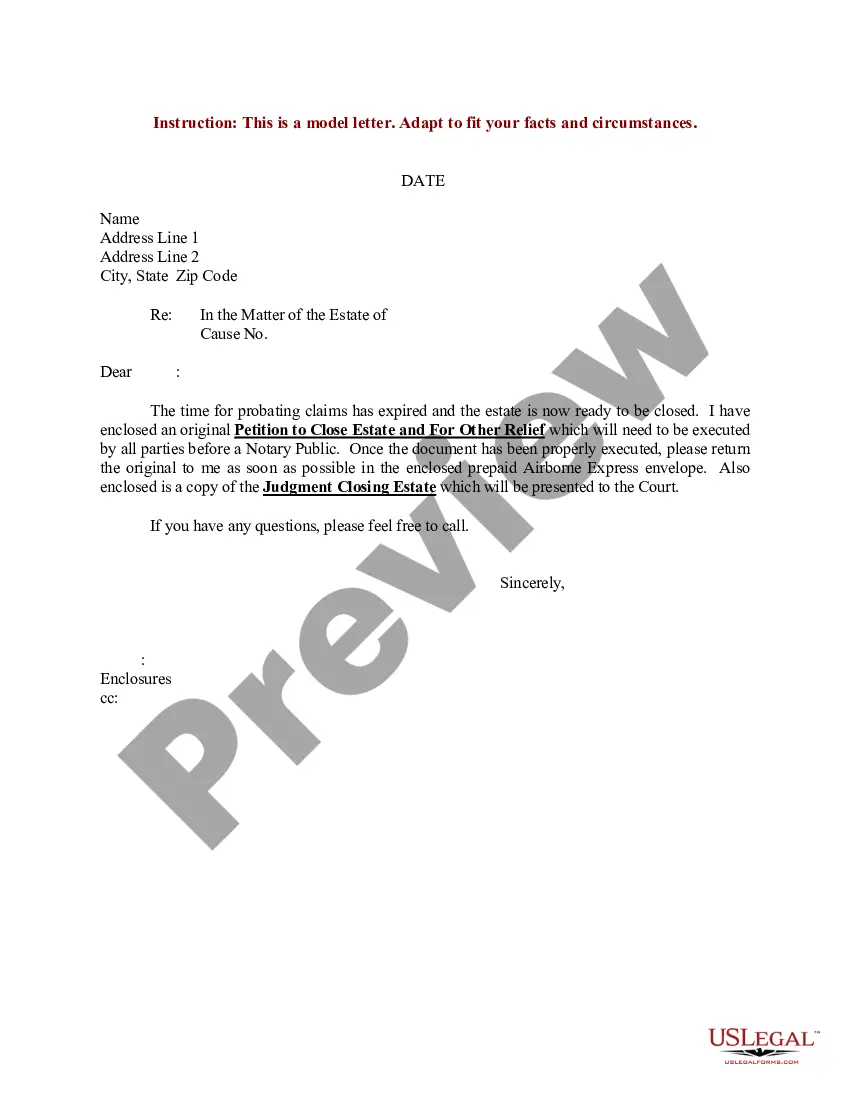
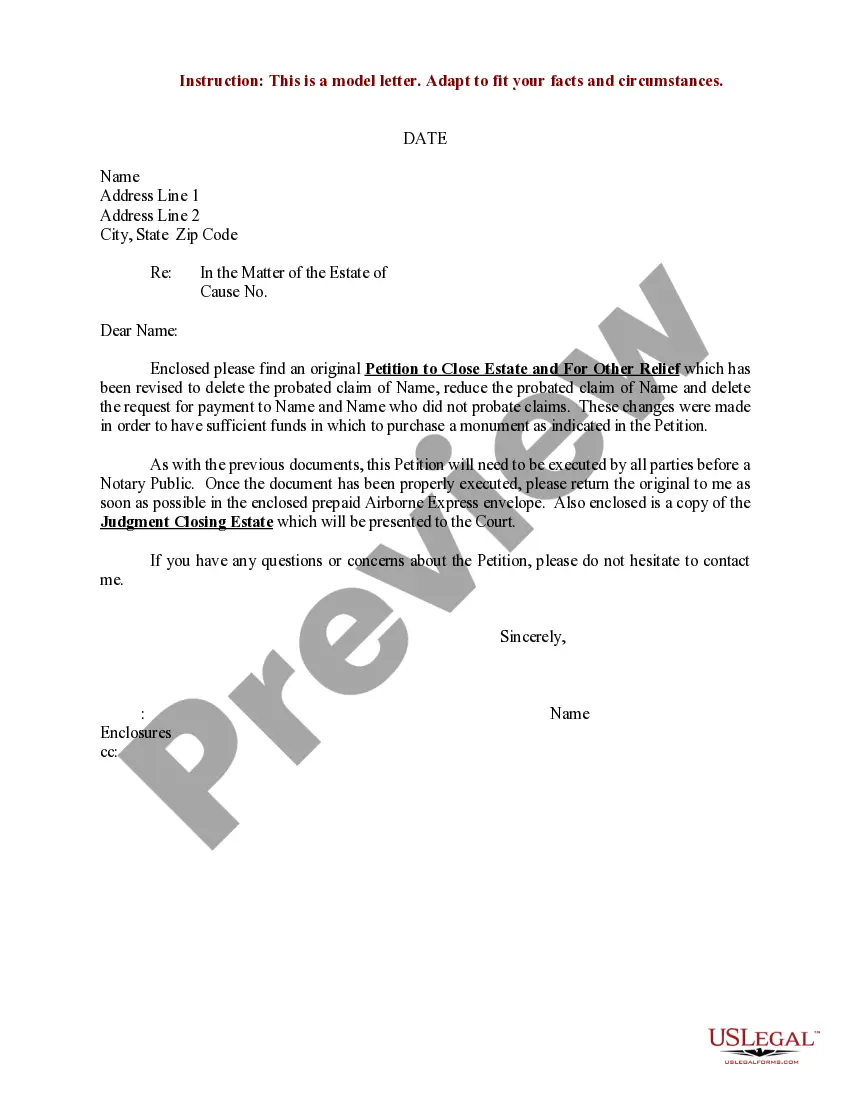
The Sample Letter regarding Petition to Close Estate and Other Relief is a model letter designed to facilitate the process of closing an estate after the probate claims period has expired. This letter serves a specific purpose in communicating with interested parties about the closure of the estate and requesting necessary documents. Unlike other legal forms, this correspondence is not a legal filing itself but provides guidance on what to include when making such a request.
Key components of this form
- Date of the letter
- Sender's name and address
- Reference to the estate matter and cause number
- Statement about the expiration of probate claims
- List of enclosed documents, including the Petition to Close Estate
- Instructions for executing and returning the Waiver of Process
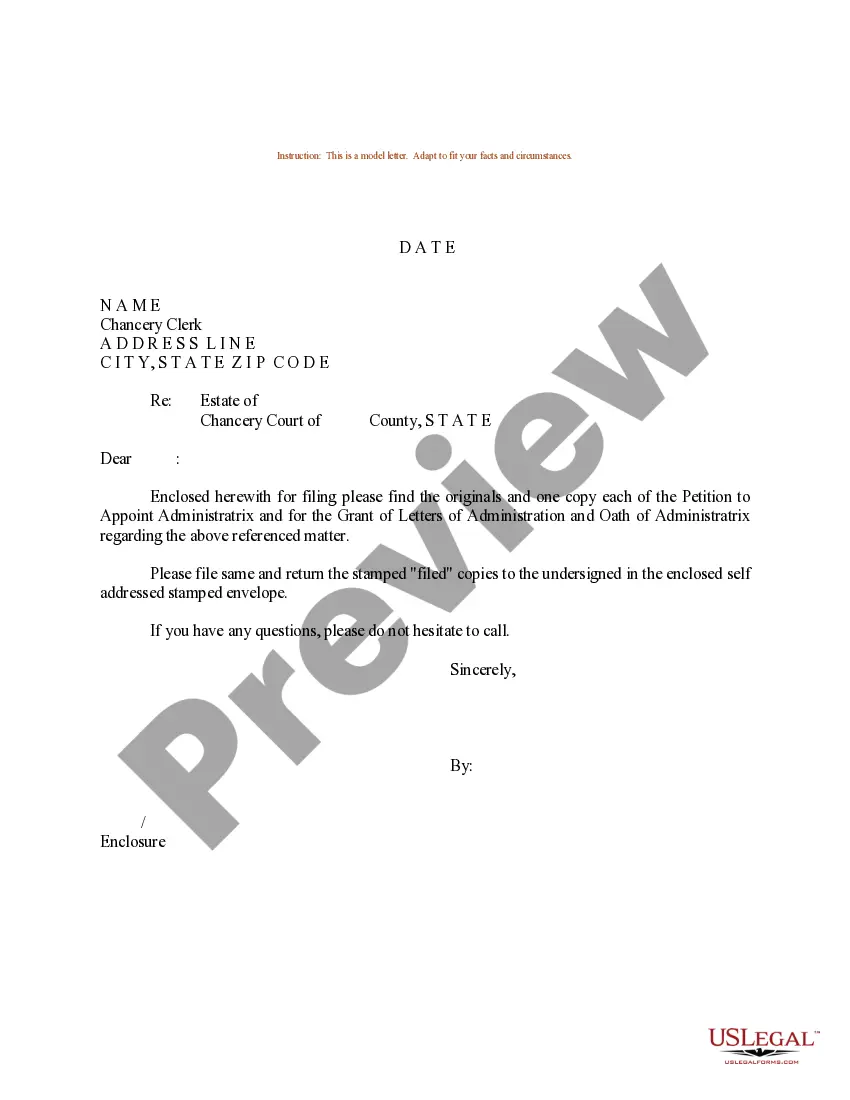
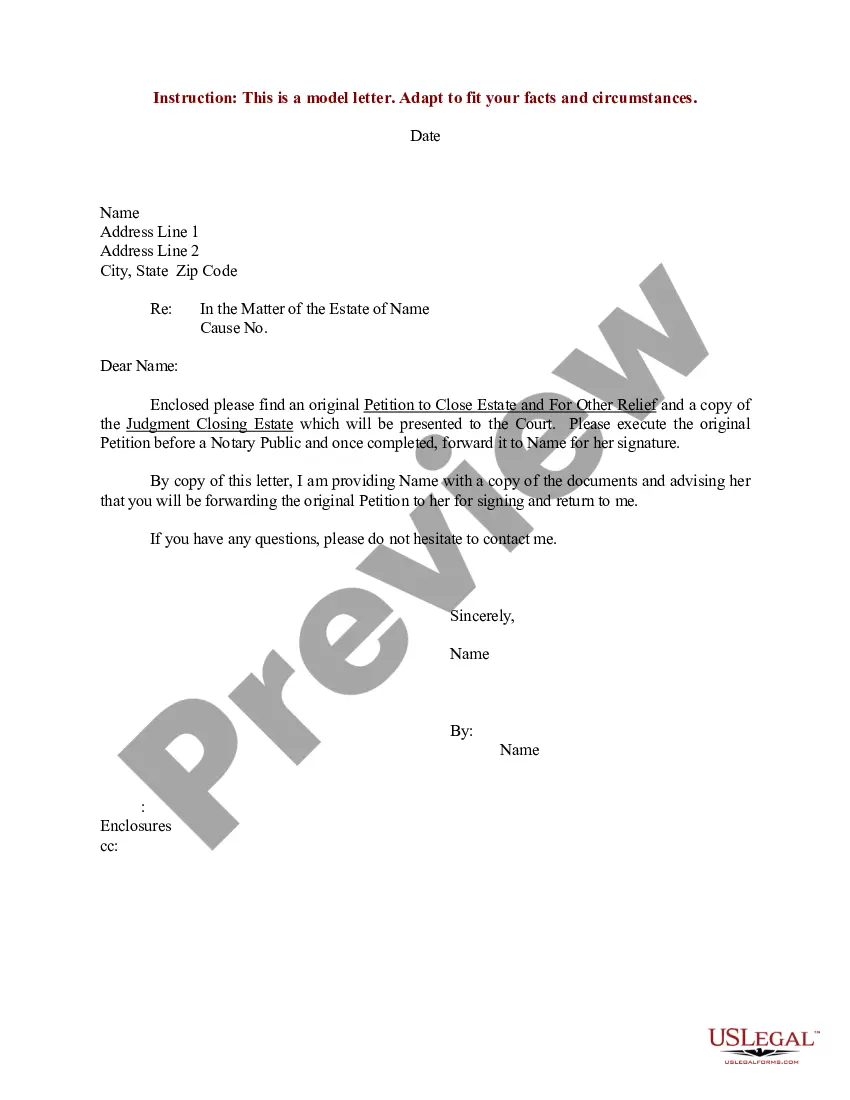
When to use this document
This letter is typically used when an estate is ready to be closed, and the executor has completed all necessary probate procedures. It is crucial to send this letter to relevant parties, such as guardians or heirs, to inform them of the closure process and to request their cooperation in executing the required legal documents.
Who needs this form
- Executors or administrators of an estate
- Individuals responsible for closing a deceased person's estate
- Guardians involved in managing estate-related matters for minors
Steps to complete this form
- Enter the date at the top of the letter.
- Provide your name and address at the beginning of the letter.
- Fill in the appropriate reference details for the estate matter and cause number.
- Describe the status of the probate claims and mention the inclusion of necessary documents.
- Clearly outline the steps the recipient needs to follow, including signing before a Notary Public.
Notarization requirements for this form
Notarization is required for this form to take effect. Our online notarization service, powered by Notarize, lets you verify and sign documents remotely through an encrypted video session, available 24/7.
Get your form ready online
Our built-in tools help you complete, sign, share, and store your documents in one place.
Make edits, fill in missing information, and update formatting in US Legal Forms—just like you would in MS Word.
Download a copy, print it, send it by email, or mail it via USPS—whatever works best for your next step.
Sign and collect signatures with our SignNow integration. Send to multiple recipients, set reminders, and more. Go Premium to unlock E-Sign.
If this form requires notarization, complete it online through a secure video call—no need to meet a notary in person or wait for an appointment.
We protect your documents and personal data by following strict security and privacy standards.

Make edits, fill in missing information, and update formatting in US Legal Forms—just like you would in MS Word.

Download a copy, print it, send it by email, or mail it via USPS—whatever works best for your next step.

Sign and collect signatures with our SignNow integration. Send to multiple recipients, set reminders, and more. Go Premium to unlock E-Sign.

If this form requires notarization, complete it online through a secure video call—no need to meet a notary in person or wait for an appointment.

We protect your documents and personal data by following strict security and privacy standards.
Typical mistakes to avoid
- Failing to include the correct estate reference details.
- Neglecting to specify the necessary actions for the recipient.
- Omitting to provide a self-addressed and stamped envelope for easy return.
Why complete this form online
- Easy customization to fit specific circumstances and requirements.
- Accessible anytime for immediate needs.
- Reliable templates drafted by licensed attorneys, ensuring legal compliance.
Looking for another form?


Form popularity
FAQ
Notify all creditors. File tax returns and pay final taxes. File the final accounting with the probate court. Distribute remaining assets to beneficiaries. File a closing statement with the court.
Generally, an executor has 12 months from the date of death to distribute the estate. This is known as 'the executor's year'. However, for various reasons the executor may have been delayed and has not distributed the estate within this time frame.
The Executor's Final Act, Closing an Estate The personal representative, now without any estate funds to pay his lawyer, must respond. Even if the charges are baseless, the executor is stuck paying the legal bill. Instead, before making any distribution, the administrator should insist on receiving a release.
3 attorney answers That means that the estate has been closed. In other words, all the matters of the distribution of the estate have been resolved. If your sister did not follow proper procedure, you may be able to re-open the estate.
However, if the other beneficiary is someone you do not know well, someone who you suspect will spend all the money right away, or someone who will not readily help you pay for a future bill, then you should keep the account open, perhaps until two years have passed since the date of death.
1) Petition the court to be the estate representative. 2) Notify heirs and creditors. 3) Change legal ownership of assets. 4) Pay Funeral Expenses, Taxes, Debts and Transfer assets to heirs.
If an estate is not properly probated and closed in a timely manner, there may be a number of consequences that can jeopardize the estate: The statute of limitations for creditors' claims is extended. Assets may lose value or be lost altogether. The state may claim the assets.
If you are named as an executor in the deceased's will, you must produce proof of your executor status and provide a certified copy of the death certificate before the bank will provide access to the account.Present either of these letters to the bank along with the death certificate to close the account.
A simple estate with just a few, easy-to-find assets may be all wrapped up in six to eight months. A more complicated affair may take three years or more to fully settle.