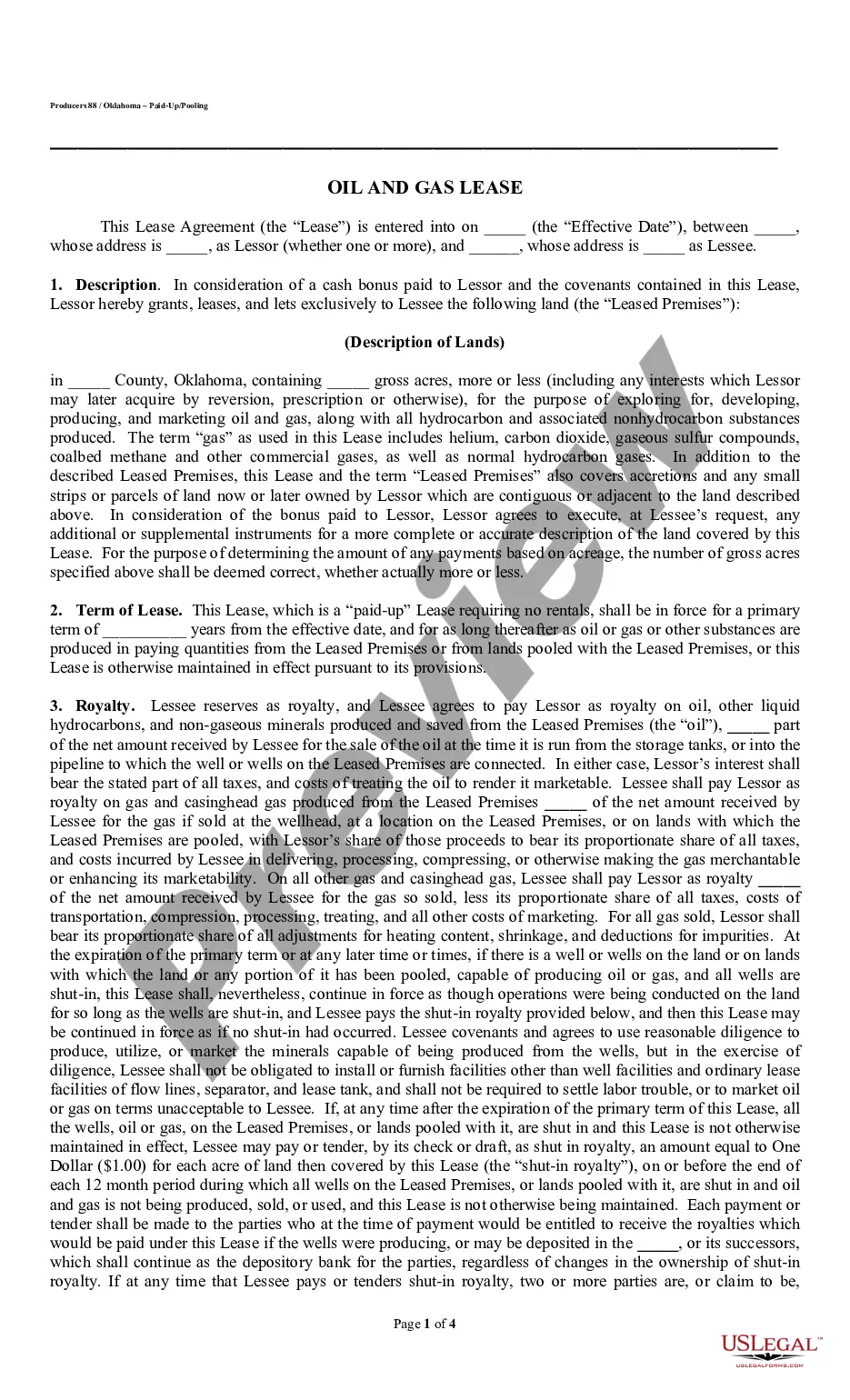
Subsurface Underground Gas Storage Lease and Agreement (From a Surface Owner, With No Right to Use the Surface of the Lands being Granted)
What is this form?
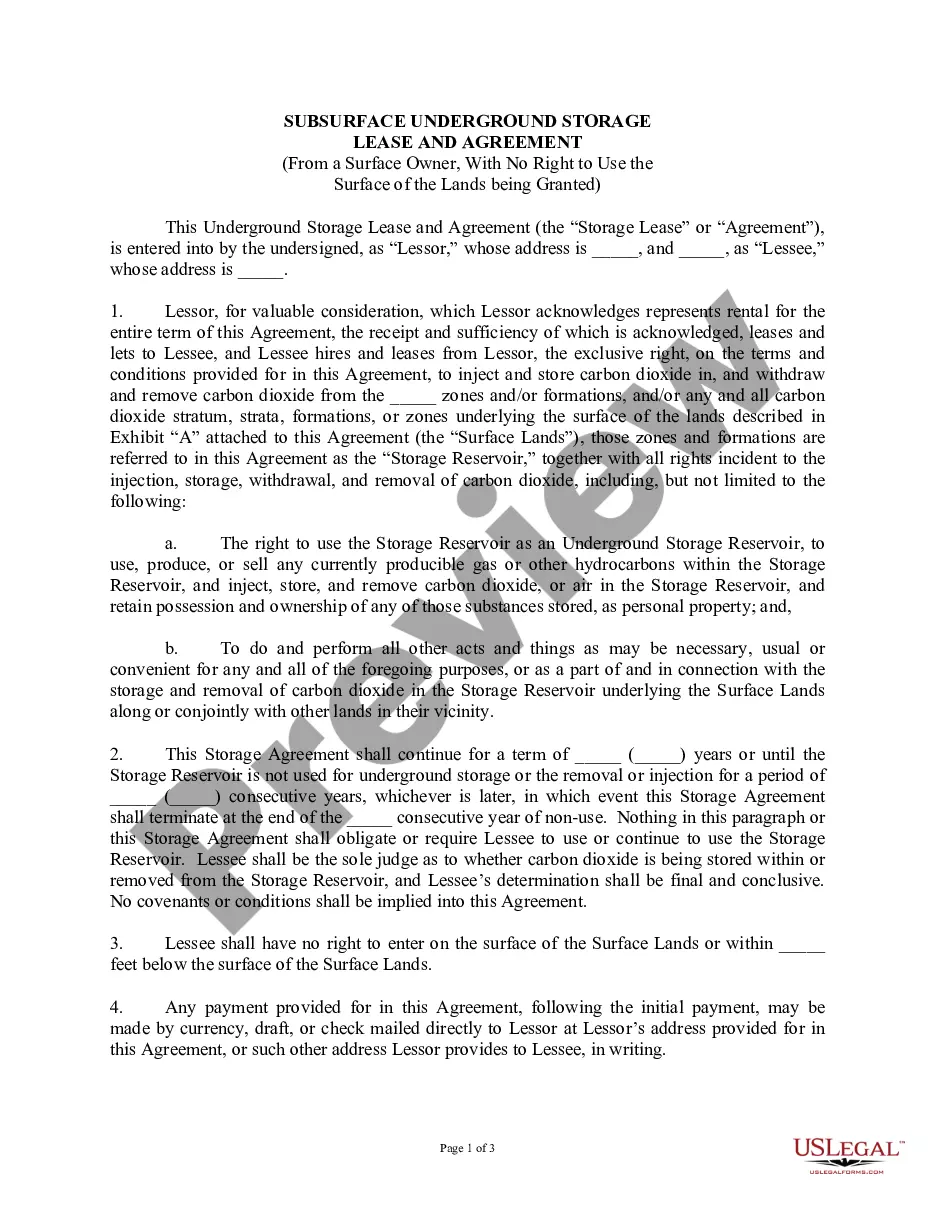
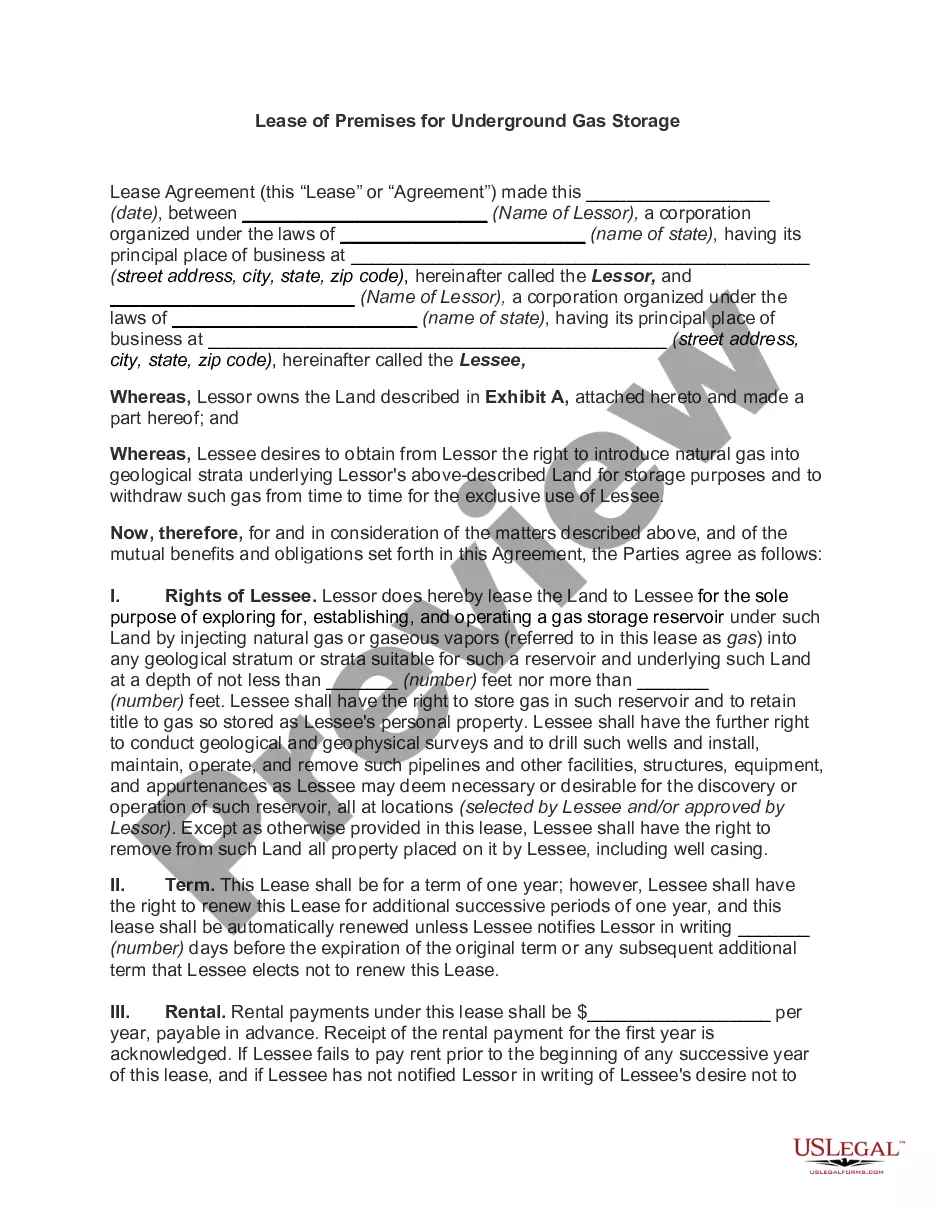
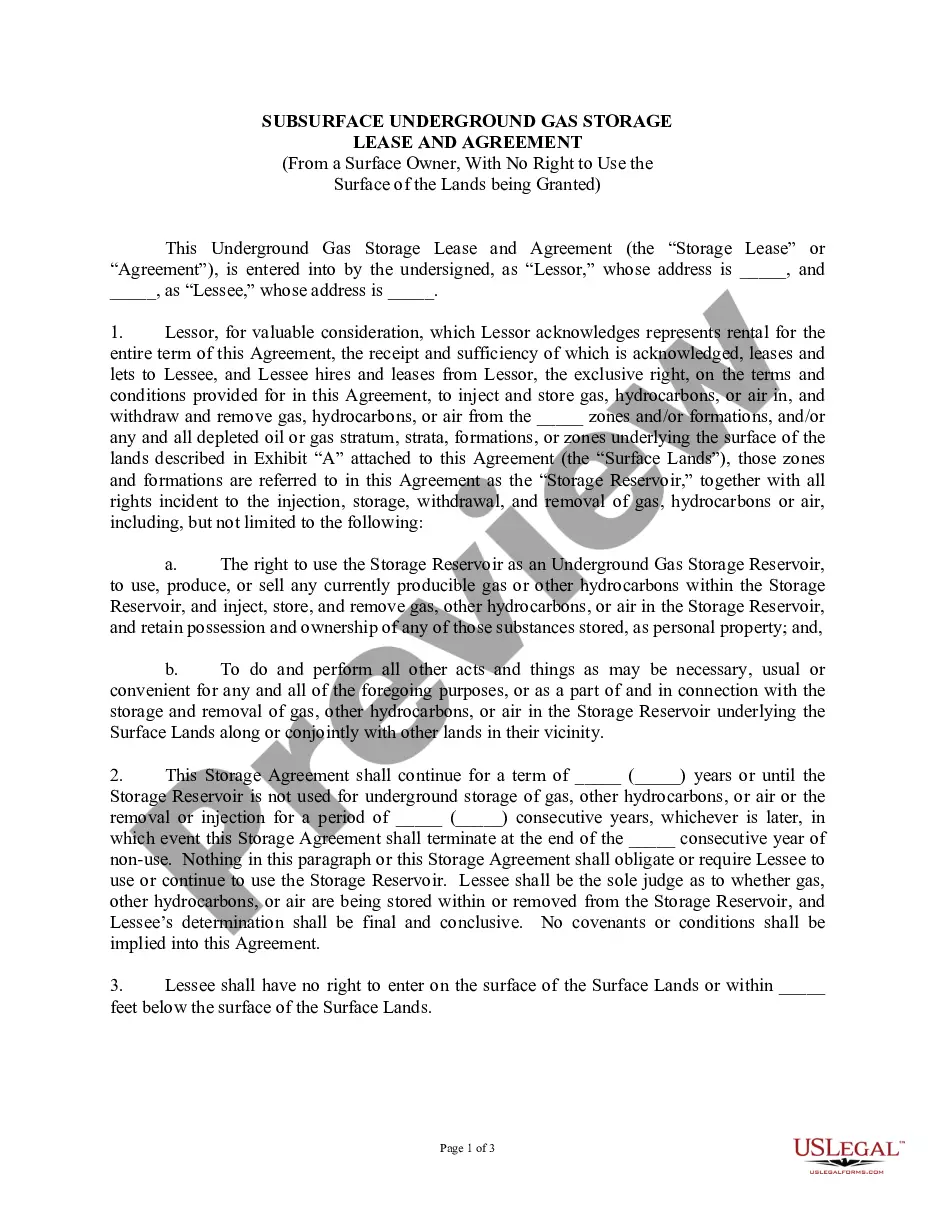
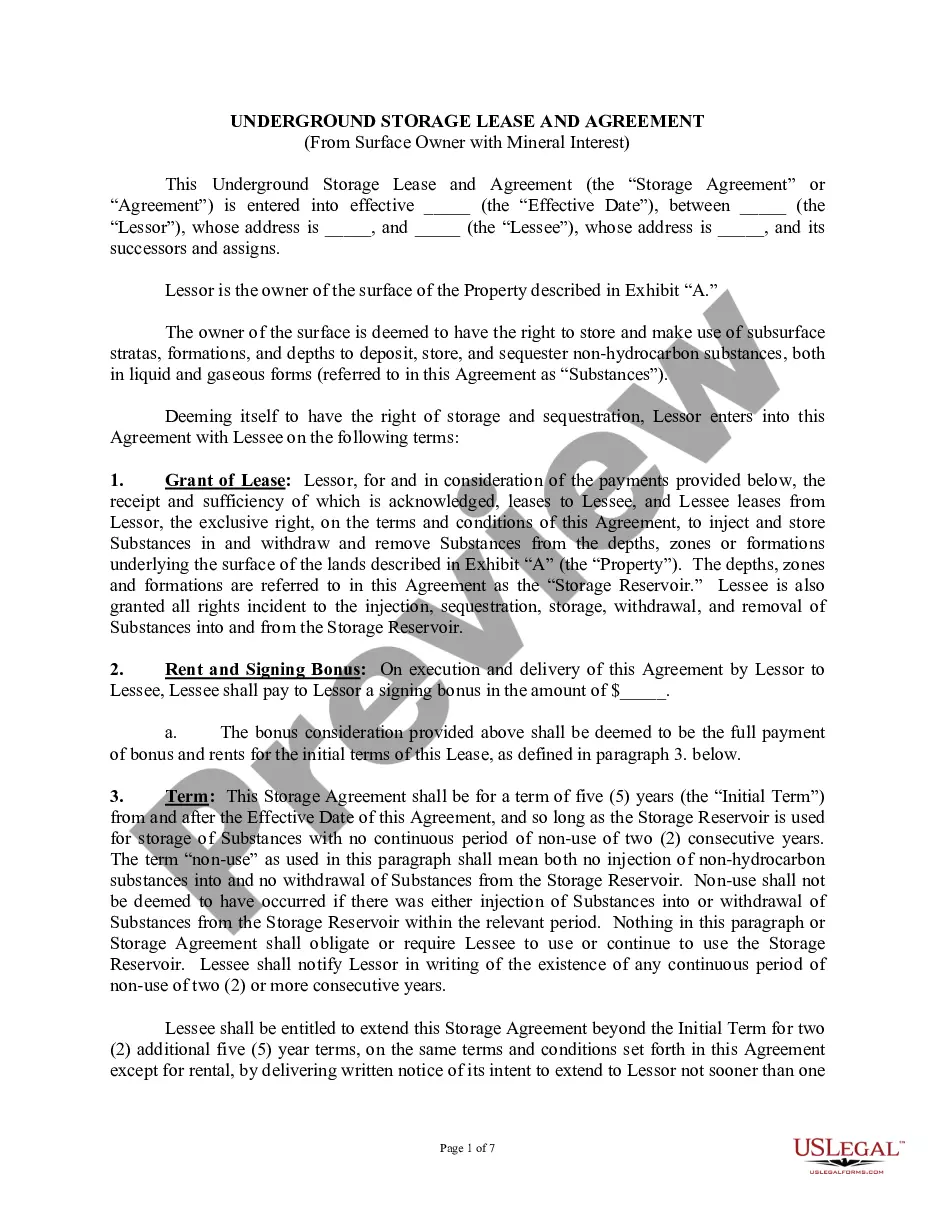
This Subsurface Underground Gas Storage Lease and Agreement is a legal document that allows a surface owner (the Lessor) to lease the underground storage rights for carbon dioxide and similar gases to another party (the Lessee). This agreement explicitly prohibits the Lessee from using the surface of the property, which sets it apart from other lease agreements that might include surface rights. It is designed to provide a clear framework for the injection, storage, and withdrawal of carbon dioxide in designated subsurface zones, ensuring legal clarity and protection for both parties involved.
Key parts of this document
- Parties Involved: Identifies the Lessor and Lessee, including their addresses.
- Lease Terms: Outlines the term of the lease agreement and conditions for termination.
- Storage Rights: Details the exclusive rights granted to the Lessee for gas injection and storage.
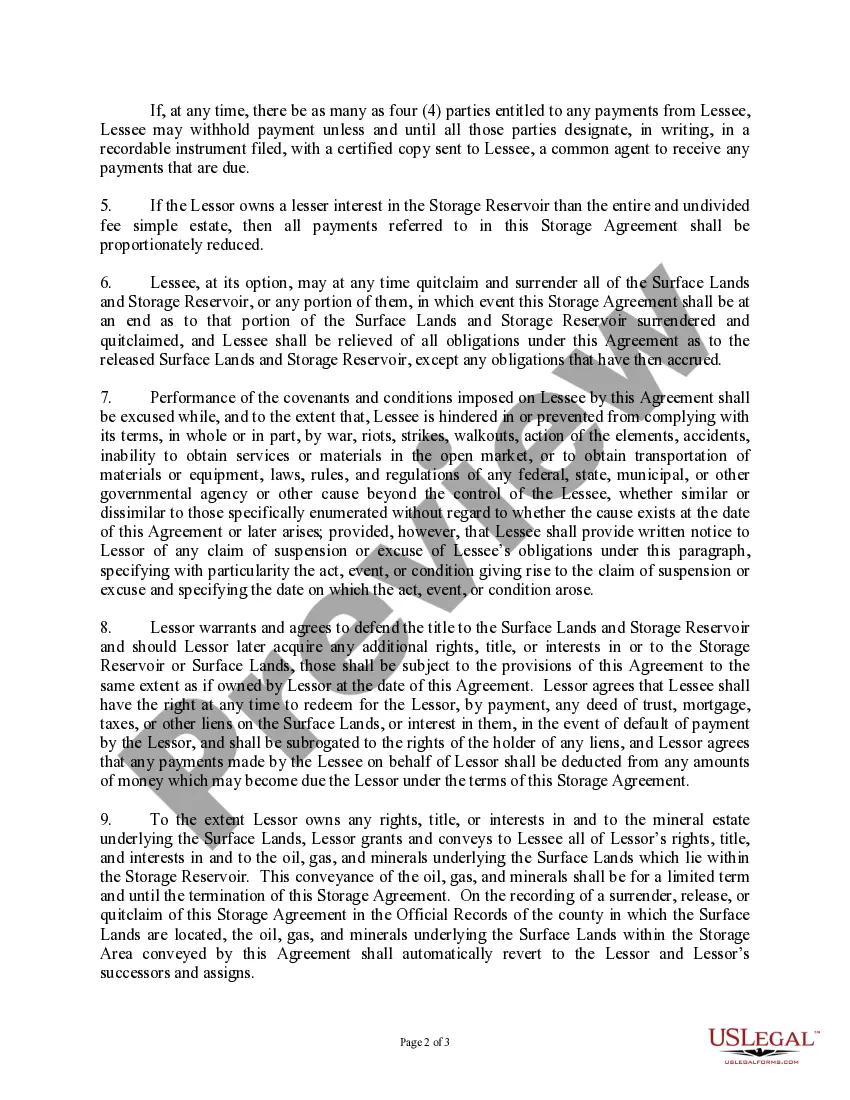
- Payment Structure: Describes how payments are to be made and conditions that might affect them.
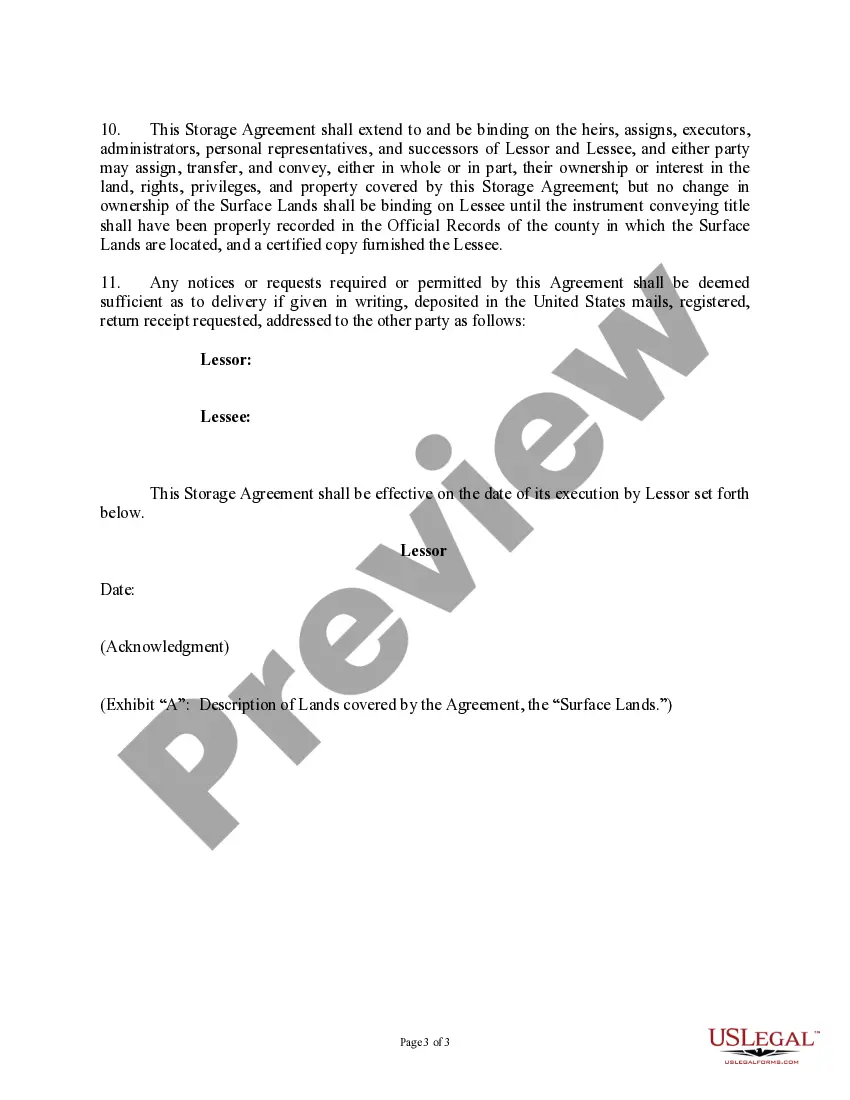
- Surface Rights Restriction: Clarifies that the Lessee has no rights to use or enter the surface land.
- Warranties and Representations: Lessor's commitments regarding ownership and title of the storage reservoir.
Common use cases
This form should be used when a property owner wishes to lease subsurface land for underground gas storage without granting any rights to use the surface land. It is particularly relevant in situations where carbon dioxide storage is required for environmental compliance or industrial purposes. If you are involved in energy production, environmental management, or carbon capture projects, this agreement is essential for establishing legal rights and obligations between parties.
Who should use this form
- Surface landowners looking to lease their underground storage space.
- Lessee entities involved in carbon dioxide storage or similar gas operations.
- Legal professionals advising clients on real estate or environmental matters.
- Investors and businesses managing energy-related assets.
Instructions for completing this form
- Identify the parties involved: fill in the names and addresses of both the Lessor and Lessee.
- Specify the term of the lease: indicate the duration for which the leasing agreement is valid.
- Detail the payment terms: include the payment structure and any conditions relating to payment.
- Outline the specific sections of land being leased: refer to Exhibit A for precise descriptions.
- Provide signatures: ensure both parties sign and date the agreement to formalize it.
Notarization guidance
In most cases, this form does not require notarization. However, some jurisdictions or signing circumstances might. US Legal Forms offers online notarization powered by Notarize, accessible 24/7 for a quick, remote process.
Get your form ready online
Our built-in tools help you complete, sign, share, and store your documents in one place.
Make edits, fill in missing information, and update formatting in US Legal Forms—just like you would in MS Word.
Download a copy, print it, send it by email, or mail it via USPS—whatever works best for your next step.
Sign and collect signatures with our SignNow integration. Send to multiple recipients, set reminders, and more. Go Premium to unlock E-Sign.
If this form requires notarization, complete it online through a secure video call—no need to meet a notary in person or wait for an appointment.
We protect your documents and personal data by following strict security and privacy standards.

Make edits, fill in missing information, and update formatting in US Legal Forms—just like you would in MS Word.

Download a copy, print it, send it by email, or mail it via USPS—whatever works best for your next step.

Sign and collect signatures with our SignNow integration. Send to multiple recipients, set reminders, and more. Go Premium to unlock E-Sign.

If this form requires notarization, complete it online through a secure video call—no need to meet a notary in person or wait for an appointment.

We protect your documents and personal data by following strict security and privacy standards.
Mistakes to watch out for
- Failing to specify the exact term of the lease or conditions for termination.
- Not clearly defining the surface land's limitations, leading to potential disputes.
- Overlooking the requirements for payment and methods of delivery.
- Neglecting to complete Exhibit A or clearly describe the leased areas.
- Not obtaining necessary signatures, rendering the document invalid.
Why complete this form online
- Quick download and access to legal form templates designed by licensed attorneys.
- Editable format allows for customization to fit specific needs and agreements.
- Convenience of completing the form at your own pace from home or office.
- Ensures compliance with standard legal language, enhancing reliability and clarity.
Looking for another form?
Form popularity
FAQ
Subsurface rights are the right to the earth below the land, and any substances found beneath the land's surface.Subsurface rights usually include the right to oil, minerals and even water that's found beneath the land's surface. Like surface and air rights, subsurface rights can be bought, leased or sold alone.
Like land, mineral rights are conveyed through a deed transferring ownership to the buyer. While the property deed will reference the mineral rights transfer at the time of the separation of land and mineral rights, subsequent sales of the land will not.
Mineral rights are automatically included as a part of the land in a property conveyance, unless and until the ownership gets separated at some point by an owner/seller.Conveying (selling or otherwise transferring) the land but retaining the mineral rights.
Ruth Hersh, Real Estate Agent EXIT Success Realty. Owner of land allowing another to use space under the ground, such as to install a sewer or gas line.
You can retain your mineral rights simply by putting an exception in your sales contract, provided that the buyer agrees to it, of course. If you sell your house with no such legal clarification, then those mineral rights automatically transfer to the buyer.
Subsurface rights are the rights to extract minerals from below the surface of the land.
Why are subsurface rights considered dominant over surface rights?Because owners of subsurface rights must have access to the surface of the property for the placement of such things as drilling or pumping rigs.
If you want to sell the mineral rights to another person, you can transfer them by deed. You will need to create a mineral deed and have it recorded. You should check with the county Recorder of Deeds in the county where the land is located and ask if a printed mineral deed form is available to use.
When mineral rights are owned by a third party, it may affect your use of the surface in the future. Surface rights are subservient to mineral rights, which means the owner of a mineral servitude will be able to access and use the surface to extract the minerals from underneath.