Subsurface Underground Storage Lease and Agreement (From a Surface Owner, With No Right ot Use the Surface of the Lands being Granted)
Understanding this form
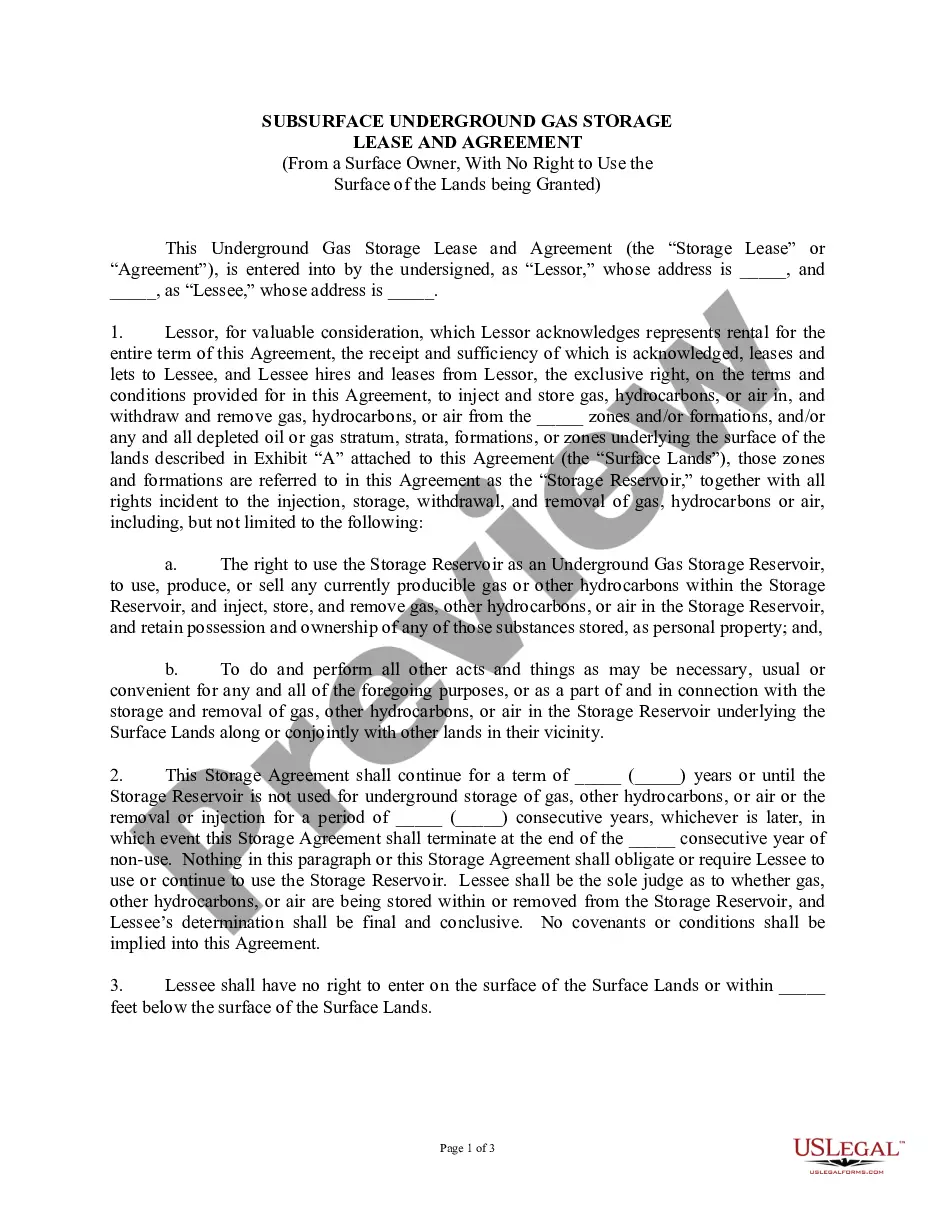
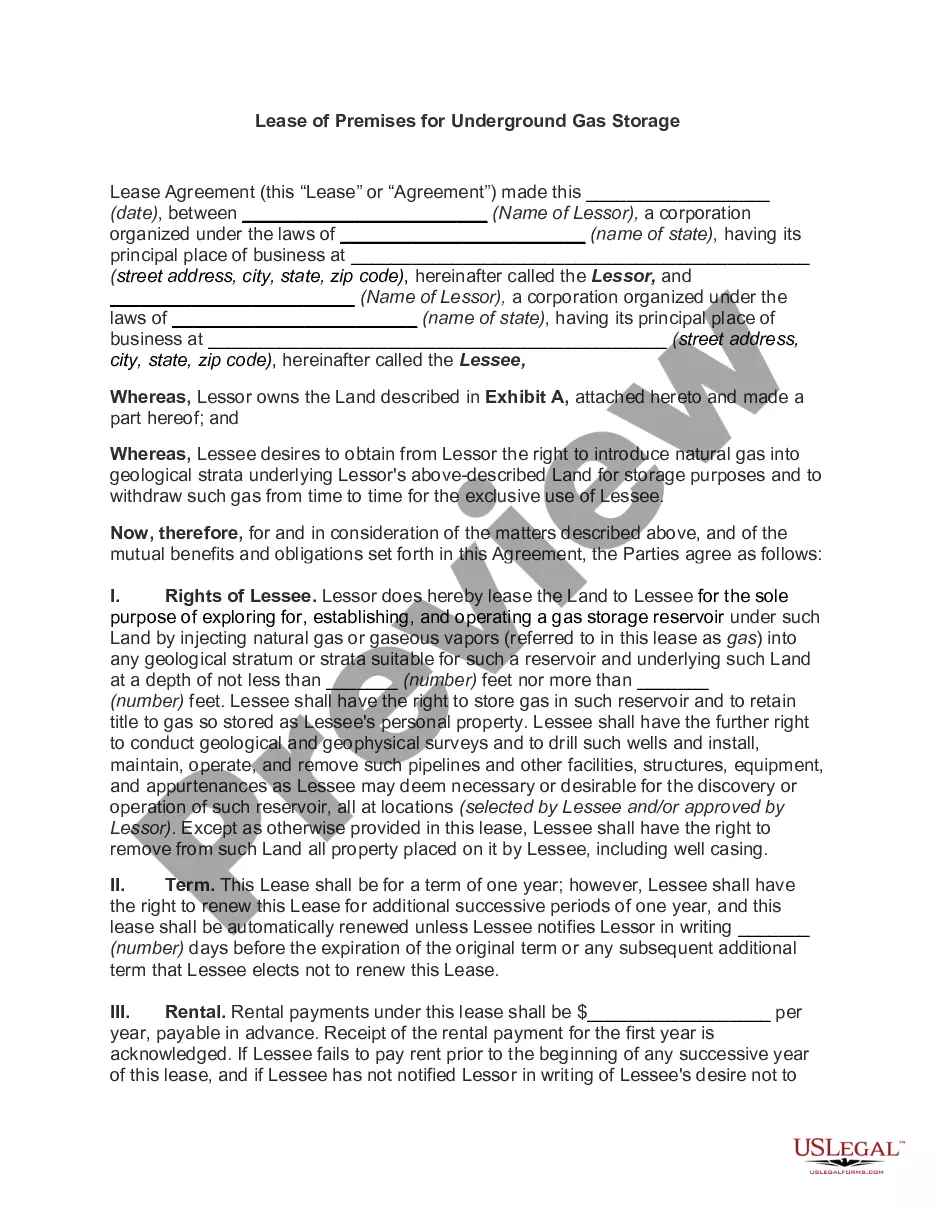
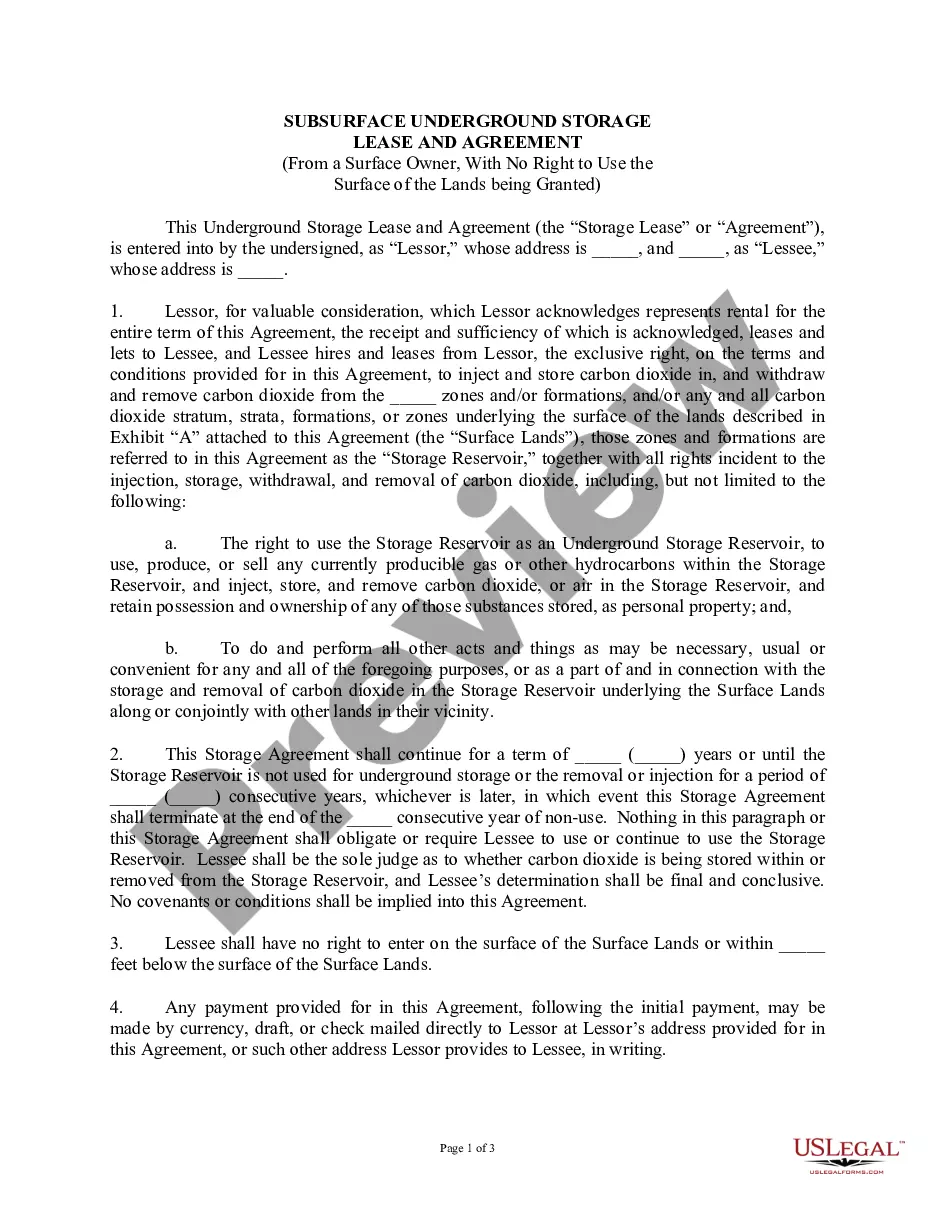
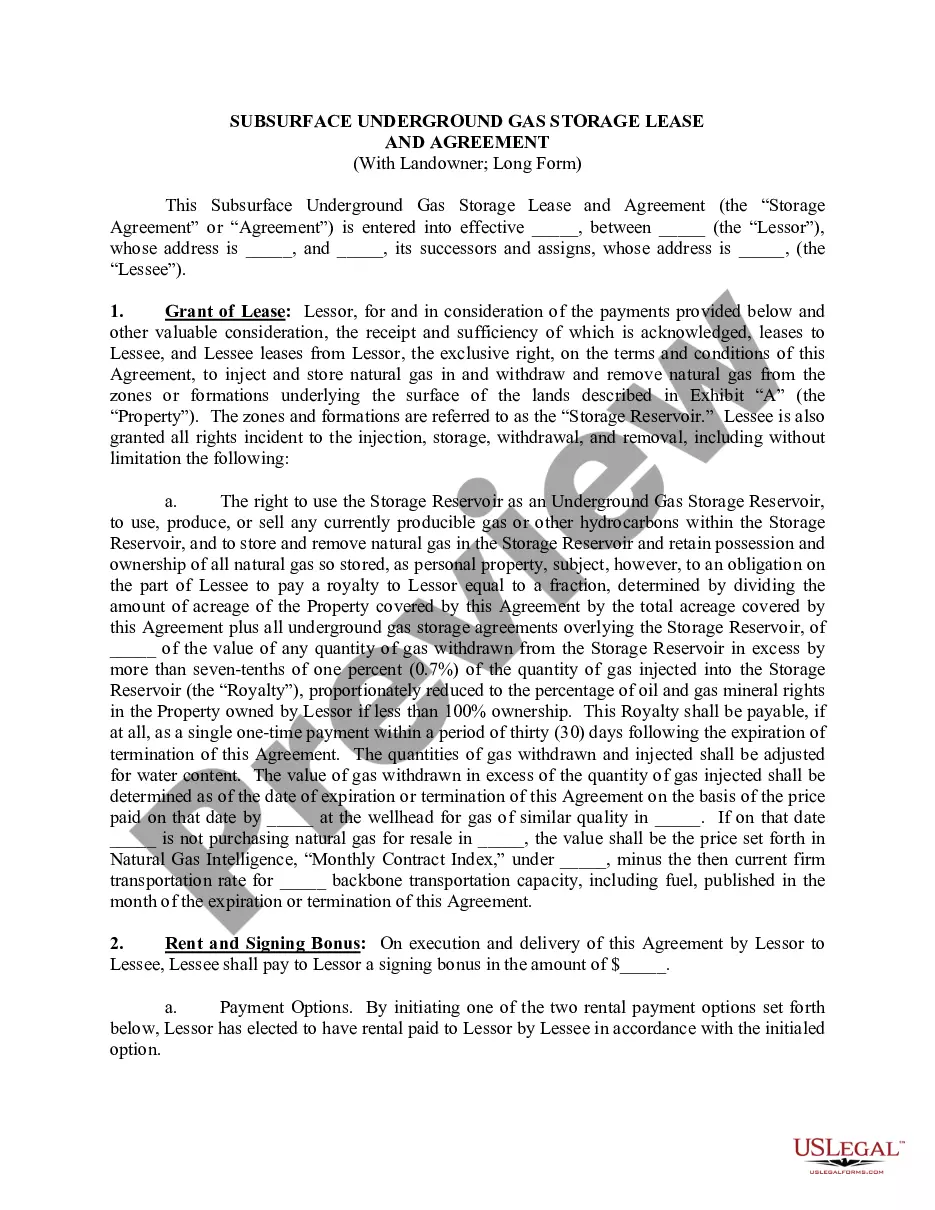
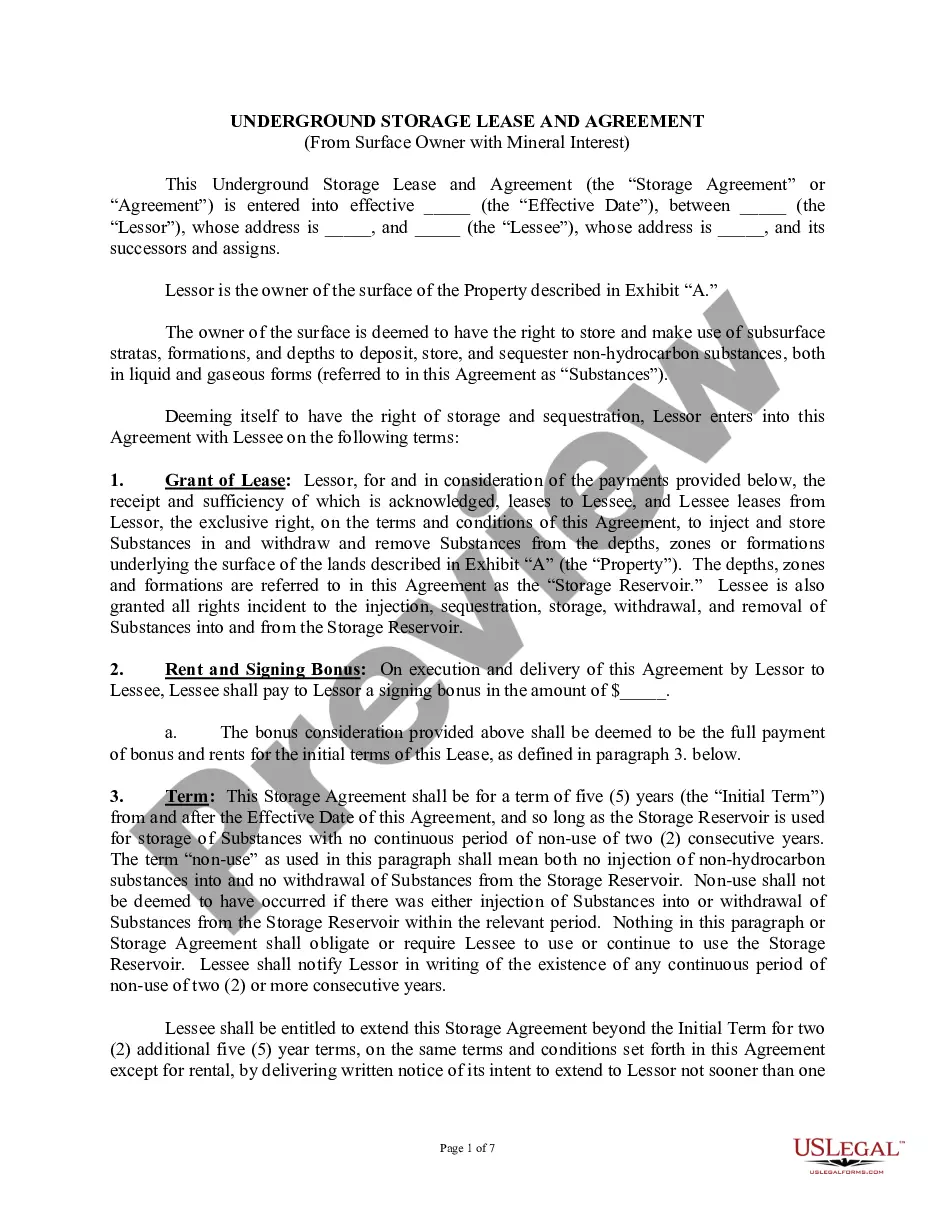
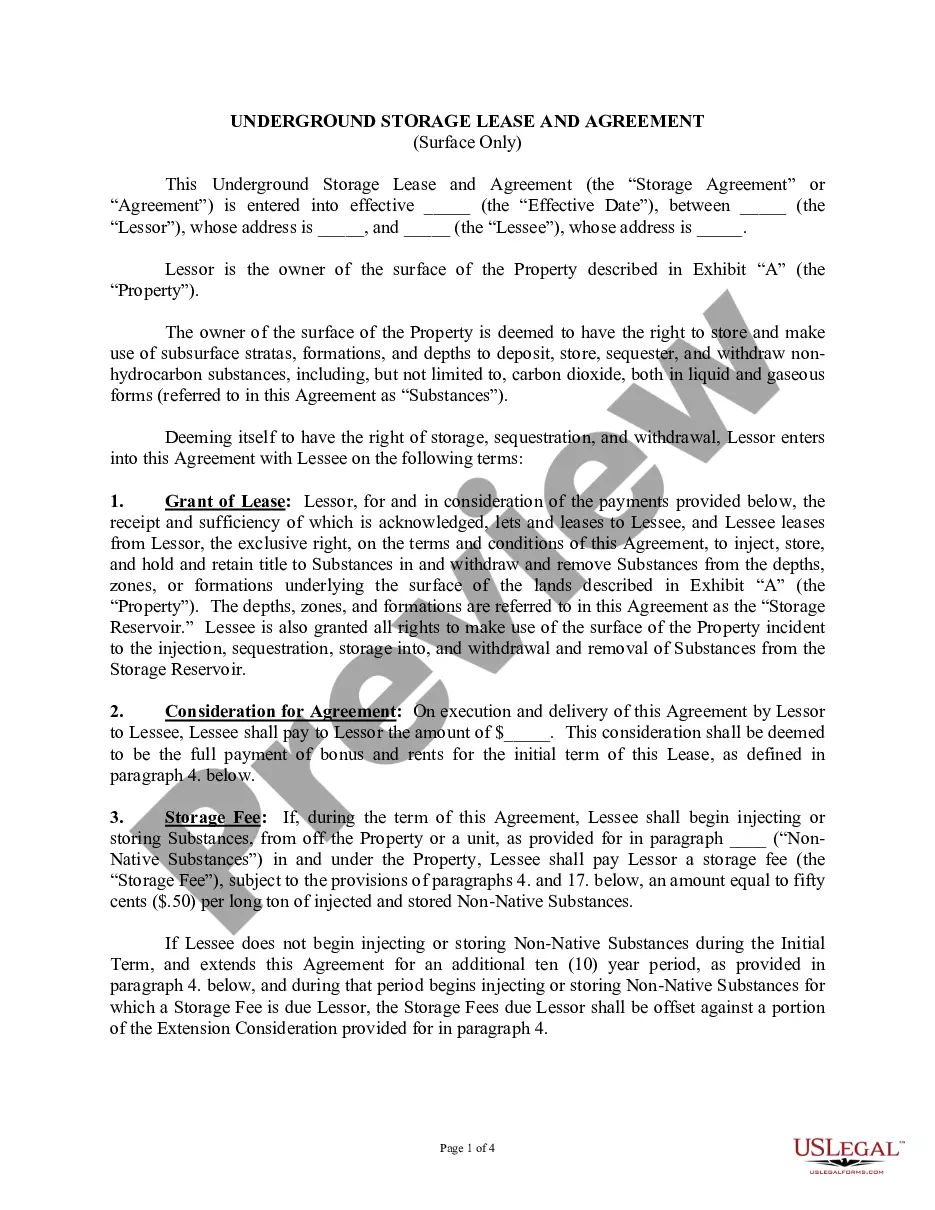
This Subsurface Underground Storage Lease and Agreement is a legal document that allows a surface owner to lease their underground space for the storage of gas, hydrocarbons, or air without granting the lessee any rights to the surface land. The agreement clearly outlines the rights and responsibilities of both the lessor and lessee regarding the storage and withdrawal of these substances from designated underground zones.
Key parts of this document
- Lessor and lessee identification, including addresses.
- Definition and description of the Storage Reservoir and Surface Lands.
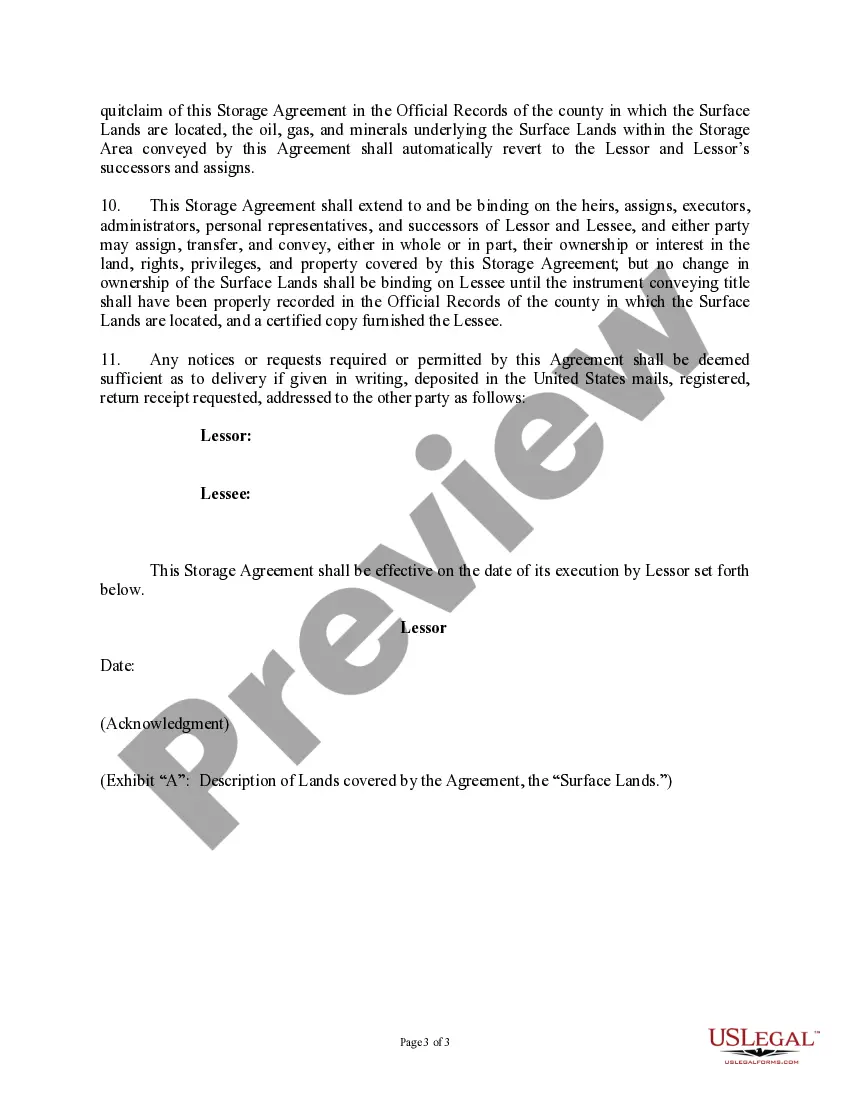
- Lease term duration and termination conditions.
- Rights granted to the lessee regarding storage and removal of gas and hydrocarbons.
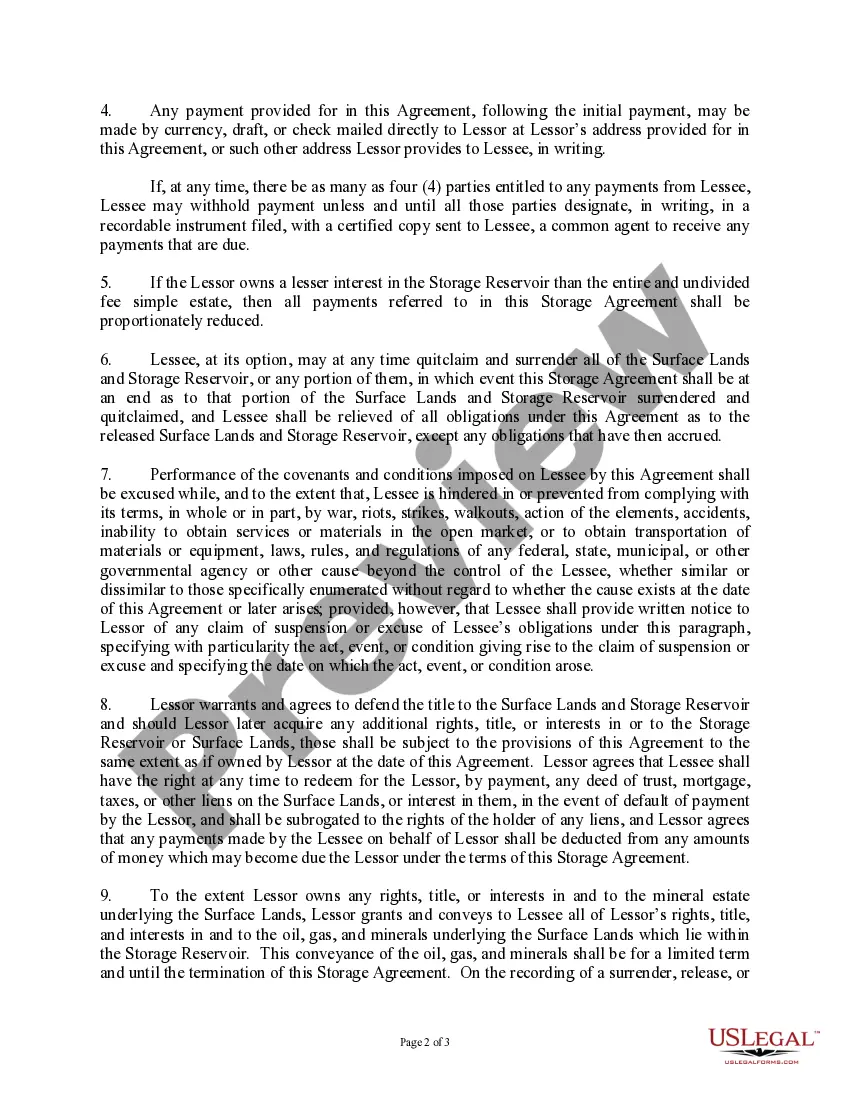
- Provisions for payment methods and terms.
- Warranties regarding the title of the Surface Lands and Storage Reservoir.
When to use this document
This form is essential for any surface landowner who wishes to lease underground storage space while maintaining control over the surface land. It can be used when negotiating agreements for the storage of gases or hydrocarbons, particularly when the lessee will not require access to the surface while utilizing the subsurface resources.
Intended users of this form
- Surface landowners looking to lease underground storage space.
- Businesses or entities involved in gas or hydrocarbon storage.
- Contract negotiators who need a clear legal framework for underground leases.
Completing this form step by step
- Identify the parties involved, including the lessor's and lessee's names and addresses.
- Specify the exact location of the Surface Lands and storage zones in Exhibit A.
- Enter the lease term duration and conditions for termination of the agreement.
- Outline the payment details, including the method of payment and any required proportions if ownership is shared.
- Ensure all parties sign and date the agreement to finalize it.
Does this form need to be notarized?
This form needs to be notarized to ensure legal validity. US Legal Forms provides secure online notarization powered by Notarize, allowing you to complete the process through a verified video call, available anytime.
Get your form ready online
Our built-in tools help you complete, sign, share, and store your documents in one place.
Make edits, fill in missing information, and update formatting in US Legal Forms—just like you would in MS Word.
Download a copy, print it, send it by email, or mail it via USPS—whatever works best for your next step.
Sign and collect signatures with our SignNow integration. Send to multiple recipients, set reminders, and more. Go Premium to unlock E-Sign.
If this form requires notarization, complete it online through a secure video call—no need to meet a notary in person or wait for an appointment.
We protect your documents and personal data by following strict security and privacy standards.

Make edits, fill in missing information, and update formatting in US Legal Forms—just like you would in MS Word.

Download a copy, print it, send it by email, or mail it via USPS—whatever works best for your next step.

Sign and collect signatures with our SignNow integration. Send to multiple recipients, set reminders, and more. Go Premium to unlock E-Sign.

If this form requires notarization, complete it online through a secure video call—no need to meet a notary in person or wait for an appointment.

We protect your documents and personal data by following strict security and privacy standards.
Common mistakes to avoid
- Failing to accurately describe the geographic boundaries of the Storage Reservoir.
- Omitting signatures from either party on the agreement.
- Neglecting to specify the payment methods and amounts clearly.
Benefits of using this form online
- Convenient access and the ability to download the form anytime.
- Edit and customize the agreement to fit your specific needs.
- Reliable templates drafted by licensed attorneys, ensuring compliance with legal standards.
Legal use & context
- This lease agreement establishes the legal relationship between the surface owner and the lessee, enabling clear operational guidelines.
- It protects the rights of both parties and outlines conditions under which the lease may terminate or be surrendered.
- Effective communication and documentation are necessary to avoid future disputes regarding the use of subsurface space.
Main things to remember
- The form is essential for leasing subsurface storage space without impacting surface land use.
- Clear terms and rights in the agreement help prevent conflicts between parties.
- Consult state regulations to ensure the form is compliant with local laws.
Looking for another form?
Form popularity
FAQ
In Texas, and most other states, the ownership of the mineral estate can be separated (severed) from the surface estate. Put another way, one person may own the rights to use the surface of a piece of property while another person has the right to use the minerals underneath the property.
Mineral rights don't come into effect until you begin to dig below the surface of the property. But the bottom line is: if you do not have the mineral rights to a parcel of land, then you do not have the legal ability to explore, extract, or sell the naturally occurring deposits below.
You can retain your mineral rights simply by putting an exception in your sales contract, provided that the buyer agrees to it, of course. If you sell your house with no such legal clarification, then those mineral rights automatically transfer to the buyer.
Mineral rights are the ownership rights to underground resources such as fossil fuels (oil, natural gas, coal, etc.), metals and ores, and mineable rocks such as limestone and salt. In the United States, mineral rights are legally distinct from surface rights.
Unless you also own the minerals under your land, that someone might have every right to start drilling. In the United States, mineral rights can be sold or conveyed separately from property rights. As a result, owning a piece of land does not necessarily mean you also own the rights to the minerals beneath it.
There are multiple ways to buy minerals, the most common being at auction, from brokers, by negotiated sale, tax sales, and directly from mineral owners. The process of buying minerals varies depending on where you buy them.
Mineral rights don't come into effect until you begin to dig below the surface of the property. But the bottom line is: if you do not have the mineral rights to a parcel of land, then you do not have the legal ability to explore, extract, or sell the naturally occurring deposits below.
Subsurface rights are the right to the earth below the land, and any substances found beneath the land's surface. Subsurface rights are important because landowners will sometimes acquire the right to valuable items in the earth's ground.