Standard Services Agreement
Overview of this form
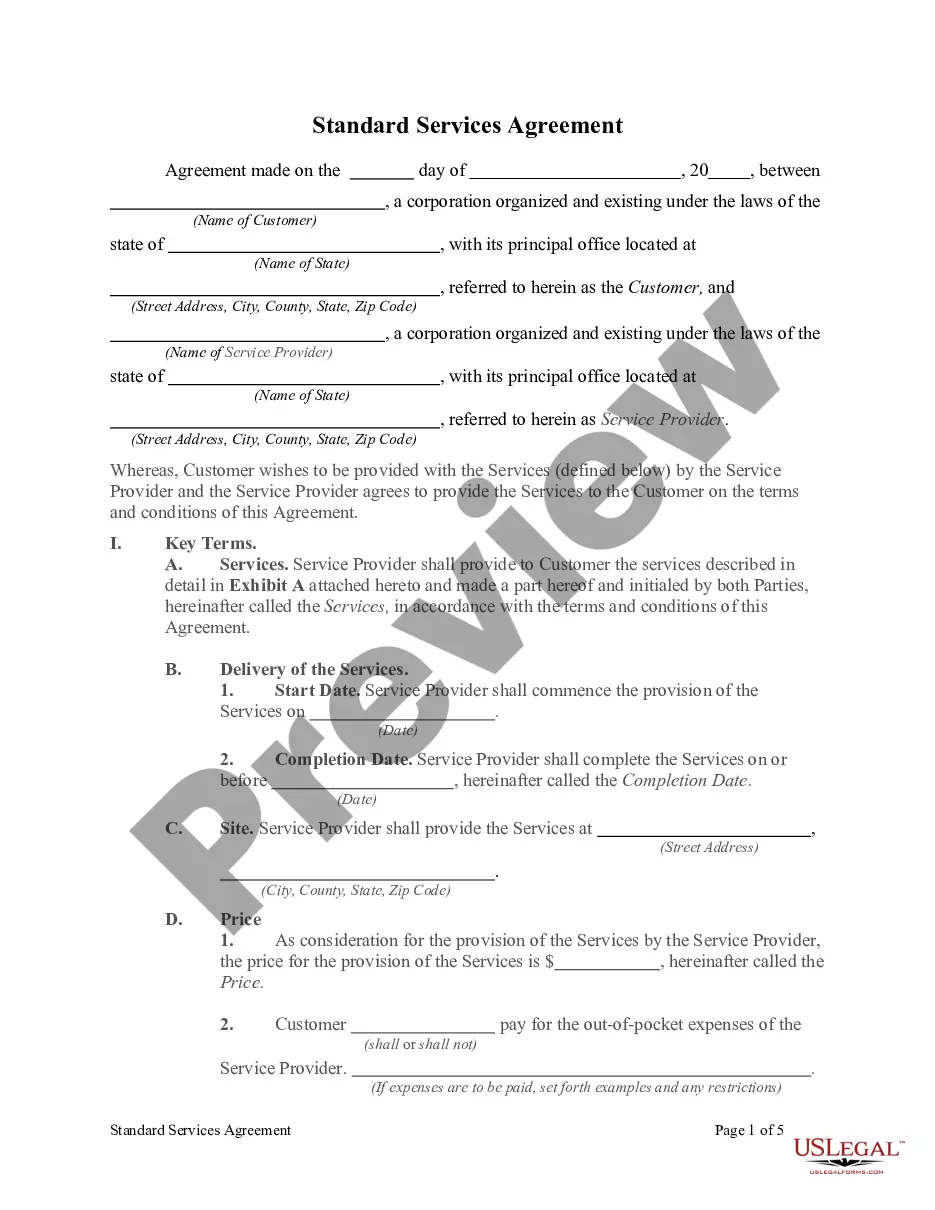
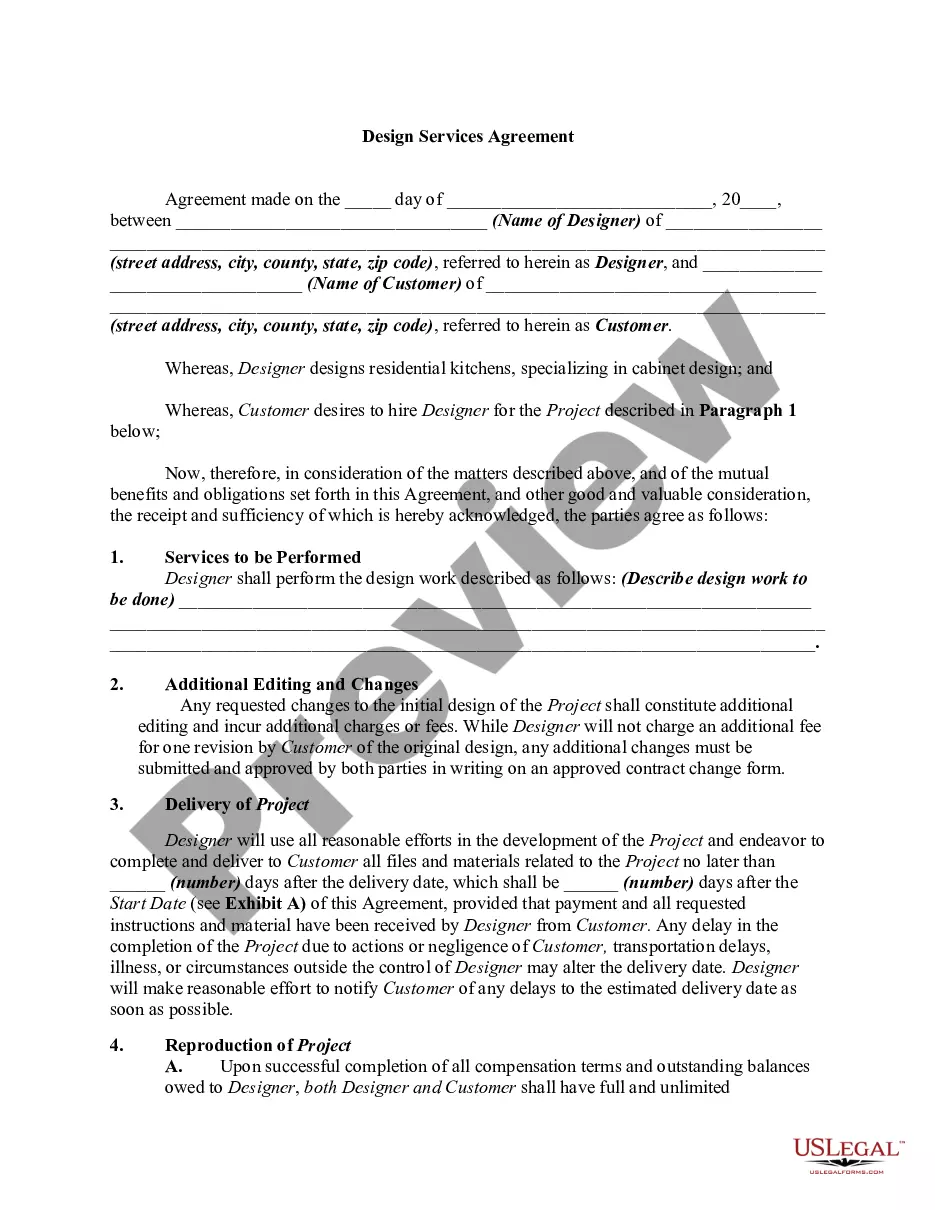
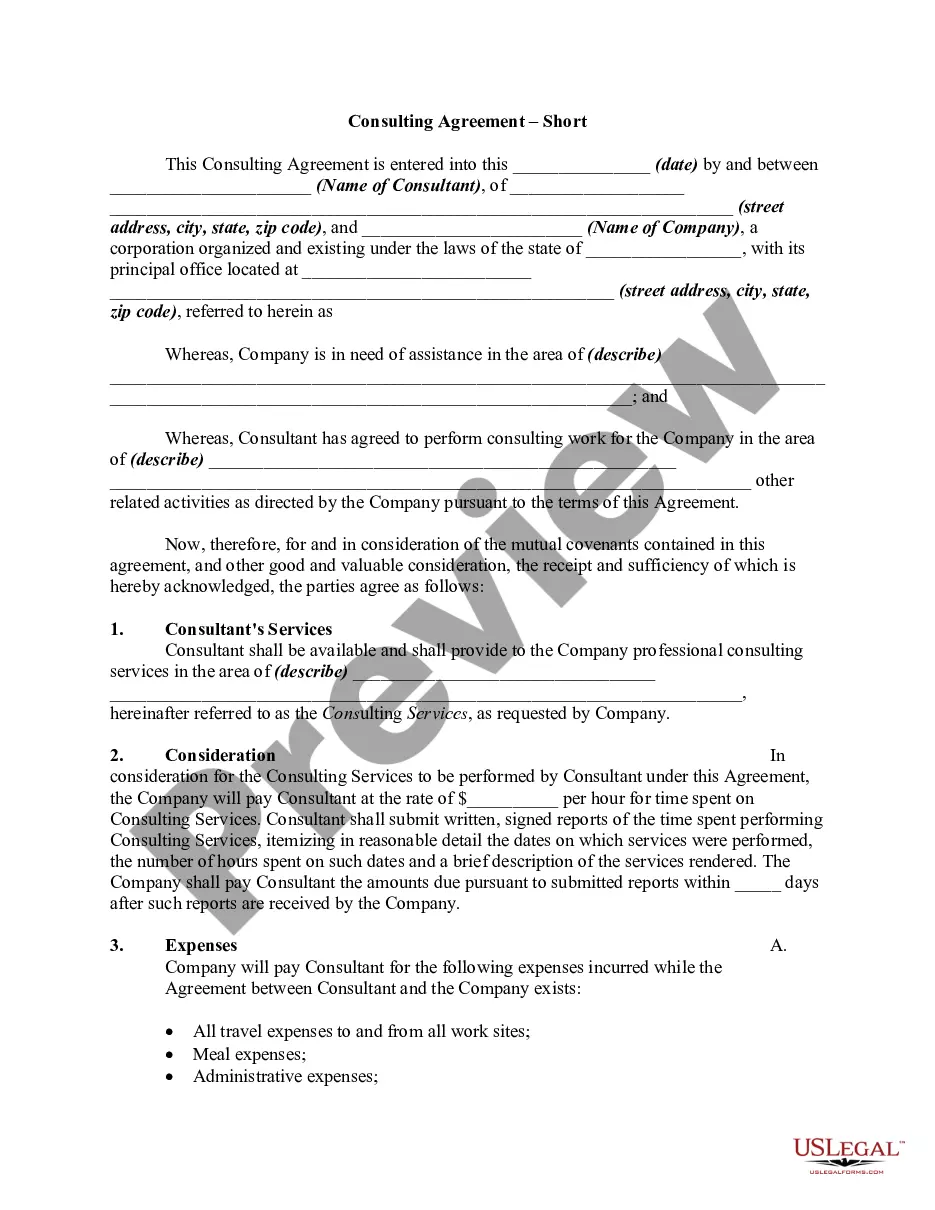
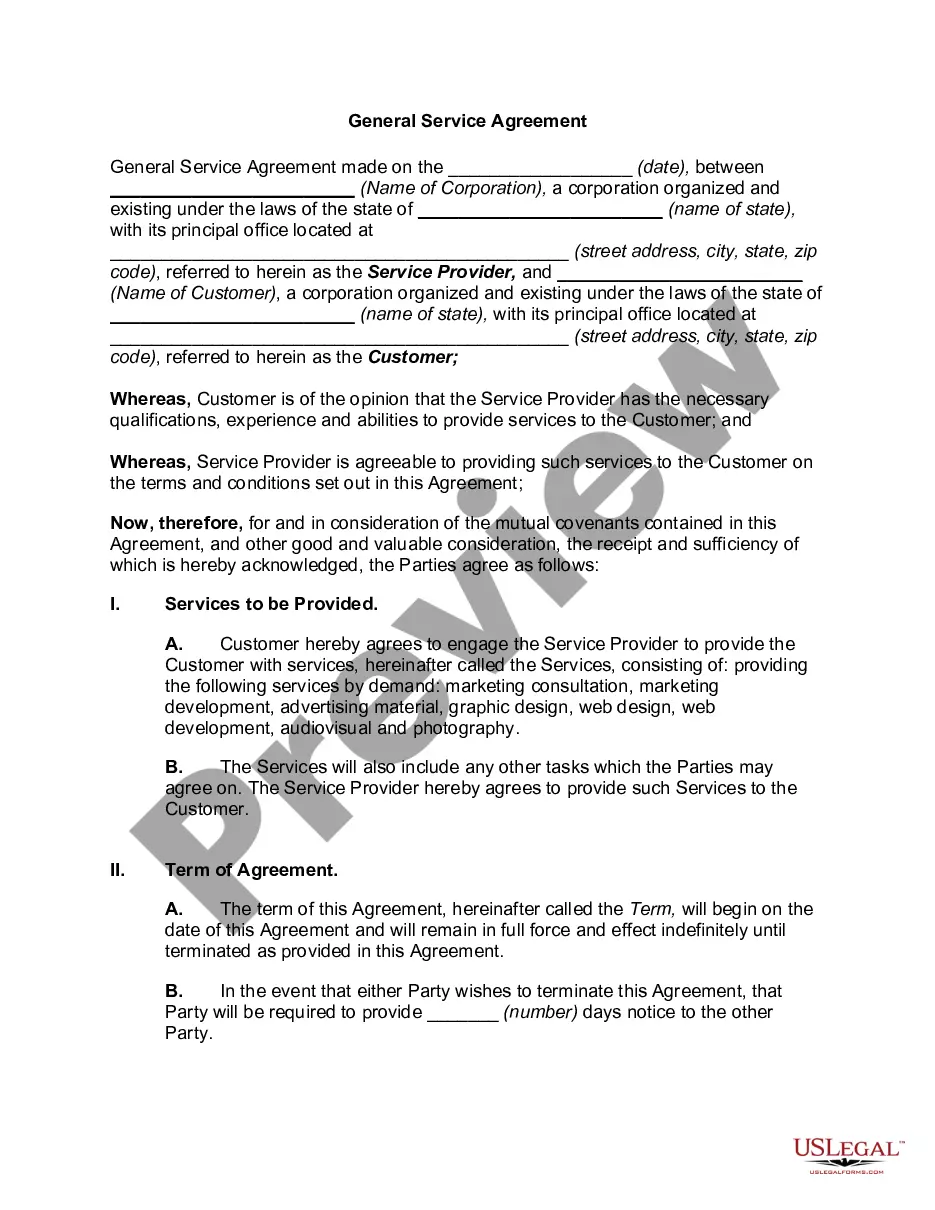
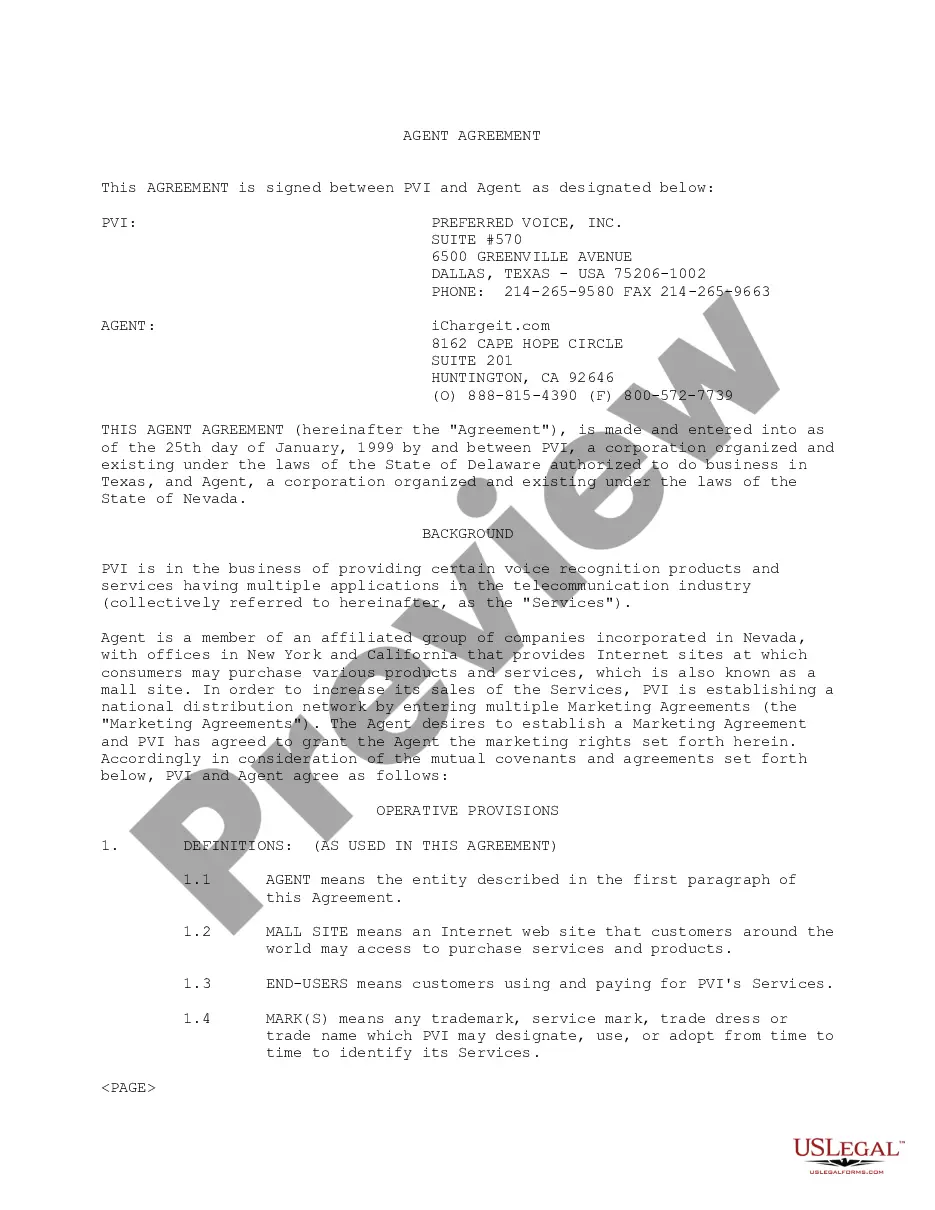
The Standard Services Agreement is a legal document that establishes an agreement between a service provider and a customer. This form outlines the specific services to be provided and the obligations of both parties. It serves to clarify the terms of service and can help prevent misunderstandings, setting it apart from other service contracts by addressing intellectual property rights and liability limitations comprehensively.
Form components explained
- Identification of the services to be provided by the service provider.
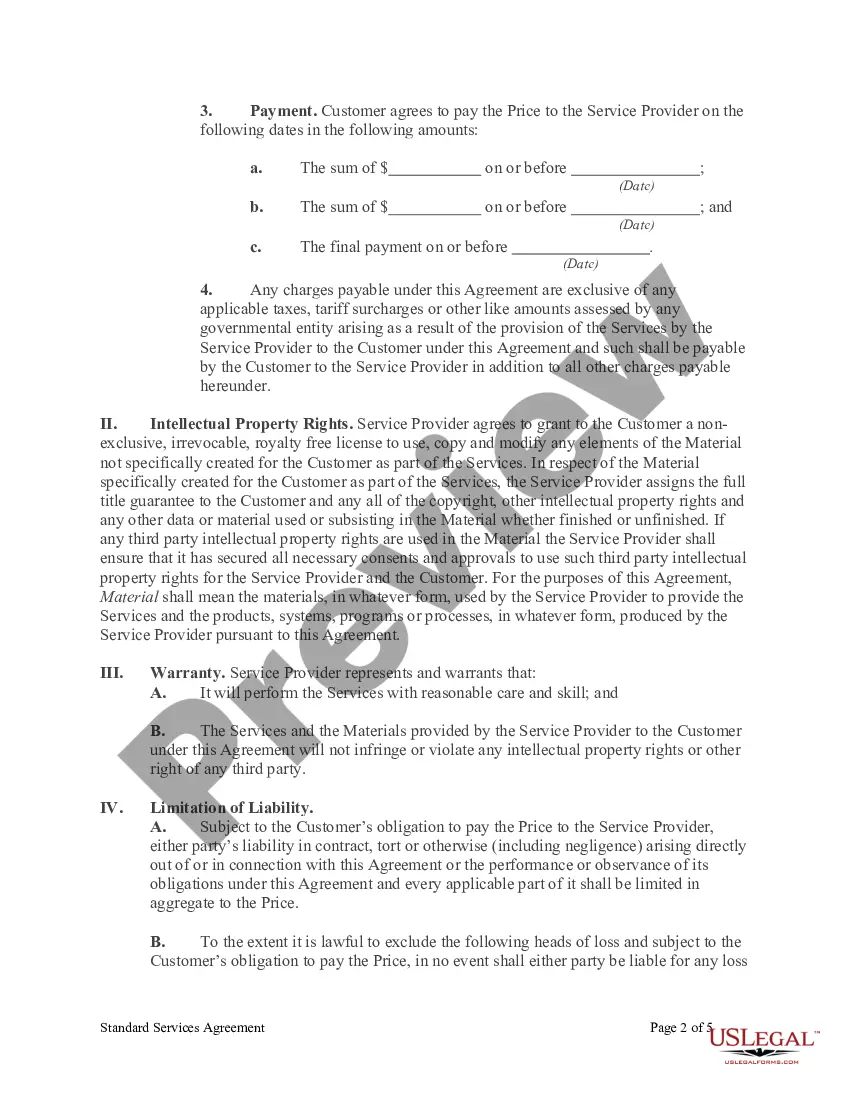
- Intellectual property rights outlining use, modification, and ownership of the materials created.
- Warranty clause guaranteeing performance standards and protection against infringement.
- Limitation of liability specifying the extent of each party's liability in case of issues.
- Terms of termination and how the agreement can be concluded by either party.
- Dispute resolution through mandatory arbitration.



When to use this form
This form is particularly useful when a business or individual needs to formalize a service arrangement. It is applicable in situations where specific services are to be provided that require clear terms to protect both parties. Common scenarios include hiring freelancers, consultants, or any contracted work where services and expectations need to be outlined in detail.
Who needs this form
- Businesses seeking to hire outside service providers.
- Independent contractors and freelancers offering services to clients.
- Individuals looking to establish a formal agreement with service providers for personal projects.
Completing this form step by step
- Identify the parties involved in the agreement, including full names and contact information.
- Clearly outline the services to be performed in detail, ensuring both parties agree on the scope.
- Include any specific terms regarding intellectual property rights in the agreement.
- Specify the duration of the agreement and conditions for termination.
- Ensure both parties sign and date the agreement to make it legally binding.
Does this form need to be notarized?
This form usually doesn’t need to be notarized. However, local laws or specific transactions may require it. Our online notarization service, powered by Notarize, lets you complete it remotely through a secure video session, available 24/7.
Get your form ready online
Our built-in tools help you complete, sign, share, and store your documents in one place.
Make edits, fill in missing information, and update formatting in US Legal Forms—just like you would in MS Word.
Download a copy, print it, send it by email, or mail it via USPS—whatever works best for your next step.
Sign and collect signatures with our SignNow integration. Send to multiple recipients, set reminders, and more. Go Premium to unlock E-Sign.
If this form requires notarization, complete it online through a secure video call—no need to meet a notary in person or wait for an appointment.
We protect your documents and personal data by following strict security and privacy standards.

Make edits, fill in missing information, and update formatting in US Legal Forms—just like you would in MS Word.

Download a copy, print it, send it by email, or mail it via USPS—whatever works best for your next step.

Sign and collect signatures with our SignNow integration. Send to multiple recipients, set reminders, and more. Go Premium to unlock E-Sign.

If this form requires notarization, complete it online through a secure video call—no need to meet a notary in person or wait for an appointment.

We protect your documents and personal data by following strict security and privacy standards.
Avoid these common issues
- Failing to clearly define the scope of services, leading to misunderstandings.
- Not including detailed terms related to intellectual property, which may result in ownership disputes.
- Overlooking liability limitations that can leave one party exposed to significant risk.
- Neglecting to sign or date the agreement, thus rendering it invalid.
Why use this form online
- Easy access to tailored templates that can be customized for various service agreements.
- Convenience of downloading and completing forms at your own pace.
- Reliable, attorney-drafted content ensuring legal soundness and compliance.
Looking for another form?



Form popularity
FAQ
A description of the parties involved in the agreement. A description of the services to be performed. A description of fees and payment schedules. The effective date of the contract, when work will begin, and the terms under which it can be terminated. Include a place for signatures.
Identify the customer and service provider. Describe the services being provided. Outline a payment schedule. Establish terms about confidentiality, non-solicitation, and non-competition. Address ownership of materials. Personalize your Service Agreement.
The following list includes the key provisions to look for when entering into a service agreement, including: payment, scope of services, amendment, termination, liability insurance, confidentiality, IP ownership, and choice of law/dispute resolution.
A description of the parties involved in the agreement. A description of the services to be performed. A description of fees and payment schedules. The effective date of the contract, when work will begin, and the terms under which it can be terminated. Include a place for signatures.
A Service Agreement is a contract - either written or verbal - which sets out the terms and conditions for service between a Customer and a Service Provider.A Service Agreement may sometimes be referred to as a contractor form, an independent contractor agreement, a contractor agreement or a freelance agreement.
Usually, oral contracts are enforceable. However, the Statute of Frauds requires that six kinds of contracts be put in writing in order to be enforceable.If the contract does not fall into one of these six categories, the contract is outside the statute and does not need to be in writing.
A Service Agreement, also sometimes called a General Services Agreement, is a document between a service provider and a client. Within these agreements, the service provider and client outline their expectations for behavior and agree to the bounds of the relationship between them.
Get it in Writing. Use Language You Can Understand. Be Detailed. Include Payment Details. Consider Confidentiality. Include Language on How to Terminate the Contract. Consider State Laws Governing the Contract. Include Remedies and Attorneys' Fees.
Identify the customer and the service provider. Add both parties' contact information. Describe the services that will be provided. Outline a schedule for payments. Establish any necessary legal terms. If the services are creative, decide who owns the creative product.