Motion to avoid judicial lien - hearing
What this document covers
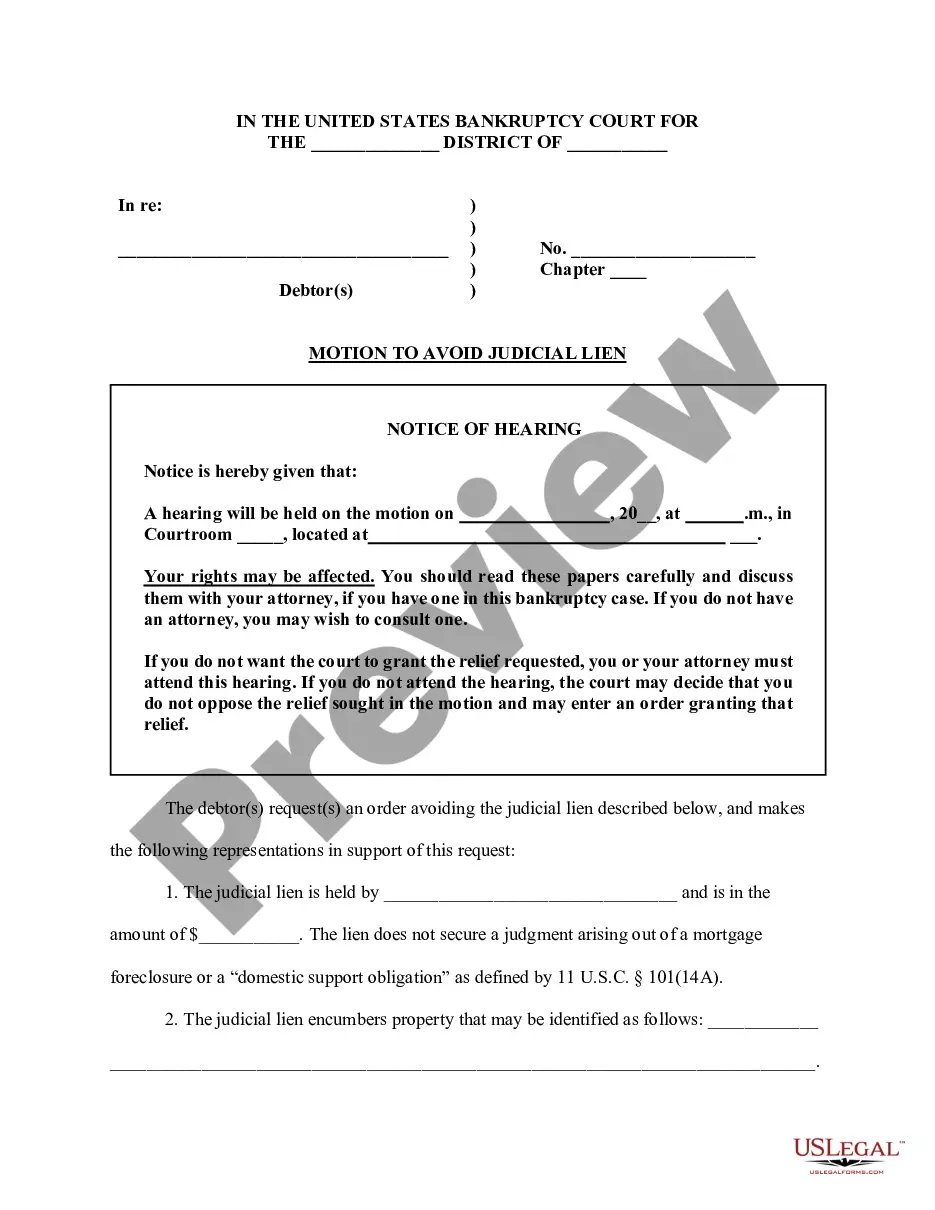
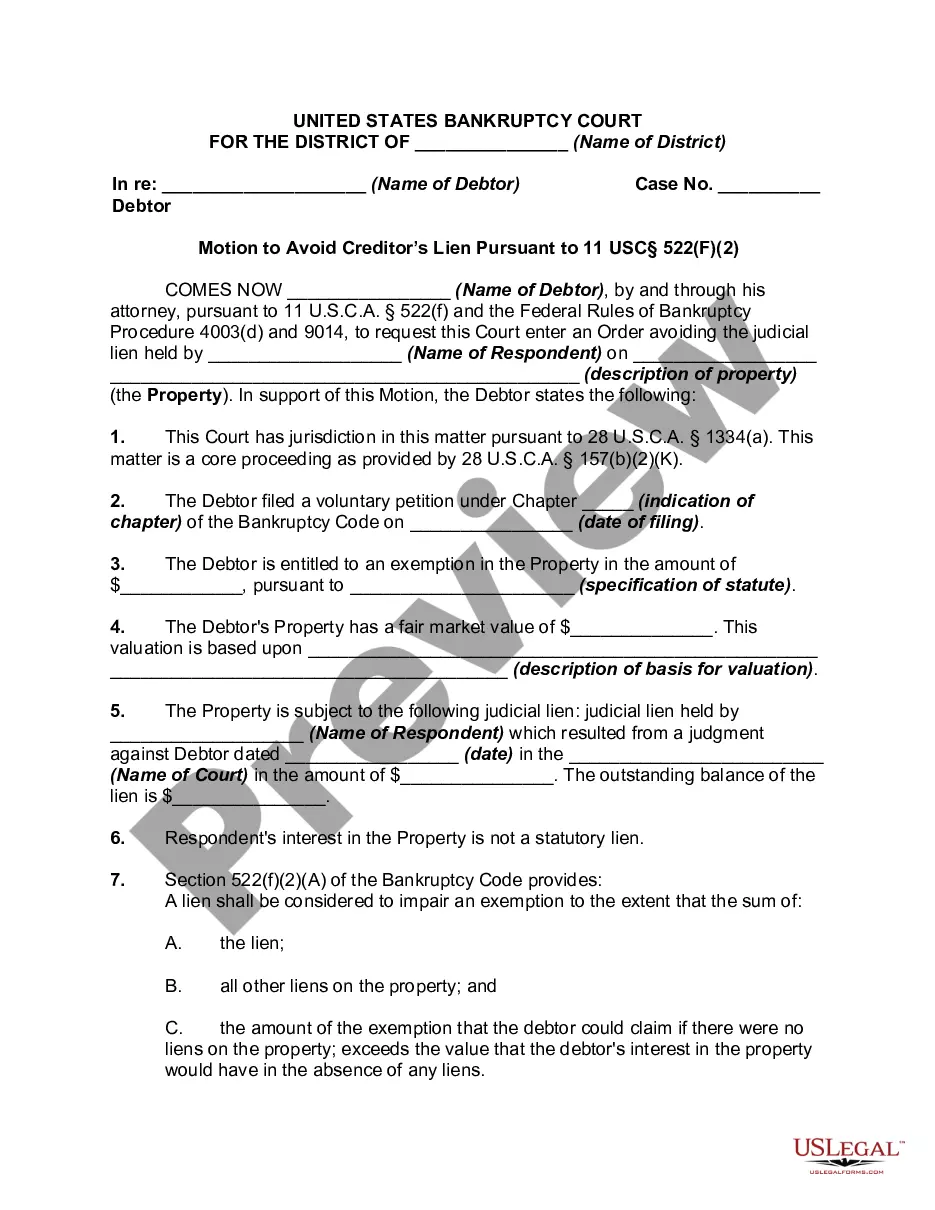
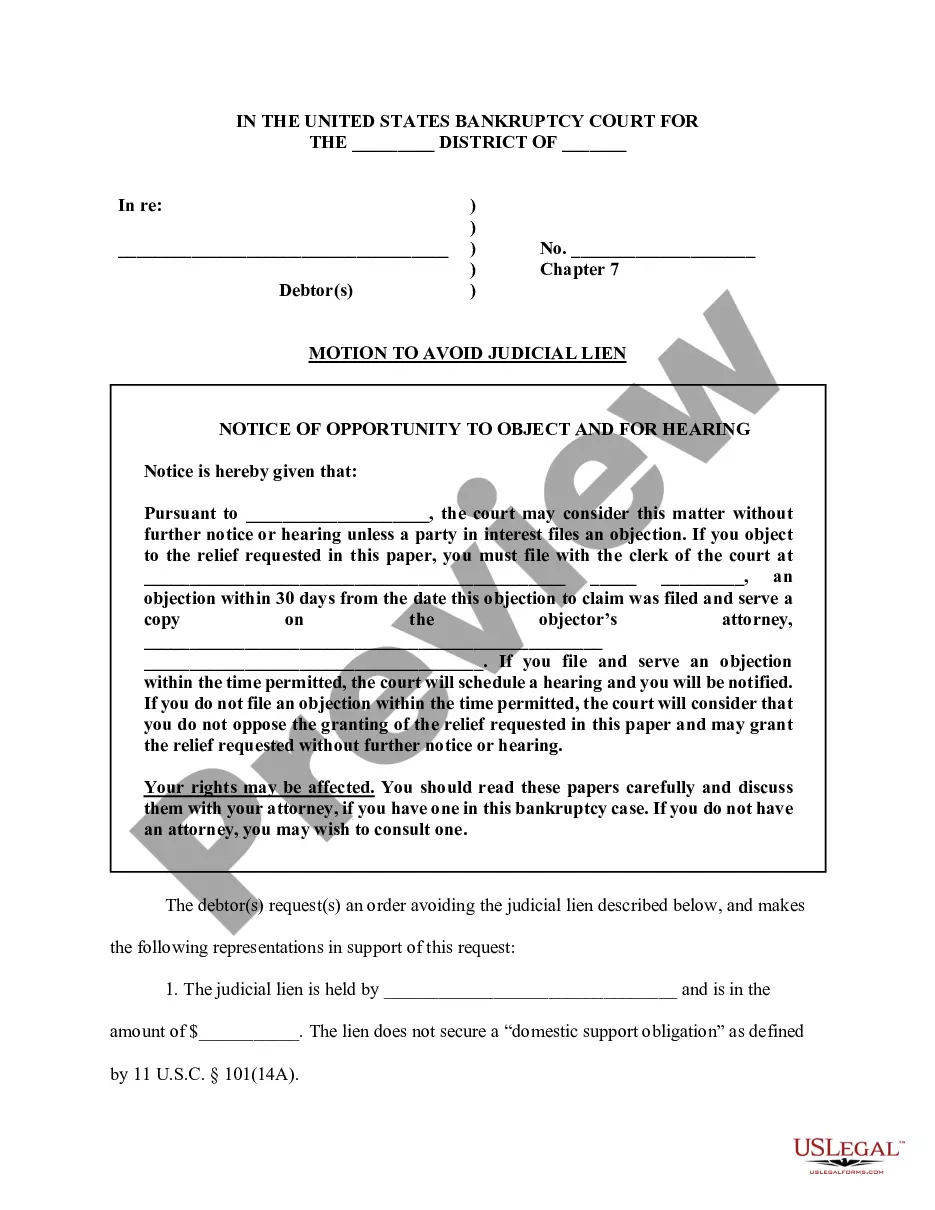
The Motion to Avoid Judicial Lien is a legal document filed in bankruptcy court to request the cancellation of a judicial lien that may be impairing a debtor's exemption rights. Unlike other motions that may address different issues in bankruptcy, this specific motion focuses on judicial liensâthis differentiates it from simpler filings. The purpose of this form is to ensure that the property of the debtor is protected from lenders who hold liens that can compromise their financial situation.
Key components of this form
- Debtor Information: Includes the names and details of the debtor filing for the motion.
- Judicial Lien Details: Specifies the lienholder's name and the amount owed.
- Property Description: Identifies the property encumbered by the judicial lien.
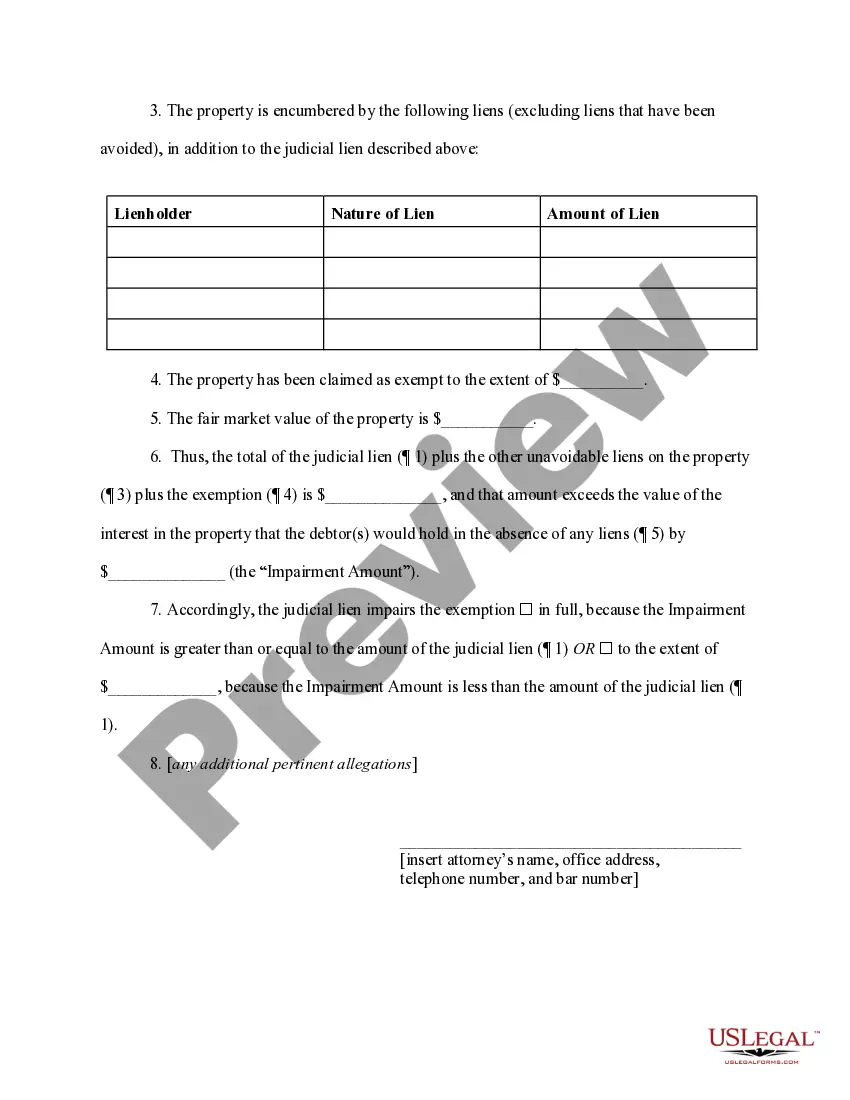
- Other Liens: Lists any other liens on the property that are not being contested.
- Exemption Claims: Indicates the amount exempted for the property.
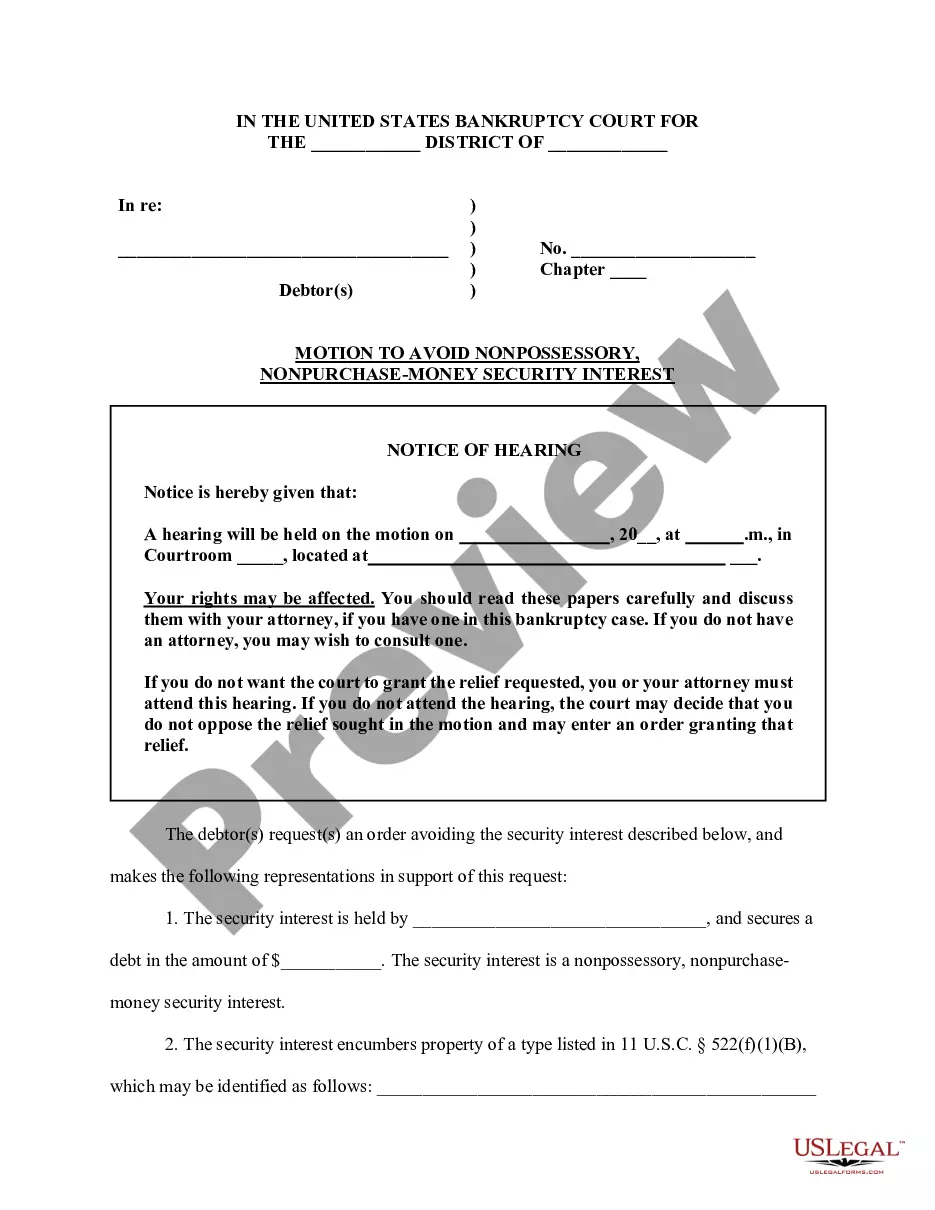
- Hearing Notice: Sets the date, time, and location for the court hearing regarding the motion.
When this form is needed
This form is necessary when a debtor in a bankruptcy case believes that a judicial lien unfairly encumbers their exempt property. The motion is crucial in cases where the debtor's financial resources are limited, and they seek to protect their assets from being diminished by claims of creditors. Additionally, it is used when the debtor does not contest the underlying judgment but argues that the lien itself is impairing their ability to utilize the property fully.
Who can use this document
- Individuals or businesses currently undergoing bankruptcy proceedings.
- Debtors who have judicial liens impacting their exempt property.
- Persons seeking to protect their assets from potential creditor claims.
Steps to complete this form
- Identify the debtor(s) involved and fill in their details accurately.
- Provide the lienholder's name and the lien amount as stated in the court records.
- Describe the property encumbered by the lien, ensuring to include all relevant details.
- List any other existing liens on the property and their respective amounts.
- Calculate and enter the fair market value of the property and the exemption claimed.
- Complete the notice of hearing section, including the date, time, and courtroom information.
Notarization guidance
This form does not typically require notarization unless specified by local law. Always confirm your local courtâs requirements to ensure compliance.
Get your form ready online
Our built-in tools help you complete, sign, share, and store your documents in one place.
Make edits, fill in missing information, and update formatting in US Legal Forms—just like you would in MS Word.
Download a copy, print it, send it by email, or mail it via USPS—whatever works best for your next step.
Sign and collect signatures with our SignNow integration. Send to multiple recipients, set reminders, and more. Go Premium to unlock E-Sign.
If this form requires notarization, complete it online through a secure video call—no need to meet a notary in person or wait for an appointment.
We protect your documents and personal data by following strict security and privacy standards.

Make edits, fill in missing information, and update formatting in US Legal Forms—just like you would in MS Word.

Download a copy, print it, send it by email, or mail it via USPS—whatever works best for your next step.

Sign and collect signatures with our SignNow integration. Send to multiple recipients, set reminders, and more. Go Premium to unlock E-Sign.

If this form requires notarization, complete it online through a secure video call—no need to meet a notary in person or wait for an appointment.

We protect your documents and personal data by following strict security and privacy standards.
Common mistakes to avoid
- Failing to include accurate details about the lienholder or the lien amount.
- Not providing a comprehensive description of the encumbered property.
- Overlooking the calculation of the exemption or the total impairment amount.
- Missing the deadline to file the motion before the court hearing.
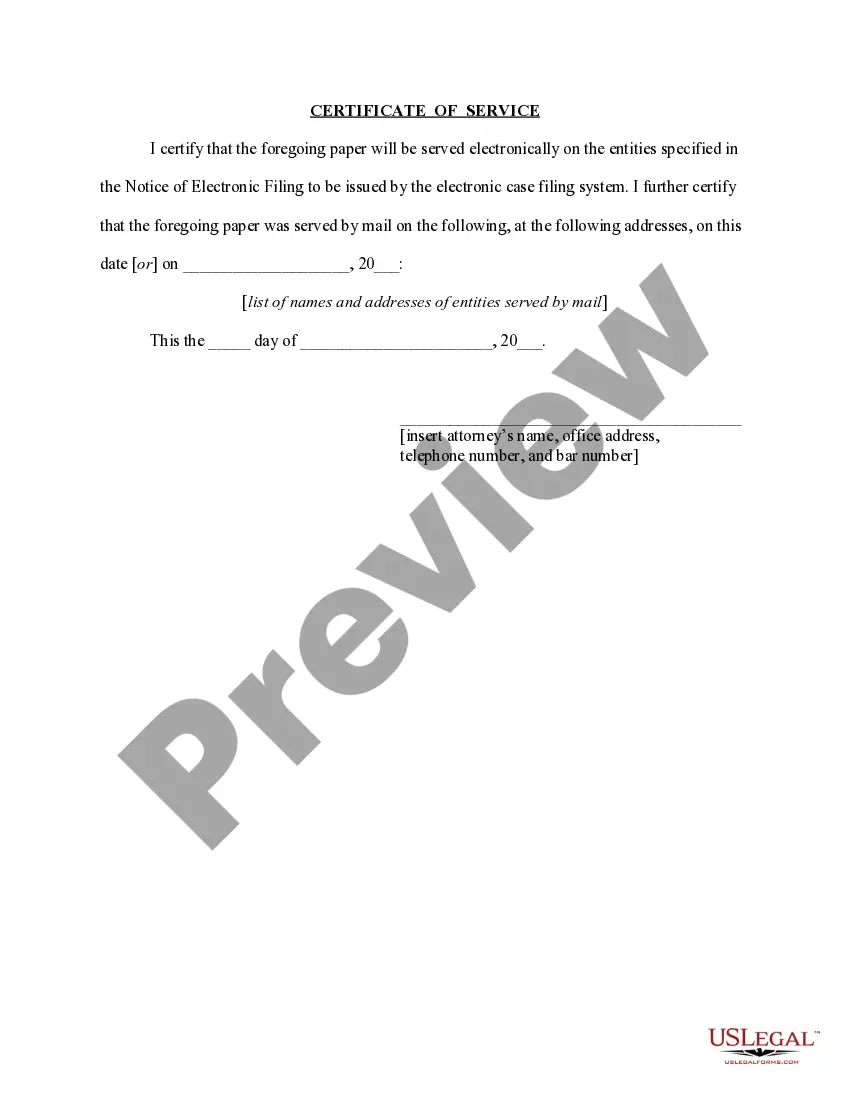
- Not serving proper notice to the appropriate parties involved.
Why use this form online
- Convenient access to the form anytime, allowing users to complete it at their own pace.
- Editability enables users to make necessary adjustments before finalizing the form.
- Reliable templates drafted by licensed attorneys ensure compliance with legal standards.
Legal use & context
- The Motion to Avoid Judicial Lien is enforceable within the bankruptcy process, providing debtors essential protections.
- It is limited to cases where judicial liens are active and specifically impinge on exempt property rights.
- Failure to file appropriately may lead to lost opportunities for lien avoidance.
Key takeaways
- The motion is vital for protecting a debtor's exempt property from judicial liens.
- Accurate and complete information is crucial for a successful filing.
- Understanding state-specific requirements is essential for proper legal compliance.