Order making determination regarding postpetition fees, expenses, or charges
What this document covers
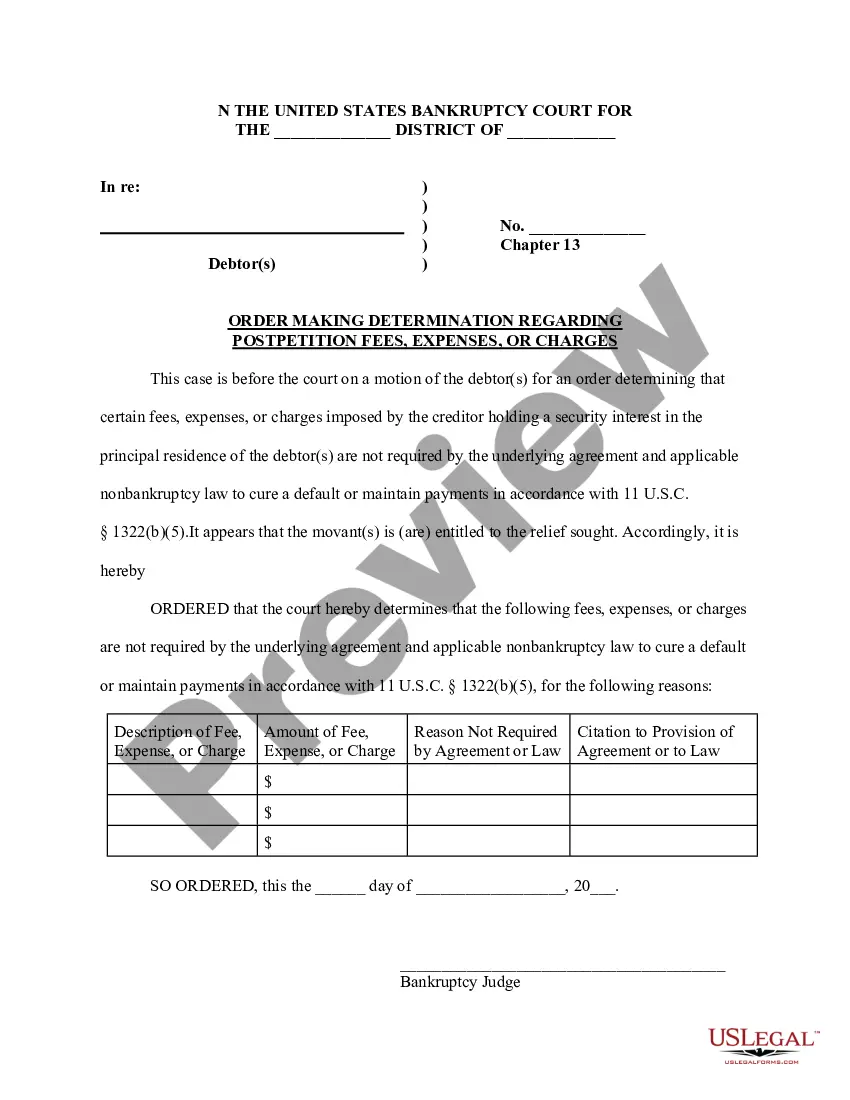
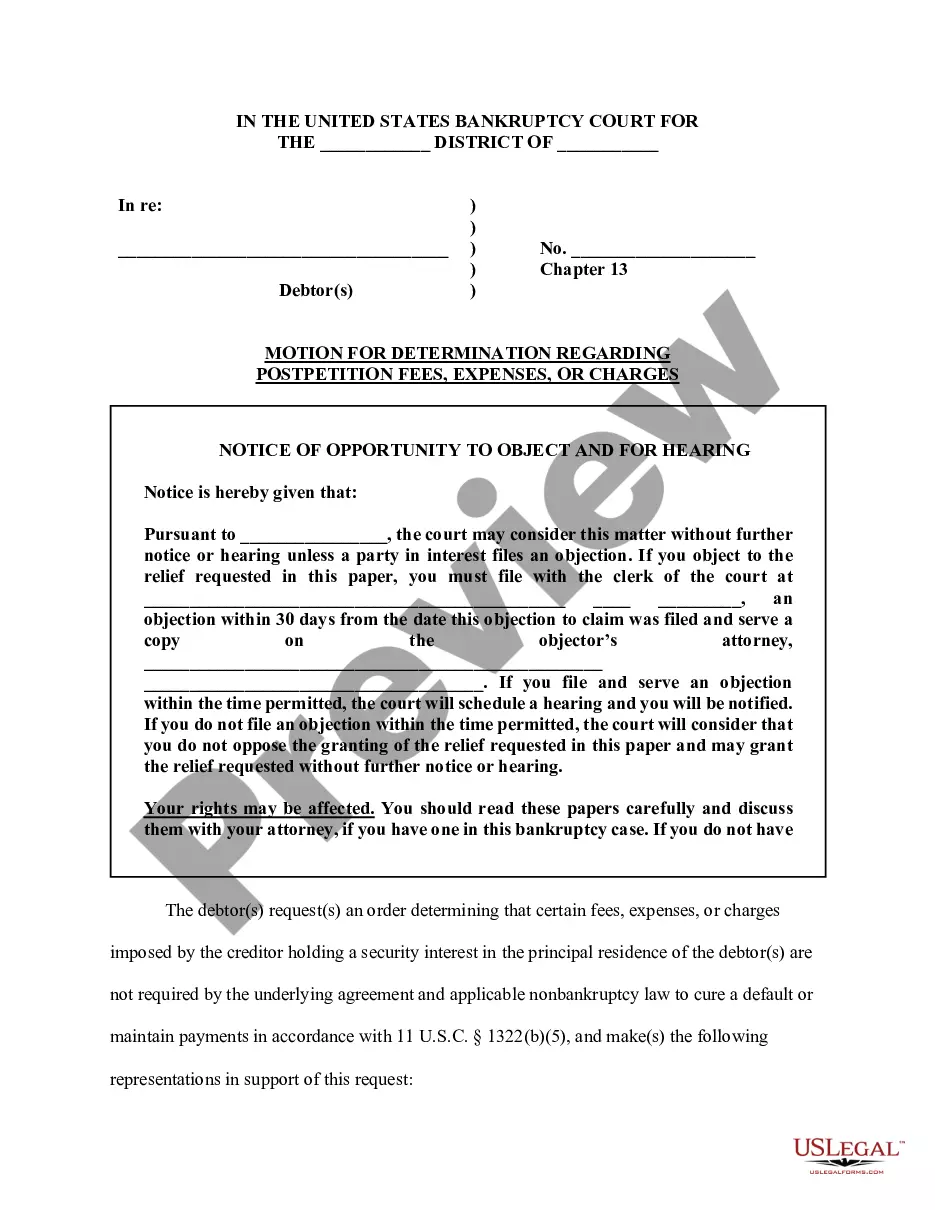
The Order making determination regarding postpetition fees, expenses, or charges is a legal document used in bankruptcy proceedings. It allows debtors to request a court ruling on whether certain fees, expenses, or charges enforced by a creditor for their primary residence are valid under existing agreements and applicable nonbankruptcy laws. This form is distinct from general bankruptcy forms as it specifically addresses disputes over postpetition financial obligations in Chapter 13 cases.
Key parts of this document
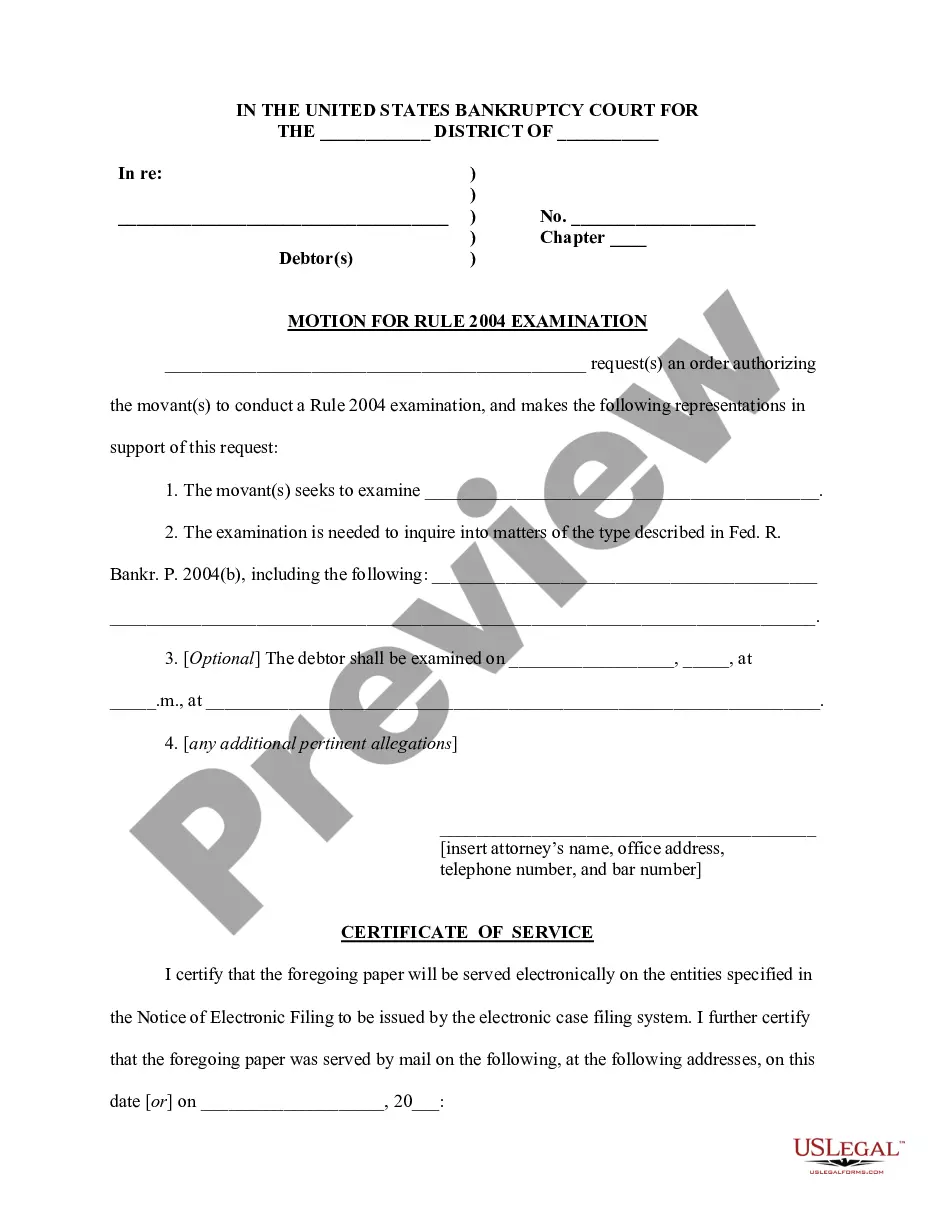
- Case information: Includes the jurisdiction, case number, and chapter of bankruptcy.
- Motion details: Section where the debtor states their request for the court's determination on fees.
- Description of fees: A list of specific fees, expenses, or charges in question.
- Legal basis: Explanation of why the charges are not required under applicable law.
- Judicial approval: Signature and date line for the Bankruptcy Judge's order.

Common use cases
This form should be used when a debtor in a Chapter 13 bankruptcy case disputes certain postpetition fees or charges imposed by a creditor. It is particularly relevant when the debtor believes that these fees do not comply with their bankruptcy plan or the underlying credit agreements. Common scenarios include attempts to contest unjustified fees during the bankruptcy process or when negotiating payment arrangements with creditors.
Who should use this form
- Individuals filing for Chapter 13 bankruptcy.
- Debtors who have concerns about fees or charges from their creditors.
- Attorneys representing debtors in bankruptcy cases.
- Creditors seeking clarity on postpetition fees and costs.
How to complete this form
- Fill in the case information, including the bankruptcy court address and case number.
- State the reasons for contesting the fees in the motion section.
- List each fee, expense, or charge being disputed, along with the reasoning for the dispute.
- Cite the relevant provisions of the agreement or applicable law that support your claim.
- Have the Bankruptcy Judge sign and date the order upon approval.
Notarization requirements for this form
In most cases, this form does not require notarization. However, some jurisdictions or signing circumstances might. US Legal Forms offers online notarization powered by Notarize, accessible 24/7 for a quick, remote process.
Get your form ready online
Our built-in tools help you complete, sign, share, and store your documents in one place.
Make edits, fill in missing information, and update formatting in US Legal Forms—just like you would in MS Word.
Download a copy, print it, send it by email, or mail it via USPS—whatever works best for your next step.
Sign and collect signatures with our SignNow integration. Send to multiple recipients, set reminders, and more. Go Premium to unlock E-Sign.
If this form requires notarization, complete it online through a secure video call—no need to meet a notary in person or wait for an appointment.
We protect your documents and personal data by following strict security and privacy standards.

Make edits, fill in missing information, and update formatting in US Legal Forms—just like you would in MS Word.

Download a copy, print it, send it by email, or mail it via USPS—whatever works best for your next step.

Sign and collect signatures with our SignNow integration. Send to multiple recipients, set reminders, and more. Go Premium to unlock E-Sign.

If this form requires notarization, complete it online through a secure video call—no need to meet a notary in person or wait for an appointment.

We protect your documents and personal data by following strict security and privacy standards.
Common mistakes to avoid
- Failing to provide complete case information, which can delay proceedings.
- Omitting necessary legal citations that support the debtor's position.
- Not including all disputed charges, leading to incomplete relief.
- Not securing the Bankruptcy Judge's signature before filing.
Advantages of online completion
- Convenience of downloading and completing the form from anywhere.
- Editability allows for easy updates as needed.
- Access to clear, state-specific templates prepared by licensed attorneys.
- Fast retrieval and submission enhance the efficiency of your case management.
Looking for another form?

Form popularity
FAQ
If there is a post petition mortgage fee noticed and allowed, and the mortgage is paid directly by the debtor/borrower, then usually it is a fee added to the debt that must simply be paid from the sale of the home or prior to release of mortgage down the road.
Post-petition debt is a debt you obtain after filing your bankruptcy case. These debts are not part of your bankruptcy case and will not be discharged. Any debt you acquire after filing for bankruptcy (even if your case is still pending) is considered post-petition, and you are responsible for paying it.
(1) Notice. The hold of the claim shall file and serve on the debtor, debtor's counsel, and the trustee a notice of any change that results in the payment amount, including any change that results from an interest-rate or escrow-account adjustment, not later than 21 days before a payment in the new amount is due.
Post-petition tax debts get special treatment in bankruptcy. The court always allows tax creditors to file claims for post-petition tax debts and then the claim gets priority in payment.
The response is filed to provide a statement indicating: 1) whether the creditor agrees that the debtor has paid the full amount required to cure the default, and 2) whether the debtor is otherwise current on all payments.
When it comes to filing Chapter 7 bankruptcy, debts incurred before filing are called pre-petition debts, that debtors are discharged from, whereas debts incurred after a filing are post-petition payments, which debtors still must pay on.
Post-petition refers to anything that occurs after you've filed for bankruptcy. Conversely, the term ?pre-petition? is used to refer to anything that happened before you filed for bankruptcy. Only ?pre-petition? debts are dischargeable in bankruptcy.
Prepetition: this term is often used to mean anything that occurred prior to your filing for bankruptcy protection. For example, the amount that may be behind on your house before you file bankruptcy would be called a pre-petition arrears.