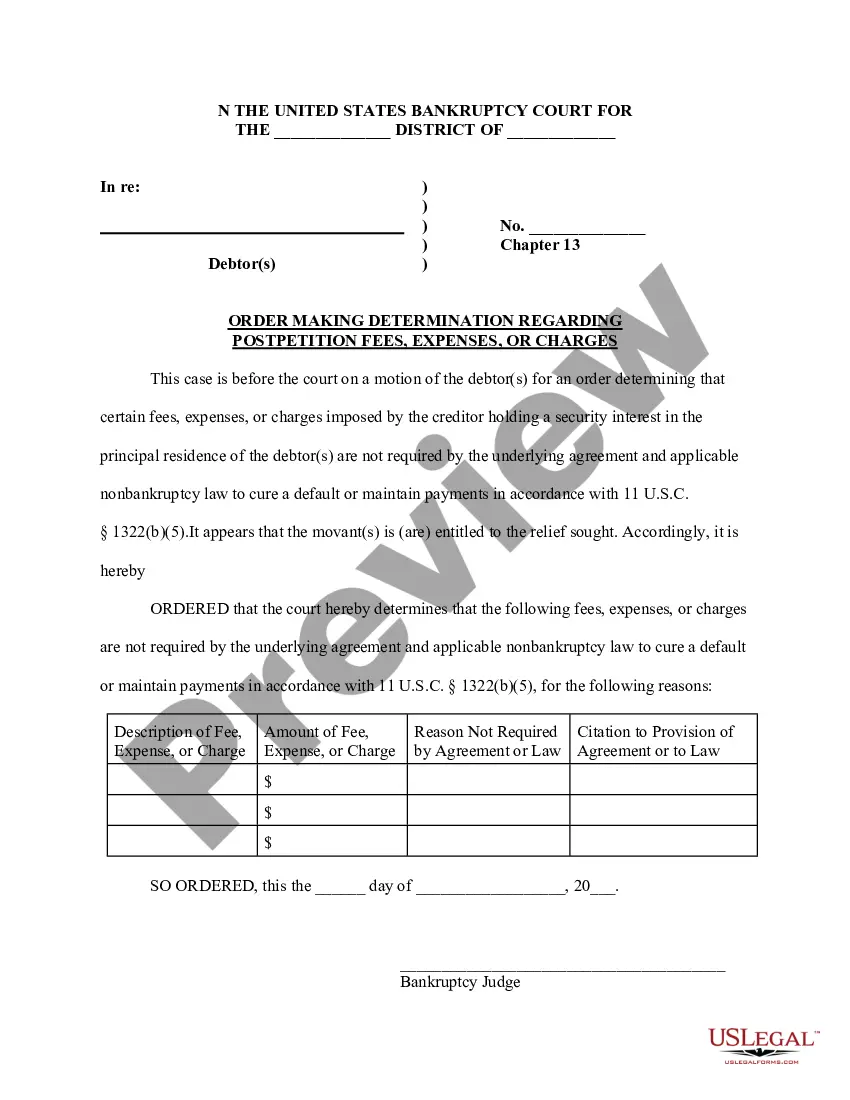
Motion for determination regarding postpetition fees, expenses, or charges
Overview of this form
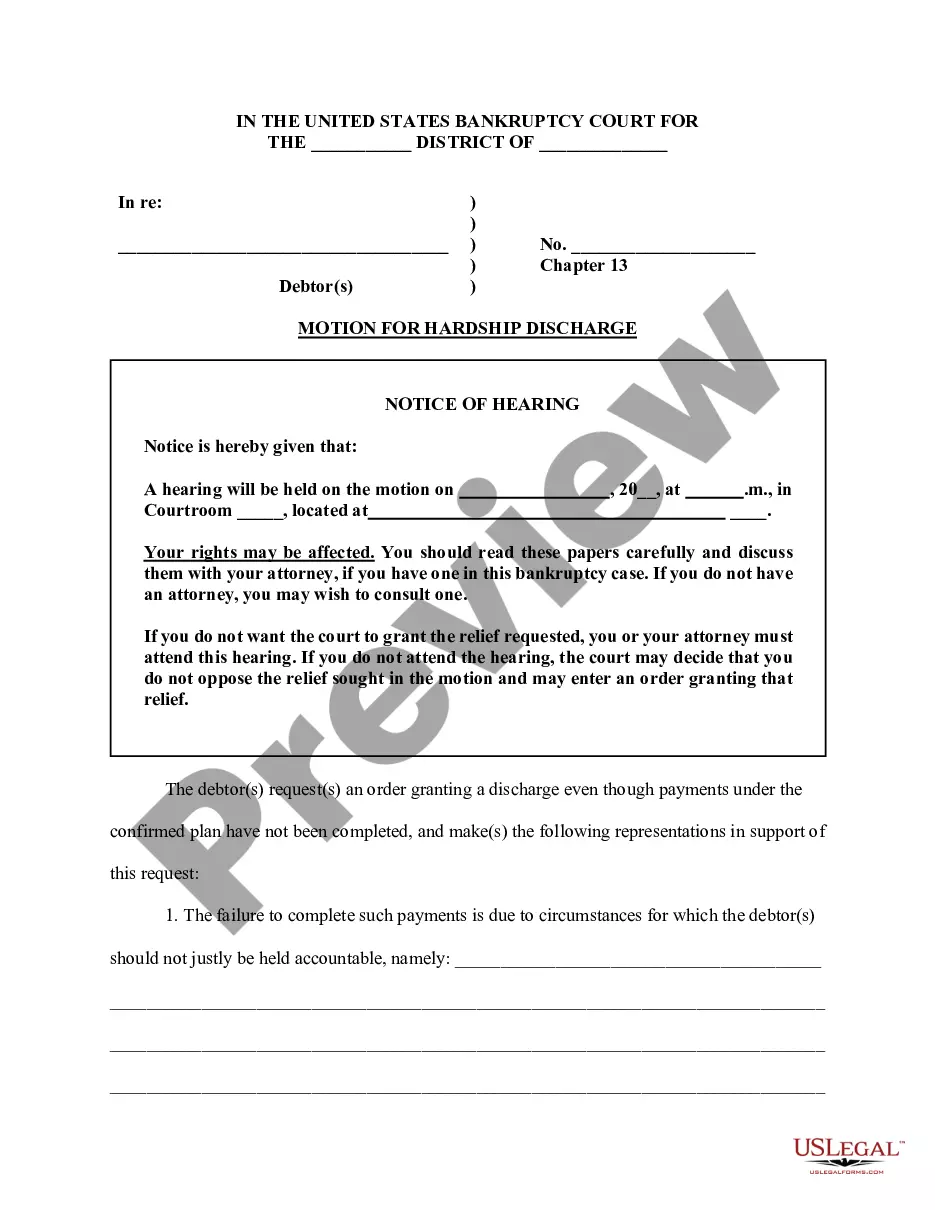
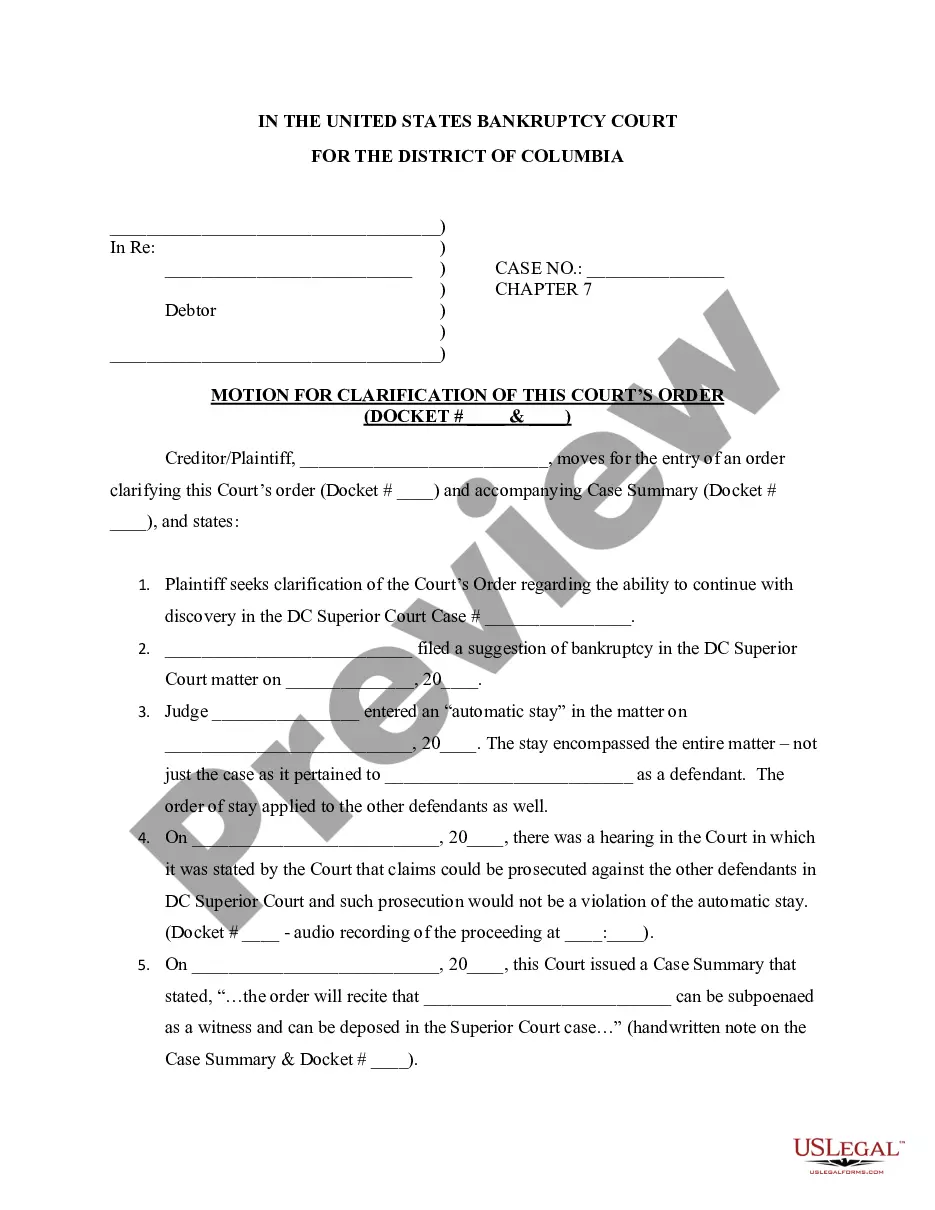
The Motion for determination regarding postpetition fees, expenses, or charges is a legal document filed in a bankruptcy case. It allows debtors to request the court to assess whether certain fees, expenses, or charges imposed by a creditor are justified under the law and the terms of the underlying agreement. This form is crucial in helping debtors contest unwarranted claims that may arise after the initiation of bankruptcy proceedings, ensuring fairness and legal compliance during the financial recovery process.
Main sections of this form
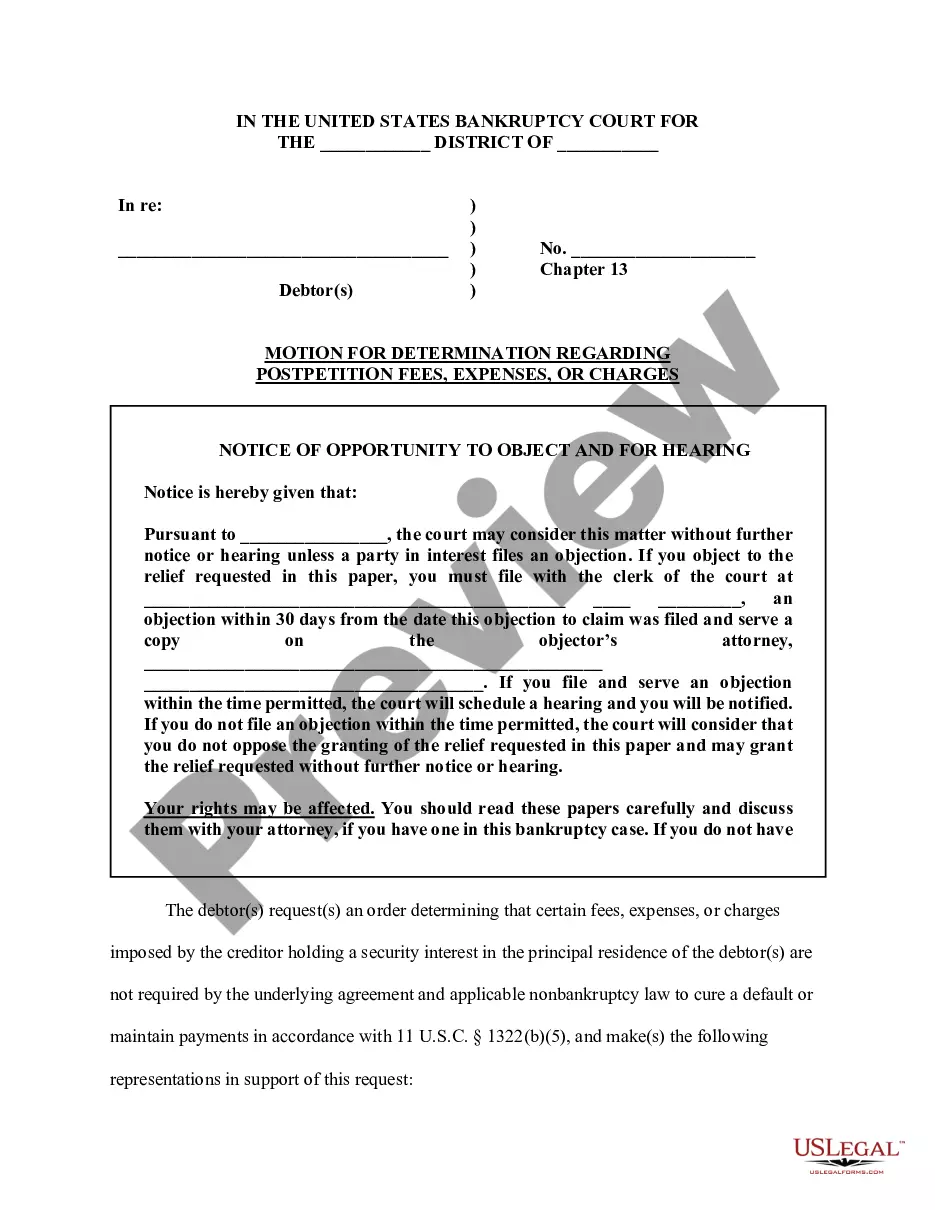
- Title and naming of parties involved in the bankruptcy case.
- Notice of opportunity to object and request for a hearing.
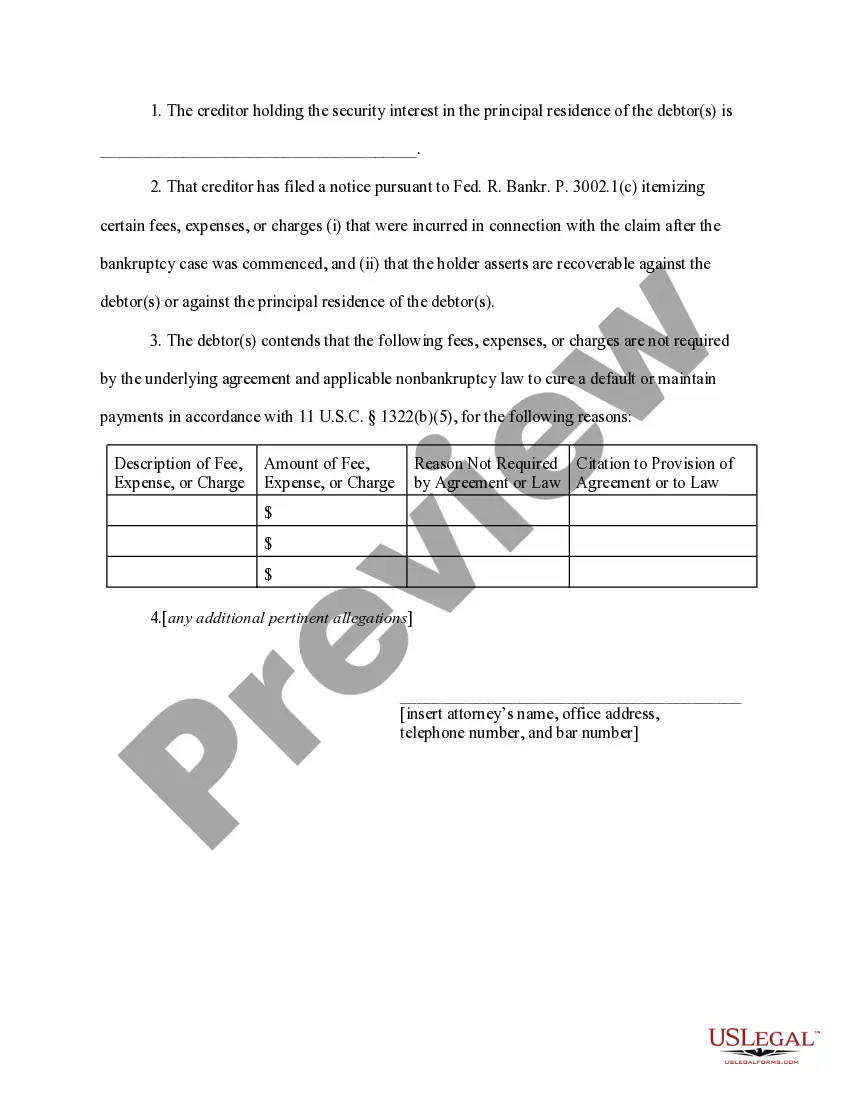
- Identification of the creditor and specific charges in dispute.
- Detailed explanation of why the charges are considered unjustified by the debtor.
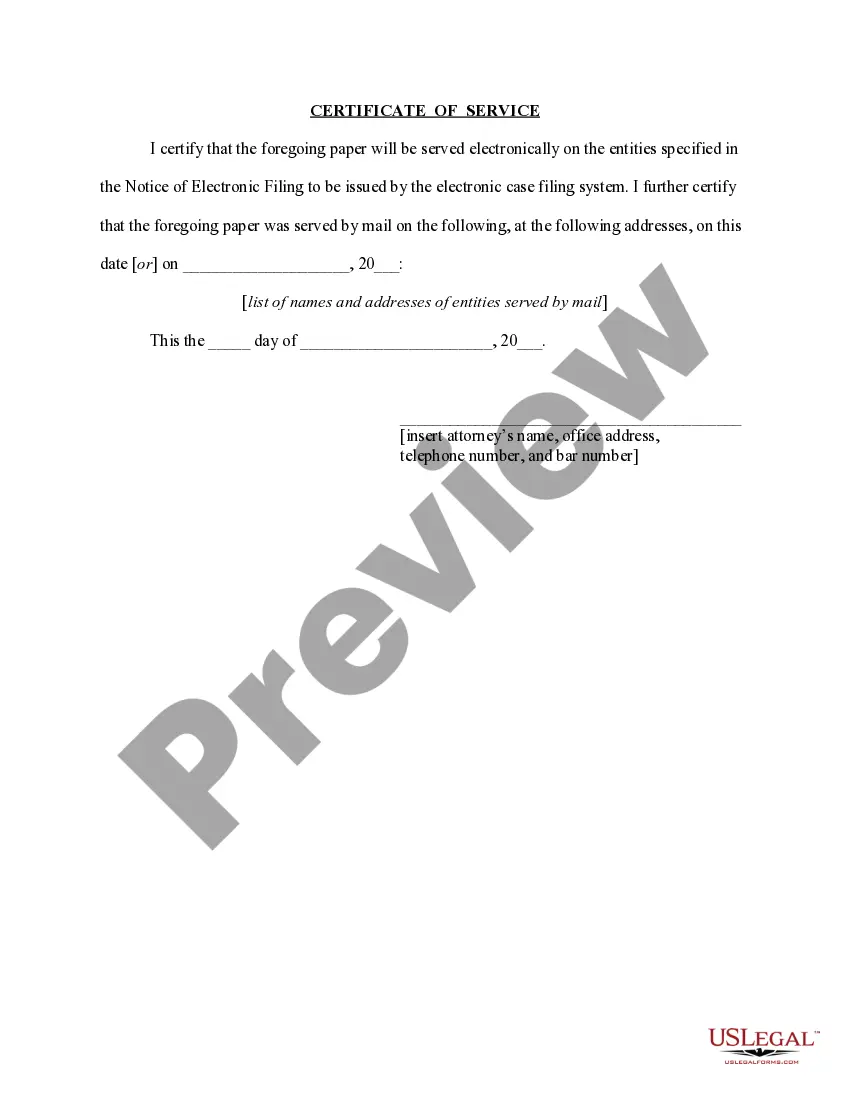
- Certificate of service confirming proper distribution of the motion.
When to use this form
This form is used when a debtor needs to dispute fees, expenses, or charges that a creditor claims are owed after the bankruptcy case has begun. It is particularly important for Chapter 13 bankruptcy cases, where the debtor is attempting to restructure debt and maintain payments while questioning the legitimacy of imposed postpetition charges. Using this form helps protect the debtor's rights and ensures that only lawful fees are acknowledged in the bankruptcy process.
Intended users of this form
- Debtors currently undergoing a Chapter 13 bankruptcy process.
- Individuals contesting additional fees imposed by a creditor post-filing.
- Those seeking clarity and determination from the court regarding financial obligations to creditors.
Completing this form step by step
- Identify the bankruptcy court and fill in the relevant district information.
- Clearly state the names of all debtors and their case number.
- Document the creditor's name and detail the disputed fees or charges with amounts.
- Provide a rationale for disputing each charge, referencing applicable laws or agreements.
- Sign the form and include the attorney's contact information if represented.
Notarization requirements for this form
Notarization is not commonly needed for this form. However, certain documents or local rules may make it necessary. Our notarization service, powered by Notarize, allows you to finalize it securely online anytime, day or night.
Get your form ready online
Our built-in tools help you complete, sign, share, and store your documents in one place.
Make edits, fill in missing information, and update formatting in US Legal Forms—just like you would in MS Word.
Download a copy, print it, send it by email, or mail it via USPS—whatever works best for your next step.
Sign and collect signatures with our SignNow integration. Send to multiple recipients, set reminders, and more. Go Premium to unlock E-Sign.
If this form requires notarization, complete it online through a secure video call—no need to meet a notary in person or wait for an appointment.
We protect your documents and personal data by following strict security and privacy standards.

Make edits, fill in missing information, and update formatting in US Legal Forms—just like you would in MS Word.

Download a copy, print it, send it by email, or mail it via USPS—whatever works best for your next step.

Sign and collect signatures with our SignNow integration. Send to multiple recipients, set reminders, and more. Go Premium to unlock E-Sign.

If this form requires notarization, complete it online through a secure video call—no need to meet a notary in person or wait for an appointment.

We protect your documents and personal data by following strict security and privacy standards.
Mistakes to watch out for
- Failing to properly identify the creditor and the specific charges in dispute.
- Not filing the motion within the 30-day objection deadline.
- Neglecting to provide adequate reasons or legal citations for disputing the charges.
- Inaccurate filing with the incorrect bankruptcy court jurisdiction.
Benefits of using this form online
- Convenience of downloading and completing the form from home.
- Editable format allows for easy customization to fit individual needs.
- Reliable access to attorney-drafted forms that adhere to current laws.
- Streamlined filing process typically saves time compared to paper submissions.
Looking for another form?

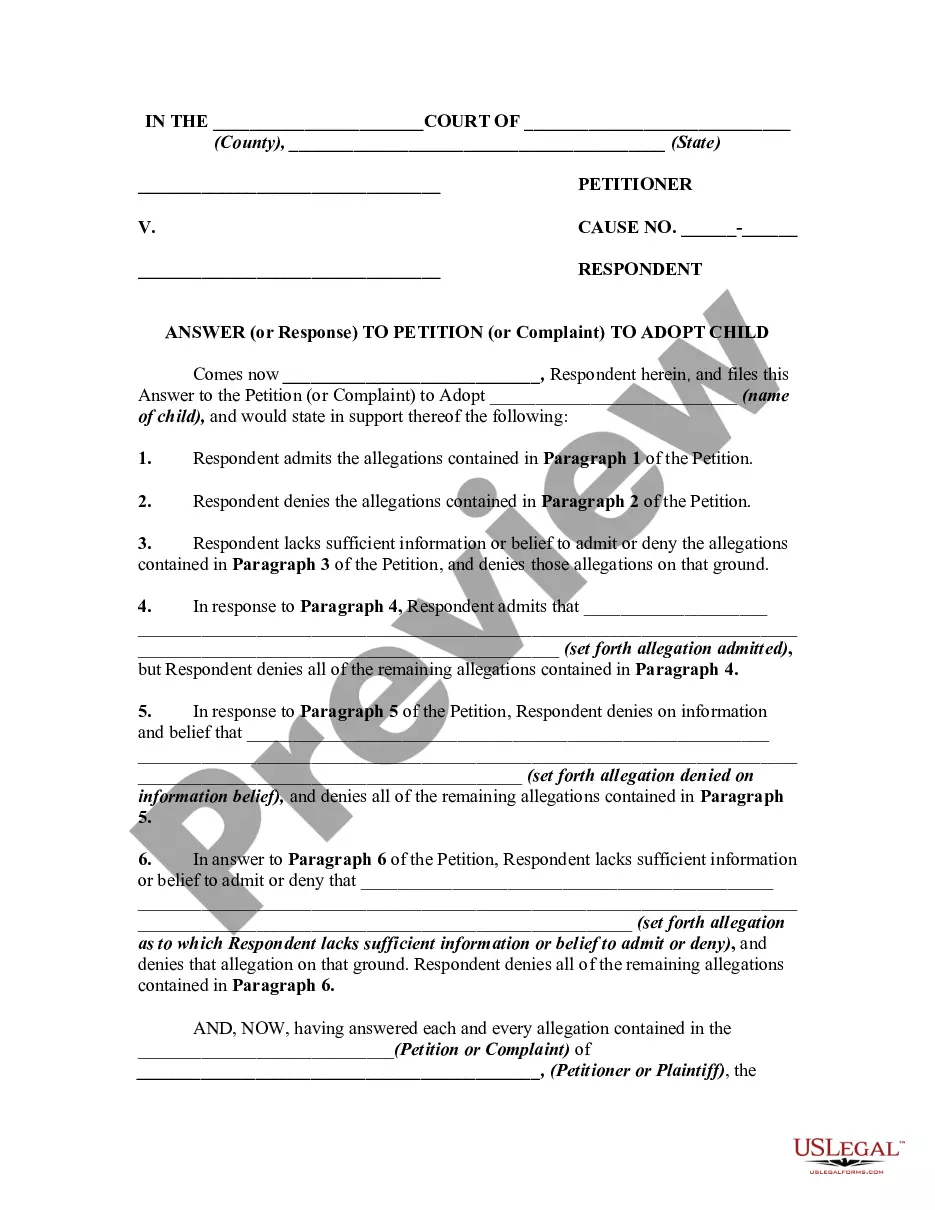
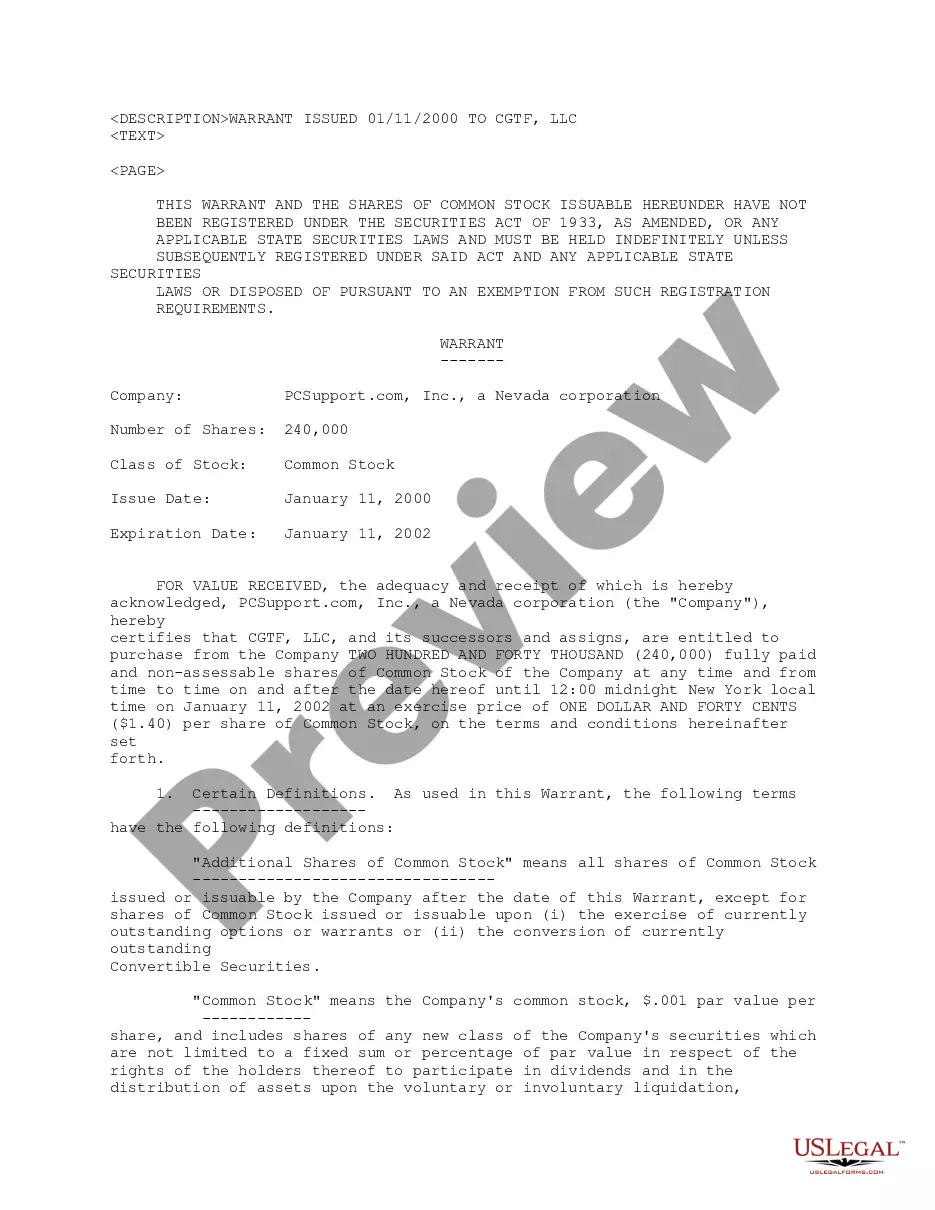
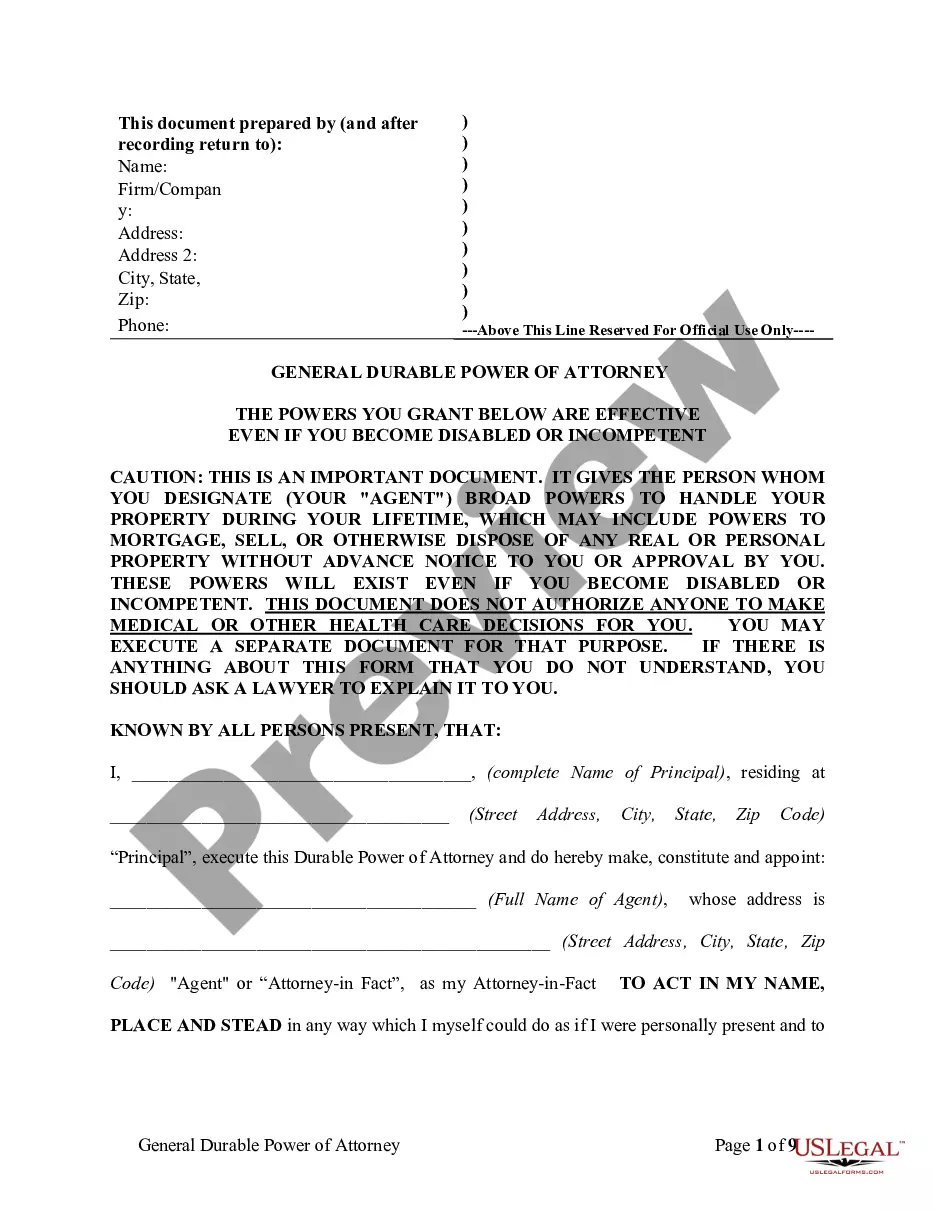
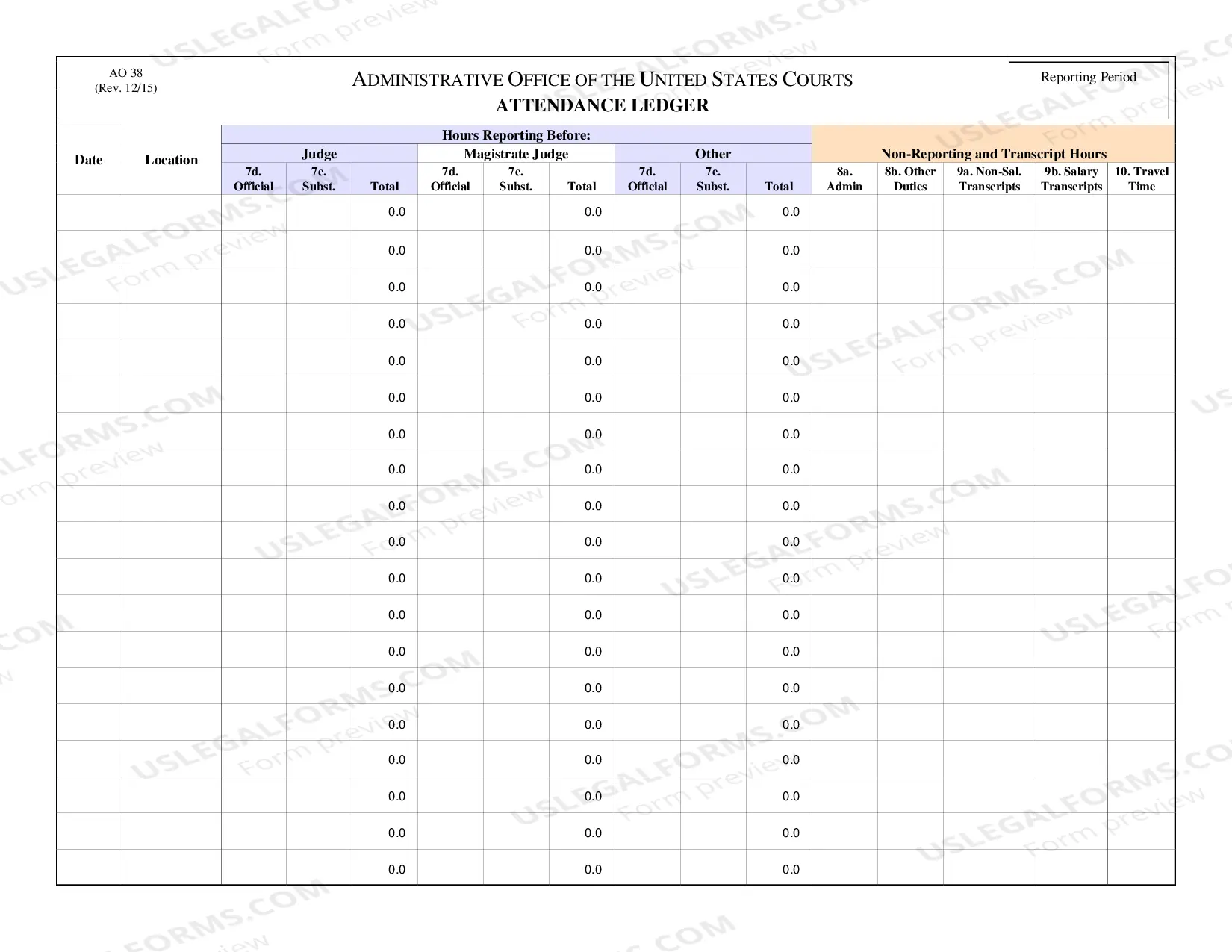
Form popularity
FAQ
Post-petition debt is a debt you obtain after filing your bankruptcy case. These debts are not part of your bankruptcy case and will not be discharged. Any debt you acquire after filing for bankruptcy (even if your case is still pending) is considered post-petition, and you are responsible for paying it.
If there is a post petition mortgage fee noticed and allowed, and the mortgage is paid directly by the debtor/borrower, then usually it is a fee added to the debt that must simply be paid from the sale of the home or prior to release of mortgage down the road.
Prepetition: this term is often used to mean anything that occurred prior to your filing for bankruptcy protection. For example, the amount that may be behind on your house before you file bankruptcy would be called a pre-petition arrears.
Post-petition refers to anything that occurs after you've filed for bankruptcy. Conversely, the term ?pre-petition? is used to refer to anything that happened before you filed for bankruptcy. Only ?pre-petition? debts are dischargeable in bankruptcy.
When it comes to filing Chapter 7 bankruptcy, debts incurred before filing are called pre-petition debts, that debtors are discharged from, whereas debts incurred after a filing are post-petition payments, which debtors still must pay on.
Post-petition tax debts get special treatment in bankruptcy. The court always allows tax creditors to file claims for post-petition tax debts and then the claim gets priority in payment.
(1) Notice. The hold of the claim shall file and serve on the debtor, debtor's counsel, and the trustee a notice of any change that results in the payment amount, including any change that results from an interest-rate or escrow-account adjustment, not later than 21 days before a payment in the new amount is due.