Motion for Rule 2004 examination - ex parte
Overview of this form
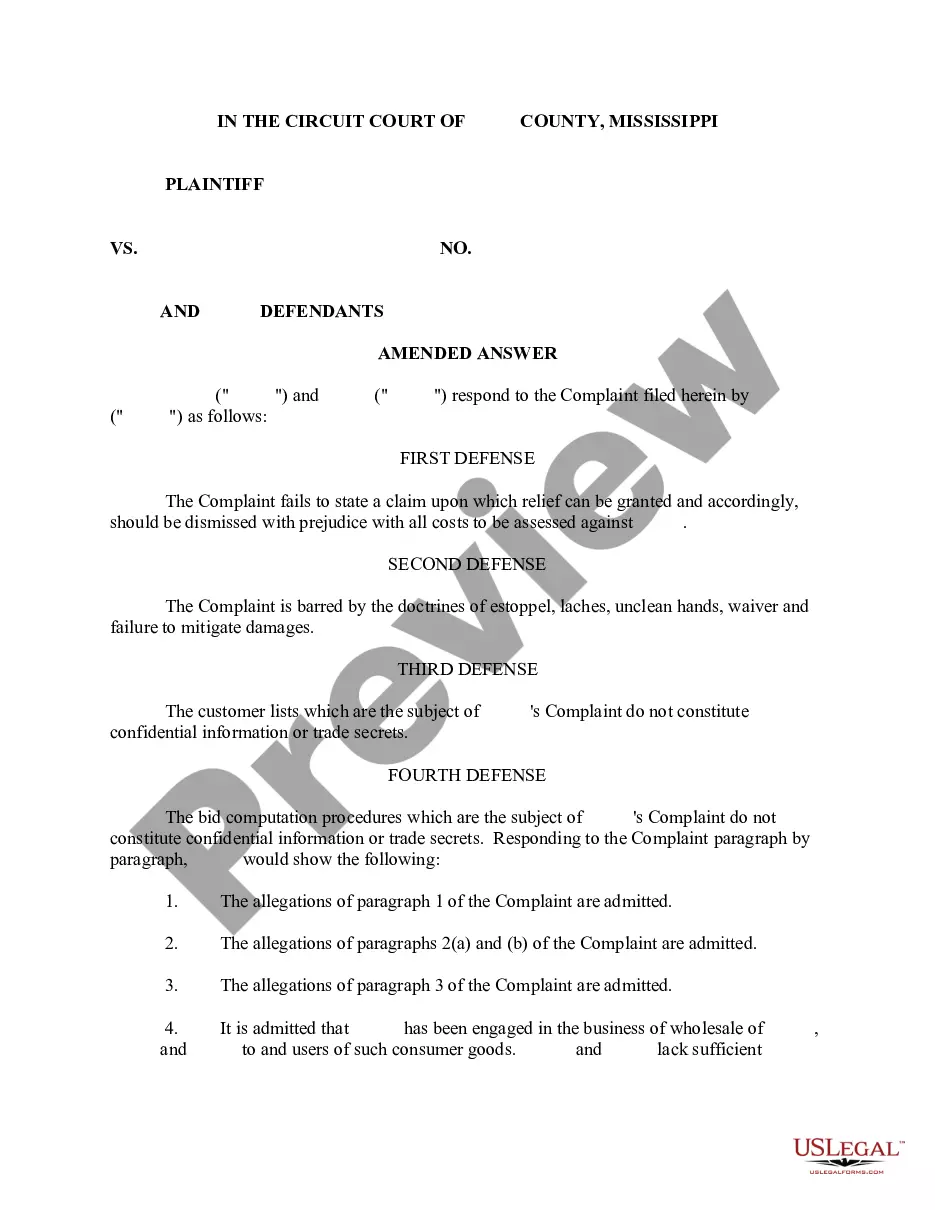
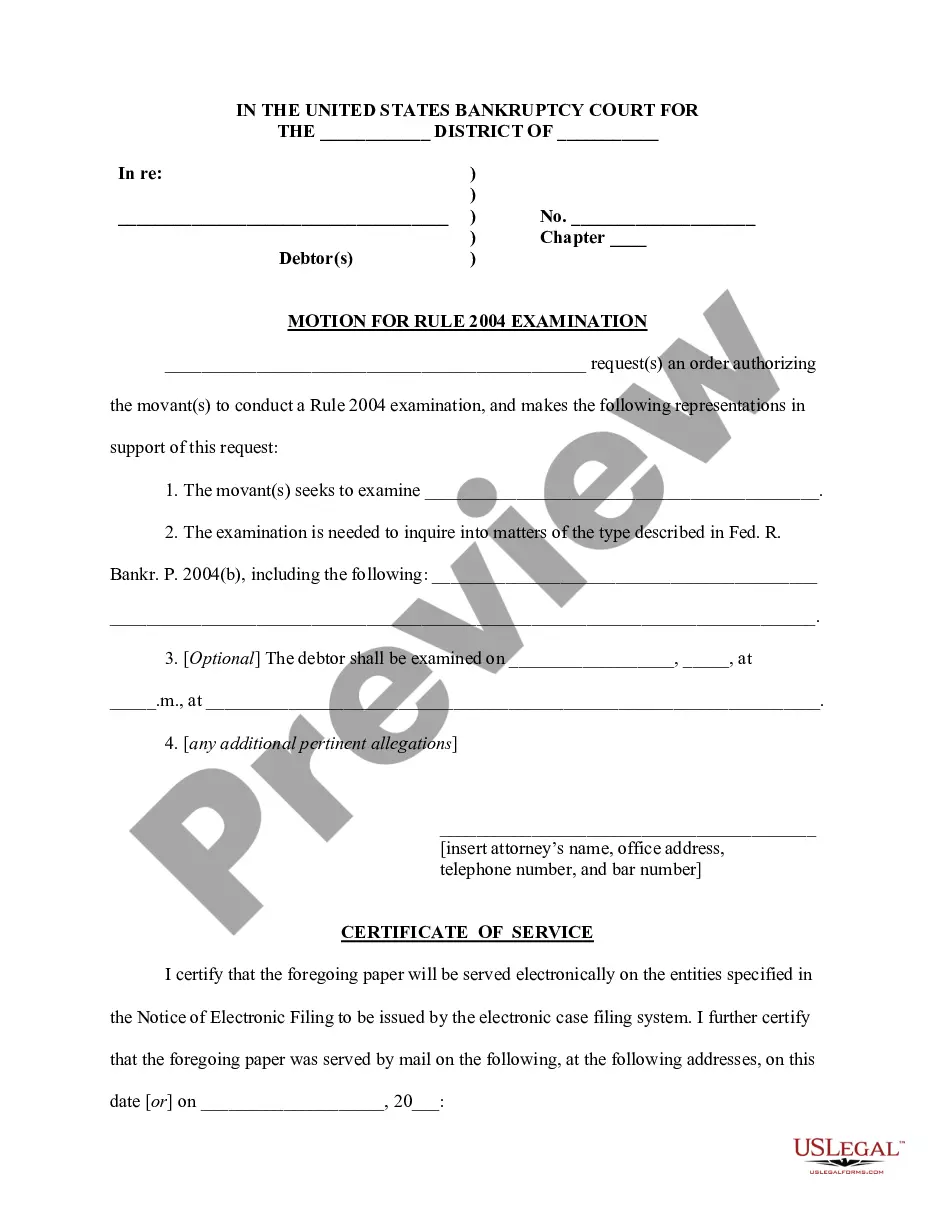
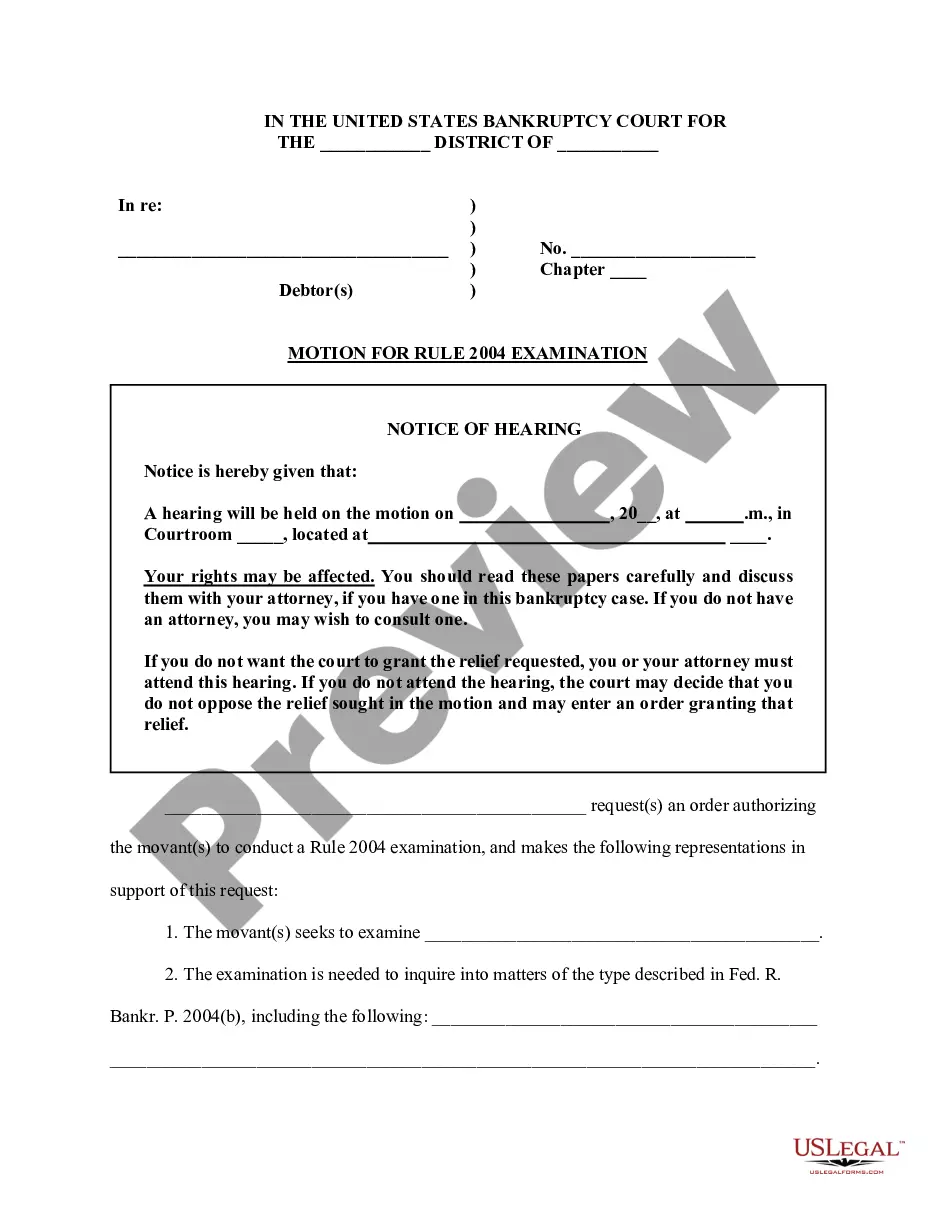
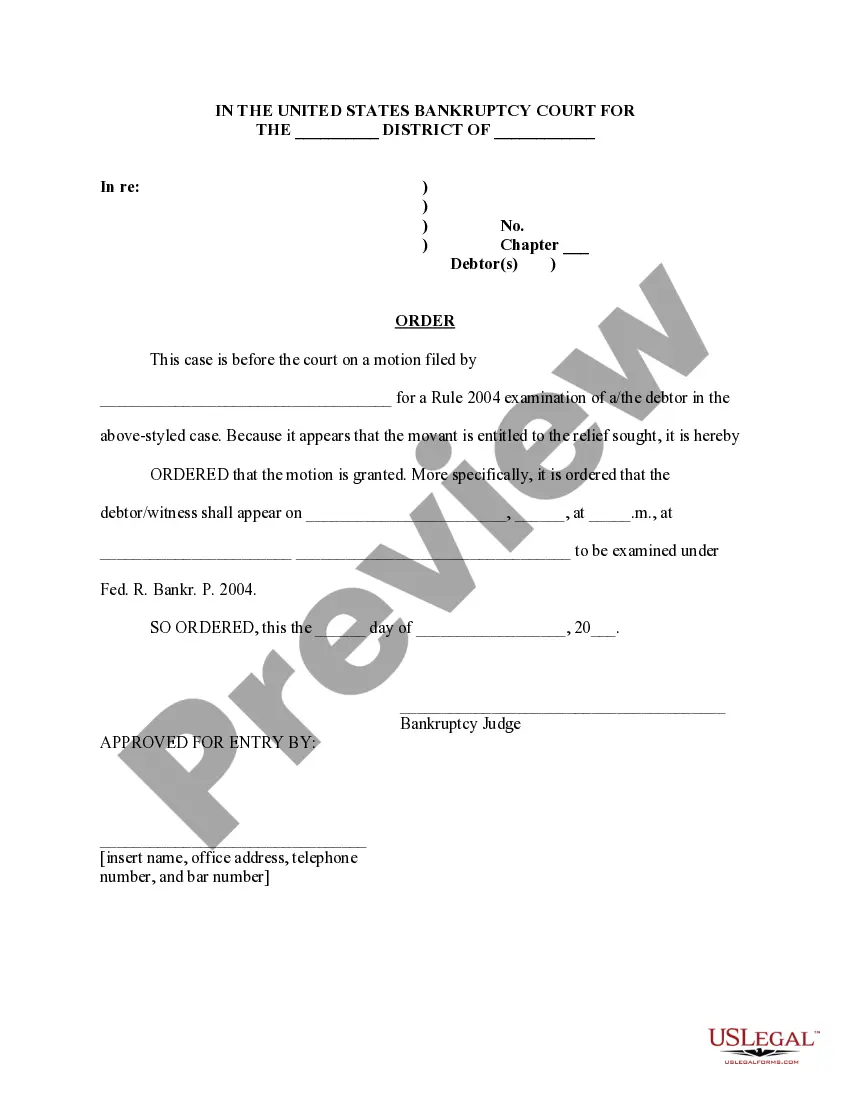
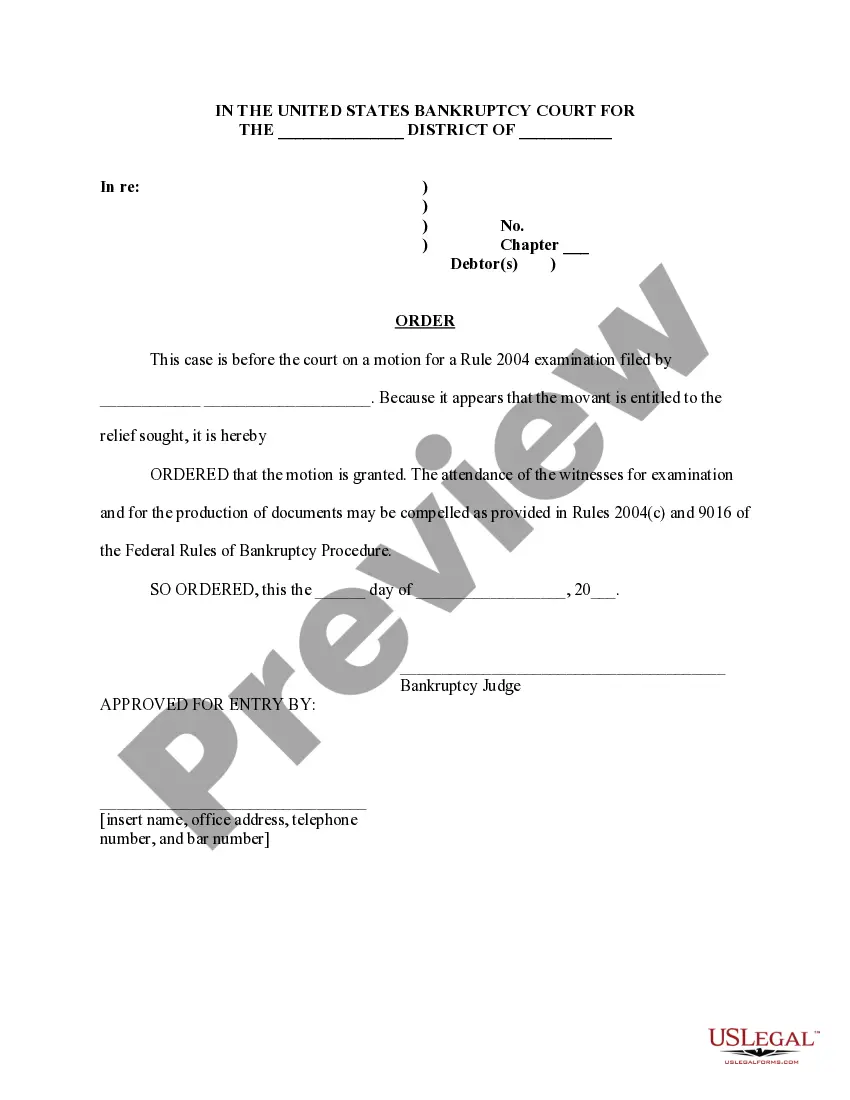
The Motion for Rule 2004 Examination - Ex Parte is a legal document used in bankruptcy proceedings. This form allows a party to request the court's permission to conduct an examination of a debtor or other relevant parties. This motion is typically filed without notice to the debtor, making it an ex parte request, which differentiates it from standard motions that require notification to all parties involved.
Key components of this form
- Details about the debtor or party to be examined.
- Specific matters to be investigated, in accordance with Federal Rule of Bankruptcy Procedure 2004(b).
- Date, time, and location of the examination (optional).
- Signature and information of the attorney filing the motion.
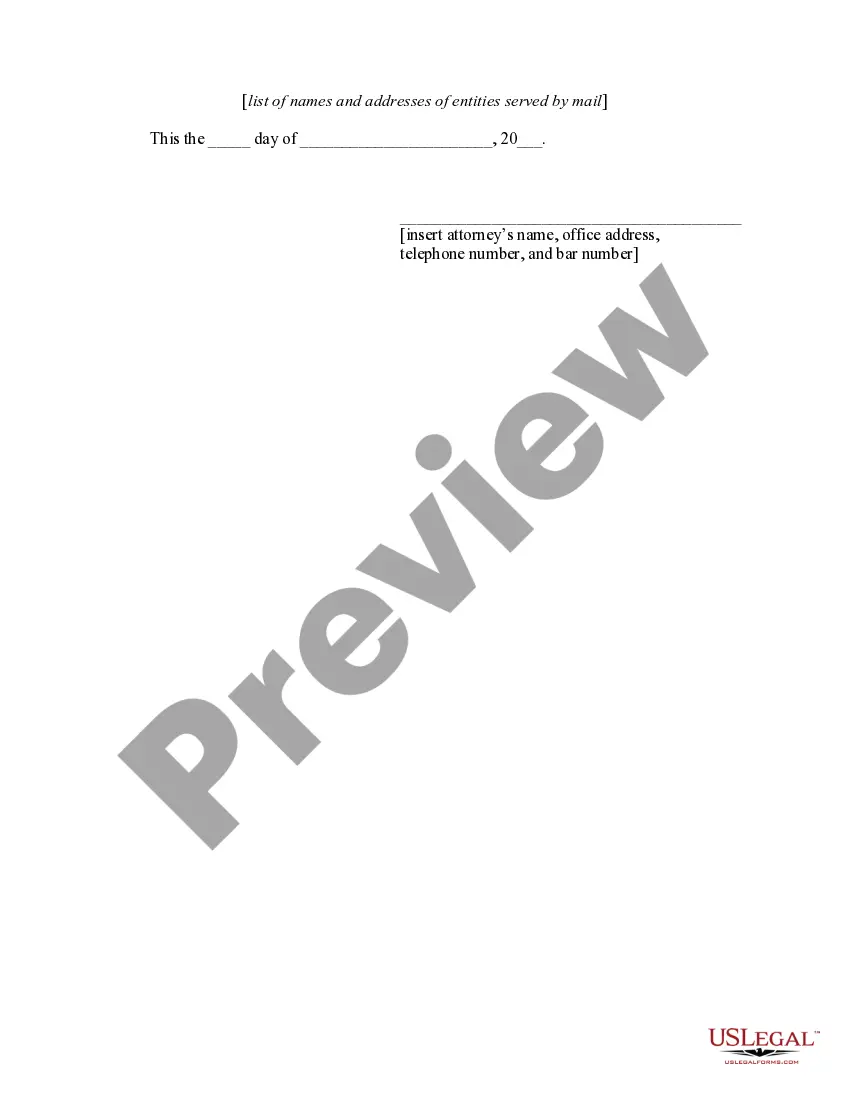
- Certificate of Service confirming that the motion has been served to relevant parties.
Common use cases
This form is utilized when there is a need to investigate the financial affairs of a debtor in bankruptcy. It is often necessary to gather information on assets, liabilities, income, and expenses to ensure proper handling of the bankruptcy case. Situations may include discovering undisclosed assets or understanding the financial status of the debtor for settlement purposes.
Intended users of this form
This motion is intended for use by:
- Creditors seeking information about a debtor's assets and financial dealings.
- Trustees in bankruptcy cases who need to investigate debtor's claims and disclosures.
- Debtors who may require a formal examination by their creditors or trustees.
Instructions for completing this form
- Identify the debtor or party being examined and fill in their details at the beginning of the motion.
- Specify the matters for examination as described in the relevant bankruptcy rules.
- If applicable, enter the date, time, and location for the examination.
- Sign the document and include your contact information and attorney details.
- Complete the Certificate of Service section to confirm notification of the motion to all parties.
Notarization requirements for this form
This form does not typically require notarization to be legally valid. However, some jurisdictions or document types may still require it. US Legal Forms provides secure online notarization powered by Notarize, available 24/7 for added convenience.
Get your form ready online
Our built-in tools help you complete, sign, share, and store your documents in one place.
Make edits, fill in missing information, and update formatting in US Legal Forms—just like you would in MS Word.
Download a copy, print it, send it by email, or mail it via USPS—whatever works best for your next step.
Sign and collect signatures with our SignNow integration. Send to multiple recipients, set reminders, and more. Go Premium to unlock E-Sign.
If this form requires notarization, complete it online through a secure video call—no need to meet a notary in person or wait for an appointment.
We protect your documents and personal data by following strict security and privacy standards.

Make edits, fill in missing information, and update formatting in US Legal Forms—just like you would in MS Word.

Download a copy, print it, send it by email, or mail it via USPS—whatever works best for your next step.

Sign and collect signatures with our SignNow integration. Send to multiple recipients, set reminders, and more. Go Premium to unlock E-Sign.

If this form requires notarization, complete it online through a secure video call—no need to meet a notary in person or wait for an appointment.

We protect your documents and personal data by following strict security and privacy standards.
Common mistakes
- Failing to provide sufficient detail about the matters to be examined.
- Not including the required attorney's contact information.
- Omitting the Certificate of Service, which may lead to delays or dismissal of the motion.
Why use this form online
- Convenience of downloading and completing the form from home.
- Editable template allowing for customization to meet specific needs.
- Access to legal forms drafted by licensed attorneys, ensuring reliability and accuracy.
Legal use & context
- The motion must comply with Federal Bankruptcy Rules.
- Examinations under Rule 2004 are generally broad and can cover a wide range of financial inquiries.
- The court has discretion in granting ex parte motions, reflecting the urgency of the request.
What to keep in mind
- The Motion for Rule 2004 Examination - Ex Parte allows creditors to request an examination without prior notice to the debtor.
- Understand the specific matters you wish to investigate before completing the form.
- Check local rules for any state-specific modifications required for filing.
Looking for another form?

Form popularity
FAQ
An adversary proceeding is the bankruptcy court's version of a civil action (a lawsuit). An adversary proceeding is opened by filing a complaint asking the court to rule on an issue related to a bankruptcy case.
In bankruptcy court disputed matters are either classified as ?contested matters? or ?adversary proceedings?. A contested matter commonly arises in disputed motions. Whereas adversary proceedings largely track traditional civil litigation (i.e., Complaint, Answer, Trial).
Authority to Take a Rule 2004 Exam: FRBP 2004 provides parties with the opportunity to conduct an examination of a person and/or documents, even though an adversary proceeding has not been filed. This is called a "Rule 2004 Examination".
During a 2004 examination, the trustee or creditor can examine anyone that might have knowledge of the debtor's finances and request the debtor or a third party to produce documents for review.