Proof of Residency for Real ID
What this document covers
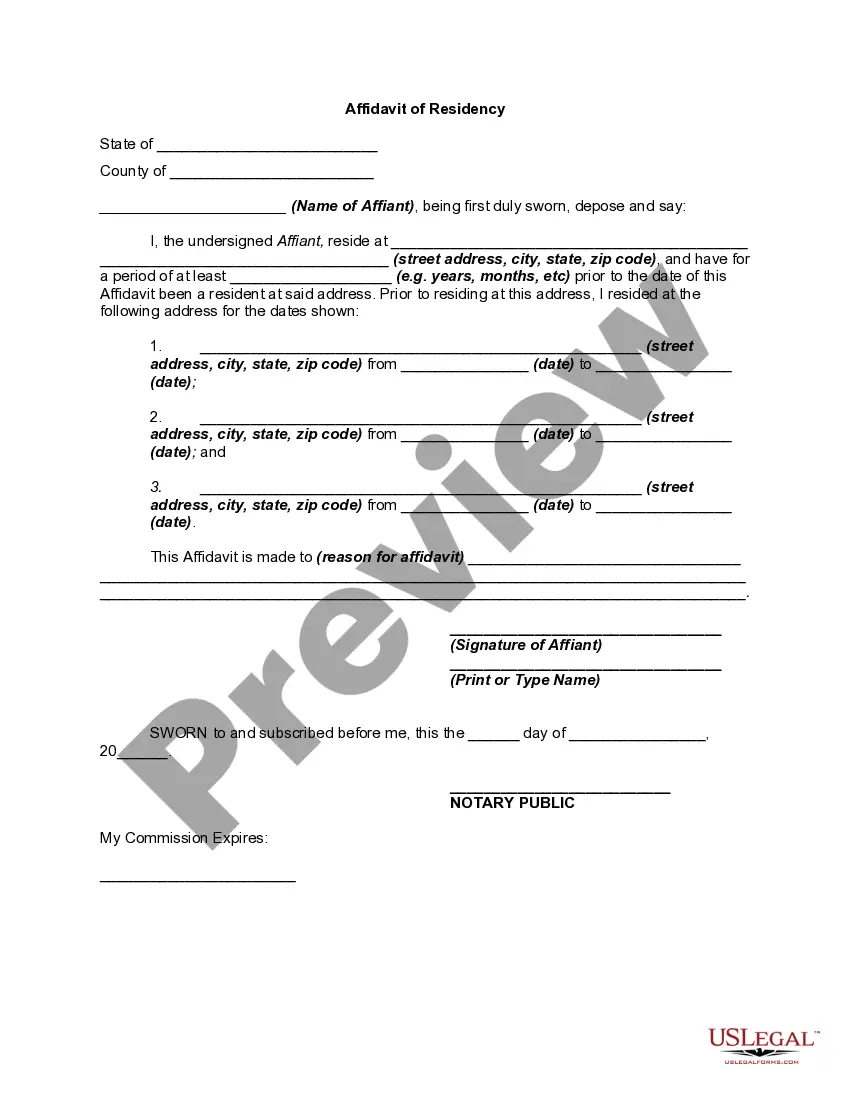
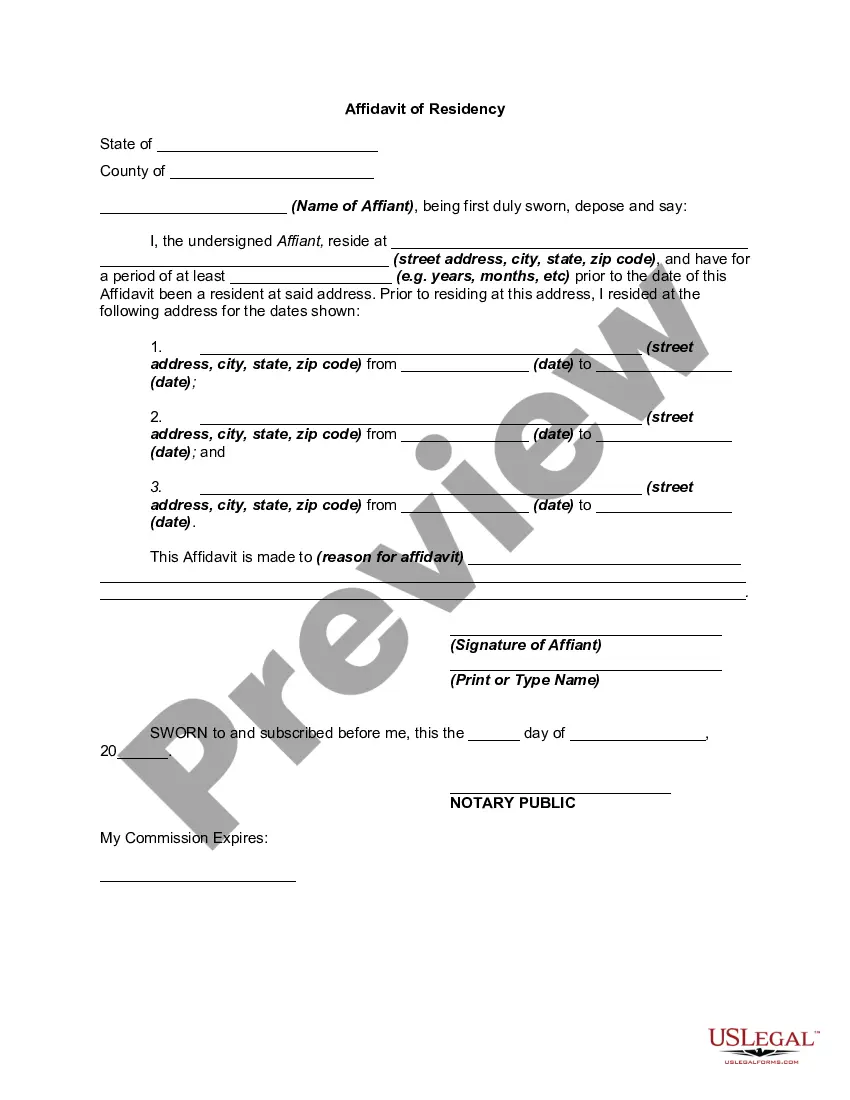
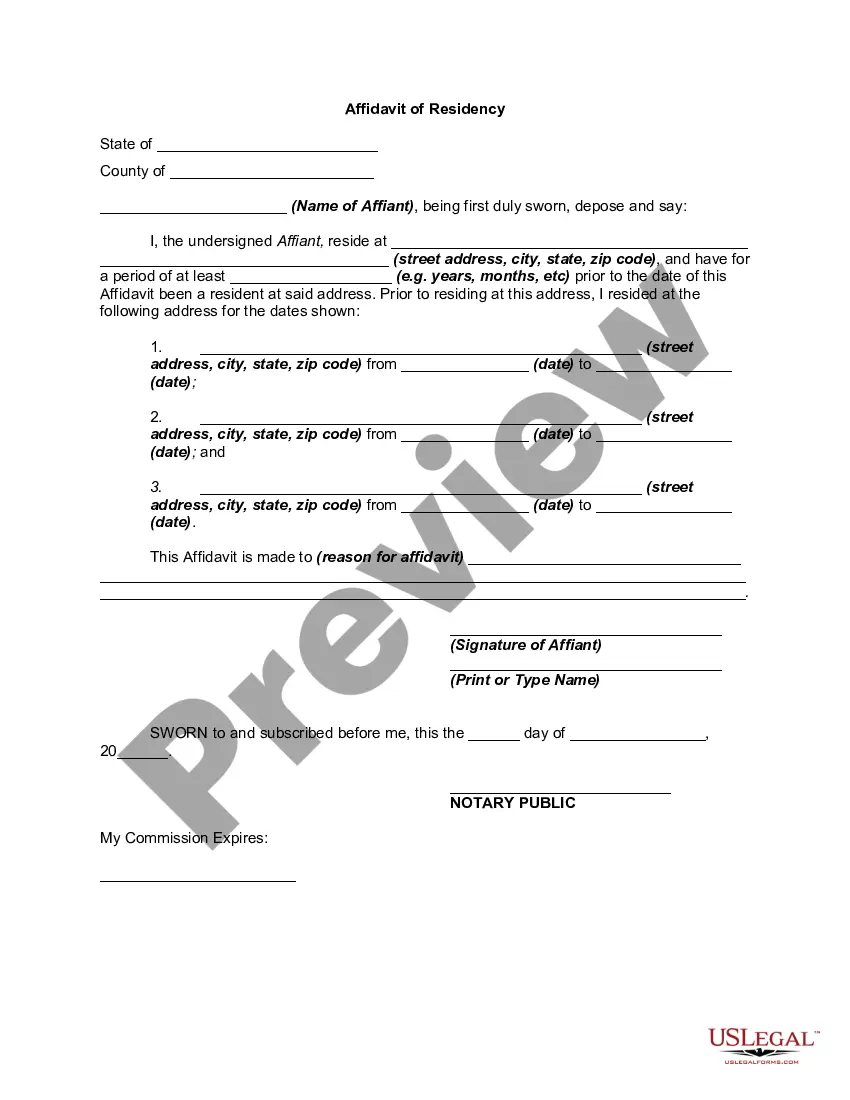
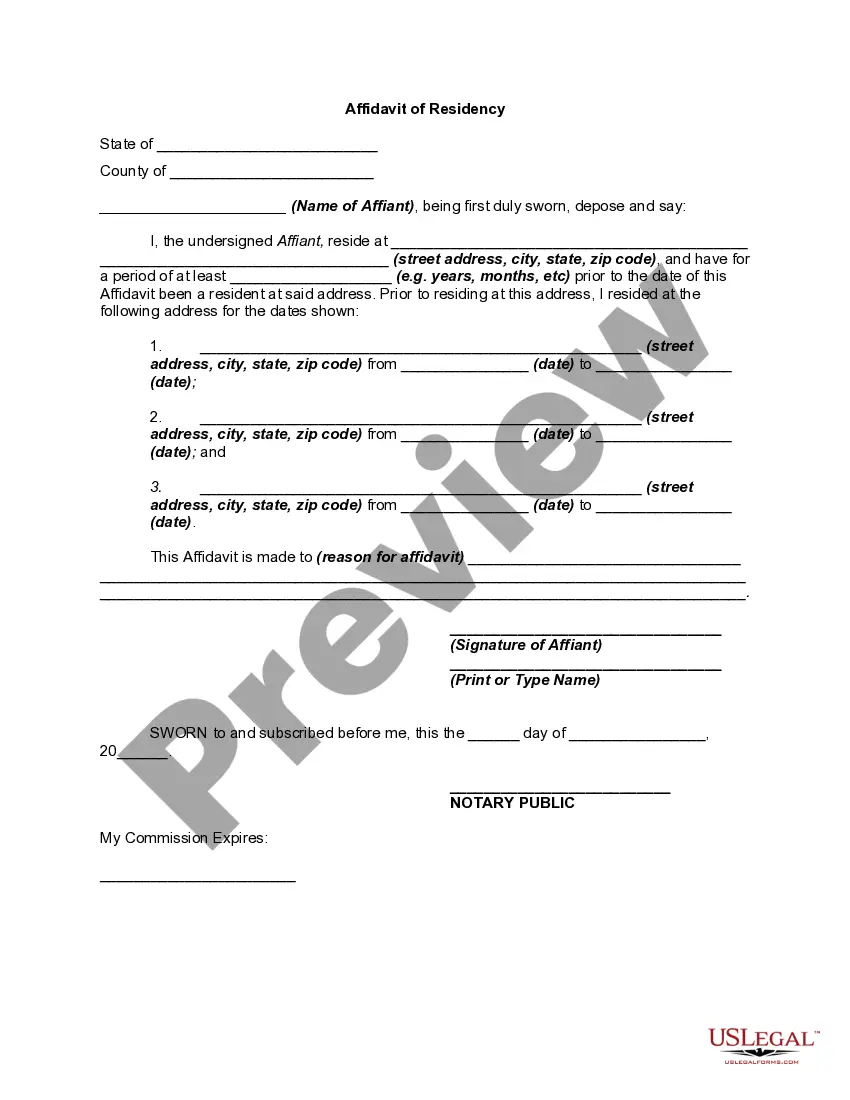
The Proof of Residency for Real ID is a legal affidavit used to confirm an individual's residence at a specified address. This form serves to verify residency when applying for a Real ID and differs from other residency documents by including a sworn statement that attests to the truth of the information provided, which is witnessed by a notary public.
Main sections of this form
- Affiant's name and signature: The individual making the statement must provide their full name and sign the affidavit.
- Statement of residence: This section includes the current address where the affiant resides.
- Previous addresses: The form requires a history of previous residences, including street addresses and occupancy dates.
- Purpose of affidavit: The affiant must specify the reason for submitting the affidavit.
- Notary public section: This area includes the notary's signature and commission information, confirming the affidavit's authenticity.
Common use cases
This form is typically used when applying for a Real ID, which is required for various purposes, including air travel and accessing federal facilities. It proves that you have established residency at a specific address, which is essential when other documentation may not suffice.
Who this form is for
- Individuals applying for a Real ID who need to establish their residency.
- Residents who may not have conventional proof of address, such as utility bills.
- Anyone required to confirm their place of residence for legal or official reasons.
How to complete this form
- Fill in the name of the affiant at the beginning of the form.
- Provide your current street address, city, state, and zip code.
- List past addresses along with dates of residence where indicated.
- State the purpose of the affidavit clearly in the designated area.
- Sign the affidavit and have it notarized by a licensed notary public.
Notarization guidance
Yes, this form must be notarized to be legally valid. US Legal Forms offers integrated online notarization, which is available 24/7 through secure video calls. This service ensures legal equivalence without the need for in-person travel.
Get your form ready online
Our built-in tools help you complete, sign, share, and store your documents in one place.
Make edits, fill in missing information, and update formatting in US Legal Forms—just like you would in MS Word.
Download a copy, print it, send it by email, or mail it via USPS—whatever works best for your next step.
Sign and collect signatures with our SignNow integration. Send to multiple recipients, set reminders, and more. Go Premium to unlock E-Sign.
If this form requires notarization, complete it online through a secure video call—no need to meet a notary in person or wait for an appointment.
We protect your documents and personal data by following strict security and privacy standards.

Make edits, fill in missing information, and update formatting in US Legal Forms—just like you would in MS Word.

Download a copy, print it, send it by email, or mail it via USPS—whatever works best for your next step.

Sign and collect signatures with our SignNow integration. Send to multiple recipients, set reminders, and more. Go Premium to unlock E-Sign.

If this form requires notarization, complete it online through a secure video call—no need to meet a notary in person or wait for an appointment.

We protect your documents and personal data by following strict security and privacy standards.
Typical mistakes to avoid
- Failing to provide complete and accurate addresses for previous residences.
- Not clearly stating the purpose of the affidavit.
- Overlooking the notary section, resulting in an invalid affidavit.
- Not providing the required information about how long you have been a resident at your current address.
Benefits of using this form online
- Convenience: Downloadable templates save time and provide instant access.
- Editability: Customize the form to fit your specific residency situation easily.
- Reliability: Forms are drafted by licensed attorneys to ensure legal compliance.
Looking for another form?
Form popularity
FAQ
Bank Statements. Document description: Preprinted account statements from your bank. Court Letters. Government Documents. Income Tax Statements. Lease Agreements. Notarized Affidavit of Residency. School Records. Vehicle Registration.
If you don't have sufficient original documents to prove your address, some financial institutions and government agencies will accept an affidavit filled out by someone you live with. Check with the financial institution or government agency to find out if they have a specific form that you should use.
Government-issued photo ID. Residential lease/property deed. Utility bill. Letter from the government/court (marriage license, divorce, government aid) Bank statement. Driver's license/learner's permit. Car registration. Notarized affidavit of residency.
Valid Driver's License. Property Tax Receipt. Posted Mail with name of applicant. Utility Bill.
Electronic utility bills showing an Alberta address. Telephone bill. Gas bill. Cable TV bill. Other non-utility statements or correspondence mailed to your Alberta address. Bank / Credit Card statement. Alberta Social Benefit Statements. Income tax assessment summary (Notice of Assessment)
How do I show Proof of Residency? Obtain a utility bill from the address you currently reside, along with a letter from the person you are living with stating that you and your child(ren) are living with them, and explain that you have no mail and/or bills in your name.
Visit your bank or credit union and ask for a copy of your most recent account statement that includes your name and address. In some cases, any piece of mail specifically addressed to your name rather than occupant or resident can be accepted as proof of residency.
A proof of residence is a document confirming where you live, and must have both your full name and your address printed on it.
If you don't have any utility bills, you can still prove your residency through other means. You can use a combination of your license, tax documents, bank statements, lease agreements, and other official paperwork. The essential factor is that the form of proof shows your address and name.