Mississippi Answers To Defendant's First Interrogatories To Plaintiff
What is this form?
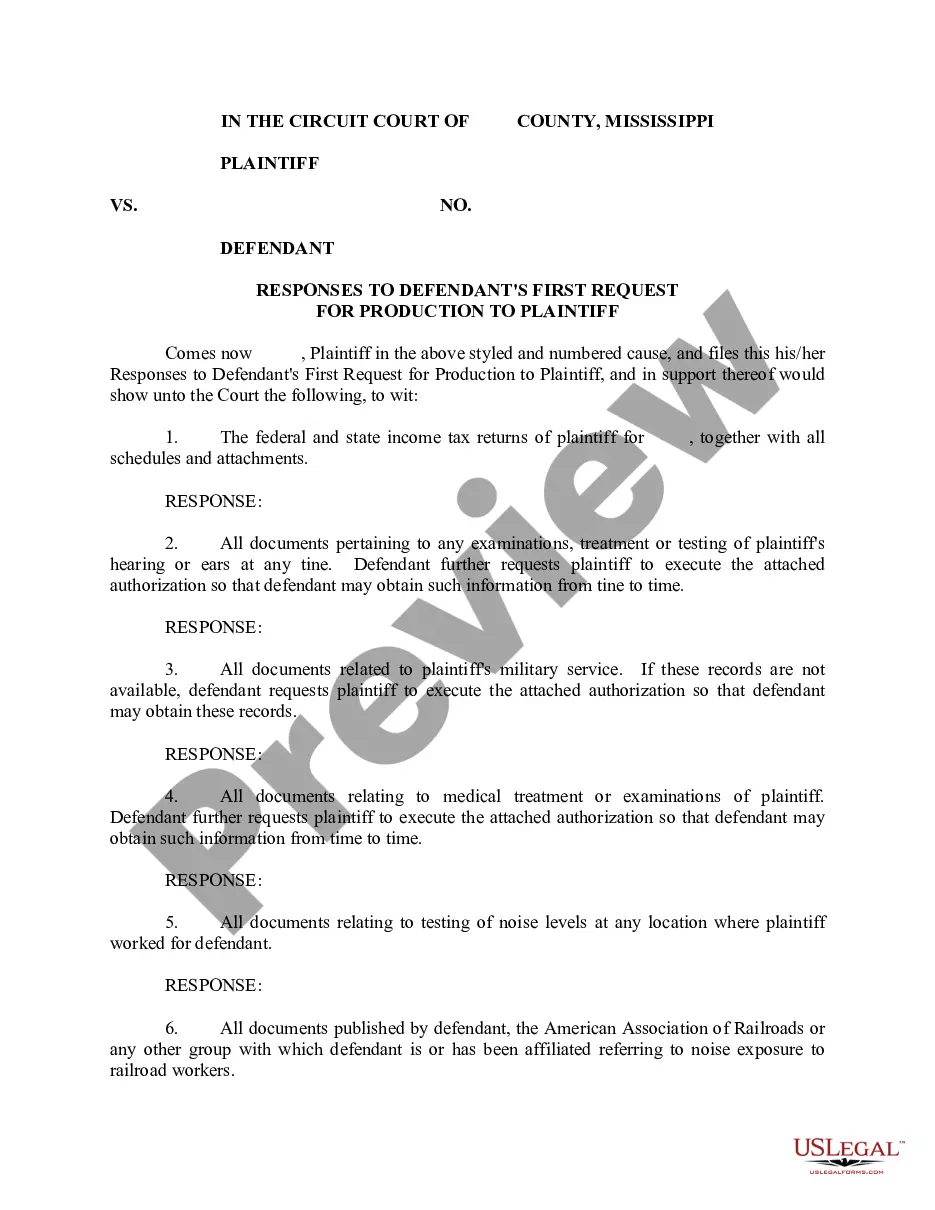
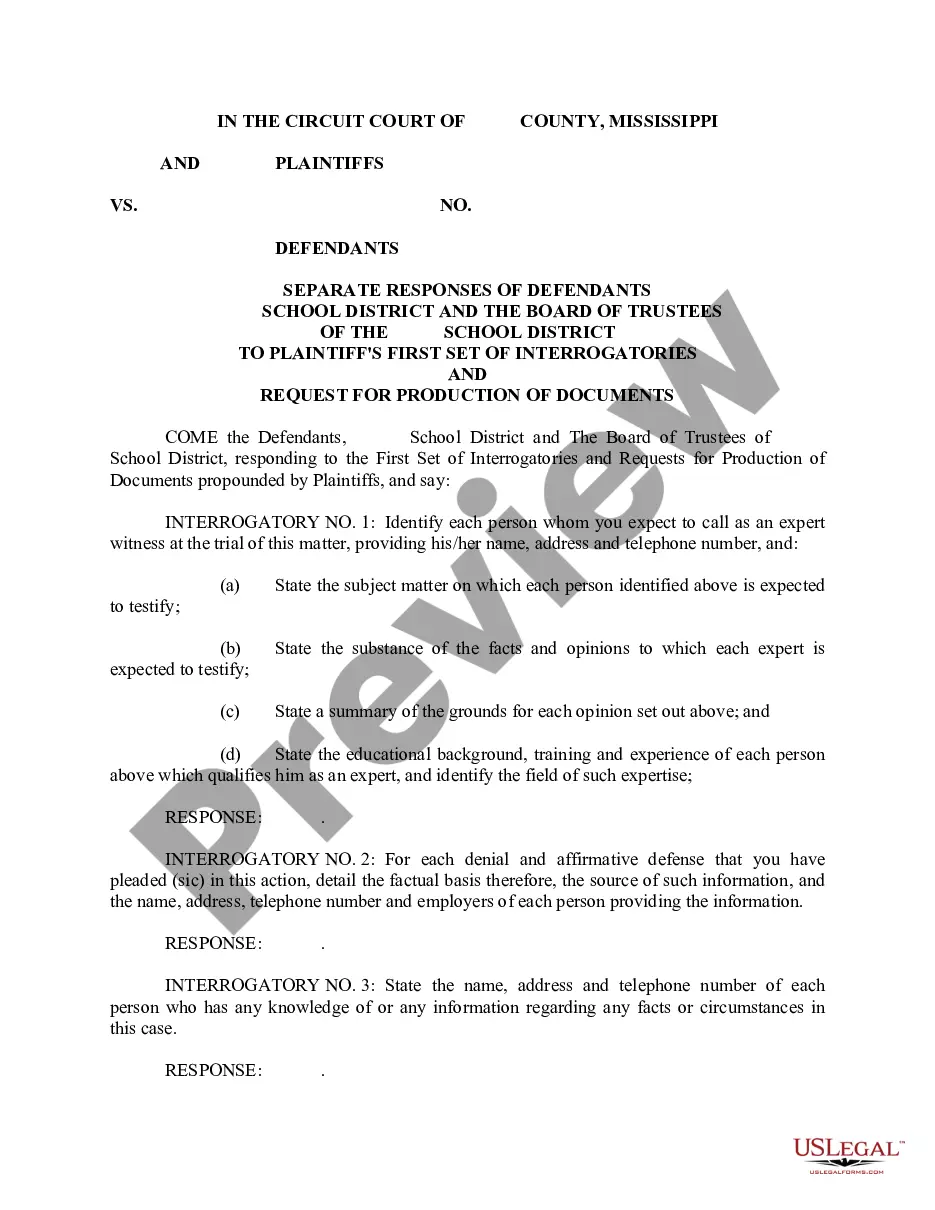
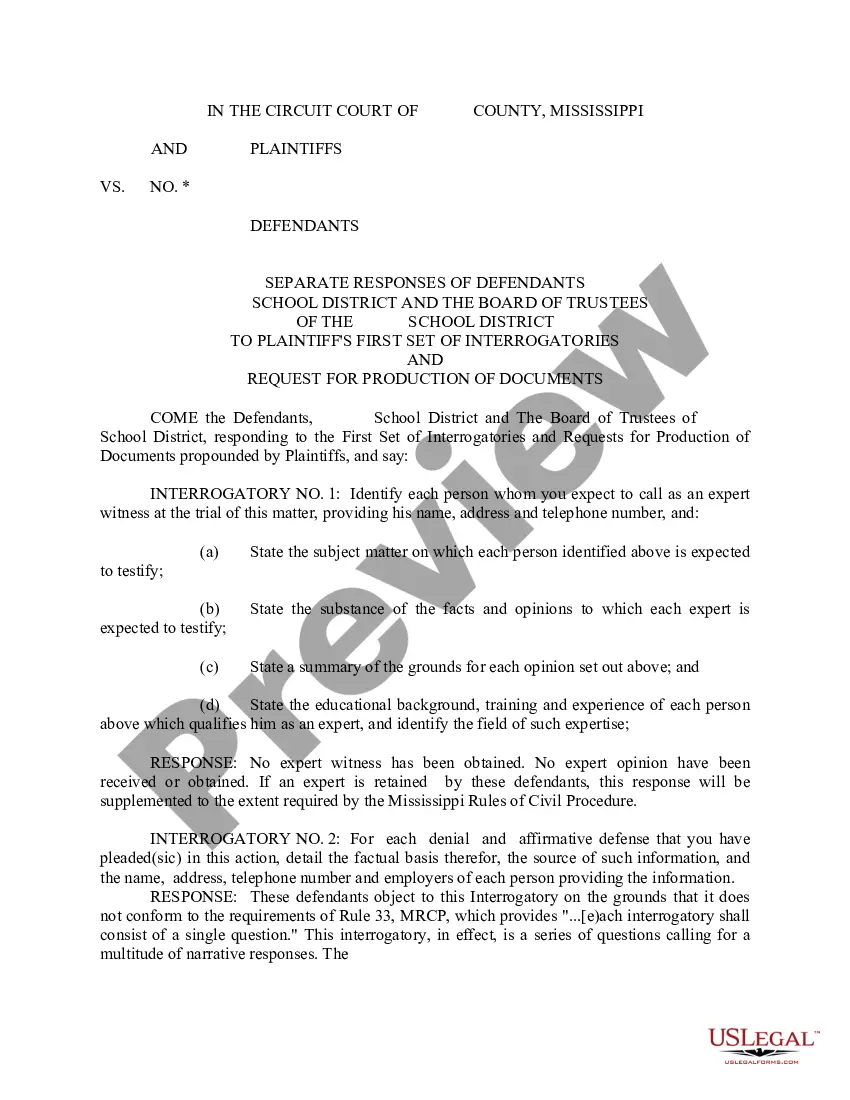
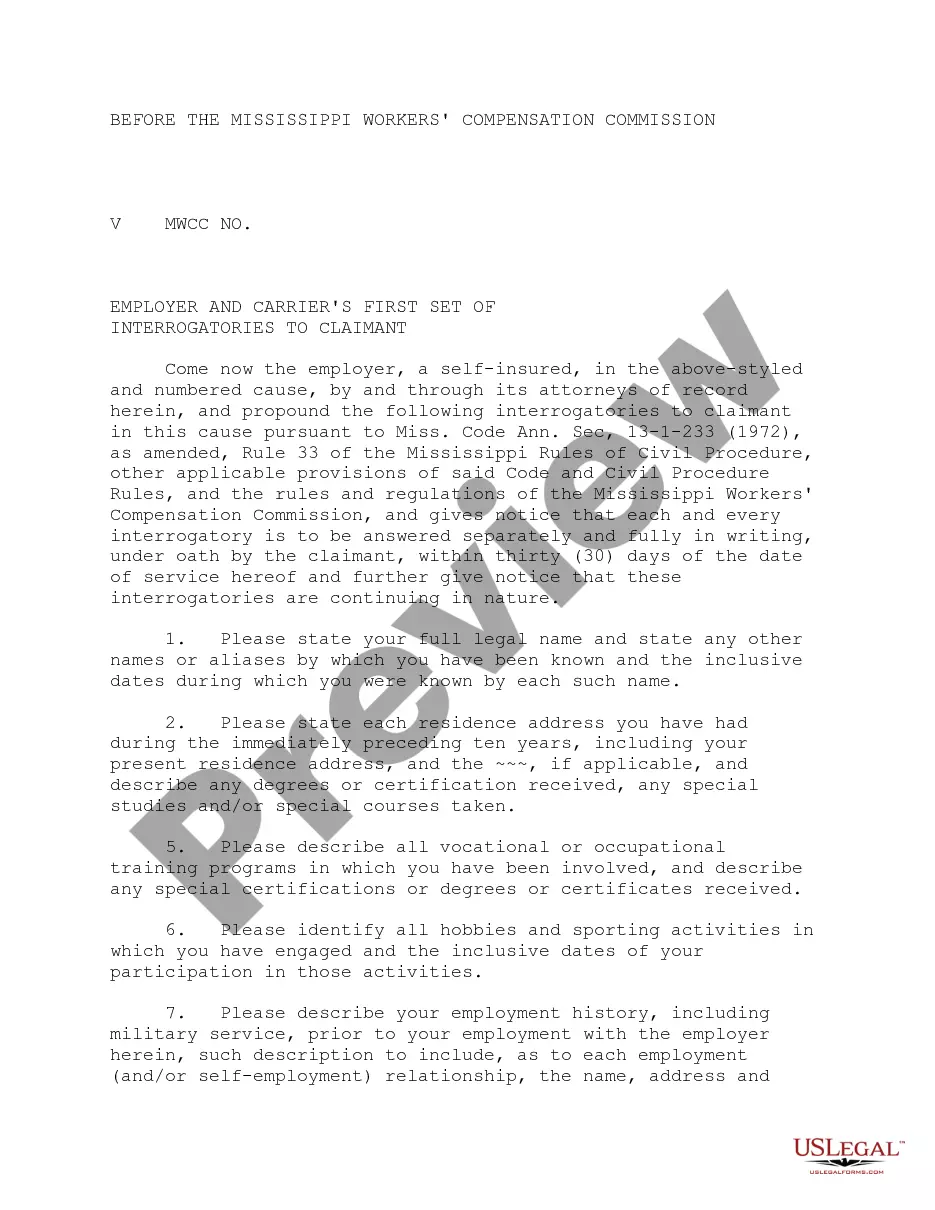
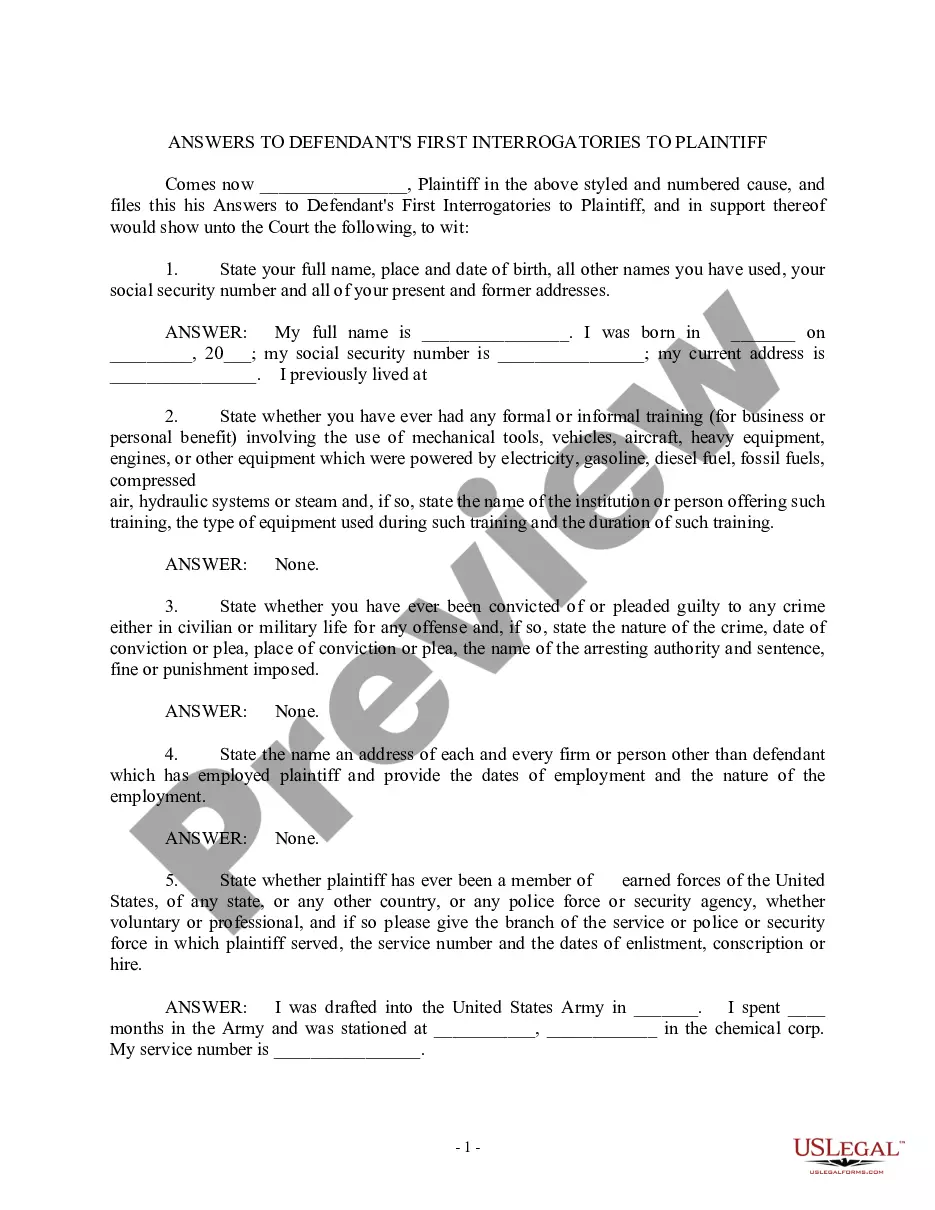
The Answers to Defendant's First Interrogatories to Plaintiff is a legal document used in the discovery phase of a lawsuit. This form allows the defendant to gather information from the plaintiff by responding to specific written questions. Interrogatories are a crucial part of the litigation process, providing insights that help both parties prepare their cases. Unlike other legal forms, this one specifically addresses the responses expected from the plaintiff regarding the facts of the case.
What’s included in this form
- Identification of the parties involved in the lawsuit.
- Specific questions posed by the defendant that the plaintiff must answer.
- Space for the plaintiff to provide detailed responses.
- Signature lines for legal verification and affirmation of the answers.
- Instructions for submitting the completed form to the appropriate court.
When to use this form
This form should be used during the discovery phase of a lawsuit, particularly when the defendant requires clarification or additional information from the plaintiff. You may need this form if: - You are a defendant seeking to establish a clearer understanding of the plaintiff's claims. - You need formally documented responses to support your defense. - You want to ensure that the plaintiff adheres to the timeline and requirements set by the court.
Who this form is for
Eligibility to use this form includes:
- Defendants in civil lawsuits seeking information from the plaintiff.
- Legal representatives or attorneys acting on behalf of the defendant.
- Individuals involved in litigation who need a structured way to collect responses for their defense strategy.
How to prepare this document
- Identify the parties: Clearly state your name and the name of the plaintiff as indicated in the lawsuit.
- Review the interrogatories: Carefully read each question posed and prepare your answers.
- Provide specific responses: Answer each question as completely and accurately as possible.
- Sign the document: Ensure to sign and date the form to validate your answers.
- File the form: Submit the completed form to the court as instructed, ensuring timely delivery.
Is notarization required?
This form does not typically require notarization to be legally valid. However, some jurisdictions or document types may still require it. US Legal Forms provides secure online notarization powered by Notarize, available 24/7 for added convenience.
Get your form ready online
Our built-in tools help you complete, sign, share, and store your documents in one place.
Make edits, fill in missing information, and update formatting in US Legal Forms—just like you would in MS Word.
Download a copy, print it, send it by email, or mail it via USPS—whatever works best for your next step.
Sign and collect signatures with our SignNow integration. Send to multiple recipients, set reminders, and more. Go Premium to unlock E-Sign.
If this form requires notarization, complete it online through a secure video call—no need to meet a notary in person or wait for an appointment.
We protect your documents and personal data by following strict security and privacy standards.

Make edits, fill in missing information, and update formatting in US Legal Forms—just like you would in MS Word.

Download a copy, print it, send it by email, or mail it via USPS—whatever works best for your next step.

Sign and collect signatures with our SignNow integration. Send to multiple recipients, set reminders, and more. Go Premium to unlock E-Sign.

If this form requires notarization, complete it online through a secure video call—no need to meet a notary in person or wait for an appointment.

We protect your documents and personal data by following strict security and privacy standards.
Avoid these common issues
- Failing to answer all questions thoroughly.
- Not signing or dating the form before submission.
- Missing the deadline for submitting the answers.
- Providing vague or unclear responses.
- Neglecting to check for adherence to state-specific rules.
Why use this form online
- Convenient access to downloadable forms anywhere, anytime.
- Easy customization to fit your specific legal circumstances.
- Reliable templates drafted by licensed attorneys to ensure compliance.
- No need for physical trips to legal offices, saving time and resources.
Legal use & context
The Answers to Defendant's First Interrogatories is a critical legal tool in civil litigation. Properly completed, it serves as a foundational document in preparing for trial, aiding in establishing or contesting claims and defenses. Ensure that responses are truthful and comprehensive to maintain the integrity of the legal process.
What to keep in mind
- The Answers to Defendant's First Interrogatories to Plaintiff is essential for gathering information in a lawsuit.
- Complete and accurate responses are crucial for effective legal representation.
- Always review local rules for any specific requirements regarding interrogatories.
- Submit the form within the required timeframe to avoid legal complications.
Looking for another form?
Form popularity
FAQ
Your answers to the interrogatories should usually be short, clear, and direct and should answer only the question that is being asked. This is not the time to set out your entire case or defense to the other side. Take the time to make sure your answers are correct and truthful.
Written questions submitted to a party from his or her adversary to ascertain answers that are prepared in writing and signed under oath and that have relevance to the issues in a lawsuit.No party can be compelled to answer interrogatories that involve matters beyond the party's control.
Responding to Form InterrogatoriesAnswer each question, being careful to answer each subpart, if one exists. Read the question carefully, and answer only what it asks. You may attach exhibits, if necessary. The response must be verified, meaning you must swear that the responses given are true.
The plaintiff must give you responses to the request for interrogatories within 45 days of when you mailed the request. If they do not give you a response you can send a final request to the plaintiff. In the final request tell the plaintiff they have another 30 days to give you answers to your interrogatory requests.
If the plaintiff does not respond to the court order, then you can file a Motion to Dismiss and you may win your case. Send a final request. If they do not respond to the final request within 30 days you can send the court an application for entry of final judgment or dismissal.
You must answer each interrogatory separately and fully in writing under oath, unless you object to it. You must explain why you object. You must sign your answers and objections.
You must answer each interrogatory separately and fully in writing under oath, unless you object to it. You must explain why you object. You must sign your answers and objections.
So, can you refuse to answer interrogatories? The answer is, no, you may not. You must answer a Rule 33 interrogatory within 30 days of being served with it. That answer must either permit inspection of the requested information or object to the production of the information for a specific reason.