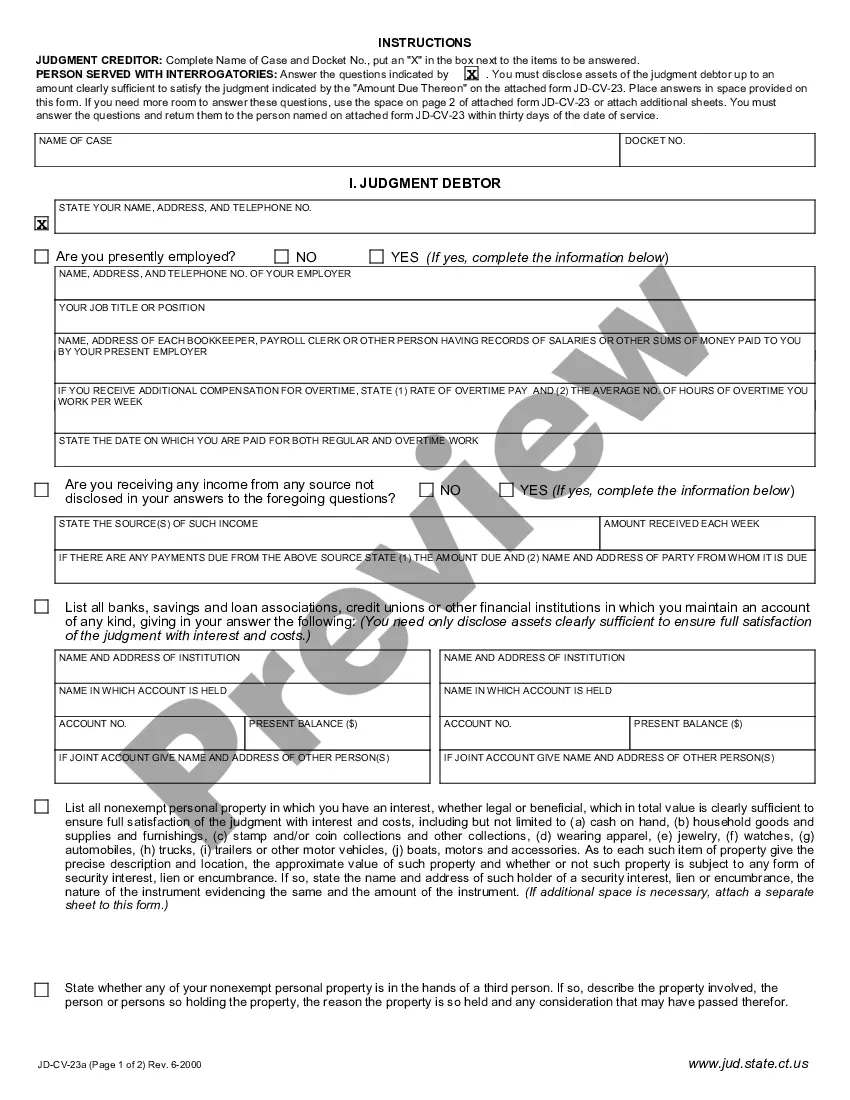
Mississippi First Set of Interrogatories to Claimant
Understanding this form
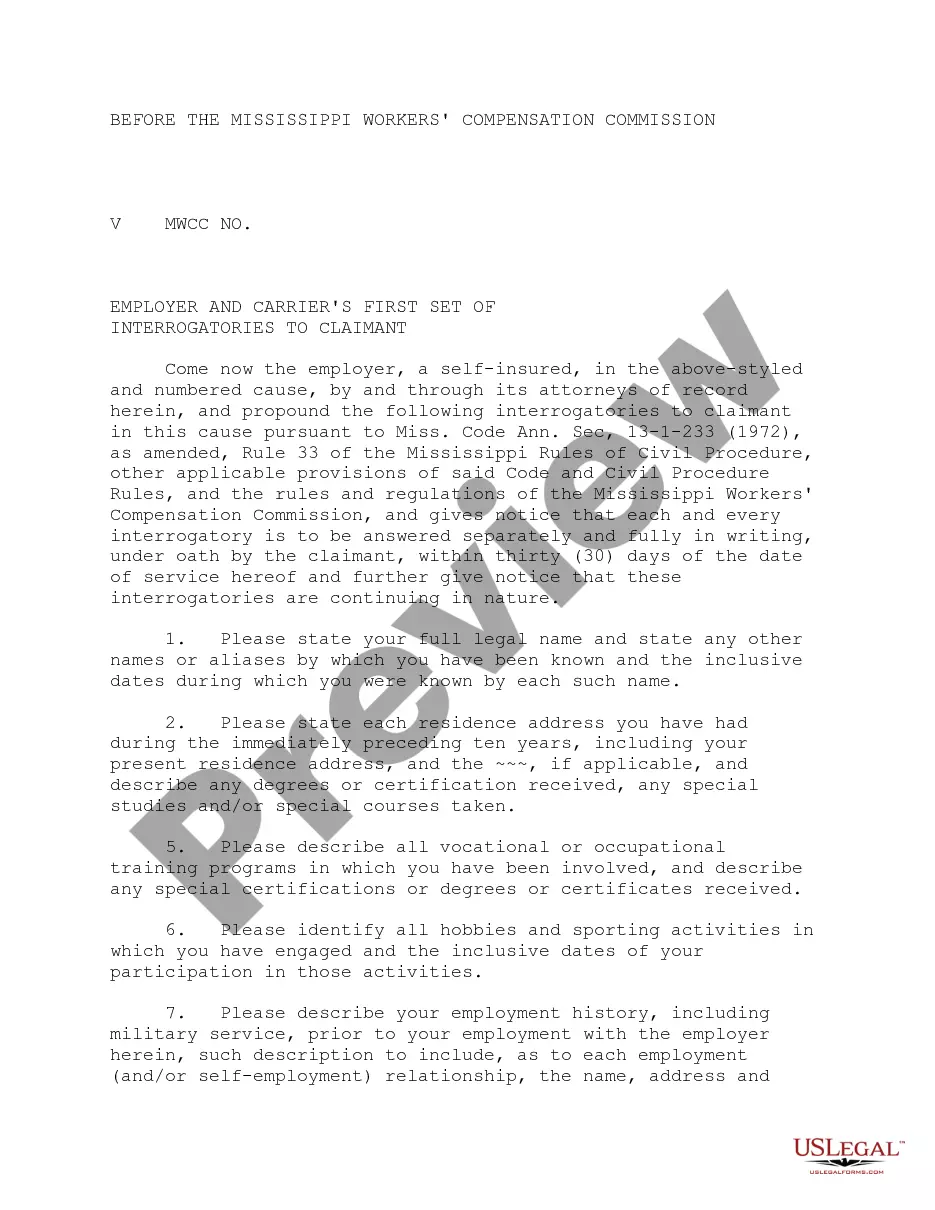
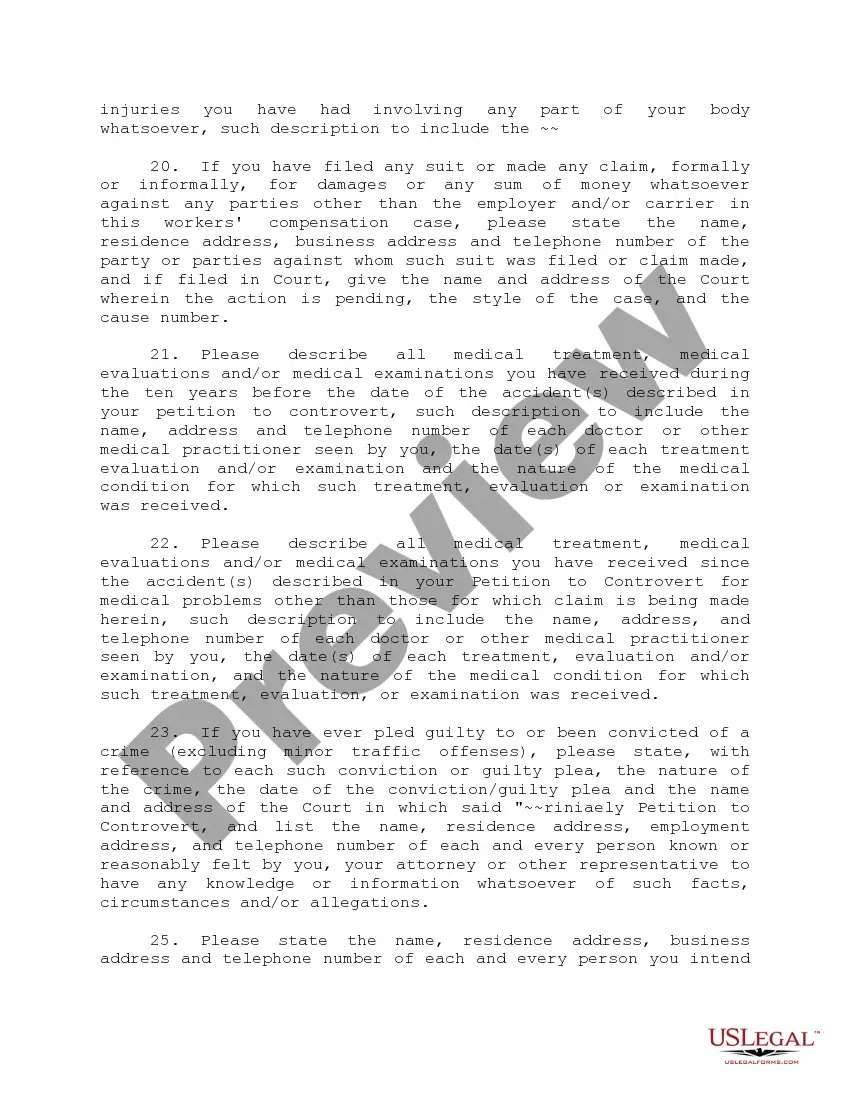
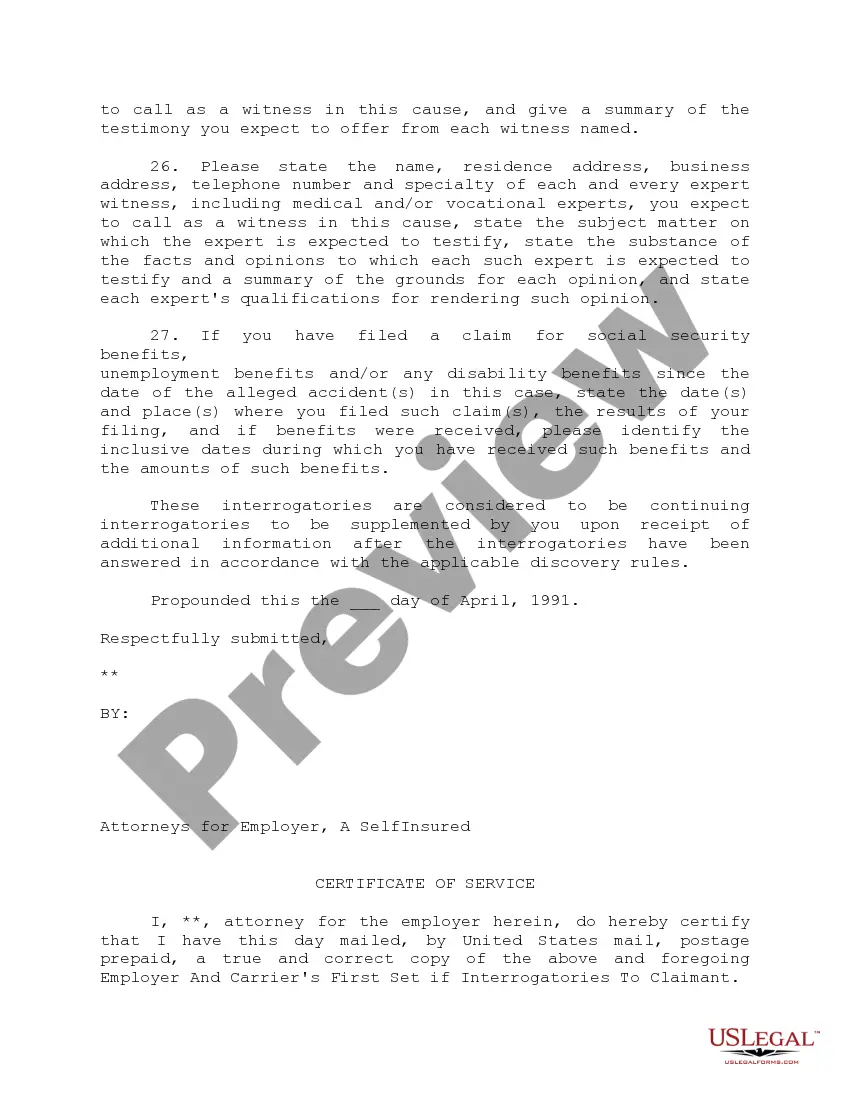
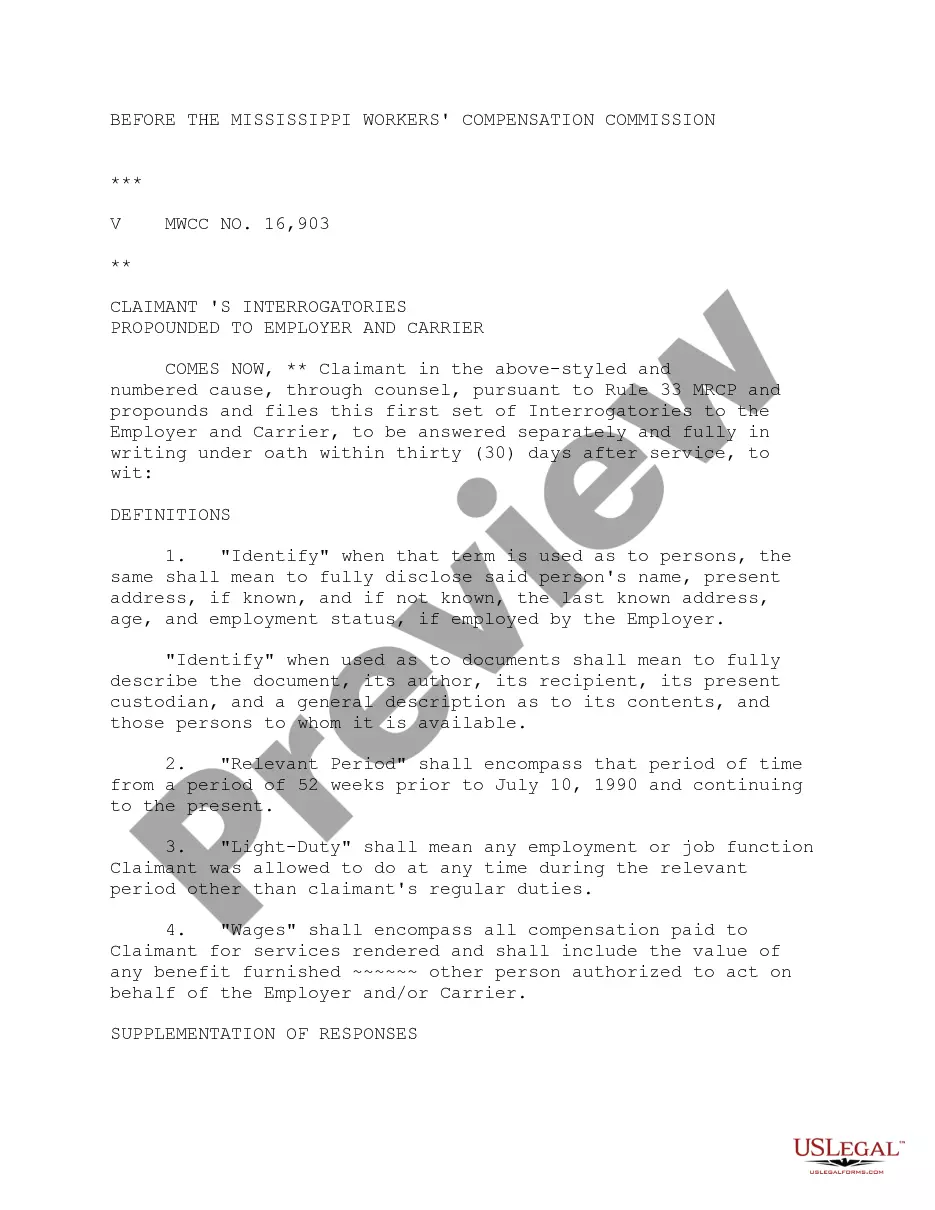
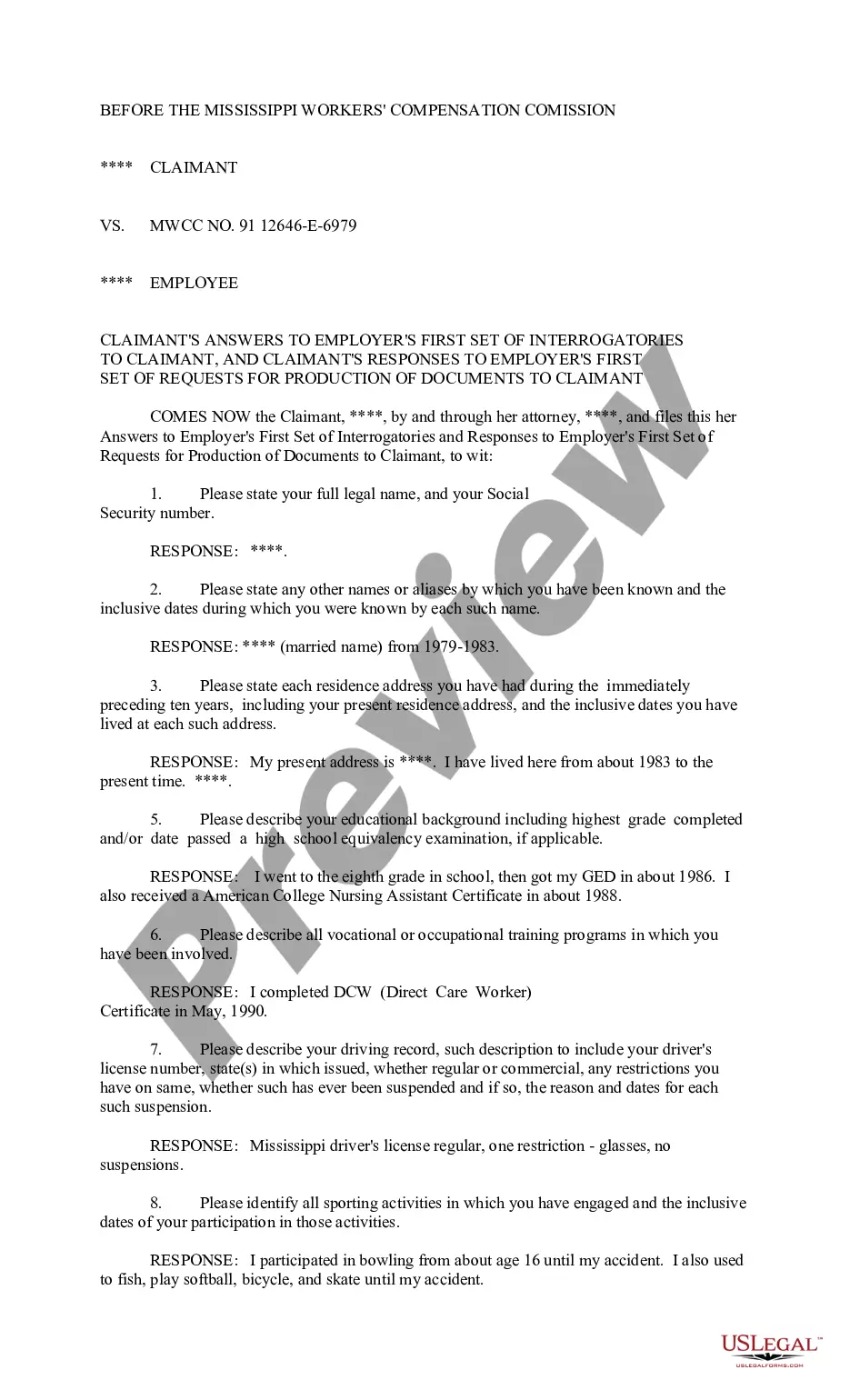
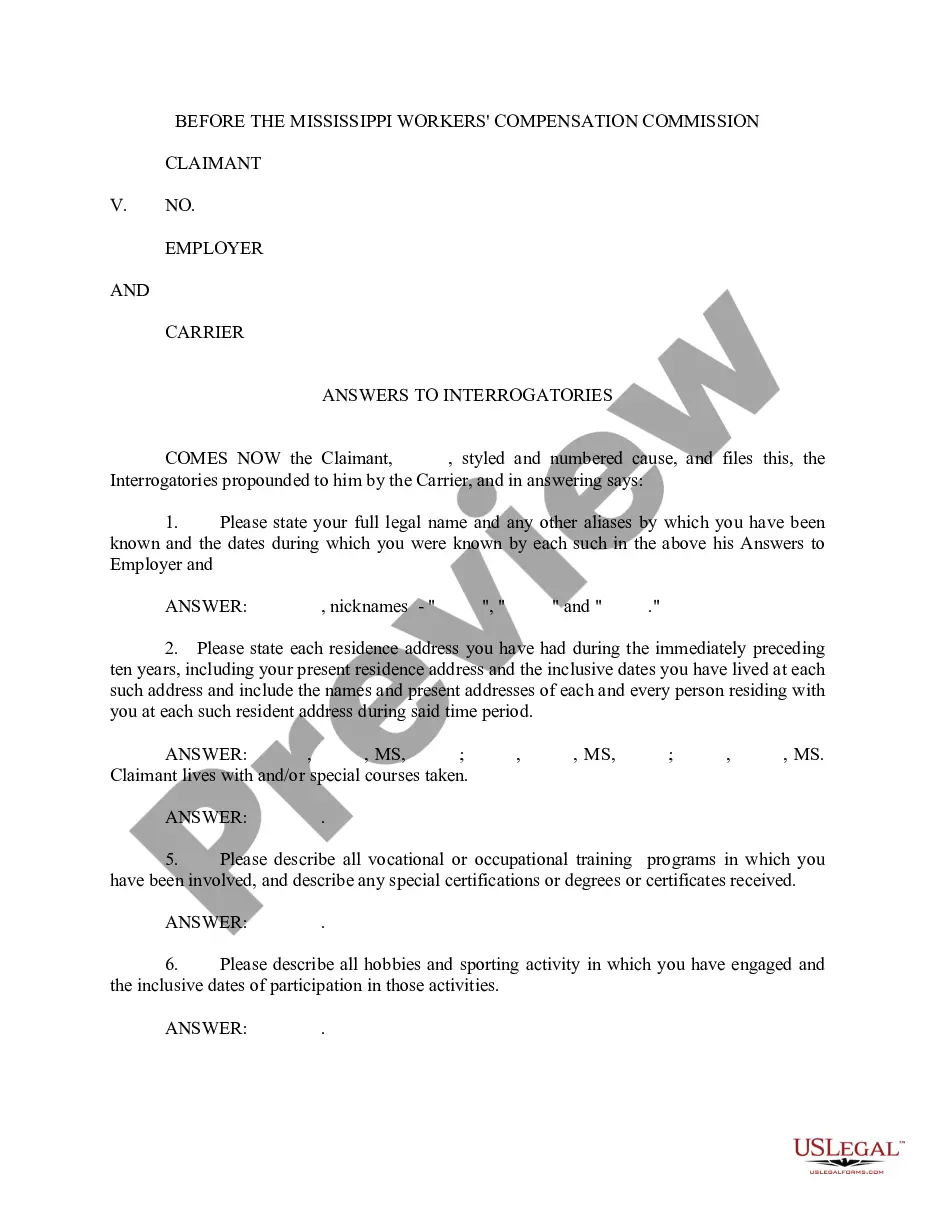
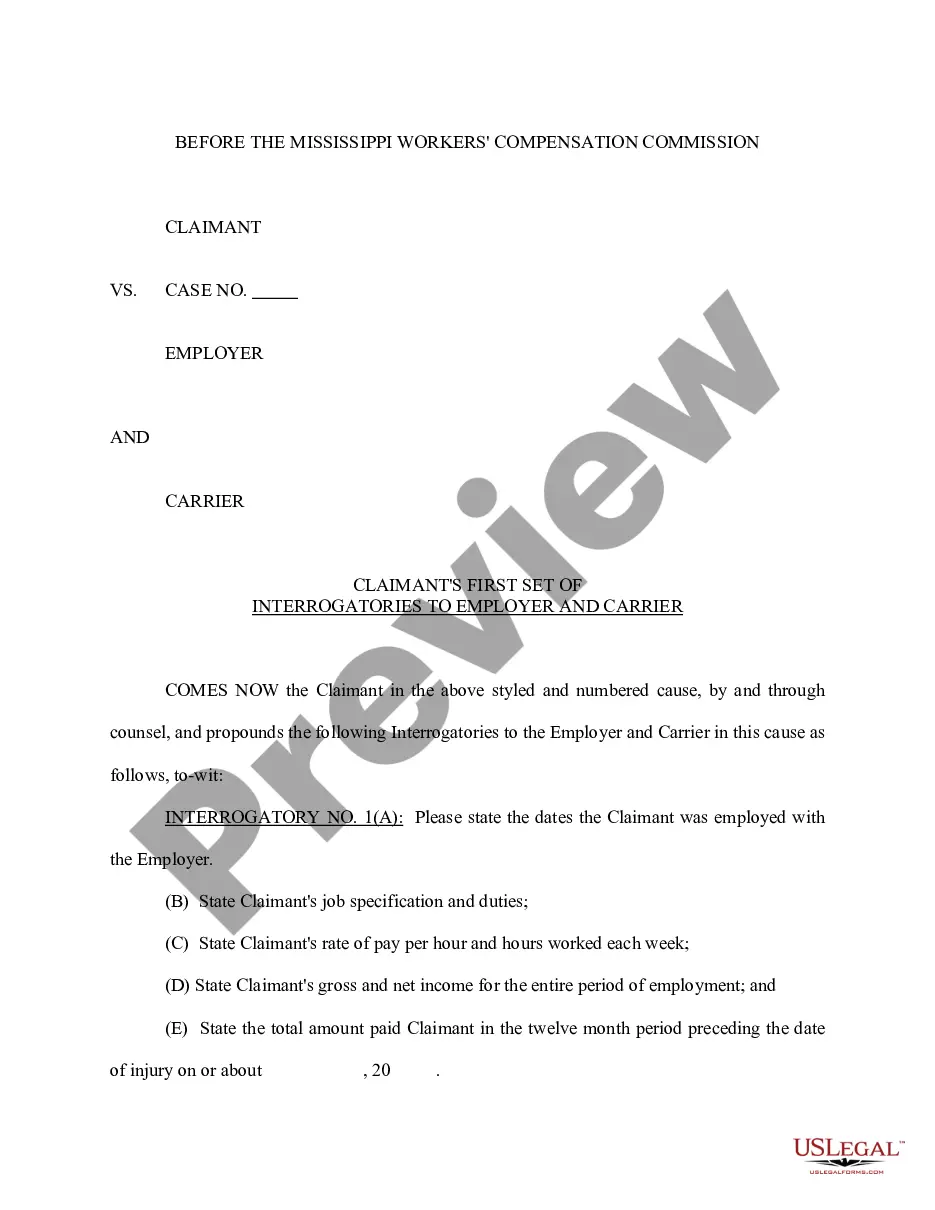
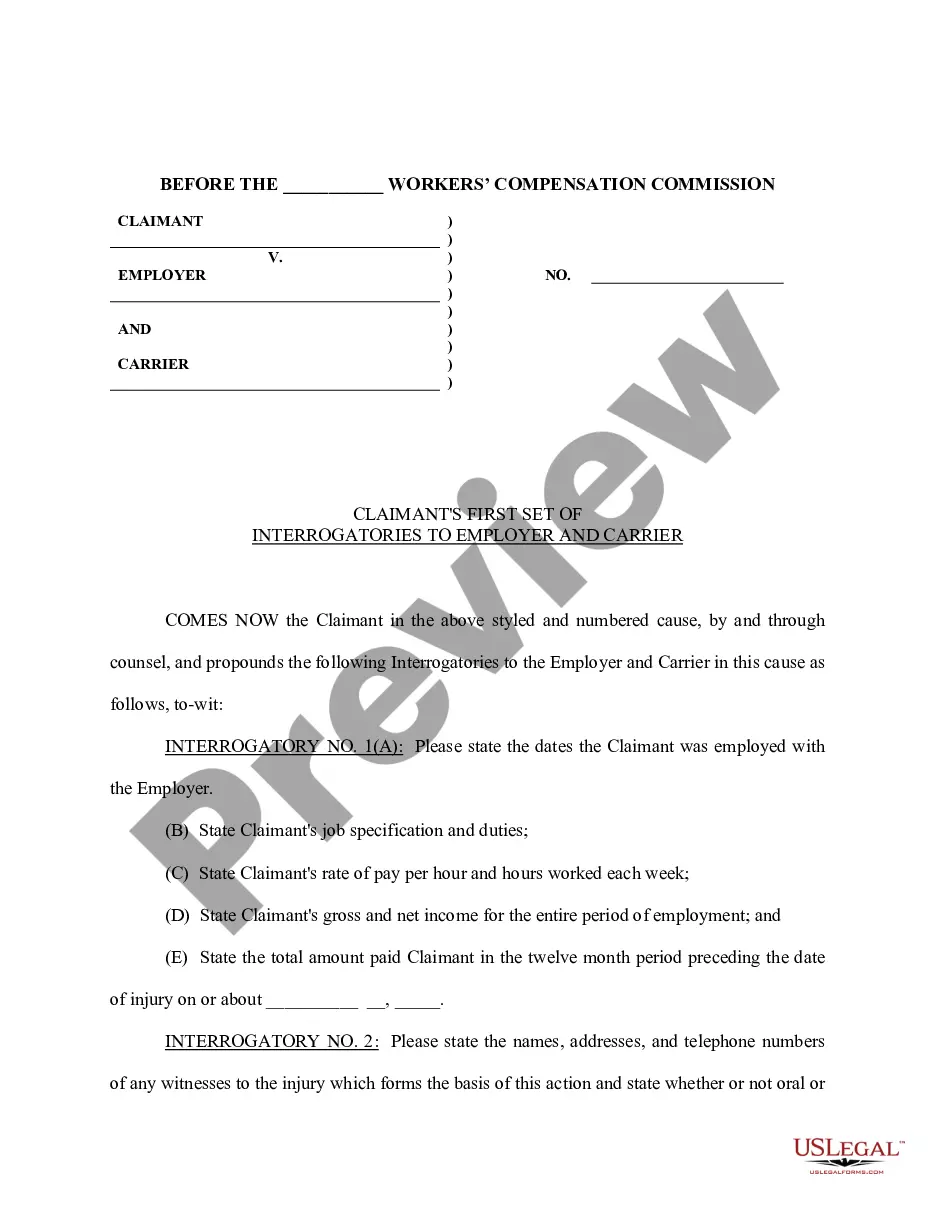
The First Set of Interrogatories to Claimant is a formal document used in the discovery phase of a lawsuit. This set of written questions is directed to a claimant and is designed to gather essential information regarding the claim. Interrogatories help clarify facts and circumstances surrounding the case, allowing both parties to prepare effectively for trial. Unlike depositions, which involve oral questioning, interrogatories require written responses under oath, ensuring accountability and precision in the information provided.
Main sections of this form
- Identification of the claimant's full legal name and any aliases.
- History of residential addresses for the past ten years.
- Details regarding the claimant's employment history, including military service.
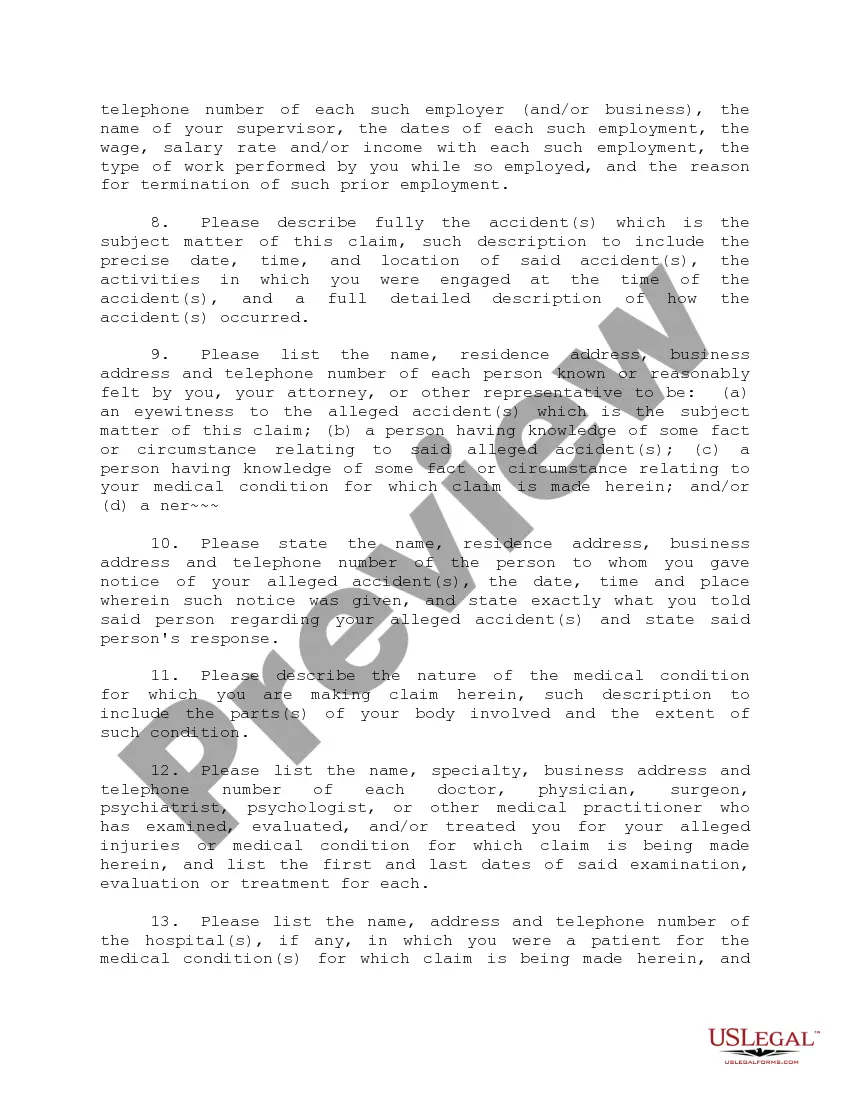
- Comprehensive description of the accident giving rise to the claim.
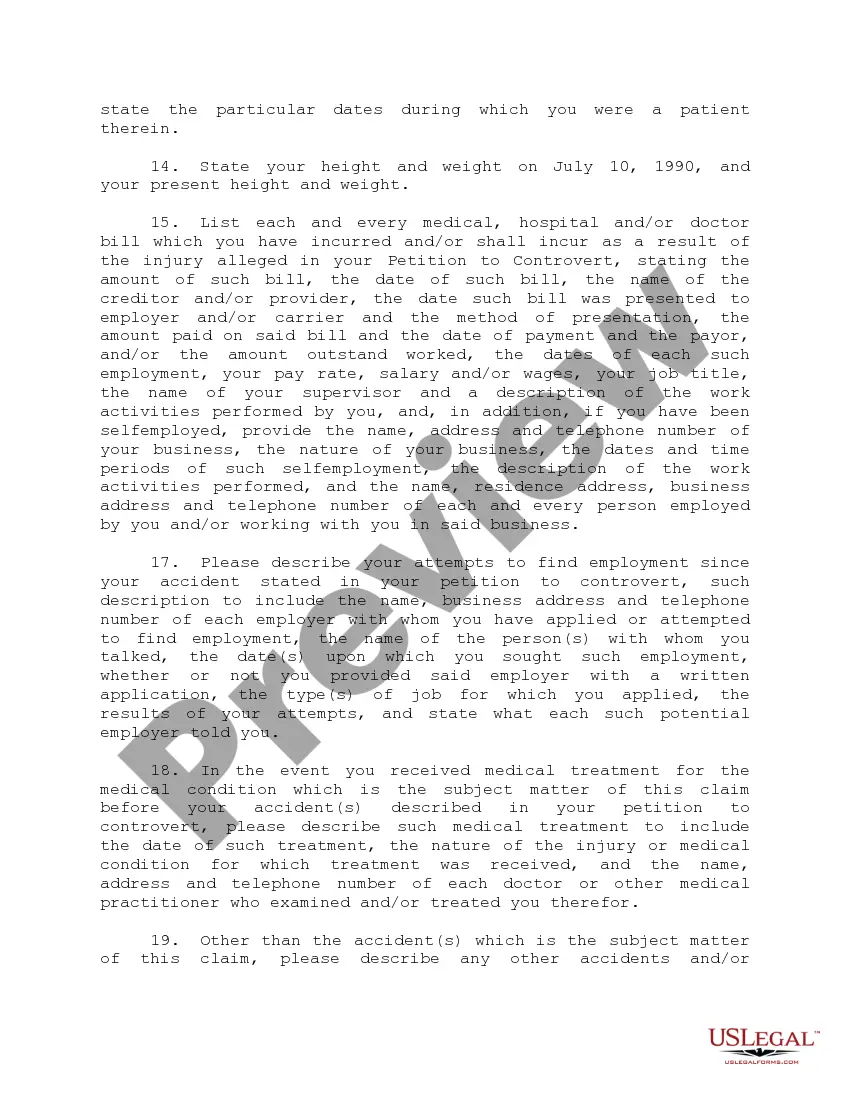
- List of all medical practitioners and facilities associated with the claimant's treatment.
- Disclosure of any past accidents or injuries relevant to the current claim.

When to use this document
This form should be used when a claimant is involved in a workers' compensation case in Mississippi and responses to specific questions are required to assess the claim. It is especially important when detailed information about the claimant's background, employment history, and medical conditions is necessary for the evaluation process. Utilizing this form helps ensure that both sides of the dispute are informed, contributing to a fair resolution of the case.
Intended users of this form
- Claimants involved in workers' compensation disputes.
- Employers or insurance carriers requesting detailed information from the claimant.
- Attorneys representing either party in a workers' compensation case who need to gather information for litigation.
How to prepare this document
- Fill in the case identification numbers and the full legal name of the claimant.
- Respond to each interrogatory thoroughly and honestly, ensuring all information is accurate.
- Be specific in detailing employment history and medical treatment to provide a comprehensive view of your situation.
- Review your responses for clarity and completeness before signing under oath.
- Submit the completed form to the appropriate party as directed by your attorney or local rules.
Does this document require notarization?
In most cases, this form does not require notarization. However, some jurisdictions or signing circumstances might. US Legal Forms offers online notarization powered by Notarize, accessible 24/7 for a quick, remote process.
Get your form ready online
Our built-in tools help you complete, sign, share, and store your documents in one place.
Make edits, fill in missing information, and update formatting in US Legal Forms—just like you would in MS Word.
Download a copy, print it, send it by email, or mail it via USPS—whatever works best for your next step.
Sign and collect signatures with our SignNow integration. Send to multiple recipients, set reminders, and more. Go Premium to unlock E-Sign.
If this form requires notarization, complete it online through a secure video call—no need to meet a notary in person or wait for an appointment.
We protect your documents and personal data by following strict security and privacy standards.

Make edits, fill in missing information, and update formatting in US Legal Forms—just like you would in MS Word.

Download a copy, print it, send it by email, or mail it via USPS—whatever works best for your next step.

Sign and collect signatures with our SignNow integration. Send to multiple recipients, set reminders, and more. Go Premium to unlock E-Sign.

If this form requires notarization, complete it online through a secure video call—no need to meet a notary in person or wait for an appointment.

We protect your documents and personal data by following strict security and privacy standards.
Common mistakes
- Failing to answer all interrogatories fully can result in delays or sanctions.
- Providing inaccurate or incomplete responses that may undermine the case.
- Neglecting to sign and date the form under oath, which can invalidate the submission.
- Ignoring the requirement to supplement answers if new information arises after submission.
Benefits of using this form online
- Immediate access to a professionally drafted form saves time and legal expenses.
- Easy to edit and customize the document to suit specific case needs.
- Convenient downloadable format allows for quick completion and filing.
Legal use & context
- This form is used in the context of workers' compensation claims within Mississippi.
- It helps in the process of gathering essential information through discovery.
- Failure to comply with responding to interrogatories can impact the claimant's case negatively in litigation.
Looking for another form?
Form popularity
FAQ
Written questions submitted to a party from his or her adversary to ascertain answers that are prepared in writing and signed under oath and that have relevance to the issues in a lawsuit.No party can be compelled to answer interrogatories that involve matters beyond the party's control.
But the usual cases will settle after intensive (and expensive) discovery is concluded, usually a few months before the actual trial, sometimes literally on the steps of the court house or in the first few days of trial if parties are willing to push the settlement envelope as far as they can.
So what's the difference? For starters, depositions are an out of court question-and-answer session that must be conducted under oath.Interrogatories are a set of questions sent to an individual to answer and send back to an attorney. These are limited to 30 questions, including subparts of questions.
Responding to Form InterrogatoriesAnswer each question, being careful to answer each subpart, if one exists. Read the question carefully, and answer only what it asks. You may attach exhibits, if necessary. The response must be verified, meaning you must swear that the responses given are true.
Interrogatories Interrogatories are written questions that are sent by one party to another. Generally speaking, the party who receives these questions has 30 days to answer them.If the other party fails to respond on time, within 30 days, then the questions are deemed admitted.
You must answer each interrogatory separately and fully in writing under oath, unless you object to it. You must explain why you object. You must sign your answers and objections.
Interrogatories can be quicker, less costly, and less complicated than depositions, but there are downsides. Since the questions are written, the witness may have more time to think and craft answers, rather than providing more candid answers during discovery.
The purpose of interrogatories is to learn a great deal of general information about a party in a lawsuit. For example, the defendant in a personal injury lawsuit about a car accident might send you interrogatories asking you to disclose things like: Where you live.
Personal/Corporate information of opposing party. Identifying information of witnesses. Contact information & background of expert witnesses. Insurance information.