Theft from Interstate Shipment
What this document covers
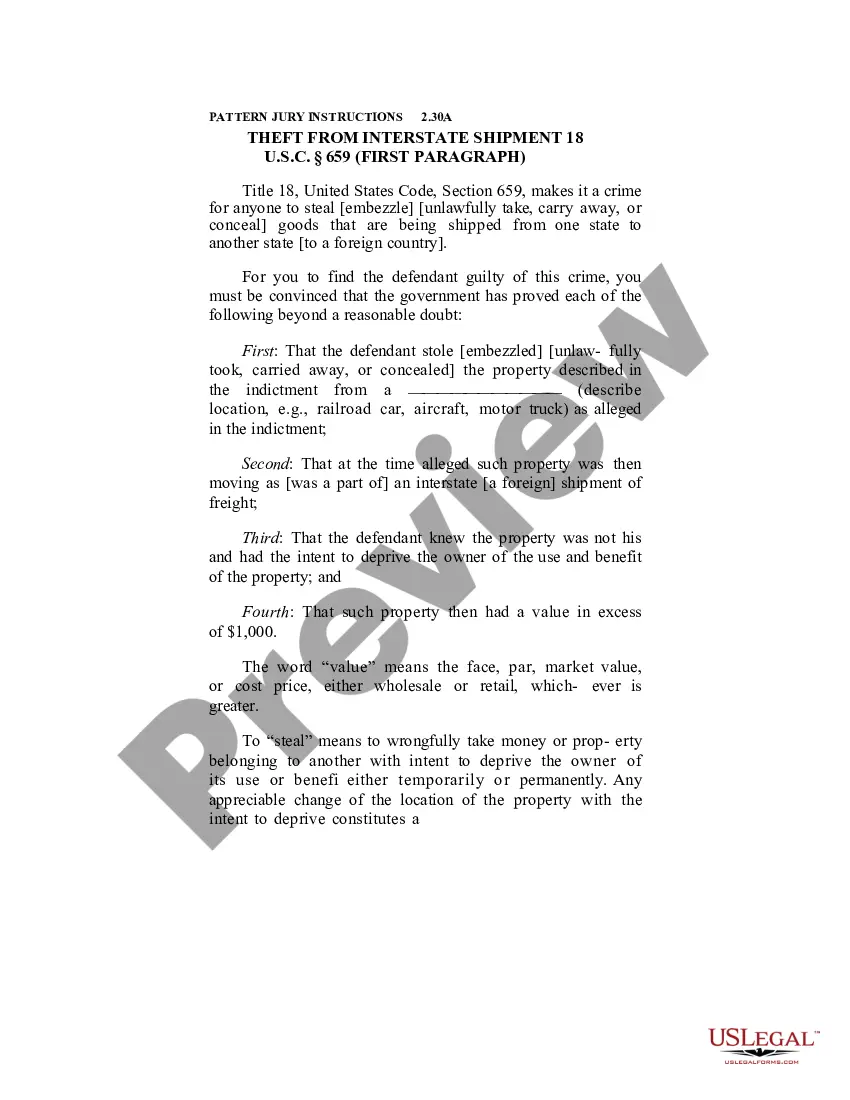
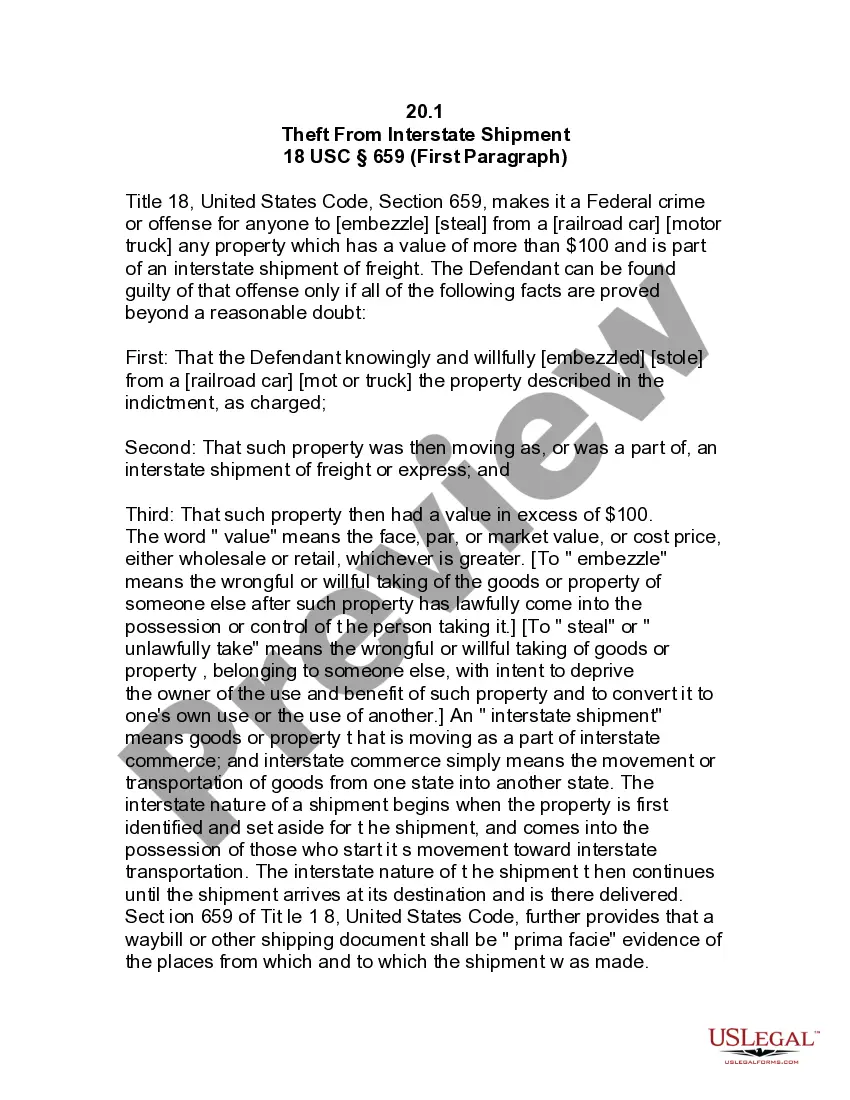
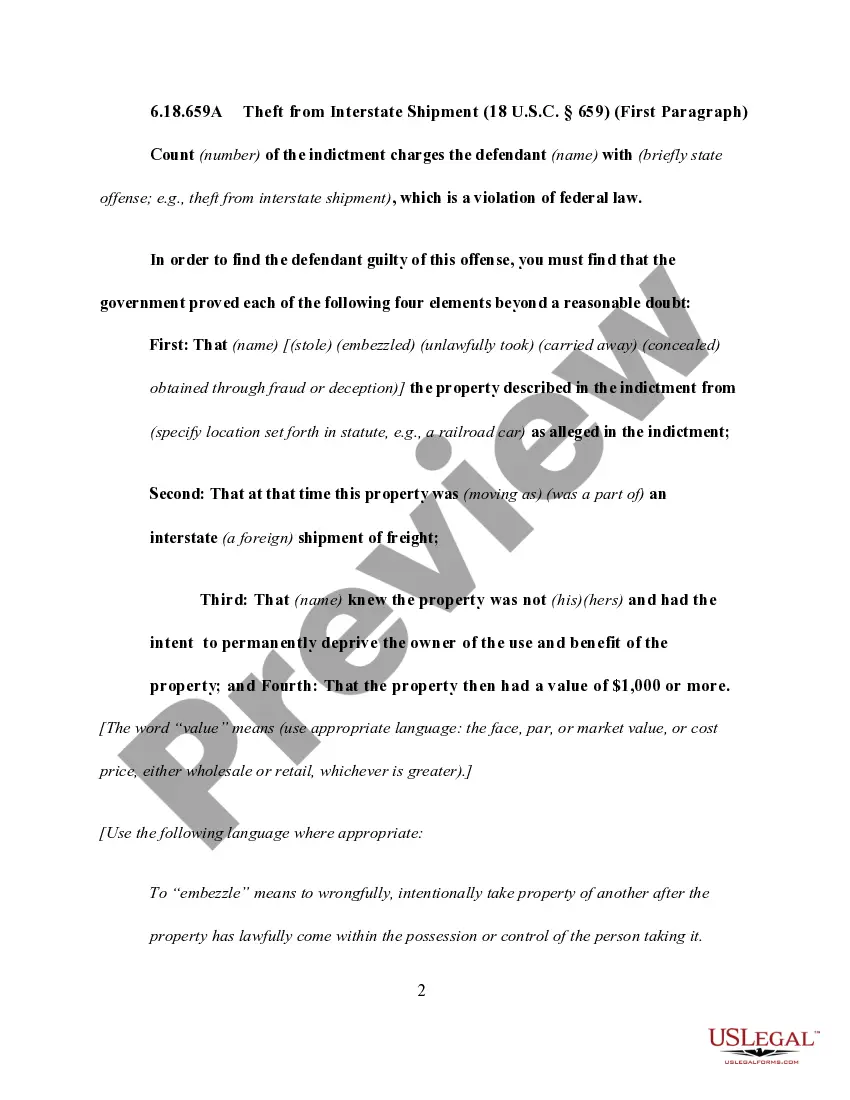
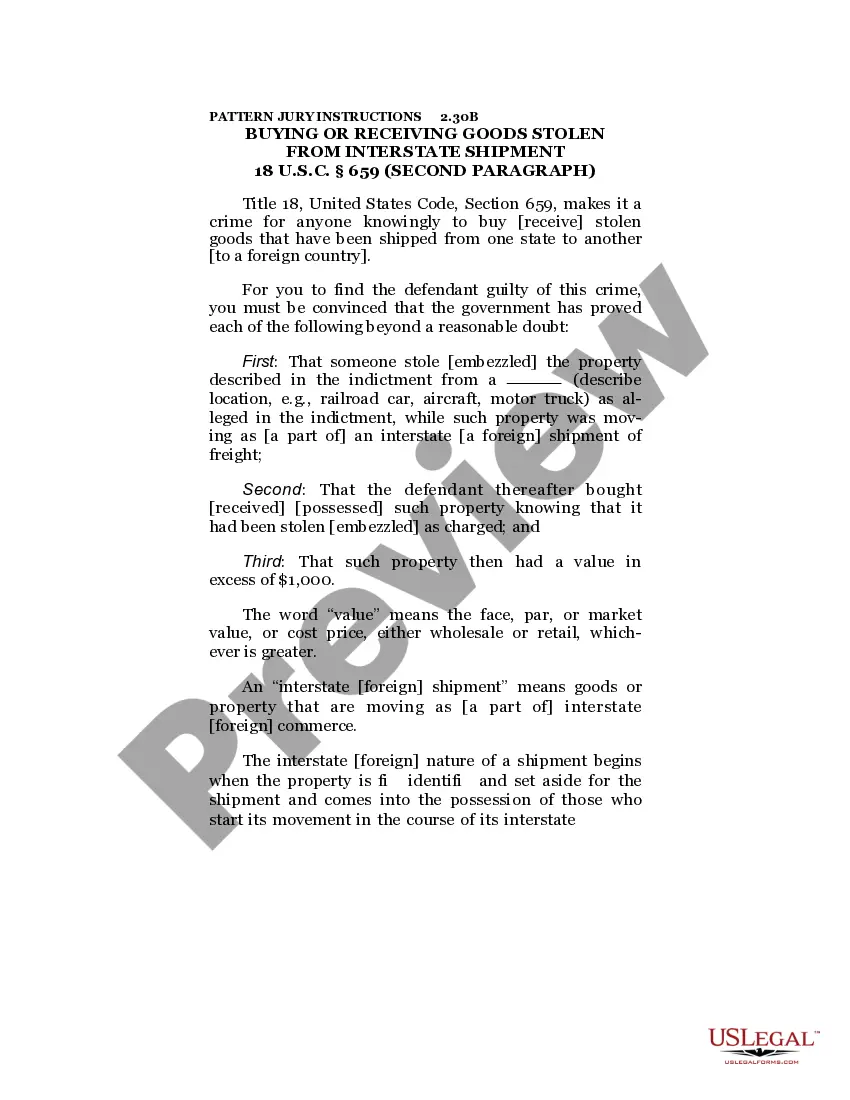
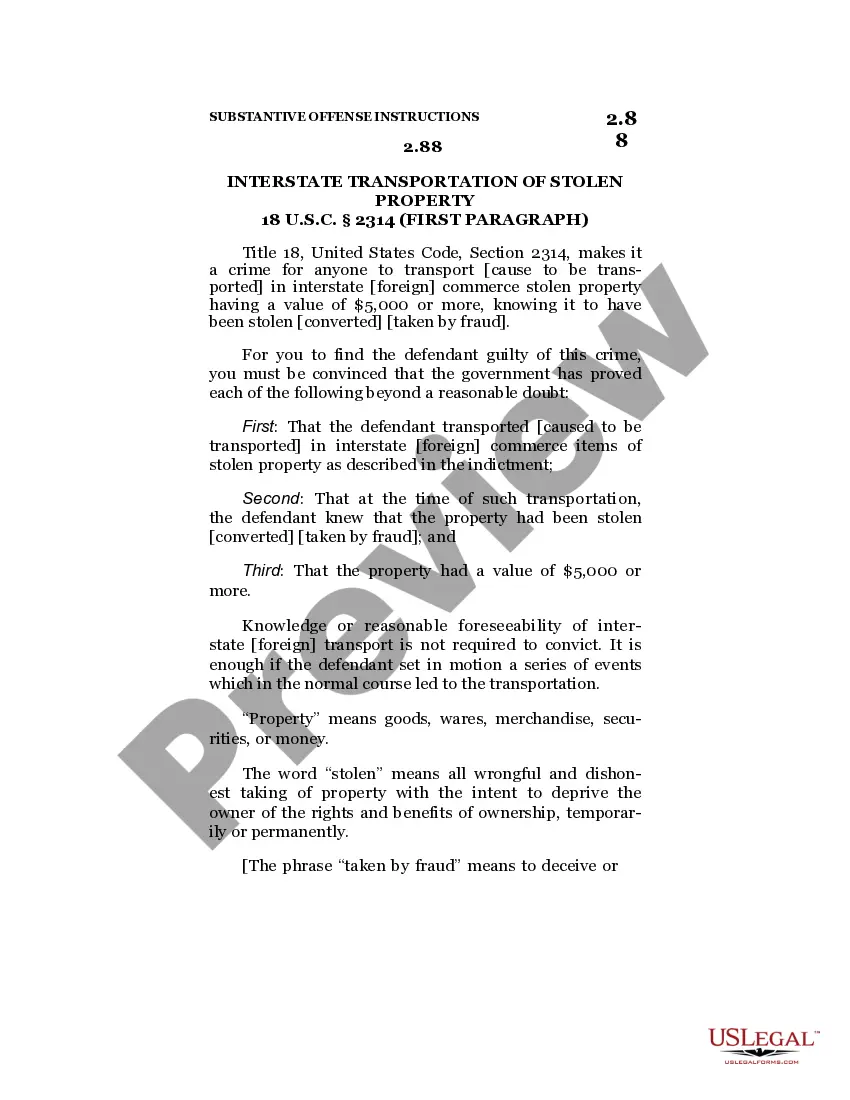
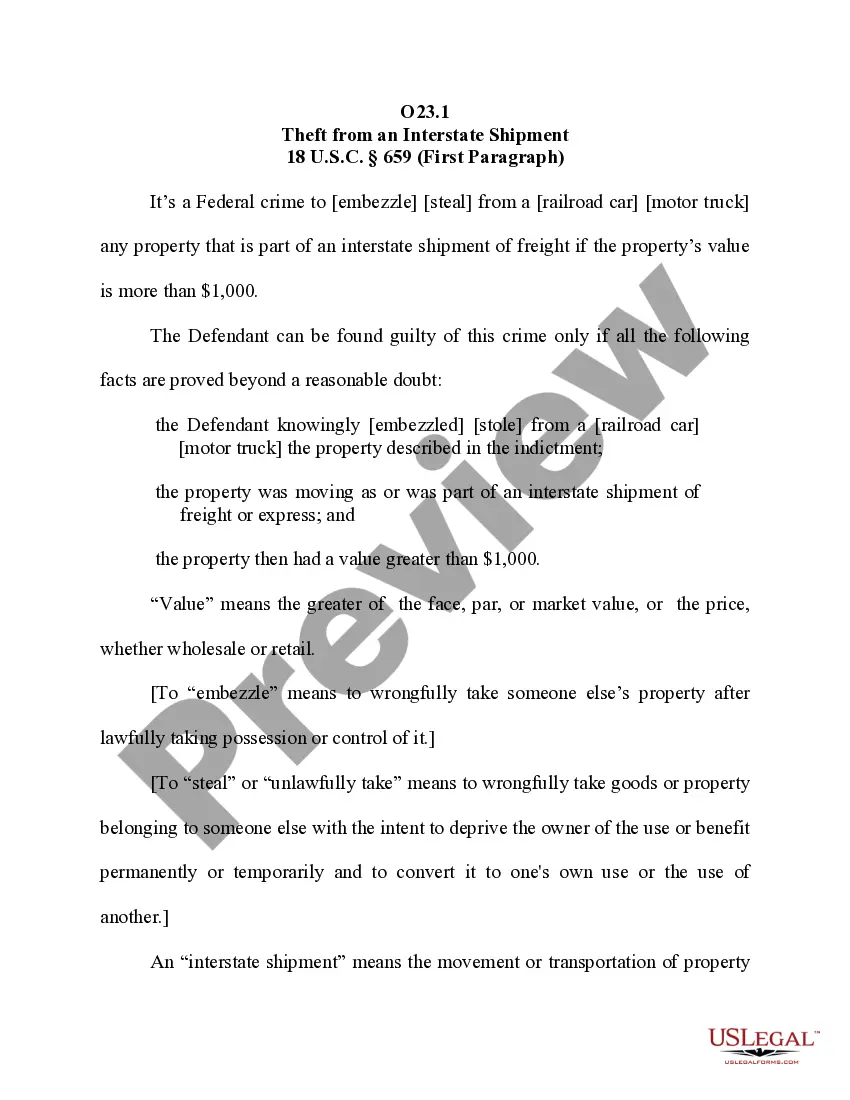
The Theft from Interstate Shipment form is a legal document that outlines the elements required to establish the criminal offense of theft as defined under 18 U.S.C. § 659. This form is specifically tailored for cases involving the unlawful taking of goods that are in transit between states or to a foreign country. By detailing the necessary criteria for prosecution, this form serves as a vital tool for understanding when and how this crime is committed against goods in interstate commerce.
What’s included in this form
- Definition of theft: Clarifies what constitutes theft, including embezzlement and wrongful taking.
- Elements of the offense: Lists the four key elements that must be proven for a guilty verdict.
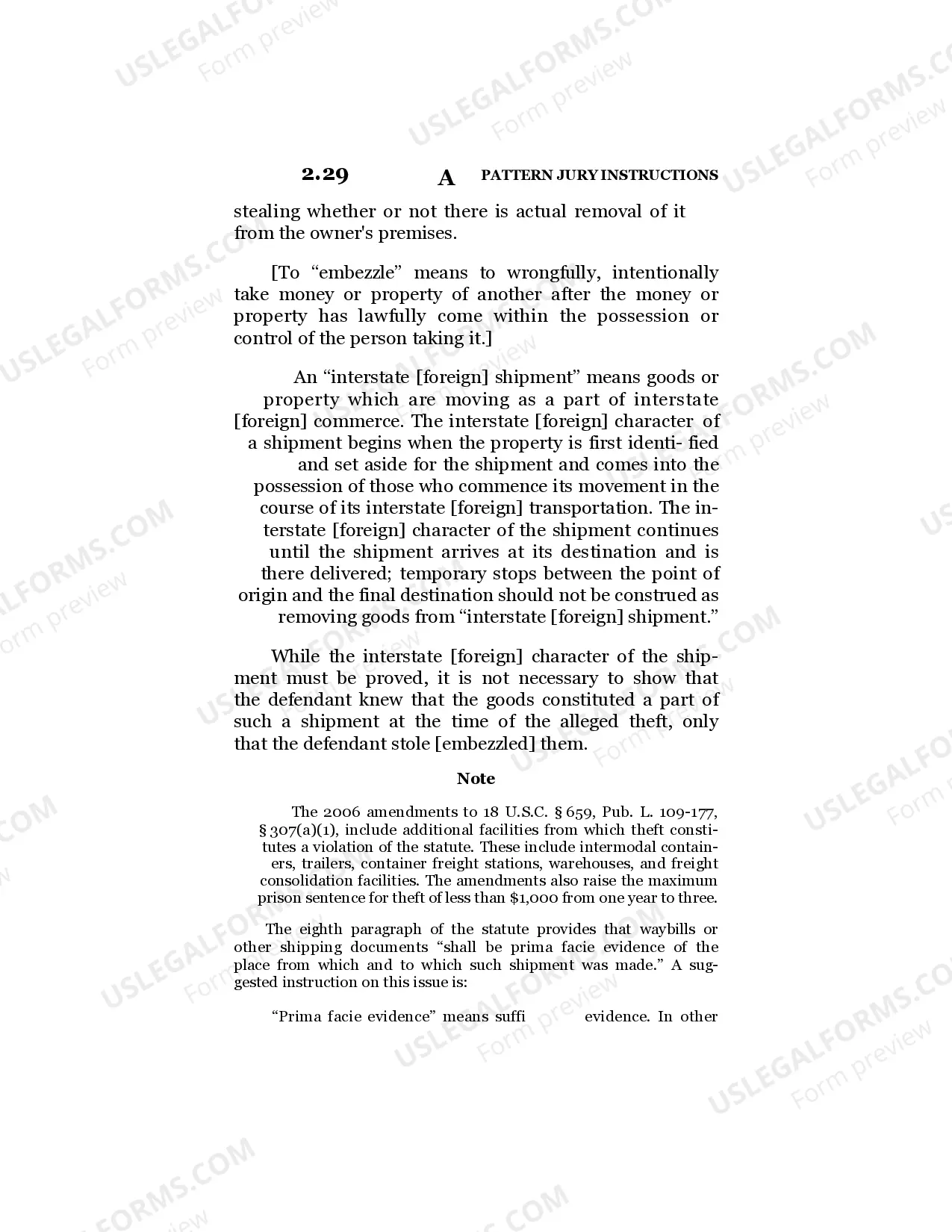
- Interstate commerce: Describes the scope of what constitutes interstate and foreign shipments.
- Value of goods: Specifies the monetary threshold for the offense (over 1,000 dollars).
- Evidence requirements: Discusses what constitutes prima facie evidence in establishing interstate shipment.
When to use this form
This form should be used in legal proceedings involving allegations of theft from interstate shipments. It is applicable when goods intended for transportation across state lines have been unlawfully taken, whether from shipping vehicles, warehouses, or freight facilities. Utilizing this form can help clarify the legal standards needed for prosecution or defense in such cases.
Who should use this form
- Attorneys representing clients accused of theft from interstate shipments.
- Prosecutors working on cases involving interstate theft allegations.
- Law enforcement officials needing a framework for reporting and investigating such thefts.
- Individuals seeking to understand the legal implications of theft within interstate commerce.
Completing this form step by step
- Identify the defendant: Include full name and any relevant identification details.
- Describe the property: Specify the goods taken or concealed, including any identification numbers.
- Detail the location: Indicate where the theft occurred, such as the specific mode of transportation or storage facility.
- Provide evidence of interstate nature: Include any documentation that shows how the goods were part of interstate commerce.
- State the value of goods: Clearly mark the assessed value of the stolen property, ensuring it exceeds 1,000 dollars.
Notarization requirements for this form
This form does not typically require notarization unless specified by local law. It is advisable to check for any state-specific regulations that may apply.
Get your form ready online
Our built-in tools help you complete, sign, share, and store your documents in one place.
Make edits, fill in missing information, and update formatting in US Legal Forms—just like you would in MS Word.
Download a copy, print it, send it by email, or mail it via USPS—whatever works best for your next step.
Sign and collect signatures with our SignNow integration. Send to multiple recipients, set reminders, and more. Go Premium to unlock E-Sign.
If this form requires notarization, complete it online through a secure video call—no need to meet a notary in person or wait for an appointment.
We protect your documents and personal data by following strict security and privacy standards.

Make edits, fill in missing information, and update formatting in US Legal Forms—just like you would in MS Word.

Download a copy, print it, send it by email, or mail it via USPS—whatever works best for your next step.

Sign and collect signatures with our SignNow integration. Send to multiple recipients, set reminders, and more. Go Premium to unlock E-Sign.

If this form requires notarization, complete it online through a secure video call—no need to meet a notary in person or wait for an appointment.

We protect your documents and personal data by following strict security and privacy standards.
Typical mistakes to avoid
- Failing to adequately demonstrate the interstate nature of the shipment.
- Not specifying the value of goods accurately, which can affect the charge level.
- Neglecting to include relevant evidence that supports the claims of theft.
- Overlooking the necessary jurisdictional requirements that may vary by state.
Benefits of using this form online
- Convenience: Download and complete the form from anywhere, at any time.
- Editability: Easily modify the document to fit specific circumstances or jurisdictional requirements.
- Reliability: Forms are drafted and reviewed by licensed attorneys to ensure legal compliance.
Legal use & context
- The form is essential for proceedings involving theft from interstate shipments, ensuring all statutory elements are covered.
- Understanding this form helps legal professionals establish case strategy for both prosecution and defense.
- Failure to adhere to the guidelines outlined in this form can result in weakened legal positions in court.
Looking for another form?


Form popularity
FAQ
It prohibits the theft or fraudulent acquisition of goods that are part of an interstate or international shipment, whether from the carrier or a holding area, and also the wilful buying, selling or possession of goods obtained in this way.
It prohibits the theft or fraudulent acquisition of goods that are part of an interstate or international shipment, whether from the carrier or a holding area, and also the wilful buying, selling or possession of goods obtained in this way.
But Section 641 also states that, if the value of the stolen property is $1000 or less, that person shall be fined and imprisoned for no longer than 1 year. The $1000 threshold, therefore, is necessary to make a Section 641 offense into a felony; smaller theft from the government is only a misdemeanor.
Mail theft under California Penal Code Section 530.5(e) PC is a misdemeanor offense that is punishable by up to a year in jail and a $1,000 court fine.
Federal prosecutors will investigate and prosecute cases involving organized crime that moves stolen property across state lines.
A violation of 18 U.S.C. § 659 is a ten-year felony where the value of the stolen goods, chattels, money or baggage is $1,000 or more; otherwise the maximum penalty is three years.
Sale or Receipt of Stolen Goods ? 18 U.S.C. 18 U.S.C. §2315 makes it unlawful to knowingly receive, possess, conceal, sell, or dispose of stolen property which has a value of $5,000 or more and which is a part of interstate commerce.
Cargo Theft is the criminal taking of any cargo including, but not limited to, goods, chattels, money, or baggage that constitutes, in whole or in part, a commercial shipment of freight moving in commerce, from any pipeline system, railroad car, motor truck, or other vehicle, or from any tank or storage facility,