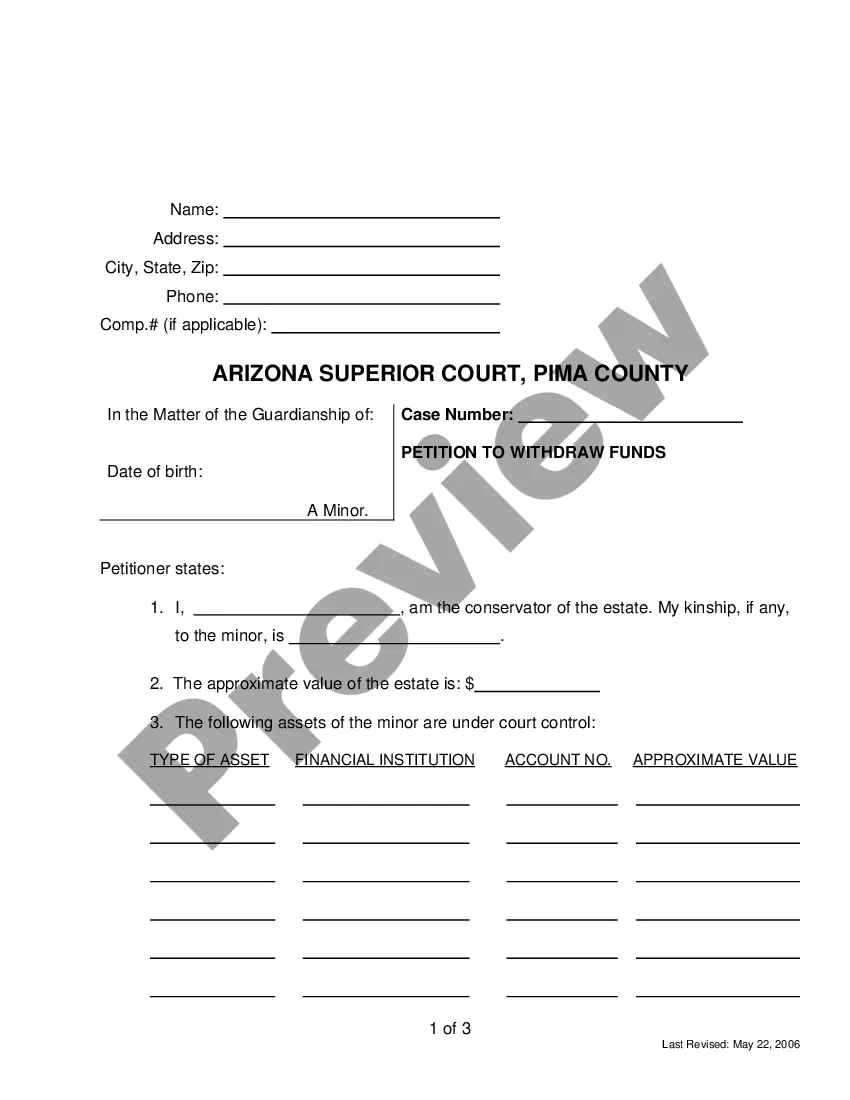
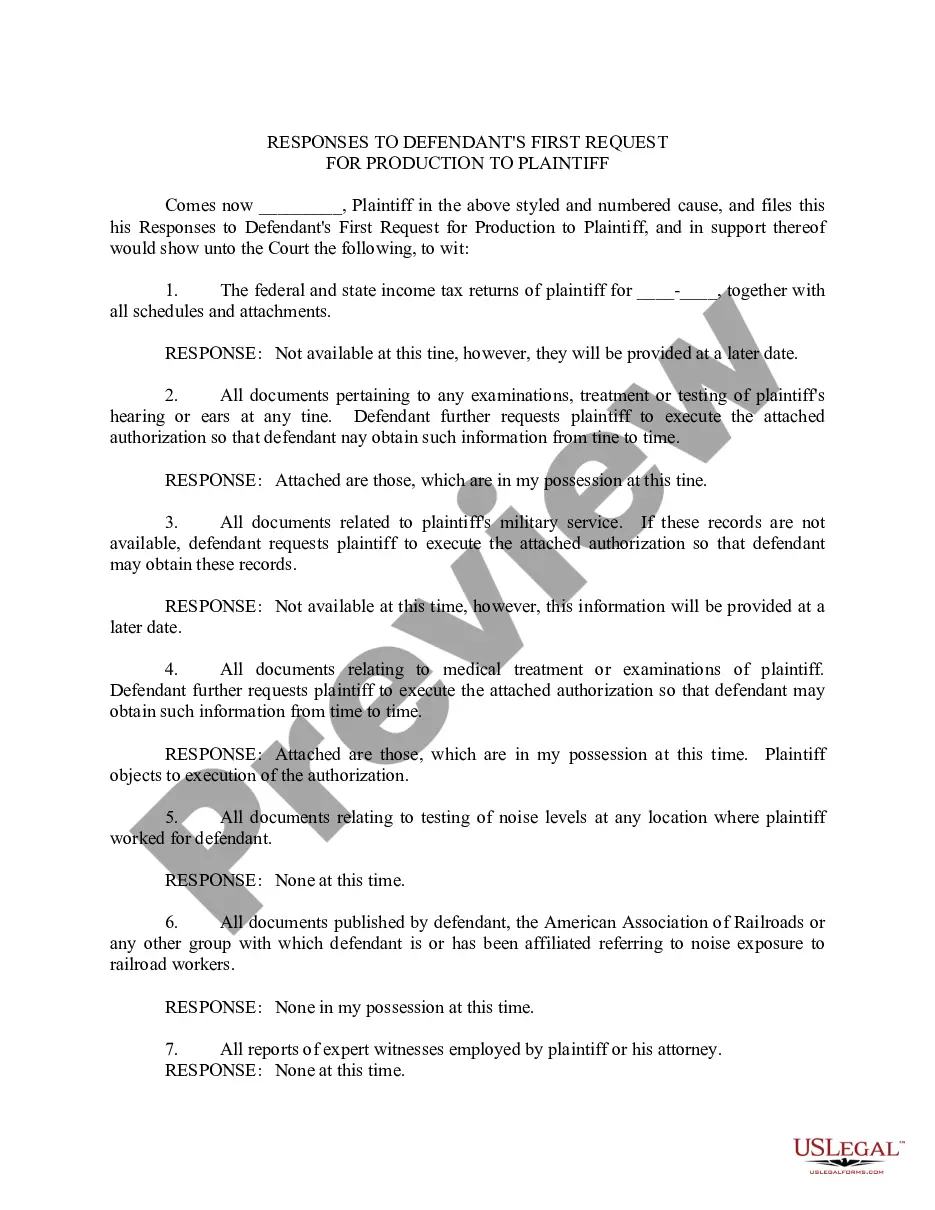
Mississippi Responses To Defendant's First Request For Production To Plaintiff
What is this form?
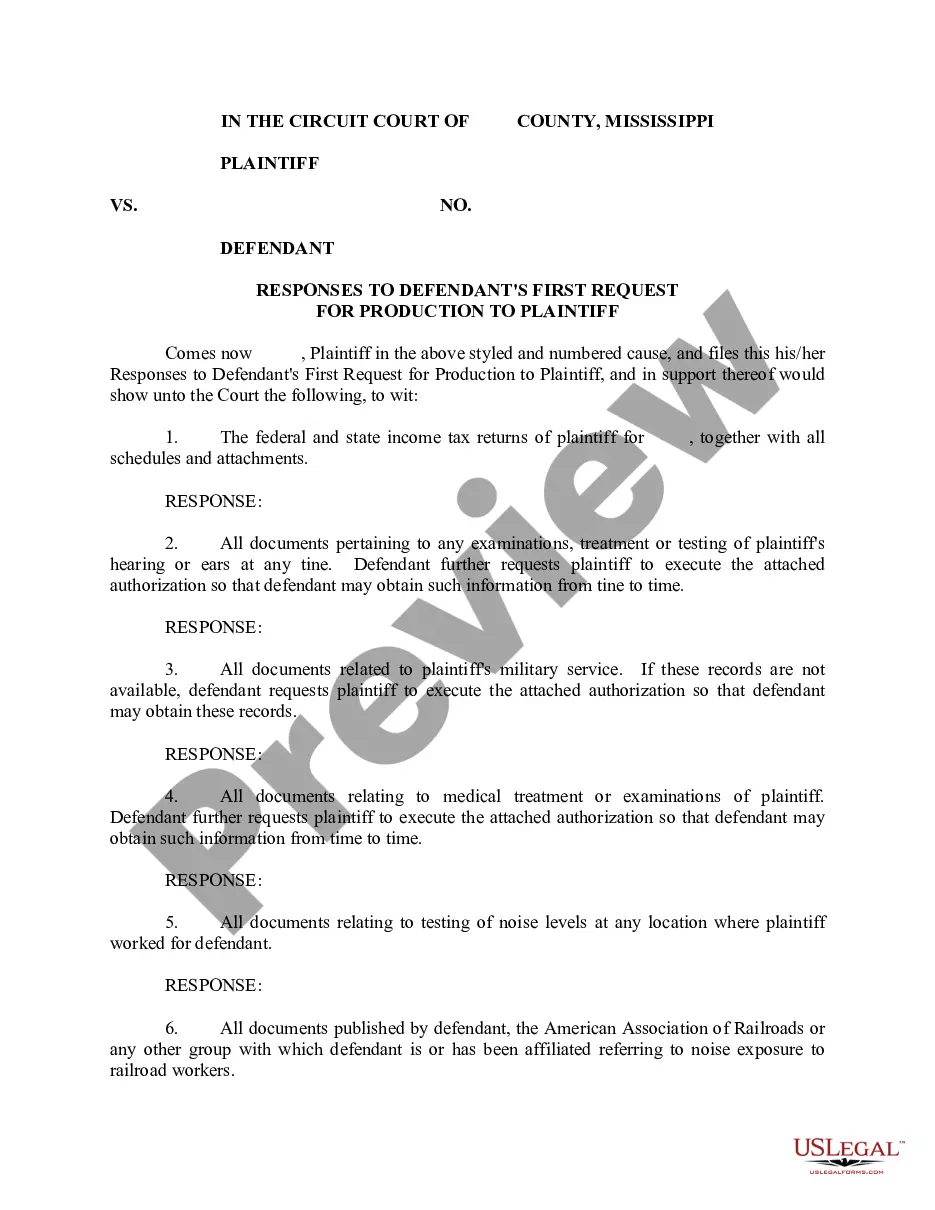
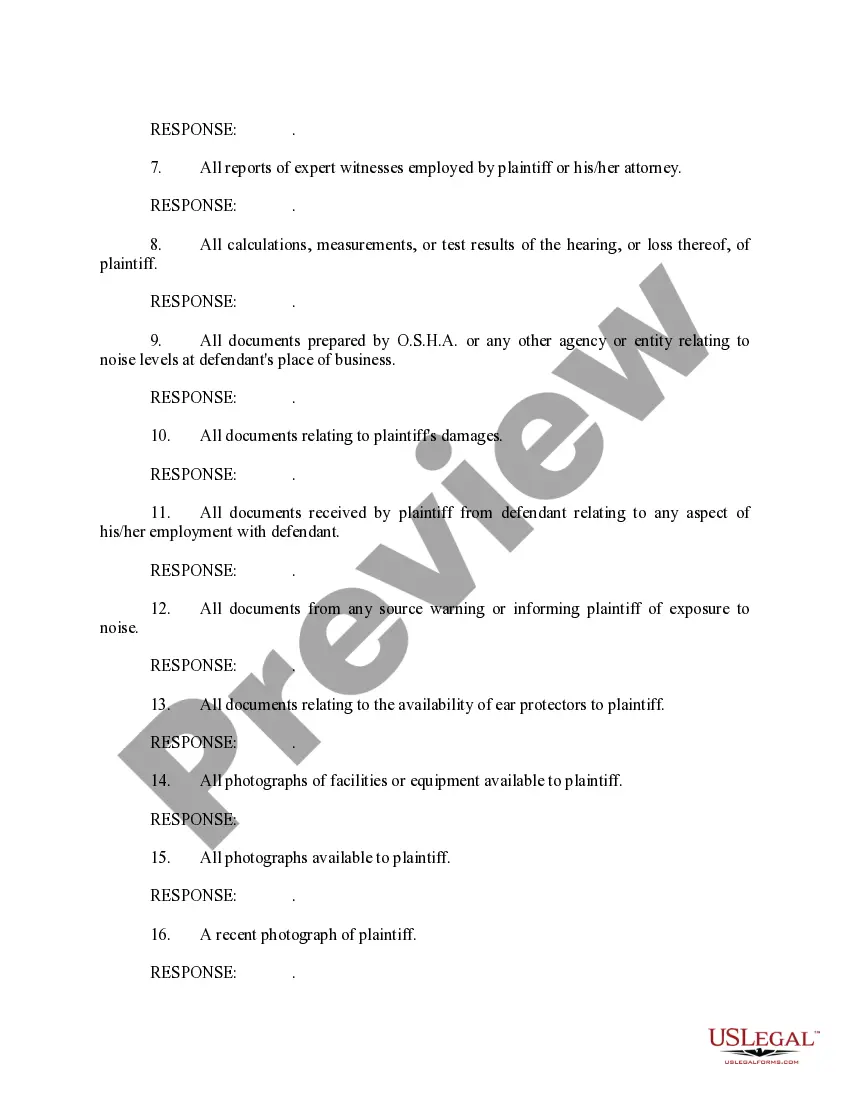
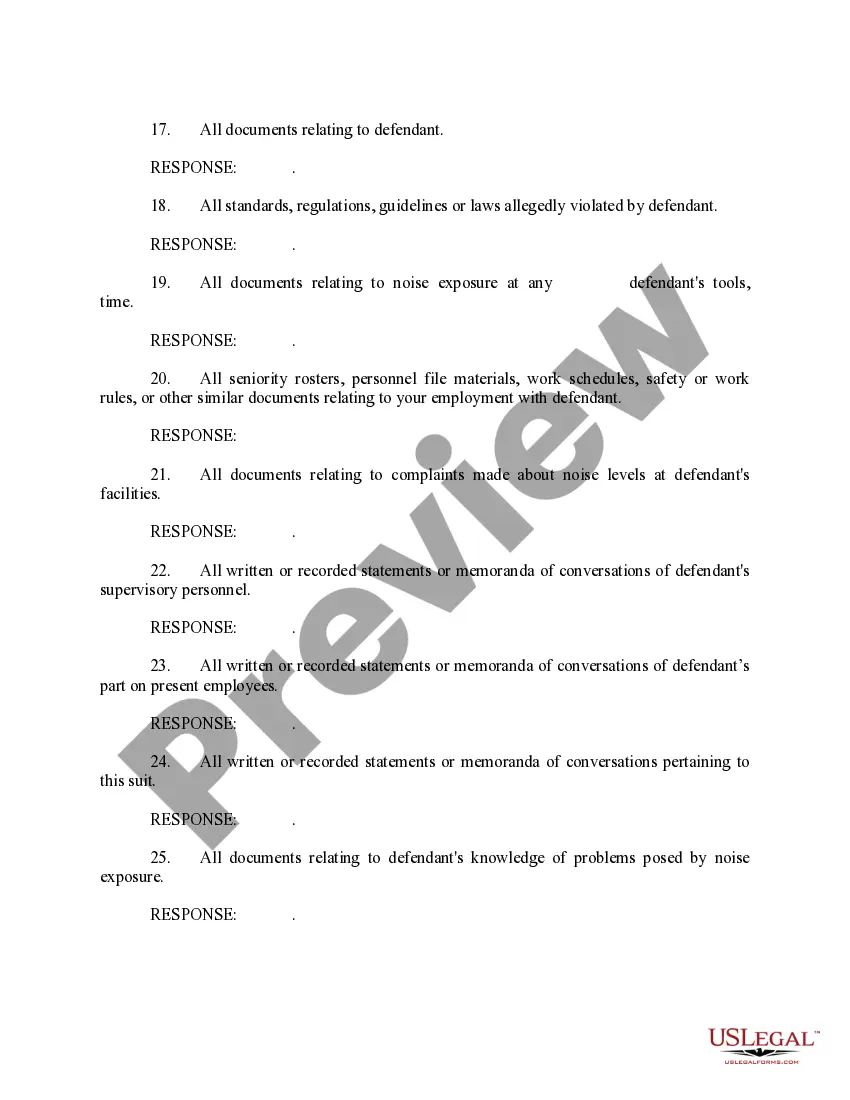
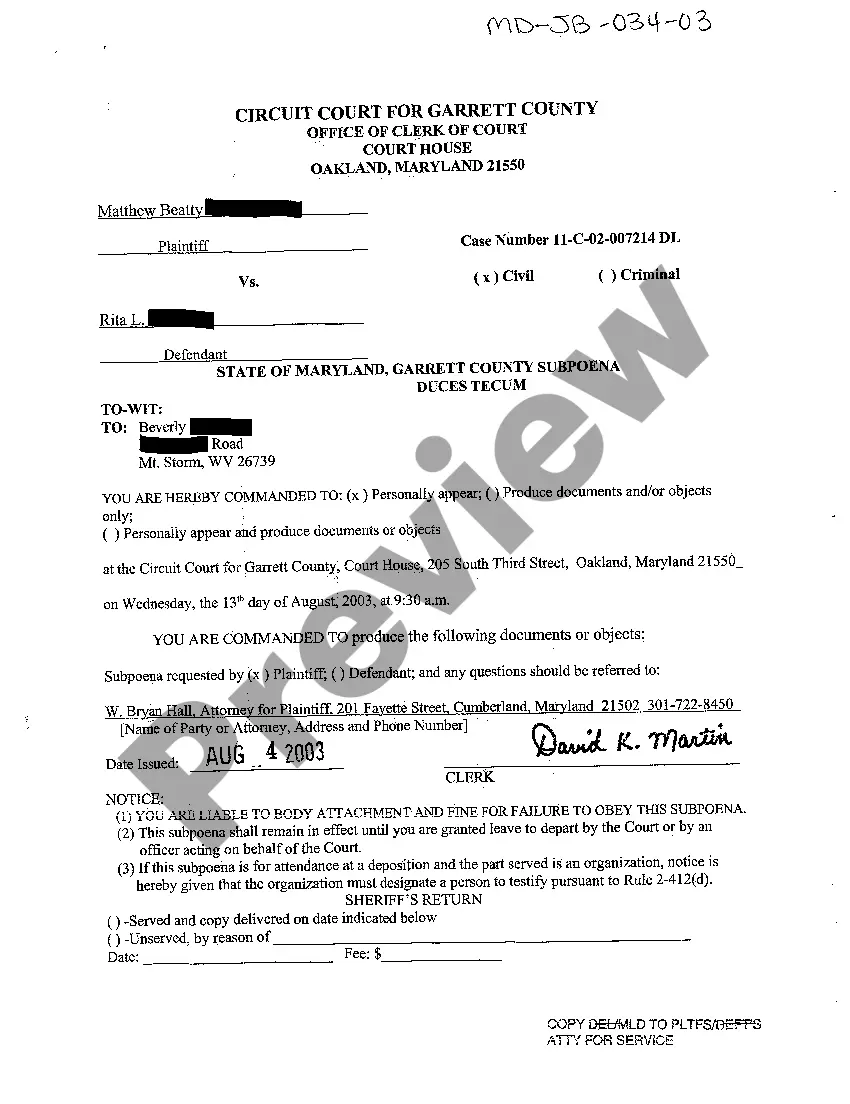
The Response To Defendant's First Request For Production To Plaintiff form is a legal document that allows a plaintiff to respond to requests from the defendant for specific information and documents related to a lawsuit. This form serves as a formal reply providing the requested information or indicating what information cannot be provided. It differs from other forms by being specifically tailored to address production requests in civil litigation, ensuring compliance with state statutory requirements.
Main sections of this form
- Identification of parties involved in the case.
- Responses to each of the defendant's requests for production.
- Details regarding the documents and information being provided.
- Indication of any objections to requests, if applicable.
- Signature and date of the responding party or their attorney.


Situations where this form applies
This form is necessary during the discovery phase of a lawsuit when the defendant has formally requested specific documents or information from the plaintiff. Use this form when you have received a Request For Production and need to provide answers to those requests, either by supplying the requested information or stating why certain items cannot be produced.
Who needs this form
This form is intended for:
- Individuals who are plaintiffs in a civil lawsuit.
- Attorneys representing plaintiffs in legal matters.
- Any party responding to a defendant's requests for information in litigation.
How to prepare this document
To complete this form, follow these steps:
- Identify the parties involved and their respective roles in the case.
- Review each of the defendant's requests carefully.
- Provide responses to the requests, ensuring clarity in what information is included or withheld.
- State any objections to the requests with appropriate justification.
- Sign and date the form, making sure it is filed properly with the court and served to the defendant.
Notarization requirements for this form
This form does not typically require notarization unless specified by local law. It is important to check any local requirements that may necessitate a notarized signature.
Get your form ready online
Our built-in tools help you complete, sign, share, and store your documents in one place.
Make edits, fill in missing information, and update formatting in US Legal Forms—just like you would in MS Word.
Download a copy, print it, send it by email, or mail it via USPS—whatever works best for your next step.
Sign and collect signatures with our SignNow integration. Send to multiple recipients, set reminders, and more. Go Premium to unlock E-Sign.
If this form requires notarization, complete it online through a secure video call—no need to meet a notary in person or wait for an appointment.
We protect your documents and personal data by following strict security and privacy standards.

Make edits, fill in missing information, and update formatting in US Legal Forms—just like you would in MS Word.

Download a copy, print it, send it by email, or mail it via USPS—whatever works best for your next step.

Sign and collect signatures with our SignNow integration. Send to multiple recipients, set reminders, and more. Go Premium to unlock E-Sign.

If this form requires notarization, complete it online through a secure video call—no need to meet a notary in person or wait for an appointment.

We protect your documents and personal data by following strict security and privacy standards.
Common mistakes
- Failing to respond to all requests, which can lead to sanctions.
- Not providing sufficient detail in the responses, leaving room for ambiguity.
- Missing the filing deadline for submitting the response.
- Neglecting to appropriately state objections or the reasons for withholding information.
Why complete this form online
- Convenience of online access to downloadable forms.
- Forms are drafted by licensed attorneys for accuracy and compliance.
- Easy to edit and customize based on specific case details.
Key takeaways
- This form allows Plaintiffs to respond to production requests during litigation.
- Proper completion is crucial to avoid negative implications in legal cases.
- Understanding state-specific requirements is essential for compliance.
Looking for another form?

Form popularity
FAQ
Primary tabs. In a civil action, a request for admission is a discovery device that allows one party to request that another party admit or deny the truth of a statement under oath. If admitted, the statement is considered to be true for all purposes of the current trial.
Responding to Form InterrogatoriesAnswer each question, being careful to answer each subpart, if one exists. Read the question carefully, and answer only what it asks. You may attach exhibits, if necessary. The response must be verified, meaning you must swear that the responses given are true.
Similar to responses to Requests for Production, responses to Requests for Admissions do not have to be verified. It is critical to respond to Requests for Admissions because failure to respond results in the requests being deemed admitted without the need for a motion to have the responses established as admitted.
Unlike responses to interrogatories and unlike state practice, the responses to document requests do not have to be verified. Requests for Admissions are governed by Rule 36, which operates in a similar manner as Requests for Admissions under state law.
Your answers to the interrogatories should usually be short, clear, and direct and should answer only the question that is being asked. This is not the time to set out your entire case or defense to the other side. Take the time to make sure your answers are correct and truthful.
You must answer each interrogatory separately and fully in writing under oath, unless you object to it. You must explain why you object. You must sign your answers and objections.
Proper Objections A responding party has four options: (1) admit; (2) deny; (3) admit in part and deny in part; or (4) explain why the party is unable to answer. It is possible to object to all or part of a request as well, but courts do not like parties who play word games to avoid responding.
If you admit the request, write admit for your response. If you deny the request, write deny. If you have to qualify an answer or deny only a part, you must specify the part that is true and deny the rest.
When responding to Requests for Admissions, remember to answer as follows: Admit: If any portion of the Request for Admission is true then you must admit to that portion of the request. You are also allowed to have a hybrid response admit the part of the request that is true while denying another part.