Employment Application for Software Engineer
Understanding this form
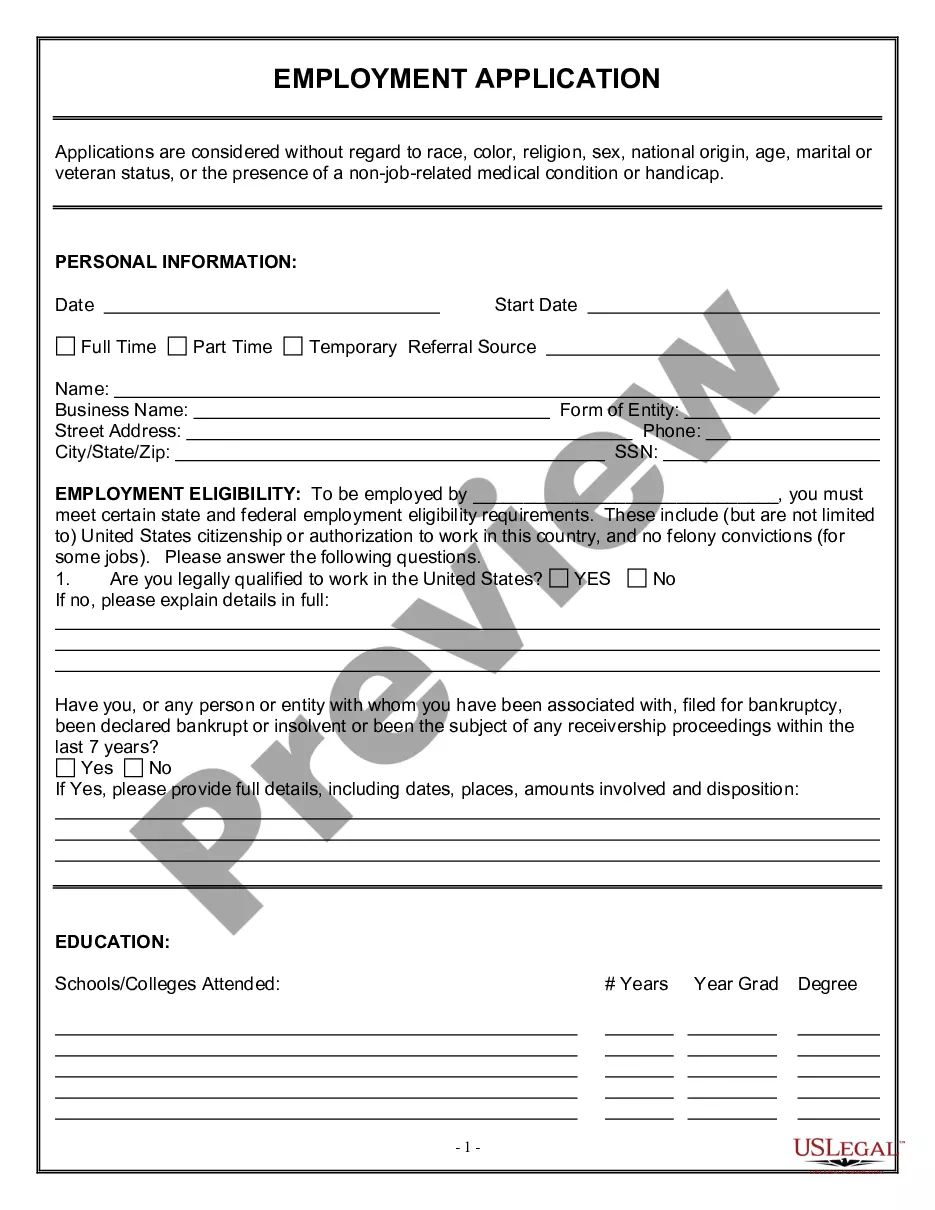
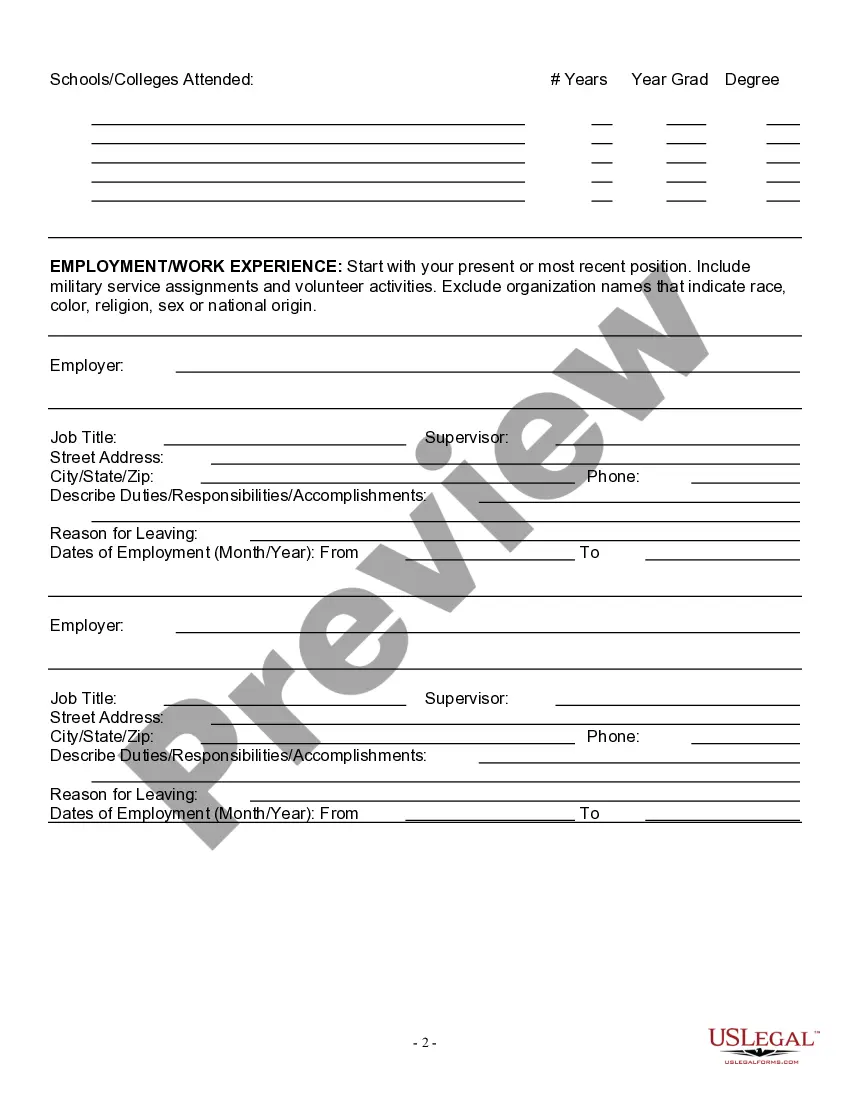
The Employment Application for Software Engineer is a standardized form that allows applicants to apply for a position as a software engineer. This form ensures that applications are considered fairly, without discrimination based on race, color, religion, sex, national origin, age, marital or veteran status, or any non-job-related medical condition. This distinguishes it from general job application forms by focusing specifically on the software engineering role and relevant qualifications.
What’s included in this form
- Personal information section requesting basic applicant details.
- Employment eligibility questions, including legal qualification to work in the United States.
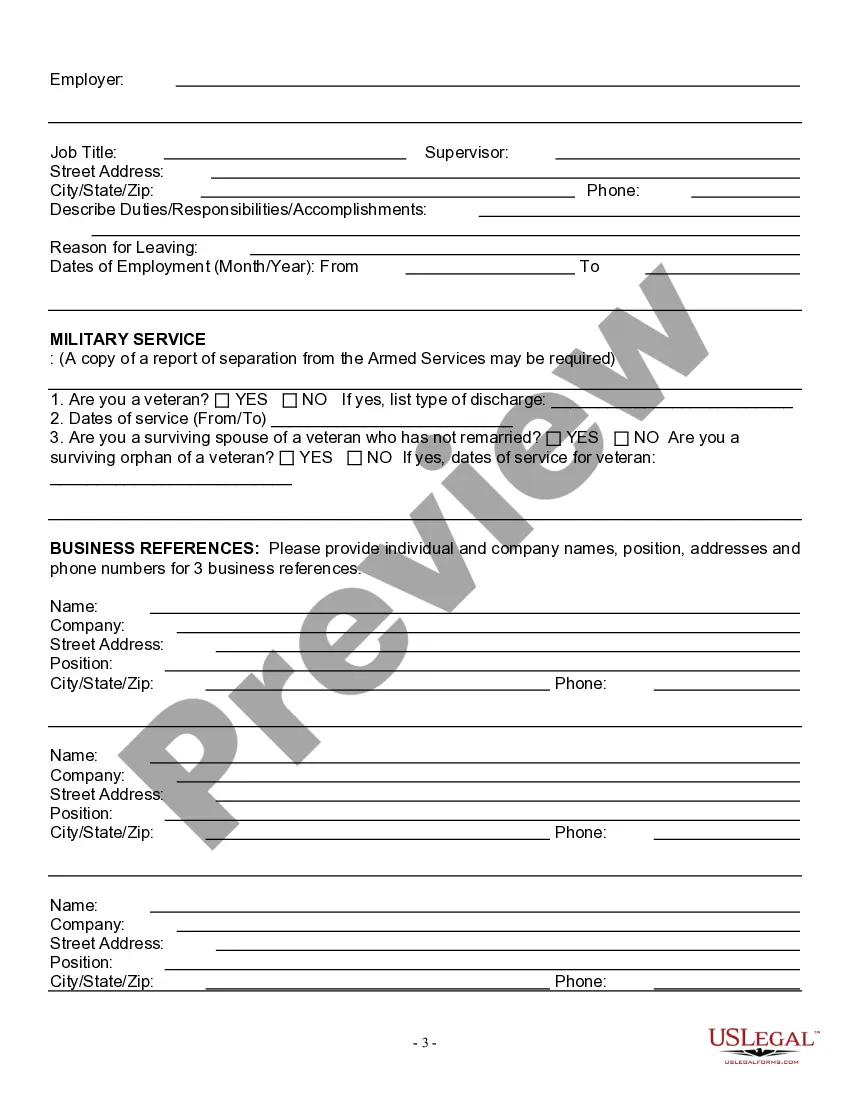
- Sections to disclose military affiliation, if applicable, including veteran status.
- Declaration of non-discrimination in the hiring process.
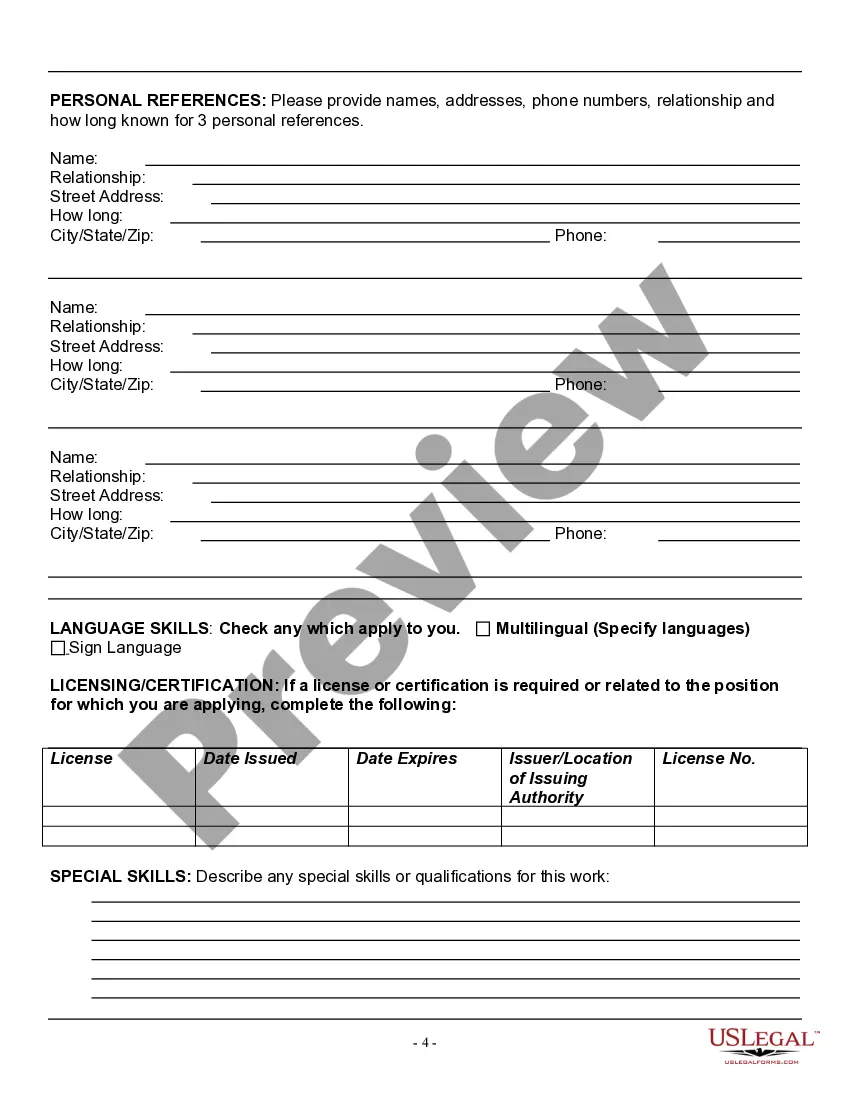
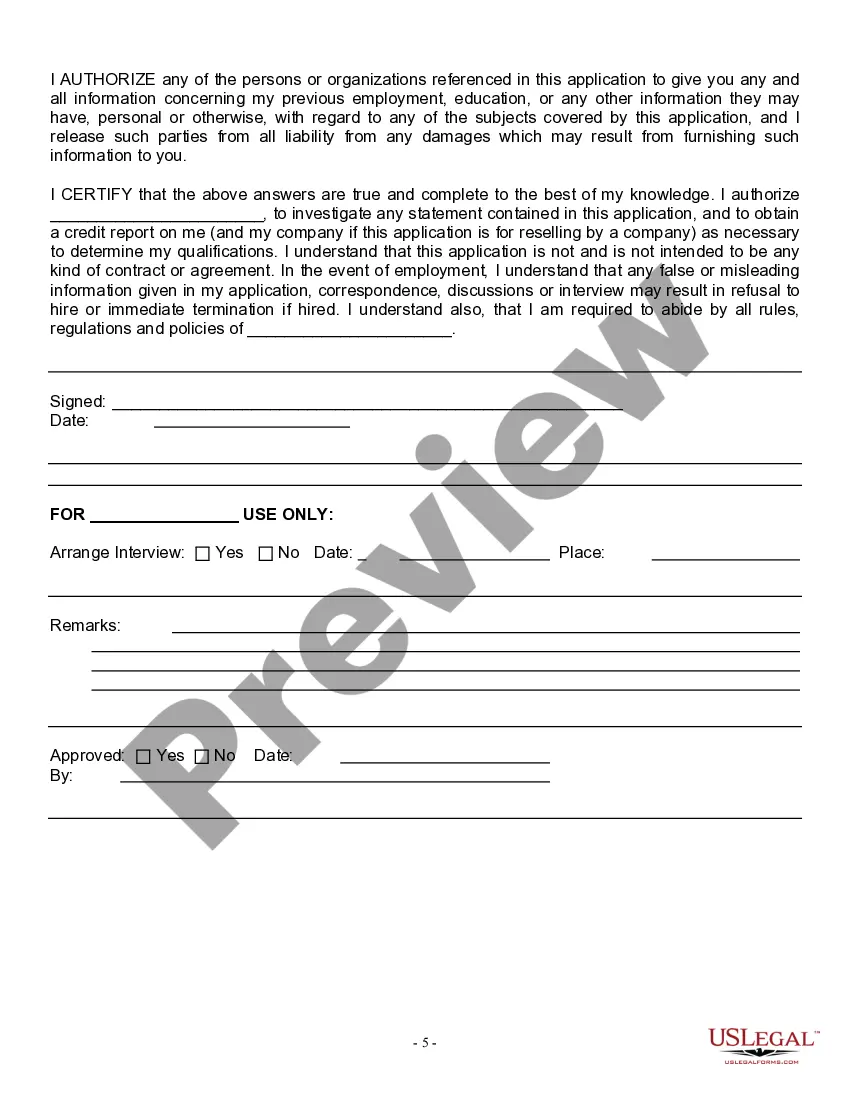
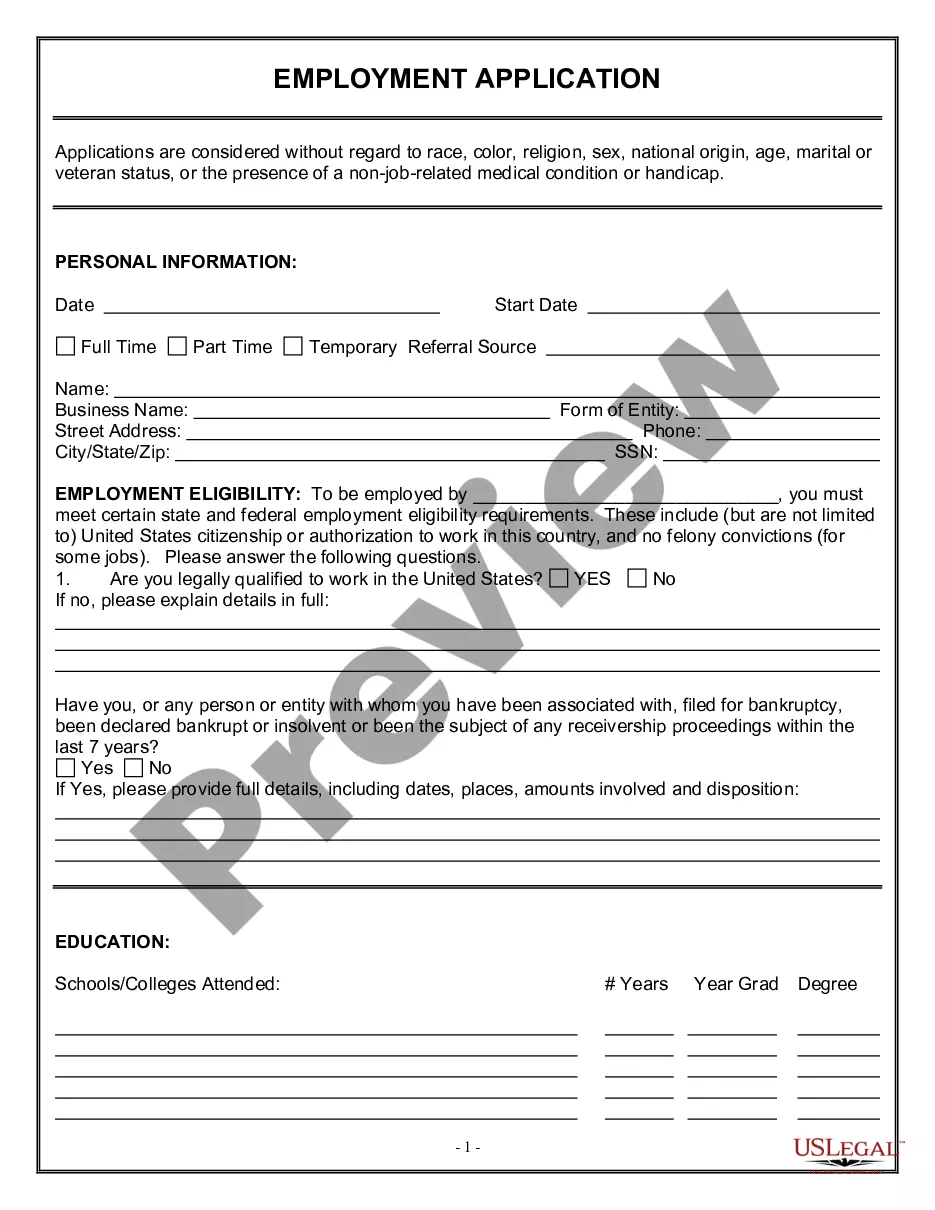
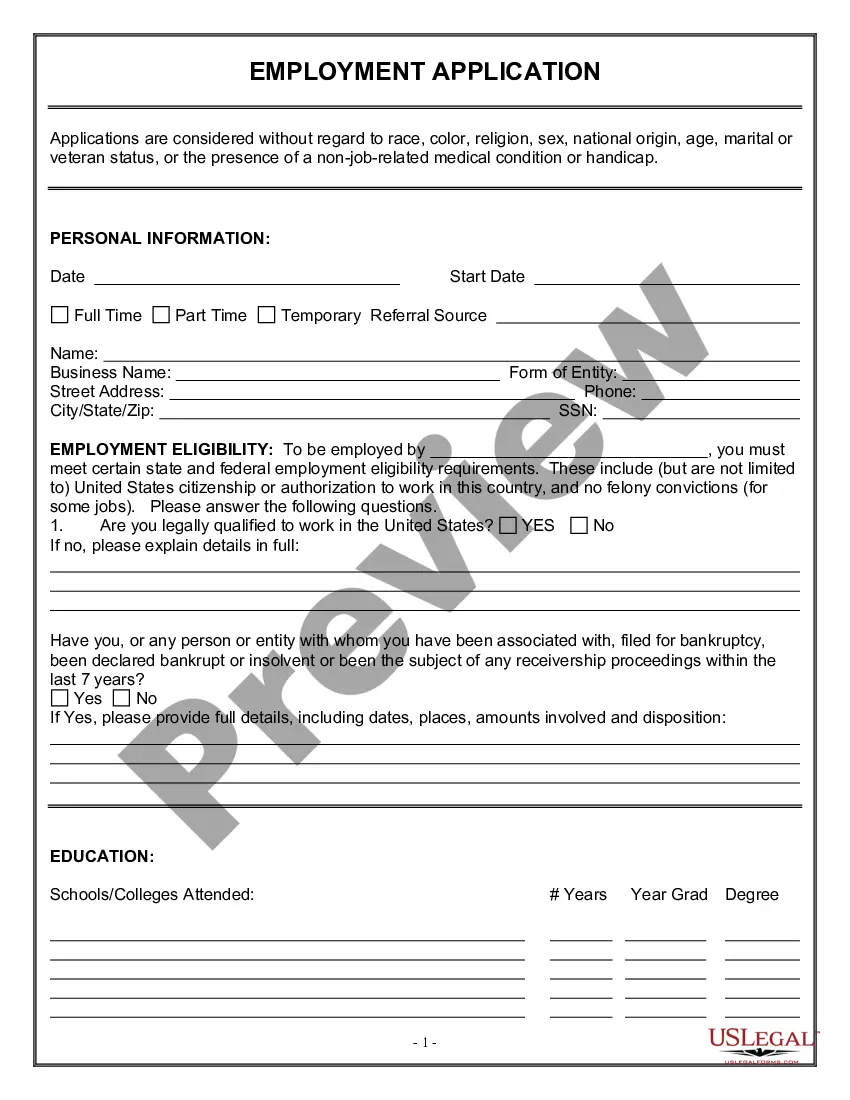
When to use this document
This form should be used when applying for software engineer positions across various companies. It is essential for employers to collect a standardized set of information from candidates, ensuring compliance with equal employment opportunity laws. Use this form whenever you are submitting an application for a software engineering role.
Who this form is for
- Individuals seeking employment as a software engineer.
- Applicants who need to demonstrate eligibility to work in the United States.
- Veterans or their eligible family members applying for soft engineering positions.
Steps to complete this form
- Fill out the personal information section with your name, address, and contact details.
- Indicate your legal eligibility to work in the United States by checking the appropriate box.
- If applicable, provide dates of service related to military affiliation.
- Review the non-discrimination statement and sign where indicated.
- Submit the completed application to the employer following their instructions.
Notarization requirements for this form
This form does not typically require notarization unless specified by local law. Ensure to check any additional requirements that may apply in your state.
Get your form ready online
Our built-in tools help you complete, sign, share, and store your documents in one place.
Make edits, fill in missing information, and update formatting in US Legal Forms—just like you would in MS Word.
Download a copy, print it, send it by email, or mail it via USPS—whatever works best for your next step.
Sign and collect signatures with our SignNow integration. Send to multiple recipients, set reminders, and more. Go Premium to unlock E-Sign.
If this form requires notarization, complete it online through a secure video call—no need to meet a notary in person or wait for an appointment.
We protect your documents and personal data by following strict security and privacy standards.

Make edits, fill in missing information, and update formatting in US Legal Forms—just like you would in MS Word.

Download a copy, print it, send it by email, or mail it via USPS—whatever works best for your next step.

Sign and collect signatures with our SignNow integration. Send to multiple recipients, set reminders, and more. Go Premium to unlock E-Sign.

If this form requires notarization, complete it online through a secure video call—no need to meet a notary in person or wait for an appointment.

We protect your documents and personal data by following strict security and privacy standards.
Common mistakes
- Not providing complete personal information.
- Failing to check eligibility status accurately.
- Omitting military service details if applicable.
- Not signing the application form before submission.
Benefits of using this form online
- Convenient access to a legally sound application template.
- Editable format to personalize your application easily.
- Ensures compliance with fair hiring practices from the start.
Looking for another form?


Form popularity
FAQ
Emphasize your skills and abilities. Stay concise. Proofread the letter. Review the job listing keywords. Send a letter for every position to which you apply.
Make a portfolio of a few standout projects. Prepare for the technical interview. Define what kind of company or role you want. Stay organized and track everything. Write a meaningful resume and cover letter. Network! Avoid settling for less, and negotiate, negotiate, negotiate.
From where I am at now, there are typically two paths for a software engineering career to take: I can continue to gain more technical knowledge and experience and become a software architect or specialize in a discipline like machine learning, big data, or cyber security (among many others).
Senior Software Engineer. Software Developer. Consultant. Lead Technician. Research Assistant. Senior Java Developer. Systems Engineer. Programmer Analyst.
Cover Letter Tips In one or two paragraphs, connect your past accomplishments with the requirements listed in the job description. Focus on your most relevant experience, qualifications and skills. When possible, quantify your accomplishments with facts and data. Avoid repeating the bullet points from your resume.
Decide Which Industry or Language to Remain/Specialize In. No Shortcuts To Becoming a 10X Developer. Learn How to Block Time. Take Feedback Seriously. Continuously Upgrade Your Skill Set.
System engineer. IT security specialist. Software engineer. Full stack developer. Cloud engineer. Data scientist. Mobile developer. 8. Development operations engineer.
Tip1: Start with how you got to know the company. Tip 2: Describe relevant experiences and what you learned from them. Tip 3: Show your enthusiasm. Tip 4: Try to use the company's name as often as you can. Tip 5: End strongly.
From where I am at now, there are typically two paths for a software engineering career to take: I can continue to gain more technical knowledge and experience and become a software architect or specialize in a discipline like machine learning, big data, or cyber security (among many others).