Tenant's Consent
Understanding this form
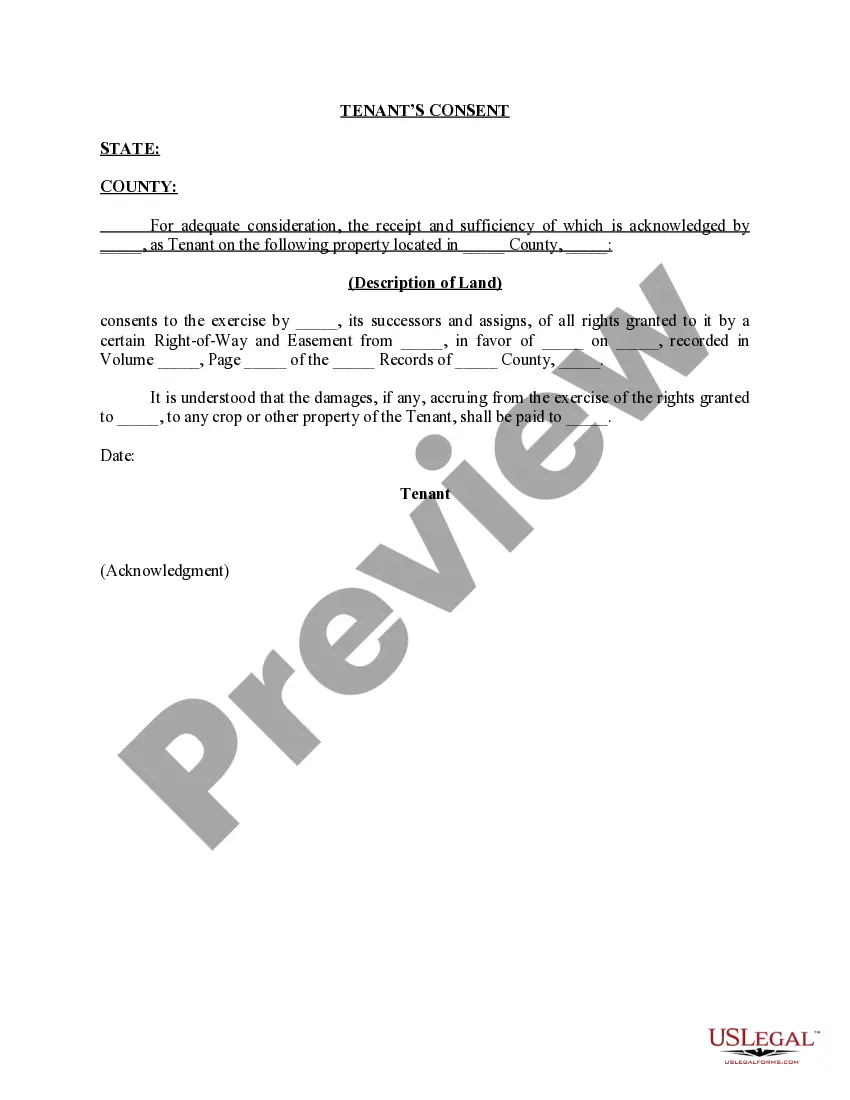
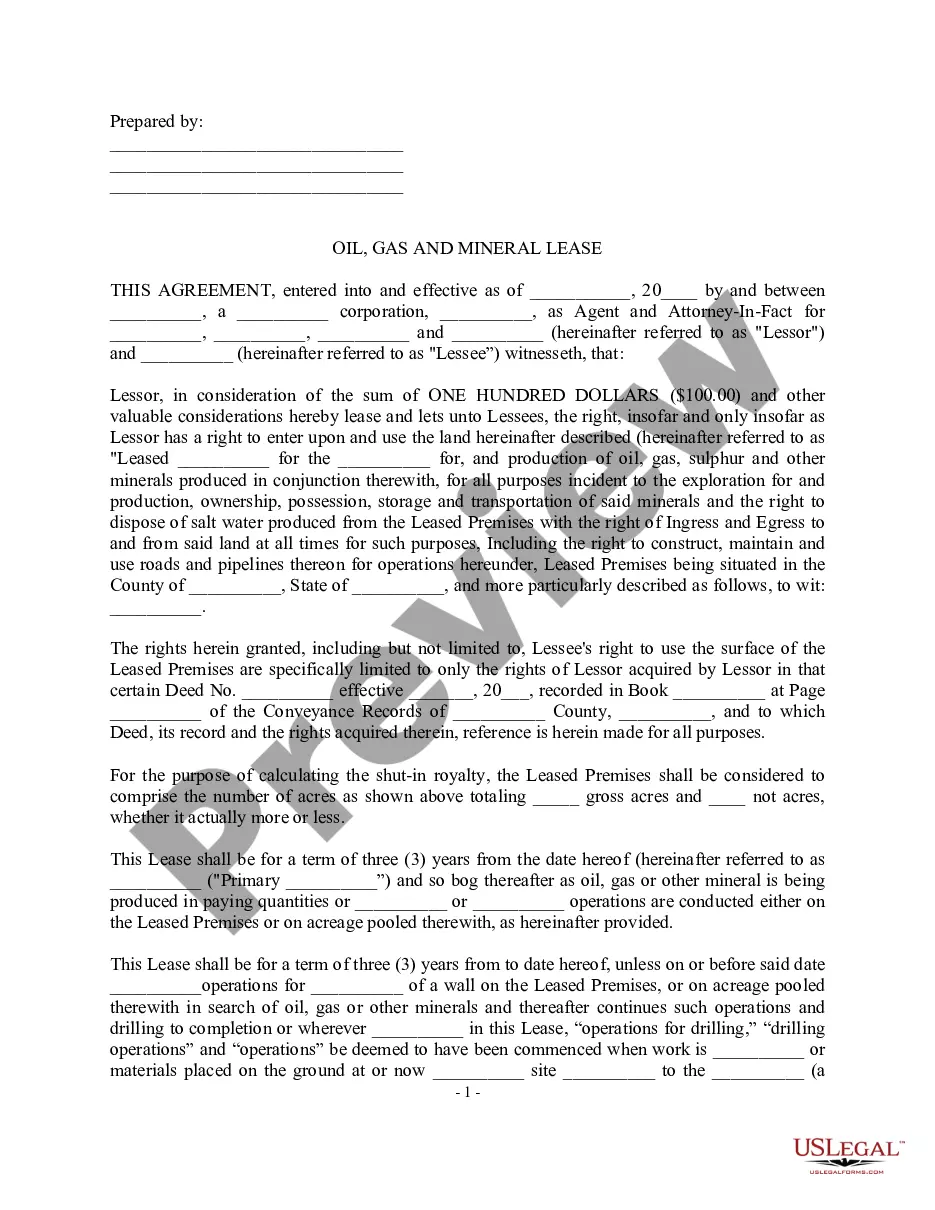
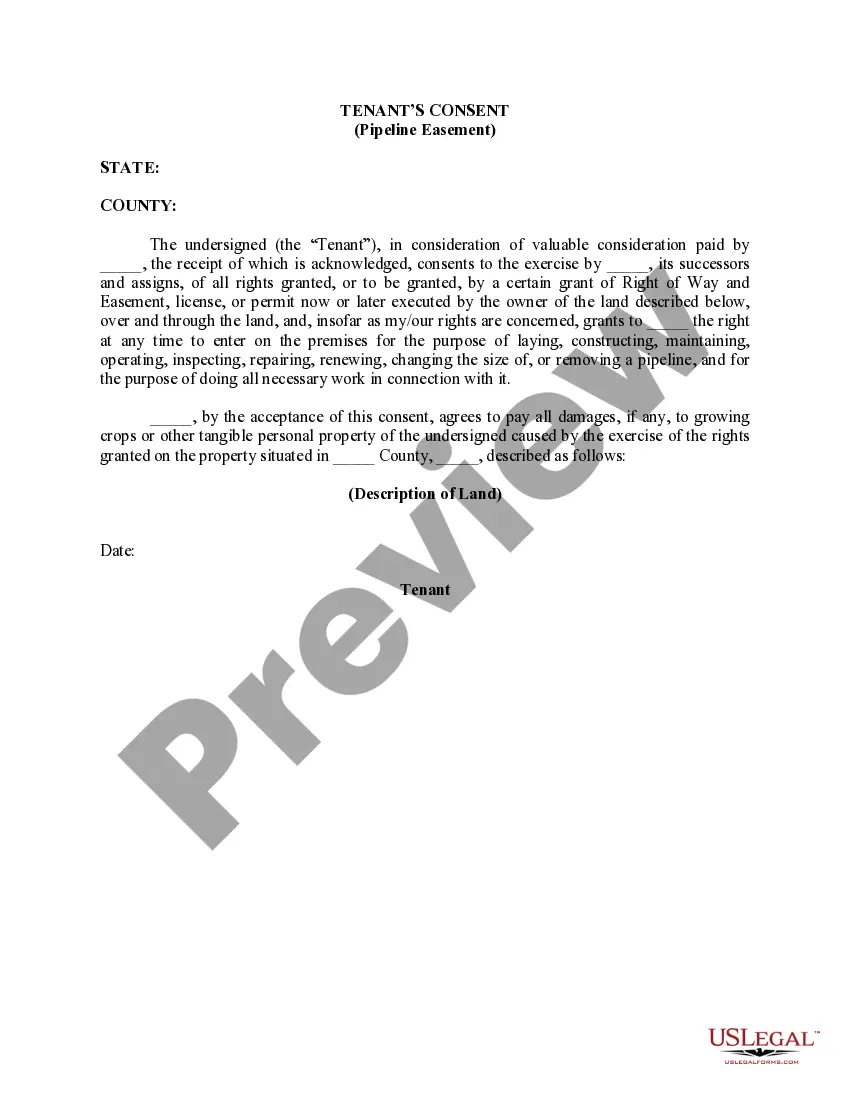
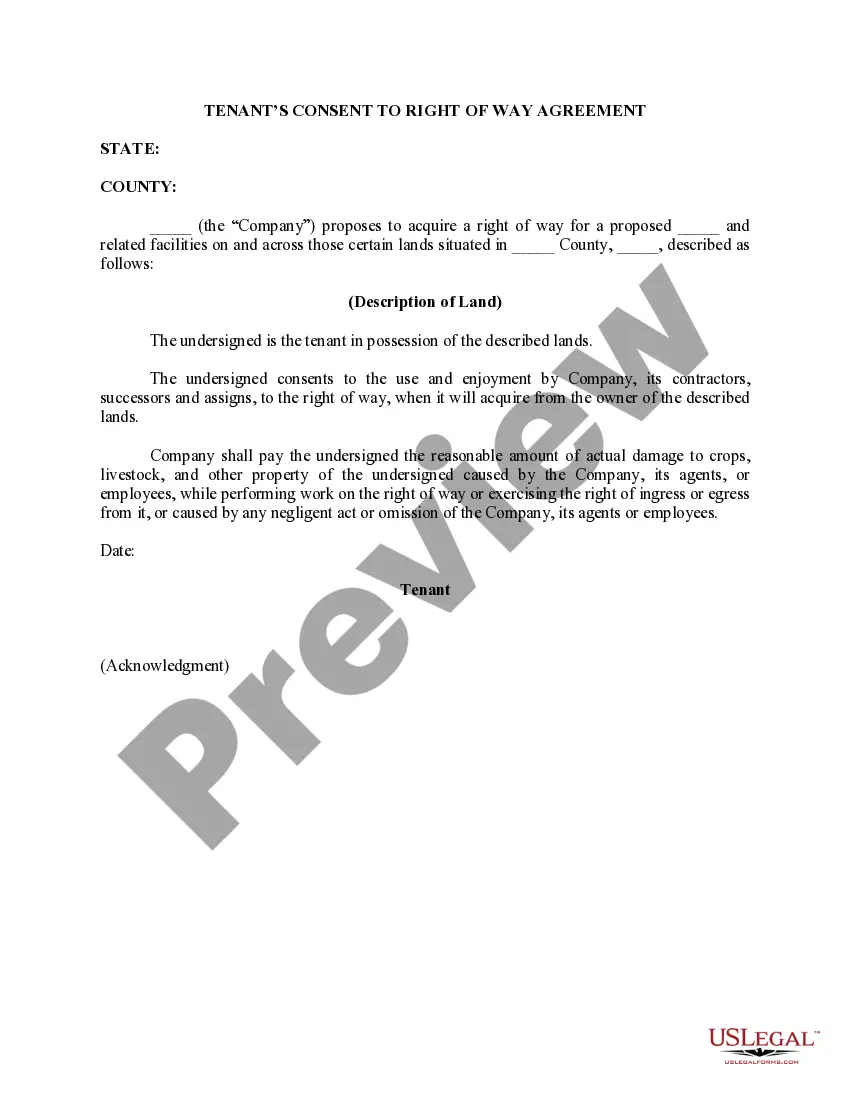
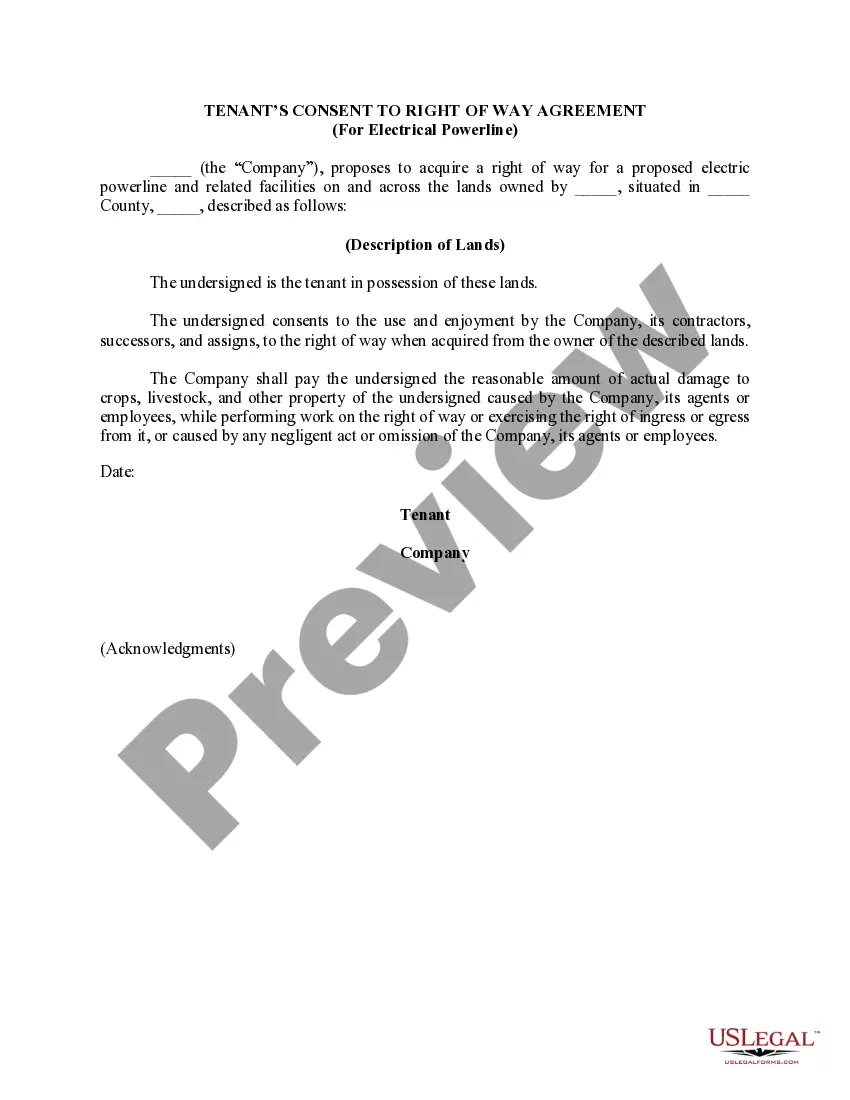
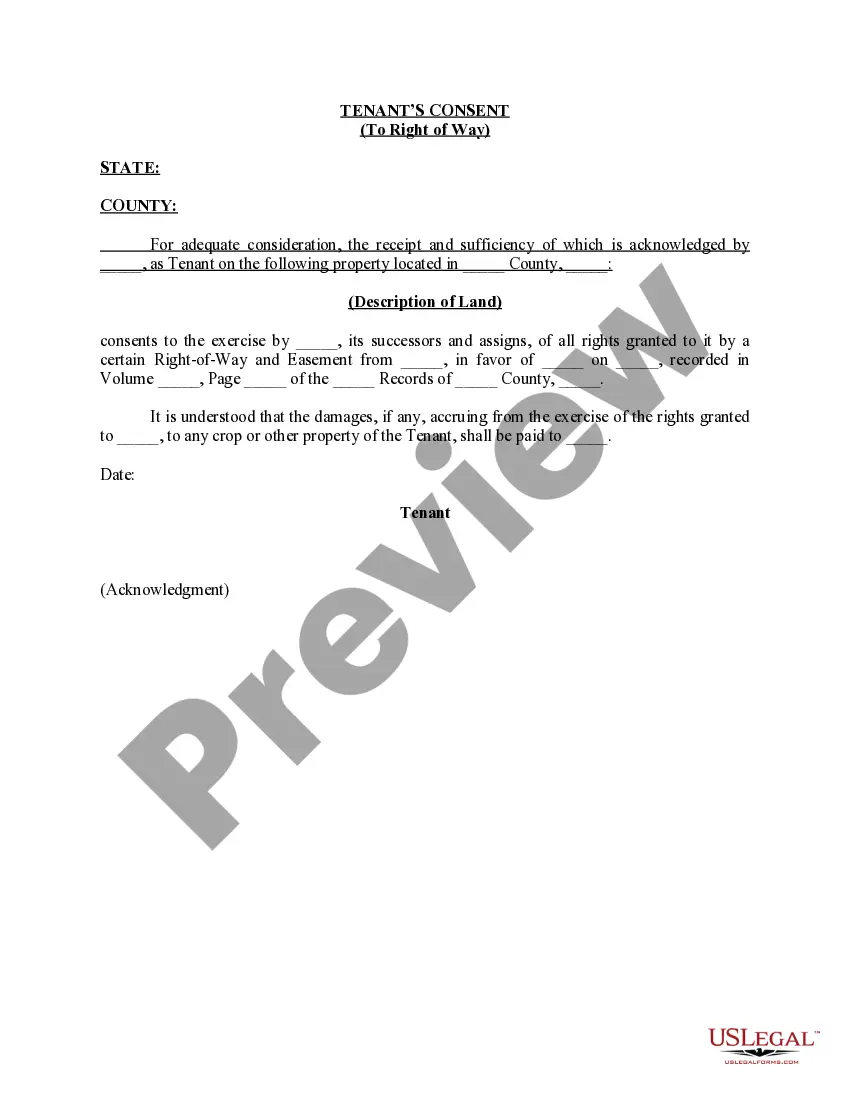
The Tenant's Consent form is a legal document that allows a tenant to agree to an easement or right-of-way on the property they are leasing. This form is essential for clarifying the permissions granted to a third party, distinguishing it from similar forms by specifically addressing tenant consent for easements related to property access or utility placement.
Key components of this form
- Parties involved: The tenant and the party requesting the easement must be clearly identified.
- Property details: Specific information about the property, including county and physical description, needs to be included.
- Easement details: Reference to the underlying right-of-way and easement document must be provided, including recording information.
- Compensation: A statement acknowledging any payment for the consent must be included.
- Damages clause: Terms outlining compensation for any damages incurred by the tenant due to the easement.
- Signatures: The document must be dated and signed by the tenant for legal acknowledgment.
When to use this document
This form should be used when a tenant needs to provide consent for a third party, such as a utility company or neighbor, to access a portion of the leased property for installation, maintenance, or other purposes. It is necessary when formalizing an easement agreement to ensure there are no disputes over property rights or access in the future.
Who this form is for
- Tenants who are leasing property where an easement may be necessary.
- Landlords aiming to facilitate access for utilities or other services without violating tenant rights.
- Property owners needing to grant easement permissions that affect current tenants.
How to prepare this document
- Identify the parties: Clearly state the names of the tenant and the party granted the easement.
- Specify the property: Include the property's address and a brief legal description of the land.
- Enter the easement details: Reference the recording information for the easement document.
- Include compensation: State the dollar amount received in exchange for the tenant's consent.
- Detail damages: Specify who will be compensated for any damages to crops or property.
- Sign and date the document: Ensure that all parties sign the form and include the date of consent.
Notarization requirements for this form
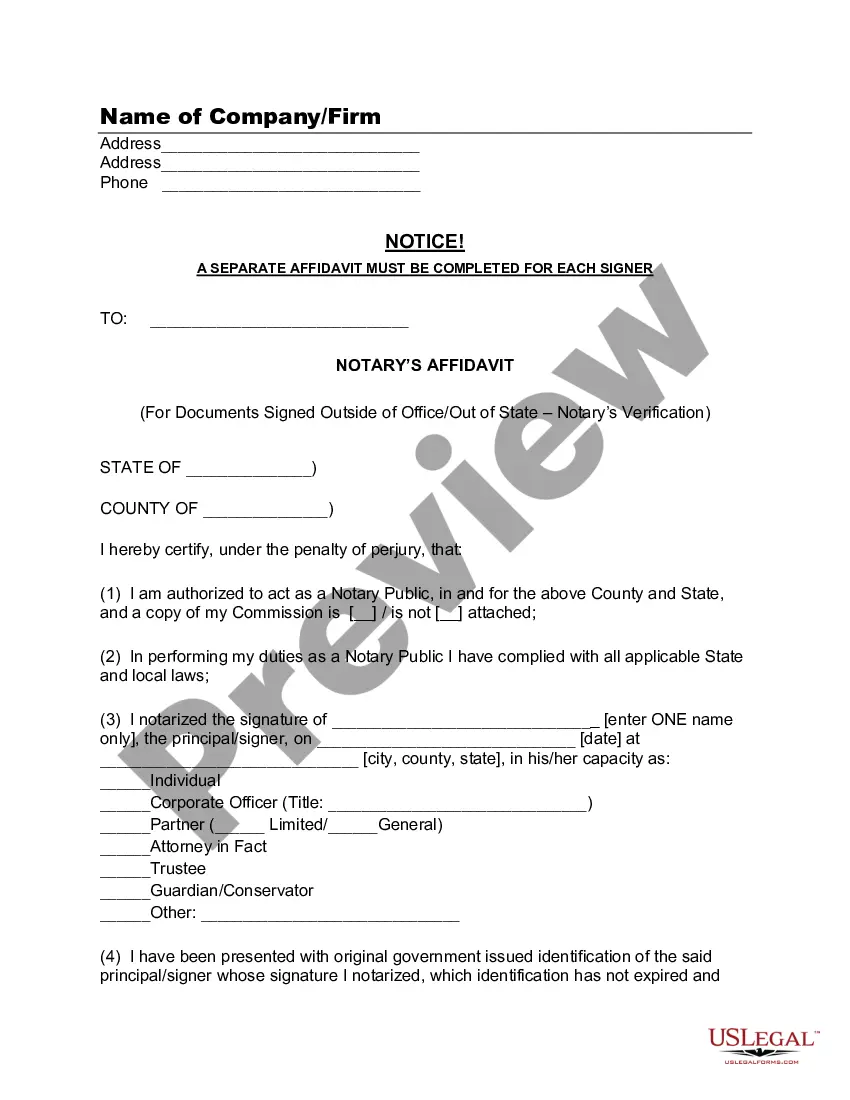
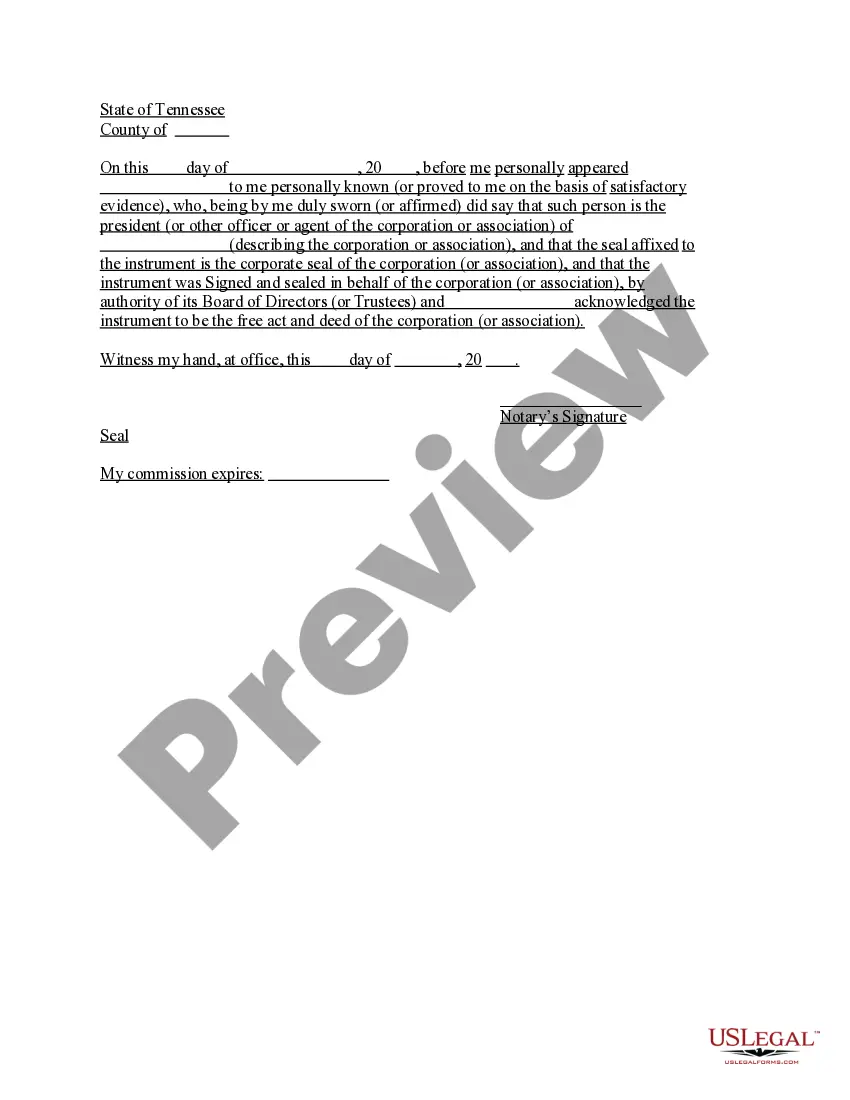
This form does not typically require notarization unless specified by local law. However, notarization may provide additional legal assurance and is recommended to strengthen the document's validity.
Get your form ready online
Our built-in tools help you complete, sign, share, and store your documents in one place.
Make edits, fill in missing information, and update formatting in US Legal Forms—just like you would in MS Word.
Download a copy, print it, send it by email, or mail it via USPS—whatever works best for your next step.
Sign and collect signatures with our SignNow integration. Send to multiple recipients, set reminders, and more. Go Premium to unlock E-Sign.
If this form requires notarization, complete it online through a secure video call—no need to meet a notary in person or wait for an appointment.
We protect your documents and personal data by following strict security and privacy standards.

Make edits, fill in missing information, and update formatting in US Legal Forms—just like you would in MS Word.

Download a copy, print it, send it by email, or mail it via USPS—whatever works best for your next step.

Sign and collect signatures with our SignNow integration. Send to multiple recipients, set reminders, and more. Go Premium to unlock E-Sign.

If this form requires notarization, complete it online through a secure video call—no need to meet a notary in person or wait for an appointment.

We protect your documents and personal data by following strict security and privacy standards.
Common mistakes
- Not including specific property details, leading to ambiguity.
- Failing to reference the related easement document accurately.
- Omitting signatures or dates, which can invalidate the consent.
- Ignoring local regulations that may require additional provisions.
Why use this form online
- Convenience: You can access and complete the form from anywhere, at any time.
- Editability: Easily modify fields to tailor the form to your specific circumstances.
- Reliability: Forms are drafted by licensed attorneys, ensuring legal accuracy.
Quick recap
- The Tenant's Consent form is essential for allowing an easement on a rental property.
- Proper completion ensures that tenant rights are protected and easement use is clearly defined.
- Be aware of specific state requirements that may affect the consent process.
Looking for another form?

Form popularity
FAQ
When writing your own renters agreement you are able to include your own classes, such as tenants aren't allowed to have pets. However, these added clauses must be in line with both the landlord's and tenants' rights and if they infringe on these rights then they are void and can't stand up in a court of law.
In many leases, the tenant grants the landlord a security interest in the property located at the leased premises to secure their lease obligations.This intercreditor agreement is often called a Landlord Consent, a Landlord Waiver, or a Collateral Access Agreement.
Names of the landlord and tenant and/or their agents. Description of the property. Amount of rent and due dates for payment, grace period, late charges. Mode of rent payment. Methods to terminate the agreement prior to the expiration date and charges if any.
Include a company or personal letterhead. If you do not have a letter head create one that includes your name, address and contact information such as phone number and email. Include the date in the top left corner. Include the tenant's name and address below the date.
Terms. The lease should state the length of the agreement. Rent. The amount of rent and when it is due. Deposits and fees. The names of all tenants. Occupancy limits. Restrictions on disruptive activity. Pets. Maintenance and repairs.
Is easy to communicate with and respectful- they are responsive, respond within reasonable time to your calls and messages; are understanding, empathetic and friendly to deal with. 4. They always pay rent on time- they never default on the rent and will let you know if they may be late for some reason.
Names of all tenants. Limits on occupancy. Term of the tenancy. Rent. Deposits and fees. Repairs and maintenance. Entry to rental property. Restrictions on tenant illegal activity.
What date would you like to move in? Do you have pets? How long have you lived in your current home? Why are you moving? How many people will be living in the unit? How many people living with you smoke? What is your monthly income? Have you ever been convicted of a relevant crime?
Let the tenant know that your property is still available and you'd like to rent it to them. Let the tenant know that the next step is signing a rental agreement. Confirm the move-in date. Discuss collecting the first month's rent and the security deposit (if applicable).