Employee Evaluation Form for Baker
Overview of this form
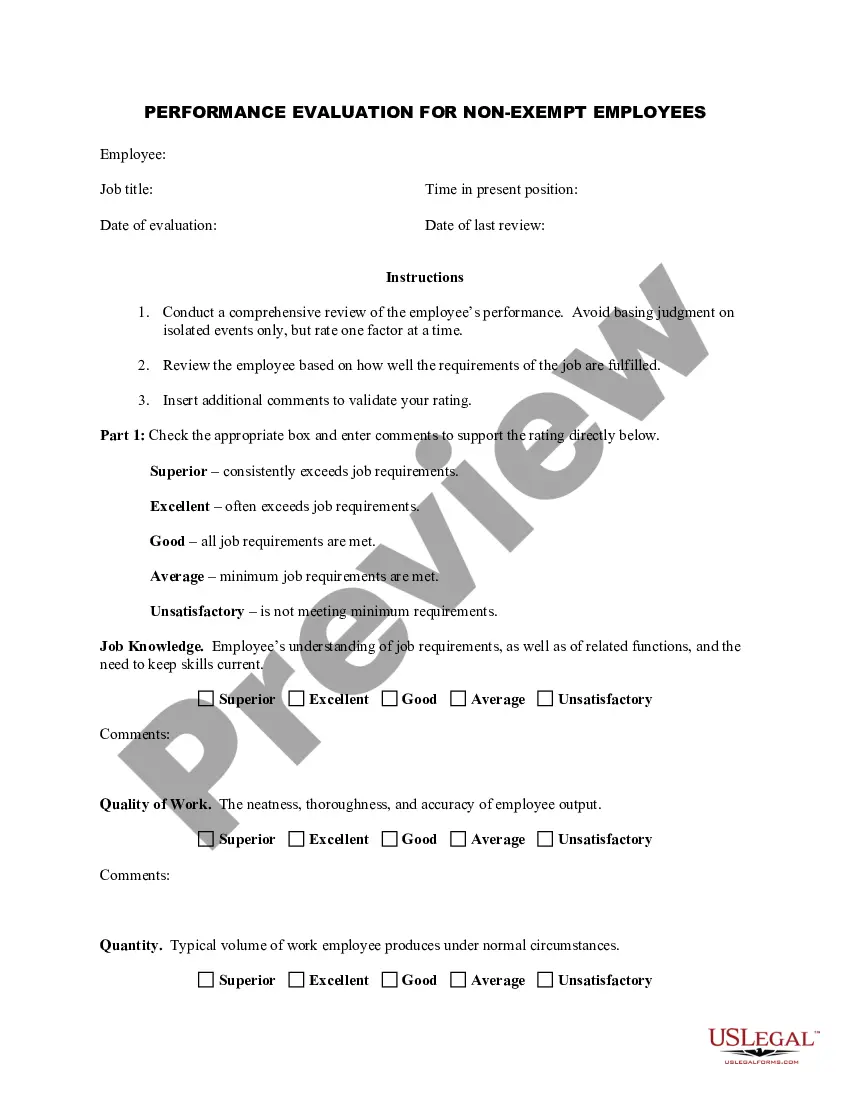
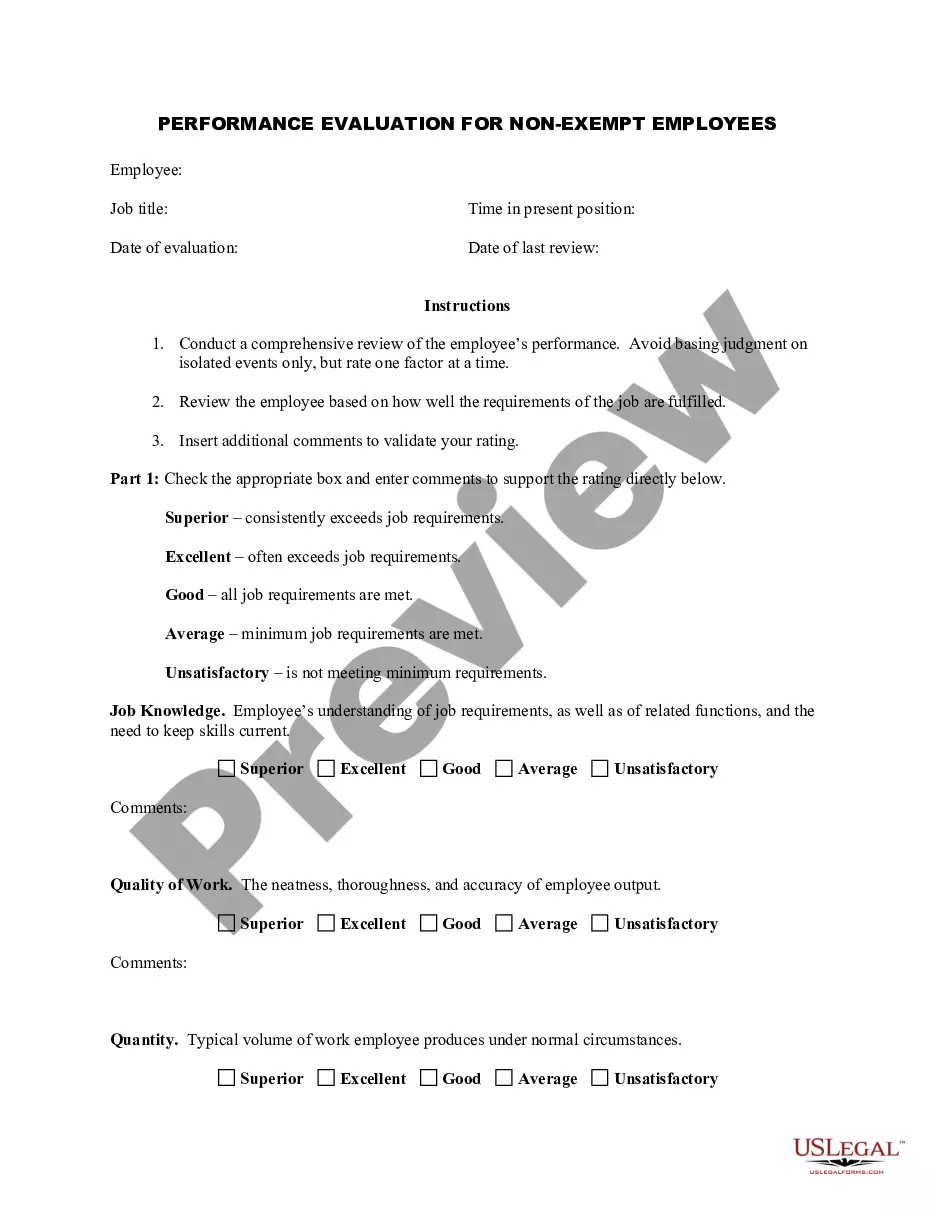
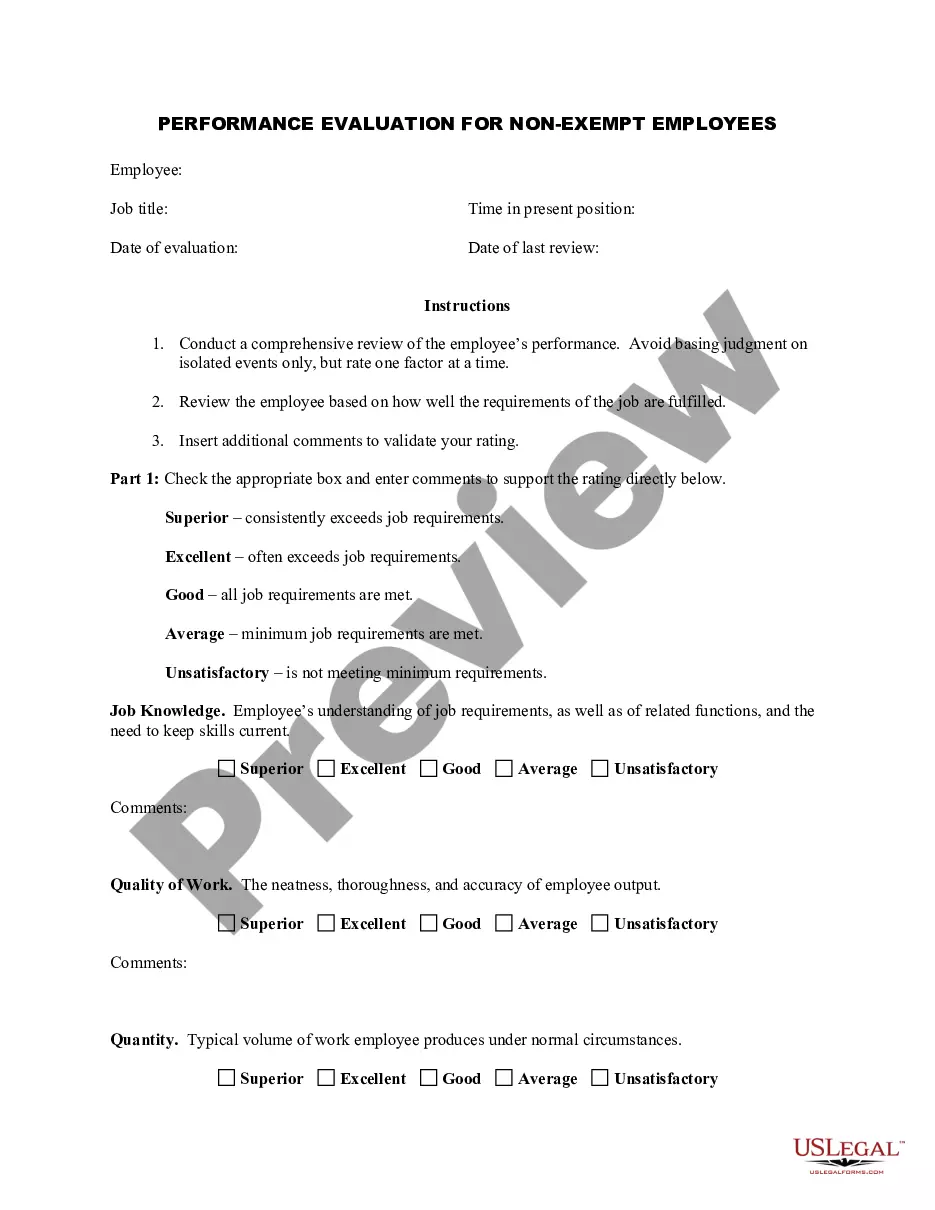
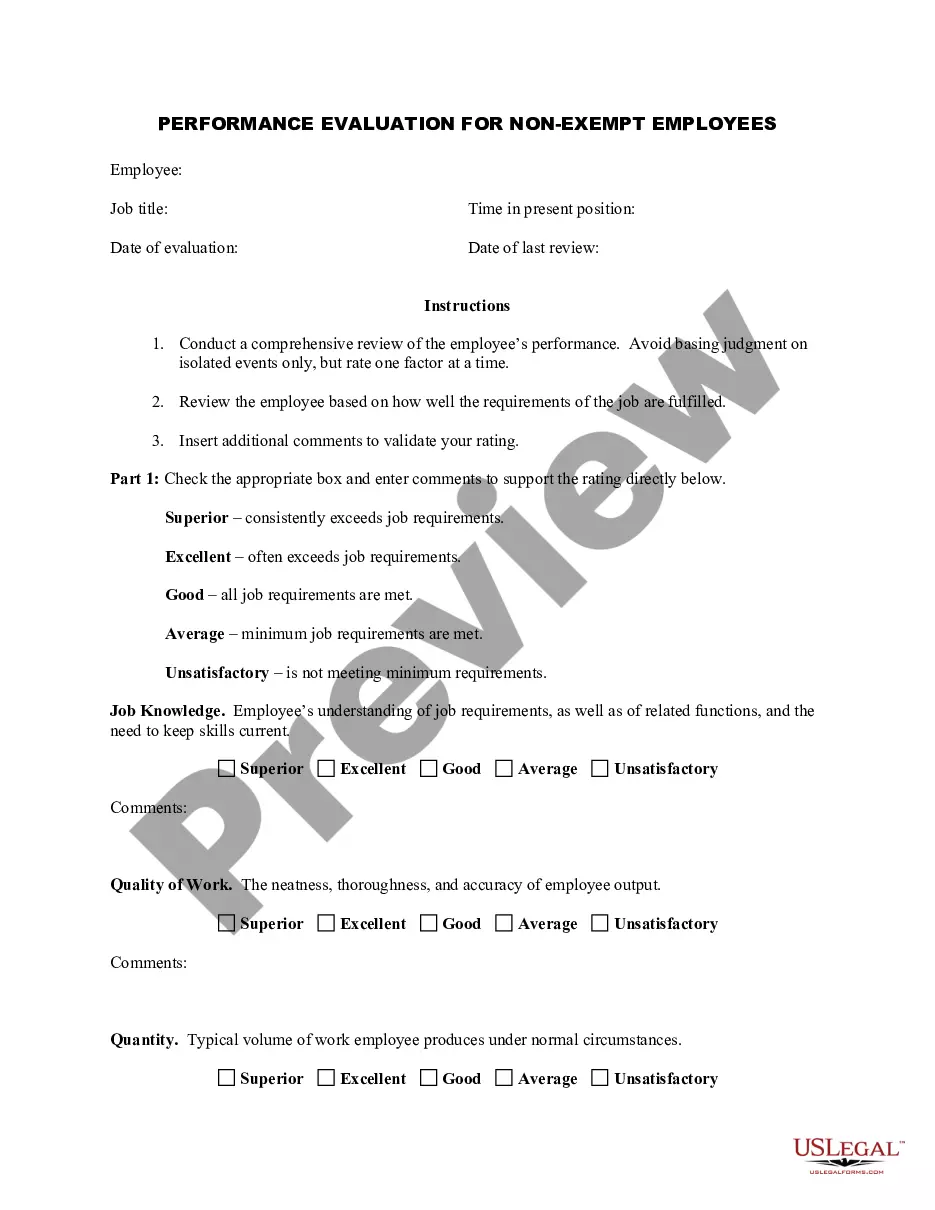
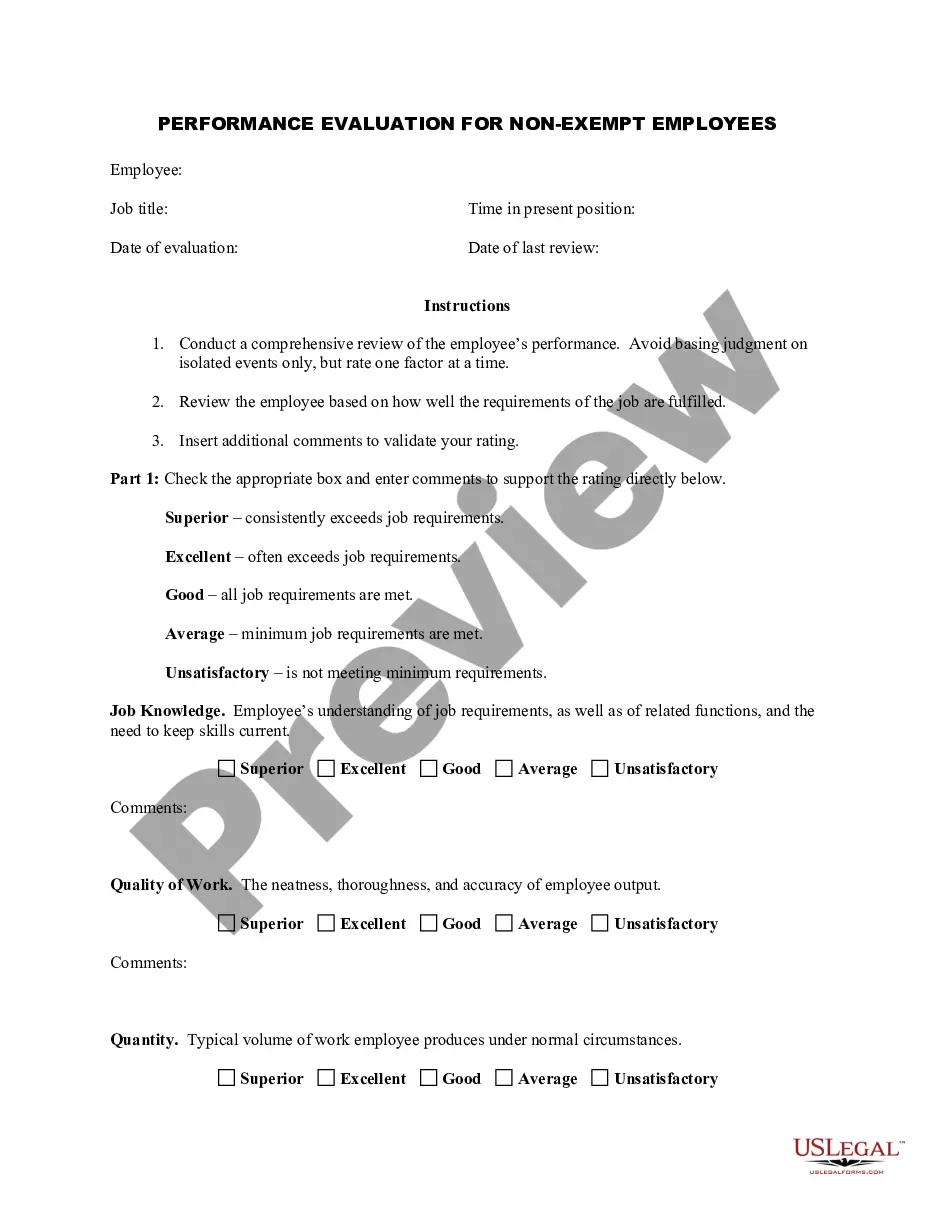
The Employee Evaluation Form for Baker is a structured document designed to assess the performance of non-exempt employees in a bakery setting. This form facilitates comprehensive reviews based on various job criteria, allowing employers to evaluate how well an employee meets their job responsibilities. Unlike informal reviews or casual assessments, this form provides a standardized approach to performance evaluation, helping ensure consistency and fairness in evaluations across the workforce.
Main sections of this form
- Employee identification: Name, job title, and date of evaluation
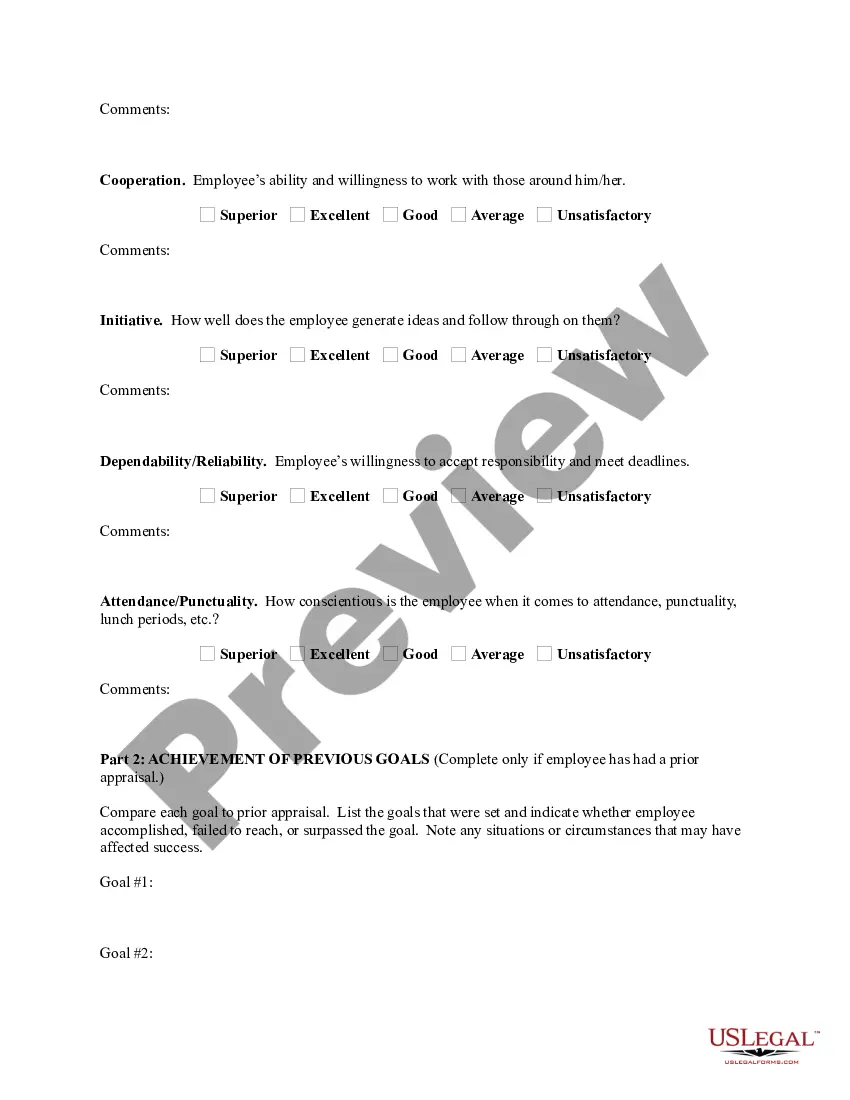
- Performance criteria: Categories such as job knowledge, quality of work, quantity of work, cooperation, initiative, dependability, and attendance
- Rating scales: Options for performance levels ranging from "Superior" to "Unsatisfactory"
- Comments section: Space for managers to provide specific feedback and explanations for ratings
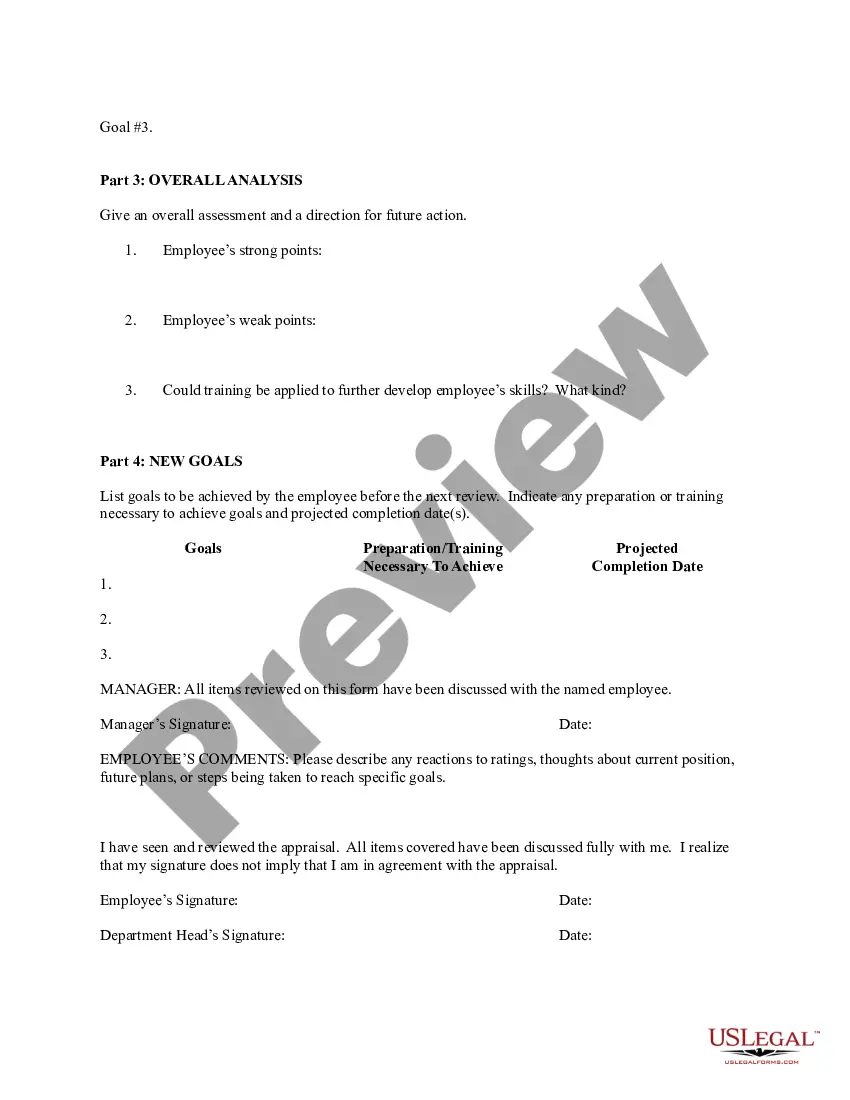
- Goal setting: A section for establishing future objectives and training needs
- Signatures: A space for the employee and manager to acknowledge the review
Common use cases
This form should be utilized during regular performance evaluations, typically on an annual basis, or as needed when significant changes occur in an employee's role or performance. It is also useful for onboarding processes or after employee training sessions to assess the impact of learning on job performance. Additionally, it can be applied to set new goals and expectations for employees as they advance in their careers within the bakery.
Who this form is for
- Managers and supervisors responsible for evaluating bakery staff
- HR personnel involved in employee performance reviews
- Training coordinators assessing employee development outcomes
- Payroll or administrative staff responsible for maintaining employee records
How to prepare this document
- Identify the employee by filling in their name, job title, and date of the evaluation at the top of the form.
- Go through each performance criterion and rate the employee using the provided scale.
- Provide comments that support your ratings, detailing specific examples where applicable.
- Set achievable goals for the employee based on this evaluation and note any necessary training.
- Have the employee review the completed form and sign to acknowledge the discussion.
- Ensure the manager also signs the form to confirm the evaluation process.
Notarization guidance
This form does not typically require notarization unless specified by local law. However, it is recommended to keep signed copies in employee files for verification purposes.
Get your form ready online
Our built-in tools help you complete, sign, share, and store your documents in one place.
Make edits, fill in missing information, and update formatting in US Legal Forms—just like you would in MS Word.
Download a copy, print it, send it by email, or mail it via USPS—whatever works best for your next step.
Sign and collect signatures with our SignNow integration. Send to multiple recipients, set reminders, and more. Go Premium to unlock E-Sign.
If this form requires notarization, complete it online through a secure video call—no need to meet a notary in person or wait for an appointment.
We protect your documents and personal data by following strict security and privacy standards.

Make edits, fill in missing information, and update formatting in US Legal Forms—just like you would in MS Word.

Download a copy, print it, send it by email, or mail it via USPS—whatever works best for your next step.

Sign and collect signatures with our SignNow integration. Send to multiple recipients, set reminders, and more. Go Premium to unlock E-Sign.

If this form requires notarization, complete it online through a secure video call—no need to meet a notary in person or wait for an appointment.

We protect your documents and personal data by following strict security and privacy standards.
Common mistakes to avoid
- Failing to provide specific examples to justify ratings.
- Overlooking the need to have the employee sign the form.
- Not updating goals during each evaluation period.
- Relying heavily on recent events rather than the overall performance over time.
Why complete this form online
- Quick and easy access to the form from anywhere
- Editable to customize feedback and goals for specific employees
- Secure storage of evaluations, ensuring compliance with HR regulations
- Easier tracking of employee progress over time
Legal use & context
- Helps protect the employer from potential disputes about employee performance
- Provides a clear record of ongoing performance assessments
- Assists in maintaining transparency in HR practices
Looking for another form?
Form popularity
FAQ
Focus on the job, not the person. Be specific. Consider questions over statements. With positives, stick to process. Connect personally where you can. Get serious but don't get mean.
Make it easy to use. Ensure that the information your evaluation form seeks is clear and concise. Determine the focus of the form. There needs to be a clear purpose. Establish a clearly defined rating scale.
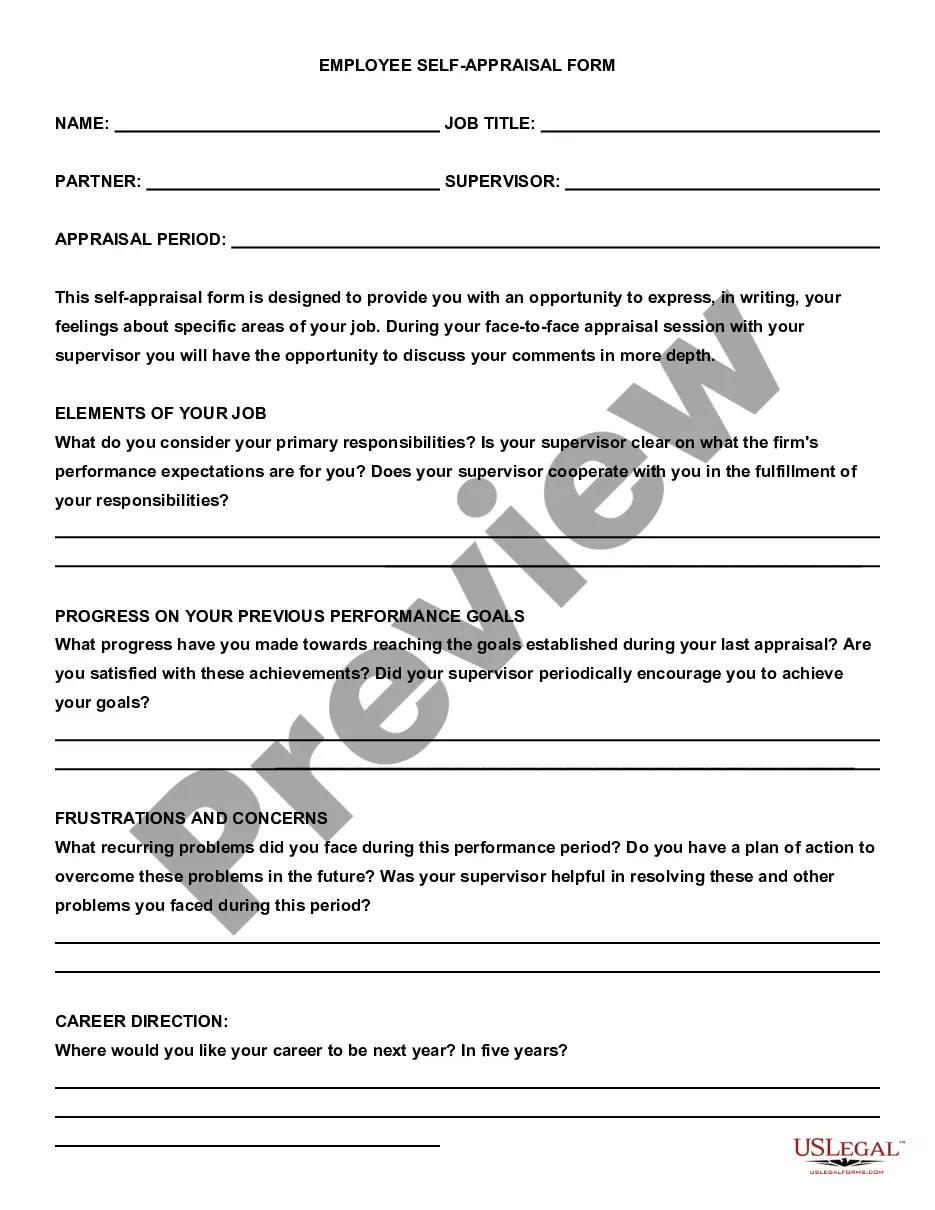
Have your employee complete self-assessment first. Be open to amendments. Don't make it personal. Focus on strengths. Use concrete examples. Base the review against their job description. Include action items for moving forward. Follow up.
First things first: Identify the need and purpose. Determine who will rate and how often it will be done. Evaluate job-related SMART objectives. Include your organization's core values. Have a follow-up section. Discuss developmental goals and needs. Have clear evaluation parameters. Additional pointers.
Employee evaluation forms are used to formally review and document an employee's performance and get their acknowledgment that the evaluation took place. This is important in establishing a paper trail to support important HR decisions.
Communication. Collaboration and teamwork. Problem-solving. Quality and accuracy of work. Attendance, punctuality and reliability. The ability to accomplish goals and meet deadlines.
Review the employee's job description. Get a current copy of each person's job description and review the requirements. Highlight areas of improvement. Compare strengths and weaknesses. Recommend actionable goals. Provide constructive feedback. Welcome employee input.
Develop an evaluation form. Identify performance measures. Set guidelines for feedback. Create disciplinary and termination procedures. Set an evaluation schedule.
1 Know how the self-evaluation is going to be used. 2 Write out a list of your accomplishments. 3 Gather analytics if you can. 4 Write out a list of your struggles. 5 Narrow your accomplishments list down. 6 Don't forget to align your review with your manager's or team's goals.