Employee Evaluation Form for Cook
What is this form?
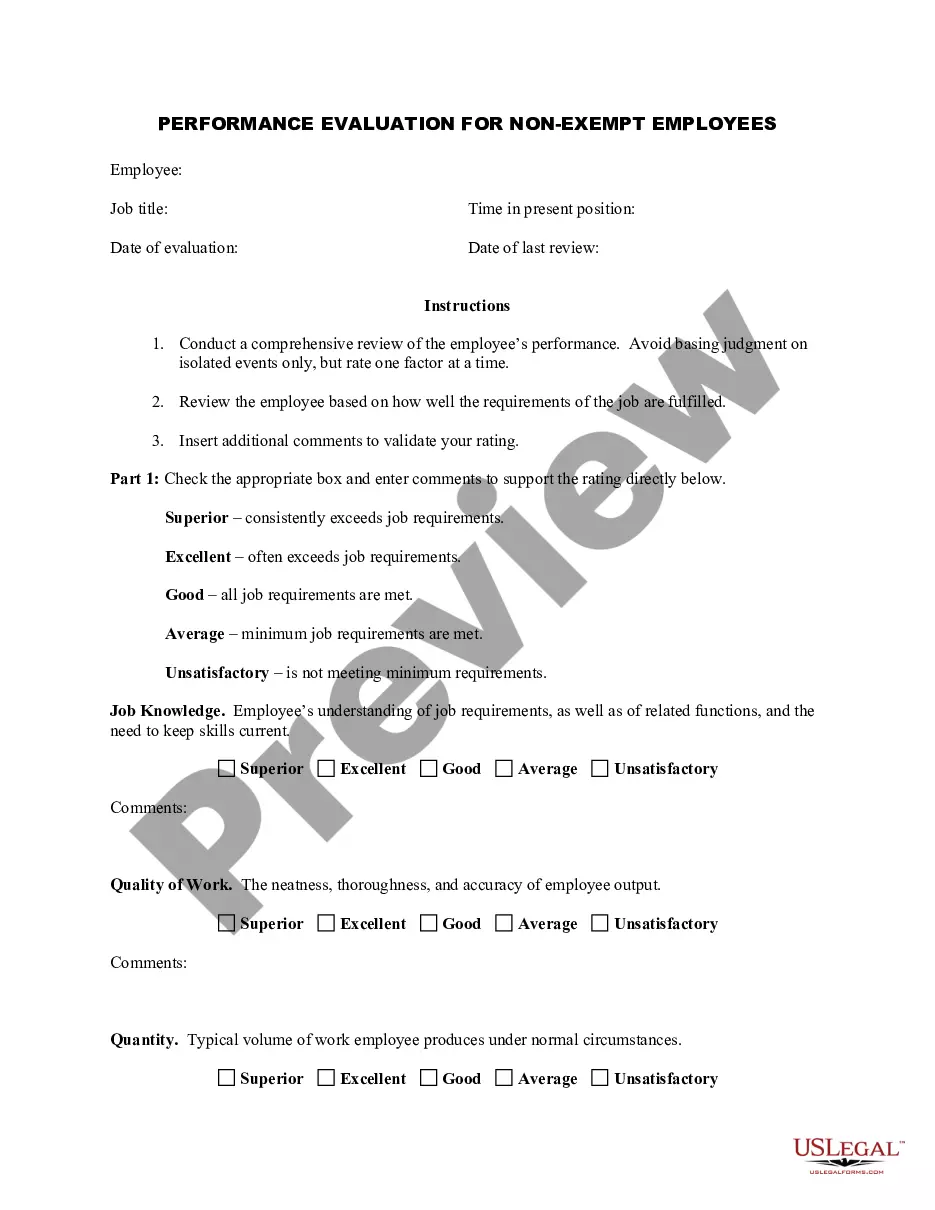
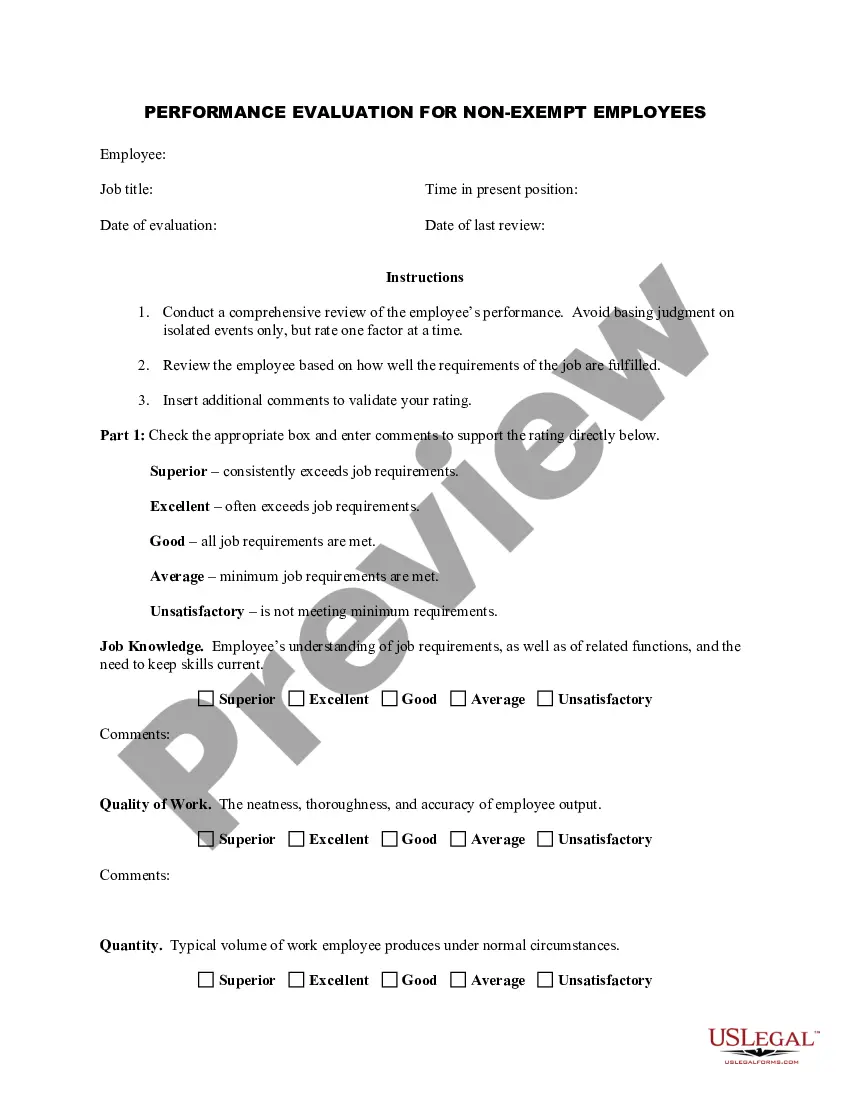
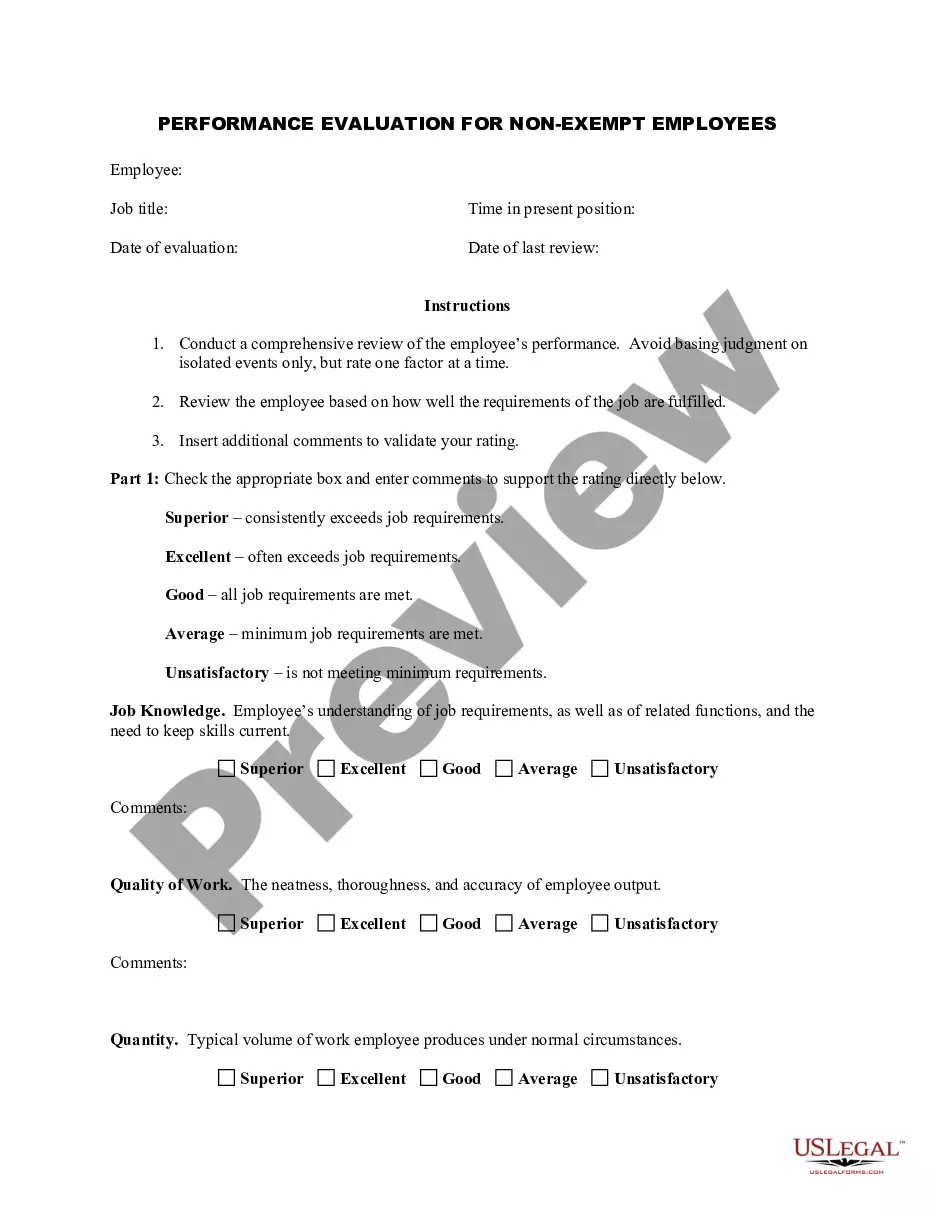
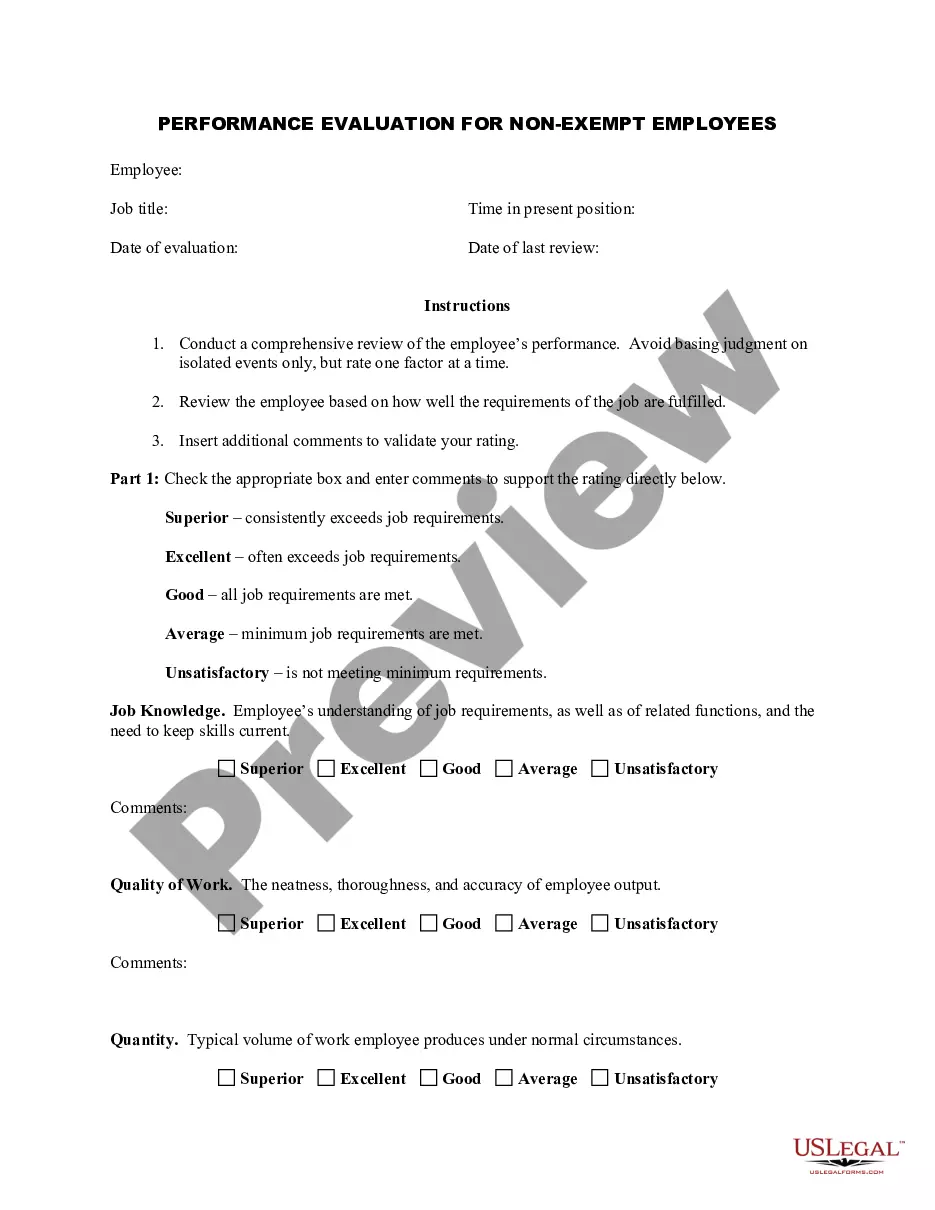
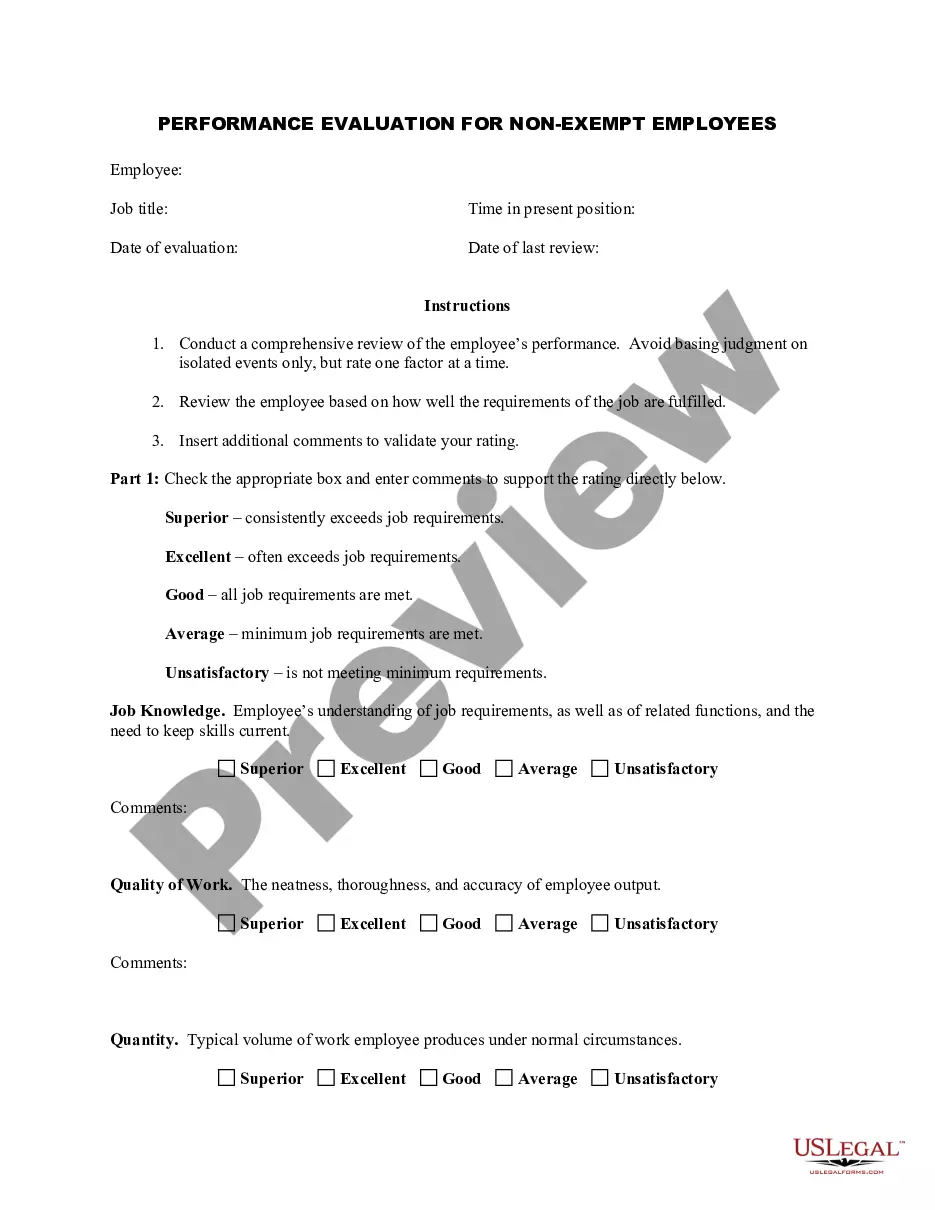
The Employee Evaluation Form for Cook is a performance review tool designed to assess non-exempt employees in the culinary field. This form enables managers to evaluate various aspects of an employee's work performance, including job knowledge, quality of work, and attendance. It serves as a structured way to provide feedback and facilitate employee development, differentiating it from informal review methods. Utilizing this form can lead to clearer communication about employee performance and expectations.
Main sections of this form
- Employee details section, including job title and evaluation dates.
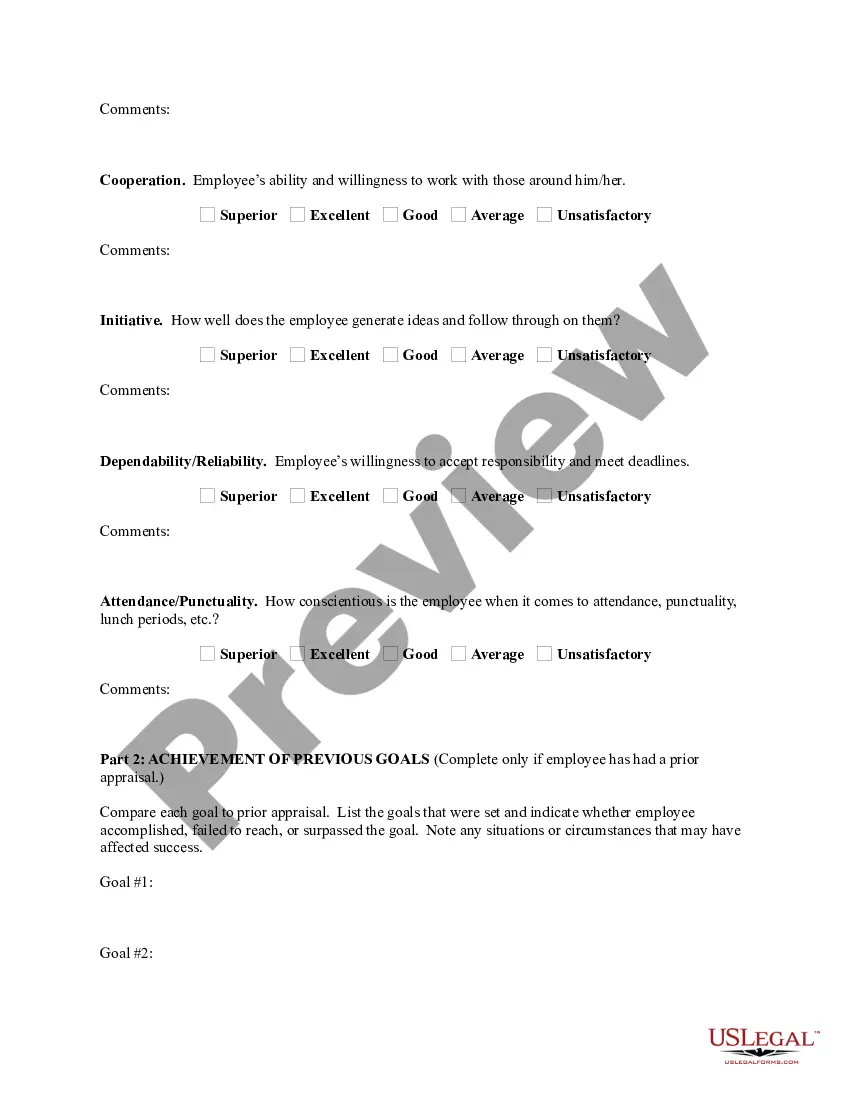
- Evaluation criteria with rating options from superior to unsatisfactory.
- Sections for comments on job knowledge, quality of work, and initiative.
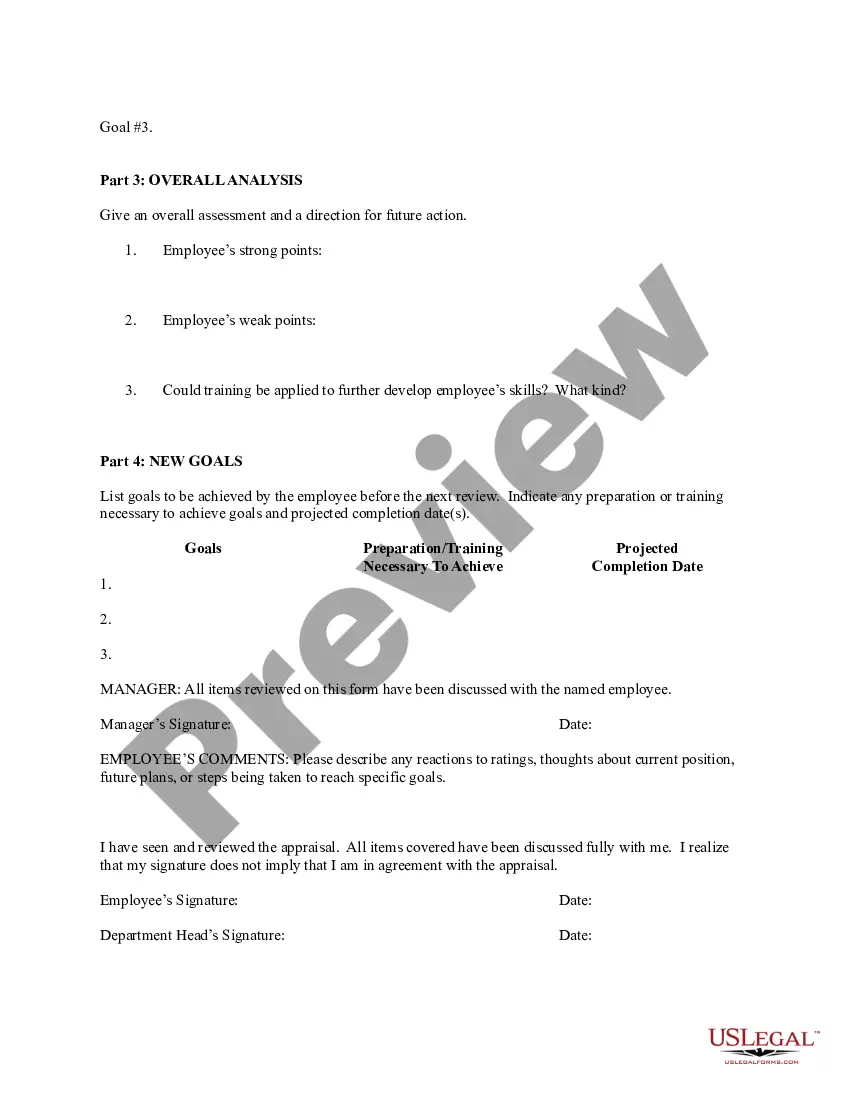
- Space for setting and reviewing previous goals.
- Overall analysis and future goals planning by the manager.
When to use this form
This form is essential when conducting periodic employee evaluations in a culinary setting. You should use the Employee Evaluation Form for Cook at the end of evaluation periods, during performance reviews, or when transitioning an employee to a new position. It is also useful for addressing performance issues and recognizing achievements.
Intended users of this form
This form is intended for:
- Managers and supervisors overseeing non-exempt culinary staff.
- Human resources professionals involved in employee performance evaluations.
- Team leaders looking to enhance communication and development within their teams.
Steps to complete this form
- Identify the employee being evaluated and fill in the relevant details at the top of the form.
- Rate the employee on specified criteria, providing comments to support each rating.
- Summarize the employee's performance related to set goals and areas of improvement.
- Document the overall analysis and set new goals for the upcoming review period.
- Ensure both the manager and employee sign the form to acknowledge the evaluation discussion.
Notarization guidance
This form does not typically require notarization unless specified by local law. It is advisable to check local regulations to ensure compliance.
Get your form ready online
Our built-in tools help you complete, sign, share, and store your documents in one place.
Make edits, fill in missing information, and update formatting in US Legal Forms—just like you would in MS Word.
Download a copy, print it, send it by email, or mail it via USPS—whatever works best for your next step.
Sign and collect signatures with our SignNow integration. Send to multiple recipients, set reminders, and more. Go Premium to unlock E-Sign.
If this form requires notarization, complete it online through a secure video call—no need to meet a notary in person or wait for an appointment.
We protect your documents and personal data by following strict security and privacy standards.

Make edits, fill in missing information, and update formatting in US Legal Forms—just like you would in MS Word.

Download a copy, print it, send it by email, or mail it via USPS—whatever works best for your next step.

Sign and collect signatures with our SignNow integration. Send to multiple recipients, set reminders, and more. Go Premium to unlock E-Sign.

If this form requires notarization, complete it online through a secure video call—no need to meet a notary in person or wait for an appointment.

We protect your documents and personal data by following strict security and privacy standards.
Typical mistakes to avoid
- Failing to provide specific examples when giving feedback.
- Relying solely on recent events rather than overall performance.
- Neglecting to discuss the evaluation with the employee beforehand.
- Not following up on previously set goals or development plans.
Why complete this form online
- Convenient access for both managers and employees.
- Editability allows for customization based on specific review criteria.
- Structured format improves clarity and consistency of evaluations.
- Secure storage ensures easy retrieval and record-keeping.
What to keep in mind
- The Employee Evaluation Form for Cook is essential for structured performance assessments.
- Effective use of this tool enhances communication between management and culinary staff.
- A detailed evaluation fosters employee development and accountability.
Looking for another form?
Form popularity
FAQ
Be proud. One major goal of the self-evaluation is to highlight your accomplishments and recollect milestones in your professional development. Be honest and critical. Continuously strive for growth. Track your accomplishments. Be professional.
Reflect on feedback. Make a list of your top accomplishments and identify areas for improvements. Gather analytics to show impact. Make a commitment to improve. Set a SMART goal for yourself. Create a plan of action. Communication. Job Performance.
Communication. Collaboration and teamwork. Problem-solving. Quality and accuracy of work. Attendance, punctuality and reliability. The ability to accomplish goals and meet deadlines.
Use numbers to your advantage. Include figures that add value to your work, if possible. Mention results. Take the company's objectives into account. Record your achievements in real-time. Take your time.
Reflect on feedback. Make a list of your top accomplishments and identify areas for improvements. Gather analytics to show impact. Make a commitment to improve. Set a SMART goal for yourself. Create a plan of action. Communication. Job Performance.
Check Your Attitude. "Attitude is very important," says employment consultant Rick Waters. Be Reflective. Assess Your Performance Against the Job Specifications. Keep a File. Find out the Supervisor's Expectations. Get Feedback From Others. Be a Team Player. Plan Ahead.
Reflect on feedback. Make a list of your top accomplishments and identify areas for improvements. Gather analytics to show impact. Make a commitment to improve. Set a SMART goal for yourself. Create a plan of action. Communication. Job Performance.
Review the employee's job description. Get a current copy of each person's job description and review the requirements. Highlight areas of improvement. Compare strengths and weaknesses. Recommend actionable goals. Provide constructive feedback. Welcome employee input.
Level of execution. Quality of work. Level of creativity. Amount of consistent improvement. Customer and peer feedback. Sales revenue generated. Responsiveness to feedback. Ability to take ownership.