Seismic Agreement Allowing Third Party to Conduct Seismic Operation on Grantor's Lease
About this form
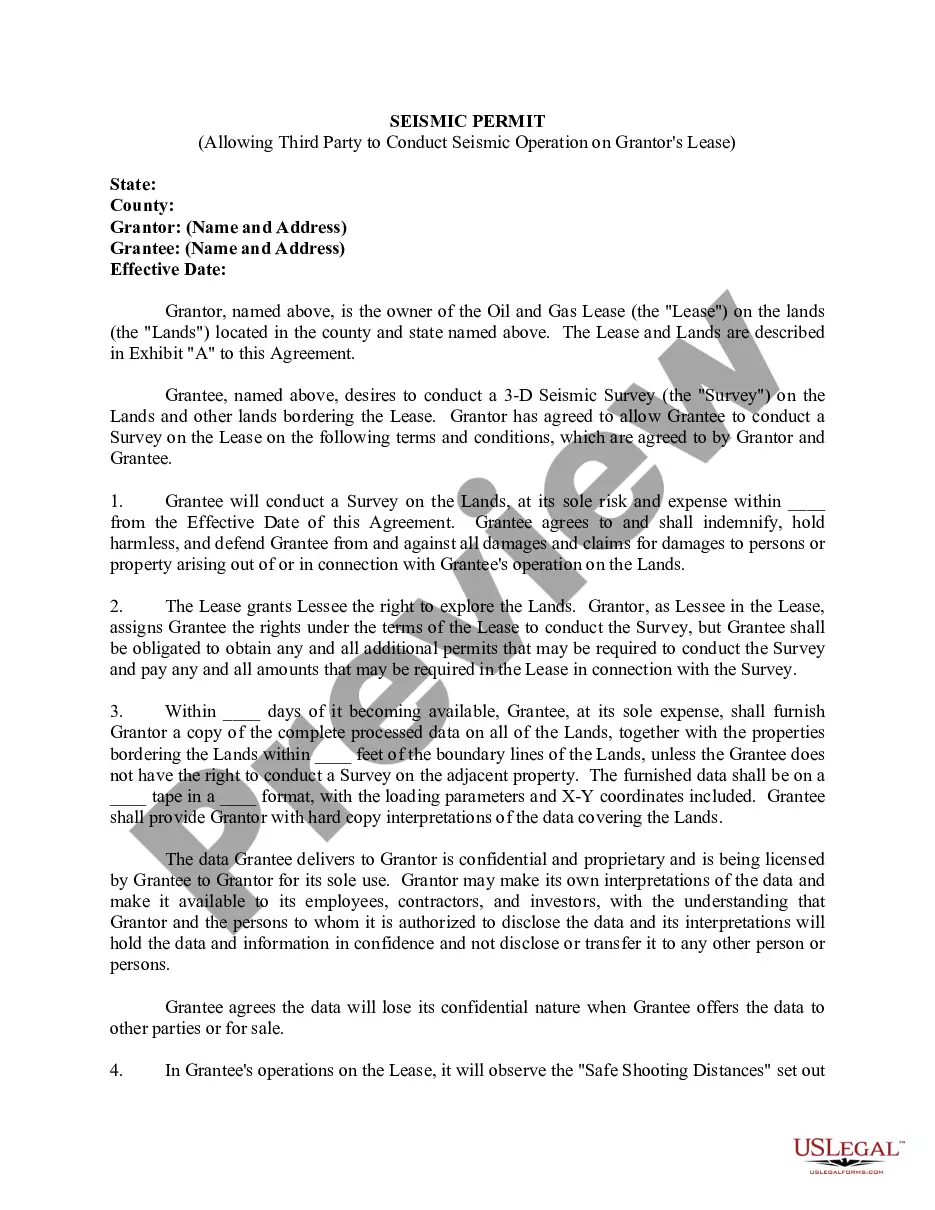
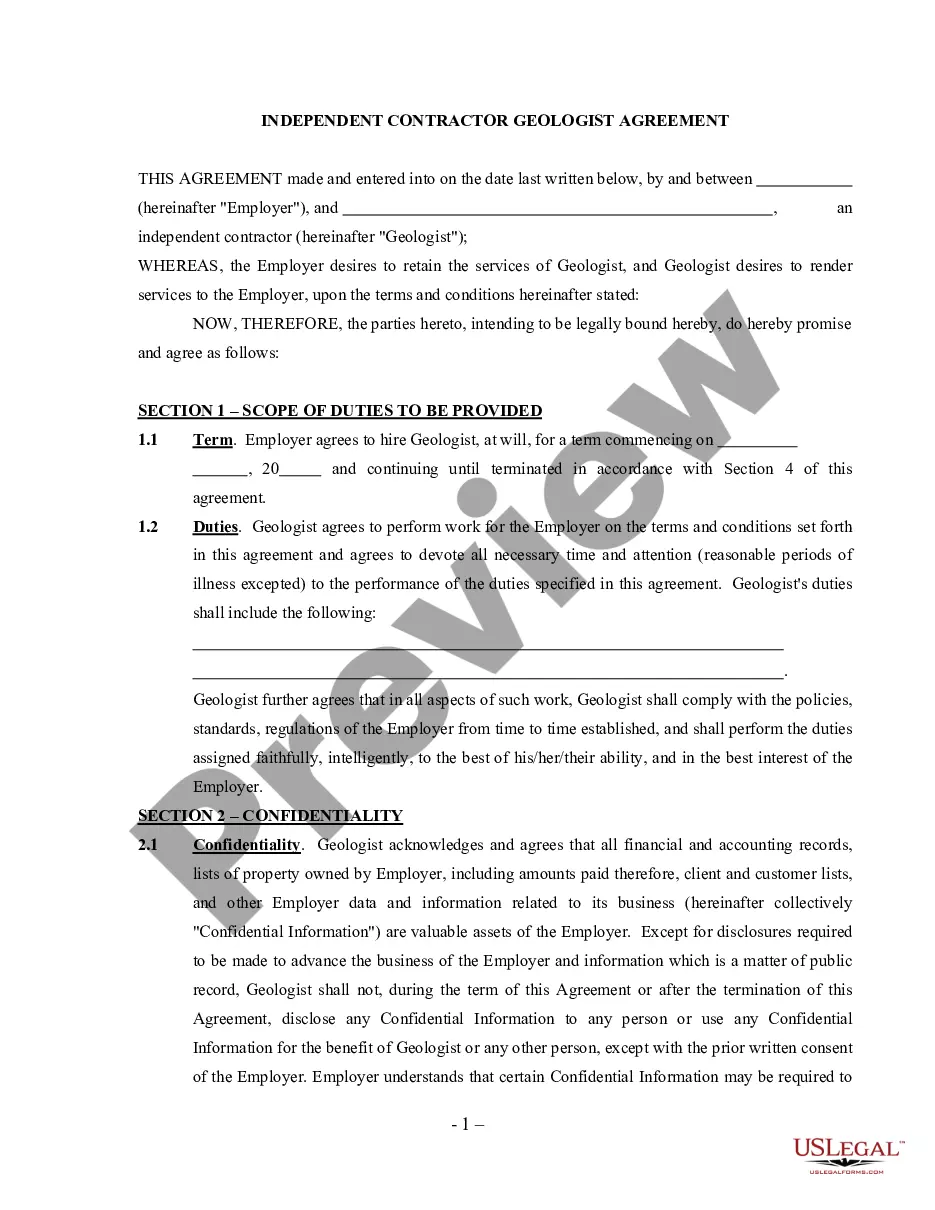
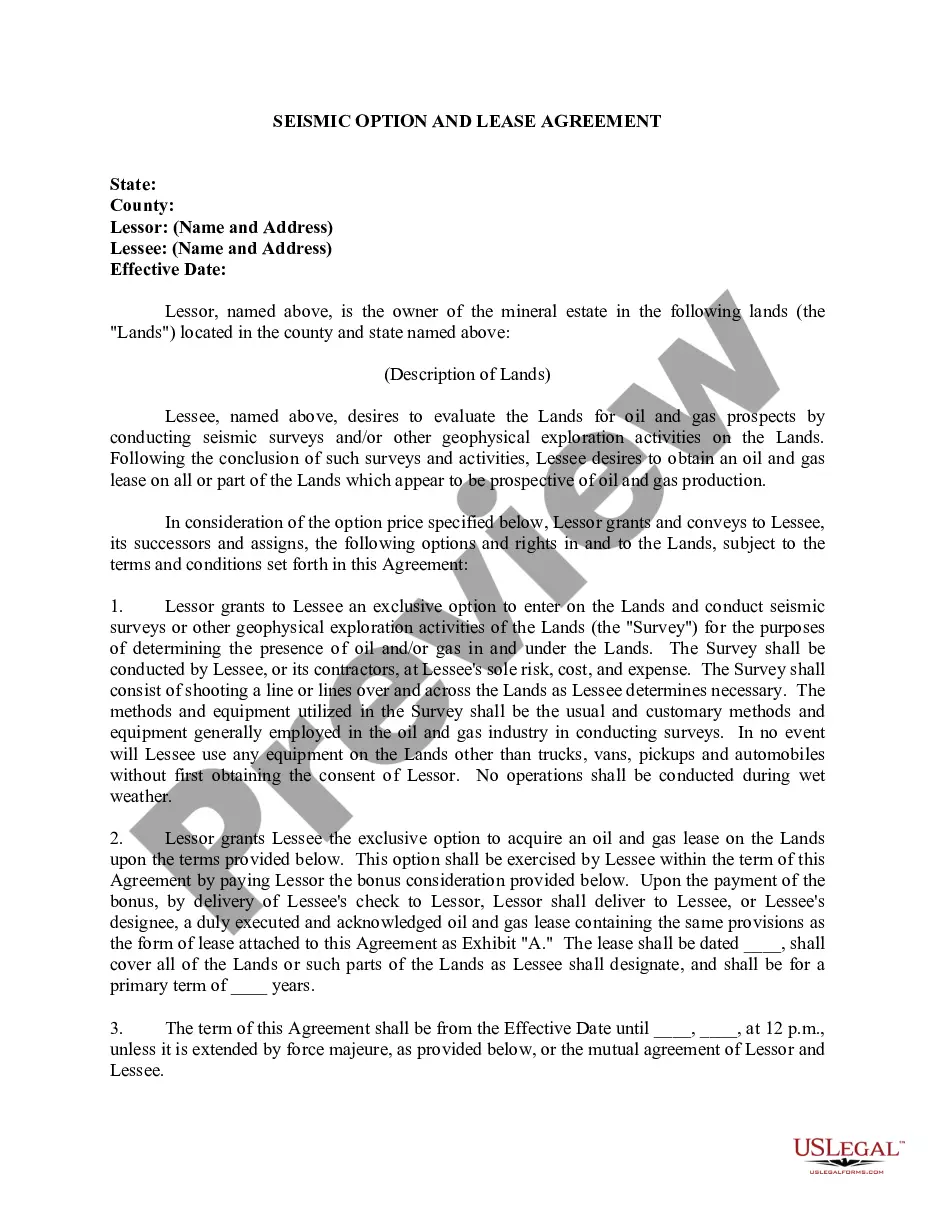
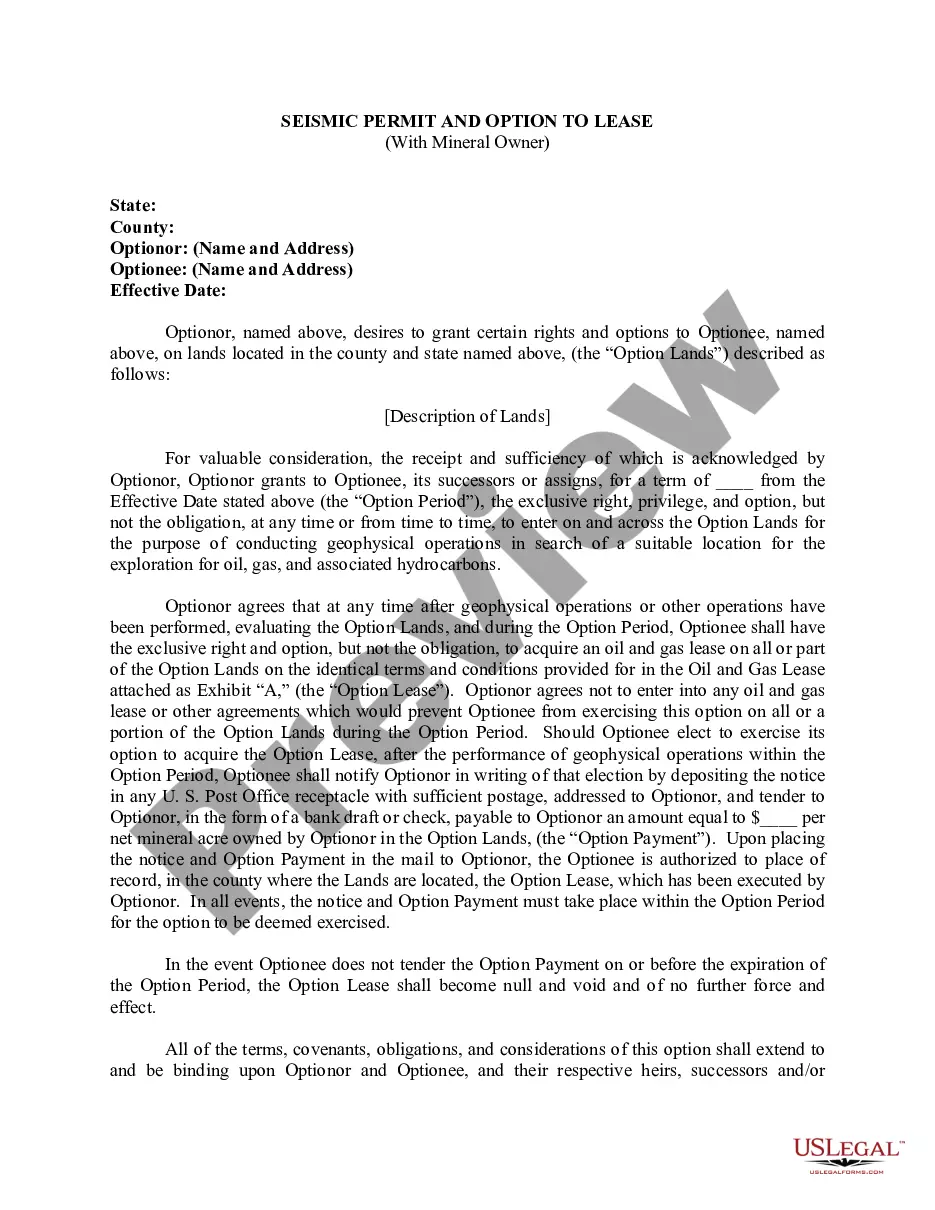
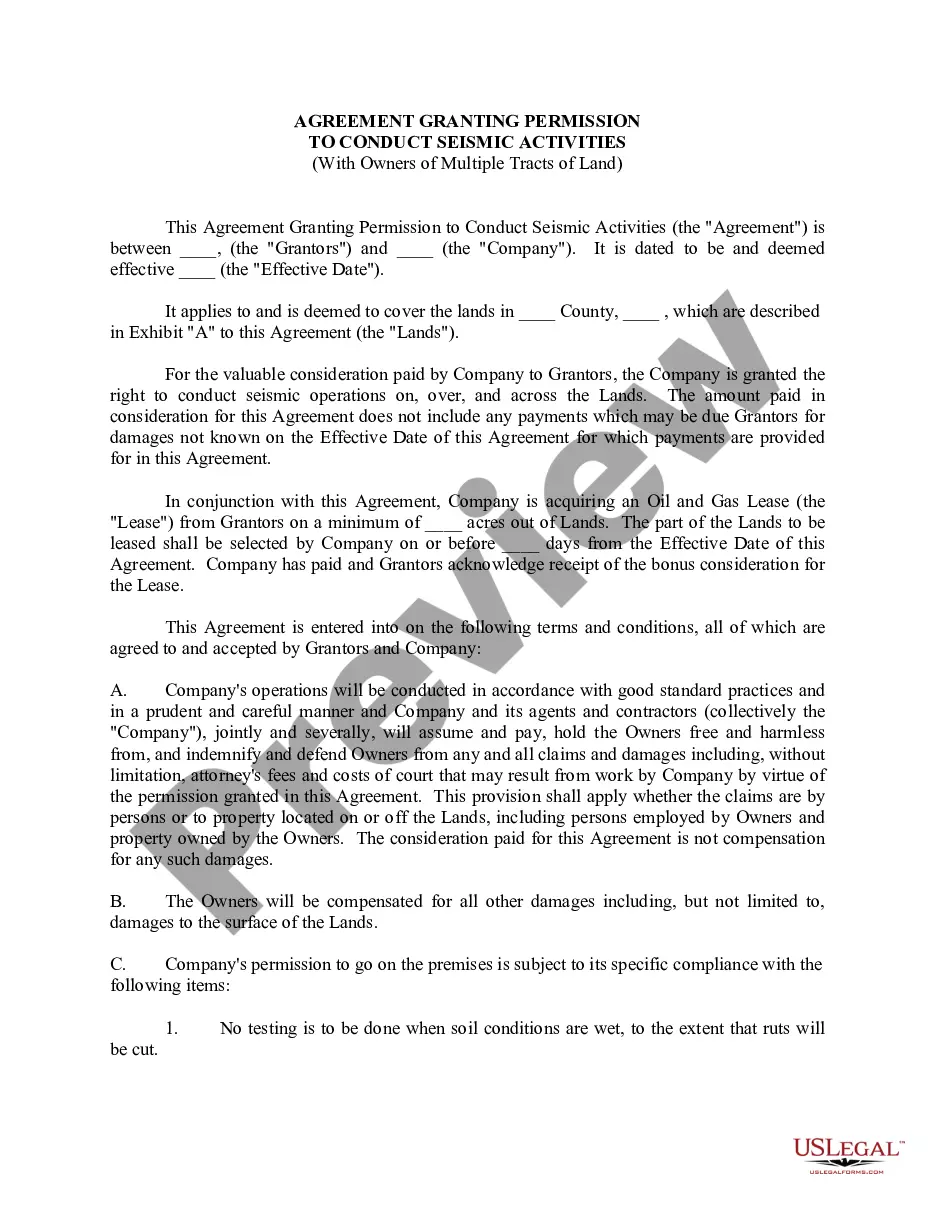
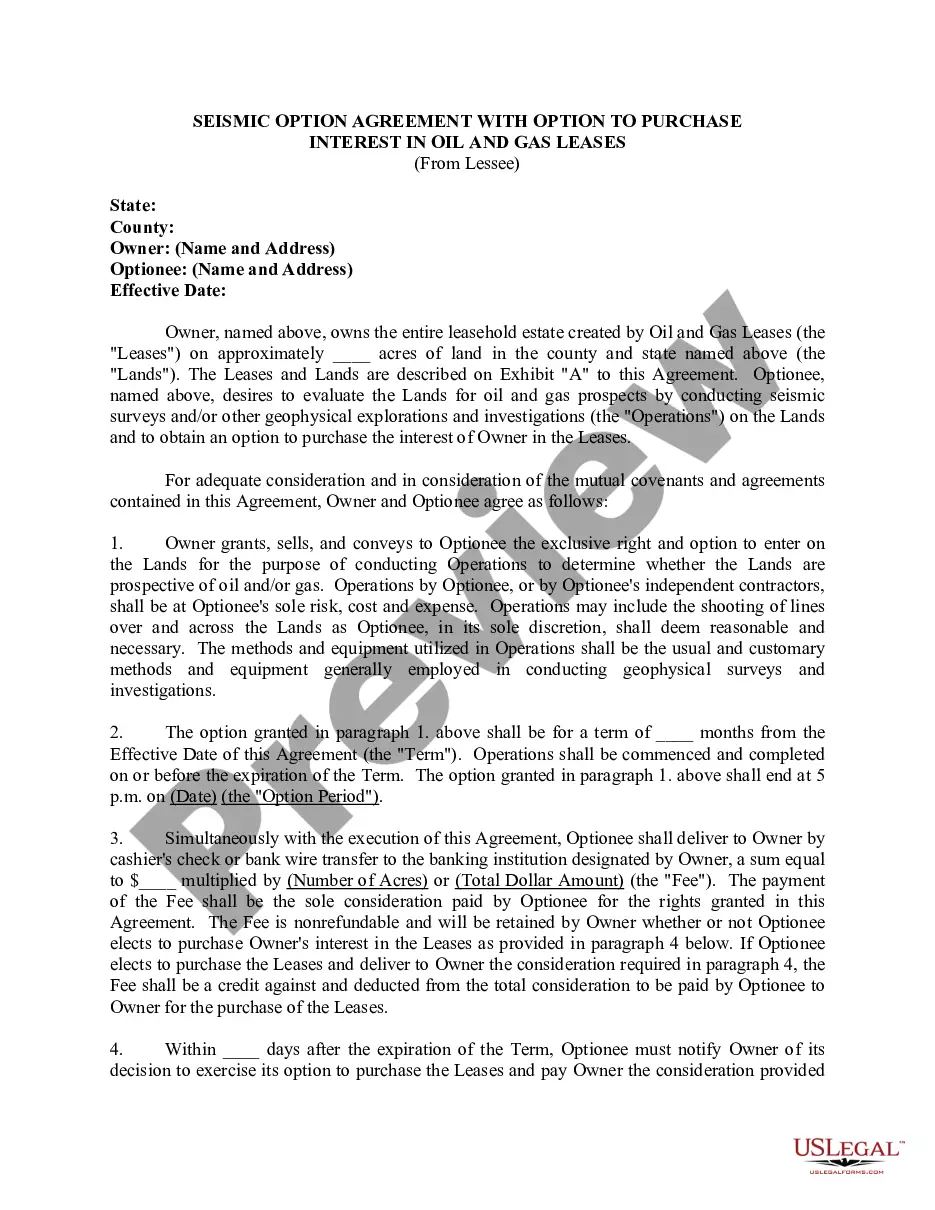
The Seismic Agreement Allowing Third Party to Conduct Seismic Operation on Grantor's Lease is a legal document that permits Grantee to perform a 3-D Seismic Survey on the leased lands owned by Grantor. This form outlines the terms and conditions agreed upon by both parties and is essential for formalizing permission before any seismic activities commence. Unlike other land-related agreements, this form specifically focuses on seismic operations and the related data handling between the Grantor and Grantee.
What’s included in this form
- Identification of Grantor and Grantee, including full names and addresses.
- Description of the leased lands and surrounding areas involved in the seismic survey.
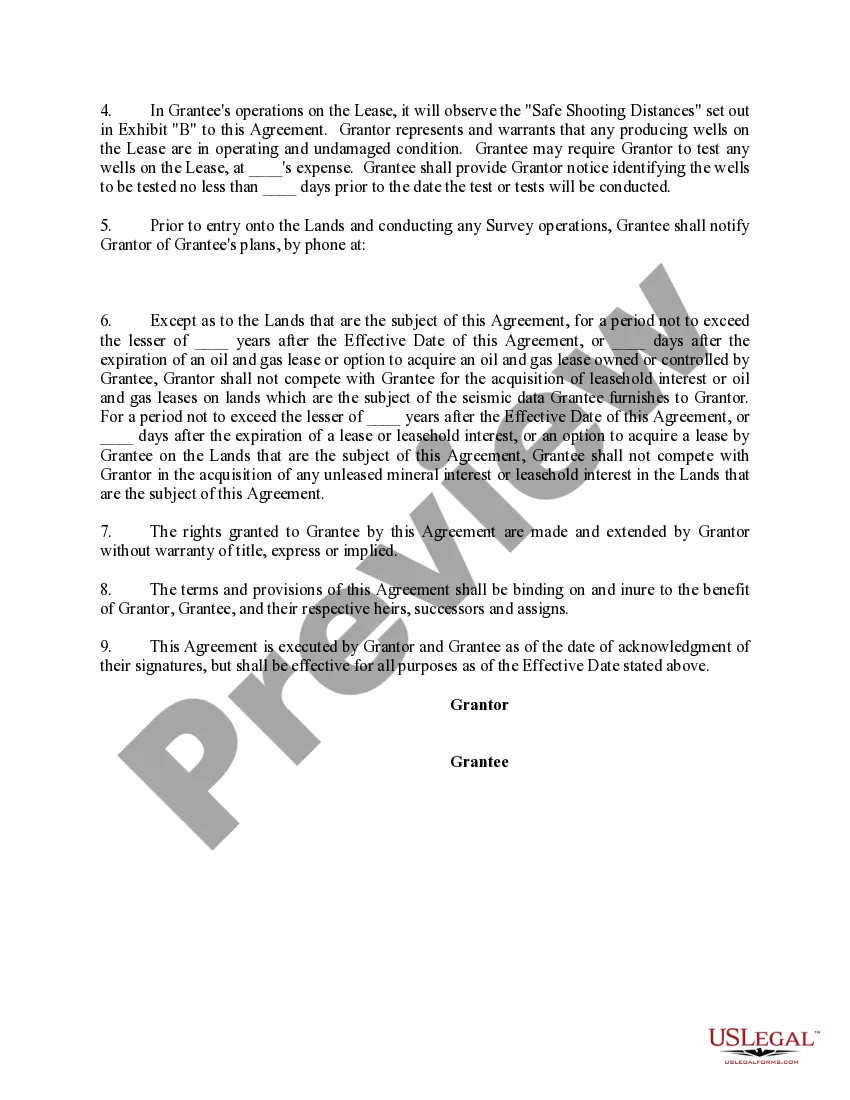
- Terms regarding the conduct of the seismic survey, including timelines and indemnification clauses.
- Confidentiality obligations concerning the seismic data and interpretations.
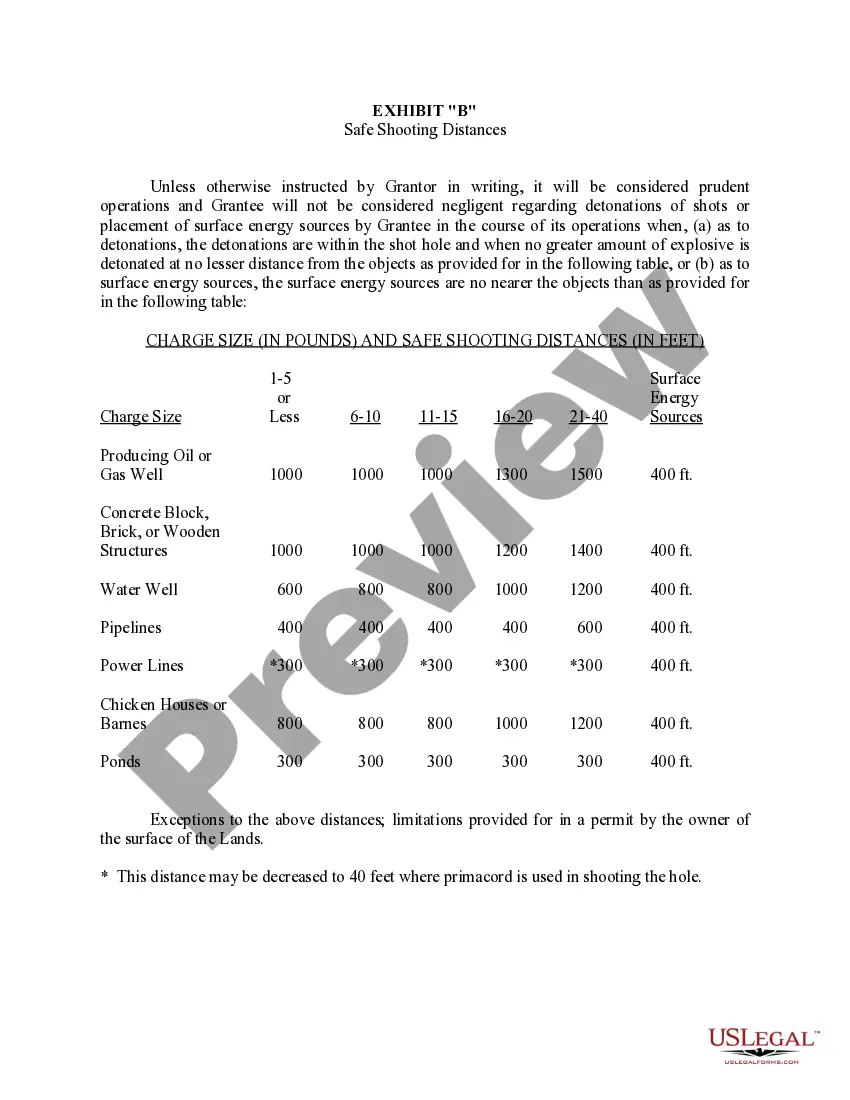
- Regulations regarding safe distances and well testing requirements.
- Non-competition clauses between Grantor and Grantee for specified periods.

When this form is needed
This form should be used in situations where a landowner (Grantor) agrees to allow a third party (Grantee) to conduct seismic surveys on their property. It is particularly useful when exploring oil and gas leasing opportunities, as it formalizes the permissions needed to assess the subsurface geology and resource potential of the land. Scenarios include but are not limited to oil and gas companies assessing lands for exploration and development purposes.
Who this form is for
This form is intended for:
- Landowners (Grantors) who lease their property for seismic activities.
- Exploration companies (Grantees) looking to conduct seismic surveys for oil and gas development.
- Attorneys representing either party in the negotiation of such agreements.
How to complete this form
- Identify and enter the names and addresses of the Grantor and Grantee.
- Specify the effective date of the agreement.
- Describe the leased lands and any adjacent areas that will be included in the seismic survey.
- Detail the terms regarding the survey execution, including timelines and obligations for data sharing.
- Sign the agreement for it to become legally binding, ensuring all parties understand their rights and obligations.
Notarization guidance
This form usually doesn’t need to be notarized. However, local laws or specific transactions may require it. Our online notarization service, powered by Notarize, lets you complete it remotely through a secure video session, available 24/7.
Get your form ready online
Our built-in tools help you complete, sign, share, and store your documents in one place.
Make edits, fill in missing information, and update formatting in US Legal Forms—just like you would in MS Word.
Download a copy, print it, send it by email, or mail it via USPS—whatever works best for your next step.
Sign and collect signatures with our SignNow integration. Send to multiple recipients, set reminders, and more. Go Premium to unlock E-Sign.
If this form requires notarization, complete it online through a secure video call—no need to meet a notary in person or wait for an appointment.
We protect your documents and personal data by following strict security and privacy standards.

Make edits, fill in missing information, and update formatting in US Legal Forms—just like you would in MS Word.

Download a copy, print it, send it by email, or mail it via USPS—whatever works best for your next step.

Sign and collect signatures with our SignNow integration. Send to multiple recipients, set reminders, and more. Go Premium to unlock E-Sign.

If this form requires notarization, complete it online through a secure video call—no need to meet a notary in person or wait for an appointment.

We protect your documents and personal data by following strict security and privacy standards.
Common mistakes
- Failing to clearly define the boundaries of the lands to be surveyed.
- Omitting required timeframes for completing the seismic survey.
- Not including confidentiality clauses related to the seismic data.
- Neglecting to identify the obligations for indemnification clearly.
- Overlooking state-specific regulations that may apply to seismic operations.
Why use this form online
- Convenient access to legally vetted templates created by licensed attorneys.
- Editability allows for customization based on specific agreements between parties.
- Immediate download and use, speeding up negotiation processes.
- Reliable and up-to-date legal forms that comply with current laws.
Looking for another form?

Form popularity
FAQ
In real estate, the grantor is the property seller who conveys property to a buyer, or grantee. If there is more than one seller on the deed, then the sellers are co-grantors. In estate planning, the term grantor is most often used with regards to trusts.
The Grantor is any person conveying or encumbering, whom any Lis Pendens, Judgments, Writ of Attachment, or Claims of Separate or Community Property shall be placed on record. The Grantor is the seller (on deeds), or borrower (on mortgages). The Grantor is usually the one who signed the document.
The grantor (as an individual or couple) transfers their assets to an irrevocable trust. However, unlike other irrevocable trusts, the grantor can be the income beneficiary. Their children or spouse would be the residual beneficiaries.
A grantor trust is a trust in which the individual who creates the trust is the owner of the assets and property for income and estate tax purposes. Grantor trust rules are the rules that apply to different types of trusts. All grantor trusts are revocable living trusts, while the grantor is alive.
Unlike a grantor trust, which is taxed to the grantor, a nongrantor trust is taxed as its own separate taxpaying entity. The trustee of the trust has the trust file its own tax return, Form 1041. On that return goes all the trust's items of income and expense.
A grantor is an individual or other entity that creates a trust (i.e., the individual whose assets are put into the trust) regardless of whether the grantor also functions as the trustee. The grantor may also be referred to as the settlor, trustmaker, or trustor.
Grantors the party who transfers title in real property (seller, giver) to another (buyer, recipient, donee) by grant deed or quitclaim deed. Guarantors a person or entity that agrees to be responsible for another's debt or performance under a contract if the other fails to pay or perform.
A grantor trust is a trust in which the individual who creates the trust is the owner of the assets and property for income and estate tax purposes. Grantor trust rules are the rules that apply to different types of trusts. All grantor trusts are revocable living trusts, while the grantor is alive.