Motion to avoid judicial lien - passive notice
What this document covers
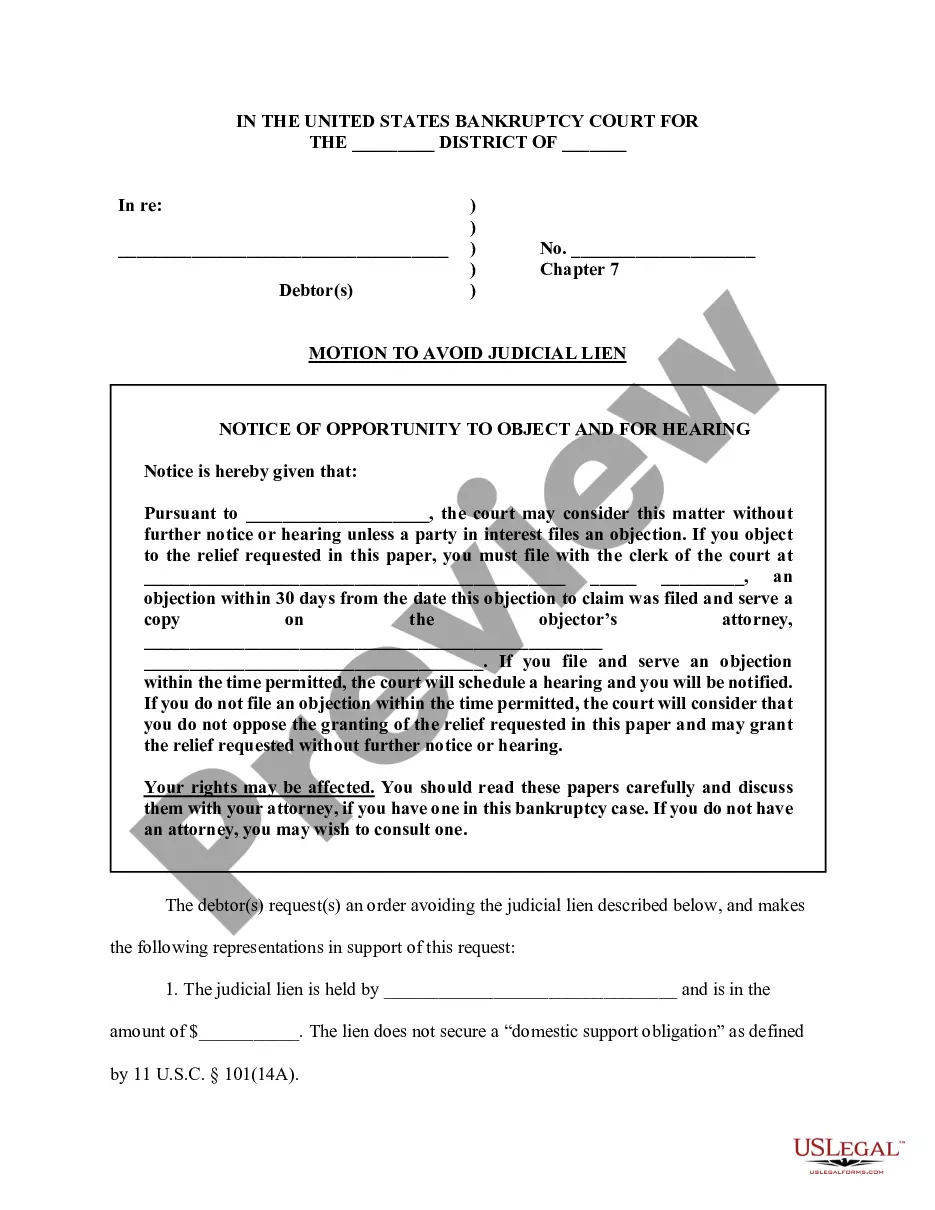
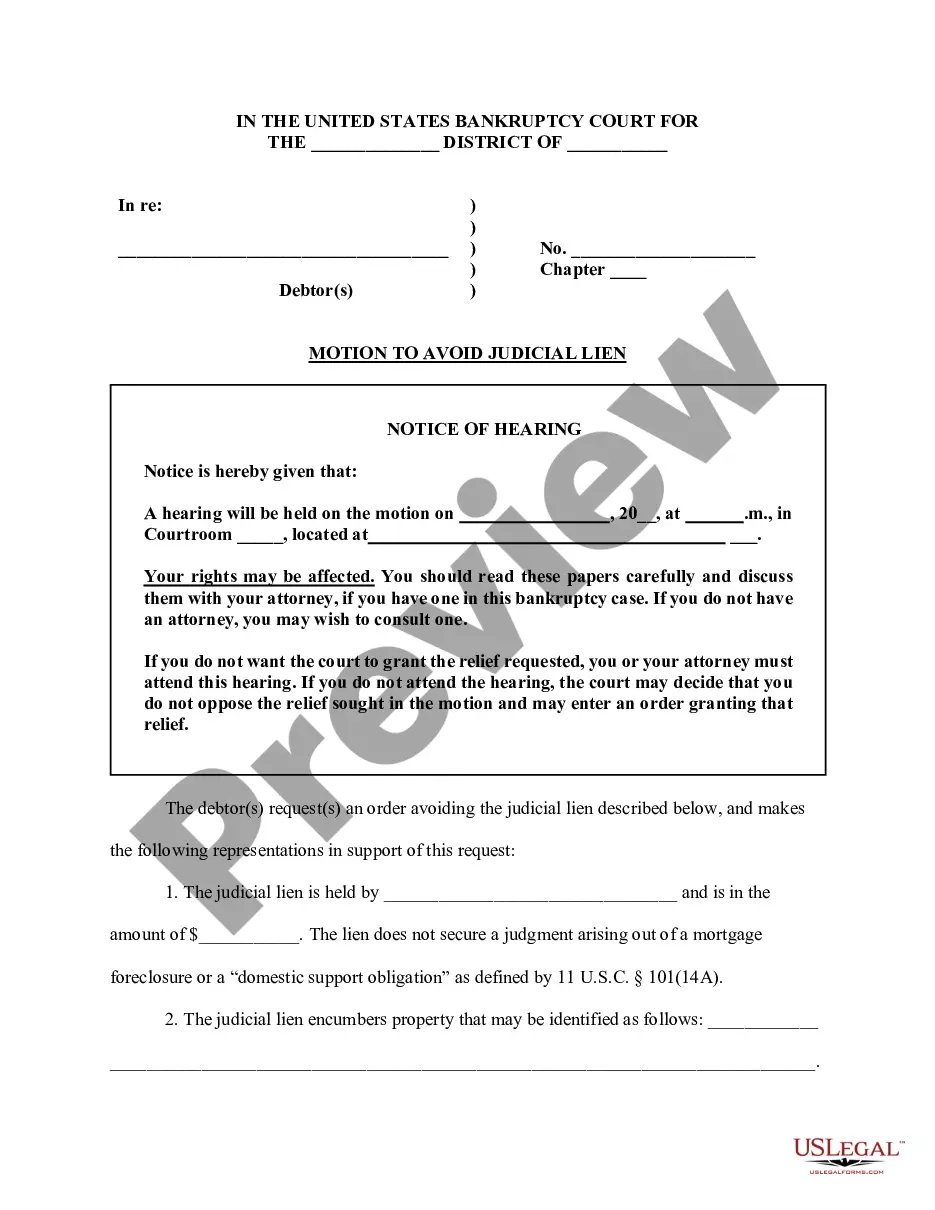
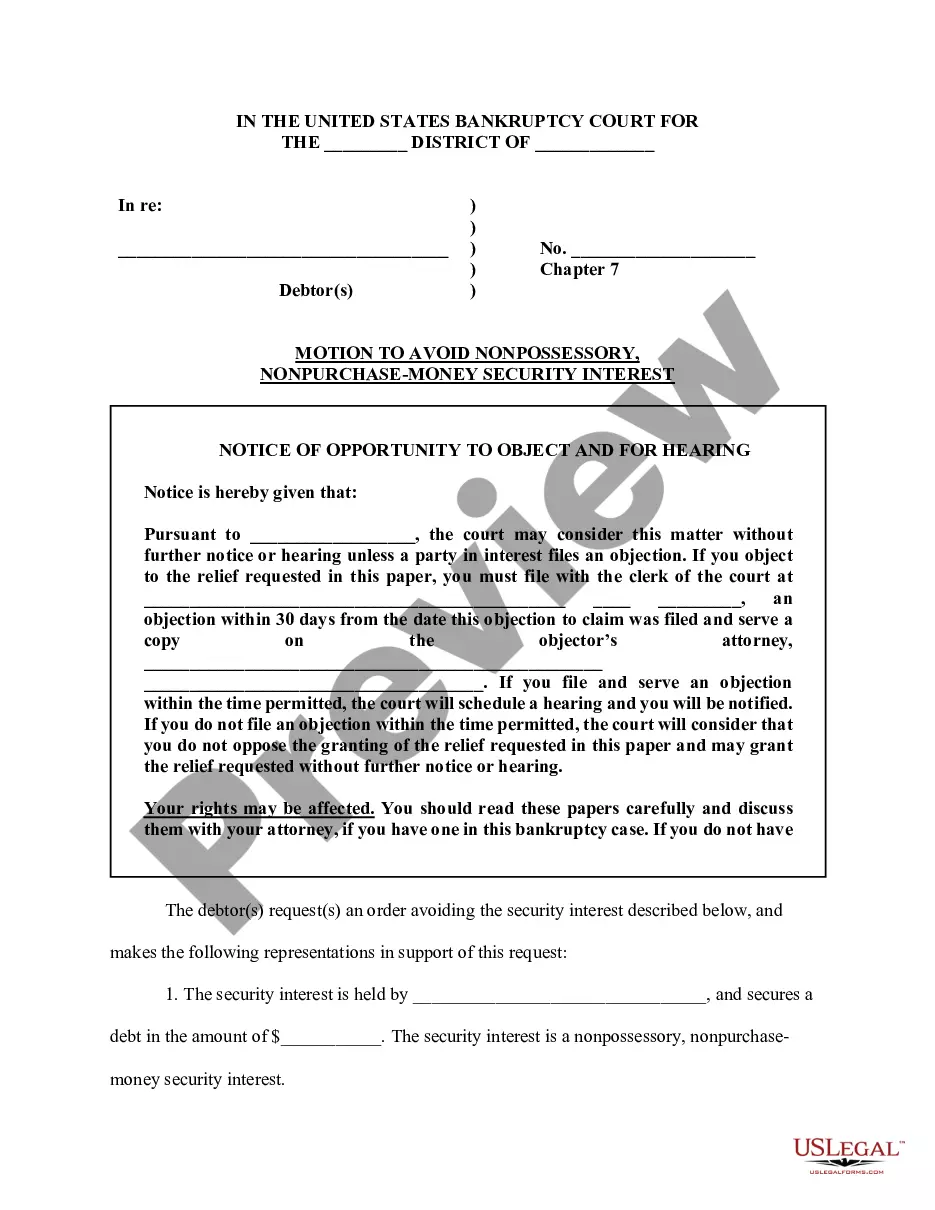
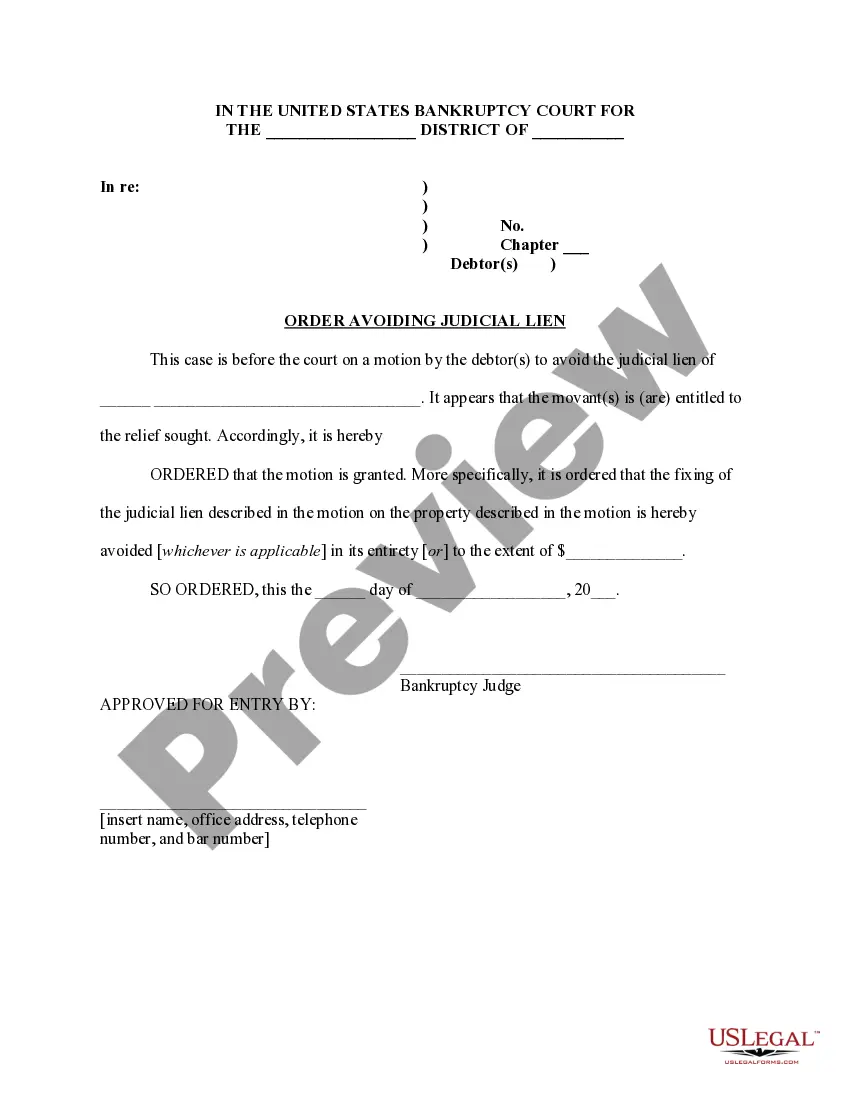
The Motion to Avoid Judicial Lien - Passive Notice is a legal document used in bankruptcy proceedings to request the court to eliminate a judicial lien on property. A judicial lien can impair your ability to fully benefit from exempt property. This form allows debtors to contest such liens and ensures that their rights are protected during bankruptcy. It is distinct from other forms of lien avoidance as it specifically addresses judicial liens and includes a notice component to inform interested parties of the opportunity to object.
Key parts of this document
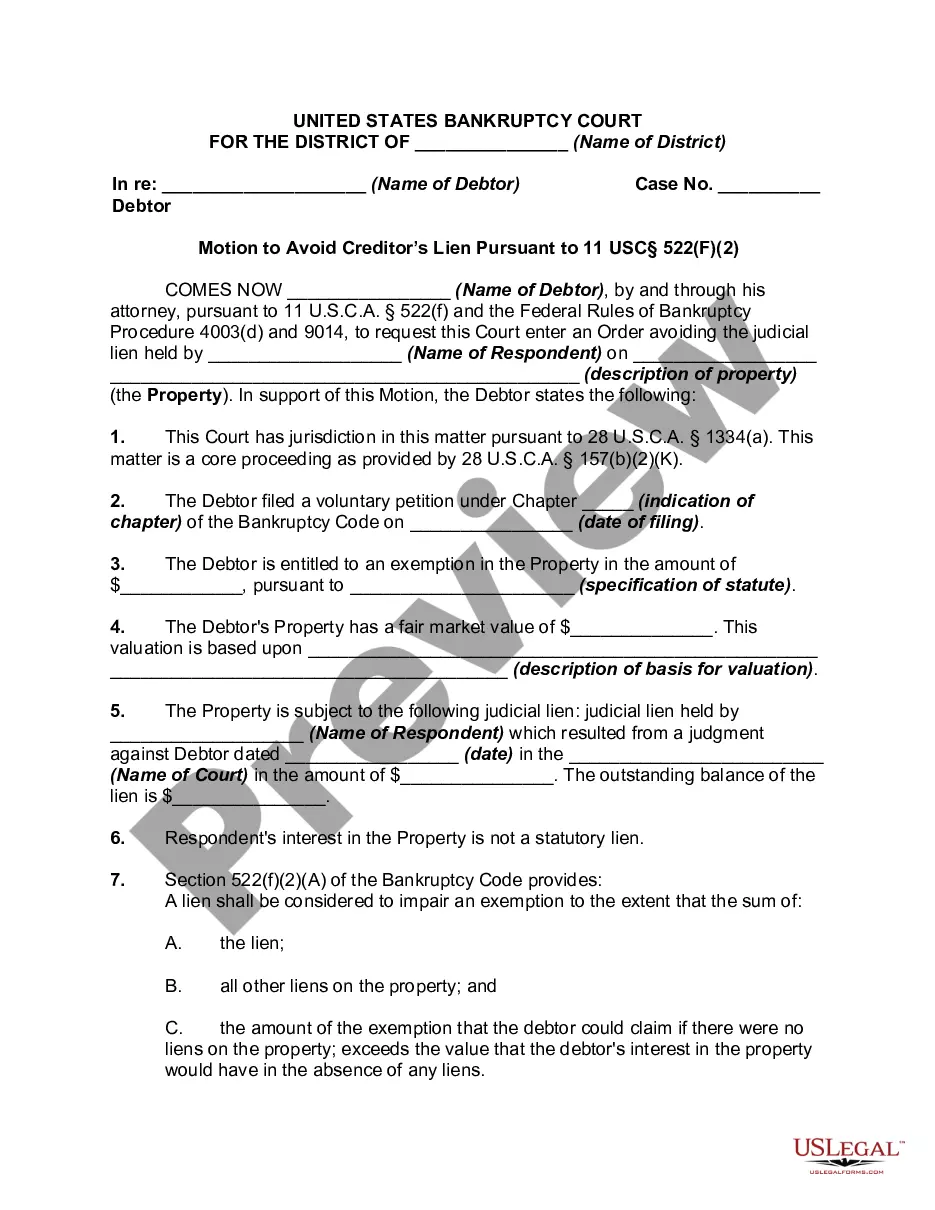
- Details about the judicial lien, including the holder and the lien amount.
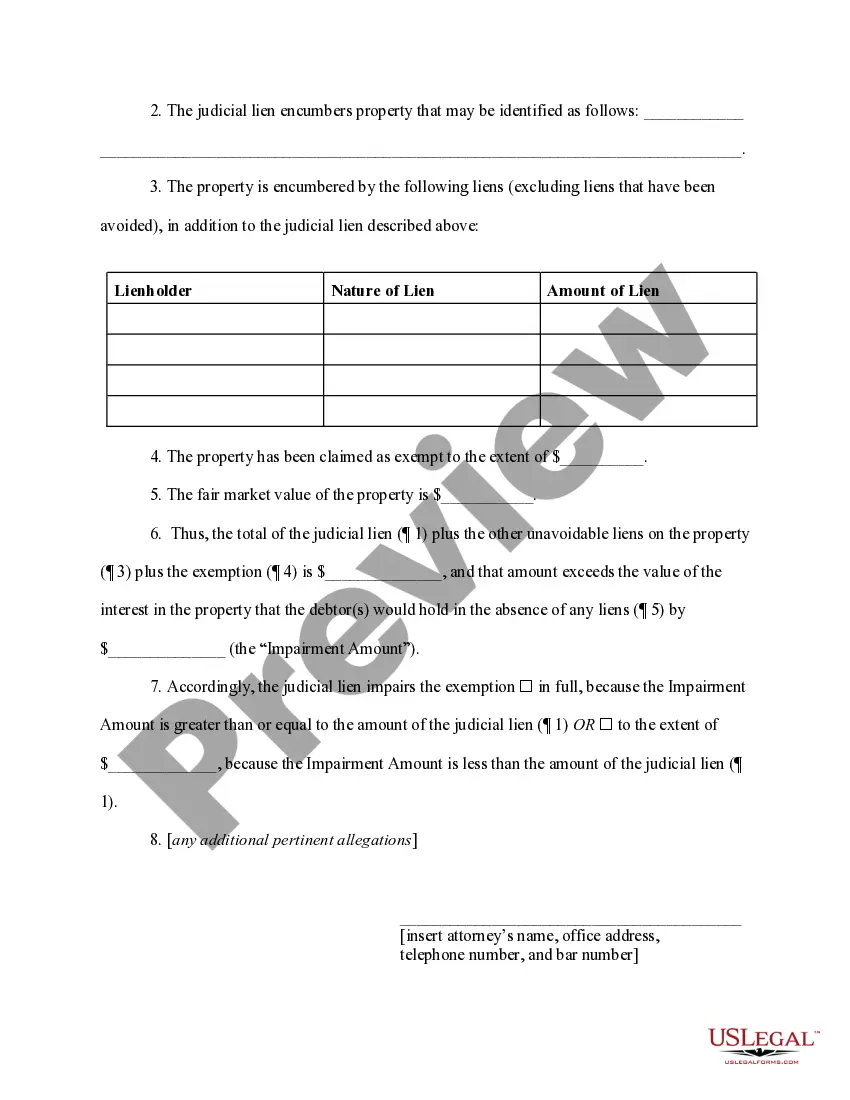
- Identification of the encumbered property.
- Listing of additional liens on the property.
- Claim of exemption amount related to the property.
- Fair market value of the property.
- Calculation of impairment amount related to the exemption and liens.
When to use this document
This form should be used when you wish to contest a judicial lien that affects your exempt property during bankruptcy proceedings. It is necessary when the total amount of judicial liens, combined with other unavoidable liens and exemptions, exceeds the property's fair market value, impairing your exemption rights. Completing this form is essential to formally request the court's intervention in removing the lien.
Who can use this document
- Individuals filing for Chapter 7 bankruptcy seeking to avoid a judicial lien.
- Debtors whose exempt property is encumbered by a judicial lien.
- Those facing financial hardships that impact their ability to maintain property ownership.
How to complete this form
- Fill in the case information including the district, debtor's name(s), and case number.
- Provide details of the judicial lien including the lienholder's name and the amount of the lien.
- Specify the property that is encumbered by the lien and any additional liens on that property.
- Claim an exemption amount and indicate the fair market value of the property.
- Calculate the total impairment amount to determine how it impacts your exemption.
Is notarization required?
Notarization is not commonly needed for this form. However, certain documents or local rules may make it necessary. Our notarization service, powered by Notarize, allows you to finalize it securely online anytime, day or night.
Get your form ready online
Our built-in tools help you complete, sign, share, and store your documents in one place.
Make edits, fill in missing information, and update formatting in US Legal Forms—just like you would in MS Word.
Download a copy, print it, send it by email, or mail it via USPS—whatever works best for your next step.
Sign and collect signatures with our SignNow integration. Send to multiple recipients, set reminders, and more. Go Premium to unlock E-Sign.
If this form requires notarization, complete it online through a secure video call—no need to meet a notary in person or wait for an appointment.
We protect your documents and personal data by following strict security and privacy standards.

Make edits, fill in missing information, and update formatting in US Legal Forms—just like you would in MS Word.

Download a copy, print it, send it by email, or mail it via USPS—whatever works best for your next step.

Sign and collect signatures with our SignNow integration. Send to multiple recipients, set reminders, and more. Go Premium to unlock E-Sign.

If this form requires notarization, complete it online through a secure video call—no need to meet a notary in person or wait for an appointment.

We protect your documents and personal data by following strict security and privacy standards.
Common mistakes
- Failing to accurately calculate the impairment amount.
- Not providing full details of all additional liens on the property.
- Missing the deadline to file objections or responses from interested parties.
Why use this form online
- Convenience of completing the form from home without needing to visit a legal office.
- Editability allows for easy corrections or updates to your information.
- Access to professionally drafted documents increases the likelihood of acceptance by the court.
Legal use & context
- This form is crucial for protecting debtors' exemption rights during bankruptcy proceedings.
- Failure to properly file this motion could result in the judicial lien remaining attached to the property.
- It serves as a formal request to the court, ensuring that all involved parties are notified of the proceedings.
What to keep in mind
- The Motion to Avoid Judicial Lien - Passive Notice protects debtors' rights in bankruptcy.
- Accurate completion of the form ensures a higher chance of court approval.
- Consultation with a legal expert is recommended to navigate state-specific rules effectively.
Glossary of terms
- Judicial lien: A court-ordered claim against property that secures payment of a debt.
- Exemption: Property that a debtor is allowed to keep during bankruptcy proceedings, based on state law.
- Impairment amount: The difference between the value of the debtor's interest in the property and the total amount of liens against it.