Putting It All Together - Indemnification Provisions
What is this form?
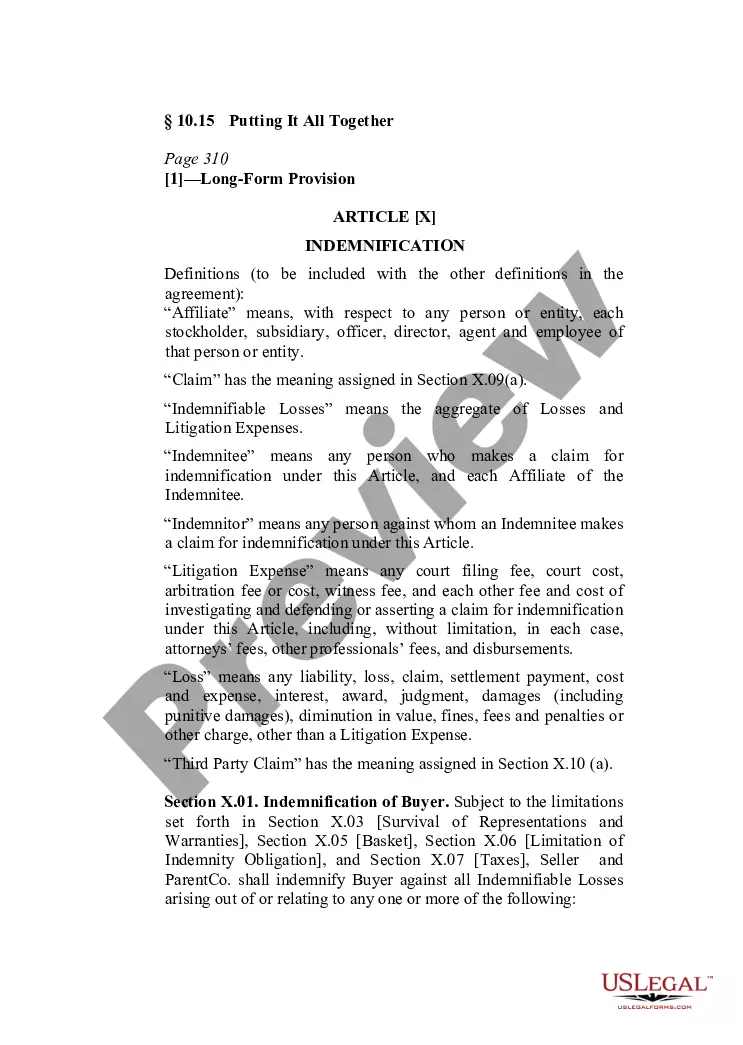
This form, titled Putting It All Together - Indemnification Provisions, is designed to outline indemnification procedures and responsibilities within a contract. It combines several standard clauses that define the obligations of indemnifying parties, descriptions of losses, and processes for handling claims. This form aims to protect all parties involved by clearly defining terms and conditions related to indemnity, which differs from other contract forms by focusing specifically on indemnification processes and liabilities.
Form components explained
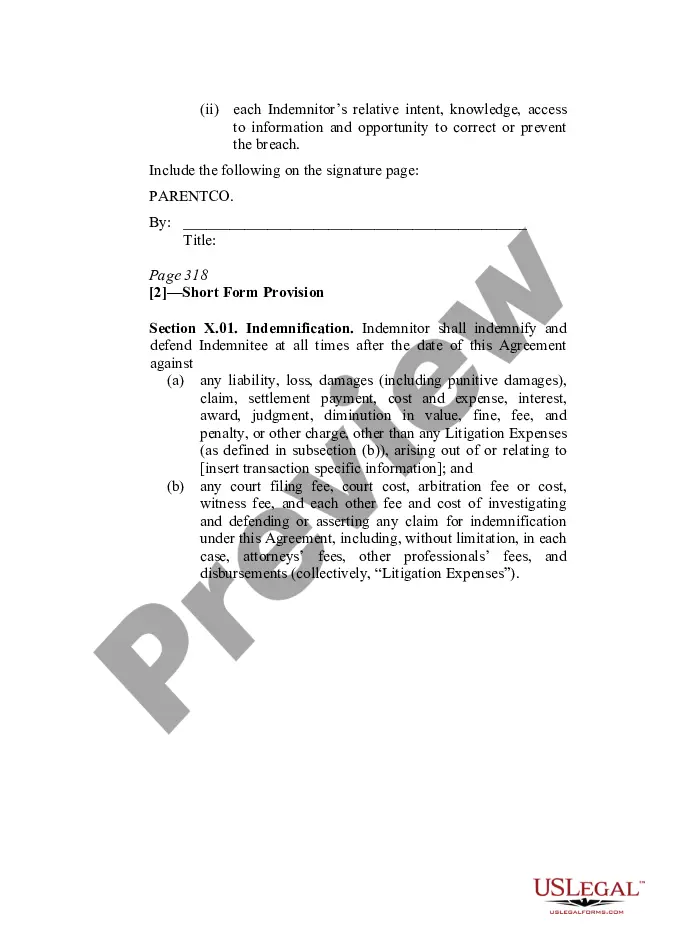
- Definitions of key terms such as Indemnitee, Indemnitor, and Indemnifiable Losses.
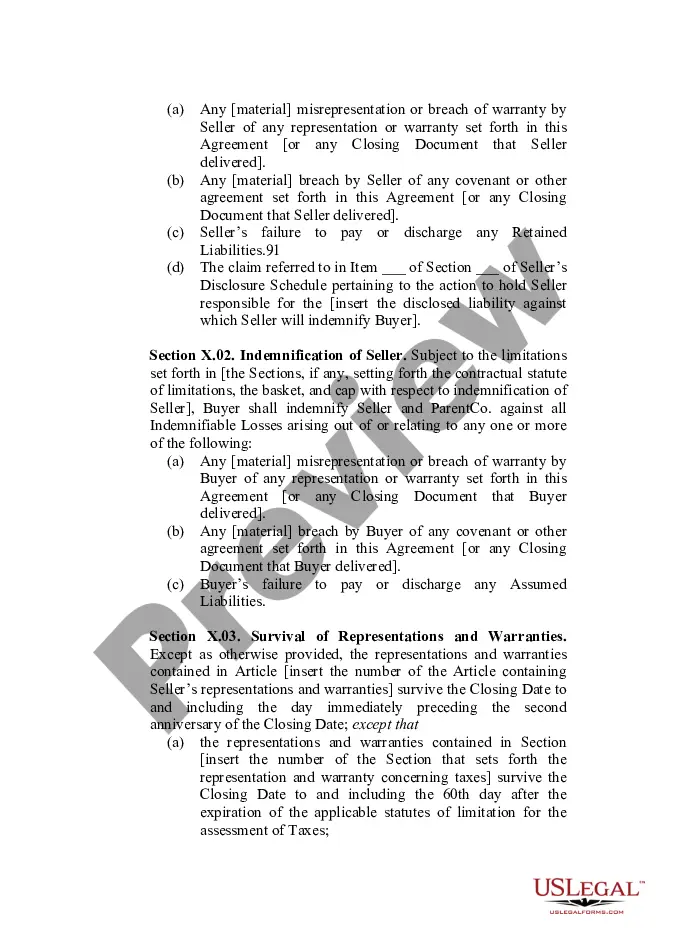
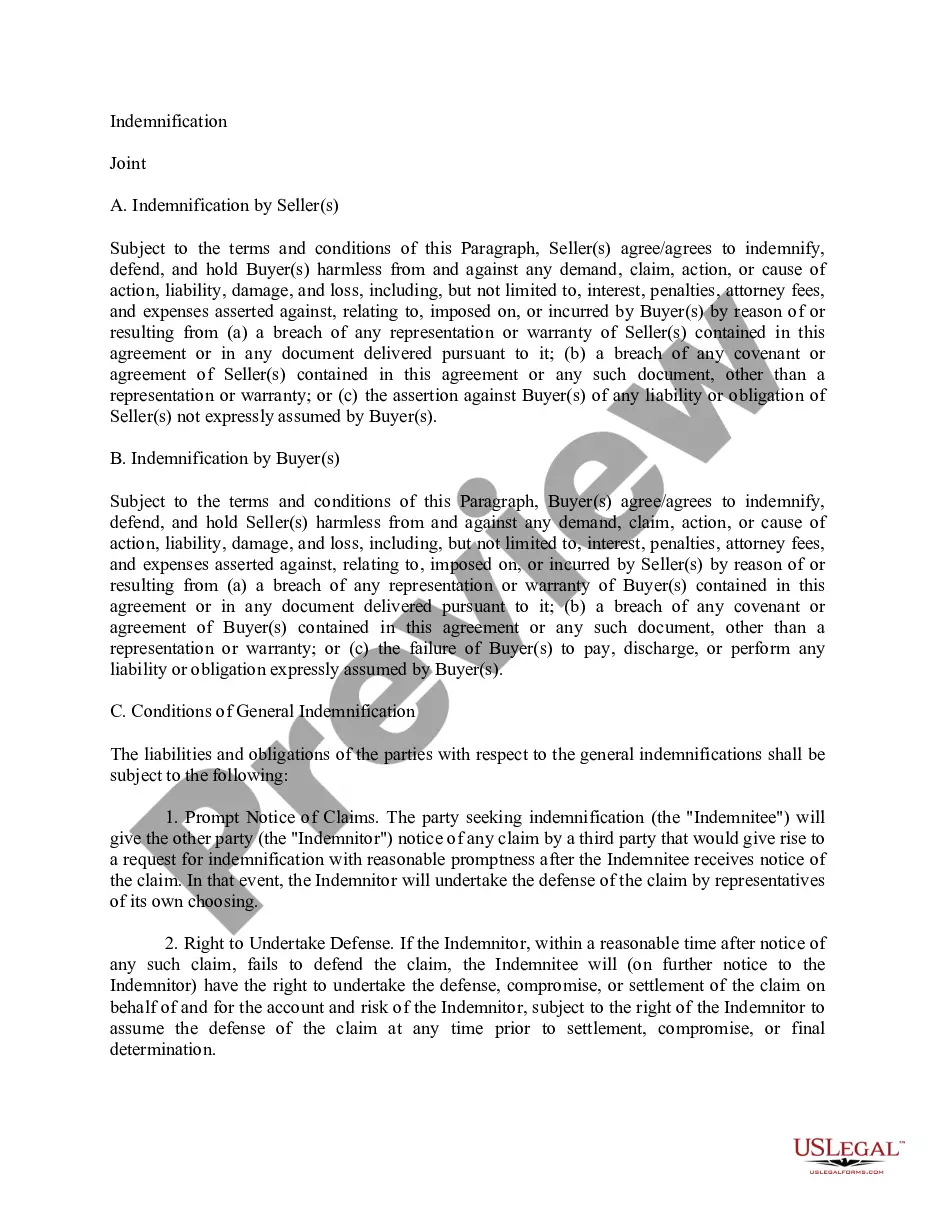
- Indemnification clauses for both Buyer and Seller, detailing obligations and circumstances covered.
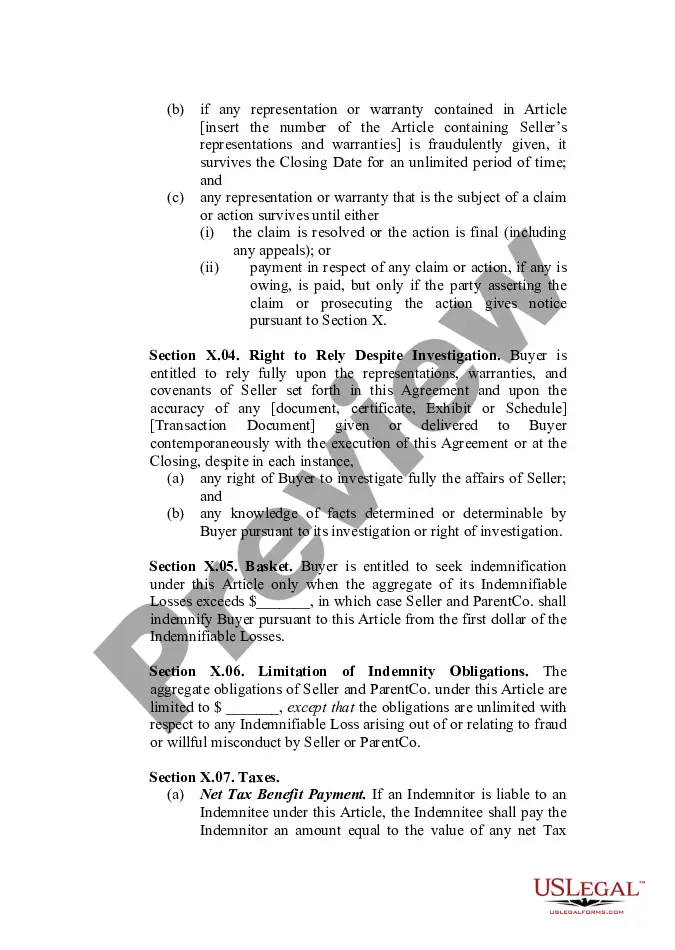
- Survival of representations and warranties periods for claims.
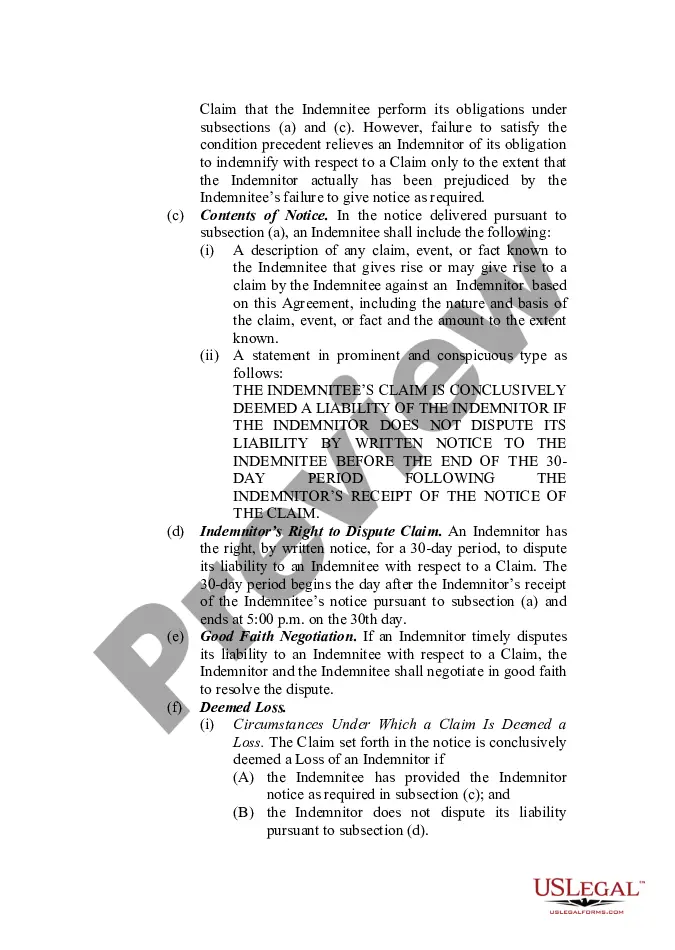
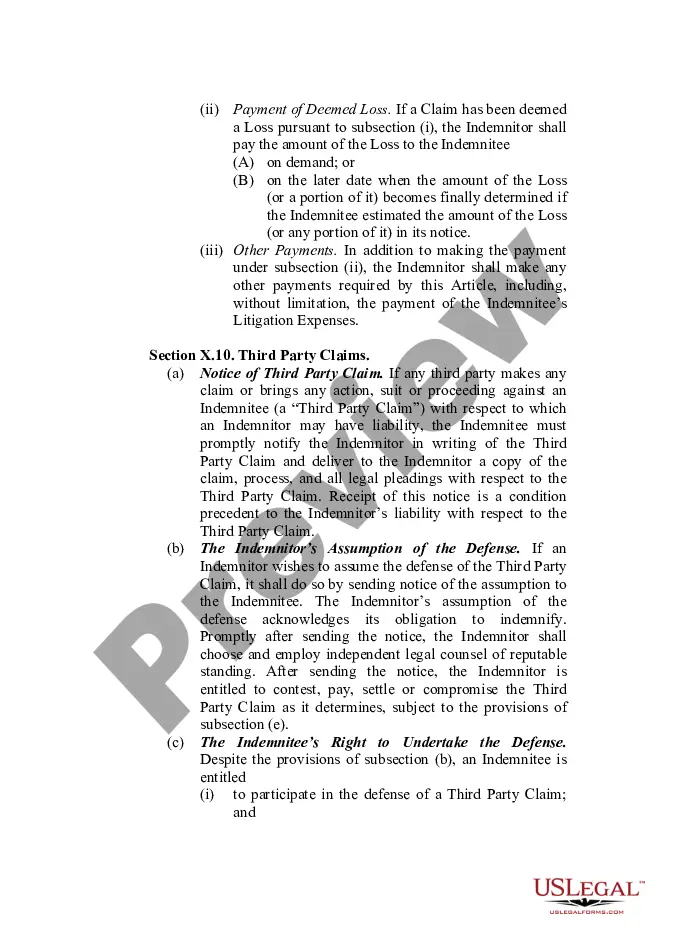
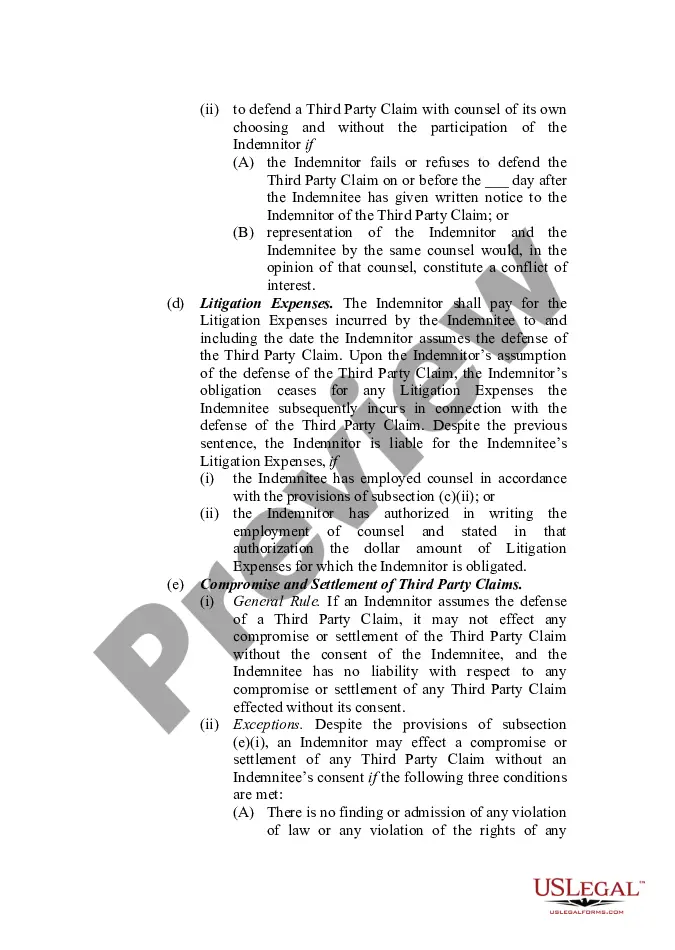
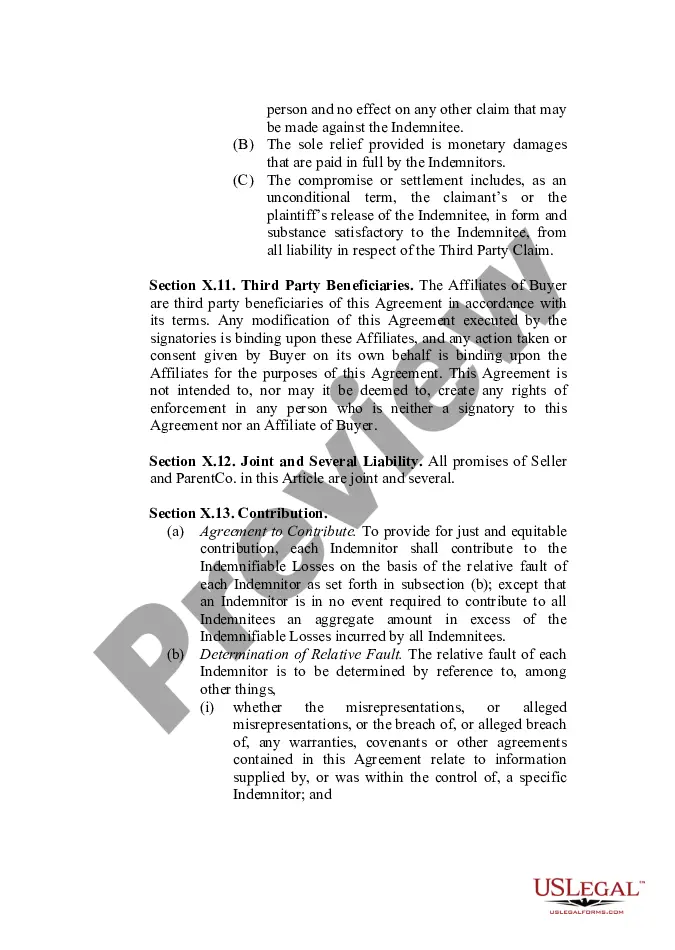
- Provisions for handling third-party claims, including notification processes and defense responsibilities.
- Procedures for resolving disputes over claims and determining liability.
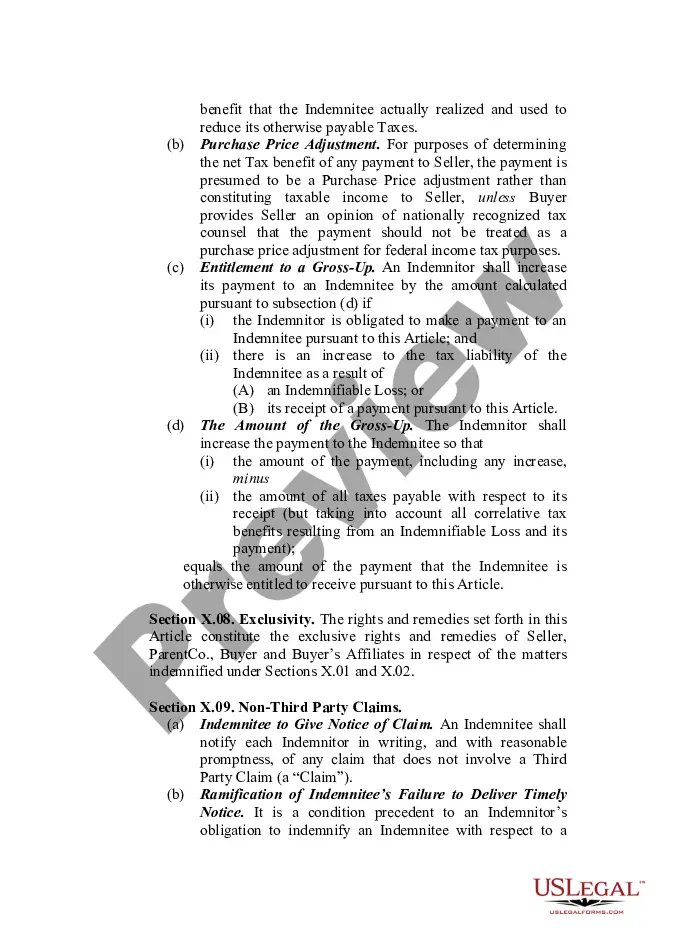
- Limitations and exclusions related to indemnity obligations.
When this form is needed
This form should be used in situations where parties enter into a contract involving potential liabilities. It is particularly relevant when one party may need to be indemnified for losses resulting from misrepresentations or breaches of contract by the other party. Use this form to ensure that indemnification terms are clearly outlined and agreed upon, thereby minimizing future disputes and uncertainties in the business relationship.
Who needs this form
- Business owners entering into contracts where indemnification is necessary.
- Legal professionals drafting or reviewing indemnification clauses in contracts.
- Companies engaged in transactions that involve significant liabilities or risks.
- Individuals or entities seeking to protect themselves against potential financial losses stemming from contract performance.
Steps to complete this form
- Identify the parties involved in the contract and clearly define their roles as Indemnitee and Indemnitor.
- Fill in the specific indemnification provisions related to Buyer and Seller obligations.
- Specify the time limits for survival of representations and warranties under this agreement.
- Detail processes for handling third-party claims, including communication requirements.
- Outline any limitations on indemnity obligations that may apply.
Does this document require notarization?
Notarization is not commonly needed for this form. However, certain documents or local rules may make it necessary. Our notarization service, powered by Notarize, allows you to finalize it securely online anytime, day or night.
Get your form ready online
Our built-in tools help you complete, sign, share, and store your documents in one place.
Make edits, fill in missing information, and update formatting in US Legal Forms—just like you would in MS Word.
Download a copy, print it, send it by email, or mail it via USPS—whatever works best for your next step.
Sign and collect signatures with our SignNow integration. Send to multiple recipients, set reminders, and more. Go Premium to unlock E-Sign.
If this form requires notarization, complete it online through a secure video call—no need to meet a notary in person or wait for an appointment.
We protect your documents and personal data by following strict security and privacy standards.

Make edits, fill in missing information, and update formatting in US Legal Forms—just like you would in MS Word.

Download a copy, print it, send it by email, or mail it via USPS—whatever works best for your next step.

Sign and collect signatures with our SignNow integration. Send to multiple recipients, set reminders, and more. Go Premium to unlock E-Sign.

If this form requires notarization, complete it online through a secure video call—no need to meet a notary in person or wait for an appointment.

We protect your documents and personal data by following strict security and privacy standards.
Typical mistakes to avoid
- Failing to clearly define all key terms, which can lead to ambiguity in the agreement.
- Not specifying survival periods for representations and warranties accurately.
- Neglecting to state the notice requirements for claims, leading to potential disputes.
- Overlooking state-specific laws that may influence the enforceability of indemnity clauses.
Why complete this form online
- Convenience of downloading and completing the form at your own pace.
- Editability allows for customization to meet specific contract needs.
- Reliability through professionally drafted content ensuring compliance with common legal standards.
Legal use & context
- This form provides a legal foundation for indemnification, which is enforceable in most jurisdictions.
- Clear definitions and obligations help protect parties in business agreements from unforeseen liabilities.
- Understanding the limitations outlined can help parties manage risks effectively.
Looking for another form?


Form popularity
FAQ
An indemnity is a promise by one party to compensate the other party for loss or damage suffered by the other party during the performance of the contract. An indemnity is also known as a 'hold harmless' clause as one party agrees to hold the other party harmless.
As discussed, an indemnity provision transfers risk from one party (called the indemnitee) to another party (called the indemnitor). Under an indemnity provision, the indemnitor agrees to reimburse the indemnitee for losses resulting from a claim or claims brought by a third-party.
To indemnify another party is to compensate that party for losses that that party has incurred or will incur as related to a specified incident.
Indemnity is defined by Black's Law Dictionary as a duty to make good any loss, damage, or liability incurred by another. Indemnity has a general meaning of holding one harmless; that is to say, that one party holds the other harmless for some loss or damage.
Indemnified Party means any Person seeking indemnification from another Person pursuant to Article VIII. Indemnifying Party means any Person against whom a claim for indemnification is asserted by another Person pursuant to Article VIII. Third Party Claim has the meaning set forth in Section 8.7.
Company/Business/Individual Name shall fully indemnify, hold harmless and defend _______ and its directors, officers, employees, agents, stockholders and Affiliates from and against all claims, demands, actions, suits, damages, liabilities, losses, settlements, judgments, costs and expenses (including but not
In a mutual indemnification, both parties agree to compensate the other party for losses arising out of the agreement to the extent those losses are caused by the indemnifying party's breach of the contract. In a one-way indemnification, only one party provides this indemnity in favor of the other party.
Indemnification clauses are clauses in contracts that set out to protect one party from liability if a third-party or third entity is harmed in any way. It's a clause that contractually obligates one party to compensate another party for losses or damages that have occurred or could occur in the future.
To indemnify another party is to compensate that party for losses that that party has incurred or will incur as related to a specified incident.