Indemnification Clauses: Contract for Real Property
Overview of this form
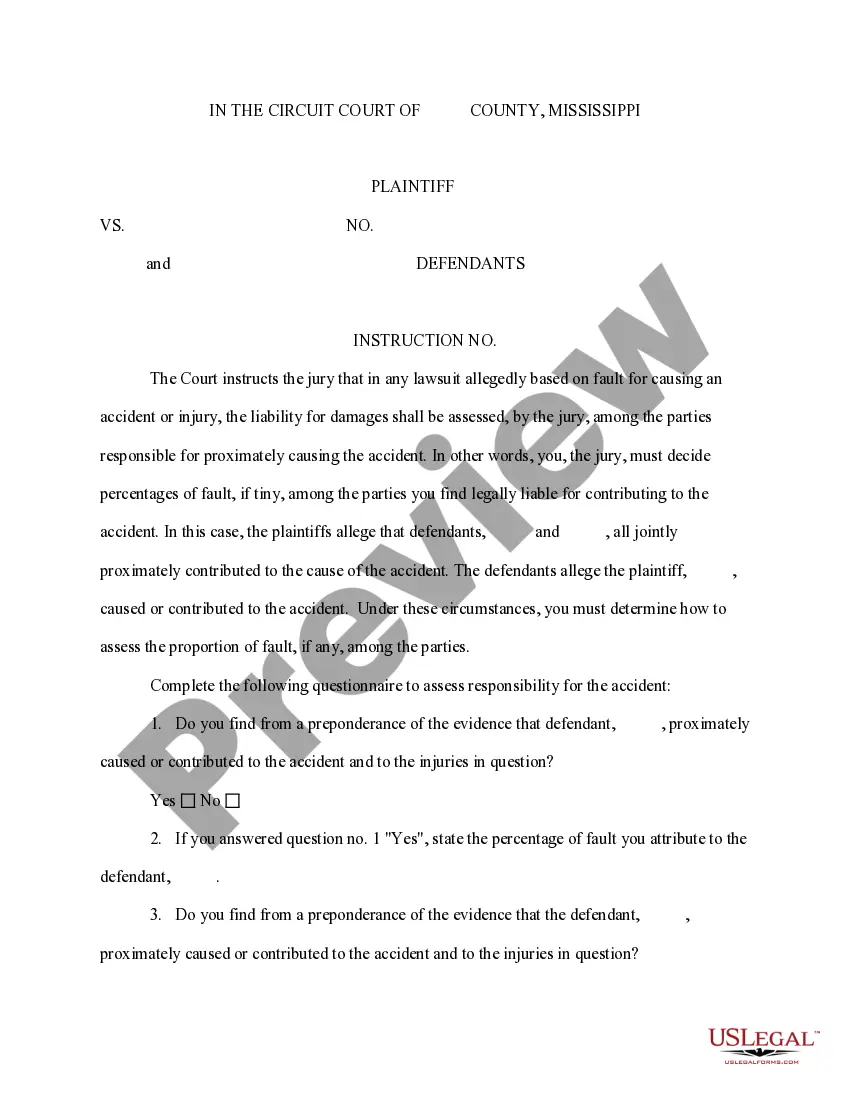
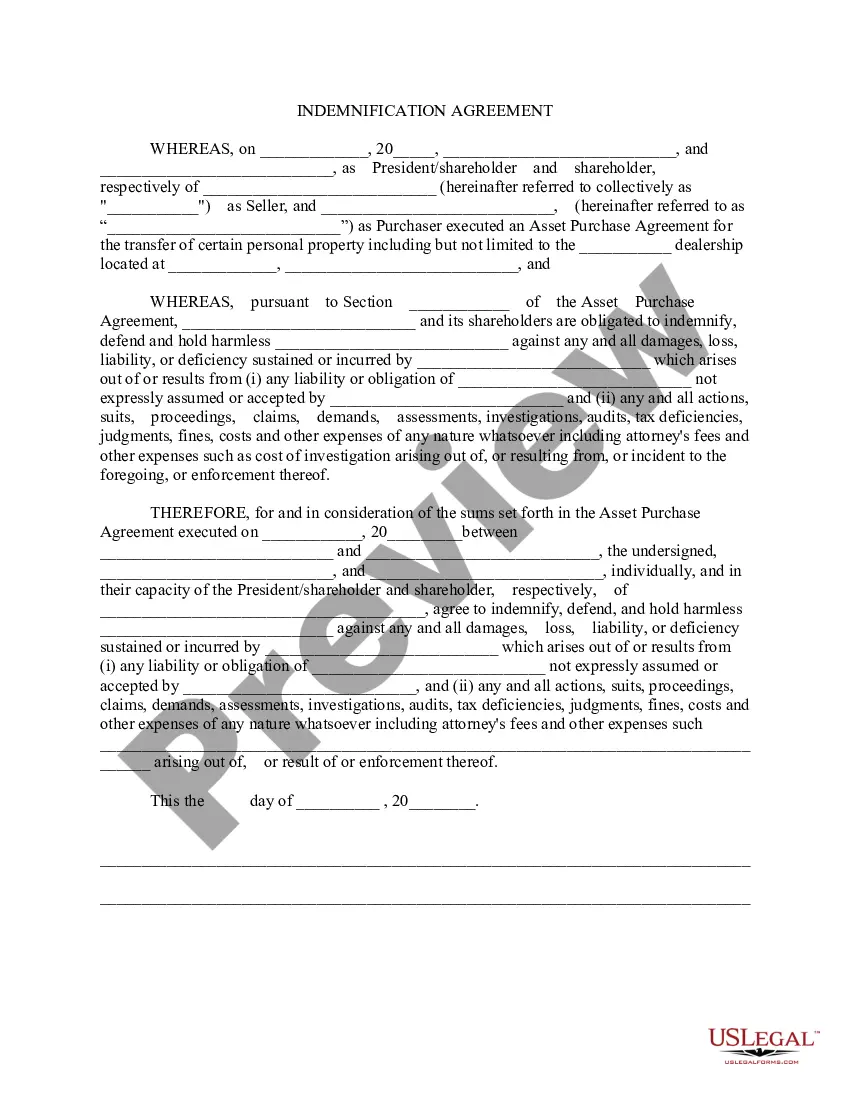
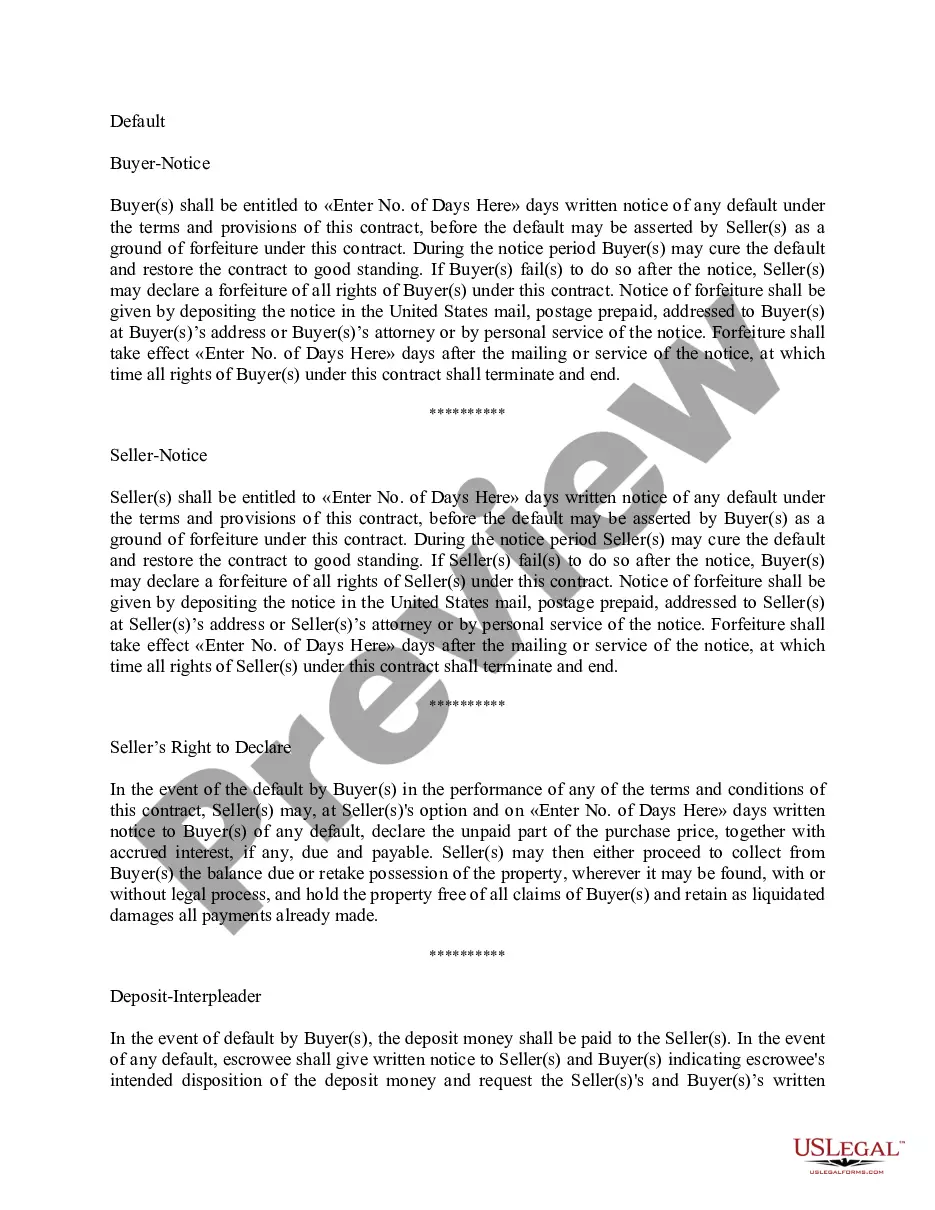
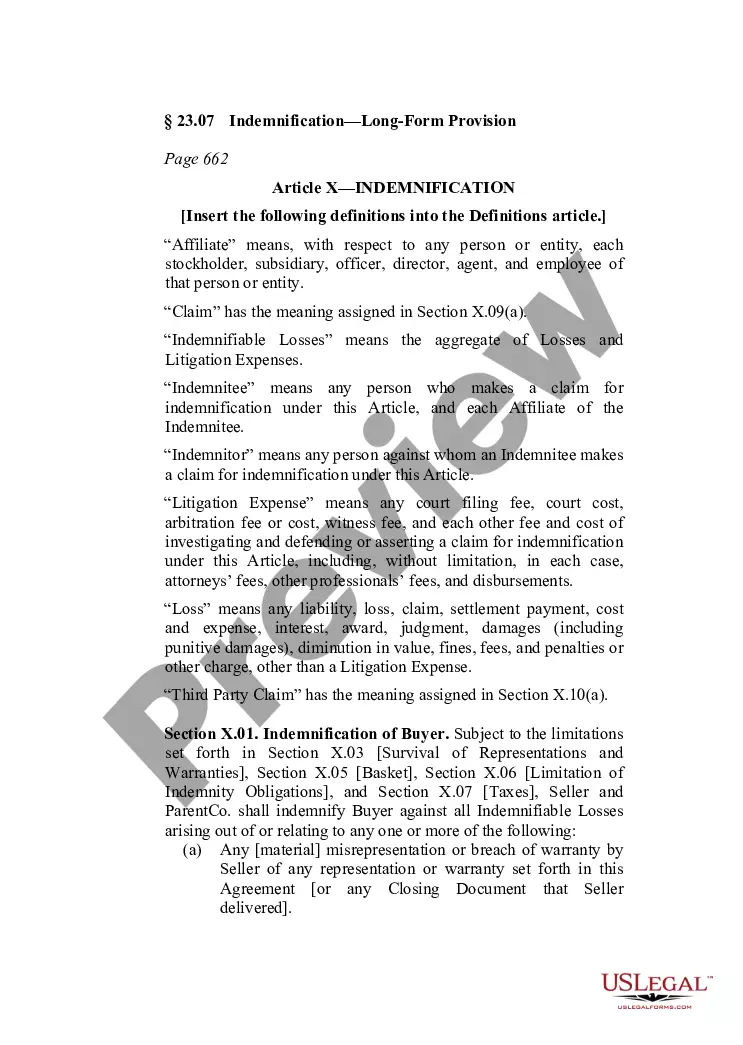
The Indemnification Clauses: Contract for Real Property form is a legal document that outlines the responsibilities each party has for indemnifying the other in a real estate transaction. It establishes the conditions under which each party agrees to compensate the other for certain damages or losses, differentiating itself from similar forms by being specifically tailored for real property transactions. Indemnification clauses help protect parties in a contract by clarifying their obligations and liability, making it an essential tool in real estate agreements.
Main sections of this form
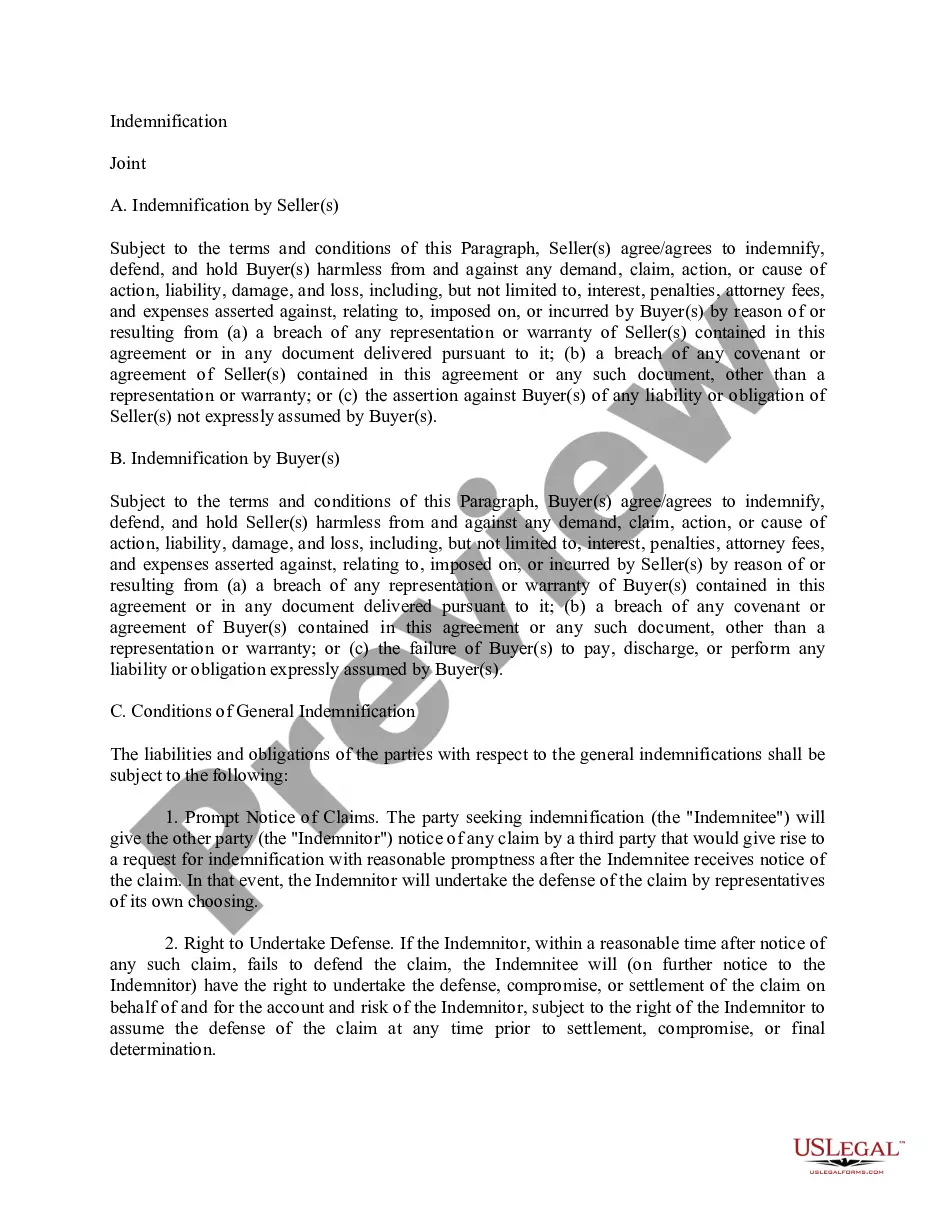
- Indemnification by Seller(s): Details the Seller's responsibility to indemnify the Buyer against certain claims.
- Indemnification by Buyer(s): Outlines the Buyer's obligation to indemnify the Seller against specified claims.
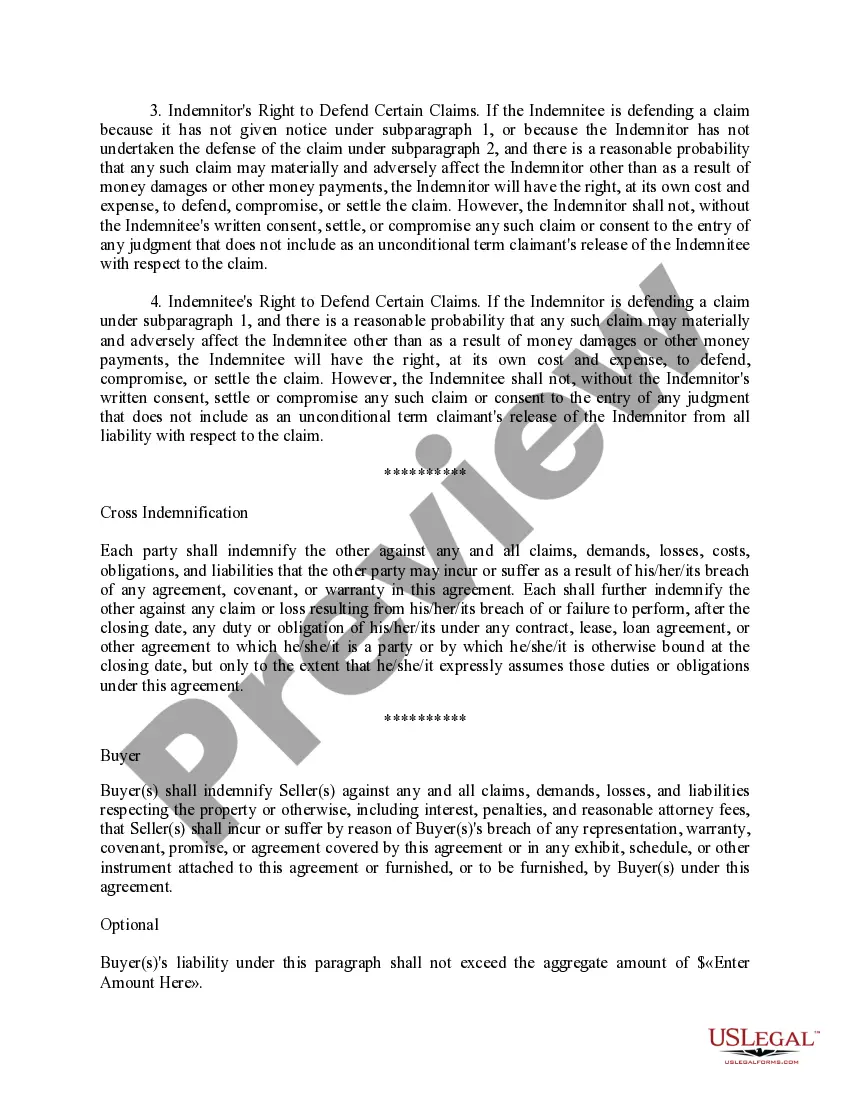
- Conditions of General Indemnification: Specifies procedures for providing notice of claims and taking defense actions.
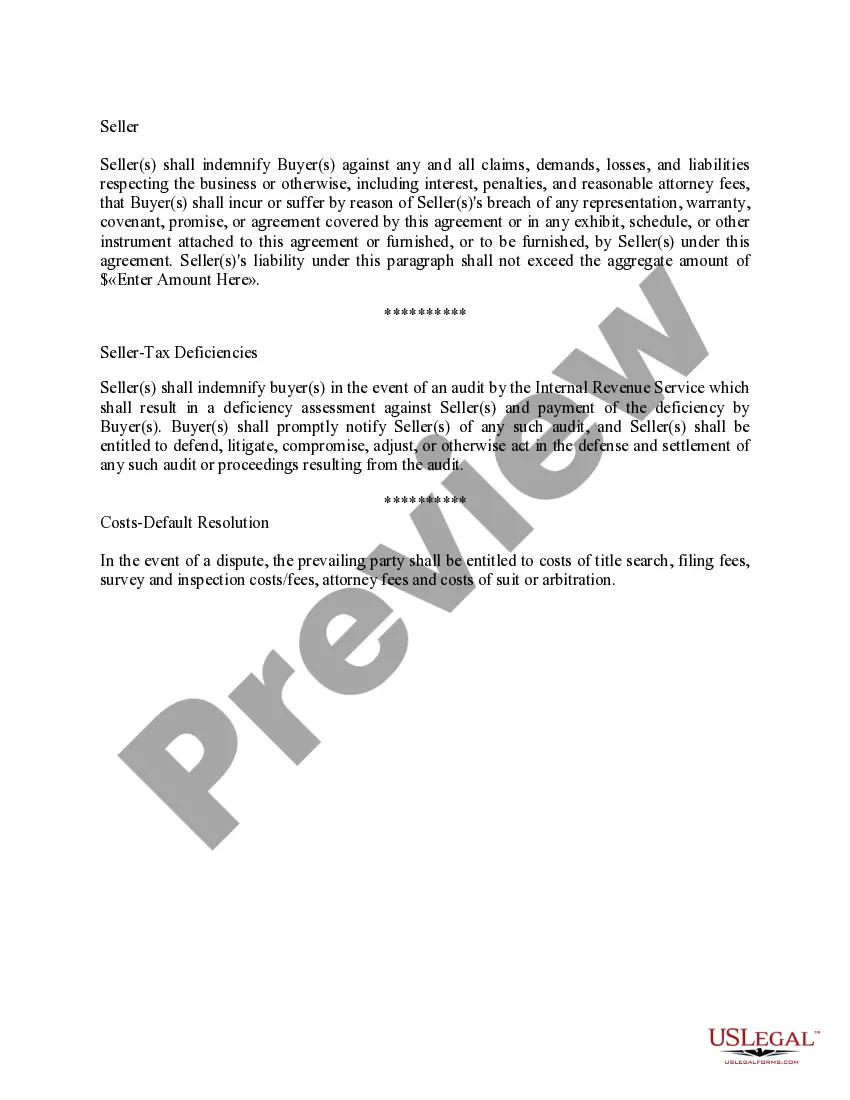
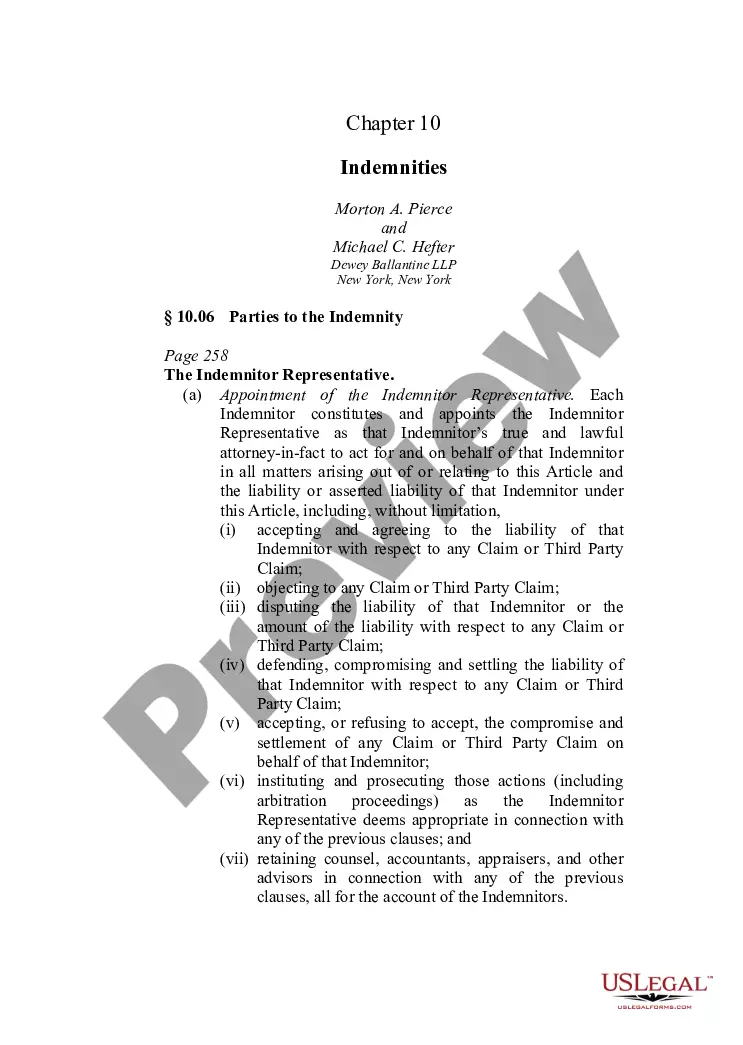
- Cross Indemnification: Establishes mutual indemnification obligations between the parties.
- Seller-Tax Deficiencies: Addresses indemnification related to tax audits by the Internal Revenue Service.
When to use this form
This form is useful when buying or selling real property, especially in transactions where one party may be exposed to liabilities arising from the other's actions. It is critical in protecting both the Seller and Buyer from unforeseen claims that may develop after the closing date, providing security and clarity in real estate transactions.
Intended users of this form
- Homebuyers and sellers involved in real estate transactions.
- Real estate agents facilitating contracts between buyers and sellers.
- Legal professionals advising clients on real estate contracts.
Completing this form step by step
- Identify the parties: Clearly state the names of the Seller(s) and Buyer(s).
- Specify the property: Provide detailed information about the real property involved in the transaction.
- Review the indemnification clauses: Ensure that both parties understand and agree to indemnify each other as specified.
- Fill in the respective liabilities: Enter the maximum liability amounts for both parties where indicated.
- Sign and date the form: Both parties should sign and date to make the agreement legally binding.
Notarization guidance
This form does not typically require notarization unless specified by local law. However, verifying local requirements is important to ensure acceptance.
Get your form ready online
Our built-in tools help you complete, sign, share, and store your documents in one place.
Make edits, fill in missing information, and update formatting in US Legal Forms—just like you would in MS Word.
Download a copy, print it, send it by email, or mail it via USPS—whatever works best for your next step.
Sign and collect signatures with our SignNow integration. Send to multiple recipients, set reminders, and more. Go Premium to unlock E-Sign.
If this form requires notarization, complete it online through a secure video call—no need to meet a notary in person or wait for an appointment.
We protect your documents and personal data by following strict security and privacy standards.

Make edits, fill in missing information, and update formatting in US Legal Forms—just like you would in MS Word.

Download a copy, print it, send it by email, or mail it via USPS—whatever works best for your next step.

Sign and collect signatures with our SignNow integration. Send to multiple recipients, set reminders, and more. Go Premium to unlock E-Sign.

If this form requires notarization, complete it online through a secure video call—no need to meet a notary in person or wait for an appointment.

We protect your documents and personal data by following strict security and privacy standards.
Typical mistakes to avoid
- Failing to clearly define the scope of indemnification obligations.
- Not specifying liability caps where necessary.
- Overlooking the requirement for prompt notice of claims.
- Not having both parties sign and date the form.
Benefits of using this form online
- Convenience: Downloadable templates allow for quick completion without the need to draft from scratch.
- Editability: Users can modify the form to fit the specific details of their transaction.
- Reliability: Designed by licensed attorneys to ensure legal soundness and compliance.
Looking for another form?
Form popularity
FAQ
An indemnification clause is a legally binding agreement between two parties specifying that one party (the indemnifying party) will compensate the other party (the indemnified party) for any losses or damages that may arise from a particular event or circumstance.
Example 1: A service provider asking their customer to indemnify them to protect against misuse of their work product. Example 2: A rental car company, as the rightful owner of the car, having their customer indemnify them from any damage caused by the customer during the course of the retnal.
A typical indemnification clause consists of two separate and distinct obligations: an obligation to indemnify, and an obligation to defend.
To indemnify means that the seller will reimburse the buyer for a loss or liability. To defend means that the seller will pay the buyer's legal fees for suits that arise from specific risks articulated in the contract.
Indemnity clauses can include 'hold harmless' wording under which one party agrees that the other will not be liable for any losses that the first party suffers arising from the specified events. It is always advisable that you seek independent legal advice on all contracts from a contract solicitor.
Put simply, no, an indemnity is not required to recover loss suffered under a contract. If a party has suffered loss under a contract and there is no indemnity to rely on, a party can rely on their rights under common law to make a claim for damages against the breaching party to recover the loss suffered.
Generally, indemnification is the buyer's remedy for a breach of any promises made in the purchase agreement or losses incurred relating to specific liabilities outlined in the purchase agreement. Indemnification allocates the risk of various post-closing losses between buyer and seller.
The best example of indemnity would be insurance indemnification. Let's say the commercial property owner has consistently paid insurance premiums for the property. The money is paid to an insurance company that promises to take full responsibility for repaying any losses if any loss or damages ever occurs.